Category: Uncategorized

  • Palestinians call out Israel for ‘apartheid’ at UN top court

    Palestinians call out Israel for ‘apartheid’ at UN top court

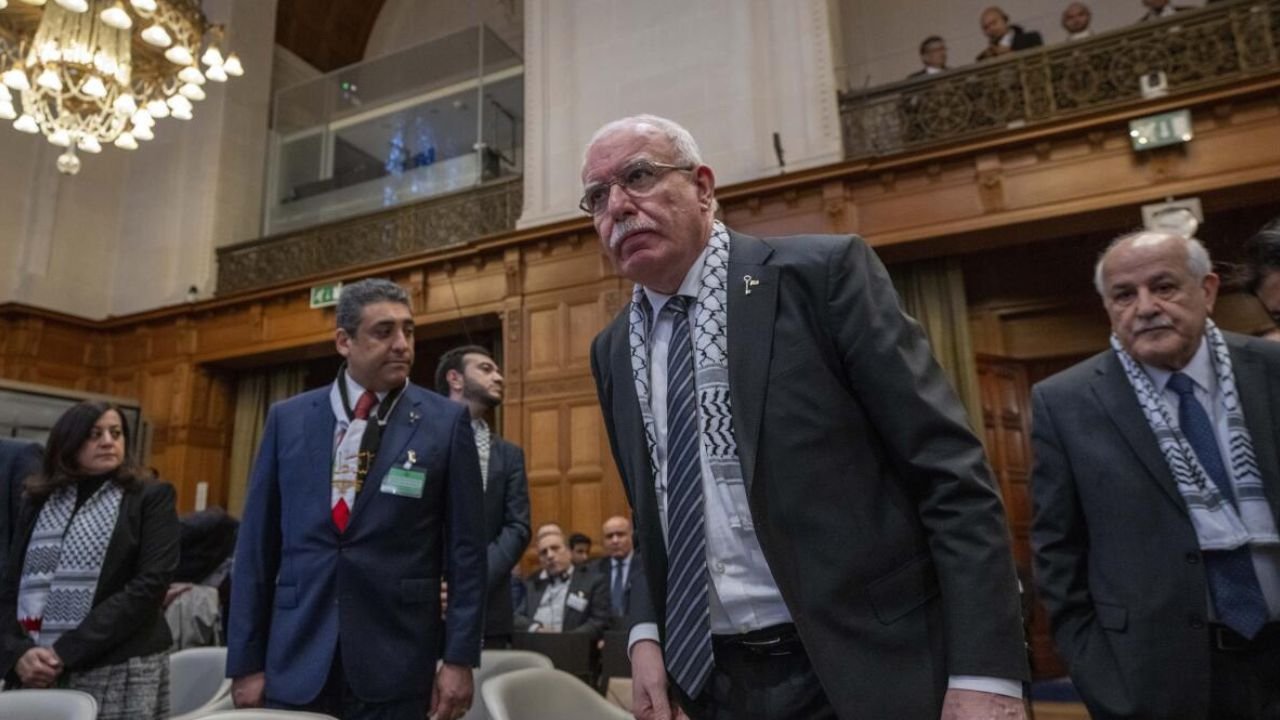
    The Hague (AFP) – Palestinian foreign minister Riyad Al-Maliki told the UN’s top court Monday his people were suffering “colonialism and apartheid” under the Israelis, urging judges to order an immediate and unconditional end to the occupation.

    “The Palestinians have endured colonialism and apartheid… There are those who are enraged by these words. They should be enraged by the reality we are suffering,” Al-Maliki told the International Court of Justice (ICJ).

    The ICJ is holding hearings all week on the legal implications of Israel’s occupation since 1967, with an unprecedented 52 countries, including the United States and Russia, expected to give evidence.

    Speaking in the Peace Palace in The Hague, where the ICJ sits, the minister urged judges to declare the occupation illegal and order it to stop “immediately, totally and unconditionally.”

    “Justice delayed is justice denied and the Palestinian people have been denied justice for far too long,” he said.

    “It is time to put an end to the double standards that have kept our people captive for far too long.”

    ‘Impunity and inaction’

    In December 2022, the UN General Assembly asked the ICJ for a non-binding “advisory opinion” on the “legal consequences arising from the policies and practices of Israel in the Occupied Palestinian Territory, including East Jerusalem.”

    While any ICJ opinion would be non-binding, it comes amid mounting international legal pressure on Israel over the intense attacks on Gaza.

    The hearings are separate from a high-profile case brought by South Africa alleging that Israel is committing genocidal acts during the current Gaza offensive.

    Al-Maliki charged however that “the Genocide underway in Gaza is a result of decades of impunity and inaction.”

    “Ending Israel’s impunity is a moral, political and legal imperative,” he said.

    In January, the ICJ ruled in that case that Israel must do everything in its power to prevent genocide and allow humanitarian aid into Gaza, stopping short of ordering a ceasefire.

    On Friday, it rejected South Africa’s bid to impose additional measures on Israel, but reiterated the need to carry out the ruling in full.

    ‘Prolonged occupation’

    The UN General Assembly asked the ICJ to consider two questions.

    Firstly, the court should examine the legal consequences of what the UN called “the ongoing violation by Israel of the right of the Palestinian people to self-determination”.

    This relates to the “prolonged occupation, settlement and annexation of the Palestinian territory occupied since 1967” and “measures aimed at altering the demographic composition, character and status of the Holy City of Jerusalem”.

    In June 1967, Israel crushed some of its Arab neighbours in a six-day war, seizing the West Bank including east Jerusalem from Jordan, the Golan Heights from Syria, and the Gaza Strip and Sinai Peninsula from Egypt.

    Israel then began to settle the 70,000 square kilometres (27,000 square miles) of seized Arab territory. The UN later declared the occupation of Palestinian territory illegal. Cairo regained Sinai under its 1979 peace deal with Israel.

    The ICJ has also been asked to look into the consequences of what it described as Israel’s “adoption of related discriminatory legislation and measures.”

    Secondly, the ICJ should advise on how Israel’s actions “affect the legal status of the occupation” and what are the consequences for the UN and other countries.

    The court will rule “urgently” on the affair, probably by the end of the year.

    Dozens of pro-Palestinian protesters demonstrated outside the court, waving flags and brandishing banners.

    “I really hope justice will prevail,” organiser Nadia Slimi told AFP.

    “I really hope all the combined efforts to pressure Israel, to demand a more humane policy, will finally lead to some steps to liberate the Palestinian people,” said the 27-year-old.

    ‘Despicable’

    The ICJ rules in disputes between states and its judgements are binding although it has little means to enforce them.

    However, in this case, the opinion it issues will be non-binding although most advisory opinions are in fact acted upon.

    Israel is not participating in the hearings and reacted angrily to the 2022 UN request, with Prime Minister Benjamin Netanyahu calling it “despicable” and “disgraceful”.

    Human Rights Watch (HRW) said that while advisory opinions are non-binding, “they can carry great moral and legal authority” and can eventually be inscribed in international law.
  • Yasir Hussain doesn’t want his son to become an actor

    Yasir Hussain doesn’t want his son to become an actor


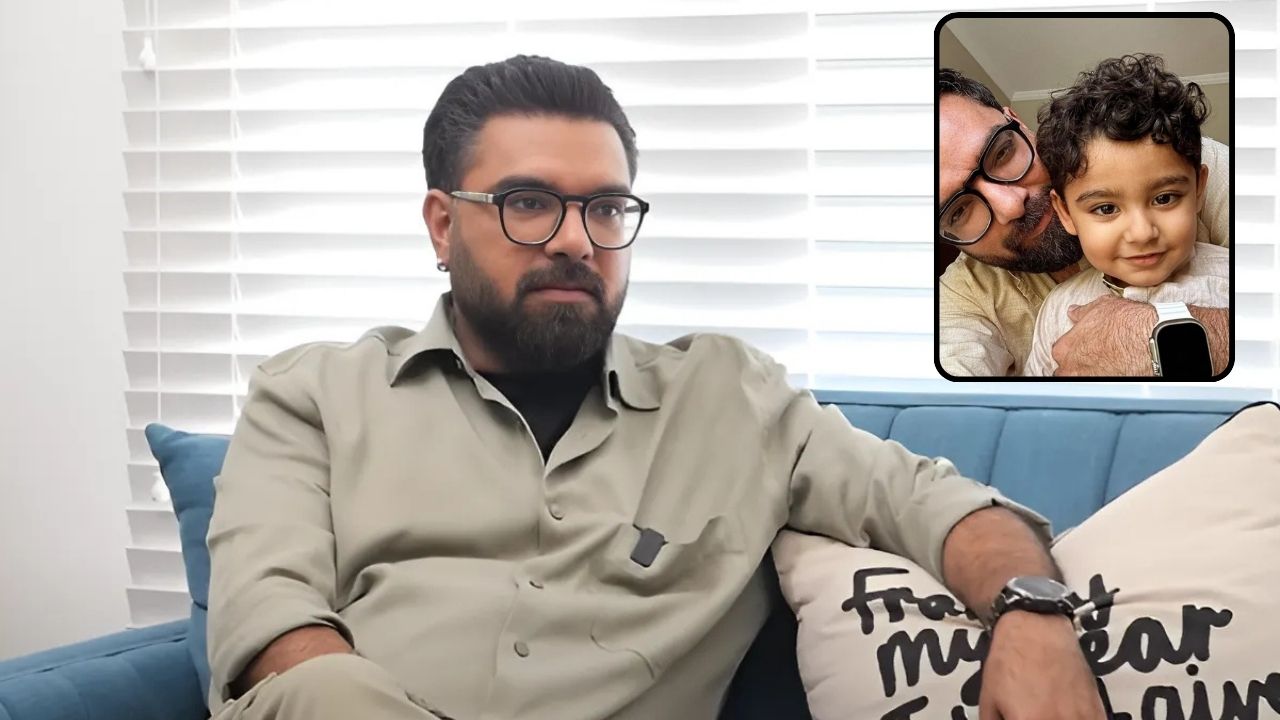
    Prominent actor Yasir Hussain does not want his son to work in the industry.


    Talking about his son’s future in an interview, Yasir said, “I don’t want my son to become an actor. If he will join, it is a different matter. I will not stop him from anything, but I don’t want him to be an actor.”


    A video of Yasir Hussain discussing his views is gaining popularity on social media.


    In response to a question, Yasir Hussain said that everyone in Pakistan does not have Netflix, so they are watching dramas, while India does not have its own good dramas, so they are forced to watch our dramas.

    “Actors should perform well and show their talent, but in our industry, they often get boring roles,” he remarked.


  • Sher Afzal Marwat claims Islamabad police raided his house

    Sher Afzal Marwat claims Islamabad police raided his house

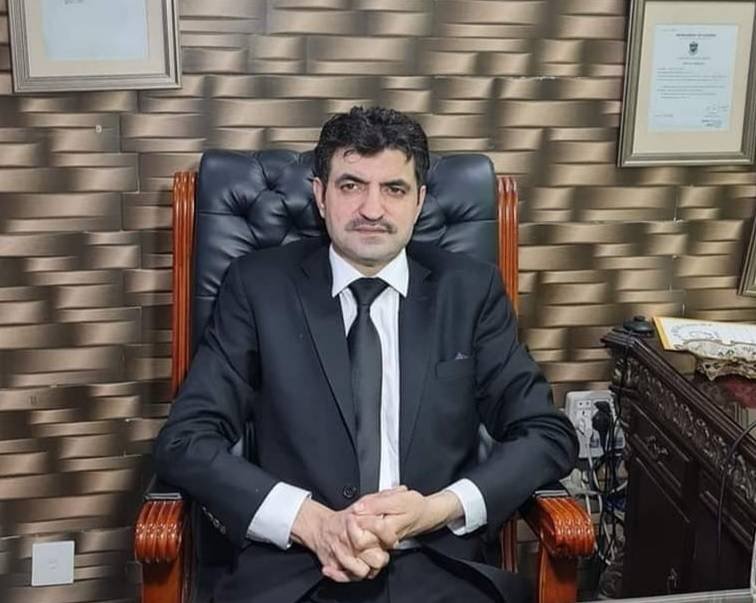
    Pakistan Tehreek-e-Insaf (PTI) leader Sher Afzal Marwat claimed on Monday that unidentified people with masks on their faces raided his house in Islamabad.

    The PTI leader told Islamabad High Court (IHC) about the incident while speaking during a hearing on the recovery of Baloch students.

    After hearing about the incident, IHC Justice Mohsin Akhtar Kayani expressed surprise, pointing out that the PTI leader was not talking about Lakki Marwat, but Islamabad.

    The court asked what will happen to common citizens of Pakistan if such an incident can happen to an elected member of the parliament of Balochistan. 

    Earlier in a tweet, Marwat claimed the CTD police raided his house and broke the doors causing damages. “…they stressed out my family and staff and confiscated my laptop. I managed to run away from my home and now I am at a safe place. This is an illegal raid and I will challenge the IG and SSP operation Islamabad in the court for this criminal act; the confiscation of my laptop is illegitimate. It contains my private and professional data, (that may be) subjected to misuse. These cowardly tactics will not scare me, or force me to step back from our mission, which is for the larger cause — the fight for true democracy in Pakistan,” he wrote on X.

    On the other hand, Islamabad police denied the claim. Fake news was being spread to gain public attention, the police maintained.

  • ‘Taxali Gate’ is getting rave reviews on social media

    ‘Taxali Gate’ is getting rave reviews on social media


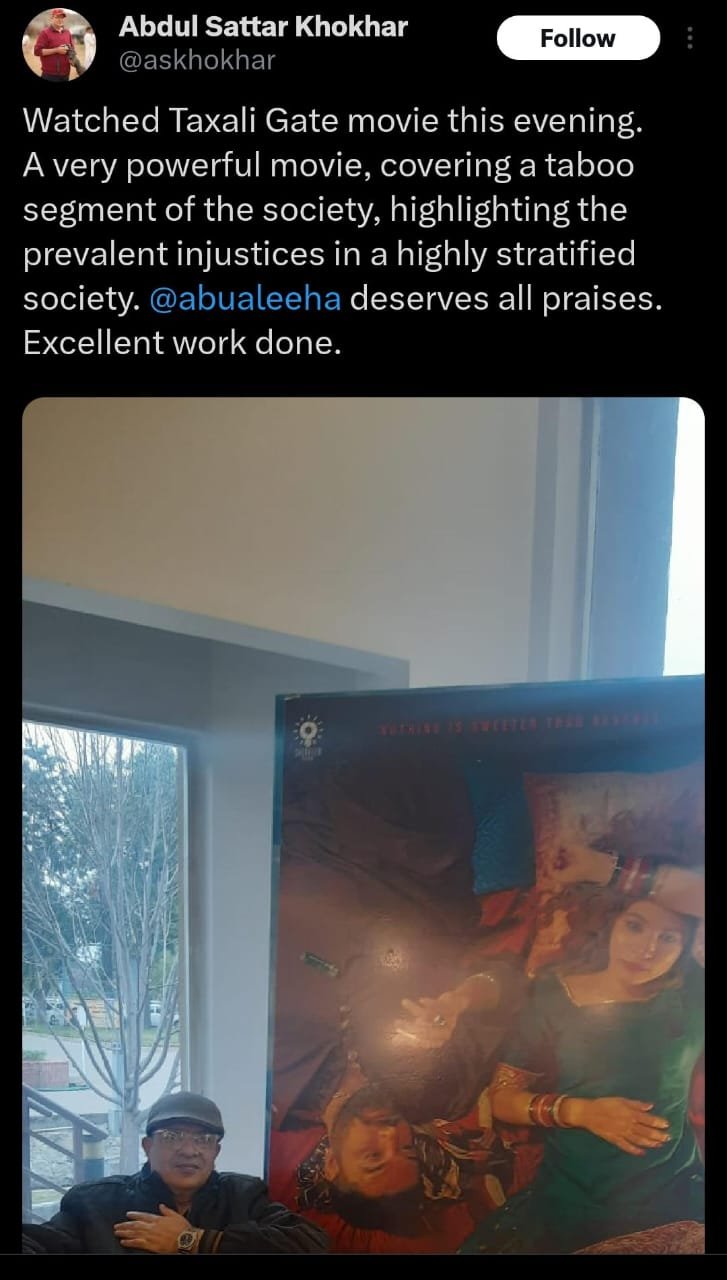
    The movie everyone’s been waiting for, ‘Taxali Gate’, is finally here! Directed by and written by Abu Aleeha, the film takes viewers on a journey of emotional discovery. Executive Producer Barrister Shabbir Shah, along with Producers Waqas Rizvi and Ayesha Omar, have brought the captivating story to life.

    Set in Lahore’s old city, the movie explores important issues of consent, touching on both legal and social matters.

    The film is getting rave reviews from fans on social media, with many calling it Abu Aleeha’s best work.


  • Italy, Home Of The Mafia, Now One Of Europe’s Safest Countries

    Italy may be the land that launched Cosa Nostra, but today it is one of the safest countries in Europe, with a murder rate well below its neighbours.

    From the mid-19th century through to the 1990s, thousands of people died in mafia violence, from rivals or traitors cast in cement or fed to pigs, to judges, priests and witnesses killed for daring to defy the mob.

    There were also the traumatic “Years of Lead” from the end of the 1960s to the 1980s, when armed groups from the extreme left and extreme right brought terror to Italy with bombings and assassinations.

    The brutal murder of former prime minister Aldo Moro by the Marxist-Leninist Red Brigades in 1978 is burned into the national psyche, although the largest number of the estimated 400 victims of the period were killed by neo-fascists.

    But when this bloody period ended, and after a crackdown on mafias which pushed them into less violent financial crime, the murder rate plummeted.

    Back in 1990, there were 34 murders per one million inhabitants in Italy, compared to 24 in neighbouring France, according to UN figures.

    In 2021-22, this had fallen to 5.5 per million in Italy and 11 in France, eight in Germany and 10 in the UK.

    In Europe, only Norway and Switzerland have a murder rate lower or equal to Italy’s, while Latvia, the worst, has a rate 6.5 times higher.

    “Homicides in general have decreased in the last 25 years, especially the percentage of men” — who previously were the main victims of mafias, noted Raffaella Sette, a sociologist at the University of Bologna.

    Just 10 percent of murders each year are now blamed on organised crime.

    “The mafias — the Camorra, the ‘Ndrangheta, the Cosa Nostra — have radically changed their way of operating,” said Gianluca Arrighi, a criminal lawyer who writes police novels.

    “Today, they operate from a more economic point of view, buying up real estate, entering into companies,” he said.

    Analysing the causes of violence across different countries is always risky, but Arrighi believes several factors are at play.

    While Italy is poorer than its comparable EU neighbours, he says this is not always detrimental to social well-being, saying “goodwill” between people can help compensate for life’s difficulties.

    “The higher the conflict in a society, the higher the number of murders, committed by people who are in some state of anger,” Arrighi told AFP.

    The murder rate is, however, higher in the south of Italy, the poorest part of the country.

    But Stefano Delfini, head of criminal analysis at the government’s department of public security, agrees that “our society is less violent”.

    “The social fabric is more resistant, probably because of the presence of family values which mean difficulties are felt in a less harsh way.”

    Another factor that drives violence in other countries is alcohol or drug use, particularly in France and the UK.

    Italy does not keep data on this, but consumption of alcohol is the lowest in the EU, according to the World Health Organization.

    There is rising awareness in Italy about femicides — killing of a woman or girl by a partner, spouse or family member — with 97 recorded in 2023, out of a total 330 murders.

    A lack of harmonised data on femicides makes comparisons with other European countries difficult.

    But statistics compiled by the World Bank for 2021 show a rate of 3.9 murders of women per one million people in Italy, well below the 6.8 in France and 8.0 in Germany.

    © Agence France-Presse

  • Top UN court rejects South Africa request for more Gaza measures

    Top UN court rejects South Africa request for more Gaza measures

    THE HAGUE: The UN’s top court Friday rejected South Africa’s request to put more legal pressure on Israel to halt a threatened offensive against the Gaza city of Rafah, saying it was “bound to comply with existing measures.”

    Pretoria has already filed a complaint against Israel in the International Court of Justice (ICJ) in The Hague, alleging that its assault on Gaza amounts to a breach of the Genocide Convention.

    The court has yet to rule on the underlying issue, but on January 26 it ordered Israel to ensure it took action to protect Palestinian civilians from further harm and to allow in humanitarian aid.

    South African officials on Tuesday filed a further request to the court, asking it to order new measures in the light of Israel’s preparation of a new operation against Rafah.

    More than half of Gaza’s 2.4 million population have sought shelter there from Israel’s offensive on the Gaza Strip.

    The ICJ’s judges acknowledged that the recent developments “’would exponentially increase what is already a humanitarian nightmare with untold regional consequences’” — citing remarks by UN Secretary-General Antonio Guterres.

    But although Israel needed to act immediately to ensure the safety and security of Palestinians, that did not require “the indication of additional provisional measures,” they added.

    Israel remained “bound to fully comply with its obligations under the Genocide Convention and with the said Order,” the ICJ ruling said.

    Hamas’s October 7 attack resulted in the deaths of about 1,160 people in Israel, mostly civilians, according to an AFP tally based on official Israeli figures.

    Militants also took about 250 people hostage, around 130 of whom are still in Gaza, including 30 who are presumed dead, according to Israeli figures.

    Israel’s assault on Gaza has since killed at least 28,775 people, mostly women and children, according to the territory’s health ministry.

    Israel’s foreign minister on Friday said the country would coordinate with Egypt before launching any military offensive in the southern border city of Rafah.

    “We will operate in Rafah after we coordinate with Egypt,” Israel Katz told journalists on the sidelines of the Munich Security Conference, where 180 dignitaries have gathered to discuss conflicts around the globe.

    Fears had been growing for the hundreds of thousands of people who have fled the north of Gaza to Rafah as Israeli troops advanced into the territory to wage war on Hamas.

    But Israel is now planning a major operation in the overcrowded city. With the border to Egypt closed, nearly 1.5 million Palestinians are essentially trapped there.

  • 24-karat gold price increases by Rs1,300 per tola

    24-karat gold price increases by Rs1,300 per tola

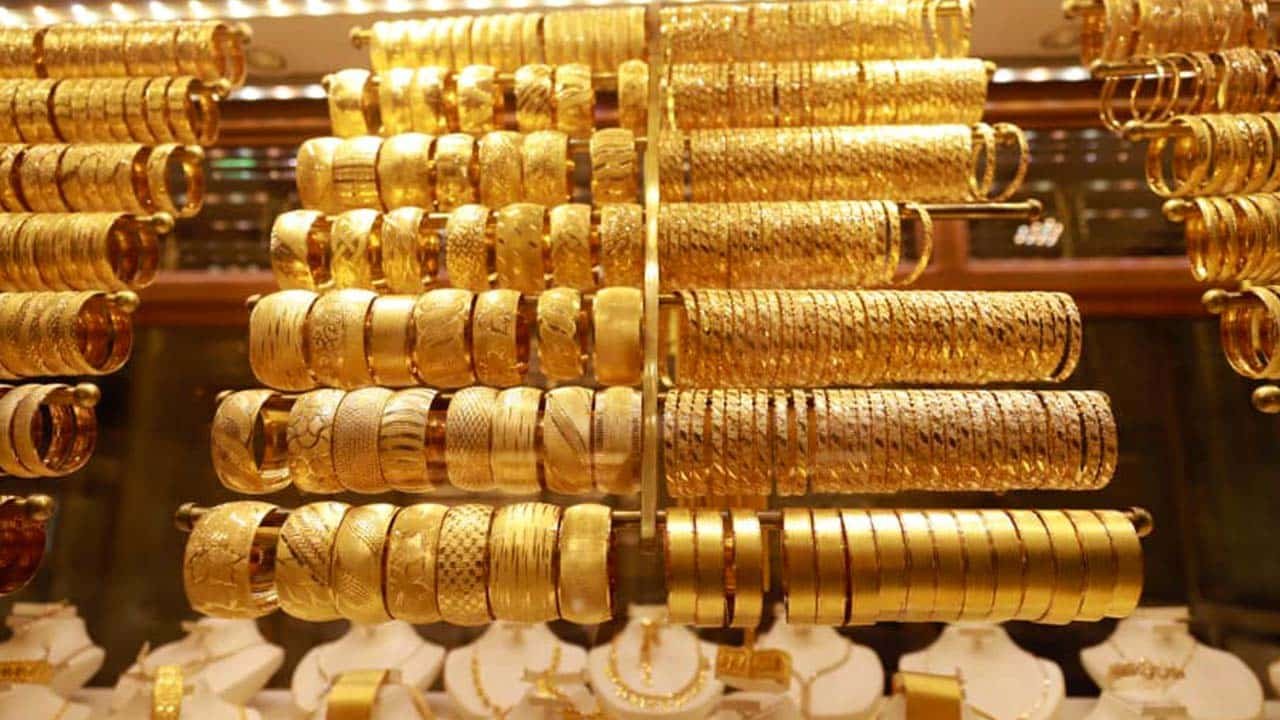
    In a persistent upward trend, the domestic bullion market showcased further gains, particularly in the value of 24-karat gold, which surged by Rs1,300 per tola to reach Rs212,400 on Friday.

    According to the latest report from the Karachi Sarafa Association, the price of 10-gram 24-karat gold experienced a notable increase, reaching Rs182,099 and reflecting a gain of Rs1,115 compared to the previous session.

    Simultaneously, the price of 10-gram 22-karat gold saw an uptick, settling at Rs166,924.

    Despite the positive momentum in the gold market, silver prices remained steady, with 24-karat silver holding at Rs2,580 per tola and 10-gram silver trading at Rs2,211.93.

    Interestingly, despite today’s substantial rise in gold prices and the prevailing political instability in the country, local gold is on track to record a weekly loss.

    This comes on the heels of hotter-than-anticipated US inflation data released on Wednesday, causing gold to dip below the $2,000 mark for the first time in two months.

    Bloomberg reported that the American Consumer Price Index (CPI) data disappointed investors, reversing recent declines in price pressures and dampening expectations for rate cuts this year.

    However, the international spot gold has rebounded strongly since Wednesday’s decline, currently trading at $2,007.61, reflecting a gain of over $3 day-over-day.

    Amidst these global dynamics, the fluctuation in the domestic currency plays a crucial role in determining the domestic gold rate.

    It’s noteworthy that the Pakistani Rupee (PKR) snapped its 13-week-long and historic winning streak against the US Dollar, experiencing a marginal drop of 8 paisa.

    Given that gold is denominated in US dollars, a depreciation of the PKR against the dollar contributes to the rise in the value of PKR-denominated gold.

    The bullion market’s resilience in the face of global challenges highlights its sensitivity to both local and international economic factors, providing a nuanced perspective for investors and stakeholders.

  • Russian opposition leader Alexei Navalny dies in prison

    Russian opposition leader Alexei Navalny dies in prison

    Moscow, Russia – Russian opposition leader Alexei Navalny died Friday in the Arctic prison colony where he was serving a 19-year-term, Russia’s federal penitentiary service said.

    Western governments immediately attacked the Kremlin over the death of the most outspoken critic of President Vladimir Putin.

    Navalny lost consciousness after a walk and could not be revived by medics, the prison service said.

    “Navalny felt bad after a walk, almost immediately losing consciousness. Medical staff arrived immediately and an ambulance team was called,” it said.

    “Resuscitation measures were carried out which did not yield positive results. Paramedics confirmed the death of the convict. The causes of death are being established.”

    The 47-year-old was Russia’s most prominent opposition leader and won a huge following with his criticism of corruption in Vladimir Putin’s Russia.

    Russia’s Investigative Committee said it had opened an investigation into the death.

    Navalny’s press secretary Kira Yarmysh said his team had not been informed of his death.

    “Alexei’s lawyer is now flying to Kharp,” where his prison colony is, she said in a post on social media.

    Citing his spokesman, Russian news agencies reported that Putin had been informed of Navalny’s death.

    Western governments and Russian opposition figures on Friday said the Kremlin was responsible for his death.

    Latvia’s president said he had been “brutally murdered by the Kremlin”.

    “The Russian government bears a heavy responsibility,” Norway’s Foreign Minister Espen Barth Eide wrote on X, formerly Twitter.

    France’s foreign minister said Navalny had paid with his life for resisting oppression.

    Opposition leader

    Navalny’s exposes, posted on his YouTube channel racked up millions of views and brought tens of thousands of Russians to the streets, despite Russia’s harsh anti-protests laws.

    He was jailed in early 2021 after returning to Russia from Germany, where he was recuperating from a near-fatal poisoning attack with Novichok, a Soviet-era nerve agent.

    In a string of cases he was sentenced to 19 years in prison on charges widely condemned by independent rights groups and in the West as retribution for his opposition to the Kremlin.

    His return to Russia despite facing jail put him on a collision course with Putin, after Navalny blamed the poisoning attack in Siberia on the Kremlin.

    “I’m not afraid and I call on you not to be afraid,” he said in an appeal to supporters as he landed in Moscow, moments before being detained on charges linked to an old fraud conviction.

    His 2021 arrest spurred some of the largest demonstrations Russia had seen in decades, and thousands were detained at rallies nationwide calling for his release.

    In prison, Navalny’s team said he had been harassed and repeatedly moved to a punitive solitary confinement cell.

    He said guards had subjected him and other inmates to “torture by Putin”, making them listen to the president’s speeches.

    From behind bars he was a staunch opponent of Moscow’s full-scale military offensive against Ukraine.

    The Kremlin moved to dismantle his organisation, locking up his allies and sending dozens of others into exile.

    Late last year he was moved to a remove Arctic prison colony in Russia’s Yamalo-Nenets region in northern Siberia.

    The last post on Navalny’s Telegram channel, which he managed through his lawyers and team in exile, was a tribute to his wife, Yulia Navalnaya, posted on Valentine’s Day.

  • Alarm over fate of major Gaza hospital after Israeli raid

    Alarm over fate of major Gaza hospital after Israeli raid

    Palestinian Territories – There was growing concern Friday over a key Gaza hospital a day after a raid by the Israeli army, with the health ministry saying several patients had died there due to a lack of oxygen.

    The health ministry said the power was cut off and the generators stopped after the raid at the Nasser hospital in the southern city of Khan Yunis, and that four patients had died Friday.

    In recent days, intense fighting has raged in the vicinity of the hospital – one of the Palestinian territory’s last remaining major medical facilities that are still operational.

    On Thursday Israeli army spokesman Daniel Hagari said there was “credible intelligence” to suggest hostages seized by Gaza militants in the October 7 attack that sparked the war had been held at the hospital, and that bodies of some of the captives may still be inside.

    But the military said later it had “not yet found any evidence of this”, although forces had found “weapons, grenades and mortar bombs” at the hospital complex.

    On Friday it said Israeli forces had taken into custody more than “20 terrorists” suspected of involvement in the October 7 attack at the hospital.

    A witness who declined to be named out of fear for their safety told AFP the army had shot “at anyone who moved inside the hospital”.

    The health ministry also raised fears over the fate of six other patients in the intensive care unit and three children, saying it held Israel “responsible for the lives of patients and staff considering that the complex is now under its full control”.

    ‘Pattern of attacks’

    Medical charity Doctors Without Borders described a “chaotic situation” at the hospital, with one employee unaccounted for and another detained by Israeli forces.

    “Our medical staff have had to flee the hospital, leaving patients behind,” it said.

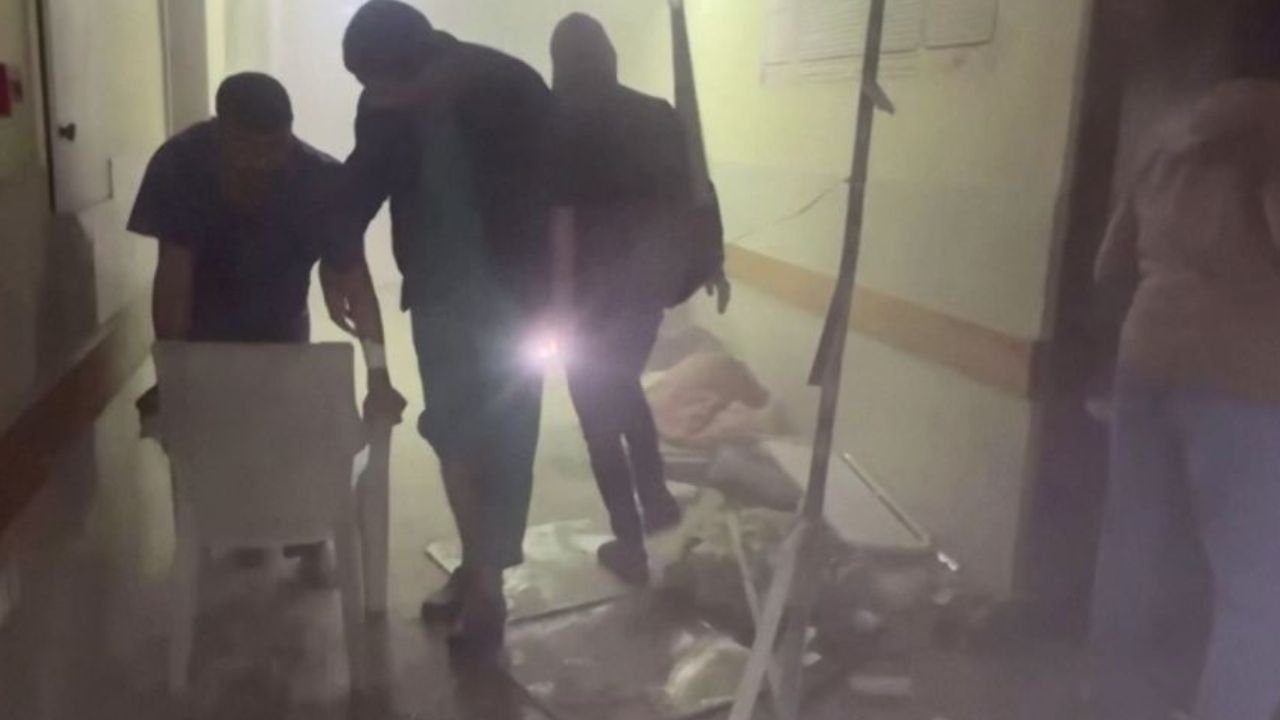
    Footage circulating on social media, which AFP could not independently verify, showed rescuers trying to move patients through dust-filled corridors amid fallen debris.

    At least 28,775 people, mostly women and children, have been killed in Israel’s assault on the Palestinian territory, according to the health ministry.

    The UN Human Rights Office said Israel’s raid on the Nasser hospital appeared to be “part of a pattern of attacks by Israeli forces striking essential life-saving civilian infrastructure in Gaza, especially hospitals”.

    The World Health Organization has described the Nasser hospital as a critical facility “for all of Gaza”, where only a minority of hospitals are even partly operational.

    Israeli strikes continued in the besieged territory overnight, with the health ministry saying Friday another 112 people were killed.

    ‘Dying slowly’

    Nearly 1.5 million displaced Palestinians are trapped in Rafah – more than half of Gaza’s population – seeking shelter in a sprawling makeshift encampment near the Egyptian border.

    There are fears about a growing humanitarian disaster without adequate supplies.

    “They are killing us slowly,” said displaced Palestinian Mohammad Yaghi. “We are dying slowly due to the scarcity of resources and the lack of medications and treatments in the city of Rafah.”

    “There is no medicine,” said Jihan al-Quqa, who was displaced from Khan Yunis to Rafah.

    “There are no antibiotics or any other treatments,” she added.

    “Everyone is sick, children and the elderly, and there is no medicine.”

    US President Joe Biden spoke by phone with Israeli Prime Minister Benjamin Netanyahu late Thursday, the White House said, and urged him again not to carry out an attack on Rafah without a plan to keep civilians safe.

    Britain, Australia, Canada and New Zealand have also urged Israel not to launch a ground offensive in the city.

    Despite international pressure, Netanyahu has insisted he would push ahead with a “powerful” operation in the overcrowded city to achieve “complete victory” over Hamas.

    Media reports suggested Egyptian authorities were building a new wall near the frontier with Gaza, amid fears of an influx of refugees.

    Truce talks

    Mediators from the United States, Qatar and Egypt gathered in Cairo this week to try and broker a deal to halt the fighting and see the release of the remaining hostages in exchange for Palestinian prisoners held by Israel.

    CIA director Bill Burns made an unannounced visit to Israel Thursday for talks with Netanyahu and the head of Israel’s Mossad intelligence agency, David Barnea.

    Barnea had already held talks with Burns and Egyptian and Qatari representatives in Cairo on Tuesday, before a Hamas delegation visited Wednesday.

    US Secretary of State Antony Blinken said he believed an agreement was still “possible”.

    But there has been limited sign of progress.

    Netanyahu said Thursday he rejected a plan for international recognition of a Palestinian state, following reports of the move in The Washington Post.

    burs-rox/dv

    © Agence France-Presse

  • Somia Asim charged in Rizwana torture case

    Somia Asim charged in Rizwana torture case

    The district and sessions court Islamabad has on Friday indicted Somia Asim, wife of Civil Judge Asim Hafeez, in the Rizwana torture case.

    The case was heard by civil judge Umar Shabbir. Rizwana’s mother and the suspect Somia Asim appeared in the court with their respective lawyers.

    During the hearing, the court read out the indictment while Somia Asim denied the crime.

    The court has formally started the trial against Somia and adjourned the hearing of the case till March 20, calling the witnesses to record their statements at the next hearing.

    Somia Asim is accused of torturing the young domestic maid Rizwana.

    Case

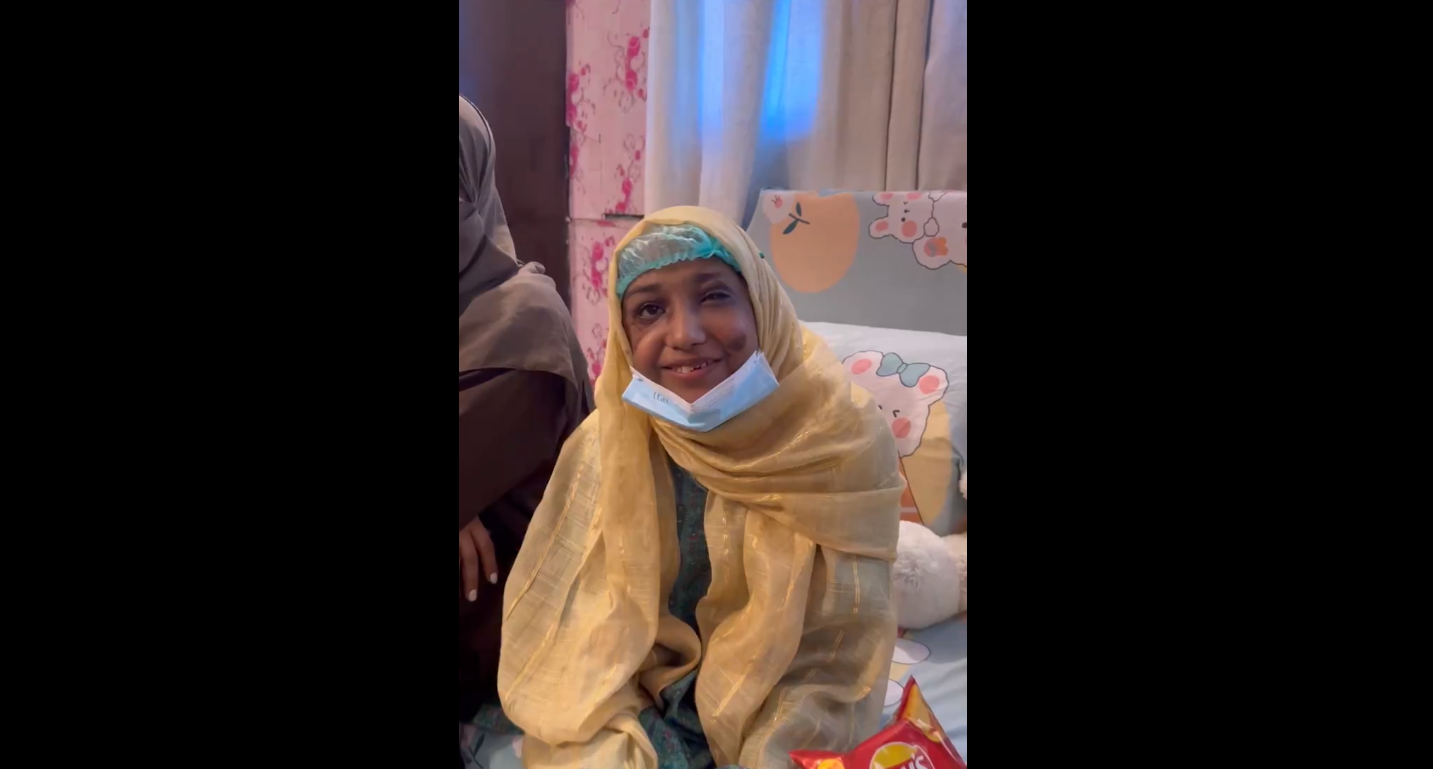
    Rizwana had been allegedly tortured and abused while working at a civil judge’s home in Islamabad, after she was accused of stealing jewellery. Rizwana’s family revealed that the girl was not paid a single penny by the family for the extensive workload she was doing and was instead subjected to violence.