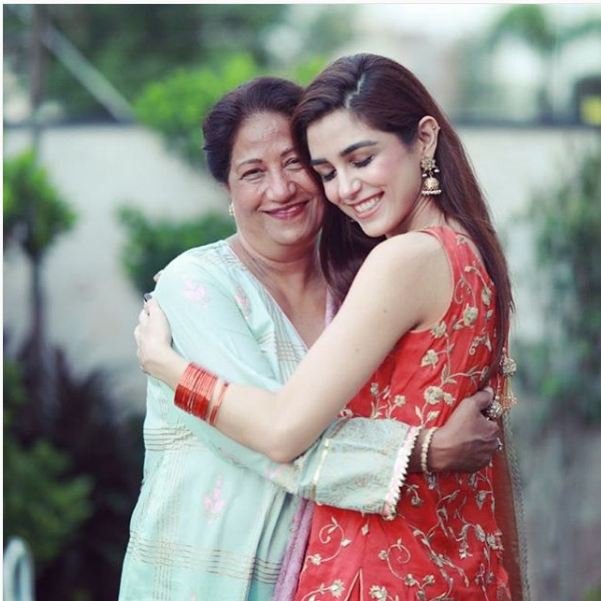
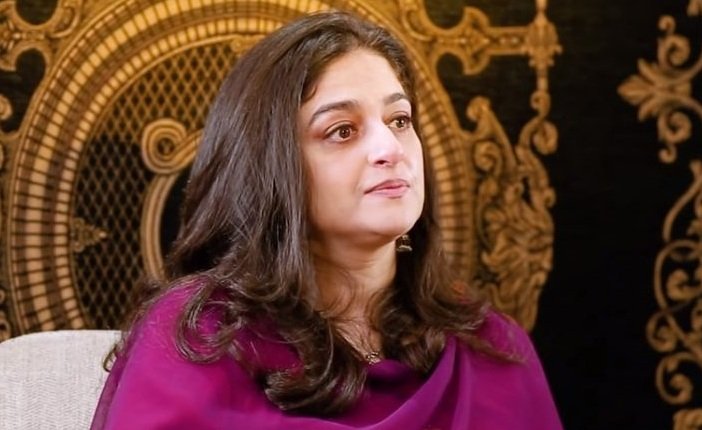
Maya Ali has always been expressive about the bond she shares with her mother and the latest social media post which she has made for her mother is surely the sweetest thing you will see today on the internet.
The Teefa in trouble actor took to Instagram — a photo and video-sharing social networking platform, to express her love for her Amma and wrote a heartfelt caption, dedicated to her mother.
She wrote: “With time you grow
older, and your nature changes but for your parents, you never get older and
that is the best blessing from ALLAH for all children… Today I was sitting
with Amma after such a long time and sharing all the things and all of a sudden
she hugged me and told me how strong I am, and how proud she is of me, and all
I could say is that Amma “yeh sab app se he to seekha hai” but after this
emotional episode, I realized one thing, no matter how old you get you always
need a hug and cuddle from your parents to relax you and make you stronger…
Amma I love you for everything, for understanding me when I don’t speak a word,
when I laugh loud and you’re the one who knows I am trying to hide something, for
those moments when I cry, you’re always by my side and saying, “bass bohat ho
Gaya rona dhona?”
for all the times you pray for me.
She then made a request to all her followers, urging them to take out some time and sit with their parents and listen to them.
“ We as children can’t return how much they do for us, so I request to all, please try and spare some time for them and listen to them, what they want… They are precious and the most important and most valuable relationships in the world…?”
A man in Australia has been charged for punching and kicking a heavily pregnant woman in what was described by a leading Australian Islamic association as an “Islamophobic” attack.
Shocking security camera footage showed a man approaching a table of three women wearing headscarves as they chatted at a cafe Sydney on Wednesday (Nov 20).
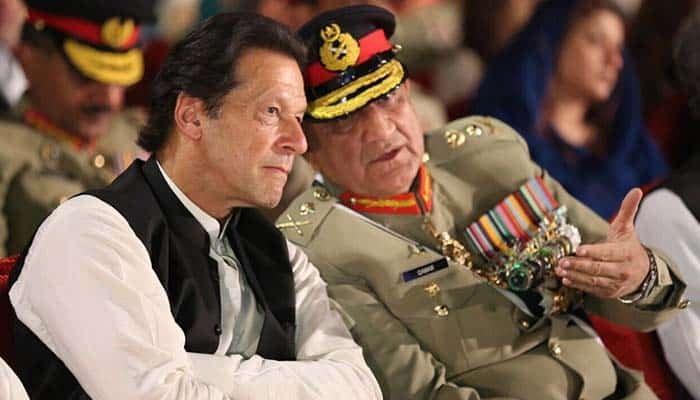
Prime Minister (PM) Imran Khan’s office has again confirmed the three-year extension given to Chief of Army Staff (COAS) General Qamar Javed Bajwa recently, saying a notification pertaining to the extension in the general’s tenure has already been issued on August 19, Pakistan Today reported.
According to the details, the statement came after a meeting between PM Imran and Gen Bajwa amid reports of an alleged rift between the civilian government and the military establishment. This was the second meeting of the two bigwigs in a week.
During this meeting, the top leaders discussed matters pertaining to national security, said the statement issued by the PM House.
In the earlier meeting, Gen Bajwa met Imran in an apparent attempt to allay the latter’s concerns over the recent political developments in the country. The statement further said that the two sides discussed the prevailing situation in Indian-occupied Kashmir (IoK) and at the western border, and internal security issues were discussed.
The PM’s meeting with the army chief was followed by a meeting with Inter-Services Intelligence (ISI) chief Lt Gen Faiz Hameed on Tuesday.
However, media reports dub these meeting as an attempt to assuage Imran’s concerns by the military. “The government and army are not on the same page due to disagreement on certain points, especially the exit of former PM Nawaz Sharif from the country on health grounds,” reports had earlier stated.
After these statements, military spokesperson Major General Asif Ghafoor refuted claims of an alleged divide between the country’s civilian and military leadership, reiterating that both sides are on the same page.
“This is baseless gossip. There is absolutely nothing of the sort,” said ISPR director general as he dismissed speculations of a rift.
“The army is supporting a democratically elected government as per the constitution. There will be no let-up in this [support] as it is a must for the progress and prosperity of Pakistan”, he added.
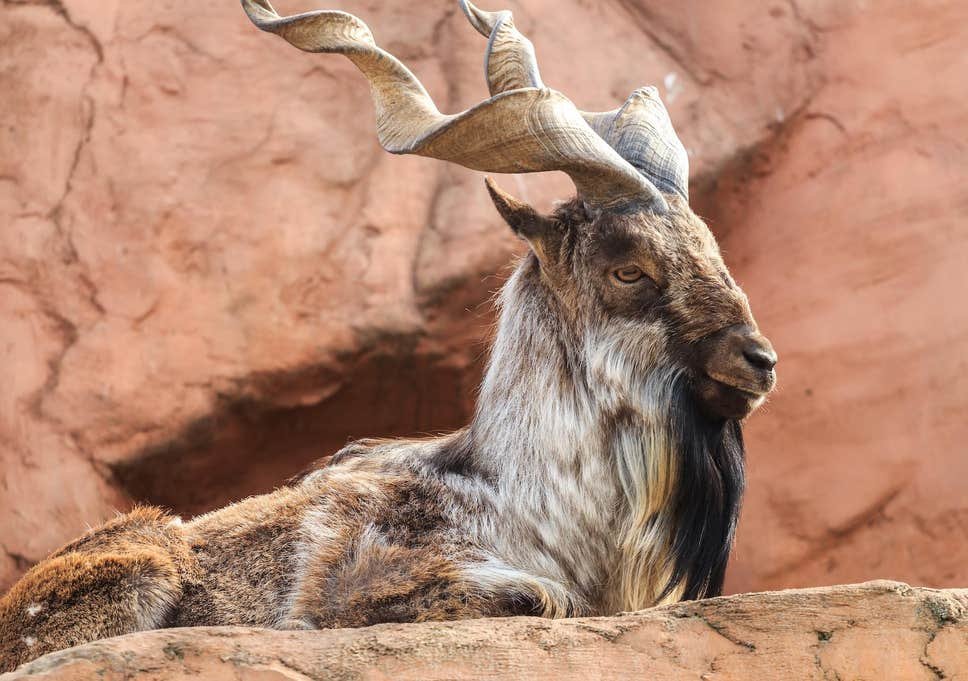
The wildlife department of Gilgit Baltistan has auctioned four licenses for hunting the markhor, the official national animal of Pakistan.
According to a report in Arab News, the Ministry of Climate Change agreed to the licenses, including for trophy hunting of the much in demand flare-horned Astore markhor, a large goat species native to Pakistan. Under the government’s scheme, 12 licenses for markhors are issued every year in Pakistan, four in Gilgit Baltistan.
Each license was sold for over $80,000, from which 80 percent will go to the villages where the hunt takes place for developing their infrastructure. A total of $500,000 was reportedly raised from the auction.
The report, quoting president of a wildlife conservation community in Astore, Abdul Sami, further said that the before the licensing was introduced two decades ago, both residents and influential people would just hunt the animals for fun and meat.
Sami shared that the licensing has benefited rural communities, as the money from permits becomes their development funds.
“We have built schools, hospitals, water supply systems, and maternity homes from the trophy hunting scheme in the area,” Sami said, disapproving criticism against markhor hunting.
Earlier this year in February, a photograph of American hunter Bryan Kinsel Harlan posing with an Astore markhor he killed had invited social media outrage. Harlan had reportedly paid a record $110,000 to shoot it on a tourist expedition to Pakistan’s northern Himalayan region of Gilgit-Baltistan.
Meanwhile chief conservator Zakir Hussain claimed that the markhors would have been extinct had it not been for the licensing program. The population of markhors in the Astore Valley is currently 2,500. According to the wildlife department’s data, the markhor population in the province has increased to over 6,000 from a mere 200 in the 1990s.
Trophy hunting season runs from November to April. As markhors prefer cold, they can usually be found at the height of 8,000-11,000 feet, however, during winters they descend to 5,000-6,000 feet.
Markhor hunting usually takes place at dawn or dusk. Hunting of female and young animals below the age of six is strictly forbidden. The age of the markhor is determined by its horns, the older the markhor is, the bigger its horns will be. Markhors live about 15 years on average. The hunter is accompanied by wildlife department officials who ensure that everything is done as per the law.
Karachi witnessed a very strange story of a robbery, in Korangi No.5.
According to reports, thieves entered a house in Karachi where they held three women hostage.
The robbers started looting and had grabbed all valuables inside the house. After raiding most of the cupboards and rooms inside the house, they entered the room where they had held the women hostage.
One of the women from the three shouted out and prohibited them from entering claiming that her husband had died recently and she was in “Iddat” and according to Islamic values and traditions she was not to see another man till a set period of time.
When the thieves got to know this, they left all the valuables and left the house, asking the women to pray from God so that he may ease their difficulties.
The women then told the whole story to their surprised neighbours. They did not report the matter to the police and the inquiry of local police came back empty-handed.
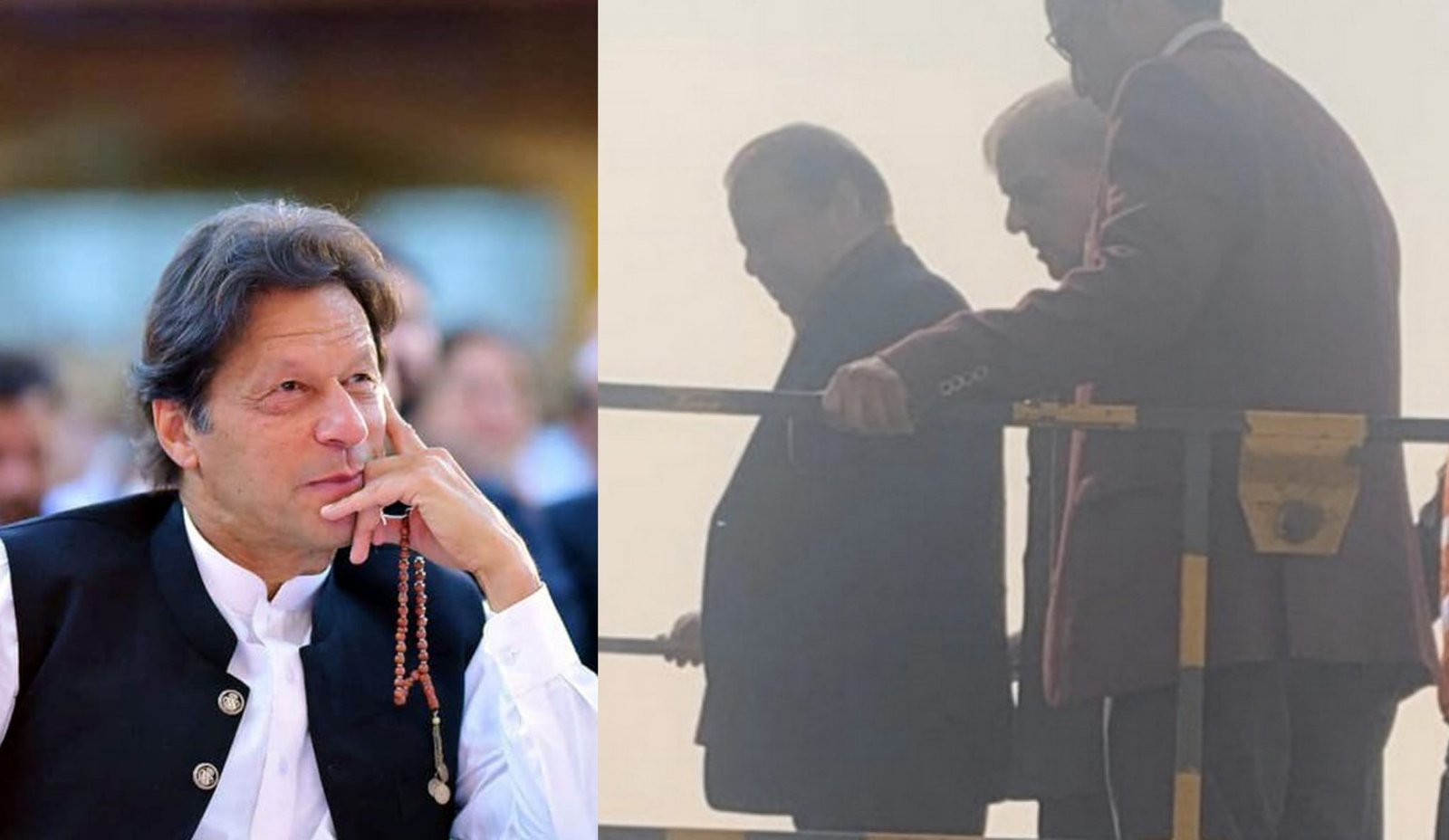
Prime Minister (PM) Imran Khan has said that when he saw the former premier Nawaz Sharif climbing the stairs of the plane he remembered the doctors’ reports, which said the patient ‘will be gone [forever]’ if not allowed to go abroad, Geo News reported.
According to the details, PM Imran while addressing a gathering in Mianwali after putting the foundation stone for a hospital said that in the reports it was written that “the patient had heart problems, kidney problems, high sugar and if the patient is not allowed to go abroad then he will be ‘gone’ [forever].”
PM said that he wondered if Sharif’s recovery owes to the luxurious plane he travelled in or to the London climate, adding that he seeks clarity on the issue and that the matter needs to be investigated.
The prime minister taunted former PM again by saying that maybe Nawaz had recovered by simply looking at the plane “since it was such a magnificent plane and a common man cannot travel in such an aircraft”.
The statements from PM Imran have come only a few days after he had put the burden of letting Nawaz travel abroad for treatment on Pakistan courts.
Watch Video:
Imran Khan had earlier said in an indirect reference to Nawaz’s travel to London that there are separate laws for the weak and powerful in the country, requesting the Chief Justice of Pakistan (CJP) Asif Saeed Khosa to deliver prompt justice.
PM also urged CJP Khosa and puisne judge of the Supreme Court Justice Gulzar Ahmed to come forward and restore public confidence in the judiciary.
CJP Khosa later responding to PM’s remarks reagarding the judiaciary said that Imran Khan himself agreed for ‘someone’ to travel abroad, so it should not be said that the judiciary was the sole authority in the matter.
CJP added, “Do not taunt us regarding the powerful, everyone is equal before the law”.
After CJP Khosa’s remarks Imran Khan clarified his stance and said that the government agreed to allow the Pakistan Muslim League-Nawaz (PML-N) supremo for medical treatment on “humanitarian grounds”.
Nadia Jamil has been using her social media to bring awareness to a cause she feels deeply about.
The actor-activist has been sharing some heartbreaking stories of children being raped and her words are enough to send a shiver down your spine.
Reader discretion is advised.
13 year girl old raped, murdered in Jhang#ChildrensDay2019Disgusted w our collective silence.Ashamed that trends in Pakistan continue 2be political tussles. Our concern 4 what goes on in the lives of politicians insatiable. No System 4 Child Protection Twisted Priorities pic.twitter.com/u2NZxSqbf1
Perfect little #Sakina ws 5. Brutally raped & tortured her tiny body was found in this water tank. Another one lost 2 us How do we protect our children frm an apocalyptic epidemic of child abuse? We really find other things more imp 2 talk about & hv no system 4 Child Protection! pic.twitter.com/I5UxFTKPbs
We shld hv thought of #Justice4Sakina while she was alive. She ws raped 2 death,then thrown in a water tank. Seeing her dead body makes people feel uncomfortable.I wish it made them uncomfortable enough 2 get up & speak up w all their might 2 DEMAND #ChildProtection#ChildRightspic.twitter.com/38PvIoXblA
He was nine. Still screaming in pain when I reached him. His pants covered in blood. He got 13 stitches. His landlord raped him. His father is a poor Mali. I spent the week w him non stop & all he talked abt after surgery was how he wanted ice cream. So we had ice cream everyday pic.twitter.com/t250KfE2Z2
He is doing well now Please help those who are not doing so well In shelters In Kasur In Shahrag Pressure the state to prioritise … #OurChildrenComeFirst
Pls remember th 12yr old Sindhi child brutally gang raped.She recently hd a baby out of tht rape.Her life & her babies life threatened by local vaderas. Her mother a widow.2 of her 4 rapists out on bail.2 never even caught.The men who would give her roti were regularly raping her
Sometimes my TimeLine is a graveyard 4 all the little angels we speak abt 2 late. I hear them constantly. Beaten,abused,begging,slaving,abandoned,losing hope,losing trust. My heart a deep,gutted, aching grave 4 the children we let die. It makes me sick 2 know there will be more
Nadia is not sharing heartbreaking stories to raise awareness, she is also calling out the authorities to take swift action and work towards the protection of children.
Everyone should not speak about the issue randomly ♀️ Everyone should demand a cohesive #childprotectionsystem. Every one should demand laws that desist be updated and implemented. https://t.co/l6FbwU6EHZ
Meanwhile, Nadia’s upcoming drama serial Damsa will also highlight child abuse and trafficking.
Nadia will play a nurse in the drama which will “highlight the concepts of marriage, children and the dangerous reality of child trafficking.”
#Damsa is not just any serial. Its not just #TV Damsa is a powerful story that shows how love transforms. It expresses the most exalted form of love I have ever experienced,the love between a mother & child. Damsa is a testimony 2 #childprotection in #Pakistan. It calls 4 action pic.twitter.com/YNMxpHlhKk
On November 2 and 3, 2019, in a meeting hosted by the Progressive Students’ Collective, more than twenty students’ organisations from all across the country, including Gilgit-Baltistan (GB) and Azad Jammu & Kashmir (AJK) formed the Students’ Action Committee to demand revival of student unions and other issues in higher education.
The committee vowed to
launch a nationwide struggle for revival of student unions, against the cut in
educational budget, increasing harassment cases in universities, security
forces interferences in educational institutions, student torture cases, lack
of educational infrastructure and ban on freedom of expression. It also decided
that the first public activity under the banner of Students’ Action Committee
would be the Students’ Solidarity March on November 29, 2019.
The current crisis of
higher education in Pakistan confronts students in the form of rising cost of
education and a drastic decrease in immediate returns from a college degree.
Not only is it harder to afford college education, but education expenses also
leave students and their families in more debt and with limited job
opportunities. A shrinking job market with employment opportunities swayed
through social capital in the form of “contacts” has no space for a majority of
graduates.
We are marching on November 29 to organise and to seek institutional power in universities and create a way of holding onto that power. It’s our education — we should control it.
It seems like a
four-year degree only qualifies one to become a daily-wage labourer. Given this
continual crisis, students are organising on campuses across the country for
the forthcoming Students’ Solidarity March, after so many decades their
struggles for the restoration of students’ unions are not fragmented but
coordinated.
Since the collapse of
the students’ movement of the 70s and the subsequent ban on student unions in
1984 under the dictatorship of General Ziaul Haq, most campus activism has
taken the form of single-issue groups. There is a ban on any kind of political
activity by students on campus and those who have tried to raise their voice
for rights, have been rusticated, abducted and sometimes killed by fascist
groups. By using anti-terror laws, their voices have been suppressed.
Due to different kinds of repression on campuses, students haven’t been able to form an alliance that can give voice to all those being robbed of their rights and facing severe repression.
From the past one year,
students are agitating in different campuses on different issues, which include
protests and sit-ins against fee hikes, sexual harassment, against the
abduction of a number of students and for better housing, internet and transport
facilities on campuses.
While the resistance
that popped up at Quaid-e-Azam University (QAU) against budget cuts and tuition
hikes remained partially successful in pressurising the administration to succumb
to some of their demands, the fiscal situation and budget cuts at QAU are not
unique.
We are marching because if we want to create radical change on our campuses — change that addresses economic and cultural aspects of our life — we need to move towards students’ unionism.
Provincial governments
across the country are cutting funding to schools and universities; the
university officials are using budget cuts to jack up tuition fees (hikes that
will continue for a long time) and to cut essential services and programmes.
While the students at QAU, Punjab University (PU), Sindh University (SU) and
the University of Balochistan (UoB) are putting up an amazing response to fee
hikes, sexual harassment and securitisation of campuses, a coordinated effort
under the banner of Students’ Action Committee to revive student unions would
be more beneficial for the student body to assert its power as a class that
represents the youth of this country.
Therefore, we are marching on November 29 to organise and to seek institutional power in universities and create a way of holding onto that power.
Progressive policy
changes are a great thing on our campuses and they should be fought for, but
they should be fought for in the context of building student power at campus
level as well as at national level. Building student power means gaining more
and more control over our campuses and the decisions that affect us as students.
In the end, student power means a student-run higher education system.
It’s our education — we should control it.
We are marching
together to ensure that local victories do not become isolated pockets of
progress and resistance. We are marching to ensure that this work spreads and
students find ways to coordinate efforts with those underway at other campuses
in their areas.
Movements grow not only by example, but when they actively engage people and share resources and hard-earned lessons. Because the federal government still makes most of the higher education policy decisions, students also need to coordinate on the national level in ways that foster cross-campus solidarity and encourage local initiatives.
We are also aware of
the fact that coordinating efforts should never mean that local campus organising
becomes merely an extension of some larger campaign because this sort of
strategy cannot support long haul organising. We need coordination that is
mutually beneficial to everyone involved.
We are marching on November 29 because if we want to create radical change on our campuses — change that addresses economic and cultural aspects of our life — we need to move towards students’ unionism. Unions that are run by the rank and file students; that fight alongside faculty and workers; that seek to empower the historically oppressed and revolutionise our educational system.
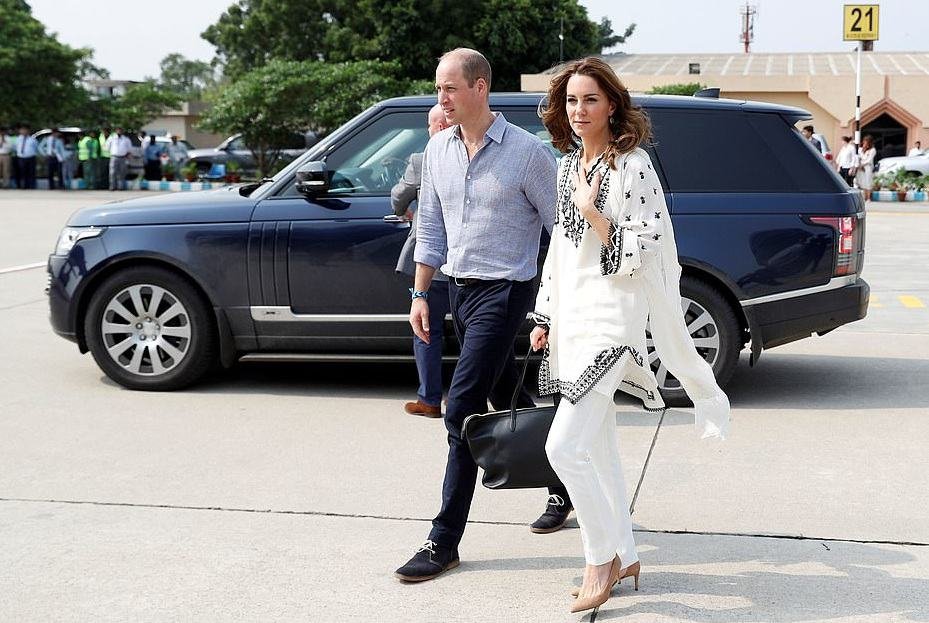
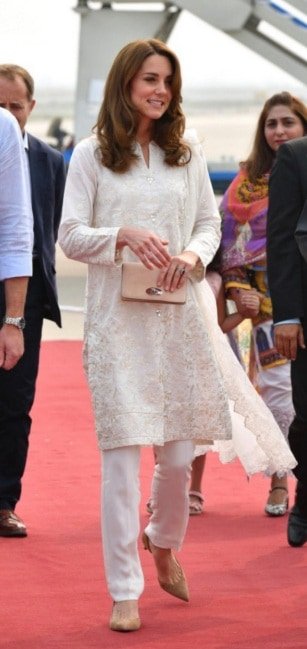
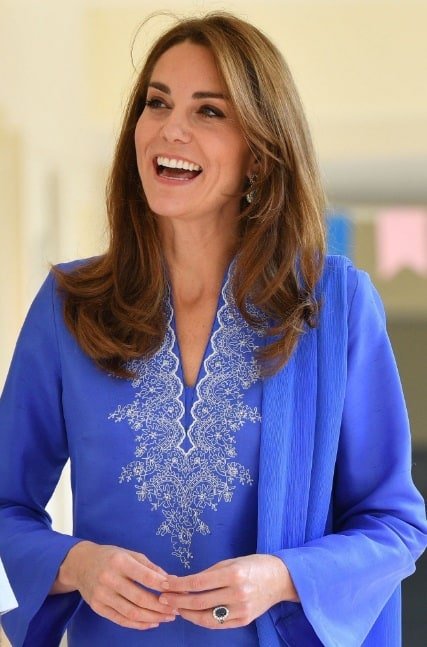
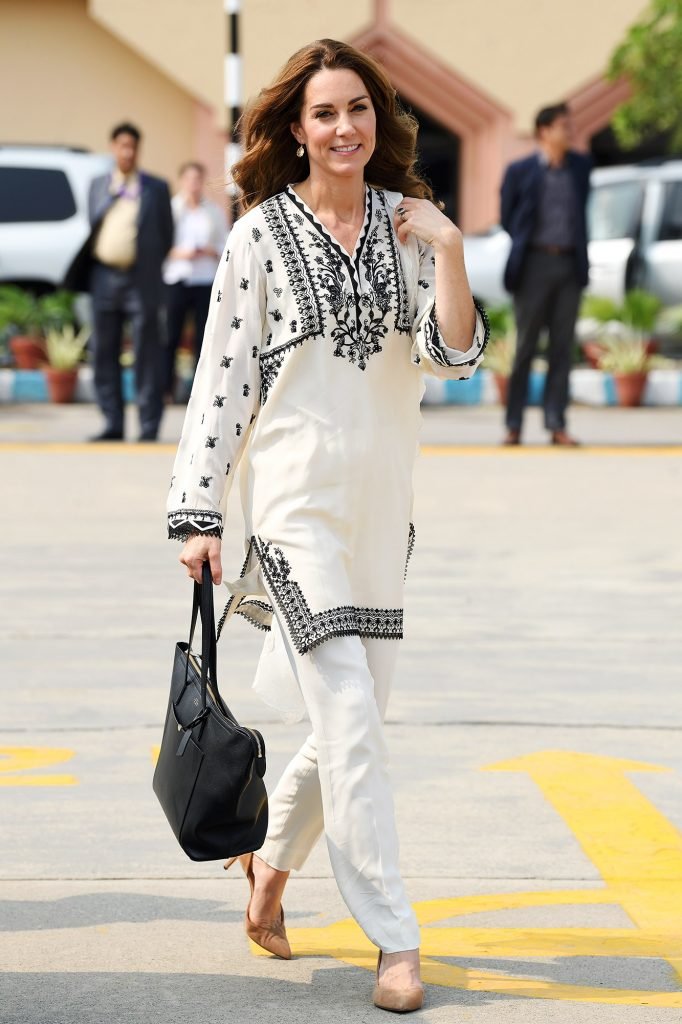
The Royals tour of Pakistan was definitely one of the highlights of the year and the Princess’ wardrobe was the cherry on top. Duchess Kate stole the show with a number of traditional dresses from local designers including Maheen Khan, Gul Ahmed and Khadija Shah.
Gul Ahmed
Maheen Khan
Élan
And it appears that the Duchess was very pleased with her wardrobe because Khadija of Élan got a signed thank you note from Kate herself.
Khadija shared a picture of the letter on Twitter and expressed her happiness over receiving it.
Along with appreciating the designer for her work, the letter also said: “Pakistan really is a wonderful country, which we both thoroughly enjoyed visiting and hope to return one day soon.”
Kate had worn a cream and black embroidered outfit by the designer label as she boarded a plane back to Islamabad after an unexpected storm had disrupted their schedule and forced the royal couple to spend the night in Lahore.
Kate wore the same outfit to a private visit the royal couple undertook to the SOS Village in Lahore.
On the final day of their visit to Pakistan, The Duke and Duchess of Cambridge returned to @SOSChildrenPK, which provides a home and family structure to over 150 young girls and boys in Lahore #RoyalVisitPakistanpic.twitter.com/UhDqjzE9Et
— The Prince and Princess of Wales (@KensingtonRoyal) October 19, 2019
Kate and William visited Pakistan for the first time in October. Their five-day tour had a jam packed schedule which included visits to Lahore, Islamabad and Chitral.