Category: Uncategorized

  • Mayor of Karachi lambasted on social media following Karachi rains

    Mayor of Karachi lambasted on social media following Karachi rains

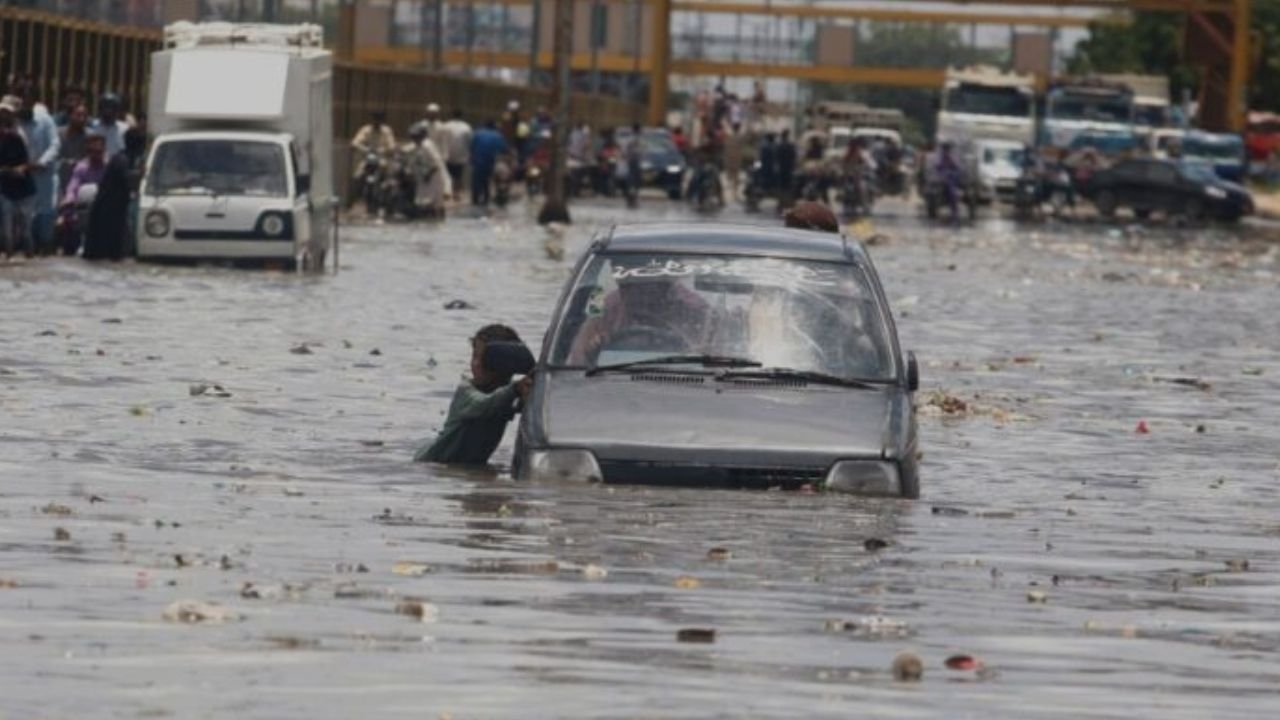
    The recent rains in Karachi have sparked heavy criticism of the city’s governance on social media.

    With the main arteries blocked following the rain on Saturday, the city has been flooded while movement has been disrupted.

    Karachi’s mayor Murtaza Wahab of the PPP is under fire on social media, especially now that the elections are around the corner.

  • Gold price in Pakistan falls by Rs1,200 per tola, breaking winning streak

    Gold price in Pakistan falls by Rs1,200 per tola, breaking winning streak

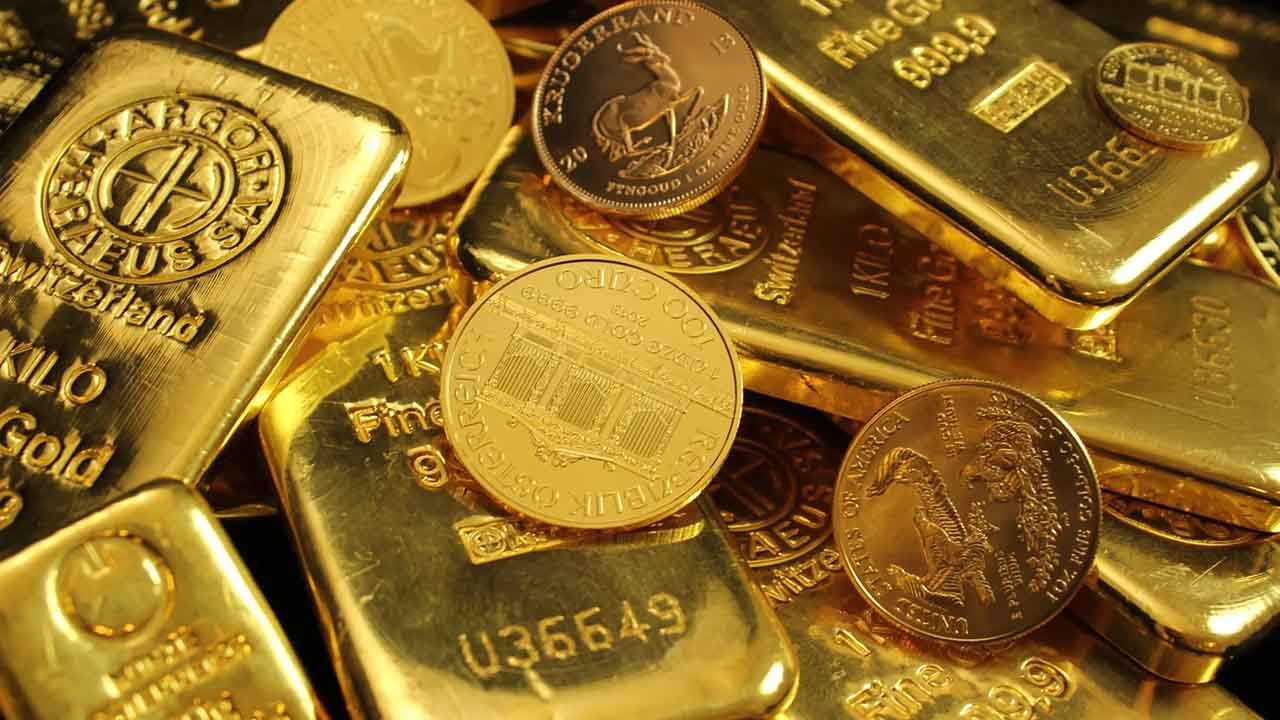
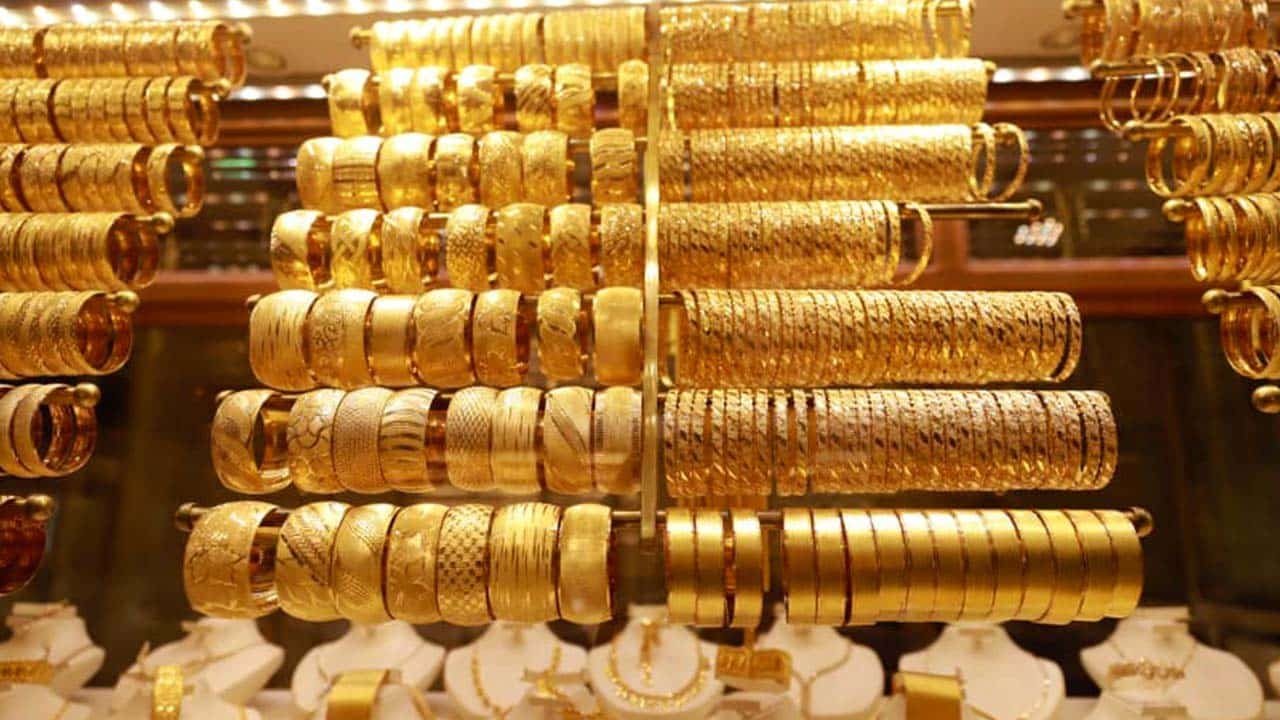
    In a reversal from its recent gains, gold prices in Pakistan opened the new week in the red, witnessing a decline of Rs1,200 per tola for 24-karat gold, bringing it to Rs214,800 on Monday.

    The Karachi Sarafa Association reported a decrease of Rs1,029 in the 10-gramme 24-karat gold, settling at  184,156. The 10-gramme 22-karat gold closed at Rs168,810.

    This comes after a notable surge last week, where gold prices rose by Rs2,100 per tola due to an upswing in international prices. Contrary to gold, silver prices remained steady in the domestic market, with 24-karat silver selling at Rs2,600 per tola and Rs2,229.08 per 10-gramme.

    The international context reveals a 0.8 per cent drop in spot gold during today’s early trade session, amounting to $16.18.

    This decline is attributed to a rise in US Treasury yields and the dollar, fueled by diminished expectations of a rate cut. Federal Reserve Chair Jerome Powell dismissed the idea of lowering interest rates in the spring, expressing confidence in inflation returning to the 2 per cent target, according to Reuters.

    Adding to the pressure on domestic gold prices is the Pakistani rupee’s continued success against the US dollar. As the PKR maintains its positive trajectory, it further contributes to the challenges faced by the domestic gold market.

  • Hockey Federation employees unpaid since six months

    Hockey Federation employees unpaid since six months

    Pakistan Hockey Federation (PHF) employees have not been paid salaries since six months.

    According to Geo sources, employees of the Lahore headquarters have demanded that they be paid dues soon.

    PHF sources say that sick employees do not have money for medical treatment, including a PHF employee who suffers from heart disease.

    According to sources, the issue of due salaries of senior and junior players is also pending. Captain Imad Shakeel Butt demanded payment of delays after participating in the Olympics qualifying round, but funds have not been released to PHF by the government. A funds and assignment account is yet to be opened.

    According to PHF sources, one month’s salary is in arrears in the current cycle, the remaining five months’ arrears are from the previous cycle. About eight crore rupees is pending.

    The current administration had closed the accounts of the federation in the last week of December due to which it is now necessary to open an assignment account.

  • Electioneering in Sindh – II

    Electioneering in Sindh – II

    In the second part of our series on electioneering in Sindh, we will discuss Shaheed Benazirabad and Mirpur Khas divisions. Shaheed Benazir division, formerly known as Nawabshah, comprises Naushahro Feroze, Shaheed Benazirabad and Sanghar districts. It has six National Assembly (NA) and 13 provincial assembly (PA) seats. As per the latest delimitations, one of its districts – Sanghar – has lost one NA and one PA seat. While Mirpurkhas division comprising Mirpurkhas, Umerkot and Thar district has five NA and 11 PA seats. Former president Asif Ali Zardari and his elder sister Azra Pechuho, former federal ministers Asghar Shah, Ghulam Murtaza Jatoi, Shazia Marri, Nawab Yousuf Talpur, and former chief minister of Sindh Arbab Ghulam Rahim are testing their luck in these divisions. Let us look at it in some detail.

    There are two National Assembly seats in district Naushahro Feroze. On NA 205 Naushahro Feroze-I, PPP has fielded the winner of 2018 elections Syed Abrar Ali Shah. Among 17 aspirants, his main rival is PML-N’s Syed Asghar Ali Shah. Although PPP candidates may feel the heat from voters over his performance during the last five years, Abrar Shah still seems set to win. In NA 206 Naushahro Feroze-II, 16 candidates are in the race, but the main contest is between GDA’s Ghulam Murtaza Jatoi and PPP’s Zulfiqar Behan. Jatoi lost to Behan in 2018 by a meager difference of 6,000 votes, so he will work hard to reclaim the seat. We may see an interesting contest on this seat. In four provincial assembly seats allotted to this district, a tough contest is expected on PS 34 NF-III and PS 35 NF-IV between GDA’s Shah Nawaz Jatoi and PPP’s Mumtaz Chandio (he was winner in 2018) and GDA’s Masroor Jatoi (he has returned to electoral politics after more than a decade) and PPP’s Zia Lanjar respectively. In 2018 PS 35, which was then PS 36, GDA’s Arif Mustafa Jatoi won. The margin of victory was very thin in both constituencies. On the remaining two PA seats, the opposing candidate will show some resistance but conditions are favourable for PPP candidates.

    Asif Ali Zardari is facing 12 candidates on NA 207 Shaheed Benazirabad-I. His main rival is Sardar Shaer Mohammad Rind, who is running as an independent candidate with the backing of GDA, JUI-F and PML-N. Here, a repetition of 2018 results is predicted. On NA 208 Shaheed Benzairabad-II, Syed Zainulabdin Shah known as Zain Shah, grandson of GM Syed, of GDA is up against PPP’s Syed Ghulam Mustafa Shah and 17 other candidates. Since 2002 elections, PPP’s Ghulam Mustafa Shah has stood victorious on this seat, and he is poised to repeat the same. There is smooth sailing for PPP candidates Azra Pechuho and Javed Iqbal Arain on PS 36 and 37 Shaheed Benazirabad I & II respectively, however, stiff competition is expected by Syed Zain Shah on PS 38 Shaheed Benaziradad-III against PPP’s Ghulam Qadir Chadio. Many anti-PPP Sindhi nationalists want to see Zain Shah in the assembly. It is interesting to note that Mr. Chandio has been returning to the Sindh Assembly since 2002. On PS 29 Shaheed Benazirabad-IV, PPP’s Bahadur Dahri will face some resistance from his rival GDA’s Arif Niaz Arain mainly due to the candidacy of Mohammad Ismail Dahri, who belongs to the same community and party.

    Although Sanghar is a stronghold of the followers of Pir Pagara, PPP candidates swept all three NA seats in 2018. However due to the decrease in seats after delimitation, the situation seems difficult for PPP candidates, particularly on NA 209 Sanghar-I, where 17 candidates are vying for victory. GDA’s Mohammad Khan Junejo and PPP’s Shazia Marri are real competitors on this seat. In 2018, Shazia Marri won from NA 216 Sanghar-II by getting 80,000 votes while her close rival GDA’s Kishanchand Parwani got 70,000 votes. She lost to PML-F’s Sadaruddin Shah in 2013 elections, while she won from the same constituency in the bi-elections. Due to decrease in NA seats in district Sanghar, Marri is facing a tough competition. On the other NA seat 201 Sanghar-II, GDA’s Saira Bano is challenging PPP’s Salahuddin Junejo. Although Junejo belongs to this constituency and Saira Bano is an outsider and he has a little edge over his rival, still he has to work hard for victory on February 8. On provincial assembly seats PS 40 Sanghar-I, a close contest is expected between GDA’s Abdul Qudoos Rajar and PPP’s Naveed Dero, while on PS 41 Sanghar-II, it will be surprising if PPP’s Ali Hasan Hingoro beats GDA’s Qazi Shamsuddin. Although PPP candidates Jam Shabbir Ali, Paras Dero and Shahid Thaheem have a little edge over their rivals Jam Nafees, Niaz Hussain and Mohammad Bux of GDA on PS 42, 43, and 44 Sanghar-III, IV and V, but anything can happen on February 8, 2024.

  • ECP ready to conduct polls on February 8, despite security challenges

    ECP ready to conduct polls on February 8, despite security challenges

    The Election Commission of Pakistan (ECP) has declared on Thursday that it is determined and ready to conduct upcoming elections on February 8 as per schedule, despite facing security challenges in Khyber Pakhtunkhwa and Balochistan provinces.

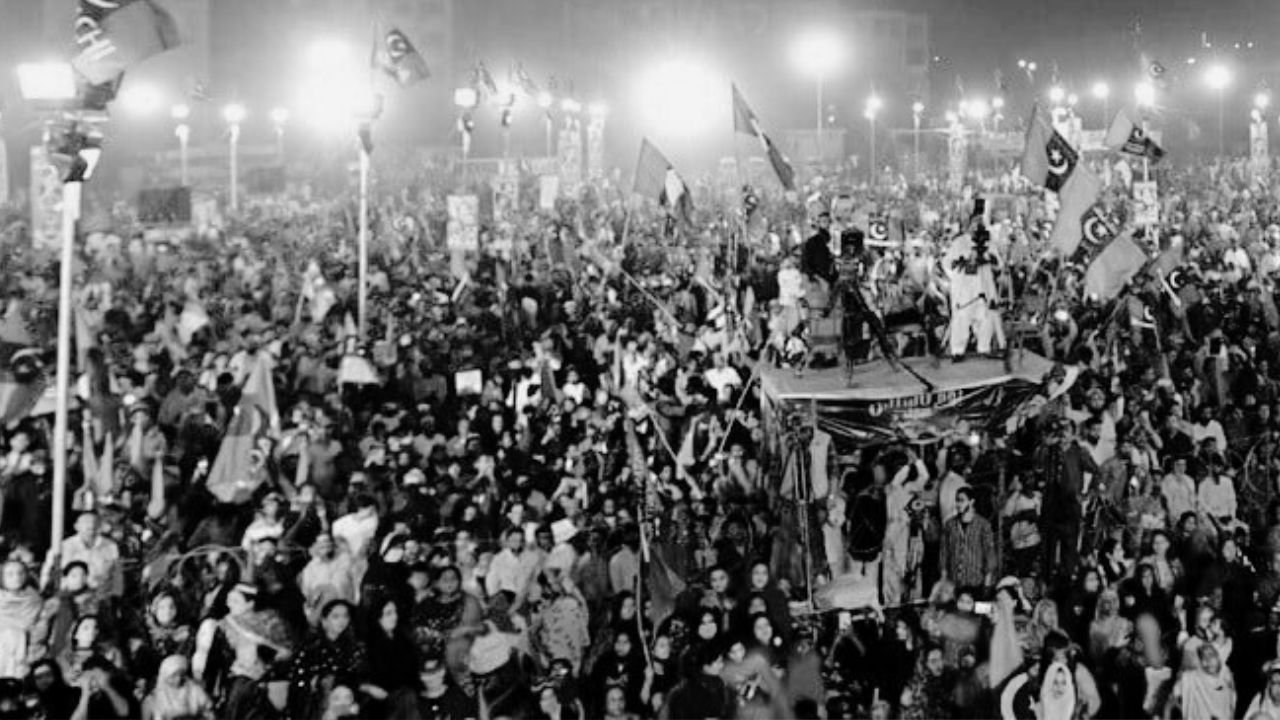
    With only one week remaining until the February 8 polls, election preparations and campaigns are in full swing. However, the country is grappling with a series of violent incidents that have led to multiple deaths, particularly at political party rallies in the two provinces most affected by terrorism.

    Law enforcers have tightened security across the country to maintain law and order during the upcoming general elections.

    “The February 8 polls will take place on time. Though the security challenges exist but the election commission is fully ready [to hold the elections], and with the help of Law Enforcement Agencies (LEAs) and Pakistan Army, the elements involved in hindering the electoral process and disrupting security situation will be dealt strictly,” Chief Election Commissioner (CEC) Sikandar Sultan Raja said during the ECP’s security meeting.

    On Thursday evening, the electoral body held an important meeting on the worsening law and order situation in two provinces.

    After the meeting ended, the ECP released a statement saying that the CEC voiced concerns about the worsening security situation in KP and Balochistan. However, he emphasised that the electoral process will continue despite the challenges.

  • Gold price soars to Rs216,300 per tola with Rs800 increase in Pakistan

    Gold price soars to Rs216,300 per tola with Rs800 increase in Pakistan

    In alignment with the surge in the global market, gold rates in Pakistan experienced an upward trajectory on Thursday.

    The precious metal, often viewed as a barometer for economic sentiment, reached Rs216,300 per tola, marking an increase of Rs800 over the course of the day.

    As reported by the All Pakistan Gems and Jewellers Sarafa Association (APGJSA), the 10-gramme gold bar was traded at Rs185,442 following a notable rise of Rs686.

    This shift in prices follows a contrasting trend from the preceding day, when gold prices in Pakistan had seen a decline of Rs600 per tola.

    The international gold rate exhibited a similar positive movement on Thursday, reaching $2,060 per ounce with a $20 premium.

    This uptick of $5 in the global market, as highlighted by APGJSA, contributed to the buoyancy in the local gold prices.

    Conversely, silver rates remained steadfast at Rs2,600 per tola, maintaining stability in the precious metals market.

    This fluctuation in gold prices can be attributed to the intricate interplay of various global economic factors.

    Analysts suggest that investors and traders should closely monitor these trends to make informed decisions in the ever-evolving market.

  • Bushra Bibi surrenders herself at Adiala jail for arrest

    Bushra Bibi surrenders herself at Adiala jail for arrest

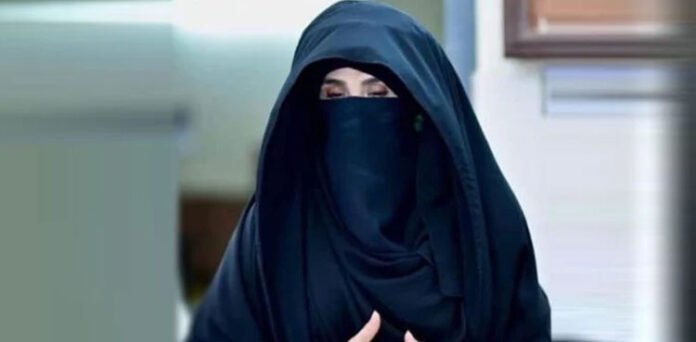
    After being sentenced by the Accountability Court in the Toshakhana case, former First Lady Bushra Bibi reached the jail to surrender herself for arrest.

    The Accountability Court has earlier todat sentenced Pakistan Tehreek-e-Insaf (PTI) founder Imran Khan and his wife to 14 years imprisonment with hard labor in the Toshakhana case, while the court has also disqualified Imran Khan for 10 years.

    According to sources in Geo, Bushra Bibi is currently sitting in the office of the Deputy Superintendent of Jail, and she has not been arrested yet.

    A day earlier, Imran Khan and senior PTI leader Shah Mahmood Qureshi were sentenced to 10 years imprisonment each in the cipher case.

    Judge Abual Hasnat Muhammad Zulqarnain heard the cipher case and delivered the verdict at the Adiala Jail in Rawalpindi.

  • Actions speak louder than symbols

    Actions speak louder than symbols

    Elections are just around the corner. There has been a lot of debate and discussion brimming with political hubris in the months running up to it. As usual, nothing of substantial interest to the people – no concrete plans to try to put the economy on a path to recovery; no public schemes that can mature in the months after the election; nothing for an ordinary Pakistan.

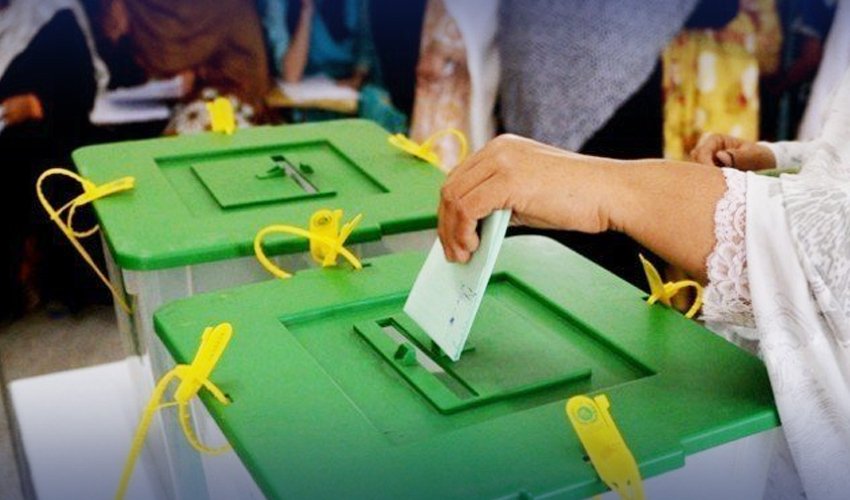
    For months, the political arena has been abuzz with hours of ‘political debate’ on non-issues and as already mentioned, nothing to do with the people of Pakistan. Political parties have focused on everything and anything – as usual – that is important for their leaders. The most important discussion all through December 2023 was on the allocation of political symbols, with some parties afraid their ‘traditional’ symbols would be given to someone else. Can you blame them? These symbols are the only way their voters can identify them on the ballot paper, as a majority are either politically blind or illiterate. The political symbols are like a book with pictures that help everyone to their conclusions about the story regardless of the accompanying words.

    Most parties know the way to their followers’ votes is through their emotions rather than intellect. This helps them since most have not done anything for the people that can be used to woo the voter. Political workers have a special affinity with their party’s symbol, and it works. Many political parties lack substantial projects or even indications that they even attempted to begin any people-friendly projects; therefore, it is better to rile up emotions than logic. Logical voters ask too many questions. Hence the importance of political symbols.

    Promises made during elections are old ones- regurgitated and patched up – echoing for decades without any action to back them up. The only way voters can determine who to vote for is to study a party’s manifestos past and present, which should have been released weeks or months before the polling.

    The main Pakistani political parties launched their manifestos in the last week of January 2024 for elections to be held on February 8, 2024. There is no explanation or apology for this delay, maybe because the parties are aware of how their voters think and behave – at least devoted loyalists will believe anything they promise as a tradition of Pakistani politics.

    They have not impressed critics who commented that the manifestos “lack substance and fail to address the pressing realities of Pakistan”, adding that they rely on promises without offering concrete implementation plans. Others commented that “some have promised much, but most have not bothered at all”.

    Why isn’t this a surprise?

    The main reason for this is that parties know their voters won’t demand to see manifestos – past and present – which allows them space to play as they like.

    Even though the political parties have not given their voters much time – less than 10 days – it wouldn’t hurt for people to do a comparative study of these manifestos with past ones of not only their own party but the others as well.

    A manifesto is an extremely important document that informs voters what to expect from someone they elect to run the country for many years. It should be the first thing to be launched and made available to the public. It is the resume of the party vying for the reins of the country.

    People should not only question parties about what they have planned to make the public’s life better and hold governments accountable throughout their tenure on the promises they had made in their manifesto.

    They should ask what policies and plans has the government made to shield people from miseries; what they planned to stop people from murdering their children and partners, and committing suicide; to provide them employment in the country so that they don’t fall prey to human traffickers; to protect the rights of vulnerable groups like religious minorities; allocating funds to provide basic health and education.

    But this is too much to ask. Voters are indifferent, which is quite dangerous for society and the country. The only beneficiaries are those in power.

    However, it would make an interesting study to see why there is so much public indifference. One reason for this could be the unnatural public devotion to political leaders, some of whom have become demigods. Devotees flock around them regardless of their flaws. It is almost as if they are members of a cult – a political cult. They follow their leader with blank minds, no queries, or interests of their own, believing the mere presence of the leader will solve everything.

    This is not a new phenomenon in Pakistan or global politics, political cult behaviour takes root over years, weakening a conscious society and forcing it to stop asking questions. It has also damaged the political process and democracy itself.

    Like other cults political cults revolve around a personality and their agenda, with followers believing everything and anything, even if it is detrimental to the very structure of society.

    Commenting on the political cult behaviour, Bethany Burum, a research scientist in psychology who teaches a Harvard course on cult behaviour, said in an interview (The Harvard Gazette):

    “Cults manage to shift people’s beliefs rapidly away from the broader society and away from the beliefs they had before they joined. The second thing I emphasize is that cult members act against their own interests and their families’ interests quite strikingly.”

    Pakistan’s political history is a good example cult politics throughout the decades – one person calling the shots devoutly followed by thousands of people from the entire social spectrum and different backgrounds.

    The cult followers don’t care about the larger consequences that directly affect their lives, all they care about are the leader’s words and promises that hold an almost divine value for them. If their leader fails to fulfill a promise, the devotees blame the failure on other forces because their political (cult) leader cannot do wrong.

    And it doesn’t help that the political (cult) leaders provide quick fixes that are temporary but enough to reinforce their powers among the followers.

    Unfortunately, decades of political cults in Pakistan have done nothing to improve the society and bring prosperity to the people. It has only damaged the social psyche and ingrained hopelessness in the people forcing them to wait for the next and ‘real’ messiah. And begin following anyone who promises to break the status quo but never intended to do so.

    Pakistani voters seem to have reached a certain level of complacency that allows them to tolerate the superficial political claims from inefficient people running the country in the name of politics. They rather watch an argument around the allocation of political symbols than worry about what their leader(s) has promised them. It seems they rather believe in miracles than expect change, as that has never really worked out for them.

    It will take decades for the voter to understand the importance of the written manifesto and that actions speak louder than political symbols.
  • Gold price surges by Rs700 per tola, reaching Rs216,100 in domestic market

    Gold price surges by Rs700 per tola, reaching Rs216,100 in domestic market

    The domestic bullion market experienced an upswing on Tuesday as the price of 24-karat gold surged by Rs700 per tola, reaching Rs216,100.

    This price hike was reported by the Karachi Sarafa Association, which also noted a Rs600 increase in the 10-gramme 24-karat gold, now standing at Rs185,271. The 10-gramme 22-karat gold was priced at Rs169,832.

    In contrast, silver prices remained stable in the domestic market, with 24-karat silver being sold at Rs2,600 per tola and Rs2,229.08 per 10-gramme.

    The sudden spike in domestic gold prices can be attributed to the rise in international prices. Currently, international spot gold is trading at $2,039.598, marking a 0.24 per cent increase compared to the previous session’s closing.

    Last week, we witnessed the second consecutive weekly loss in the international gold market due to diminishing expectations of a rate cut. However, the recent escalation of tensions in the Middle East has triggered a surge in the demand for safe-haven assets, particularly gold, signalling a bullish trend.

    Despite the persistent pressure on domestic gold caused by the continuous strengthening of the Pakistani Rupee (PKR), the market dynamics shifted due to the sudden upturn in international prices.

    The impact of the PKR’s strength was outweighed by the growing appeal of gold in the wake of geopolitical uncertainties.

    Investors and analysts are closely monitoring the evolving situation both domestically and internationally as they assess the potential impacts on precious metal markets.

    The fluctuating trends in gold prices highlight the intricate relationship between global events and their influence on the financial landscape.

  • Pakistani rupee appreciates by 9.32 paisa against US dollar

    Pakistani rupee appreciates by 9.32 paisa against US dollar

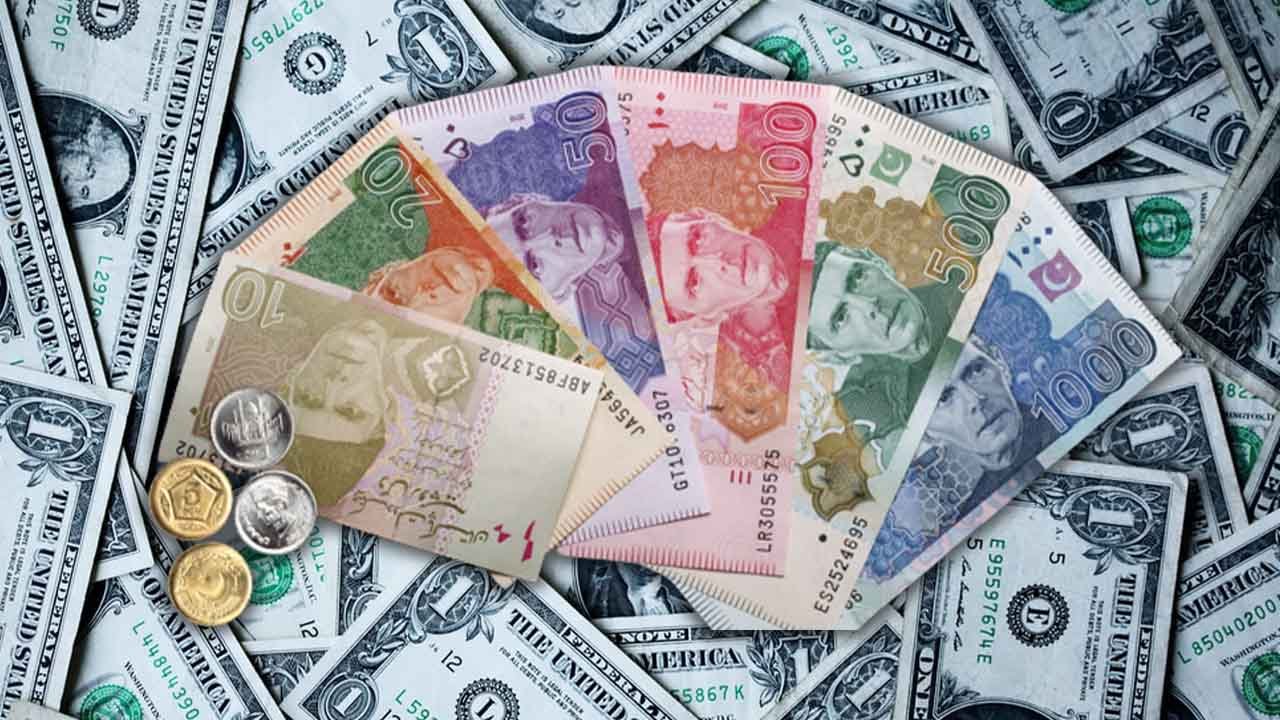
    In the latest interbank session on Tuesday, the Pakistani rupee (PKR) displayed resilience, appreciating by 9.32 paisa against the US dollar. The closing rate settled at PKR 279.55, marking a positive shift from the previous day’s closing at PKR 279.64 per USD.

    During the trading day, the local currency experienced an intraday high (bid) of Rs279.66 and a low (ask) of Rs279.6. In the open market, exchange companies quoted the dollar at Rs278.71 for buying and Rs280.86 for selling.

    In a significant development, the central bank opted to maintain the policy rate at 22 per cent, a decision unchanged for the fifth consecutive meeting. This decision is amidst the Pakistani rupee’s consistent upward momentum, celebrating its eleventh consecutive weekly victory against the US dollar.

    Against other major currencies, the PKR demonstrated strength. It gained 29.66 paisa against the euro, closing at 302.68 compared to the previous value of 302.98. The British Pound became more affordable by 53.78 paisa, closing at 354.86 compared to 355.4 from the previous day.

    The Swiss Franc witnessed gains of 45.64 paisa, closing at 324.6 compared to 324.15 from the previous session.

    However, against the Japanese yen, the PKR experienced a marginal loss of 0.6 paisa, closing at 1.898 versus 1.892 a day ago. The Chinese Yuan, on the other hand, gained 0.5 paisa, closing at 38.9514 against 38.9464 from the previous session.

    The Saudi Riyal closed at 74.54 with a loss of 2.58 paisa from its value of 74.57 a day ago, while the U.A.E. Dirham decreased in value by 2.54 paisa from 76.136 a day ago to 76.111.

    Reflecting on the broader financial landscape, during the current financial year, the PKR has appreciated against the dollar by 6.44 rupees, or 2.3 per cent. Meanwhile, the current calendar year has witnessed the PKR appreciate by 2.31 rupees, or 0.83 per cent.

    In the money market, the benchmark 6-month Karachi Interbank bid and offer rates experienced a modest increase of 13 basis points, reaching 20.58 per cent and 20.83 per cent, respectively.