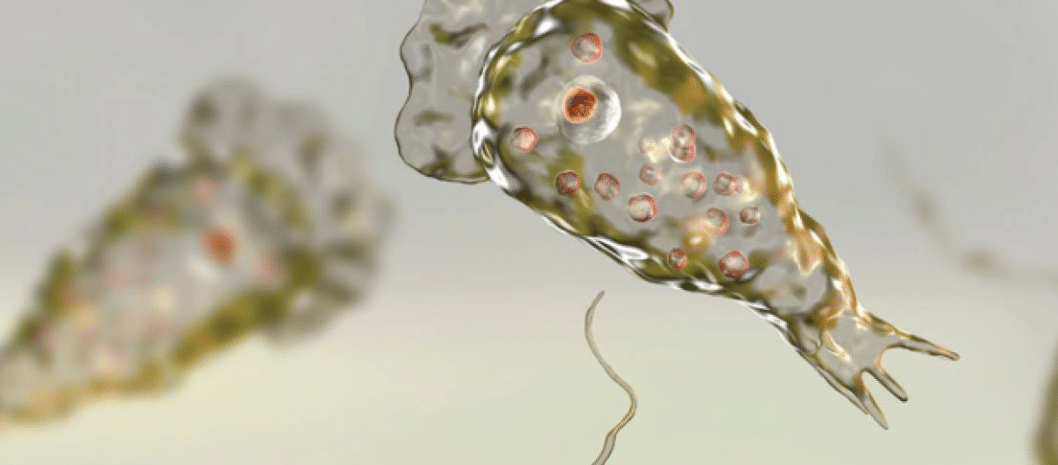
A concerning development has emerged in Lahore as the first suspected case of brain-eating amoeba, known as Naegleria Fowleri, has been reported in the city on Tuesday.
DAWN has said that reports from a private laboratory revealed that a young patient has possibly tested positive for Naegleria. The patient was mmediately transferred to Services Hospital for isolation and further investigations.
The lab’s report stated, “Amoeboid movement observed, suggesting the possibility of Naegleria fowleri,” and promptly notified the management of the government-run Services Hospital about the results.
The news has sparked alarm among the public and health authorities alike.
Medical experts have identified Naegleria fowleri as a free-living amoeba that causes primary amebic meningoencephalitis (PAM), a disease affecting the central nervous system.
The Medical Superintendent of the hospital said the patient had been experiencing symptoms such as headache and fever since the past four days. The patient’s medical history is currently under investigation to confirm the Naegleria case, he added.
A team of experienced medical professionals has been assigned to the patient’s treatment, while separate investigations have been initiated by the health department’s teams.
It was further reported that a group of public health experts from the Lahore District Health Authority (DHA) visited Services Hospital and found the patient unconscious.
The DHA team also visited the patient’s residence in Ichhra, where the patient’s family informed the doctors that he had recently spent time with friends in the DHA Lahore. They also clarified that the patient had not visited Karachi, where Naegleria cases have recently been reported.
The DHA has formed additional teams tasked with inspecting all swimming pools and sources of clean drinking water in the city.
In order to reduce the risk of contracting this highly infectious amoeba, the official recommended that the public use chlorinated water for domestic purposes. They also urge parents to take preventive measures and ensure the safety of their children and family members by avoiding swimming pools that have not been properly chlorinated.
Leave a Reply