Blog

  • Court declares Imran-Bushra marriage case admissible

    Court declares Imran-Bushra marriage case admissible

    Additional District and Session Judge (ADSJ), Islamabad, Muhammad Azam Khan, has on Thursday declared a case pertaining to the alleged illegal marriage of Chairman Pakistan Tehreek-e-Insaf (PTI) Imran Khan with Bushra Bibi during iddat admissible.

    The judge has remanded back the case by dismissing the civil court’s verdict. Earlier, the civil court had declared the case of illegal marriage of the former Prime Minister inadmissible.

    The petitioner, Muhammad Hanif, claimed that Bushra Bibi got divorced in November 2017 and married Imran Khan on January 1, 2018, which means that her Iddat period had not ended, “which is against the Sharia and Muslim norms.”

    Muhammad Hanif also submitted the statements of Mufti Muhammad Saeed, who conducted the marriage between Imran Khan and Bushra Bibi, and Auwn Chaudary, a former close friend of Imran Khan. Auwn Chaudhary was also one of the witnesses at the wedding.

    The petitioner said that Bushra Bibi moved to Islamabad soon after their nikah, which is the reason for filing a case in Islamabad.

    After the completion of arguments, the ADSJ declared the case admissible and returned it to civil court for hearing.

  • ‘College Gate’ hits TV screens with mixed reviews

    ‘College Gate’ hits TV screens with mixed reviews

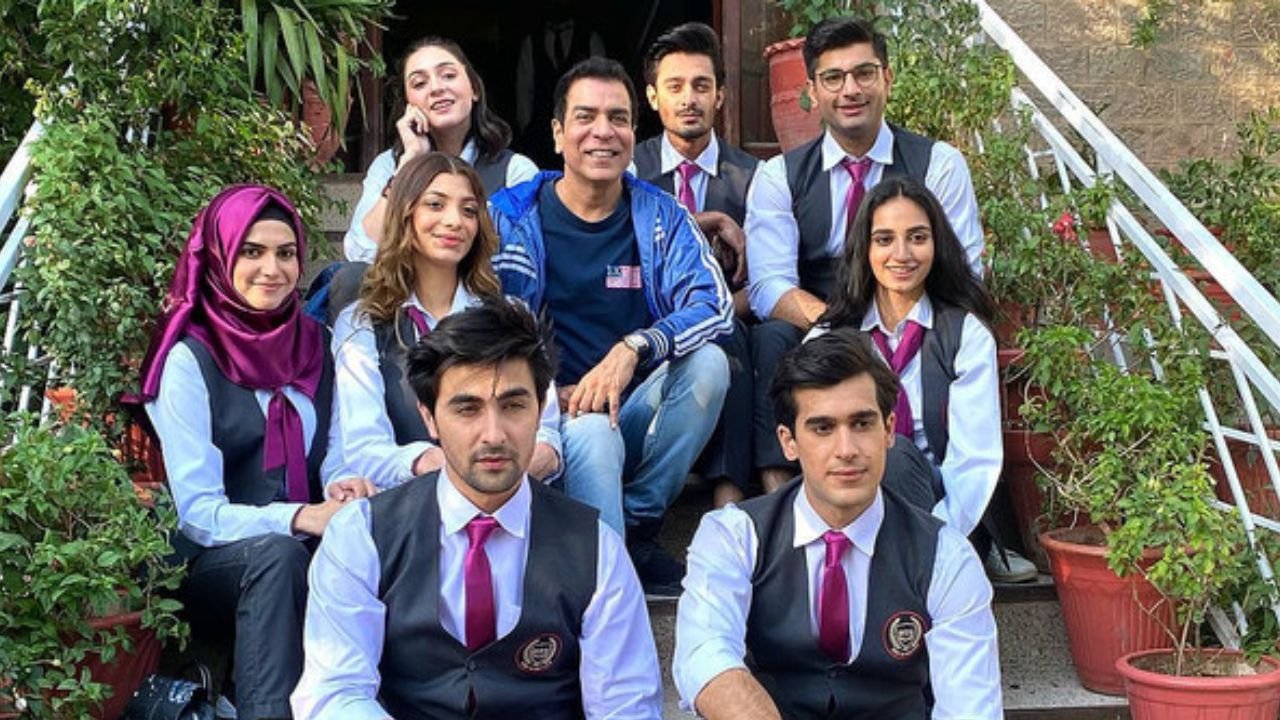
    Green Entertainment rolled out a list of its anticipated dramas this week, including College Gate, an exploration of the lives of six students as they tackle bullying, financial independence, career dreams and pressure to step into adulthood. The cast includes a list of newcomers like Mamia Shajaffer, Khaqan Shahnawaz and Zarrar Khan.

    The first two episodes, where we see the students stepping into a new phase of their lives, debuted this week. We see the main leads struggling to follow dreams to become a singer, dealing with bullying or drug abuse.

    Social media users have mixed reviews about the episodes, with some applauding the show for focusing on the lives of teenagers and taking a break from saas-bahu dramas, while others felt that the casting choices could have been different.

    Some users found the episodes to be engaging for tackling issues only teenagers were dealing with.

    Many felt that the script was similar to the web series ‘Midsummer Chaos’ or Netflix shows like Elite.

    Others pointed out that the actors playing the characters could not pass off as teenagers, stressing that a more age appropriate cast should have been selected rather than actors in their 30s.

  • Dukaan CEO lays off 90% of his support staff in favour of AI chatbot

    Dukaan CEO lays off 90% of his support staff in favour of AI chatbot

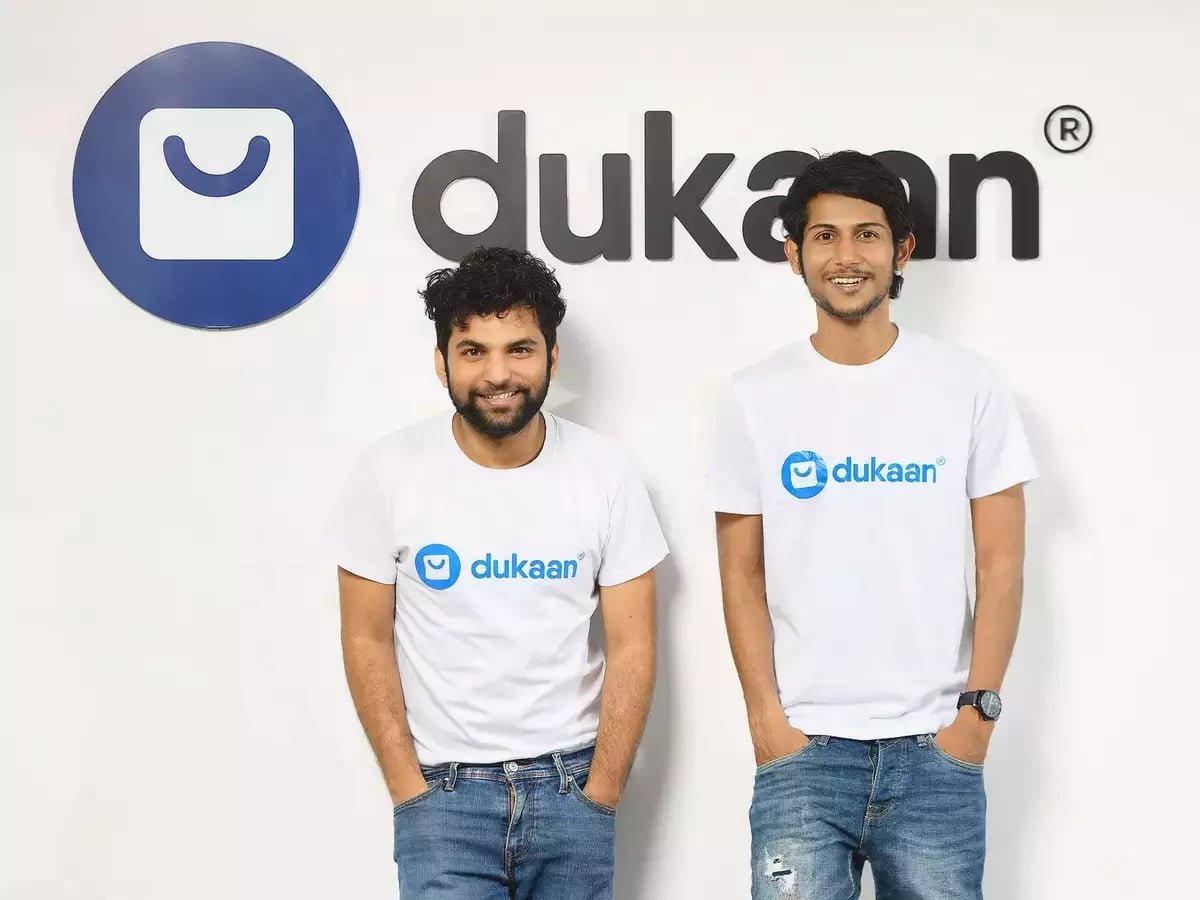
    Suumit Shah, founder and CEO of Bangalore-based e-commerce startup Dukaan, announced via his Twitter account that he has laid off 90% of his customer support staff in favour of using an AI chatbot. 

    The bot was built by one of the firm’s data scientists, and according to Shah was able to respond to initial queries instantly, compared to the average staff time of one minute and 44 seconds.

    In his tweet, Shah admitted that the layoffs were “tough, but necessary”, explaining that given the state of the economy, startups are prioritising “profitability”.  

    Customer Support has apparently been a long-time struggle for Dukaan. In a conversation with CNN, Shah said that the company had cut the cost of its customer support function by 85% after introducing AI technology. He reasoned that this part of the business had been problematic for some time, with delayed responses and limited availability of staff at critical times, among other issues.

    That’s what prompted Shah to come up with the idea to create a personal AI-assistant for Dukaan, which would answer customer queries instantly, precisely, and from anywhere. Dukaan’s AI-lead Ojasvi Yadav stepped up to the plate.

    According to Shah’s Twitter thread, just a day after the bot was launched, Dukaan’s AI chatbot ‘Lina’ had resolved 200 lives chats and 1400 support tickets. The success of Lina propelled the team to create Dukaan’s new product ‘BOT9.ai’. It is an AI assistant, that can learn the ins-and-outs of a business, and answer customer queries instantly, 24/7. 

    As Shah tweeted, “it’s less magical, sure, but at least it pays the bills!”

    Considering the era of AI we are in now, and the general widespread layoffs by tech giants, Shah’s decision had been met with much criticism. However, Shah continued to justify the layoffs by emphasizing how AI technology can optimise their operations. 

    Moreover, Shah believes that allocating employees’ expertise to areas requiring critical thinking, while relegating routine tasks to AI-powered chatbots, improves efficiency while also allowing for a better allocation of human resources.

    Many Twitter users were enraged at the apparent pride in Shah’s tweets. One user tweeted, “You disrupted the lives of 90% of your support team & you’re celebrating it in public. You also likely destroyed your customer support (disprove with good CSAT for the bot) – all for a basic ChatGPT wrapper. This is a new low even for you.” 

    While the announcement may read as apathetic, it is not surprising that major companies are turning to AI to improve general performance and efficiency in what are considerably quite routine tasks. 

    According to a report from outplacement firm Challenger, Gray & Christmas, which looks at layoffs across every industry, around 5% of May’s job cuts in 2023 were directly related to artificial intelligence. 

    Are you worried AI is going to replace you at work?

  • Critics slam world’s largest cruise ship as a “monstrosity” comparable to Titanic

    Critics slam world’s largest cruise ship as a “monstrosity” comparable to Titanic

    The Icon of the Seas, the world’s largest cruise ship, operated by Royal Caribbean International, has faced heavy criticism from skeptics who liken its upcoming maiden voyage to the ill-fated Titanic, according to The New York Post.

    Royal Caribbean International President and CEO, Michael Bayley, views the ship as a revolutionary advancement in sea travel, positioning it as the ultimate family vacation.

    Set to embark on its first journey in January of next year, the ship has an astounding internal volume of 250,800 gigatonnes (GT), dwarfing the Titanic’s 46,328 GT.

    The vessel boasts an array of features, including seven pools, nine whirlpools, and a record-breaking water park with six slides aptly named “Category 6.” It spans 19 floors, equivalent to the height of a New York City building, accommodating approximately 5,610 passengers and 2,350 crew members.

    While the ship has completed its initial tests, critics argue that its grand scale does not guarantee an improved experience.

    Online commentators have expressed their dismay, labeling the Icon of the Seas a nightmare and comparing it to visions of hell. Despite skepticism, the ship has generated significant attention, with the cheapest ticket for a seven-night cruise priced at $1,851 and the most expensive at $10,864.

    As the vessel’s maiden voyage approaches, opinions remain divided, with some fascinated by the ship’s remarkable features while others view it with intense dread. The ship’s size and ambitious design have ignited a spirited debate about the future of cruising and whether bigger truly means better in the eyes of travelers.

  • Interior Minister takes notice of threats to Hindu community

    Interior Minister takes notice of threats to Hindu community

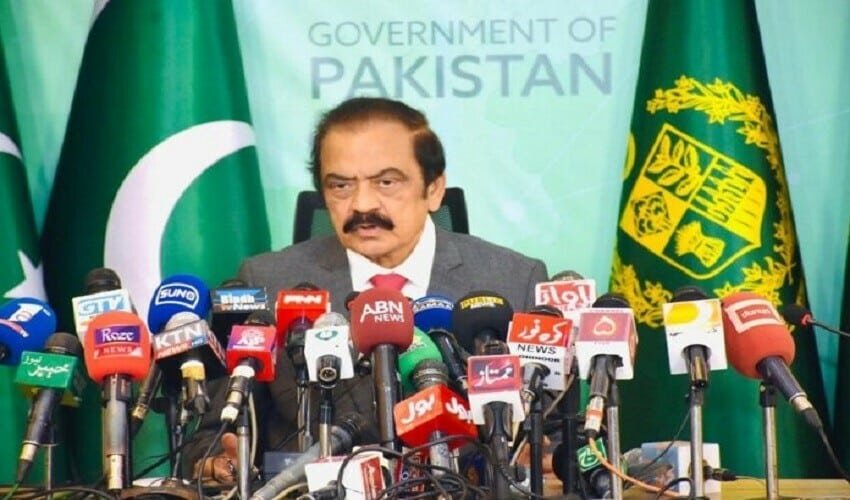
    Interior Minister Rana Sanaullah on Friday took notice of threats to the Hindu community, instructing ministry officials to contact officers of Sindh government.

    Member of the National Assembly (MNA), Kheal Das Kohistani, met Rana Sanaullah and informed him about the recent situation and events in Sindh. In the meeting, it was emphasised to improve protection of the Hindu community.

    The Interior Minister further said that the protection of all religious minorities, including the Hindu community, is the responsibility of the state.

    On the other hand, in the northern districts of Sindh, police have increased the security of Hindu temples. According to police officials, the security has increased after the threats of dacoits for the return of Seema Rind.

    It should be noted that in the beginning of this month, Seema Haider, a Pakistani citizen, reached India with her four children after befriending a Hindu Indian boy on the PUBG game. In interviews given to BBC, Seema has said that she will live in India and not return to Pakistan.

    The highly publicised story led to extremist threats against the Hindu community in Sindh.

  • TW: mentally challenged girl gang-raped by six men in Kasur

    TW: mentally challenged girl gang-raped by six men in Kasur

    On Wednesday, the police in Kasur arrested six men for the brutal gang rape of a mentally challenged teenaged girl found unconscious by her mother in the basement of a private restaurant.

    In the case filed at the Kot Radha Kishan police station, the mother revealed that her daughter had gone out of the house, however, she was later found unconscious, and was rushed to Tehsil Headquarters hospital. After the girl was denied medical treatment, she was taken to Jinnah Hospital, where again she was denied healthcare. Then, the survivor was taken to Services Hospital, where after a medical examination, it was determined that she had been gang raped.

    After the mother questioned locals, it was revealed that two men Sahil and Khalil along with three to four other unidentified men, had taken the girl with them to the basement of a private restaurant where they had gang-raped her.

    After the case was filed, the DPO took speedy action to file a case against main accused Sahil, and arrested him.

    On Wednesday, the police arrested six men for the brutal gang rape of a mentally challenged teenage girl in the basement of a private restaurant and was found unconscious by her mother, according to Express Tribune.

    In the case filed at the Kot Radha Kishan polcie station, the mother revealed that her daughter had gone out and was later found unconscious, and was immediately taken to THQ hospital, where after she was denied medical treatment, was taken to Jinnah Hospital, where again she was denied medical treatment. Then, the survivor was taken to Services Hospital, where after a medical examination it was that she had been gang raped.

    After the mother had questioned the locals, it was revealed that the men Sahil, Khalil and three to four other unidentified men had taken the girl with them to the basement of a private hospital where they had gang-raped her.

    After the case was filed, the DPO took speedy action the main accused Sahil.

  • Federal govt contemplating strict law to counter social media ‘propaganda’

    Federal govt contemplating strict law to counter social media ‘propaganda’

    The outgoing federal government is contemplating strict laws to counter social media disinformation and propaganda, geo.tv had reported.

    The government is mulling amending the 2016 Prevention of Electronic Crimes Act (PECA) so that “fake news targeting the reputation and image of a particular person or group of people, organisation, or other entity will be checked by all available means,” a source told Saleh Zafar.

    The authority of Pakistan Telecommunications Authority (PTA) and Federal Investigation Agency (FIA) will be increased to keep a check on social media, while an ‘e-safety’ law will be introduced to protect official portals.

    The report also claims that a new section will be added to PECA to ensure “stringent” action against culprits. Officials say that FIA is powerless even in instances of fake news.

  • All projects put on hold as Hollywood actors go on strike

    All projects put on hold as Hollywood actors go on strike

    In an unprecedent move, 160,000 Hollywood actors represented by the Screen Actors Guild (SAG) joined writers in strike against Hollywood after negotiations between the union and major studio networks failed.

    Much of Hollywood had shut down in May after writers went on strike, protesting against low pay as studios shifted to streaming, and the incorporation of A.I into writing scripts.

    The demands made by the actors union include fairer working conditions, and protection of actors against digital replicas like A.I and computer generated faces and voices will not be used to replace actors. Another demand was that actors should receive better pay base and residuals- which are payments made to actors in television and films they have starred in.

    During the negotiations, network studios had offered what they called a ‘ground-breaking proposal’ that actors would be asked for consent when their digital replicas would be used in films, while background actors would be scanned and give one day’s pay for their digital image to be used on screen without their consent, which SAG said was unnacceptable:

    “They propose that our background performers should be able to be scanned, get paid for one day’s pay, and their company should own that scan of their image, their likeness, and should be able to use it for the rest of eternity,” the SAG chief negotiator Duncan Crabtree-Ireland said. “If you think that’s a ground-breaking proposal, I suggest you think again.”

    The cast of Christopher Nolan’s ‘Oppenheimer’ walked off the red carpet at the London premiere on Thursday, including A-list actors like Cillian Murphy, Florence Pugh, Emily Blunt and Matt Damon, when the strikes were announced in the US.

    Addressing the strike during a red carpet interview, Damon defended fellow actors who were protesting for studios to provide better pay, sharing that royalty payments are a way for working actors to survive:

    “We got to protect the people who are kind of on the margins. 26,000 bucks a year is what you have to make to get your health insurance. And there are a lot of people (for) who residual payments carry them across that threshold. If those residual payments dry up, so does their healthcare, and that’s absolutely unacceptable.”

    Announcing the SAG-AFTRA strike, President of the union Fran Drescher, called this a sad decision, which will greatly impact both writers and actors.

    “We are the victims here. We are being victimized by a very greedy entity. You are systematically trying to figure out ways to carve us out of what is due us. Shame on you!”

  • Qari arrested for torturing child in Islamabad

    Qari arrested for torturing child in Islamabad

    Police on Friday arrested a madrassa teacher for torturing a child in Islamabad.

    A video of the suspect in which he could be seen torturing a child went viral on social media. Police registered an FIR against him and he was later taken into custody from a madrassa adjacent to the Sector I-10 center.

    The Islamabad Police shared details on Twitter, requesting people to be more mindful and aware of their child’s life and wellbeing after sending them to educational institutions and madrasas.

    “All parents are requested to stay informed about the condition of their kids in educational institutions and madrasas. Call-15 immediately in any such situation,” tweeted Police.

  • Pakistan’s major industrial production drops by 14.37% in May, marking ninth consecutive decline

    Pakistan’s major industrial production drops by 14.37% in May, marking ninth consecutive decline

    Pakistan’s Large-Scale Manufacturing (LSM) sector suffered a substantial year-on-year decline of 14.37 per cent in May, according to data released by the Pakistan Bureau of Statistics.

    This contraction represents the ninth consecutive month of contraction for the country’s major industries during the outgoing fiscal year FY23. The primary cause behind this downturn can be attributed to a slowdown in the production of export-oriented textile and clothing sectors.

    The consequences of this decline in large industries are evident in the form of a significant number of job losses. The reduction in production capacity has unfortunately resulted in numerous individuals becoming unemployed.

    These statistics shed light on the challenges faced by Pakistan’s manufacturing sector and raise concerns about the overall economic performance of the country in the coming months.

    In May, the growth of LSM experienced a decline compared to the same month last year. The decline in April was 21 per cent, which is lower than the decline of 25 per cent in March, 11.6 per cent in February, and 7.9 per cent in January. In December 2022, there was a slight decrease of 3.51 per cent.

    In November 2022, there was a negative growth of 5.49 per cent, while in October 2022, it declined by 7.7 per cent. In September 2022, there was a decrease of 2.27 per cent compared to the same month last year. In August, there was a slight increase of 0.30 per cent after a decline of 1.67 per cent in July, which marked the first month of the current fiscal year.

    Between July and May, LSM also recorded a negative growth of 9.87 per cent on a year-on-year basis.

    In FY22, the LSM expanded by 11.7 per cent year-on-year. The production estimate for LSM industries was based on the new base year of 2015-16.

    During May, the production of 16 sectors shrank, while only four sectors experienced a marginal increase. The textile sector’s production decreased by 25.97 per cent compared to the previous year. The major negative growth was observed in yarn (29.89 per cent) and cloth (17.49 per cent), while nominal growth was reported in the production of other textile products.

    On the positive side, the production of garments grew by 12.86 per cent in May. Its performance remained positive in the first 10 months, except for February when it experienced a decline.

    In the food group, wheat and rice production decreased by 0.36 per cent and starch and its products by 2.15 per cent. However, there was an increase of 39.99 per cent in the production of blended tea, 24.45 per cent in cooking oil, and 23.80 per cent in vegetable ghee.

    In May, petroleum products witnessed a negative growth of 21.85 per cent, primarily due to a decline in the production of petrol and high-speed diesel. Almost all other petroleum products experienced a slowdown, except for jet fuel, kerosene, jute, and batching oil. The auto sector also suffered a 68.60 per cent slump in May, as the production of almost all types of vehicles declined.

    The production of iron and steel decreased by 5.83 per cent in May, mainly due to a decline of 15.09 per cent in billets/ingots, while non-metallic mineral products saw a marginal growth of 0.53 per cent. However, chemical products experienced a negative growth of 15.44 per cent in May compared to the previous year.

    In May, the production of pharmaceutical products decreased by 38.61 per cent, rubber products by 5.81 per cent, and fertilisers by 13.31 per cent compared to the previous year.