Blog

  • ‘The Legend of Maula Jatt’ will NOT be screened in India

    ‘The Legend of Maula Jatt’ will NOT be screened in India

    Pakistan’s blockbuster film ‘The Legend of Maula Jatt’ has been banned in Indian cinemas just before its highly anticipated debut on the country’s screens.

    According to Indian media, superstar Fawad Khan and A-lister Mahira Khan’s blockbuster movie ‘The Legend of Maula Jatt’ was scheduled to be released in theaters in Indian Punjab today, but its release has now been postponed.

    Indian media reported that the film distributor of ‘The Legend of Maula Jatt’ in India and Pakistani, Nadeem Mandviwala, confirmed the news about the postponement of the film’s release and said that the film had been stopped due to a court order.

    Nadeem Mandviwala said, “Unfortunately, the film’s release has been stalled once again, and nothing can be done until the court gives its verdict.”
    Earlier, Hindu extremists in India had also threatened to stop the release of the film.

    Raj Thackeray, head of the Hindu extremist party Maharashtra Navnirman Sena, threatened theater owners in the state of Maharashtra, stating that the film would not be released there under any circumstances.

    ‘The Legend of Maula Jatt’ was released in 2022 and did record-breaking business worldwide.

  • ‘I wrote the song, I didn’t get any credit for it’; Javeria Saud on Ishq Murshid OST

    ‘I wrote the song, I didn’t get any credit for it’; Javeria Saud on Ishq Murshid OST

    The hit drama serial Ishq Murshid has become a huge success on television and YouTube, setting viewership records with its engaging story.

    One of the most impressive parts of the drama was its original soundtrack (OST) which has become very popular among the fans.

    You all know the OST of Ishq Murshid is written and sung by Ahmed Jahanzed, but there is a twist in the tale.

    Recently, Javeria Saud appeared as a guest on Subh Ka Samaa where she claimed that she did not receive credit for writing the song.

    Madeha Naqvi asked her, “Ishq Murshid was written by you as well, right?”

    Javeria replied, “Yes, I wrote the song, I didn’t get any credit for it, they’re friends, and I’ll let people know, sometimes, it’s the blows from friends that make you strong.”

    Reflecting on her experiences, Javeria recalled writing the famous song for Khuda Aur Mohabbat drama.

    “For example, the song from Khuda Aur Mohabbat that I wrote is still being played today. People love it so much that when they produced the next seasons of that drama, they didn’t change the song at all, in any season.”

    The drama Ishq Murshid was written by Abdul Khaliq Khan and directed by Farooq Rind.

  • IMF director says Pakistan’s 24th loan programme could be last if conditions met

    IMF director says Pakistan’s 24th loan programme could be last if conditions met

    Director of the International Monetary Fund’s (IMF) mission for Pakistan, Nathan Porter, has claimed that if the country faithfully follows the IMF’s economic advice, the current programme would be the last for Pakistan.

    Appearing in an interview with Voice of America, the IMF director said that after the economic crisis of 2023, Pakistan’s economy has been improving, which he deemed crucial for the foundation of economic progress.

    Responding to Prime Minister (PM) Shehbaz Sharif’s recent statement declaring that the 24th IMF loan programme would be the last for the country, Nathan Porter said that this could be possible if Pakistan sincerely acted on economic reforms.

    Commenting on Finance Minister Aurangzeb’s statement regarding the tough conditions imposed on Pakistan, the IMF director rejected the claim, adding, “IMF recommended solutions which the concerned country needed to get out of the economic uncertainty.”

    Porter further said the IMF’s stance on Chinese loans to Pakistan was the same as its perspective on the loans of other countries.

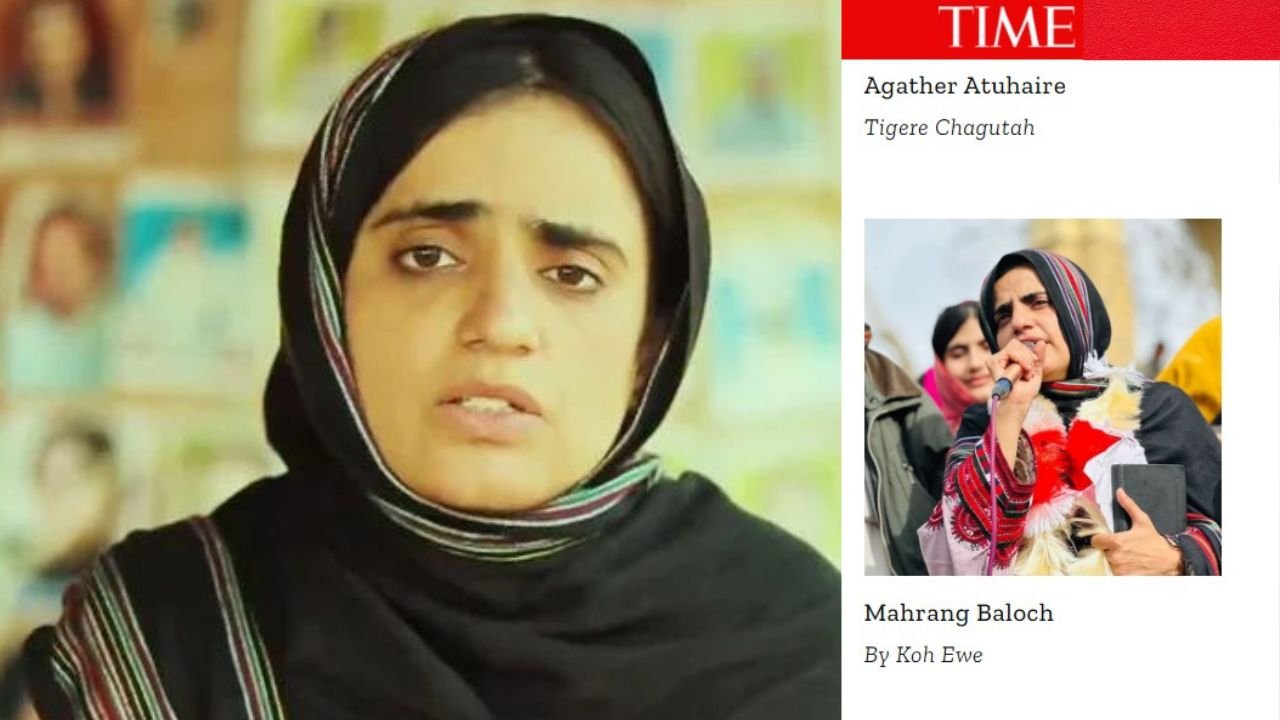
  • Dr. Mahrang Baloch among Time’s 100 Most Influential People of 2024

    Dr. Mahrang Baloch among Time’s 100 Most Influential People of 2024

    Activist and leader of the Baloch Yakjehti Committee, Dr. Mahrang Baloch, has been named in Time magazine’s ‘2024 Time100 Next’ list.

    The list featured her for “advocating peacefully for Baloch rights”. She is one of the 19 advocates Time selected for the list.

    “I am deeply honoured and delighted to be named among the top 100 emerging leaders of the world by TIME,” Dr Mahrang wrote in a Facebook post with a link to the whole list.

    She further added, “I dedicate this recognition to all Baloch women human rights defenders and families of victims of forcefully disappeared people.”

    The Times Magazine’s list recognizes 100 young individuals “who are not waiting long in life to make an impact,” including artists, athletes, and advocates. Dr Mahrang was selected for her peaceful advocacy and “for all the hope she represents.”

    The magazine also honoured her for her leadership in a December 2023 march to Islamabad, where she, along with hundreds of women, marched against extrajudicial kidnappings of Baloch people and demanded “justice for their husbands, sons, and brothers”.

    Dr Mahrang came to the spotlight as a primary school student who spearheaded protests after her father went missing in 2009 from outside a hospital in Karachi.

    At the time, being the eldest of six siblings, she raised her voice and registered her protest by burning her school books in front of Quetta Press Club. Her father’s mutilated body was later found in 2011.

    In December 2023, she led a march and a large sit-in in Islamabad to protest against missing people.

    The Current also named Dr Mahrang Baloch as the Person of the Year in 2023.

    As per a recent report, a total of 197 missing persons cases were reported in the first half of 2024 alone, with most being in Balochistan.

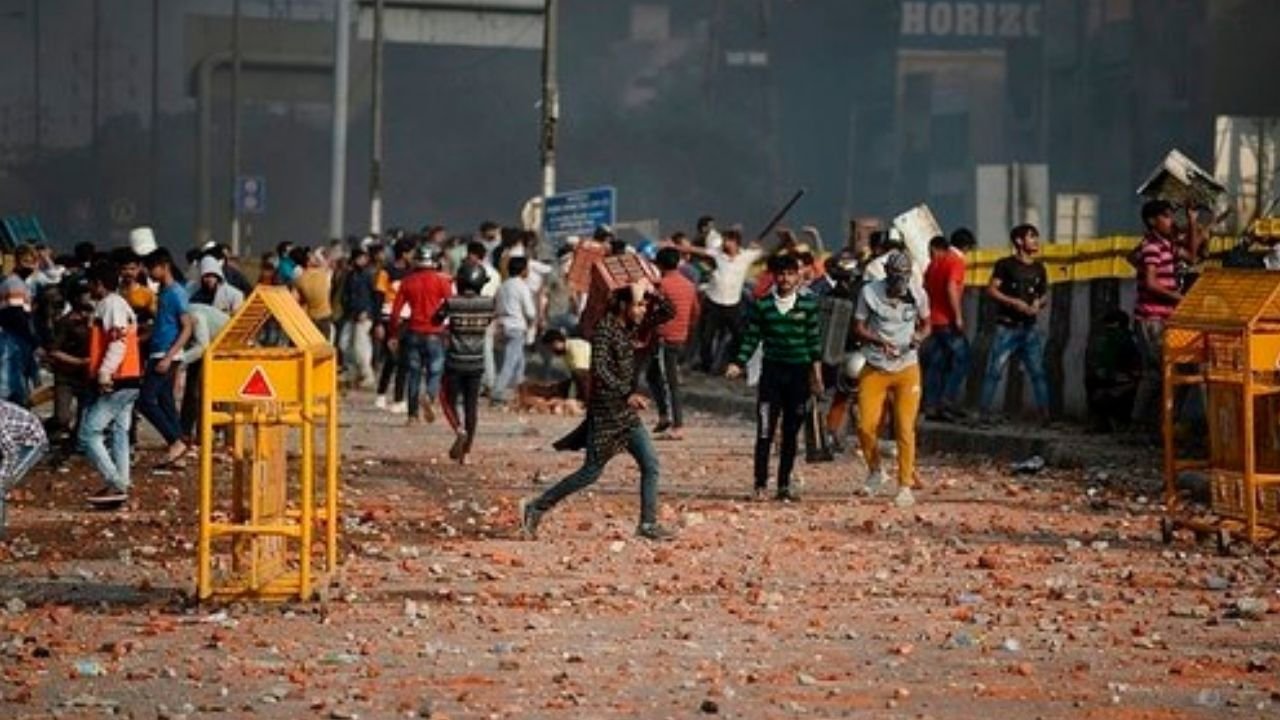
  • US flags India ‘country of particular concern’ amid worsening religious freedoms

    US flags India ‘country of particular concern’ amid worsening religious freedoms

    The United States Commission on International Religious Freedom (USCIRF) on October 2 has called for Narendra Modi-led India to be designated as a “Country of Particular Concern” for worsening religious freedoms in the country.

    “Individuals have been killed, beaten, and lynched by vigilante groups, religious leaders have been arbitrarily arrested, and homes and places of worship have been demolished,” read the damning report, which highlights human rights abuses in India.

    The report also criticised the Modi government’s 2019 decision to disenfranchise religious minorities through Citizenship Amendment Act.

    The report also revealed how Indian government officials use misinformation and disinformation to incite violence against religious minorities and their places of worship.

    “The government, led by the Bharatiya Janata Party (BJP), reinforced discriminatory nationalist policies, perpetuated hateful rhetoric, and failed to address communal violence disproportionately affecting Muslims, Christians, Sikhs, Dalits, Jews, and Adivasis (indigenous peoples),” noted the US federal government’s report.

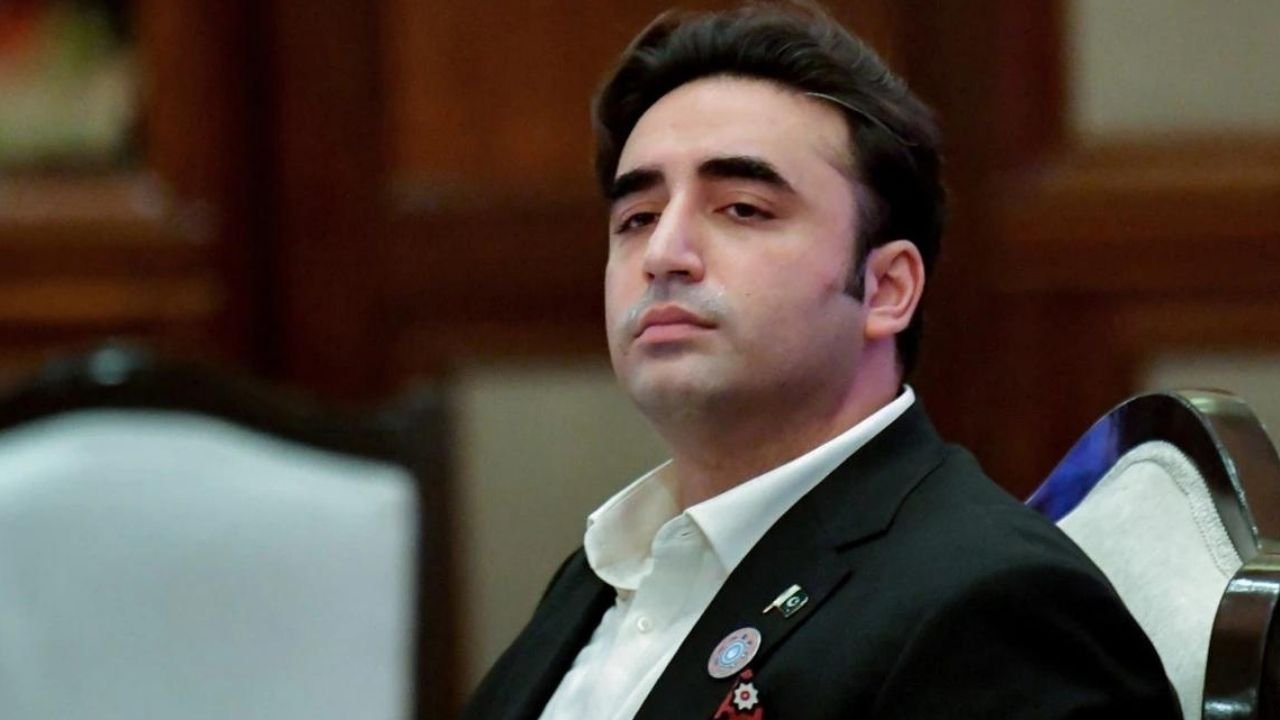
  • Bilawal warns of ‘face-off’ in country if amendments not passed before Oct 25

    Bilawal warns of ‘face-off’ in country if amendments not passed before Oct 25

    Pakistan Peoples Party (PPP) chairman Bilawal Bhutto while talking to journalists during a meeting with Supreme Court Press Association’s delegation on October 2, warned of a “face-off like situation” in the country if the constitutional amendments were not passed before October 25.

    It should be highlighted that Chief Justice of Pakistan Qazi Faez Isa is set to retire on October 25 this year.

    Bilawal has been at the forefront of campaigning for the coalition government’s decision to pass the constitutional amendments ever since it failed to do so last month.

    Last month, the government remained unsuccessful in convincing JUI-F Chief Maulana Fazl ur Rehman as opposition and government leaders raced to woo him.

    “The matter will be resolved peacefully if the amendment is passed before October 25. Otherwise, the situation could lead to confrontation,” warned Bilawal.

    He reiterated the PPP’s goal to establish a constitutional court – a goal set in the Charter of Democracy signed by the slain former Prime Minister Benazir Bhutto and Nawaz Sharif in 2006.

    Bilawal blamed the judiciary for being biased and political, questioning the top court’s reserved seats verdict.

    Interestingly, he also stated that when Law Minister Azam Nazeer Tarar apprised the SC judges of judicial reforms, then “they [SC Judges] instantly announced the verdict in the reserved seats case which is direct interference.”

    Meanwhile, Jamiat Ulema-e-Islam (JUI) leader Senator Kamran Murtaza told Geo News that he won’t cooperate with anyone under threat of bloodshed and pressure, in reference to Bilawal’s statement.

  • ‘My Presidential award file has been pending for five years; they don’t notice me,’ says Fazila Qazi

    ‘My Presidential award file has been pending for five years; they don’t notice me,’ says Fazila Qazi

    Senior actress Fazila Qazi has complained that her file for the presidential award has been hanging for the past five years, but the awardees do not see her; someone else does.

    She recently participated in ‘Hansana Muna Hai’ along with her husband, Qaiser Nizamani, where the two spoke candidly about various issues.

    In response to a question, the two actors also questioned the procedure of the state awards, while Qaiser Nizamani thanked the state and the government for giving him the award.

    “I was given the presidential award at a time when not everyone got an award, and artists received awards only because of their work,” said Nizamani.

    He added, “I got the award because of the love for my work, family, and viewers,” and he also thanked the state of Pakistan.

    Fazila Qazi agreed, saying, “There is no doubt that getting or receiving a presidential award is a great achievement, and one is proud of such awards.”

    “Thankfully, my husband got the award at a time when such people were not getting awards,” she added.

    She, however, had a lot more to contribute to the conversation.

    “My file for the Presidential Award has also been lying there for the past five years,” she revealed.

    She stated that “various persons, including TV channels, recommend individuals for other state awards, including presidential awards, and hence, files of such awards are created.

    Fazila Qazi sarcastically complained, “Awardees and recommenders do not see me; someone else does.”

    “We do not know who is sitting in the cabinet division, who the workers do not see, but they do not know who can see who,” she said.

  • New regulations: A surgical strike on Pakistani exporters

    New regulations: A surgical strike on Pakistani exporters

    Industrialists in Sialkot have been reeling from a regulation set upon them from the world over. Pakistan’s surgical instrument industry, which brings in $400 million annually in exports, is in serious jeopardy. This is in light of the European Union (EU) implementing a Medical Device Regulation (MDR) on the trade of surgical instruments.

    While the EU introduced this law in 2017, its enforcement deadline has only just passed, and exporters are feeling the costs.

    The MDR now demands that manufacturers meet the new quality controls, conduct audits for product safety, and carry out rigorous lab testing for all surgical instruments before they can be sold in the European Union. Moreover, manufacturers will also have to sign mandatory contracts with European notified bodies for external audits.

    To comply, Pakistani exporters must hire a European representative at an annual fee upwards of PKR 1.5 million. Additionally, they must sign an agreement with a notified body, which costs at least PKR 3.1 million for small exporters.

    This only grants companies a three-year window to fully implement a production process that is MDR-compliant. The cost of complying with the stipulations set out by the MDR and acquiring the necessary paperwork is a staggering PKR 30 million.

    Abdul Moize, Marketing Director of Weldon Industries, captured the hardships, stating, “The burden these new regulations have created is unbearable. With interest rates at around 18%, securing loans for MDR compliance is almost impossible. The new laws favour only the big players, pushing smaller manufacturers out of the European market.”

    What’s worse for smaller manufacturers is that Pakistan has one EU MDR-certified notified body, SGS, that can perform the required tests to check for compliance. The lack of local testing facilities causes manufacturers to send their instruments overseas for testing, which increases costs.

    While larger exporters have the financial capital to absorb these expenses, the same can not be said for smaller ones.

    Could the current situation lead to the extinction of smaller manufacturers, giving way to the monopolisation of the surgical instruments sector?

    For these businesses, whose primary clients are located in Europe, the stakes are incredibly high. Failure to meet MDR requirements means losing access to the EU market – a loss of around $110 million.

    If exports fall by such a magnitude, it would cause factory closures and a consequential increase in the local unemployment rate. This might decrease local consumer demand, which means that the economic aftershocks will be felt in other sectors, too. Also, fewer exports will negatively impact the current account, which has stayed, historically, in the red.

    Given the seriousness of the situation, the surgical instruments business community has started urging the government to provide some sort of economic relief. The government could offer subsidies, and if not, it could offer financial relief by providing low-interest loans specifically for MDR implementation, which would help manufacturers get the funding they need to take steps towards complying with the new regulations.

    This will serve the interests of the business community responsible for the export of surgical instruments and political interests in Islamabad, where lawmakers want to portray a positive image of the economy to their constituents.


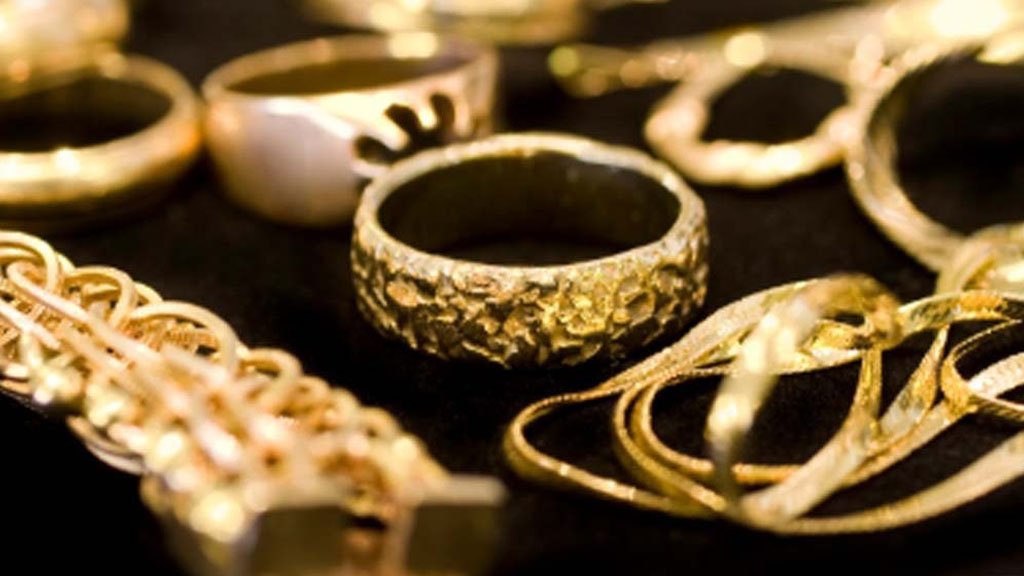
  • Gold price breaks losing streak, increases by Rs600 per tola to Rs275,500

    Gold price breaks losing streak, increases by Rs600 per tola to Rs275,500

    After witnessing days of decline, gold price rebounded slightly in Pakistan. The 24-karat gold rate in local bullion markets was recorded up by Rs600 per tola as the yellow metal was traded at Rs275,500.

    According to rates shared by the Karachi Sarafa Association, the price of ten gramme 24-karat gold was recorded at Rs236,197. This rate also shows an increase of Rs515 per ten gramme as compared to Tuesday’s rate.

    It seems like, this time, the price of precious metal was not up in line with international gold market. According to latest rates, spot gold was seen at $2,653 an ounce, showing a decline of $6.7 and 0.25 per cent.

    As expected, silver prices in the country once again remained unchanged. The price for 24-karat silver was recorded at Rs3,050 per tola and Rs2,615 per ten gramme.

    For those unaware, gold price in the previous week was recorded at an all-time high of Rs277,000 per tola which was attributed to the international surge in bullion in rates, intensifying geopolitical tensions in Middle East and increasing demand from Chinese and Indian market after Fed rate cuts.

  • Exchange rates: PKR closes at Rs277.64 against US dollar, Rs368.97 versus Pound

    Exchange rates: PKR closes at Rs277.64 against US dollar, Rs368.97 versus Pound

    The Pakistani rupee (PKR), on the third trading day of the week, gained almost five paisa versus the US dollar (USD).

    PKR ended the session at Rs277.64 against the USD.

    The latest exchange rate released by the State Bank of Pakistan (SBP) shows PKR about 0.2 per cent up as compared to the last closing of Rs277.69, which was reported on Tuesday.

    During the trading session, the home unit remained stable as it saw an intraday high of Rs277.7 with the lowest level reported at Rs277.6.

    Exchange companies in the country were buying USD for Rs278.5 and selling for Rs280.

    Here is how the PKR performed against other foreign currencies:

    Currency Previous rate Today’s rate Difference
    British Pound 370.39 368.97 1.43 rupees
    UAE Dirham 75.59 75.60 1.35 paisa
    Euro 308.64 307.32 1.32 rupees
    Swiss Franc 327.56 328.35 79.37 paisa
    Chinese Yuan 39.57 39.56 0.71 paisa
    Saudi Riyal 74.02 73.97 4.18 paisa
    Japanese Yen 1.926 1.9277 0.17 paisa
    Exchange rates

    The Saudi Riyal closed today at Rs73.97 losing more than four paisas from its previous rate of Rs74.02.

    The British Pound decreased by Rs1.43, clocking in at Rs368.97, compared to Rs370.39 from a day ago.

    The rupee surged Rs1.32 versus Euro, ending at Rs307.32 as opposed to the Tuesday’s rate of Rs308.64.

    The UAE Dirham declined by only 1.35 paisa from Rs75.59 to Rs75.6.  

    The Chinese Yuan also witnessed very minor loss of 0.71 paisa, closing at Rs39.56 against Rs39.57.

    Swiss franc climbed 79.37 paisa, closing Wednesday at Rs328.35 compared to its last close of Rs327.56.

    Against the Japanese Yen, rupee shed 0.17 paisa, closing at Rs1.927 versus Rs1.926.

    Interestingly, Pakistani currency has remained stable for months against the US dollar as it has gained only 70.38 paisa or 0.25 per cent in the ongoing fiscal year.   

    The calendar year has also seen minimal changes USD to PKR rates as the home unit has appreciated by only Rs4.22.