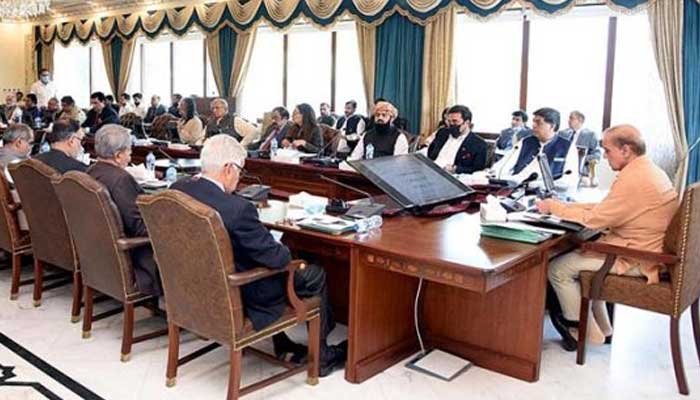
The federal cabinet on Monday approved a summary prepared by the Ministry of Finance seeking to release funds for the Election Commission of Pakistan (ECP) to hold elections in Punjab on May 14 as ordered by the Supreme Court, which will now be forwarded to the parliament.
Finance Minister Ishaq Dar presented the bill before parliament today.
Earlier today, a meeting chaired by Prime Minister (PM) Shehbaz Sharif, decided to send the matter to the parliament, observing that the Lower House was supreme and whatever decision it would make, would be acceptable.
On Sunday the cabinet decided to refer to parliament the issue of the release of funds to the ECP for holding elections in Punjab.
وزیراعظم شہبازشریف کی زیرصدارت وفاقی کابینہ کا اجلاس
وزیراعظم شہبازشریف کی صدارت میں وفاقی کابینہ کا اجلاس اتوار کو وزیراعظم ہاﺅس میں منعقد ہوا جو دوگھنٹے تک جاری رہا pic.twitter.com/u5M3TxvAoL
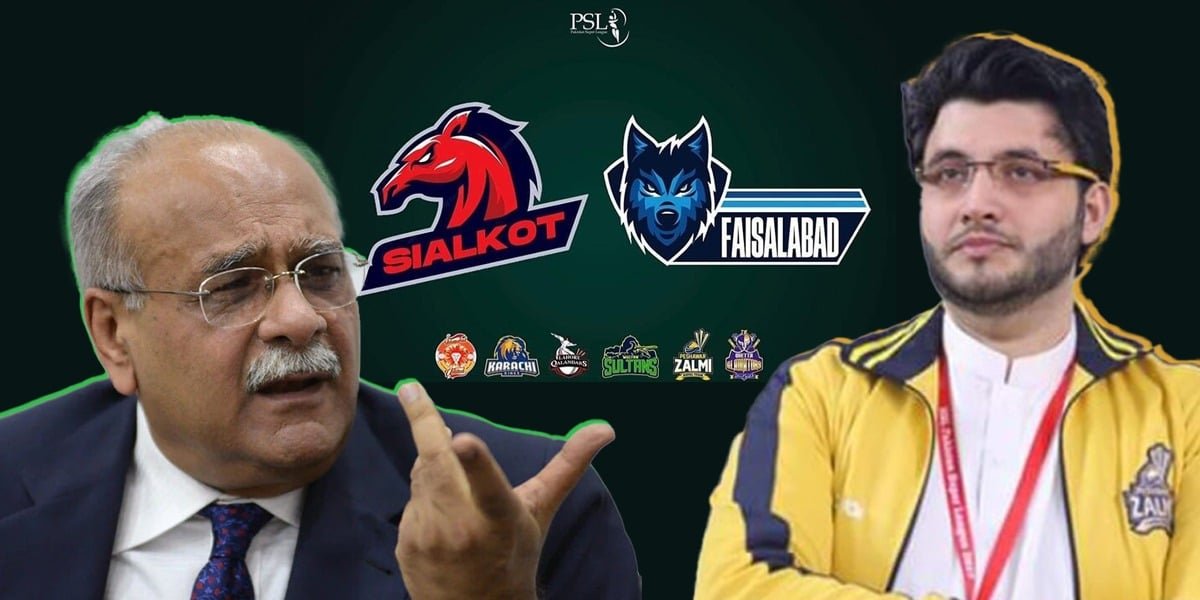
Chairman Pakistan Cricket Board (PCB) Najam Sethi has revealed that they have not contacted anyone in regard to establishing new teams in Pakistan Super league (PSL). His comment came in the backdrop of excitement among PSL fans after Javed Afridi revealed that Sialkot or Faisalabad might get to become part of the League. “We discussed new teams in PSL but existing franchises have revenue issues. But it is my desire to have two new teams,” he said.
Najam Sethi assured fans that, “A lot of potential buyers are ready to purchase the two new teams in PSL.”
“So I think Javed Afridi has fired the first shot that Faisalabad and Sialkot will be the two new teams in PSL. We haven’t had any discussions with the franchises, we didn’t make any decision, but it’s my desire that at least two new teams should be added,” he said.
However, Sethi also recognized the valid concerns of the existing franchises, about potential revenue loss and the impact on market saturation.
“There are a lot of concerns from the franchises regarding their revenues and whether the market can take it or not. And for this, we have to sit and discuss the issue because without them, we can’t move forward,” Sethi emphasized.
Reiterating that all franchises have to be part of the consultation process, Sethi said that many people are interested in buying these two teams. “If the addition of these two teams is coming in the PSL, then there will be a win-win situation for all,” he added.
The 74-year-old also reassured the existing franchises that they would not suffer any loss and instead, make a profit from this decision: “I assured the rest of the teams that the revenue will be increased, not decreased. Trust me, you will make profit instead. I promise to the rest of the teams that you will not suffer any loss. If you face any loss we will help you in this matter.”
Speaking about the possibility of taking the PSL to the United States, Sethi said that many people had approached him with the idea.
PCB chief also mentioned that the board will conduct an internal debate to consider the possibility of switching to an auction system for selecting teams in the PSL. Under an auction model, each team would have a certain amount of money to bid for players, while the highest bidder would acquire the player’s services. “We will do an internal debate on this [introducing auction model in PSL],” he concluded.
The Pakistan Tehreek-e-Insaf (PTI) on Sunday issued a “white paper” on the Pakistan Democratic Movement (PDM)-led government’s “one-year dark period”.
The 51-page “white paper” has been divided into six sections. PTI highlighted the incumbent government’s “poor governance, economy, rising inflation, constitution, democracy, the rule of law, political exploitation of state institutions, attack on the judiciary, chained foreign policy, and law and order.
The party has dedicated the white paper to PTI Chairman Imran Khan, party workers, and the people of Pakistan, who are “fighting and facing torture for real independence” and democracy.
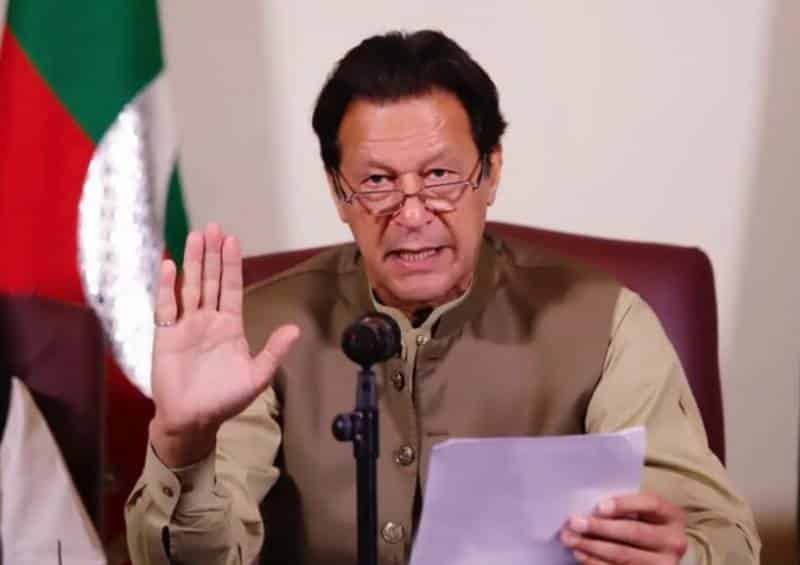
Khan — in a video address marking one year since his ouster — threatened to take to the streets if the elections are not held in the country.
“There is no other way except the elections,” he said.
Khan accused former Chief of Army Staff (COAS) Genereal Qamar Javed Bajwa of hatching a conspiracy alongside Prime Minister (PM) Shehbaz Sharif to topple his government with the help of former envoy Hussain Haqqani.
Khan asked, “Would anyone question the man (Bajwa) who ravaged the country’s all indicators for his extension which was promised by present PM Shehbaz Sharif.”
The PTI Chairman admitted that the conspiracy to overthrow his government was not hatched in the US. It was actually Gen Bajwa who had orchestrated the conspiracy with the help of Shehbaz Sharif and then hired Hussain Haqqani to launch propaganda that “Gen Bajwa was pro-America and Imran Khan was anti-America”. “The cipher made entry came only after the conspiracy had taken its roots,” the former premier acknowledged.
Giving a message to the “all-powerful” and Nawaz Sharif for making a ‘London Plan’, the PTI chief said political parties could not be crushed by violence, torture, and harassment tactics.
It is pertinent to mention here that Khan’s government was toppled on April 9 last year through a vote of no-confidence in the National Assembly.
On Monday, the 2023 spring meetings of the World Bank Group and the International Monetary Fund (IMF) commence in the US capital to examine the “uncertainties and risks weighing heavily” on the global economy. The meetings, which run from April 10 to 16, will take place at the IMF and World Bank headquarters and will focus on the impact of climate change, which is endangering lives and livelihoods worldwide.
Finance ministers and central bank governors from around the world will attend the meetings to reconnect with international financial leaders, and some may hold one-on-one meetings with officials from the US Treasury and State Department. Pakistan will be represented at the meetings by the secretaries of finance and economic affairs, as well as the State Bank governor, in place of Finance Minister Ishaq Dar.
An official statement outlining the issues to be discussed at the meetings indicated that “stubborn inflation, the cost-of-living crisis, and slower growth effects” are causing harm to the poor and most vulnerable. The statement further highlighted that record-high debt is impeding the progress of developing countries, and that the consequences of climate change are threatening lives and livelihoods globally. According to Dawn, experts are urging the World Bank and the IMF to create a comprehensive strategy to address the challenges that developing nations are facing.
A picture on the UN Foundation’s website illustrates the widespread devastation caused by last year’s floods in Pakistan, prompting international financial institutions to devise a new mechanism to “assist communities affected by (climate change) catastrophes.” The caption beneath the photo emphasised that “many lives were lost, and millions lost their homes, with one-third of the country submerged.”
According to a World Bank study released shortly after the floods, “Pakistan urgently requires substantial investment in climate resilience to safeguard its economy and reduce poverty.”
The Ba-Ikhtiyar Naujawan Internship Program (BNIP) was established by the Ministry of Planning, Development, and Special Initiatives at the request of Prime Minister (PM) Shehbaz Sharif, to ensure Pakistani youth is economically empowered.
The program aims to provide 60,000 paid internships to recent graduates across Pakistan.
“Despite lengthy stints at educational institutes, gaps remain among Pakistan’s young graduates in terms of marketable skills and practical experience. This serves as a barrier to their entry in the job market and underlies their high unemployment rate. The Prime Minister’s Ba-Ikhtiyar Naujawan Internship Program is breaking these barriers for young graduates by equipping them with requisite skills through off-job and on-job training, and providing them with the work experience they require for entering the job market. Please create an account on this portal through the ‘Register’ feature, login to your personalised dashboard, and apply to internship opportunities available in various fields.”
Who is eligible for the program?
Graduates up to the age of 30 holding a Diploma, Bachelor’s degree, or higher from an HEC-recognized university or institution in Pakistan, or abroad are eligible to apply for BNIP internships.
Is the internship paid?
The monthly stipend for the internship is Rs25,000-40,000.
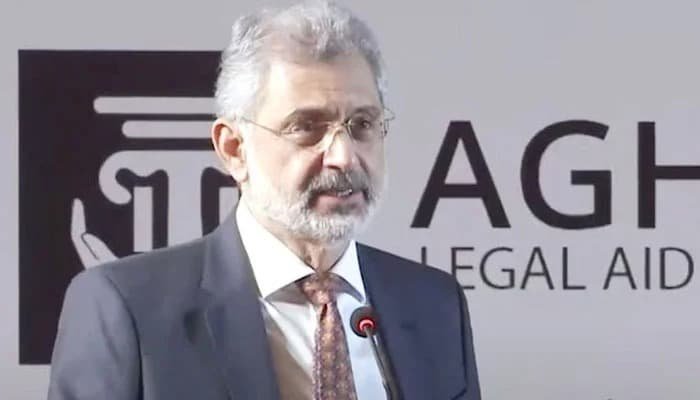
Supreme Court (SC) Justice Qazi Faiz Isa has raised multiple questions over the verdict of a six-member larger bench of the Supreme Court which deposed his order that all suo motu proceedings should be stopped.
In a nine-page note issued on Saturday, Justice Isa maintained that as the gathering in a court of six distinguished judges was not permissible under the Constitution or under any law, “the Supreme Court’s order dated 29 March 2023 passed in Case No 4 could not have been set aside by the 4 April Note”.
Justice Isa noted that the Constitution did not confer jurisdiction on a bench or on judges of the SC (no matter how many in number) to sit in an appeal over an order of the top court.
The judge further pointed out that Ishrat Ali, a federal government employee, was sent on deputation to the SC to work as its registrar.
He maintained that Ishrat Ali was “withdrawn” by the federal government, however, he refused to abide by the order.
It is pertinent to mention here that Justice Faiz had asked the registrar to resign for issuing a circular, discarding his judicial order related to suo motu proceedings.
Earlier, a six-member bench of the Supreme Court was formed in unusual haste to deliberate on Justice Faez Isa’s order freezing all the suo motu notices. The bench closed the case after a hearing that lasted a total of five minutes.
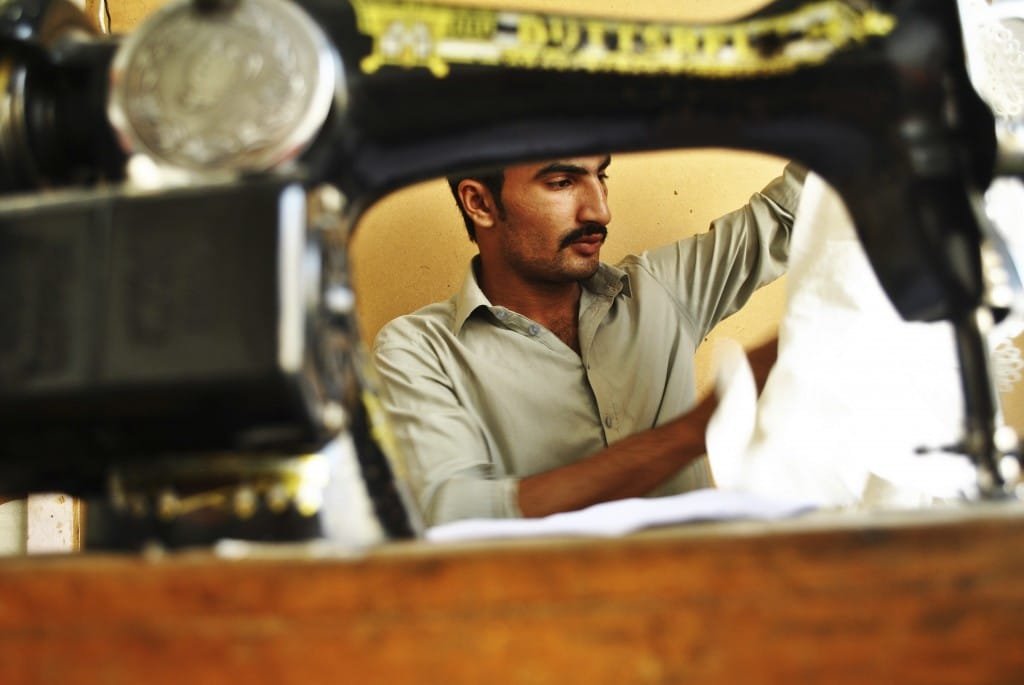
Twenty-five outfits were stolen from a tailor’s shop in a unique robbery case.
As per the details, the incident took place in Rahwali, Gujranwala.
The thieves entered the shop pretending to be customers and then held the tailor and his employees hostage at gunpoint.
Twenty-five outfits that were given to the tailor by various customers for stitching were stolen by the criminals. Additionally, they took away the employees’ cell phones before running away from the crime scene.
The shopkeeper has requested authorities to act quickly and bring the thieves to justice.
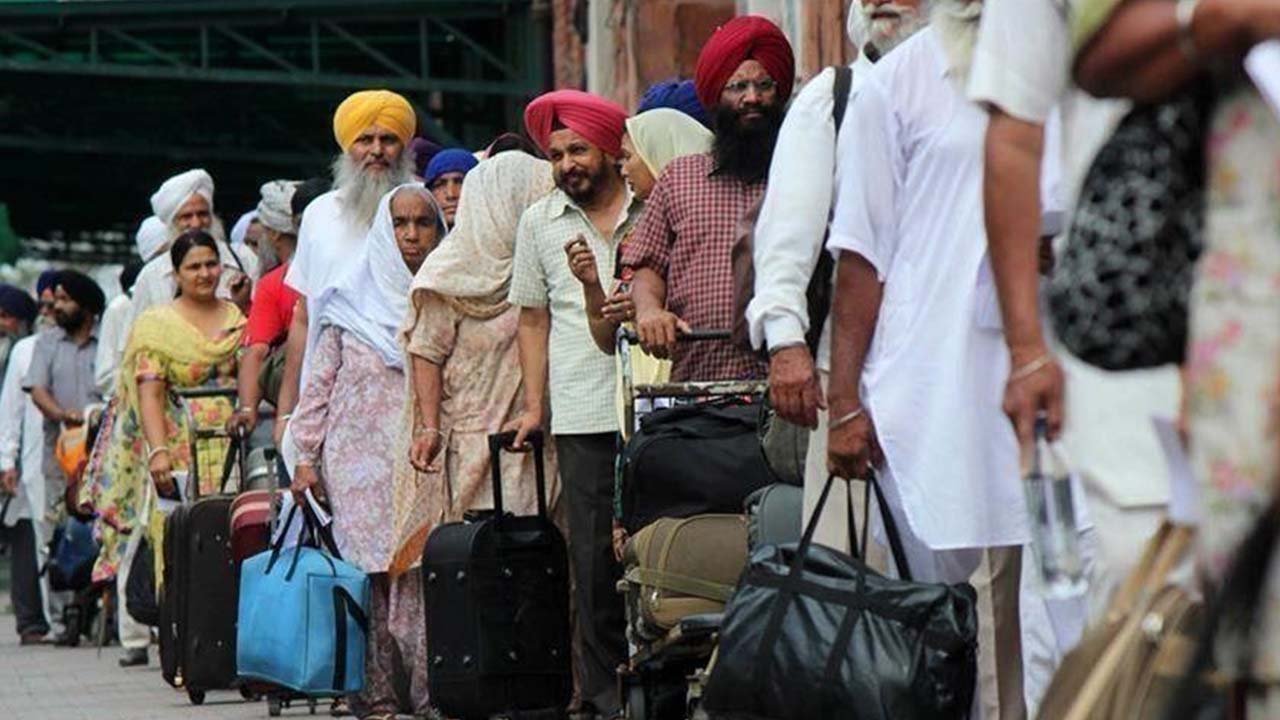
Pakistan’s High Commission in New Delhi has announced that it has issued 2,856 visas to Sikh pilgrims from India. The visas will allow the pilgrims to travel to Pakistan and participate in the annual Baisakhi festivities, which are set to take place from April 9-18, 2023. The issuance of these visas falls under the Pakistan-India Protocol on Visits to Religious Shrines of 1974.
Every year, many Sikh Yatrees from India travel to Pakistan to observe different religious festivals and occasions. The High Commission’s issuance of visas to these religious pilgrims is in accordance with the Pakistani government’s commitment to fully implement the Bilateral Protocol on Visits to Religious Shrines between the two countries.
Pakistan’s Charge d’Affaires, Salman Sharif, congratulated the pilgrims on the occasion and wished them a fulfilling journey. He added that Pakistan is dedicated to preserving sacred religious places and ensuring that visiting pilgrims are provided with necessary facilitation.
The pilgrims will visit several sites, including Dera Sahib, Panja Sahib, Nankana Sahib, and Kartarpur Sahib. They will arrive Pakistan on April 9 and return to India on April 18.
As part of their ‘Cost Of The Crown’ series, investigating the British Royal Family’s wealth and finances, The Guardian has extracted a 46 page report from the Indian government which provided details of jewelry and other precious items stolen by the colonial British Empire during their reign over the sub-continent. Most of the gifts were handed over as gifts to Queen Victoria, the reigning monarch at the time.
The investigation was commanded by the late Queen Elizabeth II’s grandmother, Queen Mary, to find out about the origins of her jewels.
The report details the names of the jewels as well as their colonial origins and how they were stolen by the East India Company.
1 Koh-i-Noor
The legendary diamond Koh-i-Noor was taken from Maharaja Ranjit Singh’s kitty. The ruler of Lahorr had signed a treaty of friendship with the British in 1831, and six years later the then Governer-General of India, George Eden, and his sister, Fanny, visited him at his palace. The Guardian writes that Fanny had later written about Singh’s diamond collection, detailing how he decorated his horses with the finest diamonds she had ever seen:
“If ever we are allowed to plunder this kingdom, I shall go straight to their stables.”
in 1849, Singh and his heir, Duleep, were forced to sign over Punjab to the British army, who stole all of his jewels as a part of their conquest, along with the Koh-i-Noor.
The diamond is part of the Imperial Collection, imbedded into Queen Elizabeth, the Queen Mother’s crown, worn by consorts.
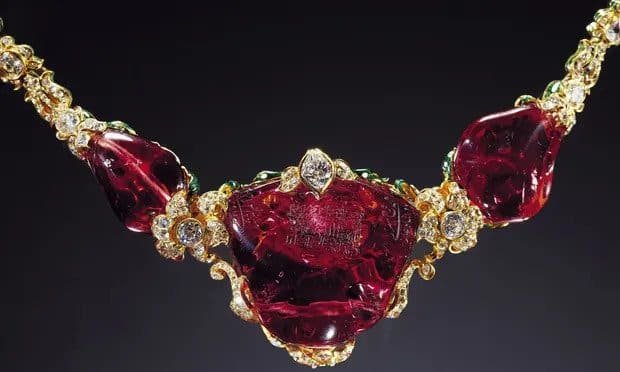
2 The Timur Ruby gemstone
Named after Timur, the founder of Timurind Empire in Central Asia, the gemstone is etched with the names of the five men who owned it: Jahangir (1569-1627), the 4th Mughal Emperor, Shah Jehan (1592-1666), the 5th Mughal Emperor, Farrukhsiyar (1685-1719), the 10th Mughal Emperor; Nader Shah (1688-1747), Shah of Iran; and Ahmad Shah Durrani (1722-1772), King of Afghanistan.
By 1813, the gemstone was under the possession of Maharaja Ranjit Singh, who ruled over the Sikh Empire, and later was passed down to his heir Maharaja Sher Singh. From there, the necklace was inherited by his brother Duleep Singh, who became Maharaja when he was only five years old.
During 1948- 49, when the British Empire waged wars over the Sikh Empire, the East India Company took over Punjab and forced the then ten-year-old Maharaja to hand over his possessions. Duleep Singh was placed under a Scottish guardian, isolated from contacting his fellow countrymen.
3 Pearl necklace
Comprising of 244 pearls and a clasp of two magnificent rubies, the necklace had originally belonged to a ruler in Punjab, until it was stolen by the British. Queen Elizabeth II was spotted wearing this necklace at the Royal Opera House in London to celebrate her diamond jubilee.
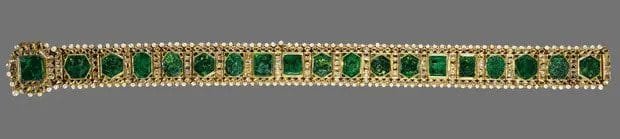
4 Emerald girdle of Maharaja Sher Singh
The gold girdle inlaid with 19 emeralds first came to the public’s attention during Buckingham Palace’s celebration of Prince Charles’ 70th birthday, with a display of his favorite pieces from the royal collection. The item had previously belonged to an Indian Maharaja, Sher Singh, who used it to decorate his precious horses.
The shocking rape of a 14-year-old girl, who was allegedly raped by her father and brother, has once again proven that there is no safe space for women in Pakistan. The girl, a resident of Azad Kashmir, was taken to a hospital by her mother after she complained of stomachache. Doctors discovered that the girl was pregnant and about to give birth. Investigation revealed that the victim’s brother and father raped her several times during the last few months. The DNA of the baby she birthed matches that of her brother’s. Imagine the horror and fear of the girl who was not safe in her own house and where her own father and brother were her rapists and tormentors.
Pakistan has staggering statistics that expose the rape epidemic in the country. In October last year, almost 21,900 women were reported to have been raped in Pakistan from 2017 to 2021. This meant that approximately 12 women were raped every day, or one every two hours, throughout the country. According to media reports, approximately 350 rape instances were recorded in Punjab, between May 2022 and August 2022. The Current records the tally of rape cases that are reported in news outlets on a daily basis to highlight the alarming situation. And not a single day goes by when rape isn’t reported in any city but that too doesn’t represent the actual figures because not all rape cases are reported. It’s hard to imagine what the real figures must be. Women around the country are raped, abused, and harassed every day, enduring it incessantly because the state and society has failed to ensure their safety. Occasionally, a rape case emerges in the media that elicits particular fury and ignites massive protests, while exposing the culpability of our society; the cradle for rape culture, the breeding ground that lets rapists get away by promoting victim-blaming.
Everything about this incident tells the the horrifying story of impunity with which Pakistani men commit crimes, without an ounce of remorse. And then there are men like Pakistan People’s Party’s (PPP) Nabil Gabol, who have the audacity to pass disgusting comments about rape. In a recent interview, Gabol casually remarked: “When rape is inevitable, just enjoy it.” How can one be so heartless to say such sickening words? Gabol’s words garnered massive backlash, and rightly so. Pakistanis were angry, and outraged at the politician’s lack of sensitivity. The PPP politician apologised for his remarks later, saying that he regretted if his words had hurt women. But then he went on to blame Pakistan Tehreek-e-Insaf (PTI) supporters for launching a social media campaign against him. After issuing an apology for his misogynistic remarks, Nabil Gabol decided to defend his statement with a screenshot of PTI Chairman Imran Khan’s interview with Time Magazine. Gabol wrote that Aurat March organisers or journalists had not called Khan out for his past problematic statements. Gabol further said if he lost weight and looked handsome like Khan, then the backlash wouldn’t have happened. This non-apology and attack on women who raise their voice for victims of abuse shows that Gabol only apologised because of the backlash on social media but didn’t mean it. As if his non-apology was not enough, Gabol’s son Nadir came out to defend his father’s thoughtlessness and said that his father had intended to say: “Pain is inevitable, suffering is optional.” It is shocking that even today men have the audacity to utter such nauseating words.
And yet, we question and pass comments on the severity of the situation. To the hopelessness and rage that fills our hearts, may women find security, protectiveness and justice in this country. Will this ever stop, is a question we ask ourselves often. Our society and justice system have failed the women of Pakistan. It is because of these attitudes that Pakistan ranks as the second-worst country on the gender gap index. Are you surprised?