Blog

  • National Assembly passes mini-budget to meet IMF targets

    National Assembly passes mini-budget to meet IMF targets

    The National Assembly of Pakistan passed the Finance (Supplementary) Bill, 2023, aimed at amending certain laws relating to taxes and duties. The bill is intended to generate an additional Rs170 billion within the next four and a half months, to fulfill the last prior actions agreed upon with the International Monetary Fund (IMF).

    Pakistan’s reserves have fallen to a critically low level of $2.9 billion, which experts believe is sufficient for only 16 to 17 days of imports. The completion of the ninth review of a $7 billion loan programme with the IMF would lead to a disbursement of $1.2 billion, as well as unlock inflows from friendly countries.

    The Finance Minister, Ishaq Dar, introduced the bill to the National Assembly on February 15, and the formal debate started on it after moving a motion by Commerce Minister Syed Naveed Qamar on February 17. In his concluding speech during the NA session, Dar said the new taxes proposed in the bill would not affect the poor segments of society, as most of the new taxes are being imposed on luxury items that they don’t use.

    The government has also proposed an increase of Rs40 billion in the budget of the Benazir Income Support Programme (BISP) to help the poor cope with rising inflation.

    The Finance Bill aims to increase the general sales tax (GST) rate from 17 per cent to 18 per cent, with an increase to 25 per cent on luxury items. The bill proposes to raise the federal excise duty (FED) on cigarettes, and aerated and sugary drinks. GST on 33 categories of goods covering 860 tariff lines, including high-end mobile phones, imported food, decoration items, and other luxury goods, will increase from 17 per cent to 25 per cent, however, the raise will be notified through another notification.

    The excise duty on cement has been raised from Rs1.5 to Rs2 per kilogram, a measure expected to generate an additional Rs6 billion. An excise tax of 10 per cent has been proposed on non-aerated drinks like juices, including mango and orange, to raise an additional tax of Rs4 billion.

    The finance bill also proposed a 10 per cent withholding tax on functions and gatherings held in marriage halls, marquees, hotels, restaurants, commercial lawns, clubs, community places, or other places, expected to raise Rs1 billion to Rs2 billion from this tax. The excise duty on carbonated or aerated drinks has been raised to 20 per cent from 13 per cent to generate an additional Rs10 billion for the government.

    The proposed increase in excise duty on business, first, and club-class air tickets will raise an additional Rs10 billion for the government, with a tax rate of 20 per cent (or Rs50,000, whichever is higher) proposed on the value of air tickets.

  • The collective effervescence of Shah Rukh Khan

    The collective effervescence of Shah Rukh Khan

    ‘Pathaan’ is a frustrating film because it does not want to make things too difficult but it also does not want to take the easy way out. It does not mind being silly but it certainly will not become stupid. Perhaps to resolve these contradictory impulses, it chooses to be a fan-service film, something that requires a certain amount of blind faith on part of the audience but also a deep and nuanced knowledge of the world the star who helms it inhabits.

    ‘Pathaan’ is first and foremost a ritual. According to sociologist Émile Durkheim, when a community or society comes together and simultaneously communicates the same thought and participates in the same action, it represents a collective effervescence. That is, the group members experience a loss of individuality and a unity with gods, where the god and the society are the same and the clan itself transfigures into a symbol, the totem pole around which they gather with strong emotion.

    So what can the film offer to non-fan viewers like this author, who have the background knowledge but not the blind faith?

    If you are not part of this collective effervescence, you might be tempted to perceive the scene, the totem, the group as separate entities but it is simply impossible to extricate one from the others. The only way to understand ‘Pathaan’ is to view the film, the star, the fandom and the world it emerges from as one composite whole even if you are outside of that experience.

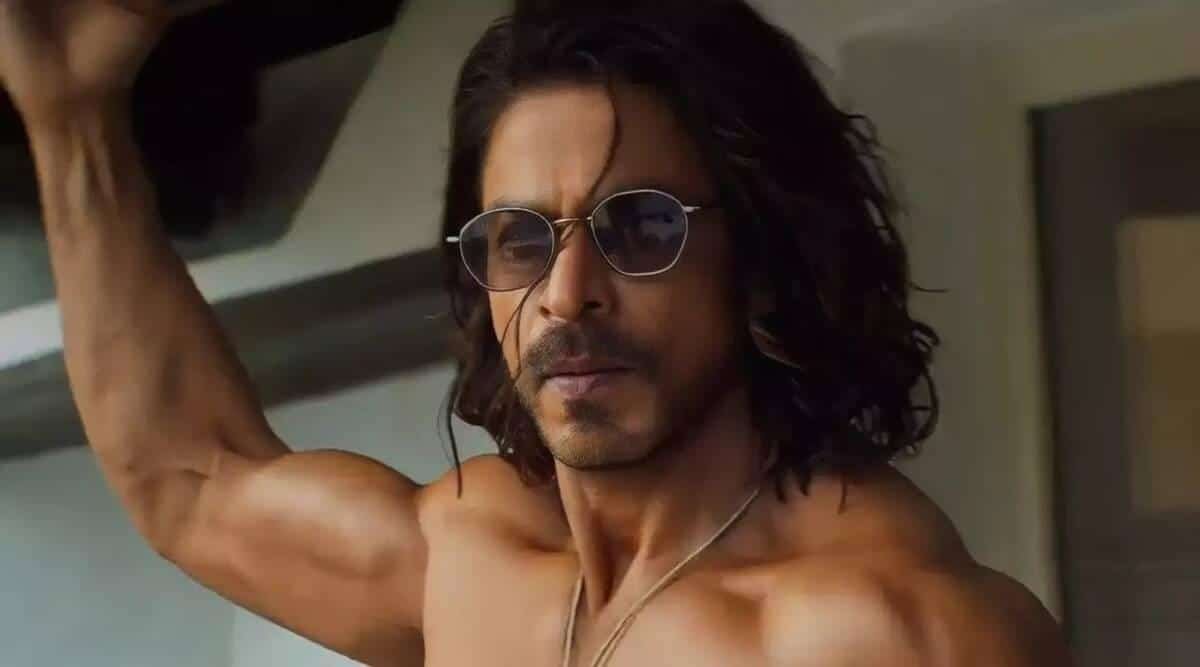
    Khan is a pathaan (son of a Khudai Khidmatgar no less) and, through this film, he insists that he must be seen as no more than an orphan of Indian cinema. Left as he was as a baby in a movie theatre, pathaan has no history and no identity beyond the service of Indian society. That he found a family outside Indian borders – in the film, this is represented by an Afghan village – holds for him deep emotional resonance, but ‘Pathaan’ and Shah Rukh Khan are, first and foremost, lost at and found by Indian cinema. And the Indian in him has a lot to get off his chest – or, do I mean his abs? – and will, unfortunately, exclude his non-Indian fans at least for the purposes of this film.

    This is not the first time a Shah Rukh film and the man became indistinguishable from one another. In ‘My Name is Khan’ (MNIK), Shah Rukh urged an increasingly Islamophobic world to not see all Muslims as terrorists. Moving on from what now seems like innocent times when the deeply problematic discourse of “good Muslims and bad Muslims” retained some currency, India now finds itself at a stage where proving one’s patriotism through a trial by fire (for example, in ‘Chakde India’) will bear no results. The Khan of ‘Pathaan’ is the older, weary and (literally and figuratively) broken version of the man in MNIK and Chakde. He has given up trying to prove his patriotism – if you are not yet convinced, you are unlikely to ever be. If you happen to be one of those blessed with blind faith, this film will not only help you reiterate your beliefs, it will also give you renewed energy to go out into the world filled with hate, despair and anger.

    John Abraham, who plays the antagonist Jim in the film, mentioned in a post-release press conference that Shah Rukh Khan is not a man but an emotion. This film, which is also the star, the nation and its audience all at once, is similarly an emotion. This is why it does not make the treatment of very complex issues difficult or easy. The issues are presented as Indians experience them.

    For me, it was still jarring to sit through the throwaway lines on Pakistan when criticism of the Indian state remains muted and one can well imagine the frustration that led Fatima Bhutto to write that Bollywood, as a whole, appears to be ‘obsessed with Pakistan’. Indian films have been steadily churning out plots where Pakistanis are represented as not only “nasty” but also gullible and even moronic. But, for Indians, who have been subjected to phallic slogans like “ghar mein guss ke maareinge” (we will invade your homes to kill you) in the recent past, the film comes as almost a relief. ‘Pathaan’ is at least not a chest-thumping agent of chaos – whether it is in India or Afghanistan, on-screen he is only trying to protect people. Whether he should have participated in the American invasion of Afghanistan at all is not a question the movie is interested in – just as it shies away from actually taking a political position on the abrogation of Article 370 that forms the impetus of the conflict presented in the film.

    It is in this almost desperate attempt to avoid taking overt stands on polarising debates that the film becomes reluctantly nuanced. While some lazy lines suffice to illustrate that only a handful of Pakistan’s military establishment have, to quote the ISI agent Rubai (played by Deepika Padukone), gone berserk, the blame for the imminent threat lies with the soulless and even callous Indian bureaucracy and a particular version of nationalism that pervades public discourse today. Jim is a narcissist for whom love for the nation used to be an extension of love for self and, now that his love has soured, he cannot but mock the selfless love that ‘Pathaan’ holds on to despite being betrayed and hurt. Most of their conversations centre on this differing attitudes towards nationalism, offering Khan ample opportunity to respond to the real-life attacks the Indian state and its narcissistic nationalists have subjected him to in recent years. The camera lingers on his dark brooding face as he expresses, in turn, his quiet disappointment with state’s priorities (while listening to Jim’s backstory), the shock of betrayal (as Rubai leaves him behind) and abject resignation (when he finally decides to go rogue). The emotions spill over the frame and become a testament to the life of India’s most famous and openly religious Muslim man under the tyranny of Hindu nationalism.

    While Bhutto’s criticism is well-taken, movies like ‘Pathaan’ – and ‘Raazi’, which she also mentions – emerge from a specific political struggle within India and must be seen as a challenge to the rampant hate rather than carriers of the same hateful messaging. Pakistan in ‘Pathaan’ serves as an empty signifier that it has been in films like ‘Uri’ where the larger plots are aimed at othering the Indian Muslims through an invocation of an external threat. But, in a crucial difference, ‘Pathaan’ brings attention back from the neighbouring country to the internal struggle in India that was provoking such excessive obsession in the first place. It is as if the filmmakers are telling us that it is impossible to speak on Indian nationalisms without underlining the disproportionate space Pakistan occupies in public imagination.

    While Jim is explicit about his motivations, Rubai’s backstory leaves a lot unsaid. Rubai’s father was a journalist somewhere in West Asia who “asked too many questions” and, as a child, she was forced to witness his waterboarding by agents of an undemocratic regime. As memories of the father’s torture merge with her own waterboarding at the hands of Indian agents she had actually helped, the signifier of Pakistan is emptied out and her story becomes one of Indian journalists who, in recent times, had “asked too many questions” with national interest at their heart and paid the price for the same.

    It may still be too unrealistic to ask Pakistanis not to be offended by ‘Pathaan’ since it is probably no consolation that the film does not address them at all. The totem of Shah Rukh holds great emotional resonance across South Asia and the world and, while the film tells us that he cherishes ‘his family’ outside India, ‘Pathaan’ is targeted at the Indian society – as a collective – that loves him and, yet, as the film sees it, has betrayed him.
  • Court grants protective bail to Imran Khan

    Court grants protective bail to Imran Khan

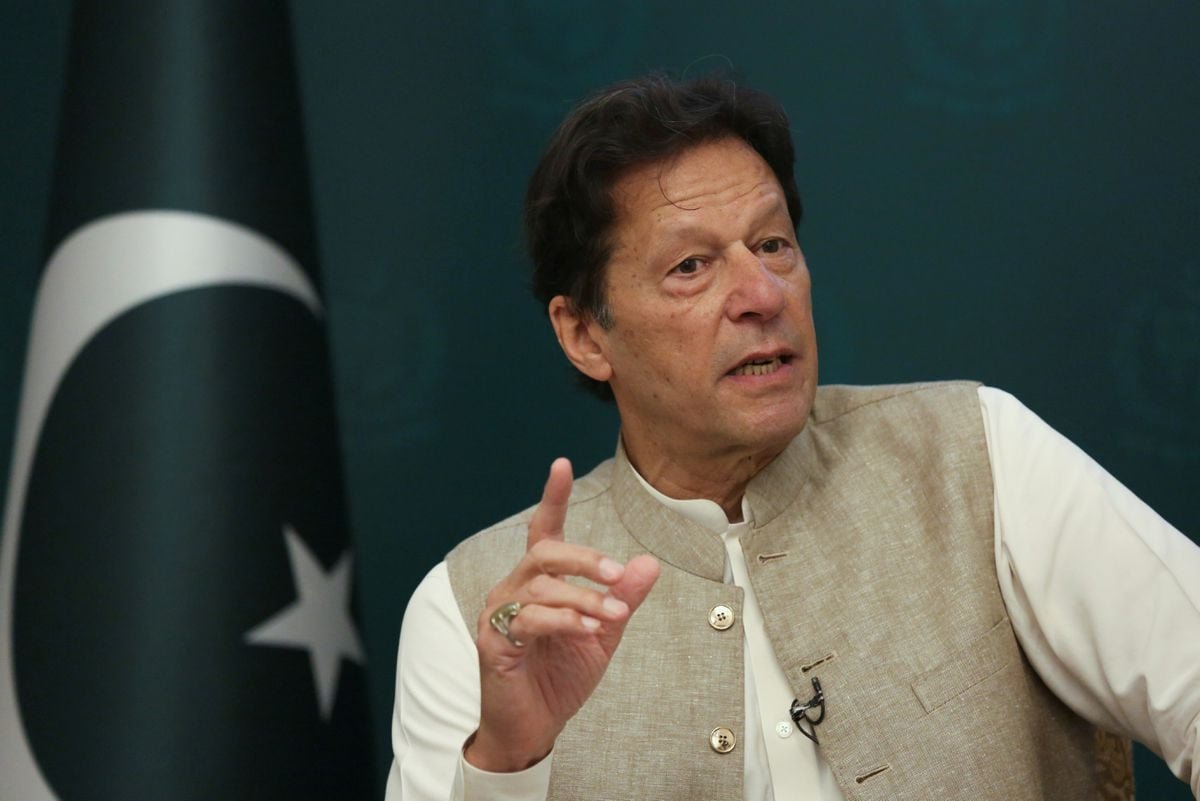
    The Lahore High Court (LHC) has finally approved protective bail till March 3 for Pakistan Tehreek-e-Insaf (PTI) Chairman Imran Khan in a case pertaining to protests outside the Election Commission of Pakistan (ECP).

    Earlier in the evening, amid tight security, Khan made his way to the courtroom from his house in Zaman Park. He appeared before the judges after being called in numerous times.

    ‘Impossible’ for Khan to step out of car to reach courtroom

    Khan was present within the premises of the LHC, however, leaders of his party said that it would be difficult for him to go towards the courtroom itself.

    Senior leader Shah Mahmood Qureshi claimed there are “thousands” of people present inside the compound while alleging that security arrangements are almost “non-existent”. He said it is “impossible” for Imran to step out of his car and reach the courtroom.

    Court gives IK a last chance to appear by 5pm today

    Earlier today, the high court gave a last chance to Khan to appear before the court by 5pm today as he faces the possibility of arrest ahead of his appearance.

    The court had disposed the former Prime Minister’s appeal for exemption from appearance for protective bail, citing doctors’ advice about the leg injury he suffered after being shot in November 2022 in Wazirabad.

    According to multiple media reports, Federal Investigation Agency (FIA) has constituted a four-member team to arrest the PTI head in a separate case related to foreign funding received by his party. Media reports suggest that Khan might be arrested by a Lahore FIA team before his appearance at LHC, and then will be handed over to an Islamabad FIA team.

    The FIA team has reportedly also held consultations with lawyer bodies so that the arrest is not disrupted.

  • President Alvi sets April 9 as election day for Punjab and KP

    President Alvi sets April 9 as election day for Punjab and KP

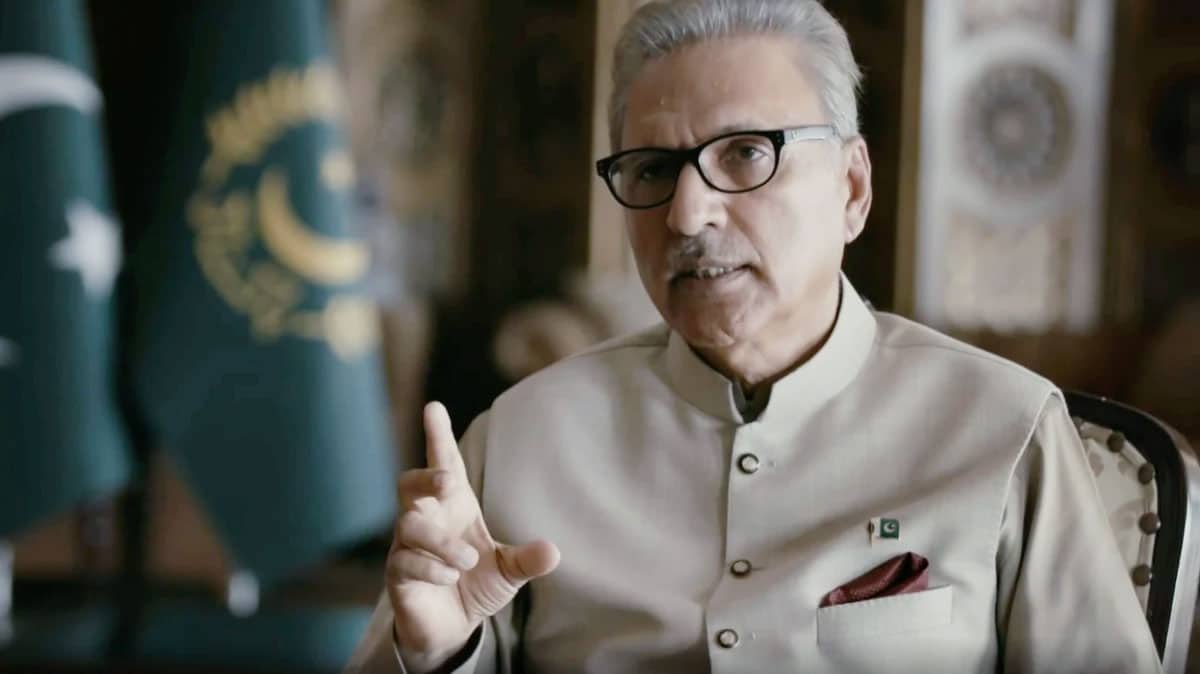
    President Dr Arif Alvi has announced that elections in Punjab and Khyber Pakhtunkhwa (KP) will be held on April 9.

    It is pertinent to mention here that Section 57(1) of the Elections Act, 2017 says that the president is entrusted to announce the election date after consulting the Election Commission of Pakistan (ECP)

    Earlier today, ECP said no to meeting President Alvi when he invited the commission to consult with him, citing that the matter of elections is sub judice.

    ECP says no to meeting with President Alvi

    On Monday, ECP, in a letter addressed to Alvi, has stated that the matter of deciding a date for elections is subjudice, hence, it cannot participate in a meeting on this issue with the president.

    The development comes days after Alvi wrote a letter to Chief Election Commissioner (CEC) Sikandar Sultan Raja, inviting him for an “urgent meeting” to discuss and consult on the election date in Punjab and Khyber Pakhtunkhwa (KP). The meeting was set to take place today (Monday, February 20).

    Two federal ministers, Rana Sanaullah and Marriyum Aurangzeb, have defended the ECP.

    In a statement issued on Monday, Information Minister Marriyum Aurangzeb said the Presidency has become “Awan-e-Sazish” [centre of conspiracy], adding that the government will not allow it to become “Imran Khan’s Tiger Force”. She also advised Alvi against becoming a puppet of the former Prime Minister.

    Meanwhile, in a tweet, Interior Minister Rana Sanaullah lambasted Alvi, stating that, “ECP is not your slave,” and adding that “Imran is now using the head of state [Alvi] for conspiracy”.

    President Alvi asks ECP for urgent meeting to consult on Punjab, KP’s election dates

    Earlier, in a letter to ECP, the president expressed displeasure over the “apathy and inaction” of the Election Commission of Pakistan (ECP) on not responding to his earlier letter as yet. The first letter was sent on February 8.

    The president stated that he had waited anxiously that the ECP would realise its constitutional duties to proceed and act accordingly, but was extremely dismayed by the commission’s “approach on this important matter”.

    The meeting will take place on February 20 (Monday).

    The president’s official Twitter account said that the two will discuss Section 57(1) of Elections Act, 2017 which details that the president is entrusted to announce the election date after consulting the ECP.

    Punjab and KP assemblies were dissolved in January to pave way for fresh elections.

    It is pertinent to mention that Pakistan Tehreek-e-Insaf (PTI) has been asking for the elections since the ouster of their chairman Imran Khan as Prime Minister.

  • ‘How dare you’: Miftah Ismail gets furious at public event when asked about getting a BMW

    Former Finance Minister Miftah Ismail lost his cool and got furious at Karachi Literature Festival on Sunday when asked about allegedly obtaining a BMW when he was the minister a few months back.

    Responding to a question, the former minister responded by saying: “How can you say I had a BMW and accuse somebody like this? How dare you talk to me that I had a BMW?”

    Miftah noted that these “false” accusations led to people in jail.

    “I was in jail for five months without being guilty of anything so I don’t appreciate people telling me that I have done something wrong,” said the former finance czar.

    “My sister, wife and daughter cried when I was in jail so you should take it back,” Miftah told the person.

    Setting the record straight, the Pakistan Muslim League-Nawaz leader also said he used to drive his personal car and bear fuel expense when he served as the finance minister.

    Miftah Ismail held the post of finance minister when the incumbent coalition government took charge in April. However, he was replaced by Nawaz’s close aide Ishaq Dar in September last year. Since then, it’s been speculated that some factions within the party are not happy with Miftah.

  • ‘Filthy’: Controversial question leads to sacking of COMSAT University lecturer

    ‘Filthy’: Controversial question leads to sacking of COMSAT University lecturer

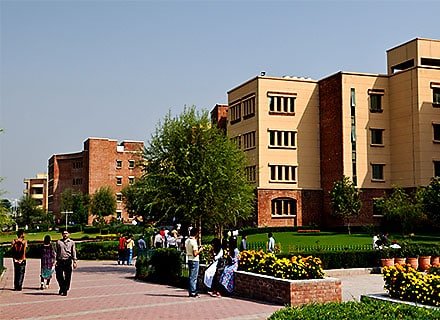
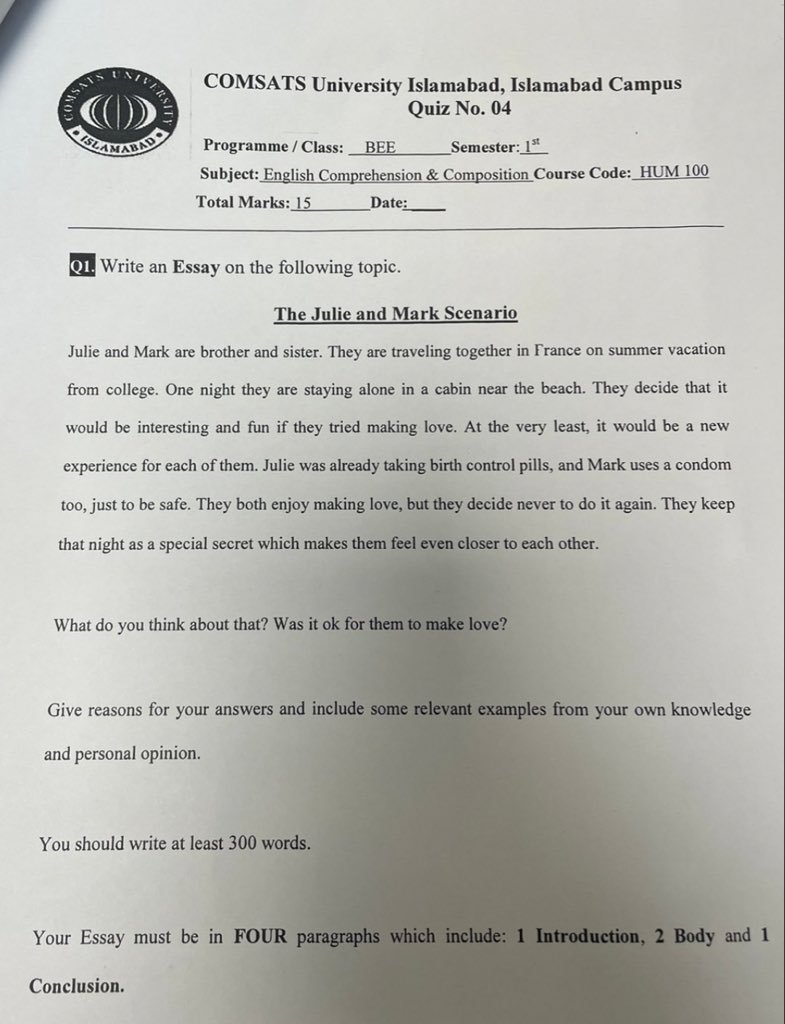
    A visiting-faculty member from COMSATS University has been fired after students from the Electric Engineering department were shocked by the question they had received for their English Composition exam.

    The university administration released a letter addressing the question about incest, and revealed that the lecturer responsible for the quiz has been removed from his position.

    As the question went viral on Twitter, social media users expressed how horrified they were and called it a sign of the destruction of the education system in Pakistan.

    “This is the end of our education system. Such a curse #COMSATS is,” one user wrote.

    Journalist Shama Junejo shared that she had never seen such filth promoted this way

    “I have lived & studied in West since decades,my children have studied in UK since their childhood,I have never seen or read any such filth,what I read in this examination of COMSATS university to promote incest. Whoever designed it,is a sick bastard & must be removed immediately.”

    More twitter users called for strict action to be taken against the University lecturer who had designed this quiz.

  • Pakistan to implement separate gas tariffs for rich and poor

    Pakistan to implement separate gas tariffs for rich and poor

    Dr Musadik Masood Malik, the State Minister for Petroleum, has announced that the government of Pakistan will implement a new system of gas tariffs that will differentiate between the rich and the poor. The purpose of this measure is to provide relief to low-income citizens who struggle to pay their gas bills.

    According to Dr Malik, the government will apply “various slabs” for the poor that will be “three times less than those of rich using the same or more gas under the same slabs.” He made this announcement during a press conference at the Lahore Press Club on Sunday.

    In addition to this, the government will supply locally explored gas or the reserves to be explored in the future to gas-fired power plants for cheap energy generation. The goal of this measure is to bring down the electricity tariff for the public at large. According to Dr Malik, the cost of generating electricity through LNG is Rs26 per unit, while it is only Rs7 when plants are operated on indigenous gas.

    Dr Malik also pointed out that only 1,000 super-rich people have captured the country of 220 million people. He deplored the fact that Pakistan provides gas at a much lower cost of “just 70 cents” per MMBTU, compared to rich countries like Saudi Arabia, Qatar, and Bahrain, where the cost is $2, $3, and $4 per MMBTU, respectively.

    He also criticised the government’s policies for creating a divide between the rich and the poor. He blamed Prime Minister Imran Khan for turning Pakistan into two countries, one for the rich and the other for the poor. He stated that “one Pakistan is that where a poor man is sent to jail for stealing bread for his children while the other one is that where a man involved in stealing watches and diamonds worth billions of rupees is sitting in his home.” He also stated that “one Pakistan is for the poor seeking money for medicines, while in the other, the people have been importing billions of dollars’ worth of precious vehicles.”

    As a result, Dr Malik announced that the government has decided to tax the rich and the powerful, not the poor or the weaker ones. He stated that the government stands with the poor, which represents around 60 per cent of the population, and that they have either reduced or maintained the gas tariff for them. He maintained that “we are the poor, as we were with them in old Pakistan.”

  • 15 dead, 60 injured in bus accident near Kallar Kahar

    At least 15 people including women and children have died and over 60 were injured after a bus overturned on M2 near Kallar Kahar late on Saturday night.
    The bus was carrying wedding guests on its way to Rawalpindi. The brakes of the vehicle failed near Kallar Kahar, where the bus broke through road barriers and plowed into cars traveling on the other side of the road before overturning.
    Shortly thereafter, rescue and police personnel reached the spot and shifted the injured and the dead to a hospital. The death toll may rise as many of the injured are in critical condition.
    Prime Minister Shehbaz Sharif expressed grief on the accident and ordered that the injured should be provided all possible relief.

  • IMF chief wants the poor people of Pakistan to be protected

    IMF chief wants the poor people of Pakistan to be protected

    In a recent interview with an international broadcaster, Kristalina Georgieva, the Managing Director of the International Monetary Fund (IMF), called for Pakistan to distribute subsidies more fairly, redirecting resources from the wealthy to those in need. Georgieva urged the country to increase tax revenues from those who are making good money, both in the public and private sectors, to contribute to the economy.

    The IMF is keen for Pakistan to function effectively as a country and avoid dangerous levels of debt, which could lead to the need for debt restructuring. Georgieva expressed concern for the people of Pakistan, who have been devastated by floods affecting one-third of the population.

    The IMF has recommended that Pakistan broaden its narrow tax base, with only 3.5 million return filers out of a population of over 200 million. The lender has also called for the removal of untargeted subsidies and the redirection of resources towards the poor, including the Benazir Income Support Programme (BISP), for which the government has increased the allocation from Rs360 billion to Rs400 billion to protect the poorest from inflationary pressures.

    The IMF’s review mission has made it clear that Pakistan must undertake tax revenues from all those who possess income to contribute to the national kitty.

    Pakistan faces a looming balance of payment (BoP) crisis, with external debt servicing of $27 billion required in the next financial year. The ongoing IMF programme of $6.5 billion under the Extended Fund Facility (EFF) is due to expire on June 30, 2023, and there is no possibility of any further extension in the ongoing EFF arrangement.

    The IMF could help Islamabad overcome the crisis by ensuring that the country can pay its debt obligations without plunging into default. The revival of the IMF programme will be a pre-requisite step for seeking any debt restructuring, so the government is currently focusing on it.