Blog

  • Rs170 billion in taxes to be imposed through mini-budget for revival of IMF loan program

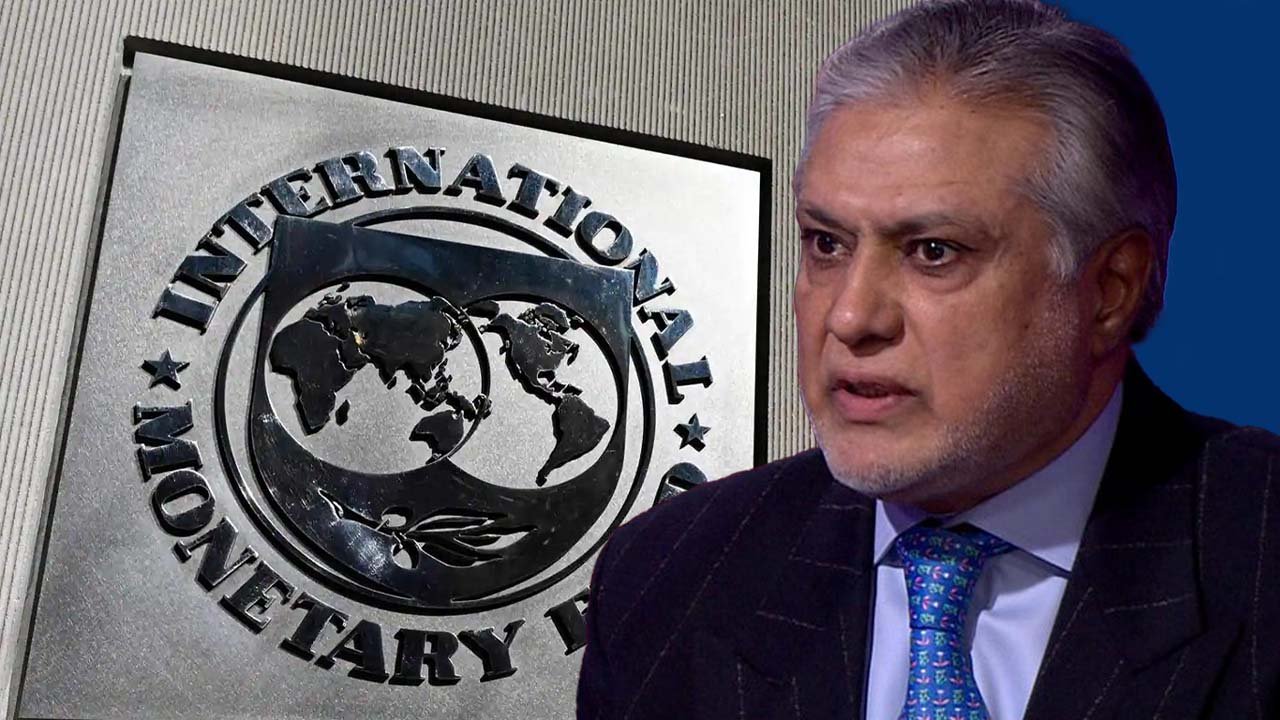
    The Minister of Finance, Ishaq Dar, has announced that the talks between Pakistan and the International Monetary Fund (IMF) have concluded positively. In order to revive the loan program, the government will be required to implement a mini-budget, which includes collecting approximately Rs170 billion in taxes.

    During a media briefing, the finance minister confirmed receipt of the draft of the Memorandum of Economic and Financial Policies (MEFP) from the IMF based in Washington. At the outset of his media address, the minister emphasized that the current government is continuing to implement the program signed by former Prime Minister Imran Khan with the IMF in 2019-2020, and that the talks are being held as a “sovereign commitment” under the leadership of Shehbaz Sharif.

    “This is an old agreement which had been suspended and delayed previously,” he noted. 

    Regarding the discussions between Pakistan and the IMF mission, the finance minister stated that the talks, which lasted for ten days, were comprehensive and covered a range of topics including the power and gas sectors, as well as the fiscal and monetary aspects.

    “The SBP governor and officials from different departments and ministries participated in the talks,” said Dar.

    Finance Minister Ishaq Dar has shared details of the agreement reached with the IMF regarding the country’s financial situation. The finance minister confirmed that taxation measures of Rs170 billion will be taken, dispelling rumors of a larger figure of Rs700-800 billion.

    Dar highlighted that reforms in the energy sector will be a key focus, aimed at curbing the flow of circular debt, particularly in the gas sector where efforts will be made to bring the circular debt to zero and minimize untargeted subsidies.

    The minister acknowledged that some of the reforms suggested by the IMF are beneficial for Pakistan and emphasized the need for reforms in the country. He added that Prime Minister Shehbaz Sharif has assured the IMF of the government’s commitment to implement the necessary reforms.

    As per the standard procedure, a MEFP and a letter of intent are given. “The government has received the MEFP draft this morning and we will go through it on the weekend. A virtual meeting with the IMF will be held after that on Monday,” he added.

    “We believe that there are some sectors that need to be reformed in Pakistan’s interest,” he said.

    The Minister of Finance, in a statement, indicated that the country’s economy is facing significant challenges, with its current ranking standing at 47. The minister attributed the economic struggles to poor governance and mismanagement, and emphasized the need to address and rectify the situation.

    In reference to the power sector, the finance minister noted that a large portion of the national budget, approximately Rs3,000 billion, is spent on electricity generation, however, the recovery rate for these expenditures is only Rs1,800 billion. This highlights the pressing need for reforms and improvements in the sector to enhance efficiency and ensure sustained economic growth.

    “Even though these reforms are painful but we will have to implement them,” he maintained.

    He said that the government had decided that Pakistan will complete the IMF’s programme for the second time.

    “Pakistan will get $1.2 billion after the approval of IMF’s Executive Board.”

    The Minister of Finance announced that it has been determined to increase the budget of the Benazir Income Support Program (BISP), bringing it to a total of Rs400 billion. This increase is aimed at mitigating the impact of inflation on the most vulnerable segments of society.

    Regarding the declining foreign currency reserves, the minister provided reassurance that efforts are underway to boost them. The minister credited the State Bank of Pakistan (SBP) with managing the situation and noted that support from friendly countries has also been secured through commitments.

    “Pakistan had made big payments to countries during this time, and once the programme is finalised, we will get the amount back,” said Dar.

    The Minister of Finance criticized the previous administration for the credibility gap in the country’s reputation, stating that the lack of trust from the IMF is a result of the previous government’s failure to implement reforms, and even reversing them during a period of political instability.

    “This has negatively portrayed Pakistan’s image and this has affected the recent talks as [the IMF] is not sure if we would agree to it,” he added.

    He added that the government refused to impose sales tax on petrol and the IMF conceded it. “It was mutually agreed that there will be no sales tax on petroleum products,” he said. He added that the general sales taxes will be added to the Rs170 billion.

    Dar said that it is necessary to recover Rs170 billion in taxes within the current fiscal year, within a period of four months.
  • ‘Only one prime minister in Pakistan’s history was considered very honest’: CJP Bandial

    ‘Only one prime minister in Pakistan’s history was considered very honest’: CJP Bandial

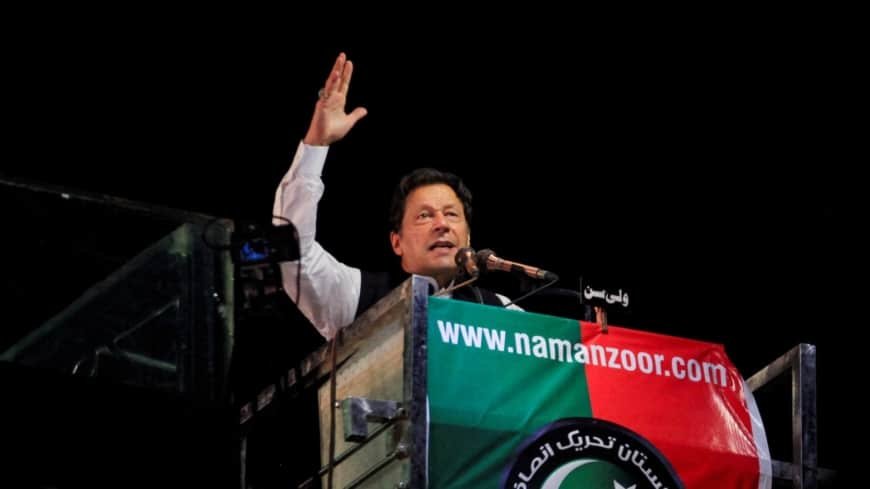
    Chief Justice of Pakistan (CJP) Umar Ata Bandial has said that “Only one prime minister in Pakistan’s history was considered very honest.” The remarks were passed during a hearing of a Pakistan Tehreek-e-Insaf (PTI) plea against amendments in National Accountability Bureau (NAB) laws. The Chief Justice, however, did not name the Prime Minister in question.

    “One honest prime minister’s government was ended through 58 (2b). Article 58 (2b) was a draconian law. The court had said in 1993 that the government was [sent packing] in a wrong manner but only elections should be conducted now,” the CJP said.

    Justice Bandial also said that the judiciary did not want to meddle in the legislative and that it had not taken notice itself of the NAB amendments ibut a petition had been filed. He highlighted that the court had rued its decision once before as well.

    A three-member Supreme Court bench — comprising CJP Bandial, Justice Syed Mansoor Ali Shah and Justice Ijazul Ahsan — PTI Chairman Imran Khan’s plea, which claims the new NAB laws are a “violation of fundamental rights

    The CJP said, “The PTI chief is not in the assembly and legislation like the NAB amendment is now becoming controversial.”

    Stating that the court has to determine what is standard of cases related to human rights, the government counsel asked, “Can anyone challenge legislation based on assumptions?”

    Replying to this, the CJP reiterated that Imran was no ordinary man but “the chief of a huge political party of the country and was a former prime minister”.

    Justice Bandial added: “His party decided to resign from the parliament due to political conflicts. His party then changed its mind and now they want to return. But they are not a part of parliament right now. But parliament is there.”

  • US sees TTP as a threat to Pakistan

    US sees TTP as a threat to Pakistan

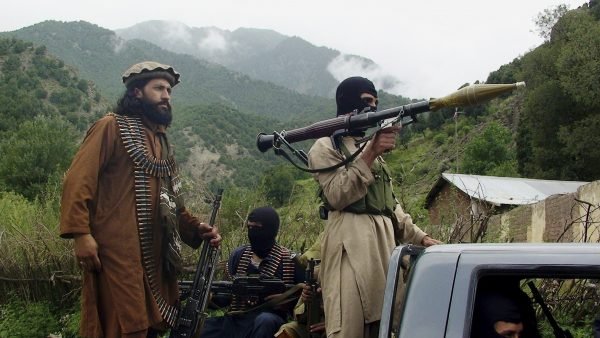
    Counselor of the United States (US) State Department, Derek Chollet, has said that his country sees the outlawed Tehreek-e-Taliban Pakistan (TTP) as a threat to Pakistan.

    While talking to ARY, Chollet said, “We have seen [TTP] in a terrible way a threat to Pakistan. The US considers any terrorist act as unexpectable.”

    The Counselor will pay an important visit to Pakistan during the ongoing week to explore possibilities of coordinating efforts to combat terrorism.

    He was also of the view that there is a great opportunity to further improve the relationship between Washington and Islamabad.

    The US diplomat said that Pakistan and US are working together to deal with the threats of terrorism.

    Since government talks with the TTP broke down in November, the militant group has intensified its attacks across Pakistan including attacks on the police.

    According to statistics released by the Pakistan Institute for Conflict and Security Studies (PICSS), January 2023 remained one of the deadliest months since July 2018.

    Most recently, more than 100 people lost their lives during a suicide attack at a mosque in Peshawar’s Police Lines. The TTP initially claimed responsibility for the attack, however, it later backtracked and claimed that they did not perpetrate the bombing.

  • Pakistani rupee strengthens by Rs2.82 against dollar, closes at Rs270.51

    Pakistani rupee strengthens by Rs2.82 against dollar, closes at Rs270.51

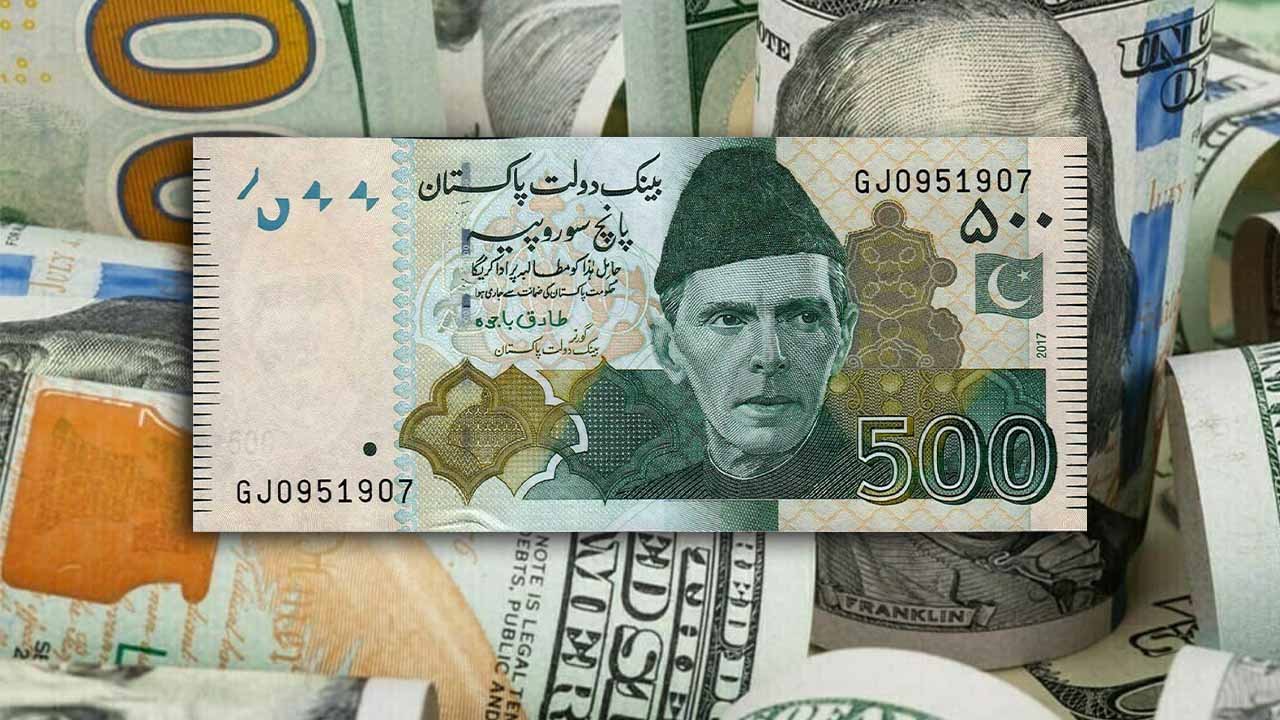
    The Pakistani rupee (PKR) experienced an upward trend against the US dollar in the inter-bank market on Thursday, appreciating by 1.04 per cent due to expectations surrounding the revival of the International Monetary Fund (IMF) program.

    According to the State Bank of Pakistan (SBP), the currency closed at Rs270.51 against the US dollar, reflecting an increase of Rs2.82. Despite this improvement, the currency has depreciated by 23.7 per cent during the current fiscal year against the US dollar.

    On Wednesday, the PKR also saw significant gains against the US dollar, closing at Rs273.33, reflecting an appreciation of Rs2.95 or 1.08 per cent.

    In a key development, Finance Minister Ishaq Dar said on Thursday negotiations between Pakistan and the IMF are “on track” and “we will announce good news soon”.

    Speaking to the media, Dar said talks between the two sides had entered the final round, progress has been “satisfactory” and he hopes discussions will conclude today.

    The dollar index, which measures the US currency against six rivals, was 0.029 per cent higher on Thursday at 103.460, having dropped nearly 0.3 per cent in the previous session.

    Gold prices, rose for a fourth straight session as the dollar faltered, although bullion’s outlook remained cloudy amid the comments made by Fed officials.

    Meanwhile, oil prices, a key indicator of currency parity, were broadly steady on Thursday as the prospect of higher fuel demand in China as it reopens post-COVID curbs were offset by fears that US crude stocks hitting their highest for months may signal weakening demand in the world’s number one economy.

  • When will provincial assemblies elections take place?

    It’s been almost a month now since the dissolution of the Punjab and Khyber Pakhtunkhwa (KP) assemblies, however, no consensus on the election dates has been reached so far.

    It is to be noted that the Election Commission of Pakistan (ECP) had recommended that the elections be held between April 9 and 17.

    On January 27, Pakistan Tehreek-e-Insaf (PTI) approached the Lahore High Court (LHC), seeking an order for the Punjab governor to immediately announce the date for elections in the province.

    Later, the high court directed Punjab Governor Muhammad Baligur Rehman and the ECP — to submit their replies to the court by Feb 10.

    In his reply, the Governor stated that he had not created any obstacle for the ECP to announce the election date.

    “If the governor did not dissolve the assembly on the so-called advice of the chief minister, then it is not the responsibility of the governor to give the date for the polls,” he said.

    No security forces avaible for elections

    Another hindrance in holding the election has come forth now as the government has said that it wouldn’t be able to provide full security during elections due to unavailability of personnel.

    Earlier this week, ECP had written to the federal government, seeking the deployment of troops of civil armed forces for the conduct of general and by-elections in various constituencies of the national and provincial assemblies.

    However, the interior ministry, headed by Rana Sanaullah, informed the ECP that the armed forces would not be able to perform security duties during the provincial assembly elections in Punjab and KP as well as by-elections on 64 National Assembly seats as it was busy conducting census and counter-terror operations.

    According to the ministry, both the armed and civil forces are overwhelmed with work on dealing with the threat of terrorism in the country. In addition, the troops are also required to undertake widespread deployment to achieve secure conduct of the census.

  • Everything is going alright with IMF, says Ishaq Dar

    Everything is going alright with IMF, says Ishaq Dar

    Finance Minister Ishaq Dar said on Thursday that it is expected that the matters between the government and the International Monetary Fund (IMF) regarding the conclusion of the 9th review of the $7 billion loan program will be settled today.

    “Everything is going alright,” replied the finance minister when asked about the status of the discussions with the visiting IMF delegation. “The final round is currently underway. I have daily meetings with the IMF team and will do so again today,” he added.

    “It is expected matters will be settled today,” Dar said. “We will give you the news very soon.”

    A delegation from the IMF, led by Nathan Porter, has arrived in Islamabad for discussions surrounding the completion of the ninth review. The discussions are set to conclude on the same day.

    The successful completion of the review would result in the disbursement of $1.2 billion from the IMF and also unlock additional funding from friendly nations and other multilateral lenders, which is crucial for Pakistan to avoid default.

    Minister of State for Finance and Revenue Aisha Ghaus Pasha informed journalists on Wednesday that the government and the IMF are in close proximity to finalizing the Memorandum of Economic and Financial Policies (MEFP).

    Minister of State for Finance and Revenue Aisha Ghaus Pasha stated that the Memorandum of Economic and Financial Policies (MEFP) would be delivered to Pakistan by the IMF once all issues have been resolved. The Minister noted that significant progress had been made, but added that the IMF was seeking clarification on certain aspects, which the government team is working to address.

    In a written statement, the ministry said the talks with the IMF continued on Wednesday and “focused on fiscal table, financing, etc. There is a broad consensus on the reform actions and measures”.

    Additionally, the mission chief also held a meeting with the finance minister to provide an update on the discussions. “The mission is working on putting it all together and will finalise the MEFP,” stated the finance secretary, who declined to comment on the possibility of extending the scheduled talks in order to reach a staff-level agreement.

    According to Dawn, it is of utmost importance for Pakistan to reach a agreement with the IMF, as the foreign exchange reserves have depleted to a low of $3.09 billion as of January 27th, which is only sufficient to cover 18 days’ worth of imports.

  • How many people does PM Shehbaz need in his cabinet to run the country?

    How many people does PM Shehbaz need in his cabinet to run the country?

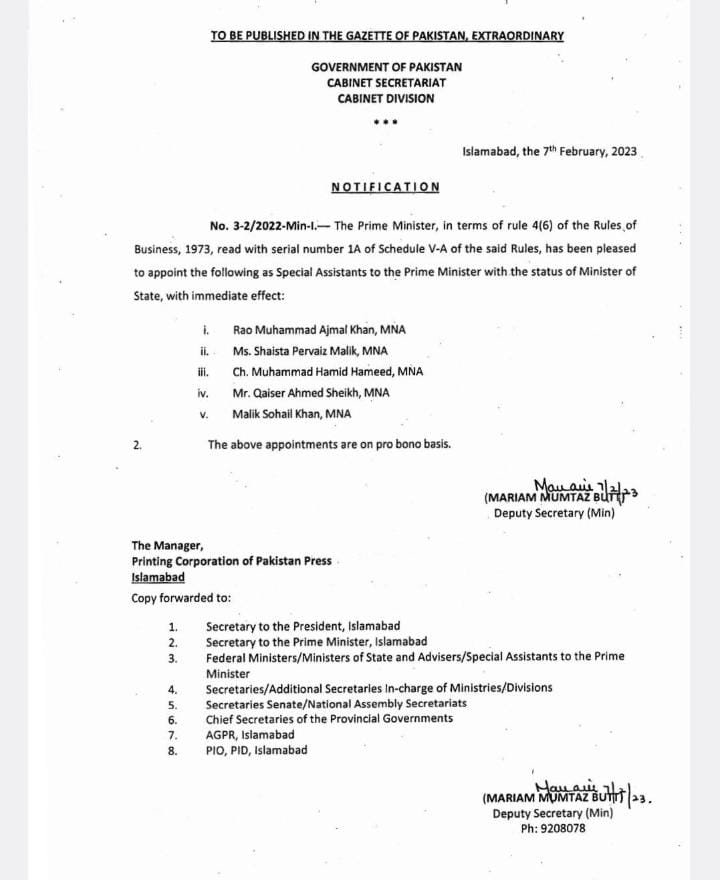
    Prime Minister (PM) Shehbaz Sharif has appointed seven more Special Assistants to the PM (SAPMs) on pro bono basis, as the federal cabinet swells to 85.

    As per details, the PM has appointed five new SAPMs including Members of National Assembly Rao Ajmal, Shaista Parvez, Qaiser Ahmed Sheikh, Muhammad Hamid Hameed, Malik Sohail Khan, Chaudhary Abid Raza and Muhammad Moeen Wattoo.

    Criticising the PM’s decision, PTI leader Farrukh Habib remarked that the government was close to making a century of cabinet members.

    The newly appointed SAPMs will enjoy the status of ministers of state, however they have not been assigned any portfolios yet.

    Of the 85 cabinet members, 34 are federal ministers, seven are ministers of state, and there are four advisers to the PM and 40 SAPMs.

    Besides the long list of federal cabinet members, 38 parliamentary secretaries in the National Assembly answer questions on behalf of the ministers in their absence.

  • You can now share your thoughts in a new way with WhatsApp voice statuses feature

    You can now share your thoughts in a new way with WhatsApp voice statuses feature

    WhatsApp has recently introduced a new feature, allowing users to post voice notes as statuses, with a maximum recording length of 30 seconds for their contacts to listen to. These voice notes will have a lifespan of 24 hours before disappearing, expanding the types of content that can be shared through the status feature.

    The meta-owned messenger introduced the status feature in 2017, which initially allowed users to share photos, videos, GIFs, and text updates. With the increasing popularity of voice messaging on the platform, the company has now added the option to share voice notes as statuses. In March of the previous year, WhatsApp announced that it was processing a daily average of 7 billion voice messages, further highlighting the growing demand for this feature.

    Moreover, WhatsApp is enhancing the status feature by offering status reactions, similar to the message reactions that were introduced by the company last year. Additionally, users will now have the ability to specify their desired audience for statuses, allowing them to control who can view their updates. This audience selection can be saved and applied to all future status updates, providing more control over privacy and visibility.

    It is currently uncertain how many users are actively utilizing the status feature to communicate with their contacts, however, the company is actively striving to increase its popularity.

  • GHQ excuses itself from deploying army and rangers’ personnel for upcoming elections

    GHQ excuses itself from deploying army and rangers’ personnel for upcoming elections

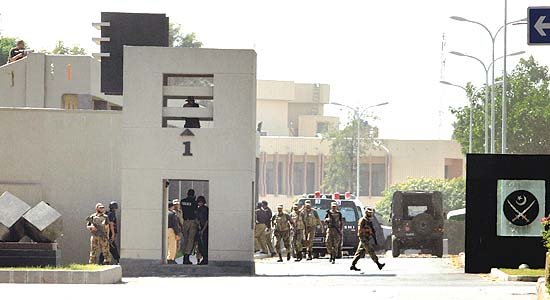
    The General Headquarters (GHQ) on Thursday excused from providing personnel from army, paramilitary Rangers and Frontier Constabulary (FC) for the upcoming elections in Punjab and Khyber-Pakhtunkhwa.
    

    The Election Commission of Pakistan (ECP) had requested the Defense Ministry to deploy army and rangers for the upcoming elections in the two provinces.

    Responding to the ministry, GHQ said that the forces are occupied with national security duties due to the recent wave of terrorism.

    However, Punjab Rangers will be available as the Quick Response Force during these elections.

    On the other hand, replying to the ECP’s letter, the Finance Ministry has asked the election-conducting authority to postpone its demand for an additional grant in the wider national interest.

    The finance ministry requested the election commission to delay its request for the grant until the economic situation of the country improves.

  • Mooove over men! This Valentine’s day, India wants people to hug cows

    Mooove over men! This Valentine’s day, India wants people to hug cows

    It looks like the lonely singles in India will have something to do other than side-glaring at all the happy couples out there.
    An appeal signed by The Animal Welfare Board of India has encouraged people to hug cows on Valentine’s Day, suggesting that it will bring about “emotional richness” and “increase individual and collective happiness.”

    Calling cows the backbone of Indian culture and rural economy, the organisation has emphasized how the mammal sustains life, represents cattle wealth and biodiversity. “It is known as ‘kamdhenu’ and ‘gaumata’ because of its nourishing nature like a mother, the giver of all providing [sic] riches to humanity.
    Vedic traditions are almost on the verge of extinction due to the progress of west [sic] culture over time. The dazzle of western civilization has made our physical culture and heritage almost forgotten.
    In view of the immense benefits of the cow, hugging [the] cow will bring emotional richness hence will increase our individual and collective happiness. Therefore, all the cow lovers may also celebrate February 14 as Cow Hug Day, keeping in mind the importance of the mother cow and making life happy and full of positive energy. This [was] issued with the approval of competent authority and on the direction of the Department of Animal Husbandry and Dairying, Ministry of Fisheries, Animal Husbandry and Dairying.”

    As soon as this news began circulating on social media, #CowHugDay started to trend both in Pakistan and India, and for once users from both countries began to bond over the pointlessness of politics.

    Bhai,bhai

    Ok, RUDE

    https://twitter.com/Rifrif9510/status/1623503842540400641?s=20&t=Uh_9Tj7t0XF06GcPo-DTtA