Blog

  • Bilawal shares unseen family photo from Bakhtawar’s wedding

    Bilawal shares unseen family photo from Bakhtawar’s wedding

    Bilawal Bhutto-Zardari has shared an unseen family photo from Bakhtawar Bhutto-Zardari’s wedding celebrations while wishing his sister Aseefa Bhutto-Zardari on her birthday.

    The picture which also features Bakhtawar’s husband Mahmood Choudhry shows Bilawal and Aseefa enjoying a light moment as the bride and groom pose for the photograph.
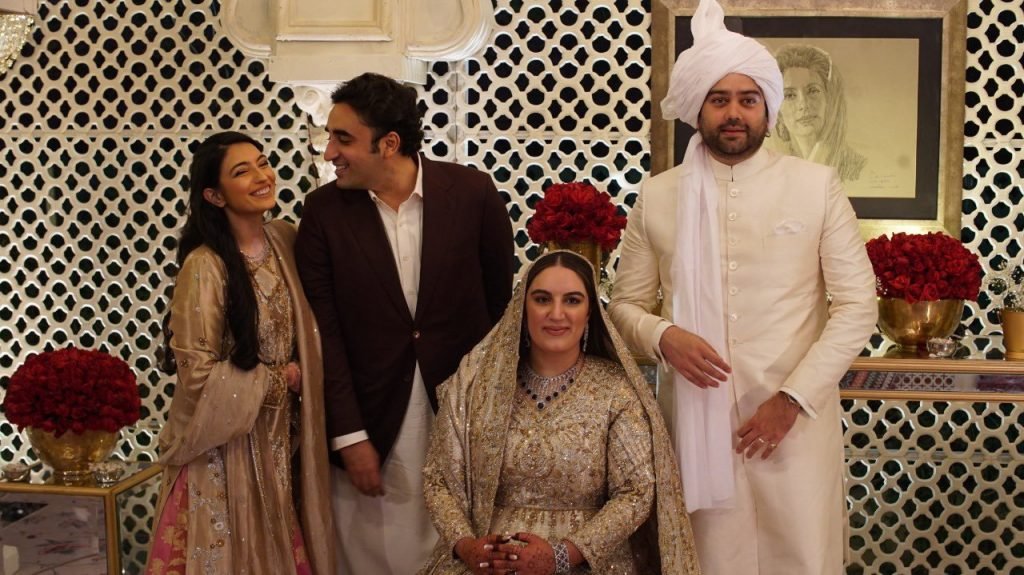
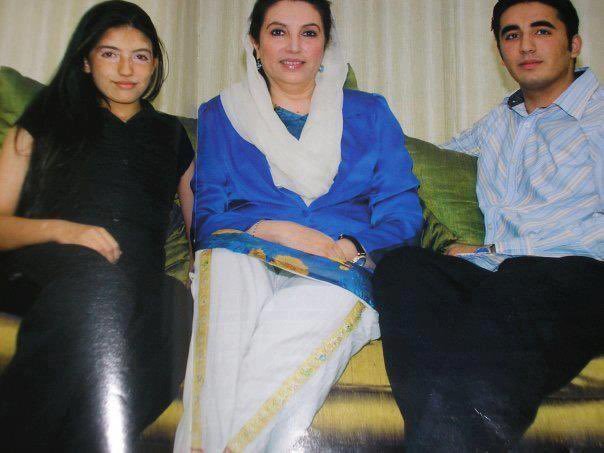
    Bilawal also shared pictures of himself and his siblings from their childhood and one of him and Aseefa with their late mother Benazir Bhutto in the post.
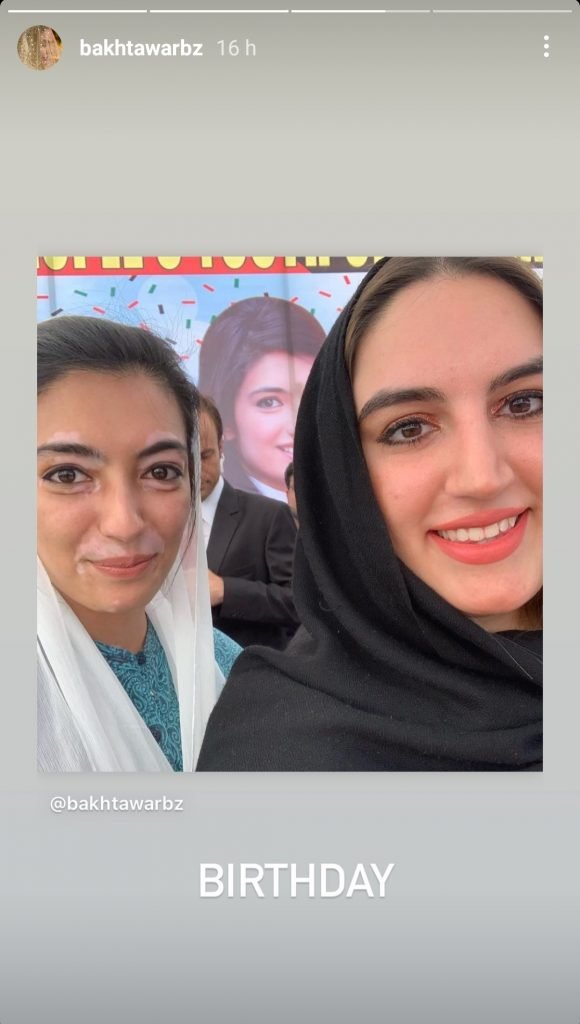
    Similarly, Bakhtawar also shared an old picture with Aseefa while wishing her on social media.
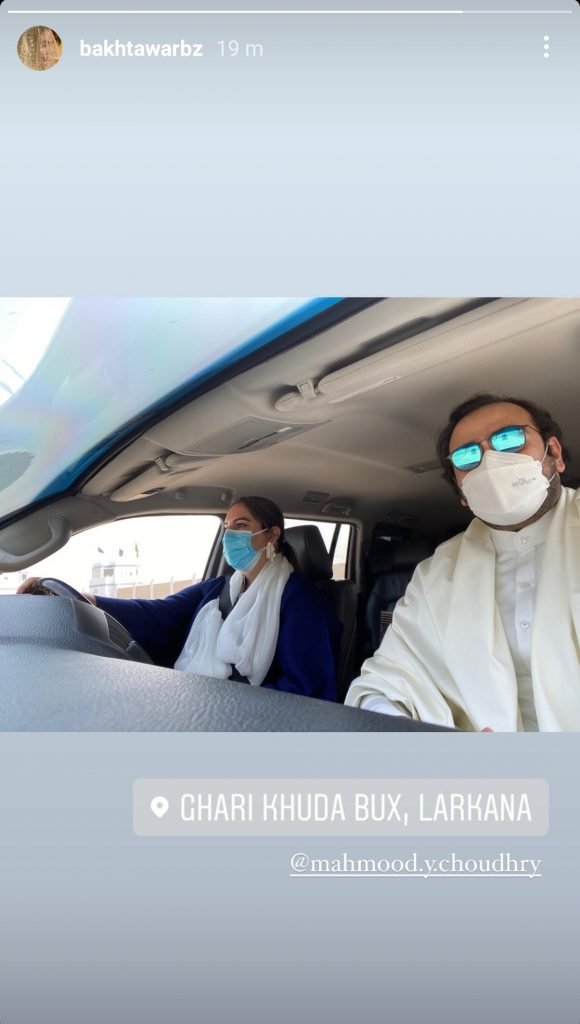
    Meanwhile, newlyweds Bakhtawar and Mahmood visited Garhi Khuda Baksh in Larkana, days after their wedding. Bakhtawar shared pictures their visit on social media.

    Garhi Khuda Bakhsh is a small village in Ratodero, notable for the Bhutto family mausoleum, where Zulfikar Ali Bhutto, Murtaza Bhutto, Nusrat Bhutto and Benazir Bhutto are buried.
    Read more – ‘All in the details’: Bakhtawar shares closeup of mehndi outfit

    Bakhtawar and Mahmood tied the knot on January 29 in an intimate nikkah ceremony at Bilawal House. The nikkah was preceded by a mehndi and followed by a grand reception. While pictures and other details from the wedding festivities were limited considering the ‘no cellphone’ policy at the event, Bakhtawar while thanking everyone for their prayers and wishes, had promised that the couple “will be sharing [their] joy” with their wellwishers through the moments captured.

  • India slams Rihanna, Greta Thunberg, Mia Khalifa for supporting farmers protest

    Rihanna on Tuesday created a flutter in India by wading into months-long farmer protests against Prime Minister Narendra Modi’s agricultural reforms. Tens of thousands of young and old farmers have blocked roads leading into New Delhi for more than two months, sheltering in tractors from the cold.

    A tractor rally by farmers last week in New Delhi turned violent. Police responded by shutting down the internet, digging ditches, driving nails into roads and topping barricades with razor wire to prevent farmers from entering the capital again.

    “Why aren’t we talking about this?!” Rihanna said in a Twitter post, sharing a CNN article on the demonstrations with her 100.9 million followers on the platform, using the hashtag #FarmersProtest.

    The same article was shared by teen climate activist Greta Thunberg, who also expressed solidarity with the farmers.

    US Vice President Kamala Harris’ niece Meena Harris also extended her support to the protest, writing: “We ALL should be outraged by India’s internet shutdowns and paramilitary violence against farmer protesters.”

    https://twitter.com/meenaharris/status/1356747965713371138?s=20

    Similarly, Mia Khalifa and John Cusack also extended their support to the protesting farmers.

    The international celebrity tweets triggered an online storm in India, where the farmers’ protests have become one of the biggest challenges to Hindu nationalist Prime Minister Narendra Modi since he took power in 2014. Modi has asserted the laws are necessary to modernise India’s agriculture sector, but farmers fear they would be placed at the mercy of big corporations.

    India’s government has bristled at international remarks on the protests, calling them an “internal matter”.

    In an official statement, the foreign ministry said that the celebrities needed “a proper understanding of the issues”.

    “The temptation of sensationalist social media hashtags and comments, especially when resorted to by celebrities and others, is neither accurate nor responsible,” read the statement, with the hashtags #IndiaTogether and #IndiaAgainstPropaganda.

    “We would like to emphasise that these protests must be seen in the context of India’s democratic ethos and polity, and the efforts of the Government and the concerned farmer groups to resolve the impasse,” it added.

    Meanwhile, Kangana Ranaut, a vocal Modi supporter, responded to Rihanna by calling the protesting farmers “terrorists” and Rihanna a “fool” and an “American porn stars”. She also called Thunberg a “dumb and spoilt brat.”

    Similarly, Akshay Kumar offered traction to MEA’s statement by sharing it and writing: “Let’s support an amicable resolution, rather than paying attention to anyone creating differences.”

    India — the world’s biggest democracy — regularly uses internet shutdowns to limit information sharing during disturbances.

  • All you need to know about Indian farmers’ protests as world shames Modi govt

    With international celebrities, including Rihanna and Greta Thunberg, voicing concerns over the law and order situation in India as farmers continue to give the Narendra Modi-government a tough time while seeking fulfillment of their demands, ‘#FarmersProtest’ has become the top trend on Twitter even beyond Indian borders — in Pakistan.

    But what do the protesters, who have now been on roads for two months, really want?

    The ongoing demonstrations caught most attention when Indian law enforcement resorted to violence against the farmers who had converged on New Delhi on the country’s Republic Day.

    According to Associated Press (AP), farmers hailing from northern Punjab and Haryana states, the two biggest agricultural producers, are demanding the repeal of laws passed by the parliament in September that they say will favor large corporate farms, devastate the earnings of many farmers and leave those who hold small plots behind as big corporations win out.

    Modi has billed the laws as necessary to modernise Indian farming.

    In recent weeks, people who are not farmers have also joined in, and the protests gained momentum in November when the farmers tried to march into New Delhi but were stopped by police. Since then, they have promised to hunker down at the edge of the city until the laws are repealed.

    At the heart of these protests are Indian farmers’ fears that the government’s moves to introduce market reforms to the farming sector will leave them poorer — at a time when they are already frustrated over their declining clout as the government aims to turn India into a hub for global corporations.

    The new legislation is not clear on whether the government will continue to guarantee prices for certain essential crops — a system that was introduced in the 1960s to help India shore up its food reserves and prevent shortages.

    While the government has said it is willing to pledge the guaranteed prices will continue, the farmers are skeptical and want new legislation that says such prices are their legal right.

    Farmers also fear that the legislation signals the government is moving away from a system in which an overwhelming majority of farmers sell only to government-sanctioned marketplaces. They worry this will leave them at the mercy of corporations that will have no legal obligation to pay them the guaranteed price anymore.

    The Modi government argues that this is designed to give farmers more choice in who to sell their produce to. It also says the legislation will benefit farmers by boosting production through private investment.

    The government has offered to amend the laws and suspend their implementation for 18 months — but that has not satisfied farmers who want a full repeal.

    Clauses in the legislation also prevent farmers from taking contract disputes to courts, leaving them with no independent means of redress apart from government-appointed bureaucrats.

    These perceived threats to their income terrify India’s farmers, who are mostly smallholders as around 70% of them own less than 1 hectare of land.

  • Global Democracy Index ranks Pakistan 105/167; says Islamabad has ‘hybrid democracy’

    Global Democracy Index ranks Pakistan 105/167; says Islamabad has ‘hybrid democracy’

    Democracy has had yet another bad year globally, according to the latest edition of the Democracy Index from The Economist Intelligence Unit (EIU).

    The annual EIU’s Democracy Index provides a snapshot of the state of democracy worldwide in 167 countries. This covers almost the entire population of the world and the vast majority of the world’s states (microstates are excluded).

    The index is based on five categories, electoral process and pluralism, the functioning of government, political participation, political culture and civil liberties.

    Based on its scores on a range of indicators within these categories, each country is then itself classified as one of four types of regime: “full democracy”, “flawed democracy”, “hybrid regime” or “authoritarian regime”.

    This year, the index classified 23 countries as full democracies, 52 as flawed democracies, 35 as hybrid regimes and 57 as authoritarian regimes.

    Securing the 105th slot, Pakistan, like last year, has been placed under the head of hybrid democracy, next to Turkey at the 104th rank. India, on the other hand, has been classified as a “flawed democracy” along with countries such as the United States (US), France, Belgium and Brazil.

    Among the countries topping the list are Norway, Iceland, Sweden, New Zealand and Canada, followed by Finland, Denmark, Ireland, Australia and Netherlands.

    “The authorities’ handling of the coronavirus pandemic led to a further erosion of civil liberties in 2020,” the report said.

  • US venture capital fund SOSV invests in Pakistani e-grocer 24SEVEN.pk

    US venture capital fund SOSV invests in Pakistani e-grocer 24SEVEN.pk

    Pakistan’s fastest growing omnichannel grocery shopping platform 24SEVEN.pk has secured a six-figure investment from US-based venture capital fund SOSV.

    The investment is part of 24SEVEN.pk’s ongoing pre-Series A round that is the first phase of a fundraising initiative taken by startups, locally and internationally.

    24SEVEN has also been selected for the 10th cohort of Mobile Only Accelerator, an SOSV programme for consumer technology and mobile-first markets.

    The total amount secured by the startups has remained undisclosed but SOSC has said that funds have been paid to the startup.

    Jarrar Shah, co-founder and CEO of 24SEVEN.pk, said that the funds will be deployed towards building infrastructure that will help the company grow faster.

    The funds will be focused on improving technology stack and supply chain for efficient deliveries as well as towards market expansion and enhancing the platform’s AI capabilities.

    Founded in 2016, 24SEVEN.pk is among Pakistan’s rapidly growing grocery shopping platforms, that claims to have served over 30,000 customers and delivered over 150,000 orders.

    The platform boasts an offering of over 6,000 products including fresh food delivered the same day to consumers. The company also provides direct linkages with farms to ensure food traceability and multiple payment options.

    With over $800 million under management and a cross-border ecosystem of over 1,000 startups, SOSV has backed several notable companies through its accelerator programme MOX.

  • Senate body approves public hanging of child rapists

    Senate body approves public hanging of child rapists

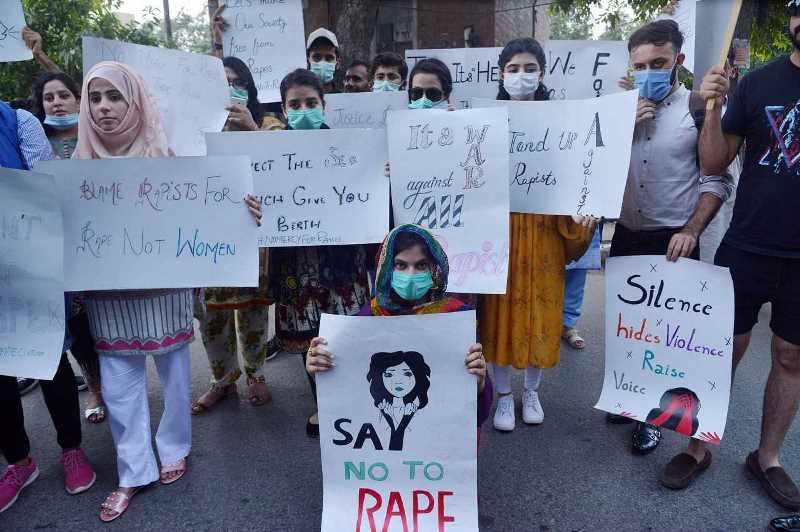
    The Senate Standing Committee on Interior has passed a bill that suggested public hangings of child abusers by seeking amendments in sections 376 and 377 of the Pakistan Penal Code.

    The bill was moved by Pakistan Muslim League-Nawaz (PML-N) Senator Javed Abbasi. As per the proposed legislation, the high courts should conduct trials of the rape cases involving children within 30 days.

    It further says that the Supreme Court should adjudicate the appeals pertaining to these cases within 60 days.

    The bill, if converted into an act of parliament, will also close doors on a compromise by the families of the children who become victims of sexual abuse.

    Dawn quoted the draft of the bill as such: “Whoever commits [child sexual abuse] be punished with death or imprisonment for life without parole till death and shall also be liable to fine.”

    Under a proposed amendment to Section 377 of the PPC, whoever voluntarily has carnal intercourse against the order of nature with any boy under 18 years of age shall be punished with death or imprisonment for life without parole till death and shall also be liable to fine.

    “Rape is a heinous crime; an act of violence that ruins the lives of victims. In Pakistan, rape cases are reported and registered; however, conviction rates of the accused are abysmally low. Recent events relating to sexual abuse and rape throughout the country, particularly against children, have necessitated that tough punishments should be meted out to perpetrators.

    “Current penalties are less compared to the magnitude of the crime. The bill aims to increase the punishment of rape as one of the deterrent to this heinous crime,” reads the statement of objects and reasons.

    During the proceedings of the Senate panel, Pakistan Tehreek-e-Insaf (PTI) leader and Leader of House Senator Shahzad Waseem staged a walkout. Waseem told the newspaper that he had opposed the bill because the government was bringing an ordinance over the same issue.

    However, Senate body Chairman Rehman Malik said that the ordinance should be clubbed with bill during the stage of its consideration.

  • VIDEO: Frontline workers receive their COVID-19 vaccines across Pakistan

    The National Immunisation Drive against COVID-19 formally commenced on Tuesday with a ceremony at the National Command and Control Centre (NCOC) in Islamabad. Prime Minister Imran Khan, Asad Umar, Fawad Chaudhry, Dr Faisal Sultan and Dr Sania Nishtar were among those present at the event.

    According to Umar, Dr Rana Imran Sikander, who heads the COVID ward at PIMS Hospital in Islamabad, was the first person to receive the vaccination in the country.

    Speaking on the occasion, Minister for Planning and Development Asad Umar lauded the sacrifices and services of frontline healthcare workers for serving the nation during the pandemic.

    “Frontline healthcare workers are our real heroes,” said the minister. “No doubt they have put their lives at risk in their fight against COVID-19 and we pay tribute to all of them.”

    He also thanked the Government of China for supporting Pakistan during the pandemic and donating vaccine to the country. Umar also paid tribute to the NCOC team and provincial authorities working in close liaison in the fight against the virus.

    The next day on Wednesday, separate ceremonies were held in all the provinces and federating units at the same time, where healthcare workers received their first dose of the vaccine. Healthcare workers are being inoculated with the Sinopharm COVID-19 vaccine imported from China.

    Meanwhile, addressing a press conference on Wednesday, Special Assistant to Prime Minister (SAPM) on National Health Services Dr Faisal Sultan said an effective mechanism has been developed to ensure the administration of the COVID vaccine to the people.

    Dr Faisal said adult vaccine centres have been established across the country which currently have the capacity to administer the vaccine to forty thousand people on daily basis. He said this capacity will be further enhanced in the coming days.

    The SAPM added that the government aims to inoculate seventy percent population by the end of this year.

  • Time to extend hand of peace in all directions, says Gen Bajwa

    Time to extend hand of peace in all directions, says Gen Bajwa

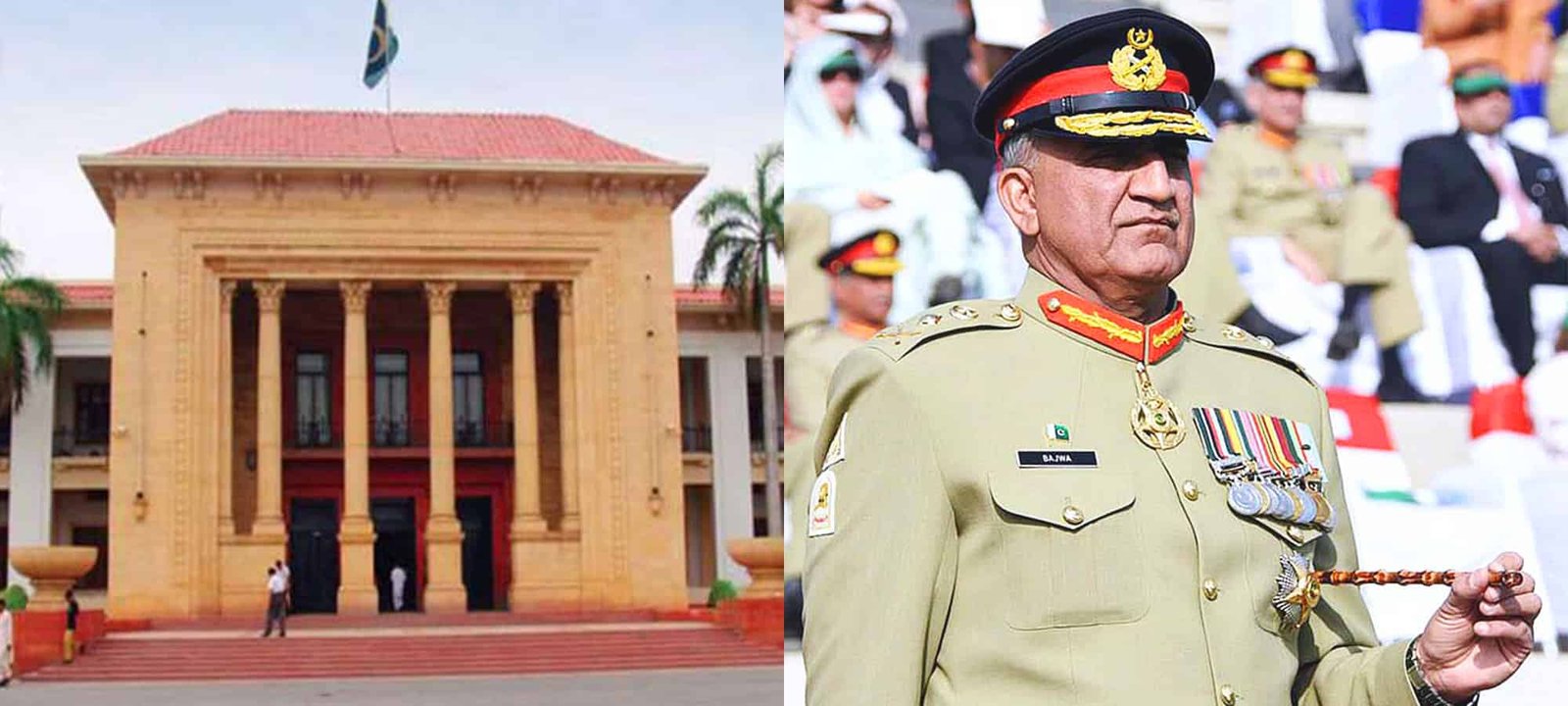
    Chief of Army Staff (COAS) General Qamar Javed Bajwa has said that Pakistan is fully committed to the ideals of mutual respect and peaceful co-existence as it is a peace-loving country.

    He was addressing the graduation ceremony of 144th GD (P), 90th Engineering Course, and 100th AD courses held at Pakistan Air Force (PAF) Academy Asghar Khan, said a statement by the Inter-Services Public Relations (ISPR).

    The country has rendered great sacrifices for regional and global peace, said Gen Bajwa, adding that it is time to extend “hand of peace in all directions”.

    The army chief also talked about the peaceful resolution of the Kashmir conflict. Pakistan and India should also resolve the longstanding issue of Jammu and Kashmir in a dignified and peaceful manner as per the aspirations of people of Jammu and Kashmir and bring this human tragedy to its logical conclusion, the army chief emphasised.

    “However, we will not allow anybody or any entity to misinterpret our desire for peace as a sign of weakness,” he added.

    The army chief said that the armed forces were fully prepared to thwart any threat. The coordination and harmony displayed by all the three services in operations against the enemies of Pakistan had brought great improvement in the internal security environment, he said.

  • PM Imran gaining record weight because of workload: report

    PM Imran gaining record weight because of workload: report

    The workload that entails one’s election as the chief executive of a country can not even be imagined by someone who hasn’t been there, and requires spending a lot of time sitting in the office.

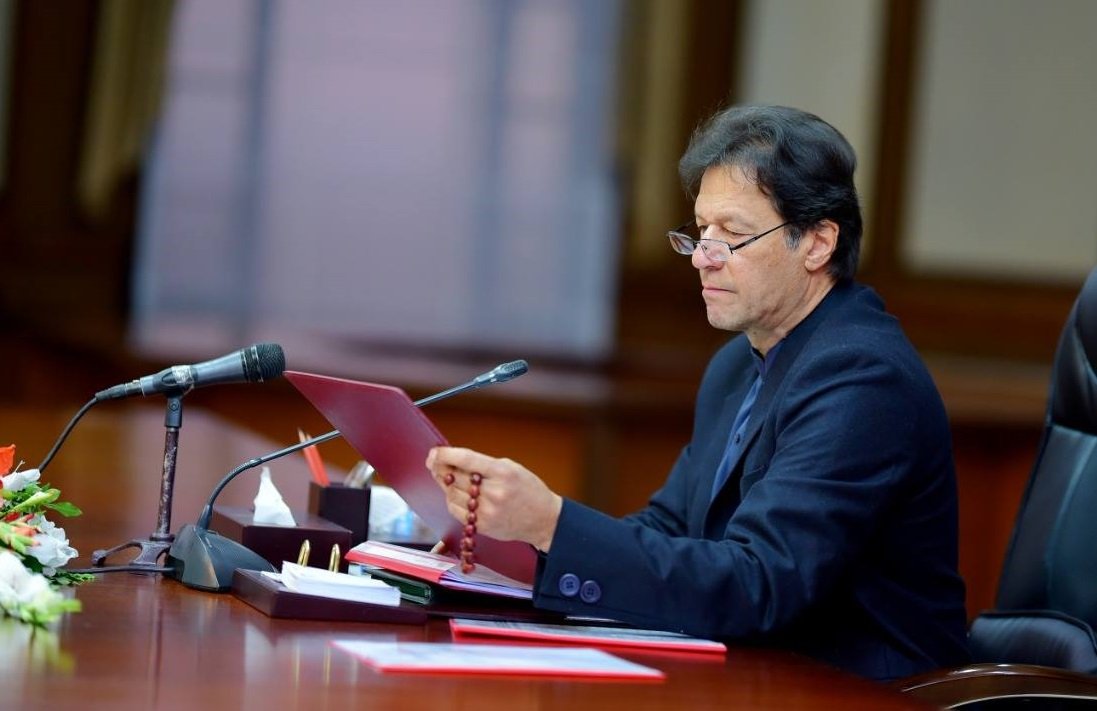
    There have been no exceptions for Pakistan’s very own cricketer-turned-politician, Prime Minister (PM) Imran Khan, who, according to Geo, now weighs around 15 pounds (6 kgs) more than he has ever weighed as a sportsperson, philanthropist or struggling politician.

    According to the premier, he has never weighed more than 185 pounds (83 kgs) but now weighs 200 pounds (90 kgs), the report said.

    PM Imran, who is well-known for maintaining good health through regular exercise, has lately not been exercising at all, the report quoted his close associates as saying.

    Back in 2018 when he had recently assumed office, PM Imran made it a routine for himself to work out in the morning before starting his official duties.

    At that time, pictures of the premier enthusiastically exercising had gone viral on social media, with people commending his healthy lifestyle.

    No holiday when there is a country to be run, Prime Minister Imran Khan has reached office

    #PMIK

    Posted by Imran Khan on Sunday, August 19, 2018

    What do you think of it? Let The Current know in the comments below…

  • Man’s in-laws mutilate his private parts

    Man’s in-laws mutilate his private parts

    The genitals of a man were allegedly mutilated by his in-laws near Mianwali on Tuesday.

    As per reports, the victim who is  a resident of Gharibabad, got married for the second time in three years. He had a son from his first marriage and later was in a relationship with another woman, whom he married by his own choice in Kalabagh.

    Last year, after the victim married for the second time, he restored his relations twice with his first wife, on the condition that he would not go anywhere near the area of her family. However, the victim did not stop stalking the locality of his in-laws from the first marriage.

    Reportedly, the conflict began when he threw a ball at his in-laws. His first wife’s family members were so enraged at him that they grabbed the man and allegedly chopped off his genitals.

    After the victim was assaulted, Kalabagh police reached the spot and recorded the man’s statement. The victim was taken to Kalabagh Tehsil Headquarters Hospital in a critical condition.