Blog

  • Pakistan, IMF and our economic future

    Pakistan, IMF and our economic future

    Pakistan is looking to resume the IMF’s $6 billion programme to bring in some much-needed foreign exchange. The programme was earlier suspended due to the government’s unwillingness to increase power tariffs and bring in a mini-budget. The negotiations for programme resumption were further delayed due to COVID-19 but IMF came to the government’s rescue with $1.4 billion emergency financing, which helped the country sail through tough times.

    But now we are back to square one, and it’s time to take some hard decisions.

    Reportedly, IMF is expecting Pakistan to significantly increase electricity prices, bring in additional revenue measures and introduce a few legal amendments. Pakistan was expecting an IMF mission in December to negotiate the conditions, but it seems that IMF is expecting some solid prior actions by the government, before it plans a review mission.

    There is no doubt that an electricity price increase is inevitable to reduce the mounting circular debt, and new tax measures are critical to help the government reach the ambitious Rs4.9 trillion revenue target. But the government is worried on two counts: not only will these measures be unpopular and further strengthen the opposition’s narrative around inflation but will also make a dent in government’s efforts to stimulate the economy. The prime minister has already given a nod to the electricity price increase; however, it is not clear if this increase is enough and how soon the government will be able to pass this on to consumers.

    However, irrespective of whether the government ends up taking these unpopular yet necessary measures or if the IMF ends up showing some flexibility, it remains to be seen if we can keep on relying on these ad hoc measures, pushing electricity tariffs up for the paying consumers and squeezing the existing taxpayers to meet the ever-increasing targets.

    Pakistan has availed 21 IMF programmes over the past 60 years; however, these programmes failed to bring in any sustainable improvement in Pakistan’s worsening conditions. Pakistan’s repeated boom-bust episodes are now a characterising feature of its economy, where sprouts of growth are inevitably followed by prolonged slumps.

    All political governments start in the midst of a balance-of-payment crisis, necessitating going for an IMF programme. IMF brings in foreign exchange to avoid a default but also fiscal and monetary tightening, which slows down growth. As soon as the IMF goes away, the country takes no time in coming back to its expansionary fiscal and monetary policies, owing to political reasons and mostly to win the next election. This in turn increases the demand for imports, increasing the trade deficit, and the country is pushed into yet another balance-of-payments crisis and the cycle starts all over again.

    But every time, Pakistan’s economic indicators sink a bit further than the previous episode. It is clear that we are on an unsustainable economic trajectory, but our political shortsightedness prevents us from seeing what’s written on the wall.

    What can break this vicious cycle? The answer is actually not that difficult. What we need is a serious dose of structural reforms, where we expand the tax net, do away with the exemptions enjoyed by powerful lobbies, control power thefts and line losses, stop the bleeding by state-owned enterprises, rationalise the ever-growing subsidies and strengthen and diversify our exports base. But these reforms require paying high political costs and compromising on short-term gains for the longer-term future.

    IMF is also no stranger to these solutions. Almost all recent IMF programmes have stressed these reform areas, but every time they end up being content on short-term corrective measures rather than the so-called structural benchmarks.

    A research paper by Harvard Kennedy School in 2015 highlighted that IMF ironically adopts a serial lending pattern. More than one-fourth of IMF member countries were part of an IMF programme for fifty percent of the duration since they became a member. Another 37 per cent have been on IMF programmes for 40 per cent of the time or more. This makes it quite evident that Pakistan, like many other developing economies, has ended up being addicted to this repeated dose of IMF money, without ever fixing the underlying problems.

    Recent months, however, have shown some positive signs, with the government mulling over restructuring plans for SOEs like Pakistan Steel Mills and PIA, announcing ambitious and futuristic power sector reforms, re-negotiating contracts with Independent Power Producers (IPPs), stimulating export industries, and even taking stock of the massive subsidy stock.

    The market-based exchange rate regime adopted by the government has already put in place an auto-corrective measure, whereby any significant current account imbalance will lead to currency devaluation, making imports expensive, reducing demand and narrowing the trade deficit.  However, the government needs to follow through on its plans and build further on this groundwork.

    These measures will undoubtedly be hard to put in place, but sooner or later someone has to go this road. If the present government pushes through on these reforms, it can help the country break out of this vicious cycle and can create a name for itself in Pakistan’s economic history. If not, we’ll be knocking on IMF’s doors yet again in another 4-5 years, but in a much worse condition.
  • Punjab Govt to issue health cards to deserving artists

    Punjab Govt to issue health cards to deserving artists

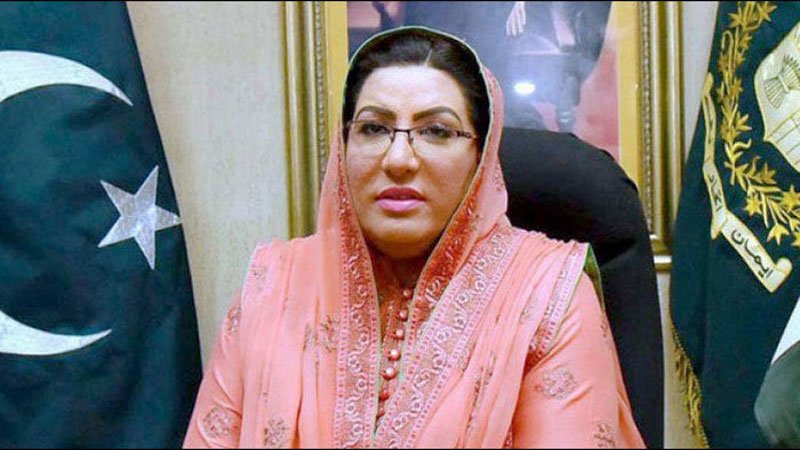
    Special Assistant to Chief Minister Punjab Usman Buzdar on Information, Dr Firdous Ashiq Awan has announced that the Government of Punjab will issue health cards to all artists across the province. In a press conference, Dr Firdous said that the provincial government will also bear all health-related expenses of deserving artists.

    Read more – Punjab Govt to give Rs 2,000 per month to citizens above 65

    Explaining the scheme, Dr Firdous said that a biometric system will be introduced through social protection authority which will ensure a transparent system of providing the fund. All the funds will be transferred through the banking channel.

    The SAPM told media that 1600 artists who were affected by the coronavirus were given relief by the Punjab government under the artist support fund, while 1500 deserving artists in Punjab received financial assistance worth Rs. 5000 each.

    Dr Firdous made these comments outside the residence of famous singer Shaukat Ali. She also presented Ali a cheque worth Rs 200,000 on behalf of CM Buzdar, adding that the Punjab government has already given him Rs 300,000.

    Ali reportedly has multiple medical issues, including diabetes and liver problem. He is famous for the patriotic songs he sang during the wars of 1965 and 1971. He is also the recipient of the Pride of Performance award.

    It is pertinent to add here that Ali was treated at a Sindh government facility on special instructions of PPP chairman Bilawal Bhutto-Zardari after reports of his ailment and inability to afford treatment were circulated on social media.

    Commenting on this Dr Awan said that she was sorry to learn that the singer had to go outside the province for his treatment while the Punjab government was distributing health cards across the province.

  • This guy’s gift to his bride is going viral. Here’s why

    With the wedding season is in full swing, our social media feeds are dominated with pictures and videos of shaadis happening all around us.

    Sometimes, a couple goes viral after they do something out of the box or have some exceptional planned for the better halves. One such couple has gone viral on social media after a groom gifted his wife four amazing portraits of her on their wedding day.

    In the video being circulated on social media, the happy groom can be seen showing paintings to his wife with minor details on them like the dates of their memorable moments, ceremonies and the bride’s ring.

    Check out the video below:

  • The lesson of inclusivity

    The lesson of inclusivity

    While COVID-19 has been creating havoc, unfortunately, in all parts of the world, it has had a massive impact in most developing countries, choking up the already shaking health and welfare systems.

    In Pakistan, the outbreak has caused an economic stoppage that amounts to a great loss, where the graph for unemployment shot up high from the very beginning of this pandemic. Not to forget, the worst-hit out of the country’s total population are the daily wage earners and those who inhabit unfortunately in the urban slums. Moreover, while the major parts of the city and larger groups were attended to and received help, the disabled were marginalised a great deal.

    For years, Pakistan as a nation has marked itself in the top three charitable countries around the globe. Local charities have been playing a key role in curtailing the economic burden on the government by providing meals, medical assistance and other key services to low-income groups.

    In order to assist and form a chain reaction with the said cause during these unreasonably trying times, PepsiCo Foundation — the philanthropic wing of the organisation — declared and extended support for the unemployed people and partnered up with the best charitable organisations under the umbrella of the ‘Millions of Meals’ initiative. The campaign was envisioned on such a large scale and designed to complete the aim of distributing an astonishing number of 13 million meals with over 500 volunteers and countless supporters, to the communities most affected by the COVID-19 outbreak.

    In order to assist the poor survive the harshness of lockdowns, unemployment and hunger caused due to economic and financial challenges, Pepsi joined hands with nine distinct charities. Among several others, targeting the lesson of ‘inclusivity’ is where NOWPDP was collaborated with, that caters to the differently-abled people in the society. 

    The idea was to empower millions of dreams, despite the odds and reach out all corners of the country, with a vision of providing immediate emergency disaster relief for the many vulnerable, neglected parts of Pakistan. NOWPDP helped in taking forward the initiative and making sure no one gets left behind specially those who are limited in their physical ability.

    NOWPDP operates in the development sector with a focus on inclusion through empowerment of persons with disabilities. As mentioned above, with the pandemic spreading its shadow all over, the most affected were the differently-abled who were now absolutely clueless and helpless in terms of taking care of their needs.

    Their agenda is to help people with disabilities and for them to be an important stakeholder in the bigger picture, whether it is in regard to education or employment, as they emphasise on their big idea, “A Part. Not Apart”. In addition, what fuels the members of this organisation, include; empathy, action and social justice. Persons with disabilities (PWDs) have equal access to opportunities and are an integral part of society. Their aim is to promote an inclusive society through holistic and sustainable endeavors in the areas of education and economic empowerment.

    Supported by PepsiCo, NOWPDP took on the responsibility of reaching out to thousands of vulnerable households. They reached out to the differently-abled residing in Hyderabad, Sujawal, Tando Allah Yar, Tando Muhammad Khan, Kot Ghulam Muhammad, Nawabshah, Sukkur, Larkana and distributed 171,675 meals altogether. For this, a group of people was specially brought together to form a call centre at NOWPDP during pandemic times to address and facilitate those in need. This effort was catering specially to the differently-abled and the deserving, where employees were to get the database together of those residing in various cities of Pakistan. 

    Babar Iqbal, a call centre agent at NOWPDP said, “Upon calling the differently-abled person, we are asked if they will be getting ration. When they are told all that it entails, the response and most importantly the happiness in their voice along with prayers is something that can’t be explained in words.”

    In addition, while the big cities of Pakistan are catered to by multiple organisations, the ones that get left behind are the differently-abled residing in interior Sindh.

    NOWPDP Executive Director Omair Ahmad said, “To achieve economic empowerment for disenfranchised communities, particularly persons with disabilities, it is incumbent on us to take the first step and show a desire, willingness and empathy to ensure that they have access to basic necessities like food and water. Without welfare, empowerment becomes a distant reality, a facade, an unachievable goal, and a dream. Thus, we are grateful to Pepsi for this initiative and understanding the urgency of this need for thousands of persons with disabilities across the country, and promptly extending their support. We hope that this journey on the path of hope will allow millions to achieve their dream of empowerment.

    This nation is full of people with a big heart who are ever ready to help those in need. We take great pride in it and this collaboration of PEPSICO and NOWPDP, which has shown us how inclusivity holds sheer importance and how endearing it is to cater to the disabled, is providing them with employment opportunities and assisting them to grow and know there are lots to look after them leaving no man behind when the entire world is at a halt owing to the pandemic. Here’s to more successful collaborations and a wish for phase 2 to take place.

  • ‘Mighty India crumbling down’: Akhtar trolls India on shameful defeat

    ‘Mighty India crumbling down’: Akhtar trolls India on shameful defeat

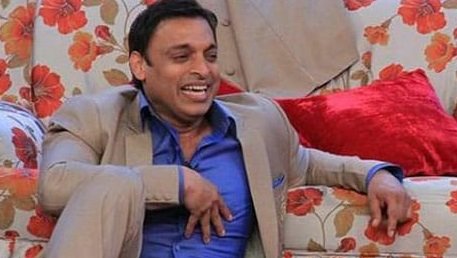
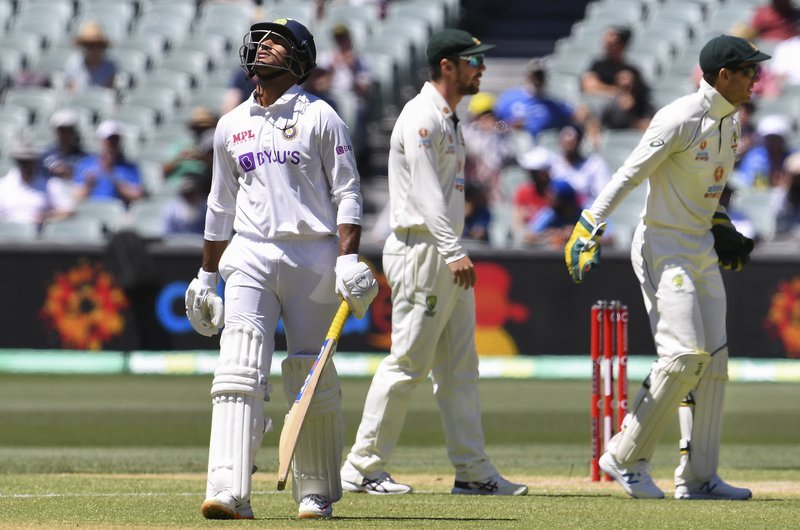
    Shoaib Akhtar has trolled the Indian cricket team after their shameful defeat by Australia in Adelaide Saturday.

    “I woke up and saw the score 369. I couldn’t believe it. Then I washed my eyes and saw the score 36/9. I couldn’t believe it either & went back to sleep,” wrote the former fast bowler on social media.

    Later in a video, the pacer said, “Embarrassing loss, embarrassing batting. World’s mightiest batting crumbling down.”

    Humara bhi record torr dia inho ne, 36 all out. This is a disgraceful and terrible performance,” he continued. “It happens in cricket and this is what will happen to you. Bear it and bear the criticism.”

    “Mighty India crashing down, crumbling down,” he added.

    Akhtar didn’t stop there and posted another video on Twitter with a caption, saying, “This will not be forgotten easily. Must come back very strongly from here. Theek thaak phentii pari hai.”

    Similarly, Wasim Akram also expressed his shock over the score, commenting: “What a spell by the Australians. Pace matters.”

    Meanwhile, Federal Minister for Science and Technology, Fawad Chaudhry also trolled the team by tweeting the hashtag ‘Australian Surgical Strike’.

    Australia’s world-class pace attack dismissed India for their lowest ever Test score of 36-9 in second innings of the opening Test Match of the series and defeated them chasing the target of 90 runs with eight wickets in hand.

    India started day three of the day-night Test on nine for one and with a 62-run lead, looking to build a competitive second innings total for Australia to chase. But their hopes were left in tatters after an exhibition of fast bowling by Josh Hazlewood and Pat Cummins.

    It was the last Australia will see of Virat Kohli batting this summer, with the captain missing the final three Tests to return home for the birth of his first child.

  • Indian troops target UN vehicle from across LOC: ISPR

    Indian troops target UN vehicle from across LOC: ISPR

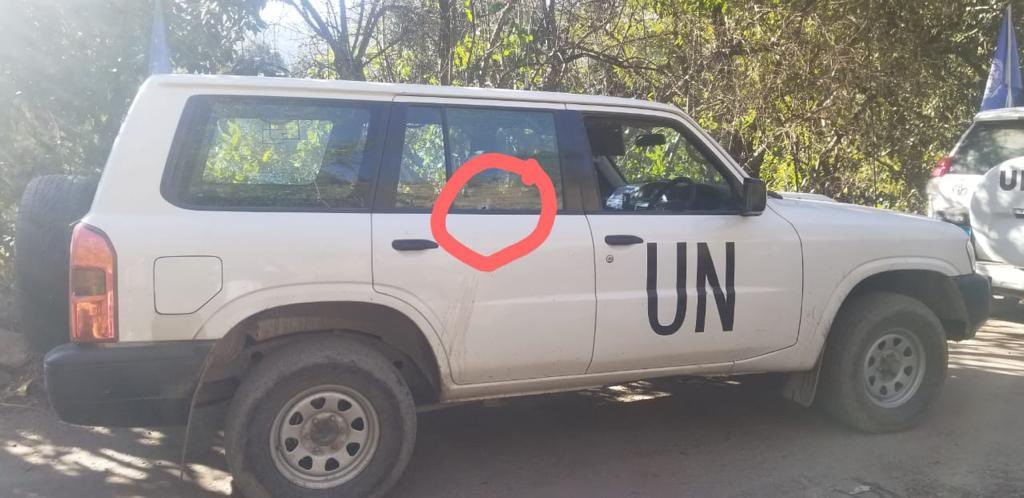
    The Indian Army has deliberately targeted a United Nations (UN) vehicle carrying military observers along the Line of Control (LoC), the Inter-Services Public Relations (ISPR) has said.

    ISPR tweeted that the Indian Army resorted to unprovoked firing in Chirikot sector of the LoC and “deliberately targeted a UN vehicle with two military observers on board”. “The military observers were en route to interact with victims of the ceasefire violations (CFVs) in Polas village in Chirikot sector,” it added.

    UN vehicles are clearly recognisable due to their distinct make and type and clearly visible markings, but they were still targetted. “While the vehicle was damaged, the two UNMOs luckily remained unharmed. They were safely rescued and evacuated by the Pakistan Army to Rawalakot,” the ISPR said.

    According to the ISPR, “Such illegal and unlawful acts against all established international norms, signify malintent of the Indian Army to target not only innocent civilians residing along the Line of Control but also the UN peacekeepers.”

    “This act only goes to show the Indian army’s complete disregard to principles enshrined in UN charter. It is indeed a new low for Indian Army,” it added.

    The media wing said that Pakistan Army stands in solidarity with the United Nations Military Observer Group in India And Pakistan (UNMOGIP) officials and appreciates the selfless services rendered by all members of UNMOGIP in the discharge of their UN-mandated duties.

    Yesterday, Foreign Minister Shah Mahmood Qureshi said that India was planning to undertake a surgical strike against Pakistan to divert the attention of the world from its worsening domestic situation.

    Addressing a press conference in Abu Dhabi, Qureshi had said that India’s irrational approach was driven by its frustration emanating from internal unrest due to the RSS-BJP regime’s policies.

    “India is planning a false flag operation … we are well aware of the Indian designs. We have intelligence reports about a potential false flag operation,” the FM said. “I want to share all this information with the UAE government and the rest of the world,” Qureshi had added.

  • VIDEO: Hina Bayat steals the show with a performance on ‘Dola Re’ at daughter’s wedding

    VIDEO: Hina Bayat steals the show with a performance on ‘Dola Re’ at daughter’s wedding

    Hina Khawaja Bayat stole the show with an electric and charged solo performance on Dola Re on her daughter designer Natasha Kamal’s wedding.

    The senior actor shared the video on social media much to the delight of her fans who praised her in the comments section of her post.

    “The precious moments when a daughter is getting married, to embark upon a new journey in her life,” wrote Hina in the caption. “May her life be blessed with every joy, health, wealth, success and happiness always.”

    Natasha

    A dynamic persona, the 48-year-old has gathered a huge fanbase in her career. Starting her career as an anchor, Bayat proved her mettle in acting with a career span of 20 years. She is one of the industry’ most graceful actresses who has fascinated audiences with her performances in Humsafar, BaaghiZindagi Gulzar Hai, Aun Zara, Raaz-e-UlfatDaasi and Eik Jhoothi Love Story.

    The actress is married to Roger Dawood Bayat and they have two children together.

  • Australia dismiss India for 36, their lowest ever Test score

    Australia dismiss India for 36, their lowest ever Test score

    Australia’s world-class pace attack dismissed India for their lowest ever Test score of 36 on Saturday, with the hosts needing 75 to win the opening Test in Adelaide at dinner after an incredible batting collapse.

    India started day three of the day-night Test on nine for one and with a 62-run lead, looking to build a competitive second innings total for Australia to chase.

    But their hopes were left in tatters after an exhibition of fast bowling by Josh Hazlewood and Pat Cummins.

    India’s previous Test low was 42 against England at Lord’s in 1974. Their 36 was the joint fourth lowest of all time with New Zealand’s 26 against England in 1955 at Auckland the worst ever.

    Their capitulation left Australia needing 90 to win, with Joe Burns and Matthew Wade knocking off 15 of them before the dinner break.

    Cummins wasted no time removing night watchman Jasprit Bumrah for two in the second over of the day, temping him to push at a slower ball that popped back up to him.

    That brought the stubborn Cheteshwar Pujara to the crease. He saw off an over from Cummins, but that was as good as it got for the veteran who fell without scoring.

    Cummins, the world’s number one Test bowler, sent down a delivery that had to be played and Pujara caught an edge that carried to Tim Paine behind the stumps.

    It left India on 15 for three, and it only got worse with opener Mayank Agarwal back in the pavilion five balls later for nine, again caught by Paine on Josh Hazlewood’s opening delivery.

    Hazlewood and Paine again combined to get rid of Ajinkya Rahane for naught then Cummins picked up the massive wicket of Virat Kohli.

    The superstar batsman had smacked Cummins for four but was gone the next ball after a review, caught by Cameron Green as he attempted a cover drive.

    It was the last Australia will see of Kohli batting this summer, with the captain missing the final three Tests to return home for the birth of his first child.

    At 19 for six, India were in real danger of making their lowest ever score and when Wriddhiman Saha chipped a Hazlewood delivery to Marnus Labuschagne and Ravi Ashwin was out next ball, it became more of a reality.

    A four from Hanuma Vihari at least took India past New Zealand’s all-time low to spare them that embarrassment.

    But Vihari didn’t last much longer, caught by Paine with Hazlewood again doing the damage before Mohammed Shami was forced to retire hurt after a Cummins thunderbolt hit his right arm.

  • Man climbs electric pole after angry wife demands divorce

    Man climbs electric pole after angry wife demands divorce

    A man in Sindh climbed a heavy voltage electric pole on Thursday following his wife’s decision to go to court to file for a divorce after an argument erupted between the couple.

    As per reports, the woman had married the man by choice. She had filed  for a divorce after a domestic dispute.

    He tried to convince his wife but was unable to change her mind. After the failed negotiation attempt outside of the court’s premises, the man decided to climb the electric pole to threaten his wife.

    Sukkur Electric Power Company cut the pole’s power off after they received the information.

    The police have now arrested the man for attempting to commit suicide.

  • Gen Bajwa ‘tolerating Nawaz’s tirades against army for sake of democracy’, says Imran

    Gen Bajwa ‘tolerating Nawaz’s tirades against army for sake of democracy’, says Imran

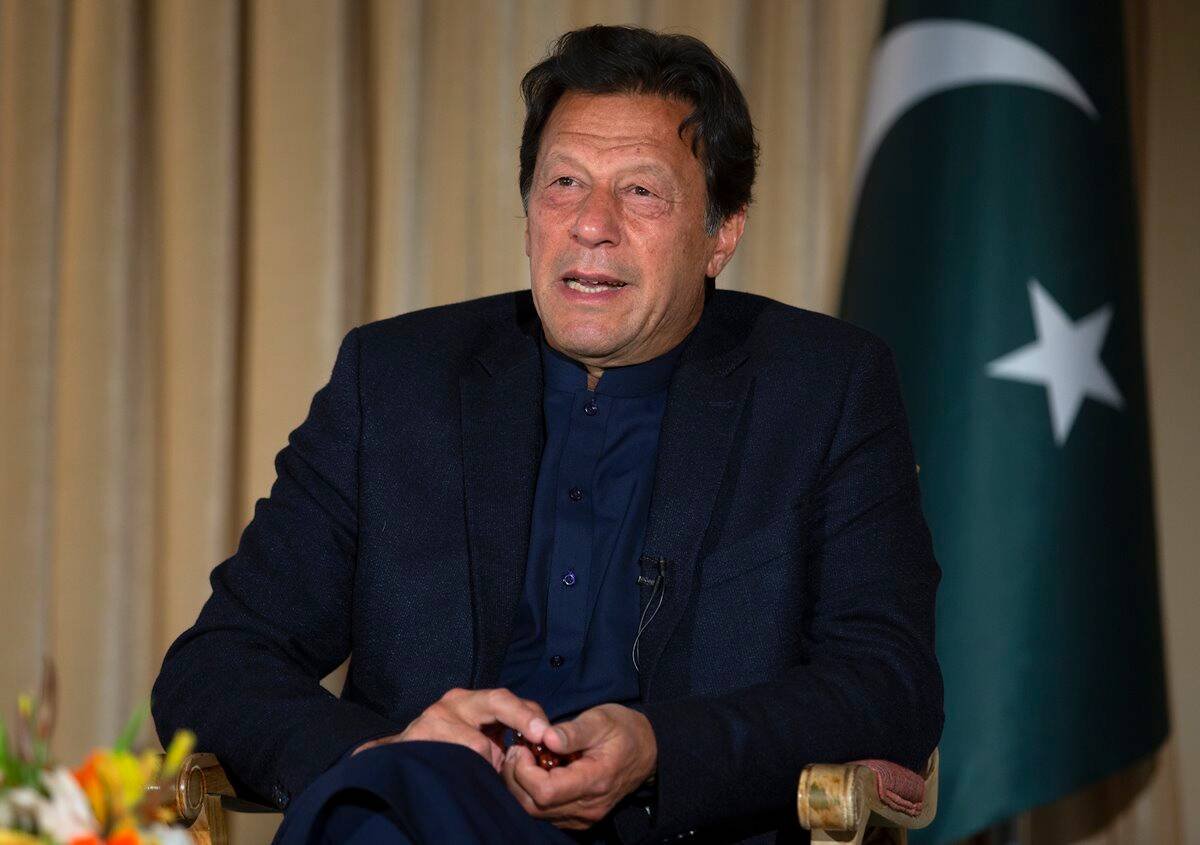
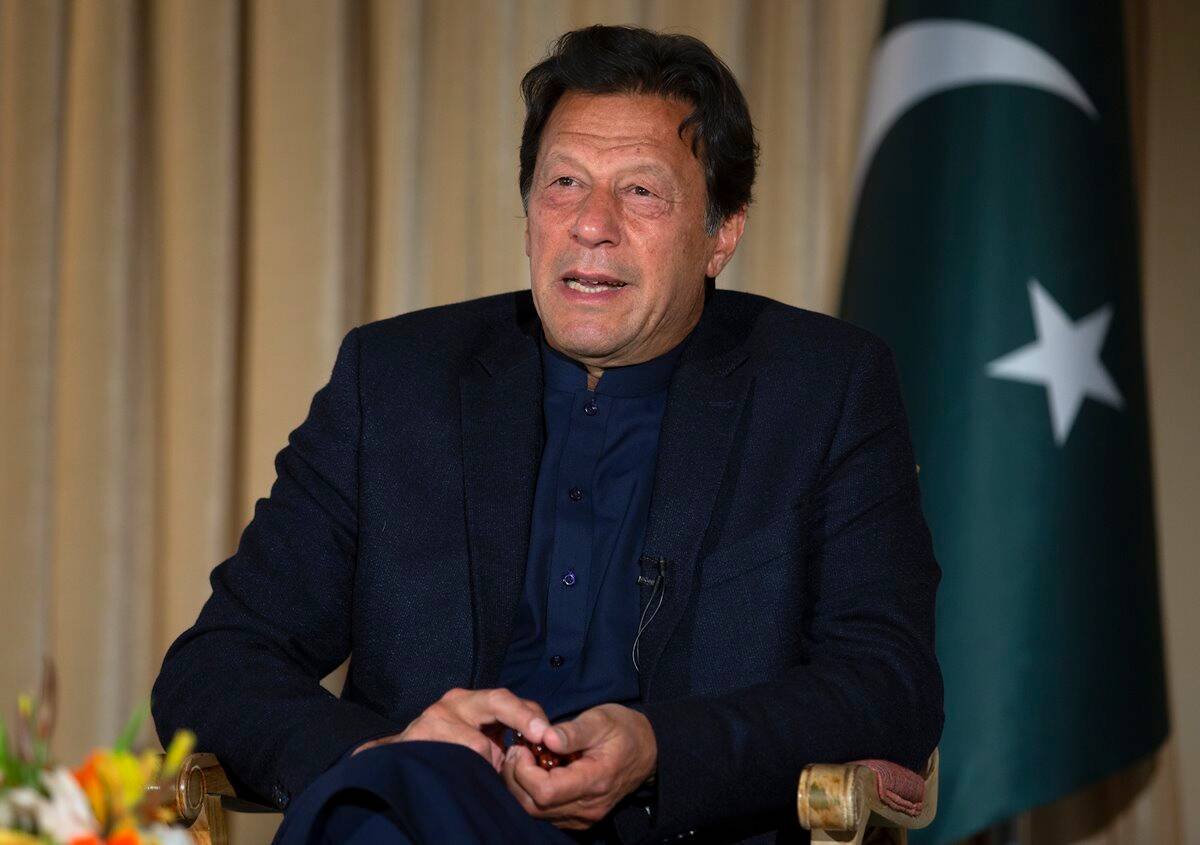
    Prime Minister Imran Khan has said that there is a lot of anger in the military over the tirades of former prime minister Nawaz Sharif against the army, but the army chief, General Qamar Javed Bajwa, is putting up with it for the “sake of democracy”.

    The PM made these comments in an interview on Samaa TV. “I praise Gen Bajwa today. To attack an army chief in this manner definitely provokes a reaction from the army,” he added.

    The PM said that Gen Bajwa was “uncomplicated man”. “If someone else was at the helm of the army, there would have been a strong response by now,” Imran said.

    The PM said the opposition was accusing him of being a “puppet” of the establishment, yet they wanted to talk to the establishment. “This means they’re putting pressure on the army to remove a democratic government. This is [their] democratic movement,” he added.

    Imran said that asking the military to remove a democratically-elected government was a case of “treason”, as Article 6 applies to this. “The opposition’s second demand is that if the army and ISI chiefs do not remove me, then the army should remove them [the chiefs of army and ISI],” he added.

    According to the prime minister, the army was a state department that was subordinate to his government. He said the military has always stood by him in times of crisis.

    Speaking on the former government’s troubled relationships with the establishment, Imran said Nawaz was “manufactured by the army against the PPP”. He said he himself received a message from military ruler Gen Ziaul Haq in 1988 that he wanted to make him (Imran) the prime minister.

    He said the establishment had helped the PML-N supremo in the 2013 elections but their ties became strained because the establishment did not support him in 2018.

    The ex-PM, who is in a self-imposed exile in London, has called out the army many times for its involvement in manipulating the general elections in 2018 to bring Imran Khan to power. Addressing a rally in Gujranwala in Oct, the former PM had called out Gen Bajwa and ISI chief Lt Gen Faiz Hameed for alleged manipulation of election results.