Amid allegations of rigging, the Pakistan Tehreek-e-Insaf (PTI) and its allies are set to form a new government for the next five years in the northern Gilgit-Baltistan region, according to initial results late Sunday.
Although Gilgit-Baltistan Chief Election Commissioner Raja Shahbaz Khan told reporters that the election authorities have not officially announced any results, local media and unofficial results showed the PTI and its allies were leading, clinching half of the contested seats.
Official results are expected to be announced Monday as election authorities said they were facing difficulties in collecting results from several far-flung mountainous areas due to heavy snow and rain.
The PTI and its allies, according to the initial results, are in the lead with at least 12 of the 24 seats being contested in the Gilgit-Baltistan Legislative Assembly.
At least four independent candidates projected to win are most likely to join the PTI to form the government.
The two other main contenders — the centre-left Pakistan People’s Party (PPP) and centre-right Pakistan Muslim League – Nawaz (PML-N), which won the 2015 elections in the region — have cried foul, accusing the election authorities of “rigging.”
The Chief Election Commissioner, however, denied the charge, advising the opposition parties to contact the commission if there are any irregularities.
The PPP, which is likely to clinch three to four seats, said its workers had staged a sit-in outside several polling stations where it claimed the results were not being announced in an attempt to favour the PTI candidates.
Meanwhile, the candidates belonging to the PML-N and the JUI-F were leading in one constituency each.
Several activists and police personnel were injured after PTI and PPP supporters clashed in Skurdu district, local broadcaster Geo News reported.
The first two elections were won by the PPP and the PML-N while they were in power in Islamabad in 2009 and 2015 respectively.
Over 700,000 voters cast ballots for 23 of the 24 seats up for grabs in the region’s Legislative Assembly, according to election authorities.
Voting for one seat was postponed after the death of a candidate.
Gilgit-Baltistan is a strategic area for Pakistan, bordering China and serving as a key route for the multibillion-dollar China Pakistan Economic Corridor.
Formerly known as the Northern Areas, Gilgit-Baltistan is located at the confluence of the world’s greatest mountain ranges – the Karakoram, the Himalayas, the Hindu Kush and the Pamir.
Before the end of British colonial rule and the creation of Pakistan and India in 1947, the region was part of the state of Jammu and Kashmir.
Rich in history, culture and natural beauty, the area, which also remained a centre of rivalry between the Russian, British and Chinese empires, has been a paradise for trekkers and adventure tourists for centuries.
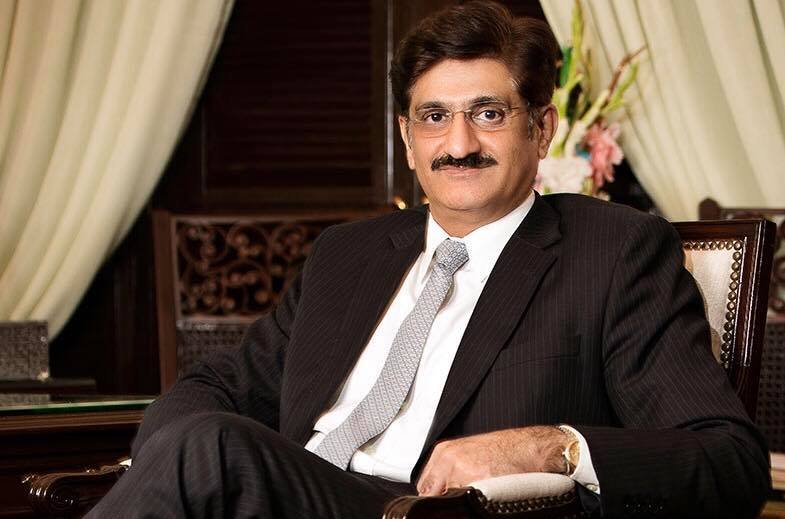
Sindh Chief Minister Syed Murad Ali Shah has tested positive for coronavirus as Pakistan reports over 2,000 infections for the third consecutive day.
According to a statement issued by the chief minister’s office, CM Murad got tested for COVID-19 on Friday after catching a mild fever. “After the test, I went into isolation on doctor’s advice,” said the chief minister.
CM Murad said he is asymptomatic apart from the fever.
On Saturday and Sunday, the country saw over 2,000 cases and 2,400 cases respectively, which means more than a 20 per cent increase in cases. These numbers are the highest since July. Seventeen people lost their lives to the coronavirus on Saturday as per the data from the National Command and Operation Centre (NCOC).
Meanwhile, the prime minister will chair a meeting of the National Coordination Committee (NCC) today to chalk up a strategy to curb the increasing number of coronavirus cases in Pakistan. The meeting will take decisions about early and extended winter vacations in educational insitutions.
Amid an increase in the infections, the NCOC had suggested a ban on public gatherings of all sorts, including a ban on indoor dining. The committee had allowed only takeaways and outdoor dining at restaurants till 10 pm, while suggesting closure of all cinemas, theatres and shrines with immediate effect.
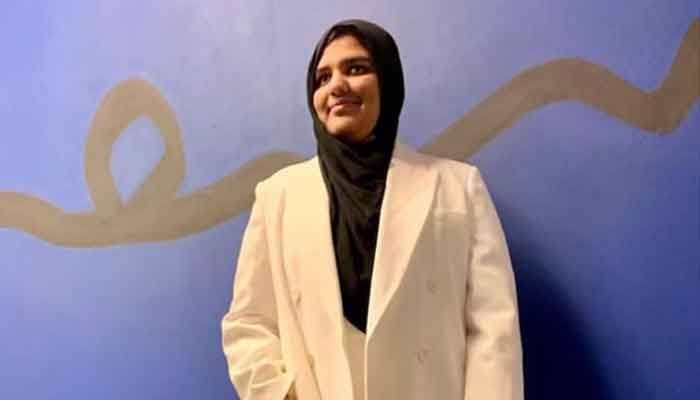
Khansa Maria was born blind. During her childhood, Maria remembers rushing to get ready for her school interview but was always left disappointed as the school could not cater to her special needs.
“It was disappointing,” she says. “Mainstream schools were not willing to make the required adaptations or go the extra mile for someone like me. You can never forget an experience like that.”
Young Maria completed her early education at a school near her home in Lahore before she got enrolled at the Lahore Grammar School. Many people didn’t show any concern for her needs but there were some who saw her as an inspiration.
Things changed for Maria. Today, the 21-year-old is a senior at Georgetown University Qatar, pursuing a Bachelors of Science in Foreign Service.
The prestigious Rhodes Scholarship selected her to study at the University of Oxford in the United Kingdom. Maria is the first Pakistani woman with a disability to be named a Rhodes scholar-elect.
Campaigning from a young age, Maria has spoken at various conferences around the world calling for a removal of barriers people with disabilities face. Her own organization, “Hope for Tomorrow”, raises awareness about people with special needs.
Maria explains that the single biggest obstacle in Pakistan is the lack of people with disabilities in the policy making and enforcement processes.
“The disable community lacks a voice,” she said, “You just don’t see [disable] people on the mainstream level.”
She hopes to change that when she returns to Pakistan after completing her postgraduate at Oxford University. “It is important to start engagement first at the grassroot level.”
Pakistan is seeing another wave of COVID-19 in the country. On Saturday, the country saw over 2,000 cases reported for the second consecutive day, which means more than a 20 per cent increase in cases. These numbers are the highest since July. Seventeen people lost their lives to the coronavirus on Saturday as per the data from the National Command and Operation Centre (NCOC). Geo’s Arshad Waheed Chaudhry also lost his battle against COVID-19 on Saturday.
After successfully controlling the pandemic, Pakistan’s new cases also point to the fact that people have become complacent in following the SOPs necessary till a vaccine comes out and is readily available across the country. From less than 6,000 active cases in September, we now have 24,938 active cases. While the NCOC has imposed a ban on indoor weddings in major cities with “high positivity and higher disease spread potential”, marriage hall owners are refusing to follow the government’s guidelines. They say that the new SOPs would not just lead to financial problems for the marriage hall owners but thousands of employees and businesses associated with the wedding industry would also suffer economic marginalisation.
Federal Education Minister Shafqat Mahmood tweeted yesterday: “We have convened an important meeting of provincial education ministers on Monday at 11 am to discuss the latest coronavirus situation in the country. As stated before health of students is our no one priority.” Most schools across the country have reopened. Punjab’s Education Minister Dr Murad Raas also tweeted that there is a meeting of all provincial education ministers tomorrow to discuss the prevailing condition of COVID-19. “In my opinion, we should focus on a Smart Lockdown rather than an across the board shutdown of Schools,” tweeted Raas. NCOC has decided to close cinemas, theatres and shrines.
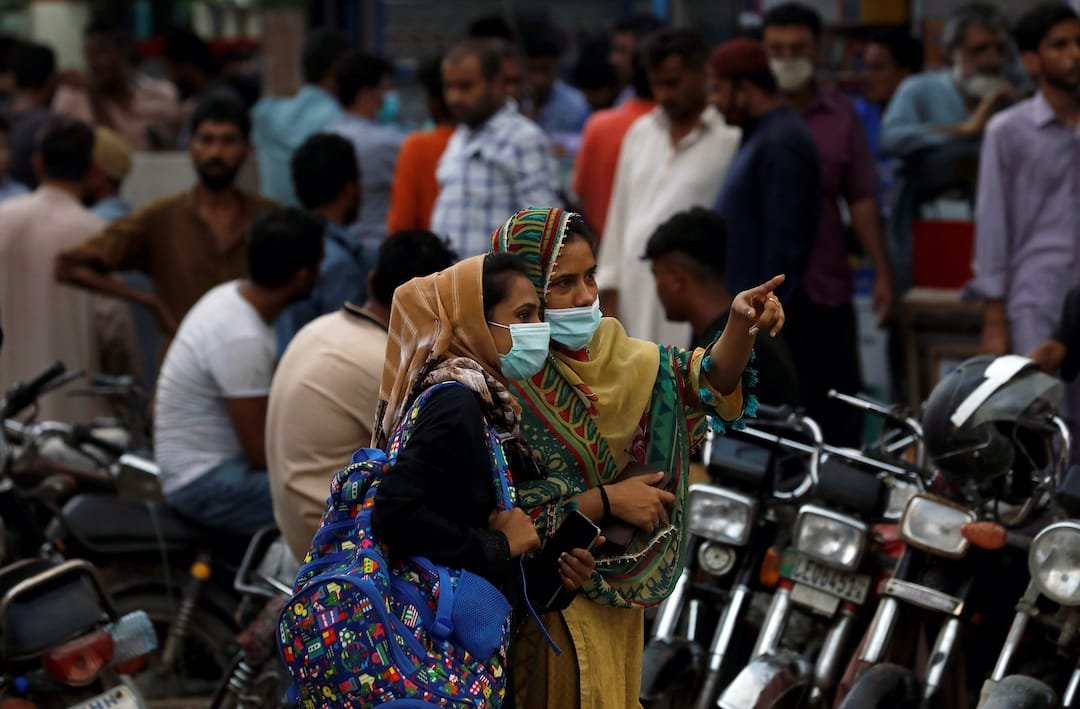
The government will now have to decide what measures to take next. The new wave is turning out to be quite dangerous. The opposition parties are taking out rallies across the country while the government, too, has held some jalsas recently. Not many were seen following the SOPs, i.e. wearing masks, maintaining social distancing, etc.
Such large gatherings apart from social gatherings will lead to more increase in the number of corona cases. It is time that all political parties as well as the people of Pakistan show responsibility before this new wave turns into a nightmare. Some organisations in the country have started implementing work from home again. Others may have to follow in case there is an increase in cases.
There have also been some instances of faulty test results in recent months. Some people who have tested positive have had their tests done the next day from a different laboratory only to find out they were negative. The government also needs to increase testing across the country. We hope that this time around, the people will follow proper SOPs so that the new wave can be curtailed as soon as possible.
As night falls on a remote mountain road in Gilgit-Baltistan, Ijazul Haq, 22, is keeping his grocery store open longer than usual, hoping to cash in on a frenzied electoral campaign that has brought the nation’s interest upon this otherwise neglected region.
Political parties are trying to sway voters in GB, an impoverished, remote and rugged mountainous part of the larger Kashmir region that is also claimed by India. The country’s top politicians have turned up here to stump, vowing to build multibillion-dollar infrastructure projects, and end decades of disenfranchisement.
Gilgit-Baltistan, which borders Afghanistan and China, is the gateway of the $65 billion China-Pakistan Economic Corridor (CPEC) infrastructure plan. But the region has so far reaped few rewards.
“Look at this road we have, it takes 4.5 hours to get to a decent hospital from here. If they fixed the road it would take 1.5 hours,” said Haq, who lives in Thawoos, a tiny hamlet in the district of Ghizer.
Locals fought pro-India forces and opted to join Pakistan in 1948. But since then Gilgit-Baltistan has not been granted full inclusion by the Pakistan constitution, over fears doing so would jeopardise Islamabad’s international stance that all of Kashmir is disputed territory.
The local assembly, for which the November 15 elections are being held, has few powers. National Assembly and Senate have no representation from Gilgit-Baltistan, and the region receives only a fraction of the national budget.
This month Prime Minister Imran Khan said he would provide provisional provincial status to Gilgit-Baltistan, giving it greater political representation, but no timeline has been given.
The announcement came a year after India changed the status of the portion of occupied Kashmir, taking away some of the region’s privileges. India rejects Khan’s plan to change Gilgit-Baltistan’s status, and it calls the election there an exercise to cover up Pakistan’s occupation of the region.
Imran’s plan is not the first time locals have heard promises of being granted constitutional rights: in 2016 then Prime Minister Nawaz Sharif proposed to make Gilgit-Baltistan a province as well but shelved plans after pro-Pakistan leaders in Indian-occupied Kashmir denounced the decision.
“We’ve long said we want to be part of Pakistan, but they push us away,” said Yawar Abbas, a local leader with the Gilgit-Baltistan Awareness Forum, which seeks to alter the region’s constitutional status.
Abbas says locals are in limbo, unable to enjoy the same rights as other Pakistanis, but also unable to enjoy autonomy.
Graves of fallen soldiers marked by Pakistani flags dot the Ghizer district, which has the country’s highest per-capita rate of military recruitment.
“There is rampant poverty here, and for many of us there is no other way to earn a living than joining the military,” said Haq, whose brother serves in the navy.
In the winter, when the glacial melt that powers the small hydroelectric dams dotting the region slows, locals often have no power for 20 hours a day.
The CPEC project was supposed to bring development to the region, but that has not happened, residents believe, because of the lack of local representation at national levels.
New roads, two hydroelectric power plants, a fiber-optic internet line, and a special economic zone to boost industrial activities have all been proposed as part of the CPEC project, but none have been materialised so far.
The only substantial project from the much-touted China-Pakistan partnership has been the construction of the Karakoram Highway, completed decades ago.
Like most other candidates, Jamil Ahmed, has promised voters he would seek to draw more investment from China.
“CPEC is going through here, we are the gateway, we are the door to China. So if someone opens the door for you, you should put something at the doorstep as well,” said Ahmed, a candidate with the Pakistan Peoples Party.
Gone are the days when fans would glue themselves to television screens just to get the slightest glimpse of their favorite celebrity’s personal life. God bless Instagram for ensuring that we all are a click away from stalking our favorite celebrities, giving birth to our own online identities, participating in influential social media movements, and being the Emilys in our own virtual Paris.
However, such accessibility comes with heavy responsibility which intensifies in the case of celebrities. From being an average application for posting pictures to becoming a social media giant, Instagram, and its management is now an art. So, let’s dive in and analyze how well our Pakistani celebrities have succeeded in influencing fans through their Instagram feeds. The analysis will take place through the Current ranking edition where you can find an exclusively ranked scorecard highlighting the top and the bottom three Instagram feeds of Pakistani celebrities.
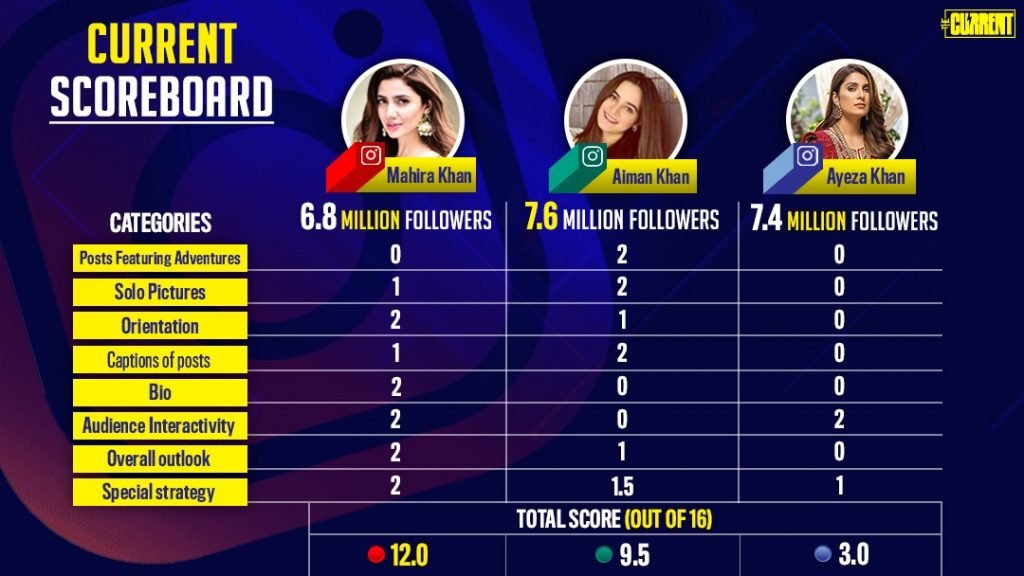
The magic formula for Instagrammy perfection combines just the right proportion of posts featuring everyday adventures, western and eastern dressing styles, catchy captions, precise bios, a classy overall outlook, adequate interactivity with the followers through comments or live sessions, and lastly, a unique special strategy which sets your feed apart from all the others. The perfect score sums up to a total of 16 points with 2 points per category.
If you’re done taking notes, scroll down to see which three best and worst Instagram feeds have made it to the Scorecard. Remember, you are what your Insta feed is!
Disclaimer: Nothing Personal
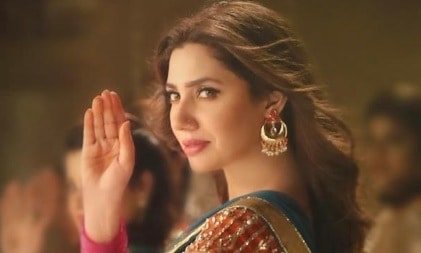
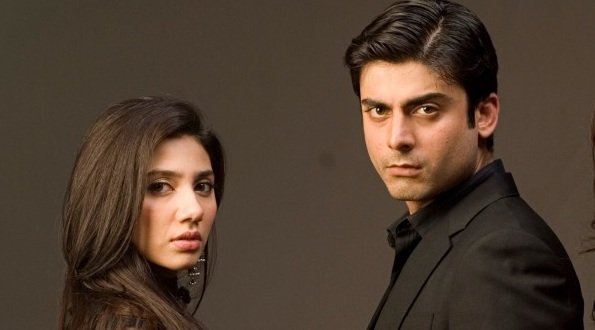
Mahira Khan: 12 / 16
Although Mahira doesn’t post frequently about her everyday adventures and uses lengthy and boring letters involving her emotional experiences as captions, the girl checks all other boxes for a perfect Instagram account. Her work, individualism and nature-oriented posts give a nostalgic outlook to the feed. Popular instances of interactivity include 2018’s incident when Mahira ended up gifting her Eid outfit to a fan who expressed a desire to wear that dress in the comment section of Mahira’s Eid post. Mahira may reply to your comments as well, you never know! This feed neutralizes its western dimension which stems from a preference for western clothing by a traditional aspect added by her bio titled ‘Funkaar’.
Besides, who could not like the post featuring her incredibly hot gown for Cannes 2018? Everything aside, the point winner for Mahira’s Instagram feed is her special strategy which never lets the glory of her old characters die as fans are constantly reminded of her signature roles like Khirad (Humsafar) or Falak (Shehr-e-Zaat) via her posts. You go, girl!
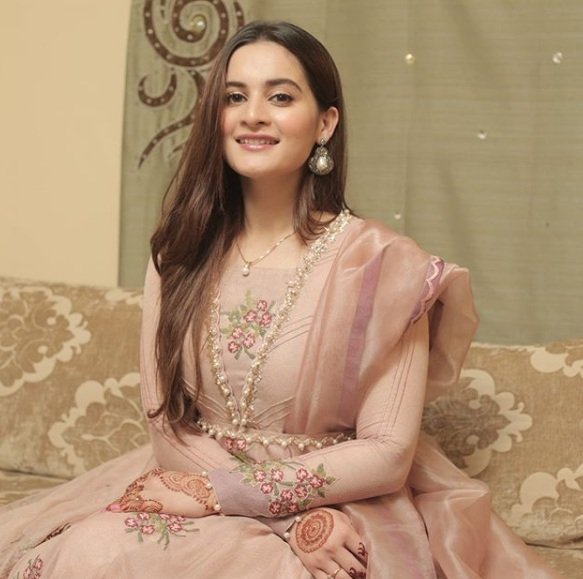
Aiman Muneeb: 9.5 / 16
Acknowledging the fact that Aiman does not have a striking bio and she rarely replies to comments, her frequent highlights about travelling (Florence, Dubai, Lahore etc.), diet plans and lunch dates really capture the interest of the followers. Her feed maintains a traditional outlook with family-oriented posts about sister dates, her daughter, husband, and mother. Aiman doesn’t shy away from influencing fashion trends by posing in stunning trench coats and desi kurta shalwar. The most captivating part about this feed is its brief, catchy and impactful captions like, “Be your own muse”. All the aforementioned qualities help Aiman skillfully market her special strategy which revolves around the ‘keeping it real’ vibe of a young girl getting the best of both worlds. This strategy does a remarkable job in attracting all those Pakistani girls who dream of making it big, just like our Aiman did.
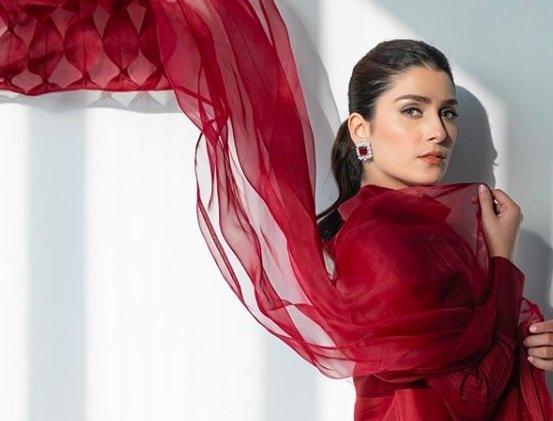
Ayeza Khan: 3.0 / 16
Jeez, that score’s pretty low but what could we do. The raw bio and majorly sponsored posts and highlights make this feed seem more like a wedding photo album than a celebrity’s feed. Don’t believe us? Try stalking this diva and all you’ll find are some breathtaking but clichéd and glossed up pictures of Ayeza in designer clothes. Her audience interactivity was pretty low until she dedicated a video post to her fans on October 3, 2020, just to let them know that she does read all their messages and comments but is unable to reply due to her busy schedule. This actor does get a decent score for her special strategy through which induced temporary curiosity among her fans. What was it?
On May 3, 2019, Ayeza made headlines by turning her Instagram private after reaching 3.1 million followers. In her own words she “wanted fans not followers” …for a short while though. This move did get her Instagram account under the spotlight. Master stroke, indeed.
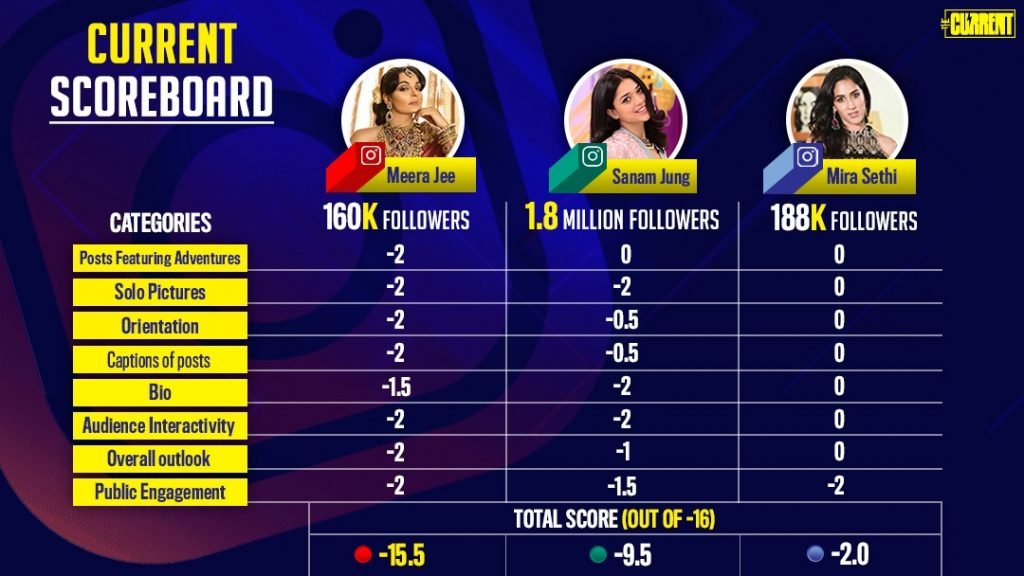
And here comes the #ouch part. Below are the ranks and scores of three of Pakistan’s least followed celeb accounts on Instagram according to The Current Scorecard. The grading criteria remains the same, however, there’s a twist. Here, we have graded every category out of -2 with 0 being the highest (which means no damage done) and -2 being the lowest. The maximum score obtainable is -16. By the way, to compensate for the brutal critical analysis, The Current has given #free suggestions to help improve the feeds. So scroll down to discover who has done the most irrecoverable damage (it’s predictable though).
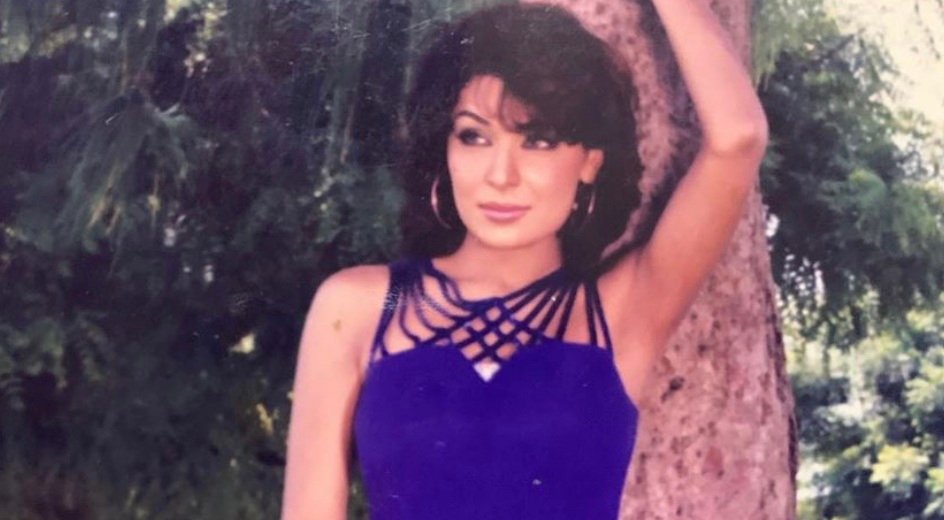
Meera Jee: -15.5 / -16
This feed seems outdated as videos that could have sufficed well as highlights can be seen featuring everyone but herself. Where to begin! Absolute lack of audience interactivity, lack of defined styling preferences in the very few solos posted, and a bio that seems more like a nice and concise resume are just a few of the Instagram blunders we have identified. The whole concept of public engagement seems to have been turned upside down. You’ll see plenty of posts featuring people without adequate description. For instance, did you see the post regarding a gentleman who “is a very creative man in the world of educational”?
Also, dedicating a video post to Zulfi Bukhari without having him or herself in either of them is nothing but awkward. The Current’s Instagram feed takes inspiration from this people-oriented feed to improve as news media because you shall find random posts regarding celebrities’ birthdays, deaths, marriage anniversaries, award nominations, COVID-19 test results, and makeup reviews. Moreover, we all know the major issue with captions. In the broader picture, let us ponder over the unreasonable motivation to be who we aren’t meant to be.
Free suggestion for improvement: Be Yourself
Embracing yourself and being comfortable in your skin can make you a stronger personality to be marketed on Instagram. Instead of promoting others in a language that is not exactly your expertise, why not try writing captions in Roman Urdu or Urdu? Also, we recommend using your amazing solos from your highlights as posts. After all, your fans want to see the iconic celebrity in you!
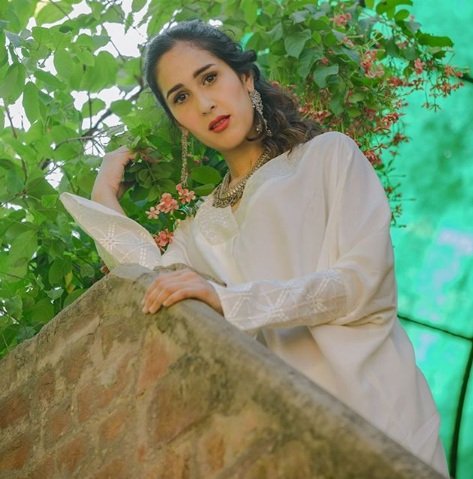
Sanam Jung: -9.5/16
Ladies and gentlemen welcome to the Jaago Pakistan Jaago feed. Although Sanam’s Instagram feed seems to have a balanced mix of work-oriented posts with a tinge of everyday adventures, it lacks maintenance. You’ll see plenty of grid photos highlighting workout routines, travelling experiences, notable literature preferences and many more, but the absence of relevant captions seem to confuse the followers between sponsored and non-sponsored content. Almost all posts uniformly follow Eastern styling trends only. Additionally, choosing a list-like format for a lengthy bio is never a good option as self-descriptions should be different from grocery lists, don’t you think? Despite zero audience interactivity, this feed might capture the attention of female fans of morning shows with its content about family adventures; however, it fails to properly grip the admiration of other genders. We expect more from you, Sanam!
Free suggestion for improvement: Get Out of the Box
Instagram can be your best resort to help separate the real you from the “the stereotyped Pakistani beti/bahu” identity of yours, thanks to the morning show fandom. We suggest you to start promoting individualism in your feed because we are sure that there’s another amazing side of the ever-empowered Sanam, which the world is yet to see.
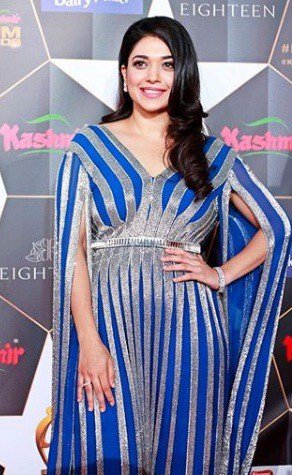
Mira Sethi: -2.0/-16
This feed has a soothing outlook as is laden with life-oriented posts appreciating humanity, family, poetry, music, art and culture. Seeing Mira play sports or hug her pets in vividly colored sarees and some classic tank gives us an exotic feel. With brief and multi-lingual captions and a perfect bio, this lady does a considerably good job of interacting with the audience as she asks them for their reviews on her drama episodes (Yeh Dil Mera) and more. However, all these plus-points dim in comparison with a major flaw related to mass appeal. This feed does an outstanding job in luring elite Urdu/English literature enthusiasts and Pakistanis settled abroad. Unfortunately, that makes up the narrowest segment of the Pakistani population. While posts about Californian parks or #BlackLivesMatter are immensely appreciated, sadly, they will fail to interest a regular Pakistani, who can barely relate with them.
Free suggestion for improvement: Go more desi
Your Instagram displays the progressive mentality that we all hope to see among the Pakistani population one day. However, today isn’t that day and the best you can do is make your target audience inclusive of all Pakistani population segments because we all deserve to discover the charismatic international face of our country.
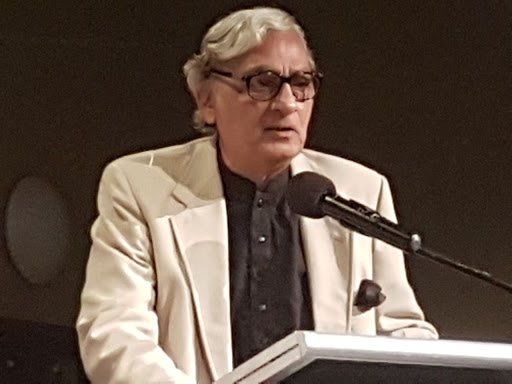
Naseer Turabi is a poet who wrote Woh Humsafar Tha in 1971 to express his sadness on East Pakistan’s separation.
Naseer Turabi
He was born in Hyderabad, Hyderabad State which was then, Deccan.
Naseer came to Pakistan after the independence of Pakistan in 1947. He did his M.A. in Mass Communications from University of Karachi in 1968. The poet now lives in Karachi.
He began writing poetry in 1962. His first collection of Poetry Aks-e-Faryadi was published in 2000.
After the East Pakistan Separation, he wrote a Ghazal Woh Humsafar Tha expressing the sadness at the great tragedy of separation of East Pakistan.
The same Ghazal was later used as a theme song for the Humsafar drama series. He also wrote lyrics for the theme song Dil Ka Jo Mol Chukatay Honge of Mol and Zindagi Gulzar Hai drama series. He has also written the lyrics of Dil Aitebaar for Khwab Saraye and for Yaqeen Ka Safar OST.
The ghazal is top-notch, Abida Parveen has also sung it. But for the newer generation, the Quratulain Baloch version of the song for Pakistani drama Hamsafar on modern instruments and rhythm is more engaging.
Honda has officially released a teaser of its upcoming 11th gen Civic to be launch in the spring of 2021 in international markets.
As seen in the teaser, the model has a more executive look as compared to the 10th generation Civic.
The teaser that allows viewers to get a mental image of what the car would look like, suggests a much sharper and more aggressive design.
Honda will reveal the brand new Civic via a live stream on November 18, 2020 at 7:45 am. Also, it is being reported that Honda will only make the 2022 Civic as a sedan and a hatchback. The two-door coupes versions will no longer be manufactured by the company.
Details are yet to be revealed about the upcoming 11th Gen Civic, but reports suggest that the a-Si (the compact sports trimmed version of Honda Civic) and Type-R (the high-performing racing) versions will be launched in the international markets.
All versions will have turbocharged 4-cylinder engines. The sportier versions shall get a manual gearbox option as well.
There are no reports of the car being introduced in Pakistan anytime soon, but as is custom with Honda Atlas, the Civic is usually introduced here a year or so after it is launched in the international market. Whether or not that will be the case for the 11th gen Civic, is yet to be seen.
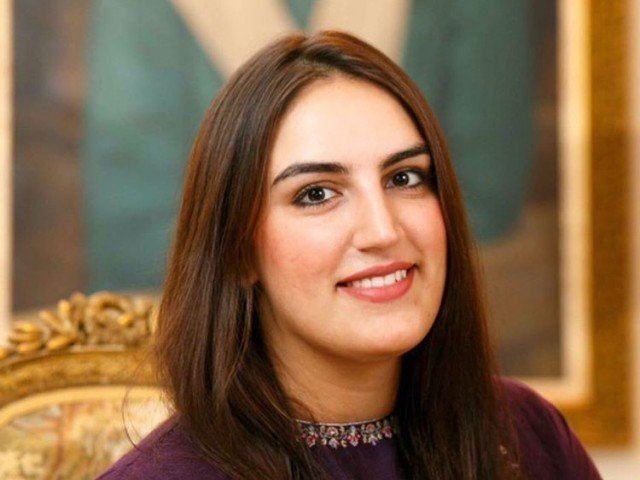
Bakhawar Bhutto-Zardari, daughter of former president Asif Ali Zardari and late prime minister (PM) Benazir Bhutto, is getting engaged to the son of a United States (US) based businessman on November 27.
According to reports, the engagement ceremony of Bakhtawar and Mahmood Choudhry, son of Younas Choudhary, will be held on November 27 at Bilawal House Karachi.
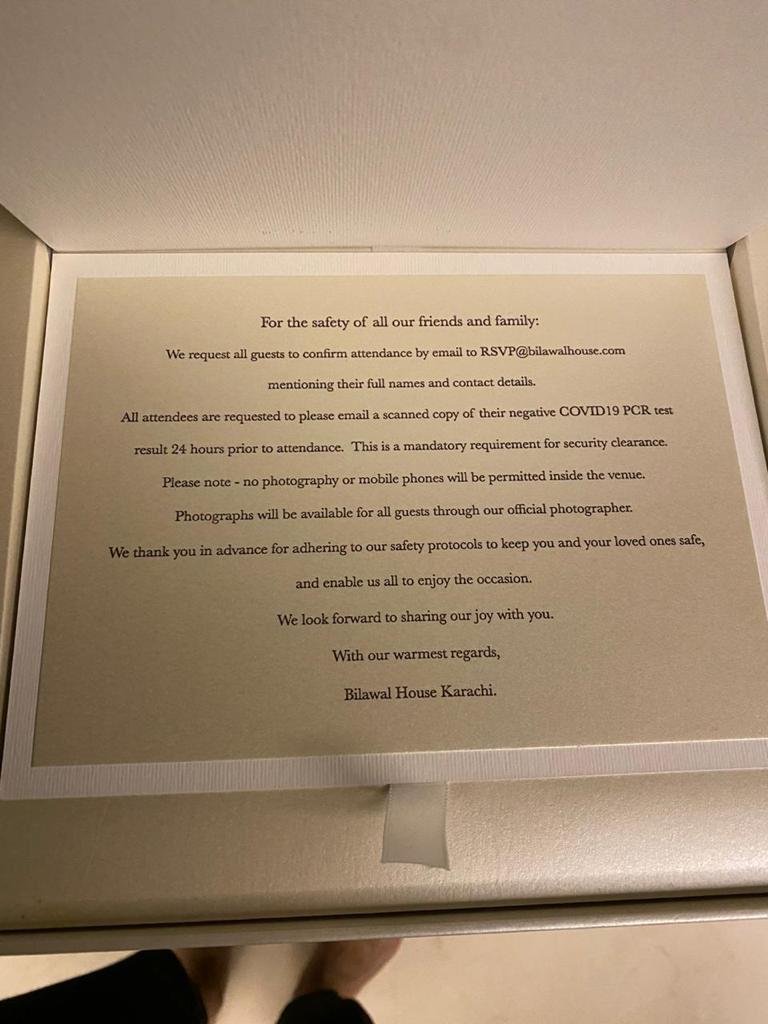
The organisers have requested all guests to get tested for COVID-19 and send the results via e-mail.
“All attendees are requested to please email a scanned copy of their negative COVID-19 PCR test result 24 hours prior to attendance. This is a mandatory requirement for security clearance,” the invitation reads.
The guests have also been asked not to bring mobile phones with them due to security purposes.
“Please note — no photography or mobile phones will be permitted inside the venue and photographs will be available for all guests through our official photographer.”
“We thank you in advance for adhering to our safety protocols to keep you and your loved ones safe, and enable us all to enjoy the occasion,” it added.
While Bakhtawar is getting engaged, her elder brother and incumbent Pakistan People’s Party (PPP) chief, Bilawal Bhutto-Zardari, still seems to be looking for his ideal life partner.
View his exclusive interview with The Current to find out more:
All eyes will be on Karachi’s National Stadium as HBL Pakistan Super League 2020 returns this afternoon.
Multan Sultans, Karachi Kings, Lahore Qalandars and Peshawar Zalmi are all set to battle for the glittering trophy and a prize of $500,000 as the cricketing tournament returns after an eight-month gap caused due to the COVID-19 outbreak.
While all four squads have been rejigged with international and local stars joining the sides, the following foreign players will be satisfying cricketing fanatics until the final scheduled for Tuesday (Nov 17).
Karachi Kings
Alex Hales (England), Cameron Delport (South Africa), Chadwick Walton (West Indies), Sherfane Rutherford (West Indies) and Wayne Parnel (South Africa).
Lahore Qalandars
Tamim Iqbal (Bangladesh), David Wiese (South Africa), Samit Patel (England), Ben Dunk (Australia) and Dane Vilas (South Africa).
Multan Sultans
Adam Lyth (England), Brendan Taylor (Zimbabwe), Imran Tahir (South Africa), Joe Denly (England), Ravi Bopara (England) and Rilee Rossouw (South Africa).
Peshawar Zalmi
Carlos Brathwaite (West Indies), Faf du Plessis (South Africa), Hardus Viljoen (South Africa) and Saqib Mahmood (England).
As for today’s clashes, Sultans will be facing Kings in the qualifier at 3 pm, whereas underdog Qalandars will be taking on former champions Zalmi in the first eliminator at 8 pm.