Blog

  • 24 hours: Over three billion images, 0.7 million hours of video… can you spot the fake ones?

    24 hours: Over three billion images, 0.7 million hours of video… can you spot the fake ones?

    Over the past few days, Twitter has tagged as “manipulated” a video showing United States (US) Democratic presidential candidate Joe Biden supposedly forgetting which state he’s in while addressing a crowd.

    Biden’s “hello, Minnesota” greeting contrasted with prominent signage reading “Tampa, Florida” and “Text FL to 30330”.

    A fact check by the Associated Press (AP) confirmed the signs were added digitally and the original footage was indeed from a Minnesota rally. But by the time the misleading video was removed it already had more than one million views, The Guardian reported.

    If you use social media, the chances are you see (and forward) some of the more than 3.2 billion images and 720,000 hours of video that are shared daily. When faced with such a glut of content, how can we know what’s real and what’s not?

    While one part of the solution is increased use of content verification tools, it’s equally important we all boost our digital media literacy. Ultimately, one of the best lines of defence — and the only one you can control — is you.

    Misinformation (when you accidentally share false content) and disinformation (when you intentionally share it) in any medium can erode trust in civil institutions such as news organisations, coalitions and social movements. However, fake photos and videos are often the most potent.

    For those with a vested political interest, creating, sharing and/or editing false images can distract, confuse and manipulate viewers to sow discord and uncertainty (especially in already polarised environments). Posters and platforms can also make money from the sharing of fake, sensationalist content.

    Only 11-25% of journalists globally use social media content verification tools, according to the International Centre for Journalists (ICJ).

    Consider this photo of rights champion Martin Luther King Jr:

    This altered image clones part of the background over King Jr’s finger, so it looks like he’s flipping off the camera. It has been shared as genuine on Twitter, Reddit and white supremacist websites.

    In the original 1964 photo, King flashed the “V for victory” sign after learning the US Senate had passed the civil rights bill.

    Beyond adding or removing elements, there’s a whole category of photo manipulation in which images are fused together.

    Earlier this year, a photo of an armed man was photoshopped by Fox News, which overlaid the man onto other scenes without disclosing the edits, the Seattle Times reported.

    https://twitter.com/ZanderYates/status/1271620044837941250

    Similarly, the image below was shared thousands of times on social media in January, during Australia’s Black Summer bushfires. The AFP’s fact check confirmed it is not authentic and is actually a combination of several separate photos.

    Cropping can greatly alter the context of a photo, too.

    We saw this in 2017, when a US government employee edited official pictures of Donald Trump’s inauguration to make the crowd appear bigger, according to The Guardian. The staffer cropped out the empty space “where the crowd ended” for a set of pictures for Trump.

    Opposition parties in Pakistan have also time and again been accused of using these tactics.

    A historical example of another technique — using colour adjustment tools — is when in 1994 Time magazine’s cover considerably “darkened” sportsman and murder accused OJ Simpson in his police mugshot.

    This added fuel to a case already plagued by racial tension, to which the magazine said that “no racial implication was intended by Time or by the artist”.

    Follow this link to fact check like a pro.

    Data Compiled By: The Conversation

  • ‘Gully Boy’ actor Vijay Raaz arrested in molestation case

    ‘Gully Boy’ actor Vijay Raaz arrested in molestation case

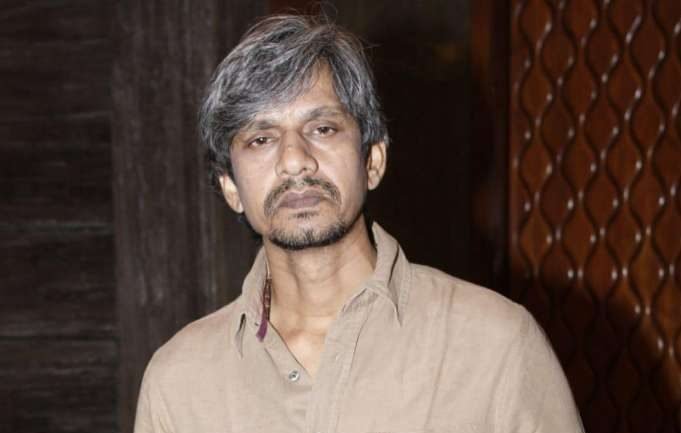
    Bollywood actor Vijay Raaz was arrested for allegedly molesting a crew member while shooting in Gondia, Maharashtra, and has subsequently been granted bail.

    According to reports, Atul Kulkarni, Additional Superintendent of Police, Gondia, Maharashtra said: “The woman came to us with the complaint, saying she was molested by Vijay Raaz in a hotel where the film crew is staying. Based on her complaint, we lodged an FIR and arrested Raaz the next morning. A local court later granted him conditional bail.”

    “The court has said he has to appear before the investigation officer whenever needed,” Kulkarni added.

    He further said: “We collected evidence of the incident and then proceeded to arrest Raaz. There are eye-witnesses from the crew who have spoken to us about the accusation being true.”

    The alleged incident reportedly took place on the set of Vidya Balan’s upcoming film Sherni. The film is being shot in the jungles of Balaghat, about 40 km away in neighbouring Madhya Pradesh and is based on the story of Pandharkawda ‘problem tigress’ T1, nicknamed Avni, which was shot dead on November 2, 2018. Balan is playing the role of the divisional forest officer who had handled the operation to catch Avni. She was also in Gondia for the film shoot.

    Read more – Ajay Devgn is making a film on China-India Galwan Valley clash

    Raaz, 57, is primarily popular for his comic roles, notably the marigold-chewing wedding planner PK Dubey in Mira Nair’s 2001 release, Monsoon Wedding. His other hit performances have come in films such as Run, Dhamaal, Gully Boy and Welcome. Raaz was also part of Amazon Prime’s superhit web series Made in Heaven. He was last seen in Amitabh Bachchan and Ayushmann Khurrana’s Gulabo Sitabo and Lootcase.

  • US Presidential Race 2020: Twitter flags Trump’s tweet claiming effort to ‘steal election’

    US Presidential Race 2020: Twitter flags Trump’s tweet claiming effort to ‘steal election’

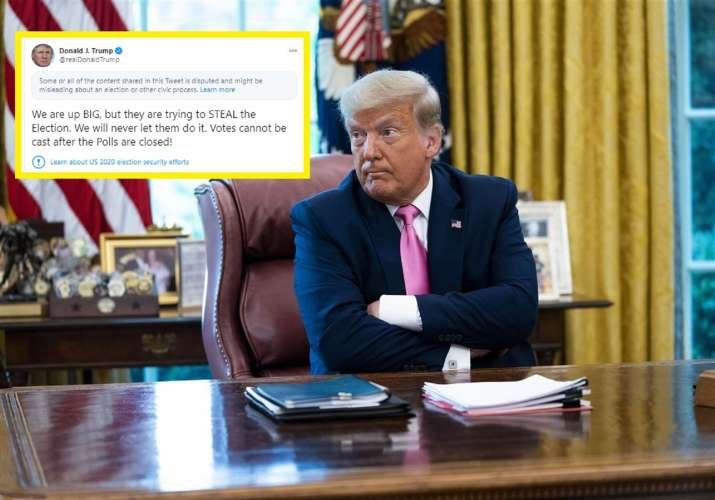
    Twitter has flagged United States (US) President Donald Trump’s tweet alleging an effort to “steal the election” as a neck-and-neck contest continues between the incumbent president and Democratic challenger Joe Biden for the key to the White House.

    “We are up BIG, but they are trying to STEAL the election. We will never let them do it. Votes cannot be cast after the polls are closed!” Trump had tweeted.

    A warning hiding the tweet read, “Some or all of the content shared in this tweet is disputed and might be misleading about an election or other civic process.”

    It, however, can be viewed by clicking on Twitter’s statement being displayed on Trump’s feed.

    US ELECTION UPDATE:

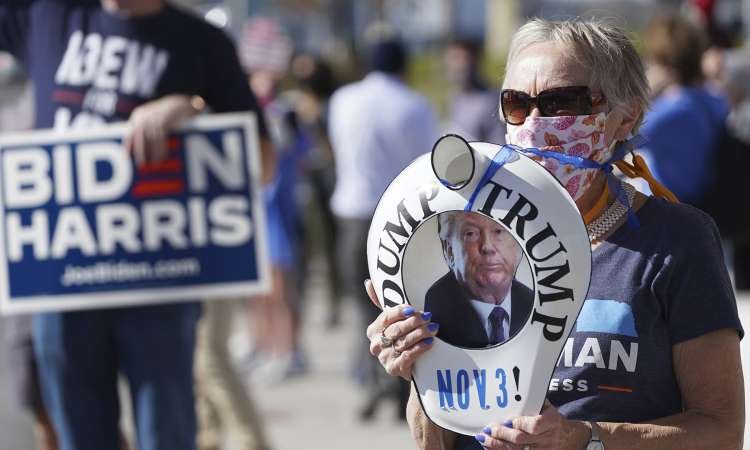
    By the time this report was filed, Trump had the lead over Democratic rival Joe Biden in the vital battleground of Florida and other US swing states, but Biden pinned his White House hopes on Arizona and a “blue wall” of three Rust Belt states that could take days to count their votes.

    Biden’s hopes for a decisive early defeat of Trump faded as the president took solid leads in Florida, Georgia, Ohio and Texas. Fox News projected Trump would win Florida, a must-win state in his quest for 270 Electoral College votes.

    Biden, 77, was eyeing the so-called “blue wall” states of Michigan, Wisconsin and Pennsylvania that sent Trump, 74, to the White House in 2016 for possible breakthroughs, although vote counting could stretch for hours or days there.

    Trump held early leads in those three states, but much of that was built on Republican-heavy Election Day voting. The counting of Democratic-heavy mail-in ballots in all three states was expected to take hours or days. In Wisconsin and Pennsylvania and much of Michigan, mail-in ballots were not processed until Election Day.

    Winning those three states would be enough to give Biden an Electoral College victory. Fox News projected Biden would win Arizona, another state that voted for Trump in 2016, giving him more options to get to 270 Electoral College votes.

    Even without Pennsylvania, Biden wins in Arizona, Michigan and Wisconsin, as well as a congressional district in either Maine or Nebraska, which apportion their electoral votes by district, would put him in the White House, as long as he also holds onto the states that Trump lost in 2016.

  • Biden wins California, Trump wins Florida; race close in other battlegrounds

    Biden wins California, Trump wins Florida; race close in other battlegrounds

    US President Donald Trump has defeated Democratic rival Joe Biden in the vital battleground state of Florida on Tuesday, while other competitive swing states that will help decide the election, including North Carolina, remained up in the air.

    Florida was widely seen as a must-win state for Trump in his quest for the 270 Electoral College votes needed to win the presidency. Electoral College votes are assigned to each state, in part based on their population.

    Biden won California, Oregon and Washington state, while President Donald Trump won Idaho.

    California, Oregon and Washington are all liberal states, while Idaho is conservative.

    California has 55 electoral votes, the biggest haul of any state. It’s also the home of Biden’s running mate, Senator Kamala Harris. She served as the San Francisco district attorney and the state’s attorney general before winning election to the Senate in 2016.

    Biden still has multiple paths to the 270 electoral votes he needs without Florida despite having spent lots of time and money trying to flip the state that backed Trump in 2016.

    Early wins

    Soon after the polling time ended, AP reported that President Trump had won Kentucky, and Biden had carried Vermont.

    There were also some predictable victories for each candidate, with Trump taking Alabama, Mississippi and Oklahoma and Biden winning Massachusetts, his home state of Delaware and Virginia, a former battleground that has become a Democratic stronghold.

    Trump also took West Virginia, South Carolina, Tennessee, Arkansas, Indiana, Louisiana, Nebraska, Nebraska’s 3rd Congressional District, North Dakota, South Dakota and Wyoming.

    Meanwhile, Biden won Connecticut, Illinois, Maryland, Massachusetts, New Jersey, Rhode Island, New Mexico, New York, the District of Columbia and Colorado.

    Voters, many wearing masks and maintaining social distancing to guard against the spread of the coronavirus, experienced long lines in a few locales and short waits in many other places. There were no signs of disruptions or violence at polling sites, as some officials had feared.

    The winner — who may not be determined for days — will lead a nation strained by a pandemic that has killed more than 231,000 people and left millions more jobless, racial tensions and political polarisation that has only worsened during a vitriolic campaign.

    Control of the Senate is at stake, too: Democrats needed to net three seats if Biden captured the White House to gain control of all of Washington for the first time in a decade. The House was expected to remain under Democratic control.

    A new anti-scaling fence was erected around the White House, and in downtowns from New York to Denver to Minneapolis, workers boarded up businesses lest the vote lead to unrest.

    With the worst public health crisis in a century still fiercely present, the pandemic — and Trump’s handling of it — was the inescapable focus for 2020.

    For Trump, the election stood as a judgment on his four years in office, a term in which he bent Washington to his will, challenged faith in its institutions and changed how America was viewed across the globe.

    Rarely trying to unite a country divided along lines of race and class, he has often acted as an insurgent against the government he led while undermining the nation’s scientists, bureaucracy and media.

    At the White House on Tuesday night, more than 100 family members, friends, donors and staff were set to watch returns from the East Room.

    Trump was watching votes come in upstairs in the residence with a few close aides. Most top campaign officials were monitoring returns from a “war room” set up in the Eisenhower Executive Office Building.

    Biden spent the day last-minute campaigning in Scranton, Pennsylvania, where he was born, and in Philadelphia with a couple of local stops in Wilmington, Delaware, where he was spending Election Night.

    The president began his day on an upbeat note, predicting that he’d do even better than in 2016. But during a midday visit to his campaign headquarters, he spoke in a gravelly, subdued tone.

    “Winning is easy,” Trump told reporters. “Losing is never easy, not for me it’s not.”

    Trump left open the possibility of addressing the nation on Tuesday night, even if a winner hadn’t been determined. Biden was also scheduled to give a nighttime speech from Wilmington.

    “I’m superstitious about predicting what an outcome’s gonna be until it happens […] but I’m hopeful,” said Biden. “It’s just so uncertain […] you can’t think of an election in the recent past where so many states were up for grabs.”

    With the coronavirus now surging anew, voters ranked the pandemic and the economy as top concerns in the race between Trump and Biden, according to AP VoteCast, a national survey of the electorate.

    Voters were especially likely to call the public health crisis the nation’s most important issue, with the economy following close behind. Fewer named health care, racism, law enforcement, immigration or climate change

    The survey found that Trump’s leadership loomed large in voters’ decision-making. Nearly two-thirds of voters said their vote was about Trump — either for him or against him.

    The momentum from early voting carried into Election Day, as an energised electorate produced long lines at polling sites throughout the country.

    Voters braved worries of the coronavirus, threats of polling place intimidation and expectations of long lines caused by changes to voting systems, but appeared undeterred as turnout appeared it would easily surpass the 139 million ballots cast four years ago.

    A report said that the US is on course to see the highest voter turnout in more than a century.

    No major problems arose on Tuesday, outside the typical glitches of a presidential election: Some polling places opened late, robocalls provided false information to voters in Iowa and Michigan, and machines or software malfunctioned in some counties in the battleground states of Ohio, Pennsylvania, Georgia and Texas.

    The cybersecurity agency at the Department of Homeland Security said there were no outward signs by midday of any malicious activity.

    The record-setting early vote — and legal skirmishing over how it would be counted — drew unsupported allegations of fraud from Trump, who had repeatedly refused to guarantee he would honor the election’s result.

    Referendum on Trump

    Supporters of both candidates called the election a referendum on Trump and his tumultuous first term. No US president has lost a re-election bid since Republican George H.W. Bush in 1992.

    Among the most closely contested states that are expected to determine the outcome are Pennsylvania, Florida, Wisconsin, Michigan, North Carolina, Arizona and Georgia, with Democrats hoping that Biden may even threaten Trump in states that once seemed certain to go Republican such as Ohio, Iowa and Texas.

    Trump is seeking another term in office after a chaotic four years marked by the coronavirus crisis, an economy battered by pandemic shutdowns, an impeachment drama, inquiries into Russian election interference, US racial tensions and contentious immigration policies.

    Biden is looking to win the presidency on his third attempt after a five-decade political career including eight years as vice president under Trump’s predecessor, Barack Obama.

    Biden has promised a renewed effort to fight the public health crisis, fix the economy and bridge America’s political divide. The country this year was also shaken by months of protests against racism and police brutality.
  • ‘It’s private’: Information commission refuses to reveal asset details of NAB chief

    ‘It’s private’: Information commission refuses to reveal asset details of NAB chief

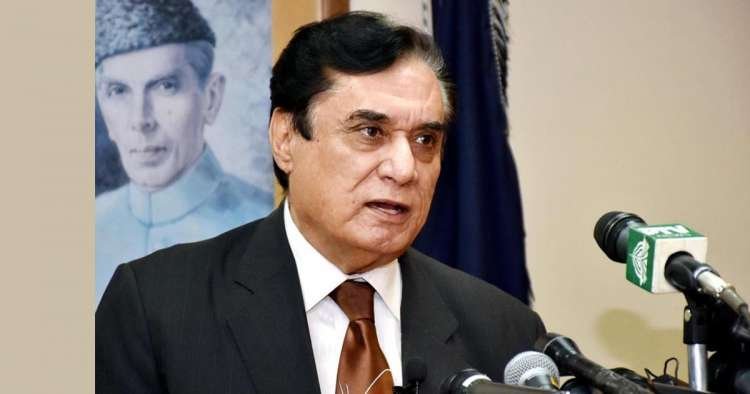
    The Pakistan Information Commission has refused to release the asset details of the National Accountability Bureau (NAB) Chairman Justice (r) Javed Iqbal and its directors, citing privacy concerns.

    In its decision, PIC Commissioner Zahid Abdullah said disclosing assets details of the NAB officers and their families would “compromise their privacy”.

    He further said that the commission will also not reveal the details of directors, assistant directors, and regional director generals of the accountability watchdog for the same reasons. The PIC commissioner also said that the issue didn’t pertain to the public interest.

    The PIC decision came after a citizen, Asadullah, approached NAB, seeking assets details of the NAB officials. However, the bureau refused to provide these details prompting Asad to move the PIC against the NAB decision.

    In a plea, the petitioner urged the commission to release details of the NAB officers before and after their induction in NAB.

    NAB, the apex accountability body, was established through a presidential ordinance in 1999 by military dictator General Pervez Musharraf one month after taking office as a result of a military coup. The purpose of the watchdog was to investigate and prosecute officials involved in corruption.

    However, it has come under increasing criticism for acting against the critics of the Imran Khan-led government during the past couple of years.  

    On July 20, 2020, Pakistan’s Supreme Court, in an 87-page decision, ruled that the National Accountability Bureau had violated the rights to a fair trial and due process in the arrest of two opposition politicians, Khawaja Saad Rafique and Salman Rafique, whom the NAB detained for 15 months without reasonable grounds.

    Subsequently,  the Human Rights Watch said that Pakistani authorities should follow up on a recent Supreme Court decision and cease using the NAB to detain critics of the government. NAB, however, says it is independent in its decision-making process.

  • PAK v ZIM ODIs: Pakistani bowlers took fifers in each match

    PAK v ZIM ODIs: Pakistani bowlers took fifers in each match

    Three Pakistani bowlers have achieved the maiden five-wicket haul in the Pakistan vs Zimbabwe One Day International (ODIs) matches.

    In the first ODI, Shaheen Shah Afridi grabbed the fifer and returned with the figures of 5-49.

    During the second ODI, off-spinner Iftikhar Ahmed’s maiden five-wicket haul earned Pakistan a convincing six-wicket victory over Zimbabwe in the second one-day international and 30-year-old Ahmed returned with 5-40.

    Meanwhile, Pakistani fast bowler Mohammad Hasnain had a day to remember on Tuesday during the Pakistan vs Zimbabwe third ODI in Rawalpindi.

    The 20-year-old picked up five wickets for just 26 runs in his 10-over spell, wreaking havoc to the opponent’s top order. He picked up three wickets in his opening spell, which he shared with Shaheen.

    Today’s game was the first of the series for Hasnain. He finished with figures of 10-3-26-5 as he became the third Pakistani bowler to claim a fifer in back-to-back matches of the ongoing series.

    Apart from the outclass performance by Hasnain, Pakistan lost the match in a Super over scoring only 2 runs on the loss of 2 wickets while Zimbabwe scored 5 runs of 3 balls, winning the match with 3 balls remaining.

  • Sparks fly between Zaid and Yumnah in Bilal Khan’s new single

    Sparks fly between Zaid and Yumnah in Bilal Khan’s new single

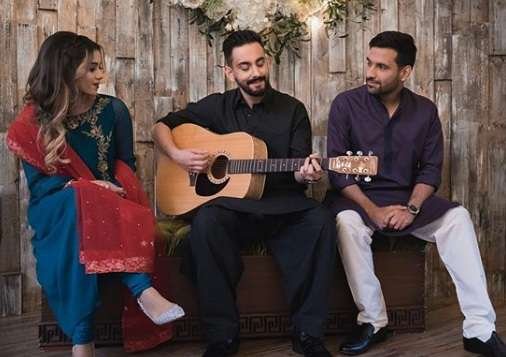
    Bilal Khan has released a new single titled Gallan Teriyan Mitheeyan. The music video features popular Pakistani-Canadian YouTuber Zaid Ali T and his wife Yumnah Ali.

    Written and directed by Khan himself, the music video of the song shows Zaid and Yumnah as young people falling in love. Bilal plays the role of Zaid’s friend in the song.

    Though the couple has featured in each other’s vlogs, this is the first time Zaid and Yumnah have worked together in a music video. The two also celebrated their third wedding anniversary recently.

    The song is soulful and melodious and quintessential Bilal Khan. Check it out below:

  • Pakistani celebrities who recently tested positive for COVID-19

    Pakistani celebrities who recently tested positive for COVID-19

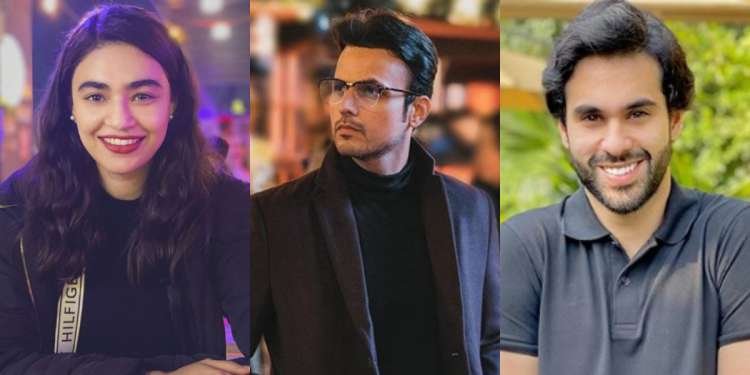
    The second wave of COVID-19 has arrived in Pakistan with infections spiking. Several Pakistani celebrities and noted personalities have tested positive for the virus in recent days including Sabaat co-stars Usman Mukhtar and Ameer Gilani and models Saheefa Jabbar Khattak and Farwa Ali Kazmi and singer Jawad Ahmed.

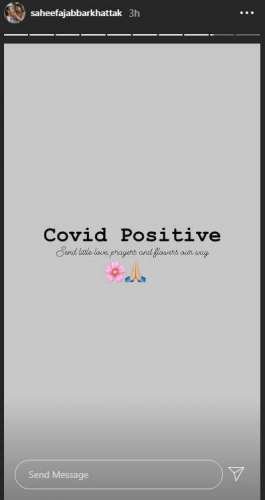
    Saheefa, on Tuesday, shared that she is “COVID positive” and requested her followers to pray for her. She is isolating at home with her husband.

    Late Monday night, Ameer Gilani, during a question-answer session with his followers revealed that he too had tested positive for the virus and was isolating in his room.

    “I’m COVID positive and there is no sense of taste and smell. I request you all to remember me and my family in your prayers as your prayers are very powerful,” shared the actor.

    Last week, Gilani’s co-star Usman Mukhtar had also tested positive for the virus.

    Pop musician Jawad Ahmad also tested positive for COVID-19, earlier this week. The singer is also isolating at home.

    Last week, model Farwa Ali Kazmi, had also tested positive for the virus, days after walking the ramp for Hussain Rehar’s solo show. Farwa had initially dismissed her symptoms, thinking it was seasonal flu only to discover later that she had COVID-19.

    “All those with cough, body aches and headaches but no fever, please get yourself tested. I had delayed it thinking its seasonal cold but it’s not,” stated the model.

    Farwa added that she thinks she got it by “sharing food and cigar with a COVID-positive”.

    Other celebrities, who had earlier tested positive for COVID-19, include Rubina Ashraf, Nida Yasir, Yasir Nawaz, Naveed Raza, Noman Sami, Alizeh Shah, Alyzeh Gabol, Abrar ul Haq, Sakina Samo, Shehzad Roy and Bilal Maqsood. All of them have recovered from the virus now.

    Meanwhile, several politicians including PTI’s Ali Haider Zaidi and PML-N’s Dr Musadik Malik have also tested positive for COVID-19.

  • World’s biggest pink diamond mine closes after reserves finish

    World’s biggest pink diamond mine closes after reserves finish

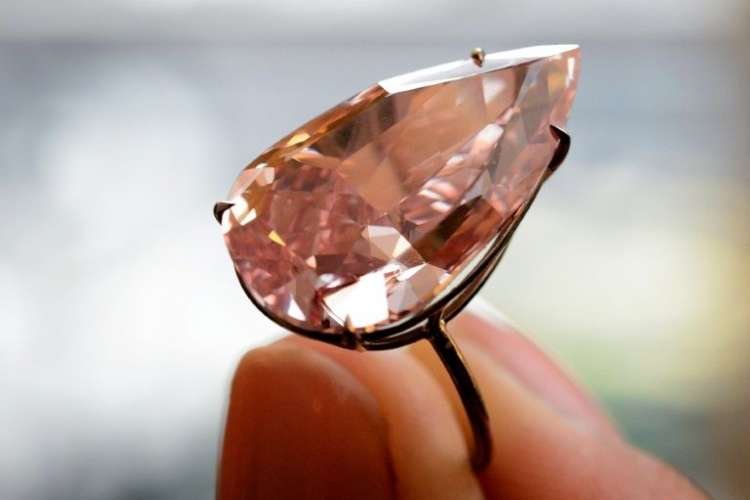
    The world’s largest pink diamond mine has shut its doors after exhausting its reserves of the expensive gems.

    According to reports, the Argyle mine, in the remote Kimberley region of Western Australia, churned out more than 90 percent of the world’s pink diamonds — sought after for their incredible rarity.

    The seam was discovered in 1979 and the Anglo-Australian firm began mining operations there four years later.

    It has since produced more than 865 million carats of rough diamonds, including a small but steady stream of prized pink stones, according to global mining giant Rio Tinto.

    Read more – Indian jewellery ad slammed for showing Hindu-Muslim couple

    Argyle employees and indigenous landowners attended a ceremony at the shuttered mine to mark the end of operations.

    The company expects efforts to decommission and dismantle the 37-year-old site will take around five years.

    “A new chapter will now begin as we start the process of respectfully closing the Argyle mine and rehabilitating the land, to be handed back to its traditional custodians,” mine manager Andrew Wilson said.

    Over the past two decades, the value of pink diamonds has risen by 500 percent, Rio Tinto’s Sinead Kaufman told public broadcaster ABC.

    The end of operations at Argyle is likely to push the price of the diamonds even higher, jewellers say. At current rates, the gems can fetch up to $3 million per carat.

    Diamonds are typically clear, but jewels such as those mined at Argyle become pink through extreme heat and pressure during their creation. Those conditions warp their crystal lattices and alter the reflection of light as it passes through the body of the diamond.

  • New Zealand gets a tattooed foreign minister

    New Zealand gets a tattooed foreign minister

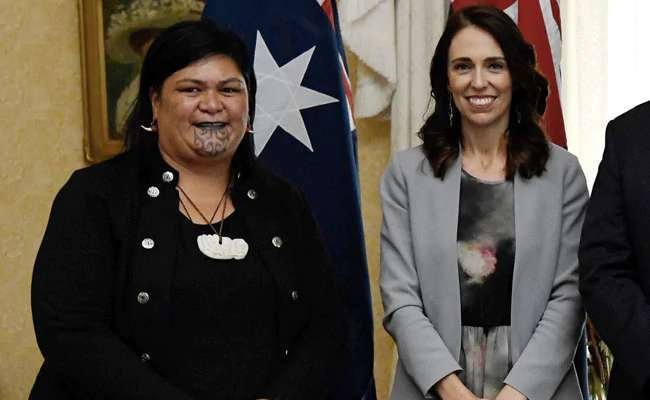
    After her victory in general elections, New Zealand Prime Minister Jacinda Ardern has appointed the country’s first indigenous female foreign minister, with a facial tattoo.

    Newly appointed Foreign Minister Nanaia Mahuta, who is a Maori – a minority group in New Zealand – wears a traditional tattoo on her chin, called a moko kauae. The Maori tattoos are usually bestowed on high-ranking  women as a reflection of their standing or power in the community.

    Four years ago, she made history by becoming country’s first female member of the parliament to wear a Maori chin tattoo, and this year she will take on the role of foreign minister.

    “Moko is a statement of identity, like a passport,” said Mahuta. “I am at a time in my life where I am ready to make a clear statement that this is who I am, and this is my position in New Zealand.”

    Politicians from both sides of the political spectrum congratulated Mahuta on her appointment as foreign minister. Rukuwai Tipene-Allen, a political journalist for Maori Television, said Mahuta’s appointment was hugely significant. “The first face that people see at an international level is someone who speaks, looks and sounds like a Maori”

    PM Ardern, whose center-left Labour Party was reelected in the elections last month, has one of the most diverse parliament in the world. Almost half of the country’s lawmakers are women, which is higher than the global average of 25%. Moreover, she has also appointed the first openly gay deputy prime minister.

    “This is a cabinet and an executive that is based on merit that also happen to be incredibly diverse and I am proud of that,” Ardern said Monday as she announced her cabinet.