Blog

  • Modi’s Hindu Rashtra

    Modi’s Hindu Rashtra

    This year, August 5 marked the one-year anniversary of occupied Kashmir’s illegal annexation and subsequent lockdown.

    Last year, India changed the special status of the troubled valley to union territories. The gross human rights violations that followed and are still taking place is no secret. Pakistan has tried highlighting the issue internationally.  Unfortunately, the international community is least bothered because of economic reasons; every country wants a share in the Indian market pie.

    The myth of Muslim Ummah was also shattered when except for countries like Turkey and Malaysia, nobody raised voice for the plight of the Kashmiris. The same led to what appeared to be a major foreign policy shift for Pakistan as Foreign Minister Shah Mahmood Qureshi asked Saudi Arabia-led Organisation of Islamic Cooperation (OIC) to stop dragging feet on the convening of a meeting of its Council of Foreign Ministers (CFM) on the Kashmir issue.

    READ: VIDEO: FM Qureshi says Pakistan ready to ‘ditch’ Saudi Arabia for Kashmir’s sake

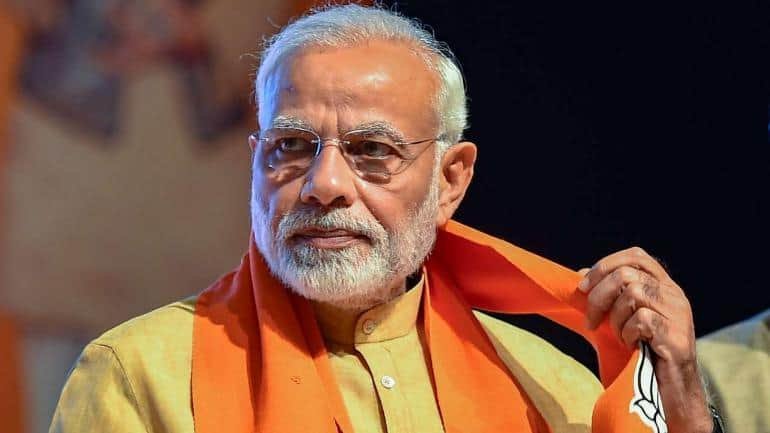
    Revoking the special status of held Kashmir was a step towards establishing Modi’s Hindu Rashtra. The first five years of Modi paved the way for an India that shattered all foundations of secularism. Modi regime’s six years have resulted in a wave of palpable fear amongst the Muslim minority in India. Modi’s Gujarat — where Muslims were killed as if it was a sport — is now being replicated in other parts of India; from beef lynchings to riots, the Muslim minority in India is being subjugated endlessly.

    Modi chose August 5, 2020, as the day of laying down the foundation of the Ram Mandir in Ayodhya. As the New York Times put it, “In a moment of triumph that India’s Hindu nationalists had worked toward for years, Prime Minister (PM) Narendra Modi on Wednesday set the ceremonial cornerstone for a new Hindu temple at the site of a destroyed mosque in Ayodhya.”

    This gesture was a slap in the face of the Muslim minority of India as well as the last nail in the coffin of Indian secularism. Modi’s Hindu nationalism has destroyed the fabric of Nehruvian secularism. It is a reminder that when a fascist ruler is in power, even strong traditions and constitutions cannot guarantee fundamental rights, human rights, freedom of speech and all other traditions of a free society.

    The cataclysmic shift of the Indian polity towards the right under Modi’s rule is not a surprise. In fact, what was surprising was the denial of Indian liberals when Modi was first elected in 2014. They were of the view that India’s secular traditions and constitution could never be destroyed but many pointed out how Modi’s victory was an indictment of the majoritarianism in India.

    This is happening all over the world. From Trump’s America to Brexit in Britain, the world’s shift to right-wing politics is quite disappointing. We hope that some day, sane voices of India and the world will take a stand against Modi’s fascism.
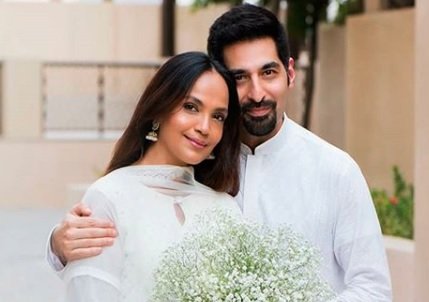

  • Aamina Sheikh ties the knot

    Aamina Sheikh ties the knot

    After confusing fans with a cryptic picture of rings with no caption, Aamina Sheikh has confirmed that she has indeed tied the knot. The actor shared a picture of herself with her husband and daughter. According to reports, Aamina’s husband is a computer engineer based in Dubai.

    https://www.instagram.com/p/CDqFkANB4eo/
    https://www.instagram.com/p/CDqFxAxB_6h/

    Earlier, Aamina had shared the picture of the rings in a grid form with ‘Bismillah’ hinting that she has tied the knot or has gotten engaged.

    https://www.instagram.com/p/CDnjumah_1R/?utm_source=ig_embed

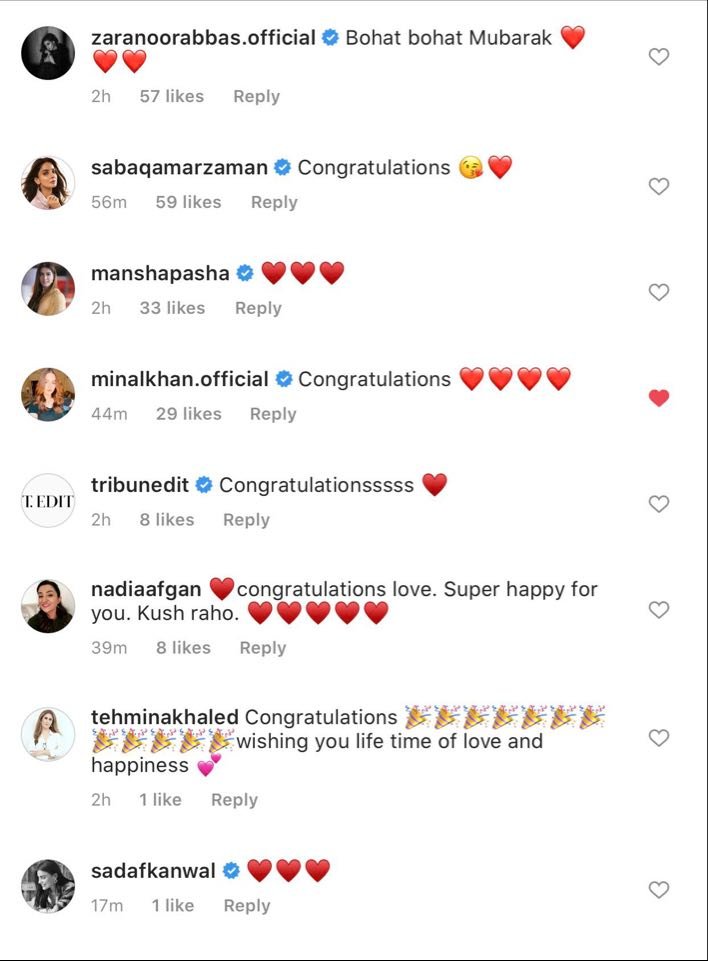
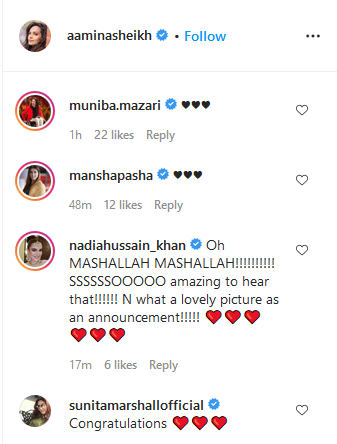
    Following Aamina’s announcement congratulatory messages poured in for her from colleagues and friends.

    Aamina was previously married to Mohib Mirza with whom she also has a daughter. Mohib confirmed their separation in an interview last October.

  • Action to be taken against Saba Qamar, Bilal Saeed for shooting video inside Masjid Wazir Khan

    Action to be taken against Saba Qamar, Bilal Saeed for shooting video inside Masjid Wazir Khan

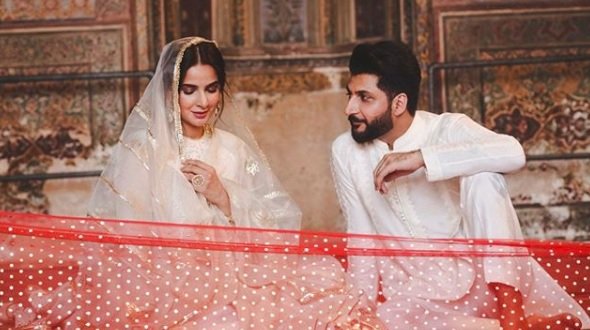
    Saba Qamar and Bilal Saeed have found themselves in hot water after they released the teaser of their upcoming music video Qubool Hai. Part of the music video, which has been directed by Saba herself, has been shot inside Wazir Khan Mosque upsetting the public.

    Read more – Saba Qamar and Bilal Saeed just said ‘Qubool Hai’

    Though Saba and Bilal in the caption clarified that “this is also the only sequence that was shot at the historical Wazir Khan Mosque” and is a prologue to the music video, the teaser did not go down well with the audiences who called out the actor and singer for hurting religious sentiments.

    “The BTS video that’s making rounds on social media was just a circular movement to click stills for the poster of ‘Qubool’ depicting a happily married couple right after their Nikah. Hurting or offending anyone or being disrespectful to a holy place is as unimaginable and unacceptable for me as for any decent human being.”

    “Despite this, if we have unknowingly hurt anyone’s sentiments we apologise to you all with all our heart,” they added in their post.

    https://www.instagram.com/p/CDoMcOtB6ch/

    Social media users demanded that strict action be taken against those who allowed the video to be shot inside the mosque.

    https://twitter.com/U_3322/status/1292083747836305410?s=20
    https://twitter.com/taimee_khan/status/1292069268876660736?s=20
    https://twitter.com/shahfai69369961/status/1292054715451224066?s=20

    https://twitter.com/Jaweriashk/status/1292092971379195904?s=20

    Later, spokesperson of the Punjab Government Mashwani Azhar said that an inquiry has been ordered into the matter and strict action will be taken against those involved in allowing the video to be shot in the Masjid and those who violated the terms of the NOC. Azhar even attached the notification in his tweet.

    “Secretary Aquaf Govt of Punjab has already ordered DG Auqaf to conduct an inquiry of the Masjid Wazir Khan matter where private company shooting Saba Qamar, Bilal Saeed video violated terms of NOC, agreed with the administration,” wrote Azhar on Twitter.

  • Mansha Pasha reveals she styled her own looks for ‘Mohabbat Tujhe Alvida’

    Mansha Pasha reveals she styled her own looks for ‘Mohabbat Tujhe Alvida’

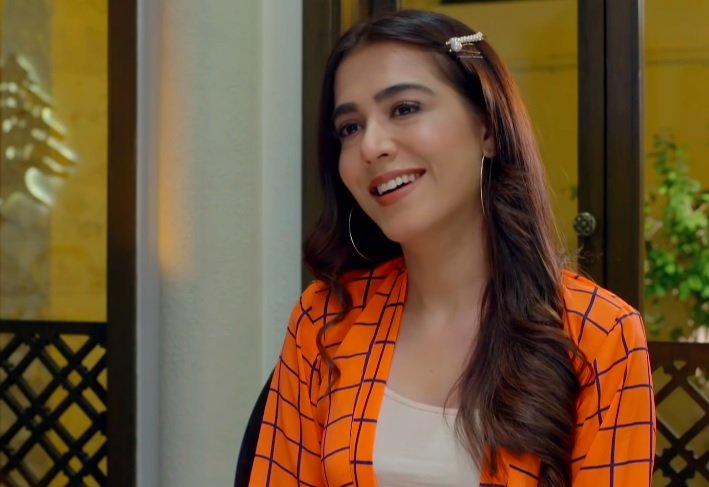
    While we may not be enjoying Mansha Pasha’s ongoing drama Mohabbat Tujhe Alvida entirely, we love her style and outfits in the drama.

    And it turns out that the actor designed her looks herself, taking inspiration from fashionistas Blake Lively and Timothée Chalamet, who often style themselves. The actor shared this tidbit in a story posted to her Instagram.

    Read more – Mansha Pasha says ‘Mohabbat Tujhe Alvida’ is not inspired by Bollywood film ‘Judaai’

    Check out some of her looks below:

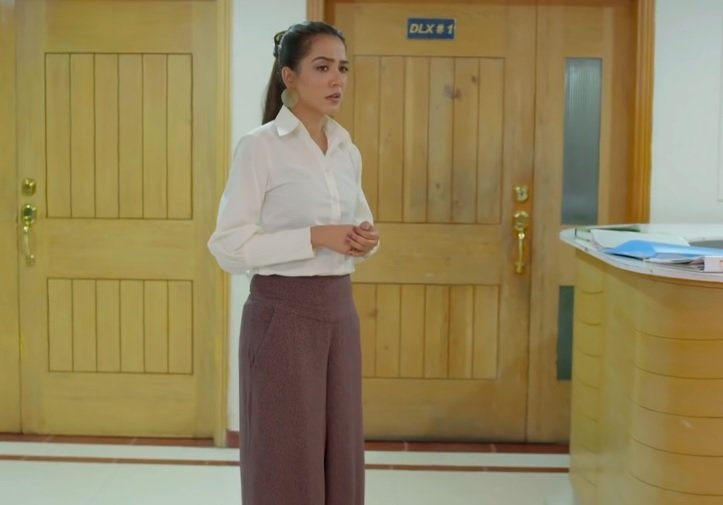
    Power suits and high-waisted pants are a staple in Shafaq’s (Pasha) wardrobe.

  • May the force be with you

    “Are elected governments regarded as inconvenient guests?”

    Thirty years ago, troops rolled into Islamabad and took up positions around ‘key installations’ and buildings in the Capital. Just over an hour later, around 5 pm, the elected government had been dismissed and the National Assembly dissolved. Benazir Bhutto, who had been prime minister for just twenty months, was sent packing. 

    Two years before that particular dismissal, another prime minister, Mohammad Khan Junejo, had been dismissed in a similarly humiliating manner: while he was addressing a press conference on his return from a foreign tour, the journalists there started leaving and hurrying over to the presidency where they had been told they would hear some big news. There the president, General Ziaul Haq had announced dismissing the government. Junejo was also sent packing without completing his term.

    By the time Bhutto was dismissed on August 6, 1990, General Zia was dead but the idea that elected civilian leaders could be unceremoniously dismissed had become something of a conviction in the minds of General Zia’s army leadership. In the eleven years between 1988 and 1999, five governments were toppled in this manner: Junejo, Bhutto, Sharif, Bhutto, Sharif. Of these PMs, Sharif and Bhutto were popularly elected, Junejo was elected in Zia’s non-party based polls but even though he had been handpicked by the general, he refused to be a puppet PM and once in office, began making all sorts of decisions to try to establish civil supremacy. Bhutto would later be assassinated while campaigning in a bid to be elected a third time while Sharif, though later able to be PM yet again, was forced to step down in a haze of allegations regarding his wealth and offshore accounts. He was charged, convicted and incarcerated. 

    Talking to various people about the 1990 dismissal brought to the fore just how difficult a time this was for civilian politicians to function in government. The main problem was, of course, a hostile establishment — a military and bureaucracy steeped in the Zia era thinking who regarded these elected politicians as troublesome outsiders, to be allowed into government for as long as they could be tolerated — and booted out as soon as they started trying to assert themselves or do anything at all that was not in line with what the forces wanted. The way in which elected leaders were treated as intruders and interlopers — almost as enemies — is instructive. Kamran Shafi, who was Butto’s press secretary at the time, recalls how her speechwriter Farhatullah Babar had to go out and get her speech printed from elsewhere because obstructive bureaucrats refused to sanction ink for a printer. It was such a hostile environment that everything was a struggle and there was a feeling that half of the administration and the staff were actually working against the PM and the government. 

    Benazir Bhutto came to power after a long period of incarceration and exile following the overthrow and execution of her father by General Zia, and she was always regarded with distrust by the military establishment but what is very interesting is that any PM (of any political hue) who tries to be a PM and implement any policy that challenges defence interests in any way is similarly despised and disposed of.

    Here, the example of Nawaz Sharif is very interesting: groomed politically and elevated during the martial law years, Sharif was the generals’ man in Punjab, extremely useful to the ‘powers that be’ as a cunning and aggressive opponent to Bhutto. However, once he came to power and tried to assert his own authority, Sharif suffered the same fate as Bhutto and he was sacked unceremoniously.

    His ‘mein dicatation nahin loonga’ (I refuse to take dictation) speech from April 1993 is a classic expression of this tussle between elected and martial forces in Pakistan. Unfortunately, that speech has disappeared from the archives and everywhere else. In his second stint as PM, Sharif actually fired the chief of army staff, one General Musharraf, and he replaced him with General Ziauddin Butt. The footage of the relevant ceremony was shown on only one PTV news bulletin because then Sharif’s government was overthrown and Pakistan Television Centre, taken over. While the video footage of the installation of the new army chief also disappeared, this process of enforced disappearances was actually quite useful in controlling the narrative.

    But what is important now is to try to prevent key chapters of the country’s political history from being disappeared from the records and erased from public memory. What happened in the 90s in Pakistan is, to some extent, still happening now.

    Because the idea that elected prime ministers are just short term visitors or inconvenient guests still prevails as does the process of constantly destabilising and smearing political governments. To fill in the gaps, we need to speak to people who were witnesses to key events, we need to question official histories and we need to search try to understand — through people’s experiences — how certain systems actually work.

  • COVID-19: Tourists can enter Gilgit after showing medical reports

    COVID-19: Tourists can enter Gilgit after showing medical reports

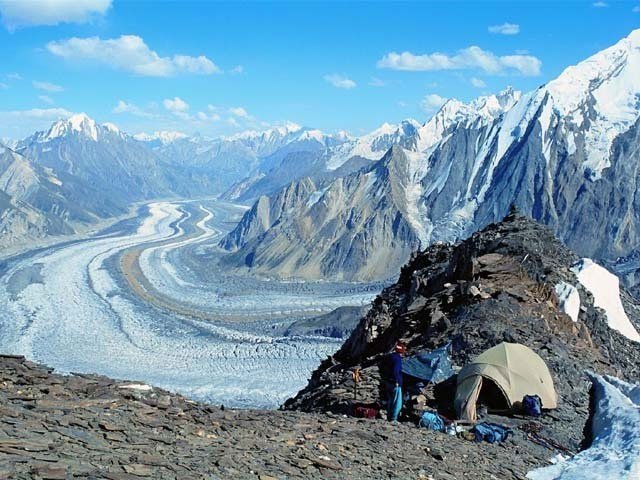
    The Government of Gilgit-Baltistan has decided to restart tourism-related activities in the province, Chief Minister’s(CM) spokesperson said on Friday.

    Caretaker Chief Minister Mir Afzal Khan has issued a few directions to open the tourism sector in the province under strict standard operating procedures (SOP)s.

    According to details, entrance of the tourists will be subject to the clearance of medical reports, the spokesperson said, adding that the travellers will be allowed to enter the province from August 8 (Saturday).

    Earlier, Planning and Development Minister Asad Umar had announced that dine-in restaurants and beauty salons across Pakistan will reopen on August 10 as the country reported a decline in coronavirus cases.

    Sports and games would be allowed to resume but without spectators and pillion-riding was also permitted.

    The move to reopen the country came after a meeting of the National Coordination Committee (NCC) and discussion on recommendations in the National Command and Operations Centre (NCOC), he said, referring to the primary body that overlooks the efforts against the coronavirus pandemic in Pakistan.

  • Amazon enters Pakistan to provide web services

    Amazon enters Pakistan to provide web services

    Amazon is forming a team to establish Amazon Web Services (AWS) in Pakistan to drive the adoption of cloud computing. Amazon has also registered a local office under the name Amazon Data Services Pakistan (Pvt) Ltd. 

    According to the Security Exchange Commission of Pakistan (SECP) database, the Pakistan office is led by Paul Andrew Macpherson as the Chief Executive Officer (CEO), while Shoaib Munir is a director. 

    A spokesperson from Amazon shared that the technology leaders are currently seeking a public policy specialist with a focus on driving AWS cloud computing solution adoption in Pakistan. The role focuses on removing regulatory and political blockers to cloud adoption. 

    Whenever big companies enter small markets, it is common practice for them to appoint an advisor on public policy. When Bytedance, the parent company of Tiktok entered Pakistan, they hired Hassan Arshad to work with Pakistan Telecommunication Authority (PTA) on policy infrastructure.

    The State Bank of Pakistan (SBP) directed banks to utilise cloud computing technology under the condition that systems and service providers shall be located in Pakistan along with all physical servers and services. 

    Under this rule, AWS would need to set up its data center and cloud server in the country. 

    According to the e-commerce policy framework of Pakistan, the Ministry of Information Technology and Telecommunication is in the process of formulating Pakistan’s first cloud policy, while the Draft Data Protection Act is at an advanced stage of consultations.

    AWS hopes to work with relevant government departments in Pakistan as they develop and revise policies related to the digital economy, including cloud-first policies, data protection regulations, outsourcing guidelines, cybersecurity policies, tax policy, and over the top regulations. They will also proactively build relationships with key policymakers, politicians, and influencers.

  • New report suggests chances of catching COVID-19 on a flight are low

    New report suggests chances of catching COVID-19 on a flight are low

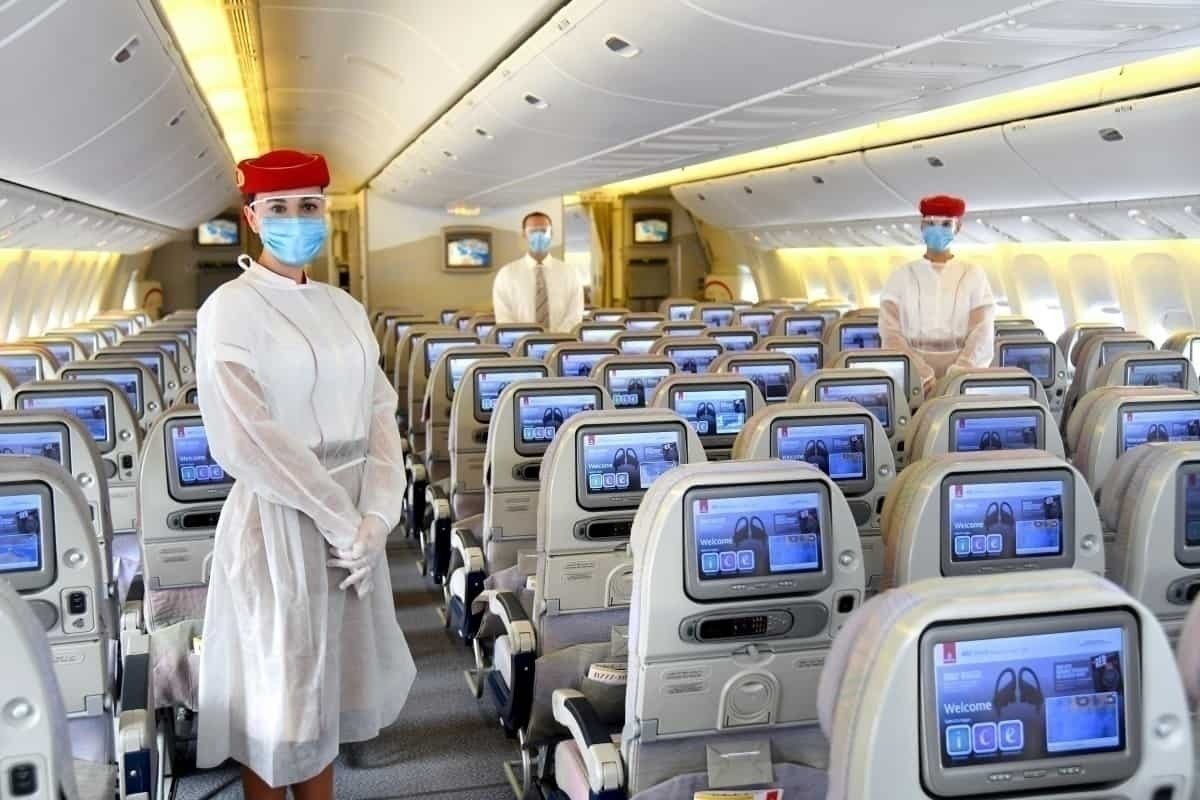
    A new report published in Bloomberg has said that the chances of catching coronavirus while flying are very low. Despite the known dangers of crowded, enclosed spaces, planes have not been identified as the spots of so-called superspreading events, at least so far.

    Arnold Barnett, a professor of management science at the Massachusetts Institute of Technology (MIT), has been trying to calculate the probabilities of catching COVID-19 from flying. 

    He’s factored in a bunch of variables, including the chances of being seated near someone in the infectious stage of the disease, and the odds that the protection of masks that is now mandatory in most flights.

    He accounted for the way air is constantly renewed in airplane cabins, which experts say makes it very unlikely for a passenger to contract the disease from people who aren’t in their immediate area — their row or the person across the aisle, the people sitting in front of them or the people behind.

    What Barnett came up with was that we have about a 1/4300 chance of getting a virus on a full 2-hour flight — that is, about 1 in 4300 passengers will pick up the virus, on average. The odds of getting the virus are about half that, 1/7700 if airlines leave the middle seat empty. Barnett has posted his results as a not-yet-peer-reviewed preprint.

    The odds of dying of a case contracted in flight, he found, are even lower — between 1 in 400,000 and 1 in 600,000 — depending on the age and other risk factors. To put that in perspective, those odds are comparable to the average risk of getting a fatal case in a typical two hours on the ground.

    University of Massachusetts biology professor Erin Bromage says he is flying every week, as he advises federal, state and district courts on how to reopen while minimizing risks. 

    Bromage says that the air exchange system in planes is better than in hospitals, with the air in the cabin being completely replaced 30 times every hour. He agrees with MIT’s Barnett, though, that it’s possible to transmit the disease to or from your close neighbours.

    He and Barnett both suggested that customers should, if possible, choose an airline that promises to keep the middle seat empty. 

  • Mahira Khan says it’s about time award shows create categories for technicians

    Mahira Khan says it’s about time award shows create categories for technicians

    Mahira Khan says it’s about time technicians and those involved behind the scenes get their due credit and respect.

    While wishing choreographer Nigah Jee on his birthday, Mahira said: “I have been wanting to say this for a while – I hope that our award shows create categories for our technicians. It’s about time! I hope we get to see choreographers, cinematographers, art directors, editors etc get recognition. Our films/dramas are nothing without them.”

    https://www.instagram.com/p/CDl43L7B5yq/

    Mahira makes a valid point here. Technicians including the set crew are an integral part of any film or drama without whom a film would be incomplete.

    Read more – ‘Meri beti nihayat jhooti hai’: Mahira Khan’s mother roasts her on live television

    Meanwhile, with cinemas expected to reopen from August 10, it is likely that Mahira’s upcoming films Quaid e Azam Zindabad and The Legend of Maula Jatt will release soon.

  • Software installed to keep Punjab Police’s Rs119b annual budget under check

    The finance wing of the Punjab Police has presented a comprehensive financial management software to stop corruption and embezzlement of funds in police accounts.

    Punjab Information Technology Board (PITB) helped in the development and installation of the software. This kind of software has not been deployed before in any state-run department in Pakistan.

    The software will monitor the budget of Rs119 billion that is allocated to police annually. The initiative was taken keeping in view the previous mega scams of corruption in police accounts when the district accountants had withdrawn funds worth hundreds of millions of rupees and misused them for personal gains.

    Recently, a similar scandal has embarrassed Punjab Police when an inquiry panel of senior police officers proposed disciplinary action against a senior officer following a mega scam of Rs340 million in the accounts of the traffic police department.

    With this new software, the accounts will be made online, giving access to the Regional Police Officers (RPOs), District Police Officers (DPOs) and the Finance wing at the Central Police Office (CPO) to keep monitoring of the funds withdrawn by the accountants of the concerned districts.

    Meanwhile, according to a police handout, Inspector General of Police (IGP) Punjab, Shoaib Dastgir said that police station is a basic unit in police department and officers should play a supervisory role for improving working and prestige of this basic unit so that problems of citizens may be resolved by the timely provision of justice.