Blog

  • VIDEO: Dubai crown prince restricts access to his Mercedes SUV after bird builds nest on it

    VIDEO: Dubai crown prince restricts access to his Mercedes SUV after bird builds nest on it

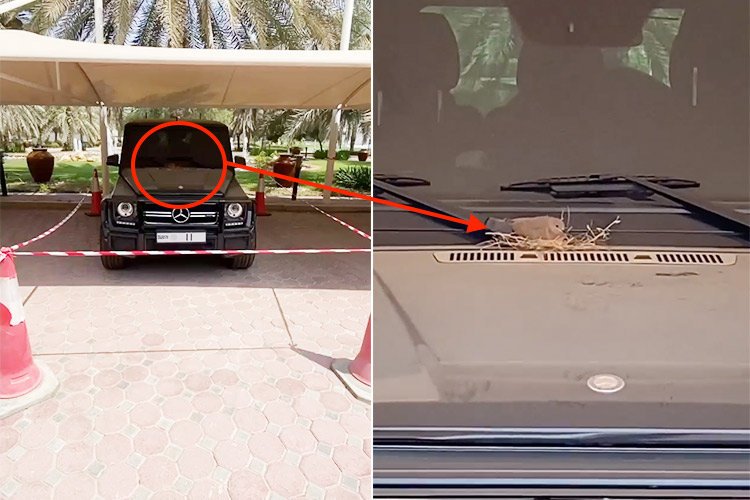
    Crown Prince of Dubai Sheikh Hamdan Bin Mohammed Bin Rashid Al Maktoum has cordoned off his car upon finding that a small bird had built a next on its hood, Gulf Today reported.

    As per the details, the crown prince on his Instagram shared a video of the bird nesting on his Mercedes-AMG G63 SUV parked within his residence in Dubai. 

    The video, which Sheikh Hamdan shot at a distance, shows the G-wagon cordoned off with red-and-white tape and he has told all personnel to stay away from the area so as to not disturb the bird.

    Reportedly an avid lover of nature, Sheikh Hamdan regularly shares his experiences across his social media platforms.

    Earlier this week, Hamdan shared videos and photos of the bird building the nest. Ever since, the royal has not been near his car and therefore told everyone to stay off the area.

    WATCH VIDEO:

    Hamdan Bin Mohammed bin Rashid Al Maktoum is the son of Sheikh Mohammed bin Rashid Al Maktoum and Sheikha Hind bint Maktoum bin Juma Al Maktoum, the senior wife of Mohammed. He is the second son of their 12 children and the fourth of his father’s children. Hamdan’s elder full brother was Sheikh Rashid bin Mohammed.

    He is popularly known as Fazza, the name under which he publishes his poetry, and which means “the one who helps” in Arabic.

    While the crown prince’s Instagram account with more than 10 million followers suggests his hobbies include animals, poetry, sports, photography and adventures, Hamdan Al Maktoum is also a licensed and a well-cultivated equestrian, a skydiver and a scuba diver. 

  • ‘Article 370’ details how horrific the Kashmir lockdown could be

    ‘Article 370’ details how horrific the Kashmir lockdown could be

    It has been a year since India revoked the special status of Indian Occupied Kashmir (IoK) and imposed a curfew in the region. To highlight Indian atrocities in the region and share a glimpse of life in lockdown, filmmaker Ibrahim Baloch has released a short film on the issue titled Article 370.

    The film tells the story of Gul-e-Rana (Mariyam Nafees), a pregnant girl living in IoK. She is awaiting the birth of her child when a complete lockdown is imposed in the region and her husband goes missing. The short 16-minute video touches a chord and your heart goes out to those living in the region.

    Speaking about the film, Baloch told a local media outlet that he wanted to highlight the human side of the political move.

    “I started following the situation in Kashmir after India announced its decision and realised that it was primarily debated from a political perspective,” he said. “I was more interested in the human side of the issue. So after doing some research, I came across stories of Kashmiri women in Srinagar who gave birth during the lockdown imposed by the Indian administration.”

    Meanwhile, the film’s official synopsis states: “An untold tale of people who have made sacrifices the world is unaware of, while they lived their lives in hell. Gul-e-Rana didn’t know her fairytale would end so soon and her blessing would turn into a curse.”

    Read more – PPP Senator Rehman Malik is making a movie on Kashmir

    The film has been produced by Madiha Majeed under the banner of ‘See Prime’.

    Watch the film below:

  • KYA BOLA? (Aug 5): ‘Hukoomat k sath ab kabhi nahi baithoonga’ to Fayazul Hasan Chohan’s cameo in Independence Day song

    KYA BOLA? (Aug 5): ‘Hukoomat k sath ab kabhi nahi baithoonga’ to Fayazul Hasan Chohan’s cameo in Independence Day song

    Following are some snippets that stood out from Urdu newspapers on August 5, 2020, which The Current takes no responsibility for.


    ‘Hukoomat K Sath Ab Kabhi Nahi Baithoonga’

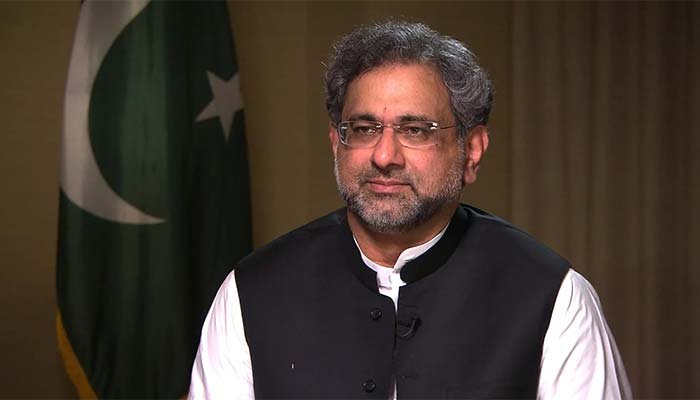
    It has been reported by Daily Jang that Pakistan Muslim League-Nawaz (PML-N) leader and former prime minister (PM) Shahid Khaqan Abbasi has distanced himself and his party from any proposals to amend National Accountability Bureau (NAB) laws, saying, “Hukoomat k sath ab kabhi nahi baithoonga. Hukoomat jhoot bolnay pr awaam se maafi maangay. Jahaan wazire azam aur wuzra assembly k floor pr jhoot boltay hon, unn se kya baat karein?”


    PPP Ki 12 Saala Karkardagi

    Daily Jang has quoted Special Assistant to Prime Minister on Political Communication Dr Shahbaz Gill as saying, “People’s Party walay ehal hotay to NDMA ko Karachi naa bhejna parrta… jin ki 12 saala karkardagi ka pol chand millimeter baarish ne khol dia, unn se bughz kaisa?


    Fayazul Hasan Chohan’s Cameo

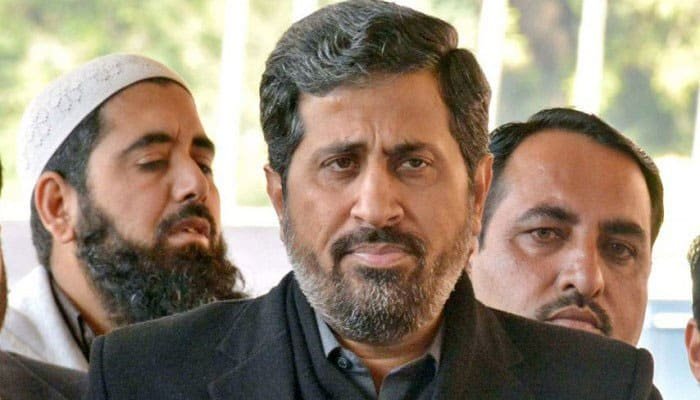
    According to Daily Jang, Punjab Information Minister Fayazul Hasan Chohan will be making a cameo appearance in the Independence Day song to be released later this month ahead of August 14 celebrations.

    Chohan, a popular member of the Punjab government, is rather infamous for his “reckless” statements, one of which was against members of the Hindu community and had cost him his job.

  • Wasu who appeared in Shehzad Roy songs needs financial help

    Shehzad Roy is very popular in Pakistan as a singer and also for his social work. Some of his socio-political songs were also a big hit in the country.

    One of Roys’s songs featured Wasu Khan, a man hailing from the Jaffarabad district of Balochistan, belonging to the labour class. He made an appearance in the song Apne Ullo Kitne Tedhe. His narrartion in the song was liked by mana people.

    After ‘Apne Ullo Kitne Tedhe‘s popularity, Wasu was featured in another song with Roy in ‘Beya Beya’ that was a tribute to the late folk singer Mureed Buledi.

    But now as per a few posts doing rounds on social media, Wasu is in financial crisis after going through numerous health issues, and living in a rented house.

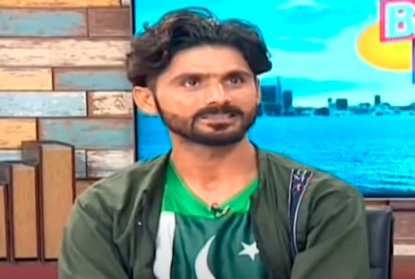
    In an interview, he said that he is not only unable to pay his house rent, but he is also unable to provide his family with two meals a day. He hopes that his message will reach the authorities and they will help him.

    His story went viral on the internet and people started to share how the star now needs our help.

    Speaking to Urdu News, Wasu said that Roy is still in contact with him.

    “Shehzad Roy has helped me a lot. He spent two lacs rupees on my treatment at Agha Khan Hospital and is still in contact with me,” said Wasu.

    He added: “Shehzad had bought me a house that was destroyed in the floods of 2010 and later sold it for treatment.”

    “ I now live in a rented house. Shehzad has given me a house, money, but my personal income is not enough,” he shared.

    Shehzad Roy recently took to Twitter and posted a video of Wasu telling that he asled for the help from the government and did not want to bother Roy as he had already helped him a lot.

  • Pakistan’s fast bowling culture: Even the PM is a paceman

    To understand the culture of fast bowling in Pakistan, look no further than Imran Khan — once a feared quick, and now the country’s prime minister.

    Not all of Pakistan’s pacemen will fly so high, but Prime Minister Imran’s rise underlines a tradition where speed is king, and the blistering pace is essential for any team.

    As if to reinforce the point, Pakistan have eight quicks in their 20-man squad for the three-Test series against England, starting on Wednesday, ready to unleash their trademark pace and swing.

    They carry the baton passed by predecessors such as Khan, left-arm great Wasim Akram and his destructive partner Waqar Younis, the unassuming Aaqib Javed, and Shoaib Akhtar, the feared “Rawalpindi Express” who is considered the fastest bowler in history.

    The current generation includes the precocious Naseem Shah, still only 17, Shaheen Shah Afridi and Wahab Riaz, and the accurate Mohammad Abbas.

    The production line is so consistent that when one player goes, another is ready to take over — as seen in 2010 when Mohammad Amir and Mohammad Asif, banned for spot-fixing, were replaced by Junaid Khan, Riaz, Mohammad Irfan, Ehsan Adil and Rahat Ali.

    Even Amir’s decision to retire from Tests at just 27 did not slow Pakistan, as Shaheen became the spearhead and Naseem announced himself with a stunning Test hat-trick.

    But the steady emergence of quicks — left-armers, right-armers, even one who is ambidextrous — raises an obvious question: how does Pakistan keep doing it?

    Former fast bowler Sarfaraz Nawaz, regarded as the pioneer of reverse swing in the 1970s, said the factors included Muslim Pakistan’s meaty diet — unlike mainly vegetarian India, once known for its spinners.

    “We are a nation obsessed with fast bowling,” Nawaz told AFP. “We eat meat which strengthens the body, we love wickets clattering and the batsman shivering so it’s natural that we produce fast bowlers.”

    Nawaz passed on his reverse-swing skills to Khan under whose tutelage Wasim and Waqar became “The Two Ws”, a menacing partnership in the 1980s and 1990s.

    Wasim said he followed Imran’s legacy, and that pace bowling matches the Pakistani mentality.

    “I think it’s the culture [to become a fast bowler], especially this generation of Waqar and I and then Akhtar, we all had a role model in Khan,” he said.

    “Generally, when we talk about cricket it’s mostly about the fast bowlers, they get batsmen caught napping. We are aggressive people in nature and that’s what helps.”

    Wasim often holds camps to train emerging fast bowlers, swelling Pakistan’s ranks.

    “When I came, I always wanted to be a fast bowler and then a crop of fast bowlers came, and now we have Naseem, Shaheen, Mohammad Hasnain and Musa Khan who bowl at 140-150 kph (87-93 mph),” he said.

    However, perhaps the most decisive factor is Pakistan’s legion of tape-ball players, who play in parking lots and disused patches of land using tennis balls wrapped in electrical tape to make them heavier, putting the onus on pace rather than spin.

    Lahore Qalandars, a Pakistan Super League (PSL) franchise which has been at the forefront of nurturing fast bowlers in recent years, received more than 350,000 applicants for their talent-hunt programme — nearly half of them tape-ball players, including the ambidextrous pace marvel Yasir Jan.

    “We give them a platform in our development programme and send them to Australia to hone their talent,” said head coach Aaqib Javed.

    According to Wasim, fast-bowling is so deeply ingrained that Pakistan’s stocks will never run out.

    “Many natural resources will dry up, but not Pakistan bowling’s reservoirs,” he said. “Our fast bowling future is secure as they follow footsteps and run-ups.”

    The article originally appeared on AFP.
  • Athletics Federation of Pakistan invites boy who jumped over 11 motorcycles for further training

    Athletics Federation of Pakistan invites boy who jumped over 11 motorcycles for further training

    The Athletics Federation of Pakistan (AFP) has invited the aspiring long jumper, whose video went viral on social media, for further training, journalist Faizan Lakhani has shared. The boy, Asif Magsi who hails from Thatta can be seen jumping over 11 motorcycles in the video.

    Federal Minister for Inter-Provincial Coordination Dr Fehmida Mirza also shared that the Athletics Federation is in touch with him.

    According to details, AFP President Major General Akram Sahi (retired), who himself was the long jump champion of Pakistan, contacted the 21-year-old and invited him for further training to Lahore.

    Sharing his thoughts on the young talent, General Sahi said: “This is a great moment for me as I was also the champions of Pakistan in the long jump. I am impressed with his talent and he could be a great asset for Pakistan.

    “He has great potential,” he added.

    General Sahi also said that the first question he asked him was if he ever got injured.

    “Thankfully, his answer was no, and I have advised him to stay safe till we meet in Lahore, as I have already invited him.”

    Meanwhile, Asif while speaking to various media outlets said he developed the skill while making Tik Tok videos. He said he wanted to make different videos which have the potential to go viral.

    “I wanted to join the Pakistan Army since childhood. So I started making videos based on national songs, and with each passing day my passion for jumping increased as have my jumps.”

    He said that he aims to set a new world record and make his country proud. The world record for the long jump is currently 8.95 meters while the Asian record is 8.33 meters.

    The video of the boy was originally shared by journalist Mohi Shah and soon went viral on social media. It even caught the attention of multiple Olympic award-winning athlete Carl Lewis, who remarked that “with his lack of fear, he has the perfect mindset”.

    The video also caught the attention of several public personalities including Minister of Maritime Affairs Ali Haider Zaidi, former Governor Sindh Mohammad Zubair and Fahad Mustafa who urged the Sports Board to take notice of the boy and train him.

    Other Twitter users also urged the Sports Board of Pakistan to hone this raw talent.

    Later, a video of the young man jumping over a canal also went viral on social media.

  • ‘ePay Punjab collects record Rs1.8 billion revenue in July 2020’

    ‘ePay Punjab collects record Rs1.8 billion revenue in July 2020’

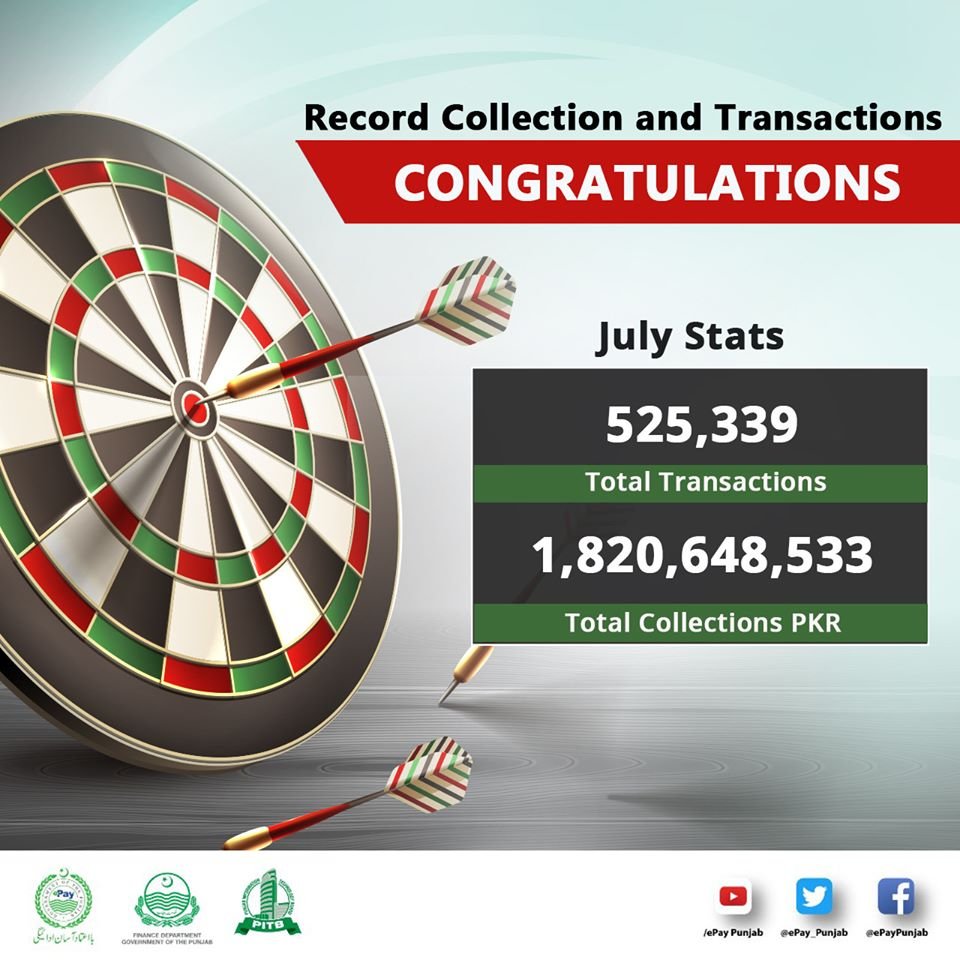
    Punjab Information Technology Board (PITB) has said that ePay smartphone application launched by the Punjab government has processed 525,339 transactions, worth record Rs1.82 billion in the form of taxes during the month of July of the current fiscal year (FY) 20-21.

    The system was launched last year in October after the collaborative efforts between PITB and the provincial Finance Department. The ePay initiative has provided a hassle-free method of paying taxes and making other payments.

    The government of Punjab has been focusing on IT-enabled solutions where citizens can avail facilities using the online platforms for payments. eBay Punjab is one such platform.

    ePay Punjab is the first digital platform for Public to Government (P2G) and Business to Government (B2G) transactions in Pakistan.

    Using the app, dues can be paid through the following payment channels: mobile banking, internet banking, ATM, and OTC (Over the Counter) banking transaction.

    • The following tax can be paid through the smartphone application
    • Excise and Taxation
    • Token Tax for Vehicle
    • Motor Vehicle Registration
    • Vehicle Transfer
    • Property Tax
    • Professional Tax
    • Cotton fee
    • Board of Revenue (BOR)
    • e-Stamping
    • Mutation fee
    • Fard fee
    • Punjab Revenue Authority (PRA)
    • Sales Tax on Services
    • Punjab Infrastructural Development Cess
    • Industries, Business Registration fee
    • Transport Department of Punjab Route Permit
    • Punjab Police and Traffic Challan.

    It is also offering a 25 per cent cut on token tax this year if paid through the app.

  • India continues celebrating arrival of Rafale jets that other countries dumped

    As India continues to celebrate the arrival of its Rafale jets, military experts are not only questioning its capabilities against United States (US) aircraft but are also raising questions why the Rafale jets failed to compete in the international arms markets and got dumped by a majority of nations.

    According to foreign media reports, Dassault’s Rafale was not India’s only choice as various other global firms expressed interest in the MMRCA tender. Six renowned aircraft manufacturers competed to bag the contract of 126 jets, which was hailed to be the largest-ever defence acquisition deal of India.

    The initial bidders were Lockheed Martin’s F-16s, Boeing’s F/A-18s, Eurofighter Typhoon, Russia’s MiG-35, Sweden’s Saab’s Gripen and Dassault’s Rafale.

    All aircraft were tested by the IAF and after careful analysis on the bids, two of them — Eurofighter Typhoon and Dassault Rafale — were shortlisted.

    Dassault received the contract to provide 126 fighter jets as it was the lowest bidder and the aircraft was said to be easy to maintain. After Rafale won the contract, the Indian side and Dassault started negotiations in 2012. Though the initial plan was to buy 126 jets, India scaled it down to 36, that too in fly-away condition.

    Despite boasting of awe-inspiring capabilities and selected by India after a mammoth testing & bidding process, the French origin jets didn’t see many buyers. Other than France and India, only Qatar and Egypt are using Rafale jets and that too in very limited numbers.

    As reported earlier by EurAsian Times, Russian aviation experts had claimed that Rafale jets would have been useless against the Chinese Airforce (PLAAF). The maximum speed of the Rafale jet is about Mach 1.8 compared to Chinese J-16s at Mach 2.2.

    The Rafale’s practical ceiling is also lower than the J-16s. Even in engine thrust, the Chinese J-16s aka Russian Su-35s are far superior to the French combat aircraft. Even if the Indian Air Force (IAF) was to deploy all 36 of its newly acquired jets, the technical superiority would still be on the side of China, claimed the Russian expert.

    The Rafale is one of the most expensive aircraft in the international market. India’s deal of 36 jets is worth Rs. 60,000 crores. Experts argue that the high cost is the result of many reasons including general inefficiency in the country’s defence sector, along with the small scale on which the Rafale is being produced in comparison to rival fighters such as the F-18, MiG-29 or F-35 due to which Rafale has not benefitted from economies of scale. This has contributed to its poor performance in the international markets.

    Rafale’s third buyer, India, previously proposed to acquire 126 jets under Make in India and not 36. However, it took five years for even the first five jets to arrive in India after Prime Minister Narendra Modi announced it in April 2015 during his trip to France.

    According to analysts, despite heavy marketing by the makers of Rafale, France’s relatively small and inefficient defence sector seems to have met its limit with the fighter program. The small production lines are unable to produce the aircraft quickly or efficiently and the French budget for research and development is smaller in contrast to the US or Russia.

    The aircraft is priced very steeply and most nations prefer to buy US jets not only because of the technical superiority but also to please the Americans instead of the French. The Rafales have seemingly lost the fight in the international market, despite boasting of excellent qualities.

  • MET office predicts heavy rain in Karachi, Hyderabad on August 7, 8

    MET office predicts heavy rain in Karachi, Hyderabad on August 7, 8

     The Pakistan Meteorological Department (PMD) has predicted rain with thundershowers in Karachi and Hyderabad on August 7 and 8 (Friday, Saturday).

    According to the MET office report, heavy rain in Karachi and Hyderabad may result in urban flooding and authorities have been directed to remain alert to control over the situation.

    The weather in Karachi will remain partly cloudy today, while the maximum temperature can rise upto 36 degree centigrade. 70% humidity was recorded in the morning.

  • China completes its alternative GPS system, Pakistan can access it

    China completes its alternative GPS system, Pakistan can access it

    China is about to complete its project of creating an alternative navigation system to rival US’ Global Positioning System (GPS), and now the batch of BeiDou, a Chinese satellite company, is ready to provide services globally.

    China’s new Beidou navigation system will not only rival the United States’ GPS, but also Russia’s Global Navigation Satellite System (GLONASS), and the European Union’s (EU) Galileo. More than a hundred countries including Pakistan have already started using the system the new navigation system.

    The BeiDou project has more than 300,000 scientists, engineers, and technicians from 400 different domestic institutes and universities working on it.

    The project was started at the beginning of the 1990s and has finally been completed in 2020. The new system was commissioned last week by the Chinese, President Xi Jinping at a ceremony at the Great Hall of the People.

    “The completion of BeiDou-3 was due to the fact that core technologies cannot be bought or begged from other countries.”

    Experts told Chinese media that:’