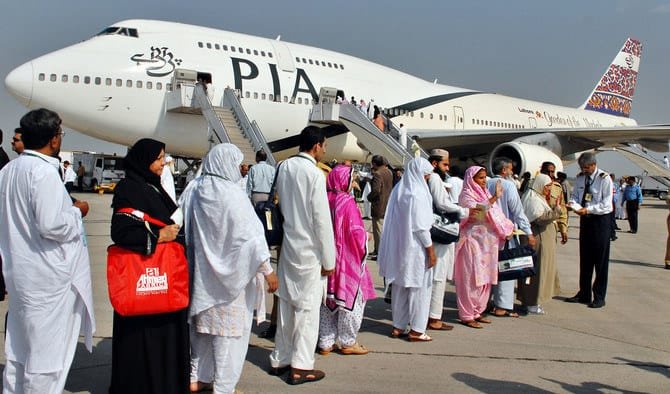
One pilot and three flight attendants of the Pakistan International Airlines (PIA), who had performed duties on a special flight from Melbourne to Lahore, have tested positive for the new coronavirus — COVID-19.
As per the details, the national carrier last month ran a one-off flight from Melbourne to Lahore to help hundreds of Pakistanis return home from Australia.
With the country having blocked all international commercial flights since mid-March — a ban that’s now set to continue for an indefinite period of time — many of the country’s residents have struggled to find a path back to their homeland, making government repatriation flights a necessity.
A PIA Boeing 777-200LR first flew from Lahore to Melbourne on Friday, April 24. PK8962 departed Pakistan at 5 pm local time, reaching Melbourne the next day at 10:30 am after a journey of 12 hours and 30 minutes.
Allowing time for the crew to rest before the return leg, the Melbourne-Lahore flight, PK8972, departed at 1 pm on April 26, reaching the provincial capital of Punjab at 9 pm the same day, 13 hours after wheels-up.
PIA’s Boeing 777-200LR jets can normally accommodate up to 310 passengers, but this repatriation service from Melbourne was capped at 250 passengers.
Over a week on, reports say that three crew members of the special flight have tested positive for coronavirus.
The crew members of PIA were earlier awaiting their COVID-19 test results and have now been shifted to Combined Military Hospital (CMH) Lahore. Among them are flight attendants Waqar Farooqui, Sofia Shaikh and Ahmed Ammad as well as first officer Shakil Akram.
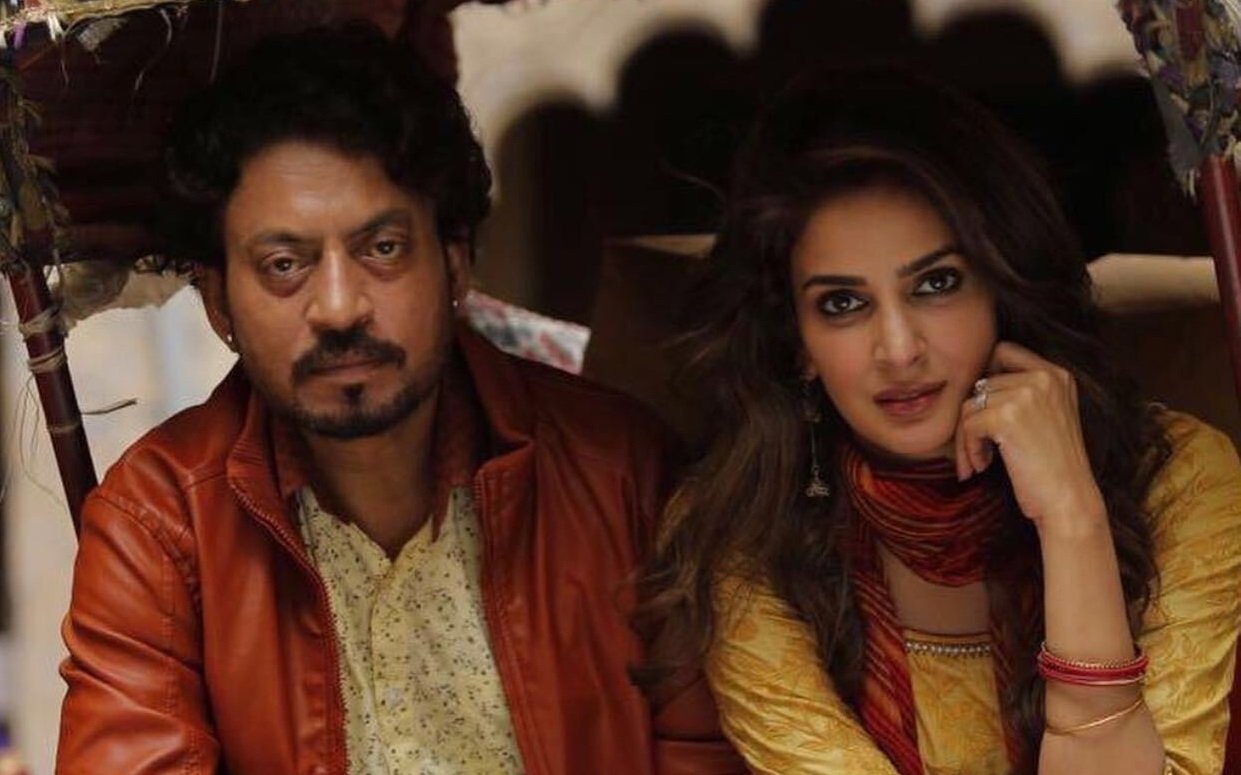
Saba Qamar, who had the honour of working with Irrfan Khan in the film Hindi Medium, in a recent interview opened up on her time with the actor on set and shared that he sang a song for her the first time they met.
“I’ve learned a lot from Irrfan,” said Saba. “Working with him was nothing less than a fan moment for me throughout. As an actor, I believe that acting is actually behaving truthfully under imaginary circumstances. And I actually saw that in him.”
Saba said that her on-set memories with the late actor were all about “fun conversations.”
“There was never a dull moment when he was around. We used to crack jokes with each other all the time. He always used to make me learn new things and give pro tips on life,” she said, adding that he was also very philosophical.
Recalling one her fondest memories with him, Saba shared that on their first meeting, Irrfan sang a song for her.
“When I entered the room where he was sitting, he started singing the song Badan Pe Sitaray…for me. I’ll always cherish the entire time I’ve spent with him.”
Saba further said that she wished that “things were better between our countries.”
“I am of the belief that acting is a form of blended art that shouldn’t be restricted to a particular type or even a country. It should be assorted in such a way that even we enjoy it and so do our fans and audiences. It is this assortment which I miss. I’d love to do more movies for my fans if I get any opportunity.”
The total number of coronavirus cases in Pakistan, by the time this was written, stood at 19,854 and the same is likely to reach the 20,000 mark some time today or by tomorrow morning.
Every ten days, the number of COVID-19 cases in Pakistan double. Just look at the month of April and how many cases increased, especially after easing down the lockdown. The government, however, thinks that coronavirus has not been “as fatal in Pakistan as it has been in many other countries”, especially the west.
Minister for Planning, Development and Special Initiatives Asad Umar recently said, “Coronavirus has caused 58 per cent more deaths in the United States (US), 207 per cent more in Spain and 124 per cent more in the United Kingdom (UK) as compared to Pakistan in the same period.” Even if we think the mortality rate is lower when compared to other countries, it does not mean we have to be lax about it. Official projections predict 150,000 cases by the end of this month.
What was even more surprising was how, in a recent speech, Prime Minister (PM) Imran Khan shifted the blame of the lockdown to the “elite”. He said the decision to impose a lockdown was taken by the elite and the rich, without thinking of the poor. PM Imran tweeted to that effect also while felicitating Muslims for Ramzan.
Ramazan Mubarak to Muslims across the world. We in Pakistan must use this holy month to ask Allah for forgiveness for neglecting the poor & vulnerable in our society. We as a nation have been elite-centric in our policies, with no thought for these people, incl in the pandemic
The premier blames the elite and rich for taking this decision when it was indeed he and his government that imposed the lockdown. Granted that Imran himself was against the lockdown and finally gave in due to the health emergency but blaming the elite, in this case, is quite misplaced. The World Health Organization (WHO) and others who are dealing with the coronavirus pandemic have recommended lockdowns and aggressive testing apart from social distancing and other measures that we have to take in order to avoid falling prey to this pandemic.
China went for a lockdown and PM Imran doesn’t tire of giving China’s example so why blame the rich and the elite for a lockdown in Pakistan — a lockdown that is now not much of a lockdown either. Traffic has increased, more shops are open, and except for Sindh, mosques are open as well during Ramzan.
While we acknowledge that self-isolation is a privilege that isn’t afforded by many, especially the poor, we do not have the answer to how we will cope with an outbreak if cases start to rise exponentially. Doctors have recently warned that Pakistan’s healthcare system will collapse if this happens. So where will the poor go if lockdown is relaxed and they get coronavirus?
The rich and elite and privileged will go to private hospitals but what about the poor? We have to choose between struggle and death, and can only hope that the cases in Pakistan remain low.
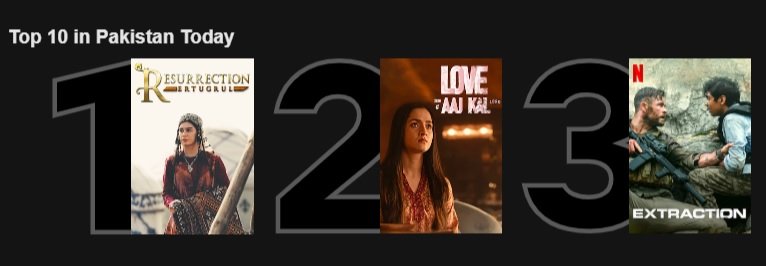
To make decision-making easier for their users, Netflix has recently started sharing a list of ‘Top 10’ movies or seasons which are trending in different countries. According to a blog post from the company, the Top 10 row will be updated every day with “the most popular titles within a subscriber’s country, and the position of the row will also change depending on how relevant the shows and movies in the list are to their interests.”
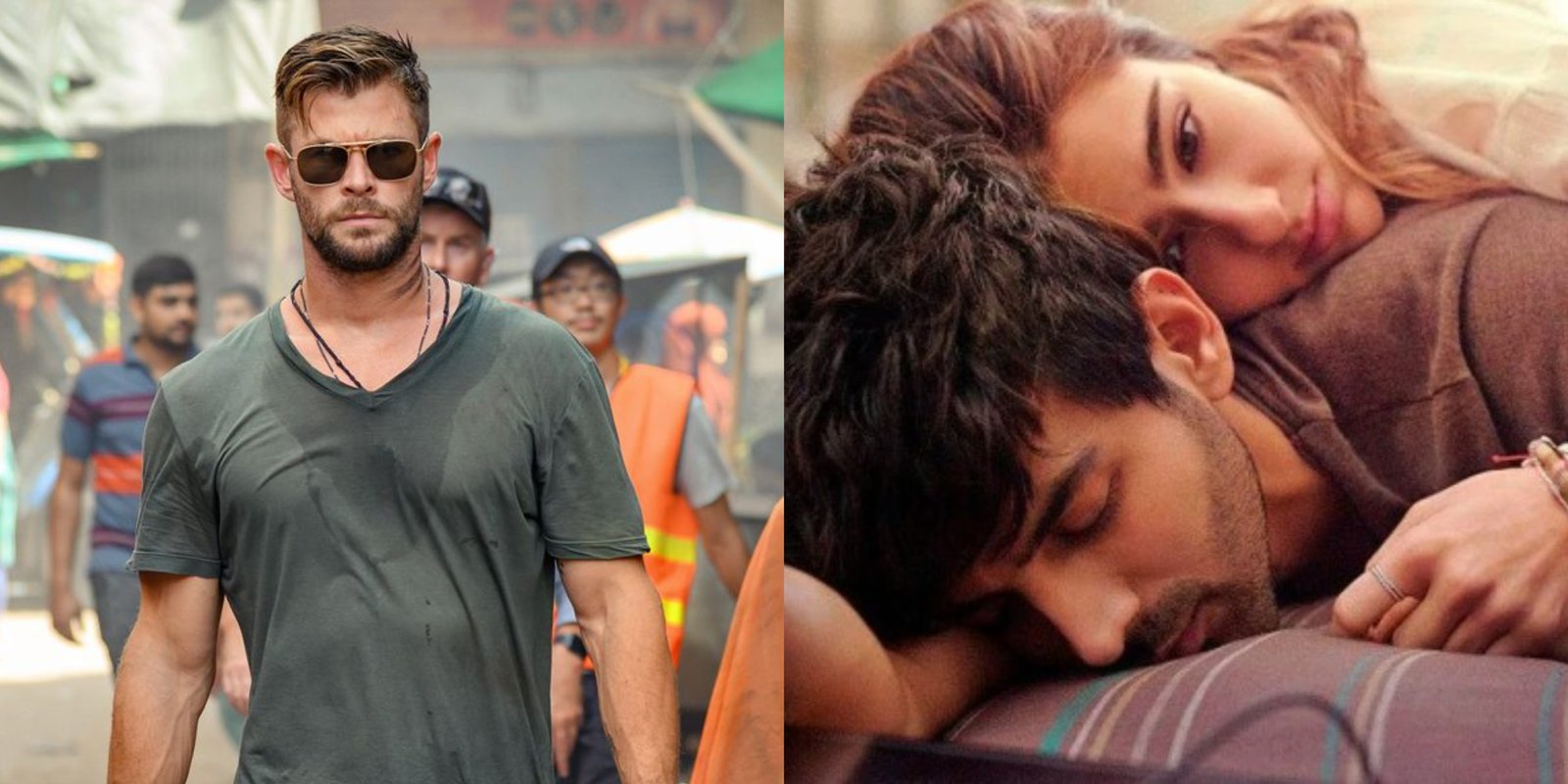
As of Friday (May 1) night, the top three things trending on Netflix are Diriliş: Ertuğrul, Love Aaj Kal and Extraction, while the two films are also the top two in the Movie Category. While we all know that Diriliş: Ertuğrul is a hit among Pakistani audiences, Extraction and Love Aaj Kal are new additions to the streaming service.
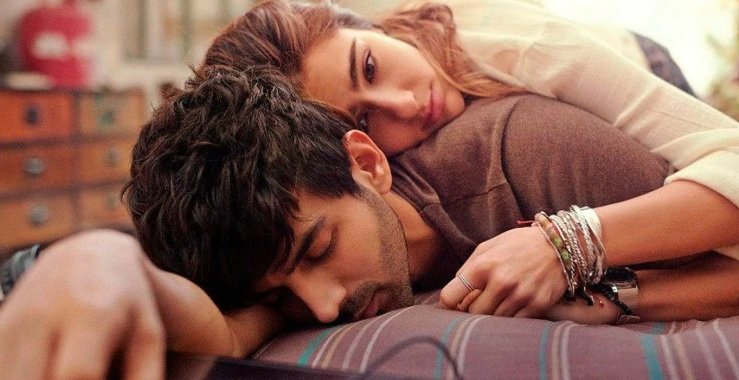
Like any other Pakistani who grew up on Bollywood films, I couldn’t resist watching Love Aaj Kal. I mean Imtiaz Ali, Sara Ali Khan and Kartik Aryan — bring it on. As for Extraction, because for the most part, my job does require me to keep up with the latest trends, I decided to step out of my usual romantic comedies/dramas zone and watch something different and see whether it was worth the Netflix hype.
Let’s start with Extraction. The Chris Hemsworth action-thriller has been creating a buzz since he went to India for its shoot. A day before its release, Hemsworth on social media had said that “making this film was one of the most exhausting but rewarding experiences I’ve ever had on a set.”
He further said: “We set out to make the most insane, intense action film and I couldn’t be prouder of what we’ve achieved.” Unfortunately, the film only made me insane with the amount of bloodshed it had it in. To be honest, I’m generally not a big fan of action films but I do enjoy them from time to time. The two-hour-long film, which I finished in three sittings, was just a Bollywood film on steroids given that a lot of actors [for example Randeep Hooda, Pankaj Tripathi] in the film were from India.
The film is focused around Tyler Rake (played by Hemsworth), a black-market mercenary and former Australian Special Air Service Regiment soldier with a troubled past. From Rake’s first scene in the film, one can tell that he is the sort of person who likes to challenge and see death in the eye. Except for a few glimpses from his past, Rake’s character isn’t adequately developed. Anyways, Rake is hired by a fellow mercenary Nik Khan (Golshifteh Farahani) to rescue Ovi Mahajan Jr. (Rudhraksh Jaiswal), the son of India’s biggest drug lord (Pankaj Tripathi), from Dhaka, Bangladesh who has been abducted by Bangladesh’s biggest drug lord, Amir Asif (Priyanshu Painyuli).
The film is just one, long and bloody action sequence. There are limited dialogues and the characters just run through the narrow streets of Dhaka as they try to escape Bangladesh’s most notorious drug lord. They jump from building to building, kill countless people on the way and lockdown an entire city. The ending is as abrupt as the beginning – there is no character development or plot development. So unless you want to see only action, I’d advice you to skip the film altogether.
Now onto Love Aaj Kal. If I had to sum up the film in one word, or two, I’d say half-baked. The story, the characters, the plot, everything about the film is half-baked. The film follows the same premise as Imtiaz Ali’s first Love Aaj Kal, which had two love stories running side by side.
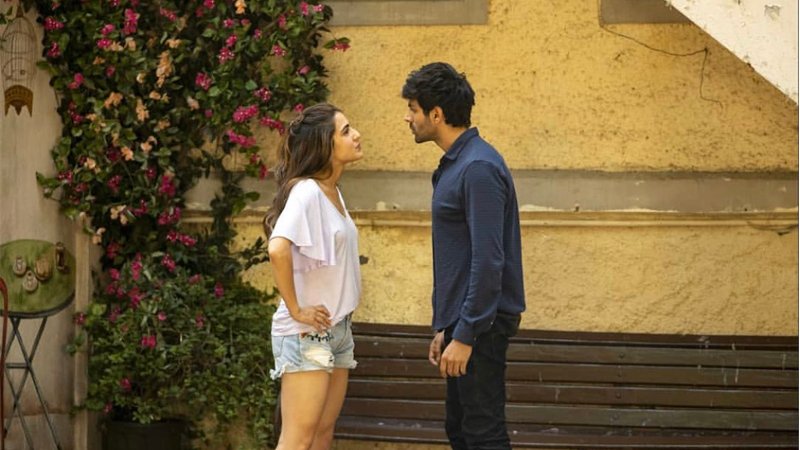
Zoe (Sara Ali Khan) is a free-spirited but ambitious girl who wants to make a career. She is bold, speaks her mind and does what she feels like, which sometimes gets a bit over the top. Veer, on the other hand, is a sensitive guy who looks at life differently than Zoe. The two meet in a club and while Zoe just wants to have a one-night stand, Veer decides that it’s not right because Zoe is “special”. How he decided that within an hour is beyond my understanding. Zoe gets annoyed with this and leaves his house and goes back to her life. Except Veer starts stalking her, not in the 90s way by singing songs and all, but by getting a spot at the co-working space where she sits. Soon the two grow closer and get into a relationship but Zoe’s mother who wants her daughter to become independent first urges her to not give up on her career for marriage. This confuses Zoe who then breaks up with Veer. The breakup scene was so ridiculously cringed that you cannot help but wonder how Imtiaz Ali even came up with it. What follows afterwards is a typical Bollywood story of how two people who are meant to be together will find their way back to each other. In between all this, Raghuvendra “Raghu” Singh, who is the owner of the cafe where Zoe works, narrates his 20-year-old love story to Zoe to help her understand her own feelings and make her decisions.
What I did not like about the film was first Zoe’s character. It was highly irritating and Sara’s acting was also terrible. Especially the scenes in which she was drunk or crying. In fact, her own dialogue basically sums up her acting: “Tum mujhe tang karnay lagay ho“.
It appears that all the attention was paid to Zoe and Raj’s character because Veer’s character was highly underdeveloped. We don’t understand his profession, neither do we understand why he spends his days just buzzing around Sara – does he not have his own life. And to top it all, his insecurities deriving from his parent’s relationship are summed up in a rap song, which is more confusing than explanatory.
While the plot did have its heart in the right place, the film was not engaging enough. It lacked the humour [like in Jab We Met] or simplicity [Highway] which Imtiaz usually beautifully weaves into his films. Sorry, Imtiaz, I really did try my best to like the movie but it just wasn’t happening.
As we wash our hands for so many times in a day and work through multiple bottles of sanitizer, here are a few home remedies to give your hands soothing relief from constant washing and sanitizing.
Moisturize
An easy way to counter the dryness that arises from excessive washing is by always making sure to moisturize hands after washing and sanitizing. Coconut oil is gives relief to dry skin and massaging it onto the hands before bedtime can be very useful.
The ritual also has the added benefit of relieving tension from either household chores or work from home. Just press the middle of your palm, stretch out your fingers by interlocking them in and out and rotate your wrists inwards and outwards for added relaxation.
DIY scrub for hands
As all the salons are shut down until further notice and we cannot get any manicure. Home beauty treatments are a great way to self pamper and a good distraction from the daily stress and lockdown tension.
DIY scrub is also easy to make. All you have to do is just mix ground coffee with honey and lemon and massage your hands with the mixture, leave for a few minutes and rinse.
Step 1: Add warm water to a tub-like vessel with salt, along with a few drops of almond oil (you can substitute this with any oil, or even aloe vera gel). Drop-in some mint leaves and some hand-wash liquid. Soak your hands for at least 20 minutes.
Step 2: Wipe your hands and follow with scrubbing with a pumice stone. Rub a little bit of an alcohol solution after the scrub (you can use sanitizer for its antibacterial properties) and rinse it with water.
Step 3: Clip your nails or file them as you prefer.
Step 4: Use a moisturizer or specialized hand creams to complete, then neatly paint your nails
It’s been a month or so of this new reality. Social distancing and self-isolation has turned all our schedules upside down. And for parents of young kids, that means a whole lot of chaos and moods. However, there is a lot we can do to make sure our kids get a wholesome life experience even during this very surreal way of life.
In this article I will go through the essentials that I include in a typical week to make my kids enjoy and learn from our days of social distancing.
Follow a routine
Children behave best when they know what to expect. The predictability of a routine or a set timetable gives them comfort and causes less anxiety. Hence try to start the day the same way and end it with a solid bedtime routine. Encourage kids to follow a timetable. For example, keep more educational activities in the first half when their minds are fresh, and more physical activities in the second half when you need to tire them out for bed! Repetition of this basic schedule helps children understand what is required and reduces tantrums considerably.
Since all of us are staying indoors and our activity levels have decreased quite a bit, avoiding junk and maintaining a healthy diet is essential. The healthier we eat, the more active and fresh we can be the whole day. Try your best to make majority food at home and keep all basic food groups covered throughout the day ranging from carbohydrates, meats, dairy, fats and starch to fruits and vegetables.
Screen time
Let’s admit screen time for kids translates to some me time for us adults, which is essential for our mental health. It is unrealistic to expect parents to engage with kids all the time without social lives or play dates. So revise your old rules and take each day at a time.
Fun time
It’s natural for children to want to jump around and create a mess whether that’s through arts and crafts or just free play. In these trying times don’t expect them to be robots. Let them create and imagine. In Pakistan, most houses have a garden so let them explore. And if you don’t have the great outdoors, create a space within the house which is safe for mess and fun.
Exercise
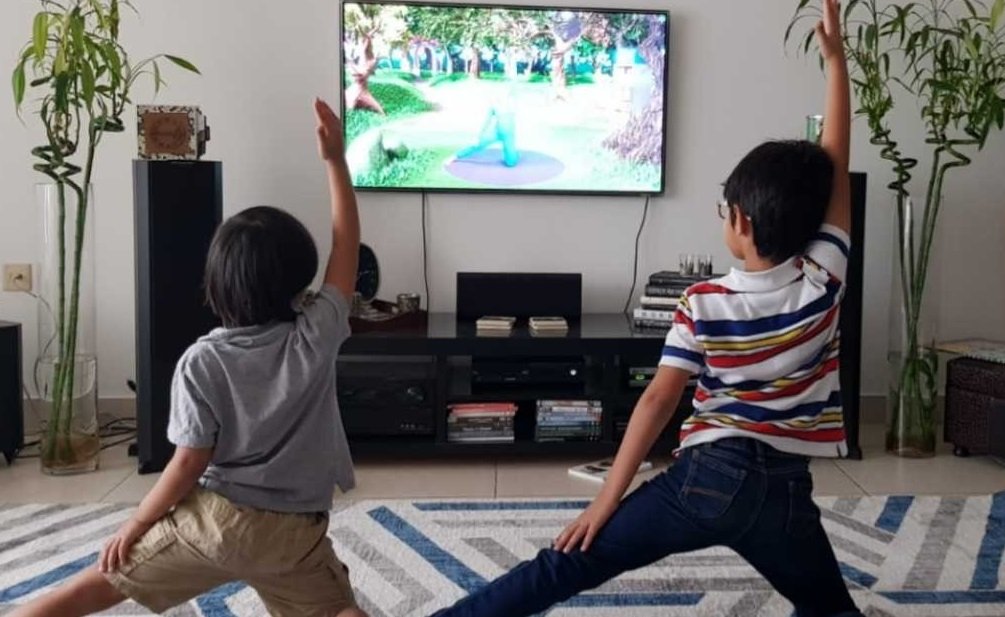
I recommend some kind of physical exercise at home for all kids. It is the best way to get their bodies energised and fit. It also helps them get a good night’s sleep. YouTube channels are a great resource for this. Whether its cardio through dance, or yoga, be sure to spend at least 30 minutes exercising.
Even though in theory us parents are with our kids day and night these days, are we really spending quality time with them all day? The answer is no and it’s normal. To think that every hour of the day will be filled with family bonding is unreasonable. In actuality, working parents are juggling between work, homeschooling, and daily chores. And stay at home parents are doing a lot of different tasks too. So take 30 minutes to an hour away from chores, work, and your mobile phones and give quality time to your kids. Whether that’s through board games or reading books together – the point is to give your children your undivided attention and make memories.
Outdoor time
Fresh air is a blessing now more than ever. Spending at least 15 to 30 minutes outdoors is known to increase happy hormones and relax anxious children and adults. So if you have a garden or any outdoor private safe space, use it! Go out for evening chai and snacks. And if you don’t, try to open your windows and sit by them for a little while to watch the blue skies. It will help your children feel better and appreciate a change in scenery.
Staying connected to God
One of the major advantages of being a Muslim is that we are reminded if the presence of a higher power at least 5 times a day. Use this opportunity to b teach your kids about Islam. Pray together if you can. Hope and faith are things that create positivity in all of us, so keep it alive as much as you can.
Staying connected to friends and family
Thanks to technology today, we can stay in touch with family and friends all over the world. Try to connect with your favourite people at least twice a week. This helps maintain relationships and helps children remember their old bonds. It creates a sense of sanity and reminds us that we are not in this alone.
Helping hands
The workload around the house has definitely increased for all of us since everyone is home all day and some of our temporary domestic help can also not come in. This means more food needs to be cooked, more laundry piles up, and in short more mess. In my opinion, these are all signs of life and laughter. So a family that uses and abuses the house together, should also clean and cook together. Encourage kids to help in all types of chores. This serves as an activity and helps pass the day in a productive way.
Boredom
Lastly, despite all of the above, there may be things you can’t manage. Some days may not have all the engagement mentioned and kids may say they are bored. To this I always say…it’s okay. Let them get bored. Boredom is actually good! It encourages them to think for themselves and sharpens their minds in more ways than giving them a well thought out activity.
We are living through a global pandemic and life as we knew it will perhaps never be the same again, That’s the hope anyway. Because there are a lot of things about the way life was before that need rethinking — and COVID-19 has given us an opportunity to do this.
In the 21st century, there was life before the virus, there is now lockdown and life during the virus and, at some point, there will be life after the virus — but will the latter be the same as our old way of living? There is much discussion now of ‘getting the economy going’ again, of getting things back to ‘normal’ again but is our plan just to restore the same economic model and the same old systems?
Or is now the time to rethink the way we live?
Several falsehoods about our lives have been exposed by the lockdown. Key among these is the myth that the old way of working and studying was the only way: fixed hours of attendance at sites you had to physically travel to. It turns out that this ‘hazri’ culture is not actually essential, and many of these ways of working were just constructs whose aim was to strengthen a type of corporate or darbari culture. Not allowing people to work from home stemmed perhaps from a reluctance to lose control of staff. The institutions that would hire expensive consultants to help them ‘save money’ and work efficiently told us that it was too expensive to have individual desks for staff and subjected them to the horrors of hotdesking. This apparently ‘saved’ some money yet these same organisations would be reluctant to allow staff to work from home routinely even though that would have saved even more money. The permission for ‘working from home’ was given not as the norm, but as some kind of great favour or concession which involved HR, applications and a degree of workplace politics.
Well now nearly everybody’s working from home and we realise this has actually been possible for many, many years and that perhaps the workplace would have caught up with technology long ago if there weren’t so many dubious management practices and vested interests involved. Apart from the workplace, there is the question of the classroom and what it is — is it a physical reality or an intellectual one? In Britain, university education was once state-funded and all about education rather than businesses.
“We’ll have to rethink education completely — especially university education.”
But in the last decade universities have been turned into businesses which are less about education and more about profits. The students are called ‘clients’ and since university fees are now more than three times what they were ten years ago, they are saddled with crippling student debt (student loans are given by a private profit-seeking company). Students invest so much that they are afraid to challenge intellectual views of question anything professors say because they know that they need to get good grades because of their investment. Instead of concentrating on the wellbeing of their students, universities seem to have become more focused on marketing their brand in order to attract a maximum number of ‘customers’ or ‘clients’. But even when the riches poured in, it never seemed to be the academic staff who’d benefit but rather the ‘managers.’
We’ll have to rethink education completely — especially university education. In Argentina, most young people get their first degree while working full time. Work by day and take evening classes. It might take longer but it definitely seems to be a more productive way to live. Oh, and state universities are free. Of course, education can not all be virtually based but perhaps a large part of it does need to be.
Then there’s the question of how society values work. Of how bankers are more highly paid and valued than ‘unskilled’ workers. How financial managers are much better paid than medical professionals. Now we realise who are the professionals that society really needs when in times of trouble: they are the medical professionals, the cleaners, the garbage collectors, the bus drivers, the police, the fire brigade, the people who run food shops and stack shelves. These are essential, these are the people we should value, these are the jobs we need to pay people well to do.
We need to think of new businesses too. Instead of having an endless number of restaurants and coffee shops to ‘provide employment’ perhaps we should have more businesses whose goal is to contribute to community welfare employing people. We need more cooperative models of working and more localised businesses. Instead of manufacturing fast fashion and throwaway clothes which encourage frivolous spending and whose plastic fibres are clogging up the oceans and rivers, we perhaps should concentrate on businesses that produce food.
“And guess who governments need to fund now? Not bigshot entrepreneurs and investment bankers, they need to support medical professionals, health workers and research scientists.”
The virus and subsequent lockdown exposed a number of vulnerabilities in life as we were living it, and one of these was the matter of food production and supply. Perhaps now we need to have a national policy of localised production: local dairy farming, local livestock, locally grown fruit and vegetables. Apart from the fact that this will avoid the issue of complicated supply chains, many people in the health, economic and development sectors have long argued that this is a healthier and more sustainable way to live. This way food production would be organic and fresh – not shipped from the other side of the world. And in terms of food, we need to unlearn the mantra that endless choice is good. The illusion that the more choice you have in choosing, for example, a brand of chocolate shows how ‘free’ you are as people needs to be dispelled. And we need to move back to the idea of quality not quantity in the way we live.
And new initiatives need to be set up to care for the environment. The enforced detox brought on by the lockdown has shown us bluer skies, clearer air and cleaner waters. We need to have a policy of setting up local initiatives to support this which are goal-oriented and not just motivated by a profit motive.
And guess who governments need to fund now? Not bigshot entrepreneurs and investment bankers, they need to support medical professionals, health workers and research scientists. And they need to provide free broadband and digital access to all citizens because when push comes to shove this is something that will benefit the whole of society. We need more government spending, new frameworks and new initiatives based on a clear vision of what our priorities are now.
People and governments need to come together and come up with a new way to live and a new model of economics, We can make a whole new sort of world; a world minus dodgy ‘outsourcing’, privatisation, unsound financial instruments, economic disparity and unbridled greed. But what’s needed is a lot of imaginative ideas and a bold new way of thinking. We need to be creative.
An assistant commissioner of Sindh’s Matiari district has tested positive for the coronavirus, according to lab reports.
Saeedabad AC Ammar Hussain Rizvi was among the officials who had performed duties during the visit of Sindh Governor Imran Ismail, who tested positive for the virus earlier this week, to Matiari on April 22, Dawn reported.
Rizvi, who is originally a resident of Hyderabad, has been quarantined in a facility located in his own office, an administration official said.
Unconfirmed reports said he had come into contact with some pilgrims as well aside from being a part of the governor’s visit.
Earlier, Governor Ismail confirmed on his Twitter account that he had tested positive for COVID-19.
I have just been tested Covid 19 positive, Allah Kareem inshallah will fight it out. @ImranKhanPTI thought us to fight out the most difficult in life and I believe this is nothing against what we r prepared for. May Allah give strength to fight this Pandemic inshallah.
“I have just been tested Covid 19 positive, Allah Kareem inshallah will fight it out. @ImranKhanPTI taught us to fight out the most difficult in life and I believe this is nothing against what we are prepared for. May Allah give strength to fight this Pandemic inshallah,” he tweeted.
The tweet was followed by Prime Minister (PM) Imran Khan wishing hi a speedy recovery.
Praying for Governor Imran Ismail’s speedy recovery from COVID19. May Allah grant him the strength to fight this.
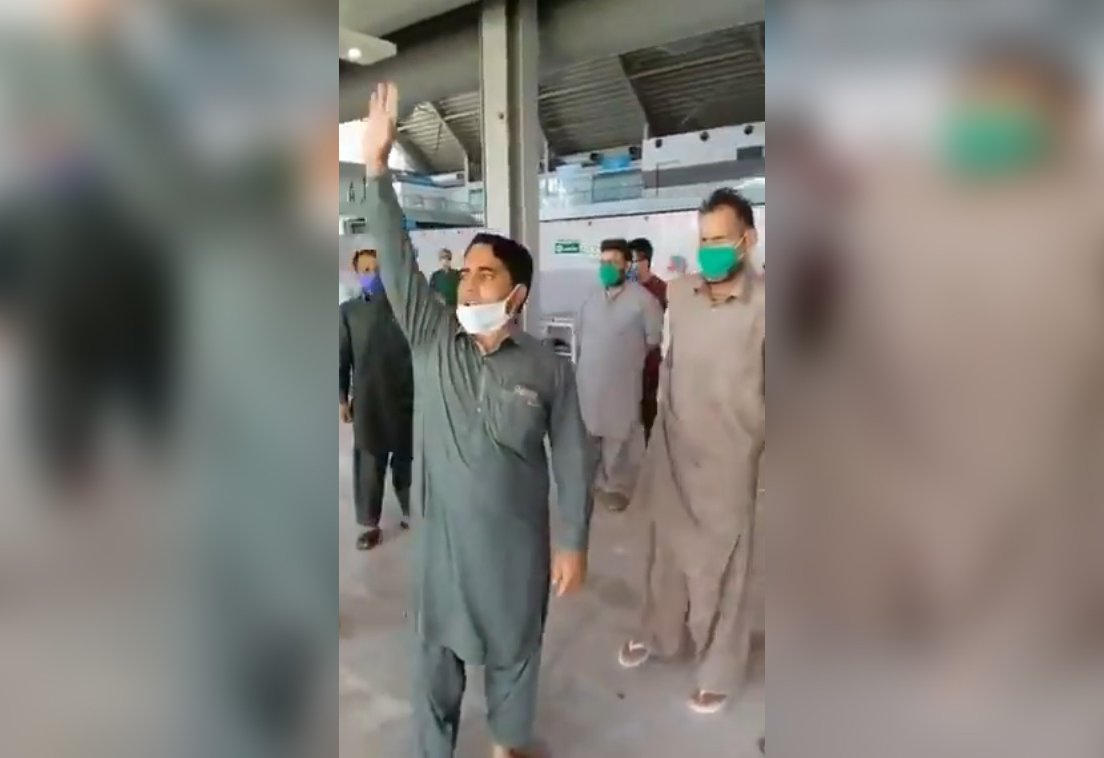
As Punjab retains its position as the worst-hit province with over 6,800 coronavirus infections, Punjab Chief Minister (CM) Usman Buzdar-led administration faces another challenge as patients at the Expo Field Hospital in Lahore come out in protest, complaining against the hospital’s inefficient management and testing.
A video available with The Current showed the patients bashing the government as they claimed that the services being provided at the hospital were inadequate and not up to basic health standards. They also claimed that due to the incompetence of the government officials, it could not be determined if many people at the centre even had coronavirus.
“Sometimes we test positive, sometimes negative… it is going on for over 20 days. The only people who have been allowed to leave this jail are the ones who have paid Rs8,000 to a private lab for testing.”
They appealed to the government to take action against the staff that had made the facility a living hell for them.
Washrooms at the hospital are extremely dirty and don’t even have soap let alone sanitiser, Samaa quoted a patient as saying.
Another complained that the food provided to patients was either stale or bad. “We have complained to the government multiple times but they haven’t even acknowledged our concerns,” he added.
The patients have demanded that the government let them go home if they can’t be taken care of. Quarantining at home is better than staying here, they said, adding that living in these conditions will never pull them out of the disease.
Previously, due to similar complaints, CM Buzdar had taken notice of the hospital, however, no changes seem to have been made yet.
The provincial government had in April has set up a 1,000-bed field hospital in Expo Centre Lahore due to rapidly increasing number of COVID-19 cases.
صرف 9 دن میں ایکسپو سنٹر لاہور میں 1000 بیڈز پر مشتمل فیلڈ ہسپتال قائم
یہ ہسپتال بطور triage بھی استعمال ہو گا تاکہ کورونا وائرس کی علامات والے مریضوں کو عام ہسپتالوں میں نہ جانا پڑے
— Government of Punjab (@GovtofPunjabPK) April 1, 2020
Punjab Health Minister Dr Yasmin Rashid had directed setting up Triage Centre at the Expo Center Field Hospital.
Triage Centre serves as the point where patients are prioritised for different sections based on the severity of symptoms and their condition in emergencies. The government has set up a field hospital at the Expo Center where emergency arrangements have been made for COVID-19 patients.