Blog

  • Lockdown, you still there?

    Lockdown, you still there?

    As per authorities, a lockdown is not only in place in Pakistan but has also been extended.

    Yet, there is no lockdown.

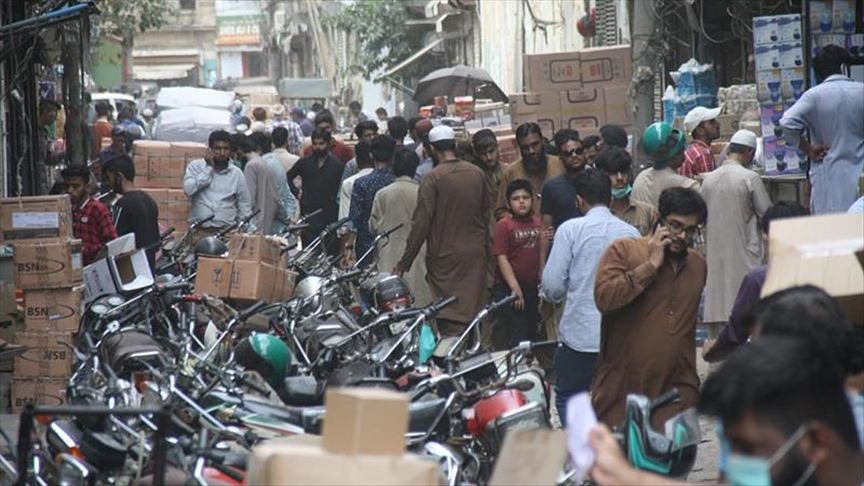
    We all know that when the federal and provincial governments imposed restrictions all across the country to curb the spread of coronavirus –COVID-19 –, most people followed the rules and stayed indoors. Less traffic was seen on the roads and consequently, the air quality became much better. But most importantly, the lockdown to some extent served its actual purpose in helping the authorities control coronavirus.

    Then in mid-April, the government announced that while the lockdown had been extended, some industries and shops ccould re-open. This led to ulema announcing that they too would reopen mosques and offer Taraweeh during the holy month of Ramzan. The government finally held negotiations with religious scholars and an accord was signed, as per which all mosques would have to follow 20 SOPs to remain open.

    A few days before Ramzan, senior doctors in Karachi held an urgent and heart-wrenching press conference. They said that after the lockdown was eased, a 40 per cent spike in coronavirus cases had been recorded from April 16-21. A 40 per cent increase in just five days. Imagine! The following day, senior doctors in Lahore also held a similar press conference and urged the government to consider imposing a stricter lockdown for the next two weeks.

    All this came amid the government’s realisation of the fact that the number of cases in Pakistan is likely to increase by mid-May. The Inter-Services Public Relations (ISPR) chief also warned of this in his press conference.

    In view of what the medical community was saying, the Sindh government on Thursday night decided to go back to their old SOPs of allowing just 3-5 people — mosque administration — to offer prayers at mosques. The rest of the country has allowed resumption of congregational prayers due to Ramzan. Apparently, not all mosques are following the agreed-upon SOPs. According to a survey conducted by the Pattan Development Organisation and published by Dawn, more than 80 per cent of mosques in Punjab and the federal capital did not put in place the measures agreed upon by the government and ulema regarding first Taraweeh congregations on Friday.

    The government will eventually have to reconsider this relaxation in lockdown. We understand that the economic downturn due to the coronavirus outbreak and lockdown was something the government was worried about and rightly so. The choice between saving the economy and an increase in coronavirus cases is difficult. But we will have to make a choice. Pakistan has crossed 13,000 cases. The number of deaths is also slowly increasing. We must remain vigilant.

    An aside: In his dua during Prime Minister (PM) Imran Khan’s telethon to raise funds for coronavirus relief, Maulana Tariq Jamil came under fire for criticising media. He later apologised when different anchors conducted shows against what he had said, but what he didn’t apologise for and what was not even highlighted much either, was how he correlated women and ‘behayai’ (vulgarity) and then said this ‘azaab’ is a result of the vices that exist in our society.

    Minister for Human Rights Shireen Mazari rightly pointed out in a tweet that it was “absurd for anyone under any guise to even suggest the COVID-19 pandemic was a result of women wearing short sleeves or because of private schools/universities misleading the youth. This simply reflects either ignorance abt pandemics or a misogynist mindset. Absolutely unacceptable.”

    In a country where thousands of women are killed in the name of honour annually, where domestic abuse is on the rise, where crimes against women keep increasing instead of decreasing, blaming women for a pandemic is unacceptable.
  • PM Khan calls out Bollywood for spreading vulgarity

    PM Khan calls out Bollywood for spreading vulgarity

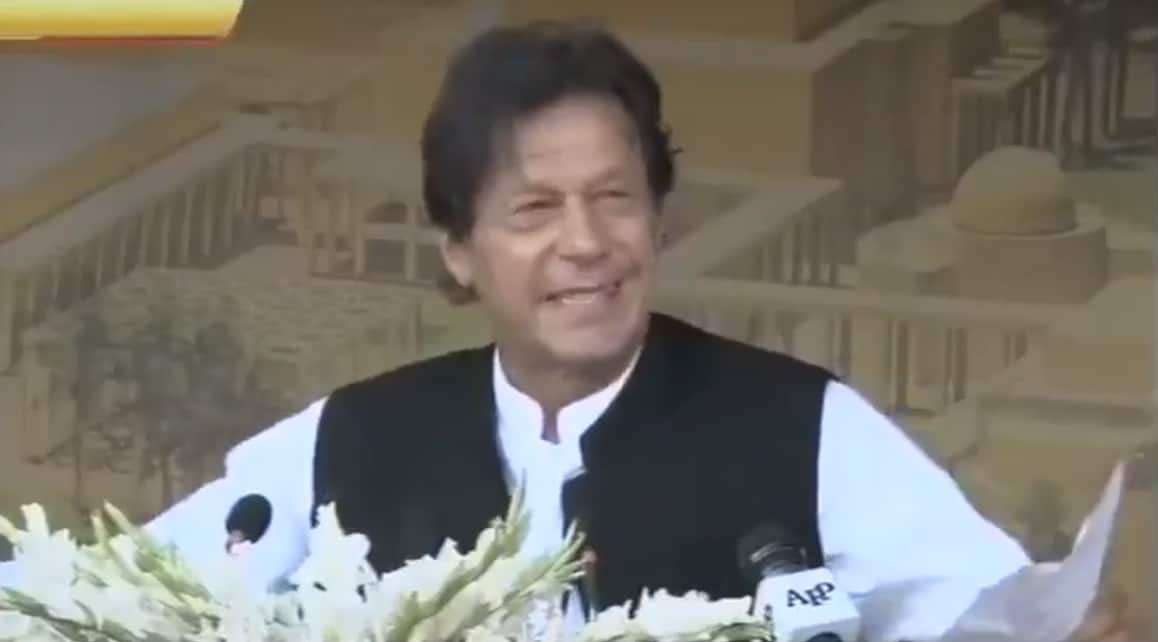
    Prime Minister Imran Khan has called out Bollywood for spreading vulgarity and adopting the ‘worst of Hollywood’.

    In a recent media meet, PM Khan discussed why he requested PTV to air the superhit Turkish series Diriliş: Ertuğrul with Urdu dubbing.

    “The show has depicted the culture of Islam,” said PM Imran. “I want our youth to know that we also have a culture which has romance and other interesting elements.”

    Read more – Urdu version of ‘Diriliş: Ertuğrul’ to air on PTV in Ramazan

    The premier then called out Bollywood for promoting vulgarity.

    “I say this with a heavy heart but thirty to forty years ago, you would have never seen such vulgarity in Bollywood. There is so much trash. Bollywood has adopted the worst of Hollywood.”

    “This is affecting our society and youth negatively. Drug culture is emerging, sex crimes are increasing because of such promotion of vulgarity. This is the reason I wanted the series to be aired so that the youth understand that there are other cultures as well.”

    “It is important to note that when vulgarity increases in a society, the family system goes down”, remarked the prime minister.

    Turkish historical fiction series Diriliş: Ertuğrul, popularly referred to as the Turkish Game of Thrones, has begun to air on PTV Home with Urdu dubbing for the local audiences. PTV obtained the exclusive rights for dubbing and screening it in Pakistan.

    Set in 13th century Anatolia, before the establishment of the Ottoman Empire Diriliş: Ertuğrul illustrates the struggle of Ertugrul Gazi, the father of Osman I – the founder of the Ottoman dynasty.

    Since its premiere on state-run Turkish TV channel TRT 1 in November 2014, the serial has been telecasted in 60 countries and has a huge fan following across the world.

    Watch the promo here:

  • Humayun Saeed’s sehri sparks a debate on Urdu grammar

    Humayun Saeed’s sehri sparks a debate on Urdu grammar

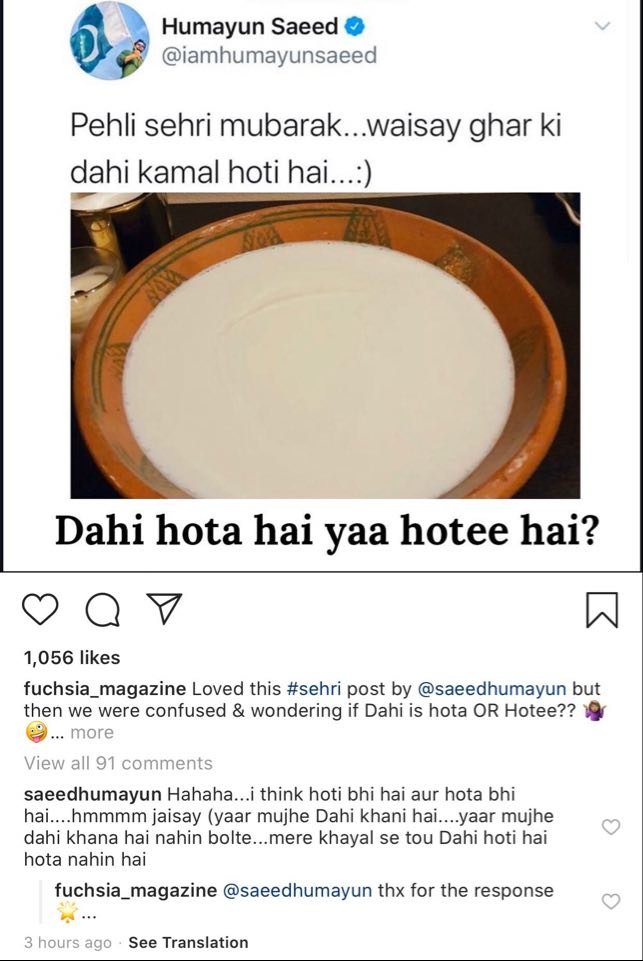
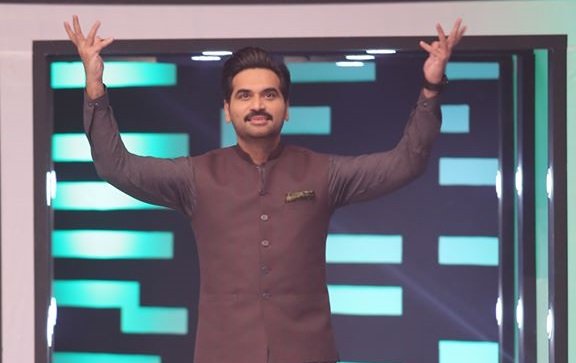
    Pakistan’s resident hero Humayun Saaed got himself into a sticky situation after he shared details about his first sehri of Ramzan.

    It all started when Humayun posted a picture of his sehri on social media.

    Following this, a local digital media outlet shared Humayun’s tweet asking ‘Dahi hota hai ya hotee hai?’

    In response to their question, Humayun wrote, “I think hoti bhi hai aur hota bhi hai…hmm jaisay (yaar mujhe Dahi khani hai…yaar mujhe dahi khana hai nahin bolte…mere khayal se tou dahi hoti hai hota nahin hai.”

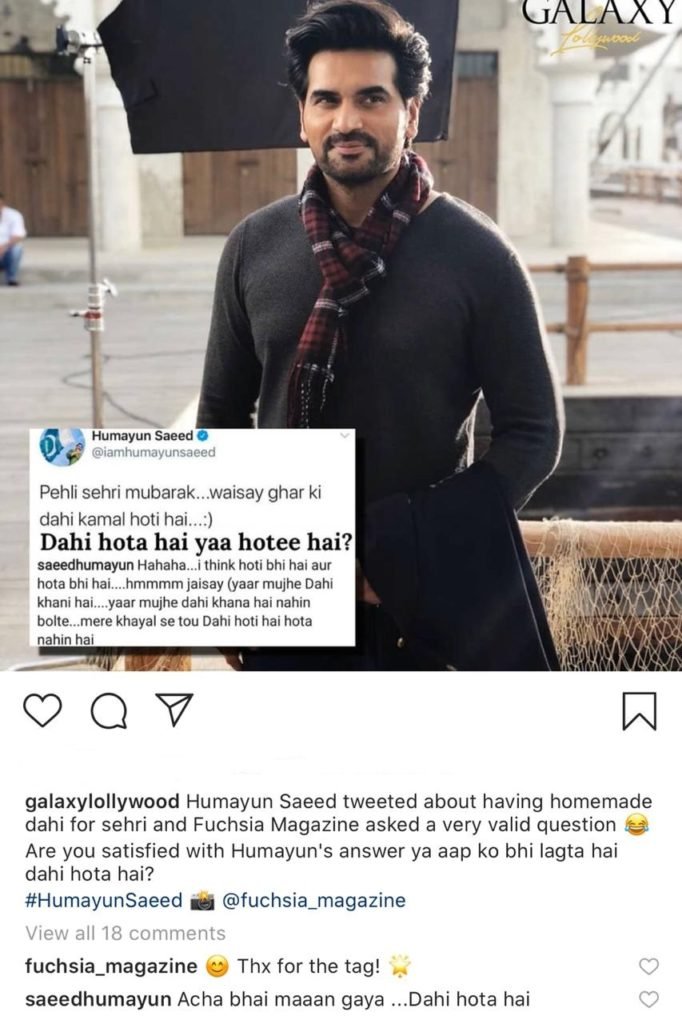
    Another media outlet, Galaxy Lollywood shared Humayun’s response on the matter prompting him to say “Acha yaar maan gaya…dahi hoti hai.”

    After this whole debate, we bet that Humayun will not be sharing his sehri and aftari meals on social media in the future.

  • North Korean dictator Kim Jong-un reportedly dead after botched heart surgery

    North Korean dictator Kim Jong-un reportedly dead after botched heart surgery

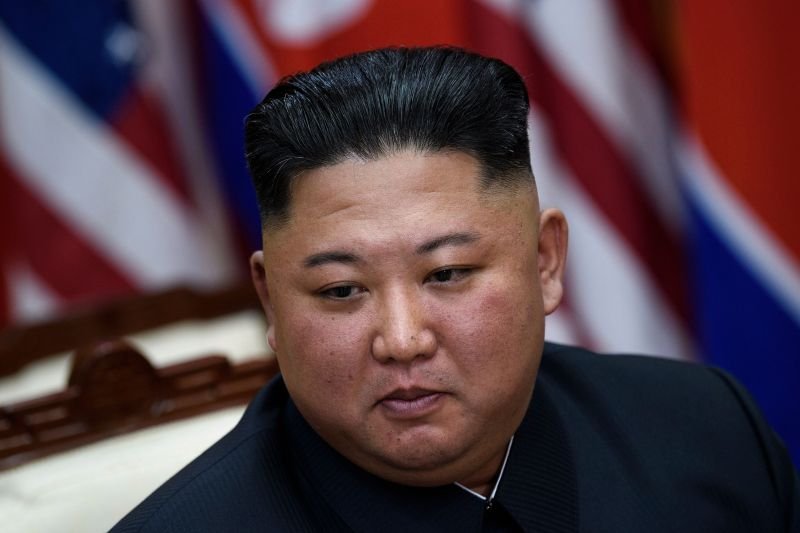
    North Korea’s Supreme Leader Kim Jong-un has died, or is on his death bed with no hope for recuperation, multiple Chinese and Japanese media outlets have reported.

    As per the details, a vice director of Hong Kong Satellite Television (HKSTV) — a Beijing-backed broadcast network in Hong Kong — claimed that Kim was dead, citing a “very solid source”. Her post on the Chinese messaging app Weibo has been shared widely on social media, according to a report in the International Business Times.

    The claim comes hours after a Japanese magazine reported that the North Korean dictator was in a “vegetative state” ever since he underwent heart surgery earlier this month.

    Other unconfirmed reports, attributed to senior party sources in Beijing, said an operation to insert a stent went wrong because the surgeon’s hands were shaking so badly.

    The weekly Shukan Gendai reported Friday that a Chinese medic sent to North Korea as part of a team to treat Kim believed a delay in a simple procedure left the leader severely ill, Reuters reported.

    A Chinese expert told the magazine that Kim, believed to be 36, clutched his chest and fell to the ground on a visit to the countryside earlier this month. A doctor accompanying Kim performed CPR and took him to a nearby hospital.

    North Korean media hasn’t mentioned Kim’s health or whereabouts, even though reports by foreign media outlets have sparked international speculation about his well-being.

    The hashtag #KimJongUndead continues to trend on Twitter without any proof of the leader’s death.

    According to Independent, if rumours of Kim’s health are true, his sister, Kim Yo-jong, will emerge as the custodian of power in North Korea.

    She is the youngest daughter of former supreme leader Kim Jong-il and an alternate member of the politburo — principal policymaking committee. Yo-jong is also the vice director of the Propaganda and Agitation Department of the Workers’ Party of Korea.

  • We take it back; ‘Ghalti’ is ARY’s best running drama

    When ARY’s drama Ghalti’ started, it seemed like a huge mistake. Typical saas bahu, beychari bahu and crazy saas. Husband is a complete disaster, giving talaaq after talaaq, which is so typical of Pakistani dramas.

    But after this week’s episode, we are happy to issue an apology and say, WOW, what happened? It’s turning out to be one of the best running dramas on ARY.

    Hina Mani delivers a stellar performance

    That being said, it’s not like it has much competition. The drama ‘Jhooti ‘ is probably Iqra Aziz’s biggest mistake and the high that Ayeza Khan got from ‘Meray Paas Tum Ho’ crashes in ‘Thora Sa Haq’.

    In this week’s episode, three massive twists made ‘Ghalti’ a fantastic watch. Zaira (Hira Mani) is married to her cousin Saad (Affan Waheed) and Saad’s mother Zaitoon (Saba Hamid) has it out for them. She tries her best to destroy their marriage and finally succeeds.

    The best part about this latest episode was Zaira. Hira Mani delivers a stellar performance, one in which you shockingly and immediately feel her pain. She acts perfectly. So perfect that you immediately are drawn to her. There is no overacting when her husband delivers the final blow and when she tells her mother. This is so realistic that you can imagine it happening in real life. And that is where the drama takes a turn.

    You can only be team Zaira then.

    At such important moments in this episode Hira Mani hits constant sixers.

    You feel her pain and she so elegantly takes on what what Zaitoon has handed her and the drama no longer becomes about divorce but actually becomes about a woman’s strength.

    Zaitoon is also not to be messed with and Saba Hamid does her total justice. She is perfect in her narcissism and her selfishness and Saba’s every expression reflects what Zaitoon is.

    Saba Hamid is full of expression and elegance, making a stellar villain

    The voice of reason is Shanzay (Mehr Bano). She is a strong, independent, working woman married to Saad’s brother. When her character was first introduced, you wondered: Ugh, here is another drama demonising the working woman. But wait. It didn’t.

    What’s going on? How is this drama getting so good?

    Shanzay tells off Zaitoon, Saad, the sisters, so well that you feel like clapping and feeling like wow, how is this possible that her husband is taking HER side? This isn’t typical at all. And it’s done so normally, matter of factly, simply. No dramatic angles, dialogues, music.

    Mehr Bano delivers a performance that rivals that of Saba Hamid

    The teaser for the next episode promises to be even better, filled with confrontation and dare we hope, a not dragged out end. We have our theories on what might happen but it isnt the time to speculate just yet. It’s almost the beginning of the week and we are already waiting for the next episode.

    So we take it back and apologise because this is one drama we wait for every Thursday and hope you guys have the time to catch up. This is the one to wait drama to look forward to during the lockdown.

  • VIDEO: Himalayan lynx attacks Markhor in Chitral

    With a decrease in human activity all over the world, animals, some which have rarely been seen before, are coming out of their hiding places and exploring their surroundings without an interference.

    Recently, WWF-Pakistan released a never seen before footage of the Himalayan lynx, captured on the steep rocky cliffs of Chitral Valley, Pakistan. According to officials, this is the first time that the nocturnal hunter and highly elusive animal has been filmed in the area.

    The video which is intense and chilling shows the cat observe and successfully hunt her prey.

    “While filming a group of markhor grazing in the Tooshi-Shasha Wildlife Conservancy recently, our field production team and the Khyber Pakhtunkhwa Wildlife Department spotted this lynx crouching in a camouflaged position behind a rock, about to begin a hunt,” shared the animal protection organisation. “What followed was a dramatic scene few have ever witnessed – a lynx stalking and successfully killing a yearling markhor.”

    Watch the full video here:

    According to WWF, “the Himalayan lynx is one of the most elusive and powerful cats living in these mountains, rivaled only by the famous snow leopard. As an apex predator, the lynx plays an essential role in maintaining the balance and health of this complex mountain ecosystem.”

    The lynx is considered to be rare species and is known to be present in Chitral and other northern areas of Pakistan, including Gilgit-Baltistan, although its exact distribution and range are not known.

    Earlier, a brown bear was also spotted in Laspur Valley in Chitral by the locals.

  • Seven things you didn’t know about Sana Bucha

    Renowned journalist Sana Bucha is a household name in the Pakistan media industry. She has been a constant on our TV screens and has always maintained a very active social media profile. Sana recently joined The Current for a live and interactive session in which she revealed some interesting tidbits about her life and also shared some meaningful advice.

    Here are seven things you did not know about Sana Bucha:

    1. Sana is starting her YouTube channel very soon

    Responding to several users who asked Sana when she will starting her YouTube Channel, Sana said that her technological skills are very poor which is why she hasn’t set up a YouTube channel as yet. However, she announced on The Current that due to popular demand, she will definitely now take the step towards that and start working on setting one up soon.

    2. Reading the Quran gives her peace

    When asked how she manages to deal with all the negativity and trolling, Sana said that she reads the Quran to feel peace and positivity.

    3. Sana fasts regularly

    Sana revealed that apart from fasting in Ramzan, she fasts regularly because it helps her spiritually as well as physically.

    4. Her favourite anchors are Mansoor Ali Khan and Kashif Abbasi

    5. Sana started yoga for back strengthening

    If you ever go through Sana’s Instagram account, it is full of pictures of her practising yoga. Sana said that she started yoga to strengthen her back but now yoga has become a regular part of her life. She has also promised to send us a yoga video exclusively for The Current viewers!

    https://www.instagram.com/p/B-sI–eAp6M/

    6. Sana’s best friend is her father

    When a user asked Sana who her best friend is, Sana said that it’s her father. Awww, isn’t that sweet?

    7. Sana loves perfumes

    Responding to a question about what gift she loves receiving, Sana said that she loves perfumes and good smells.

    Other than that, when a user asked to say two words for Prime Minister Imran Khan, Sana replied, “Textbook Narcissist”.

  • COVID-19: Should we worry about Pakistan’s economy?

    The world has come to a screeching halt.

    The coronavirus pandemic has affected lives in so many different ways that no one could have imagined only a few months ago. Large metropolitan cities like New York and London seem like ghost towns right out of a Hollywood movie. Restaurants, cinemas and airlines have stopped operating and malls are deserted. People, no matter where they are, are just afraid to get out of their houses and carry on with normal life. It is no more a health crisis, and is instead, taking the shape of an unprecedented economic catastrophe.

    No one knows the exact scale of this catastrophe, but everyone knows that a major recession is in the offing.

    Pakistan is no exception and the International Monetary Fund (IMF) has projected a 1.5 per cent contraction in the country’s GDP this year, the first in over seven decades, whereas the World Bank (WB) estimates that it can be as much as 2.2 per cent. Next year would be no different and the economy is expected to post negligible growth, that too if we are lucky. However, even this guesstimate can very easily turn into further contraction, if the crisis continues to deepen.

    HOW TO UNDERSTAND COVID-19’s IMPACT ON PAKISTAN’S ECONOMY?

    In layman’s terms, there are two major ways in which the pandemic can affect the economy. The first is what’s happening outside the country, while the second is what’s happening inside. In other words, the effects on the economy can be driven by both global factors and domestic developments.

    If you remember the 2008 global financial crisis, which turned the world’s financial markets upside down, you would also remember that it did not have a major impact on Pakistan’s economy. That can be explained by our poor integration with the world’s financial markets, which has been a blessing in disguise. Therefore, one thing is certain that the impact of a global economic meltdown is going to have a much more diluted effect on Pakistan than other countries that are fully integrated into the global economy.

    There is no doubt that the country would sail through this storm, but not without a well-thought-out action plan to stimulate the economy and bring it back to life, once the crisis is over.

    Let’s look at the global travel and tourism industry, for instance, that is taking a major hit. But Pakistan hardly had any share in this market and therefore is not likely to get impacted much. Nevertheless, disruptions in economies of Pakistan’s export destinations like the United States (US) and Europe are having a major bearing on Pakistan’s exports. Export orders are being cancelled, leading to a serious dip in the country’s already flailing exports. Fall in workers’ remittances is another area that is going to adversely impact the country, as Pakistani workers in the Middle East and elsewhere suffer job losses.

    Now we come to the in-country crisis, the impact of which is going to be driven by the severity and duration of the disease outbreak and the state’s response to it i.e. the nature and duration of the lockdown and the restrictions imposed. The already imposed lockdown, though enforced unevenly, has affected the economy in a big way. Millions of jobs are at stake and daily wage workers, who in most cases already belong to a vulnerable segment, are likely to be the major sufferers of the crisis.

    The lockdown has also suppressed demand in a number of industries such as automotive, consumer goods and construction among others. But more significantly, services sectors like domestic travel and transport, retail and wholesale trade, and hospitality are the worst casualties with their business activities coming to a standstill.

    Suppressed economic activity is resulting in a significant revenue loss for the government, whereas massive emergency response and relief activities are driving the expenditures high. The fiscal deficit is likely to touch 10 per cent of the GDP, leaving hardly any money for development, while the debt-to-GDP ratio is expected to hit the roof on the back of substantially increased debt burden. And if the country has to impose a blanket lockdown again at some stage, owing to the worsening health situation, all these indicators could quickly go from bad to worse.

    It is time for us to start thinking about some difficult fiscal and economic reform sore points that we have been avoiding for years.

    However, there is also a silver lining. Looking at Pakistan’s GDP composition, there are quite a few sectors like agriculture, electricity generation and distribution, gas distribution, communication, government services etc that are going to be much more resilient to this crisis. Moreover, there could also be some windfall earnings from the global economic downturn. The unprecedented fall in global oil prices is likely to bring in some relief for the country through the reduction in import bill. Additionally, as the world gears up for providing relief to developing countries to fight the economic shock, Pakistan is likely to be one of the beneficiaries of debt relief measures and aid inflows. In fact, the country has already received $1.4 billion in rapid financing from the IMF.

    Nevertheless, we must realise that Pakistan was already facing a tough economic situation and COVID-19 hit the country just when macroeconomic indicators were beginning to stabilise. There is no doubt that the country would sail through this storm, but not without a well-thought-out action plan to stimulate the economy and bring it back to life, once the crisis is over. And this would need much more than what’s being offered in the recently introduced fiscal stimulus package. Moreover, we would need years of fiscal discipline and economic prudence before we are fully able to recover from this shock.

    Now is the time to start thinking about some of the difficult fiscal and economic reform sore points like bleeding state-owned enterprises, ballooning wage and pension bill, swelling circular debt and inefficient government machinery, that we have been avoiding for years.

  • Coronavirus: ‘Pakistan to start conducting 50,000 tests a day,’ says Lt Gen Afzal

    Coronavirus: ‘Pakistan to start conducting 50,000 tests a day,’ says Lt Gen Afzal

    National Disaster Management Authority (NDMA) Chairman Lieutenant General Muhammad Afzal has said that Pakistan will start conducting 50,000 coronavirus tests a day from next week as a meeting held at the National Command and Operations Centre has decided that virus detection kits would be provided to all departments concerned at the earliest.

    Speaking to journalists, the NDMA chairman said that earlier only those who showed symptoms of the coronavirus were being tested, but the authorities are now shifting to randomised testing for effective implementation of the government’s plans to curb the menace of COVID-19 that has so far claimed 251 lives in Pakistan and left over 12,000 people sick across the country.

    Lt Gen Afzal added that 800,000 testing kits were available and efforts were being made to procure more.

    On April 11, the NDMA received a medical consignment from China consisting of 59 ventilators, about 936 kilogrammes (kg) of surgical masks, protective suits, safety lenses, thermometers, and 1,720 kg of unstitched cloth for surgical gowns, all of which were distributed among provinces.

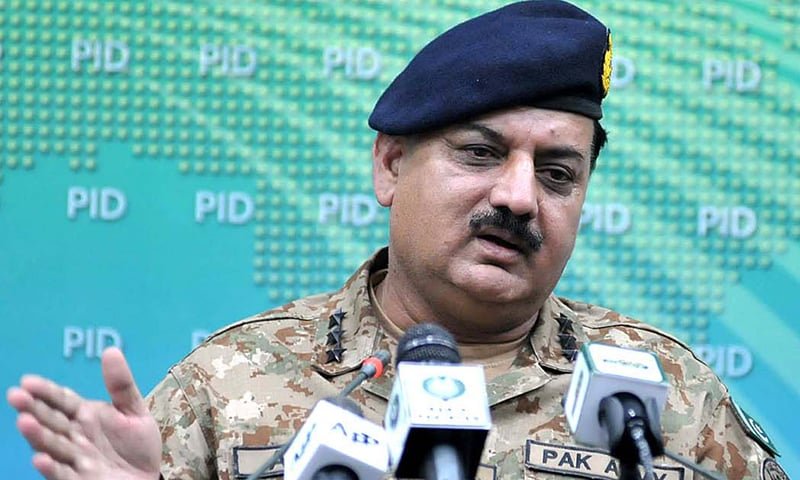
    Meanwhile, according to Inter-Services Public Relations (ISPR) Director General (DG) Major General Babar Iftikhar, Chief of Army Staff (COAS) General Qamar Javed Bajwa has instructed the military to help civilian administration during the holy month of Ramzan that has arrived amid the global coronavirus pandemic.  

    “COAS held a special conference at General Headquarters (GHQ) today where the overview of the coronavirus deployment and situation was taken into account. COAS instructed all commanders to ensures border security and carry out routine activities as per schedule,” the military spokesperson said while addressing a press conference on Friday.

    “The army chief gave the instruction to work with civil authorities to ease the difficulties being faced by the people during Ramzan,” he said.

  • PM Imran launches ‘Yaran-e-Watan’ for overseas health professionals

    PM Imran launches ‘Yaran-e-Watan’ for overseas health professionals

    The federal government has launched ‘Yaran-e-Watan’ to allow overseas Pakistani health professionals to support the country’s efforts to help fight the coronavirus pandemic.

    Taking to Twitter on Saturday, PM Imran said that Pakistani health professionals are on the frontline in the fight against COVID-19 across the world and they want to help the government to combat COVID19 in Pakistan.

    “We have launched YaranWatan initiative for our overseas health professionals who can now register to volunteer their services,” he wrote.

    Special Assistant to Prime Minister (SAPM) on Health Dr Zafar Mirza said, the initiative has been launched in collaboration with the Ministry of National Health Services, Regulations and Coordination, the Ministry of Overseas Pakistanis and Human Resource Development with support from the Pakistani diaspora health organisations.

    He said the platform will help utilise the full potential of the diaspora community, including medical doctors, nurses, pharmacists, administrators, health economists, public health professionals and other professionals, in developing Pakistan’s health sector.

    Meanwhile Tania Aidrus also encouraged doctors, both local and overseas, to offer their services to the country.