Blog

  • Zia’s son believes ex-army chief played ‘suspicious role’ in father’s death

    Zia’s son believes ex-army chief played ‘suspicious role’ in father’s death

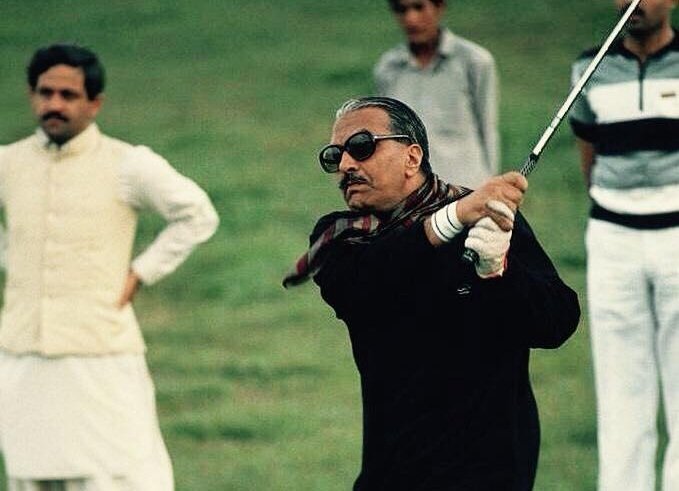
    Muhammad Ijazul Haq, son of former military ruler and the country’s longest-serving head of state Ziaul Haq, has said that ex-army chief General Mirza Aslam Beg and former national security advisor (NSA) General Mahmood Ali Durrani had a “suspicious role” to play in his father’s death.

    According to a report in The Hindu, Ijaz has said that as per the evidence he has collected, Indian and Israeli spy agencies were also involved in his father’s plane crash in August 1988.

    “The plane came down due to spraying of nerve gas in the cockpit that maimed pilots,” he said and confirmed to the Indian English daily the presence of explosives in mango crates, besides claiming that a projectile had also hit the plane.

    Talking to The Hindu, Ijaz said he believed that Generals Beg and Durrani were somehow involved because “some of the doctors who were working in CMH Multan informed Zia’s family probably a month or two after the incident that they received orders from higher-ups to no do the autopsy of the body parts that were found after the crash.

    “Later on, some of them told us that they were transferred from Multan to far-flung places, which was obviously done to cover it up. When the autopsies were done on Brigadier General Herbert M Wassom, who was the United States (US) military attache, then why not the Pakistanis? I asked Gen Beg directly and indirectly but he never responded. The orders to transfer the doctors to far-flung places didn’t come from their immediate bosses; only the GHQ could have done it.”

    ZIA’S DEATH:

    Zia died in a plane crash on August 17, 1988. After witnessing a US M1 Abrams tank demonstration in Bahawalpur, Zia had left the small town by C-130B Hercules aircraft. The aircraft departed from Bahawalpur Airport and was expected to reach Islamabad International Airport. Shortly after a smooth takeoff, the control tower lost contact with the aircraft.

    Witnesses who saw the plane in the air, afterwards claimed it was flying erratically, then nosedived and exploded on impact. In addition to Zia, 31 others died in the plane crash, including then chairman of Joint Chiefs of Staff Committee (JCSC) Gen Akhtar Abdur Rahman, close associate of Zia, Brigadier Siddique Salik, the American Ambassador to Pakistan Arnold Lewis Raphel and General Herbert M Wassom, the head of the US Military aid mission to Pakistan.

    Conditions surrounding his death have given rise to many conspiracy theories. There is speculation that the US, India, the Soviet Union (in retaliation for Pakistani support of the mujahideen in Afghanistan) or an alliance of them and internal groups within Zia’s military were behind the incident.

    A board of inquiry was set up to investigate the crash. It concluded that “the most probable cause of the crash was a criminal act of sabotage perpetrated in the aircraft”.
  • New top lawyer excuses himself from fighting Justice Faez Isa case for PTI govt

    New top lawyer excuses himself from fighting Justice Faez Isa case for PTI govt

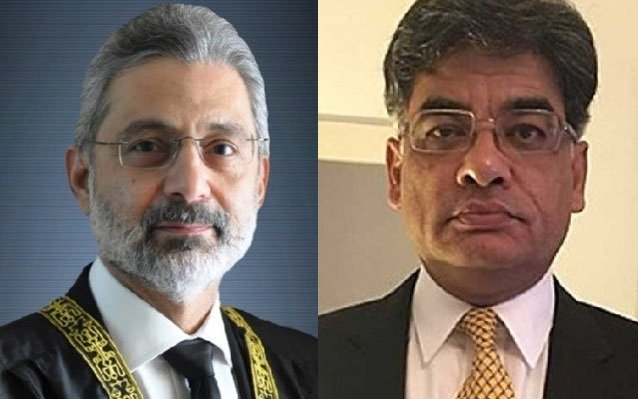
    The newly-appointed attorney general of Pakistan (AGP) — chief law officer and legal advisor of the government –, Khalid Javed Khan, has recused himself from representing the Pakistan Tehreek-e-Insaf (PTI) in the Justice Qazi Faez Isa case.

    Justice Faez Isa, a vocal critic of the establishment, has been facing a presidential reference accusing him of concealing his properties in the United Kingdom (UK), allegedly held in the name of his wife and children. He has submitted before the Supreme Court (SC) that these properties were bought and have always been held in plain sight in the personal names of his wife and children.

    “The government has recommended the name of Additional Attorney General (AAG) Aamir Rehman to represent it in the Supreme Court,” Khalid said Monday, adding that he could not represent the federation. “I have already stated my opinion regarding the Justice Isa reference,” he explained, while his predecessor, Anwar Mansoor Khan, who was representing the government in the case against the top court judge, withdrew his unwarranted statement and tendered unconditional apology.

    Anwar had stepped down from the post after lawyer bodies demanding his resignation for his “baseless” claims against certain judges of the SC. He was replaced by Khalid as Prime Minister (PM) Imran Khan appointed him last week.

    The Pakistan Bar Council (PBC) had demanded Mansoor’s resignation over some comments he made regarding Supreme Court judges, for which he had been reprimanded by the court as well.

    During the hearing on Monday, the AGP told the court that AAG Aamir Rehman was ready for the case.

    Justice Ata Bandial, who is heading the 10-judge bench hearing the Justice Isa reference said the court would give the government additional time to prepare for the case.

    AAG Rehman had on Friday filed an application with the apex court, submitting that the hearing of the petition of Justice Isa as well as the identical petitions challenging the presidential reference fixed for February 24 may be adjourned for three weeks.

    As the hearing resumed on Monday, the AAG told the court that he would be out of the country till March 20 for some official work. On this, Justice Bandial said one of the judges on the bench would be away after March 20 and they would hear the case upon his return.

  • Malaysian PM resigns from office

    Malaysian PM resigns from office

    Malaysian Prime Minister (PM) Mahathir Mohamad, who had recently made headlines for his visit to Pakistan and for hosting his Pakistani counterpart, Imran Khan, in Malaysia, has announced his resignation, paving the way for a possible formation of a new government.

    Mahathir said in a two-line statement that he had informed the country’s king of his resignation at 1 pm Kuala Lumpur time (05:00 GMT) on Monday.

    Mahathir’s party, Parti Pribumi Bersatu Malaysia, has also quit the ruling government coalition, Pakatan Harapan (Alliance of Hope), according to the party president, Muhyiddin Yassin, casting doubt on the future of the partnership.

    According to AlJazeera, Mahathir’s decision follows a weekend of political wrangling, after it was reported on Sunday night that his party was planning to form a new government that would exclude his anointed successor, Anwar Ibrahim.

    On Sunday night, allies of Mahathir, some renegade members of Anwar’s People’s Justice Party (PKR), and a slew of other parliament members, including those from the opposition, held talks in the outskirts of Kuala Lumpur.

    The meeting fueled speculation of an impending collapse of the coalition government, and a political realignment with Mahathir remaining on top, with new coalition partners and Anwar’s PKR out of the alliance. 

    The tussle between old rivals Mahathir, 94, and Anwar, 72, is the latest chapter in a long-running political saga between two of the country’s most prominent political figures.

    Anwar and Mahathir united ahead of the 2018 election to drive out the UMNO-dominated Barisan Nasional coalition that had ruled the Southeast Asian country for six decades in a surprise victory that led to the removal of then-PM Najib Razak.

    Mahathir has also repeatedly promised to hand over power to his former foe.

    But tensions between the two in their Pakatan Harapan alliance had been growing, as Mahathir resisted setting a specific timetable for keeping his promise to hand power to Anwar.

    The coalition’s political fortunes have been waning with defeat in five recent by-elections.

    Anwar also had a split with party mate, Mohamed Azmin Ali, the econonic affairs minister, who was among those who joined the meeting on Sunday night. On Monday, Anwar’s PKR announced the expulsion of Azmin as a member.

    For his part, Azmin announced that he had quit Anwar’s party, taking with him 10 renegade members of PKR, which until Monday was the dominant partner of the ruling coaltion.

    At least 112 votes from members of the 222-seat parliament are necessary to form a new government. 

    Anwar was Mahathir’s deputy when the latter was prime minister during his first stint from 1981 to 2003. But Mahathir sacked him in 1998 after they disagreed on how to handle the country’s financial crisis.

  • Indefinite leave for FBR chief Shabbar Zaidi

    Indefinite leave for FBR chief Shabbar Zaidi

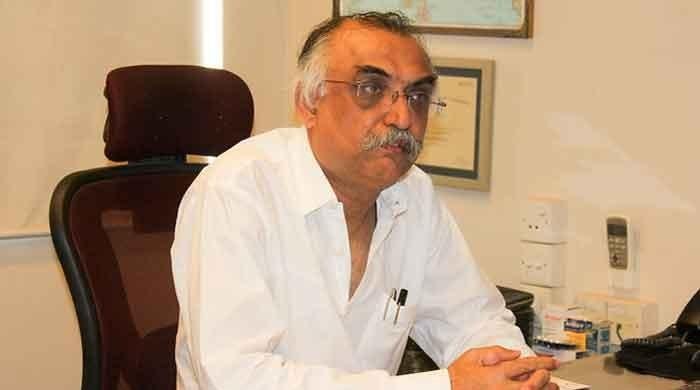
    Federal Board of Revenue (FBR) Chairman Shabbar Zaidi is on indefinite leave and has not joined the office, sending an application in this regard to Advisor on Finance to Prime Minister (PM) Imran Khan, Dr Abdul Hafeez Sheikh, The Express Tribune reported.

    Read more: Imran’s ‘blue-eyed’ Shabbar Zaidi resigns as FBR chairman?

    The FBR chief is sick since January 9, has excused himself from working, and also informed the PM in this regard, reports said.

    Zaidi’s leave had expired on February 14, and he was supposed to join office on Feb 17, but did not. In his absence, FBR Acting Chairman Nausheen Javed Amjad has been handling the affairs of the bureau. 

    Read more: Pakistan has a cure for coronavirus and Chinese can’t stop thanking for it

    According to the report, Zaidi said that his health was not good and he would follow his doctors’ advice.

    On the other hand, the PM’s aide on finance said that if Zaidi could not continue with his work as the FBR chairman owing to ill-health, a new chairman would be appointed after consultations.

  • Coronavirus: PIA suspends flight operations to Beijing till March 15

    Coronavirus: PIA suspends flight operations to Beijing till March 15

    Pakistan International Airlines (PIA) on Monday announced to once again suspend flight operations to China till March 15, journalist Sophia Saifi and Geo News reported.

    Reports quoted a PIA spokesperson as saying that a decision about extending or ending the suspension would be taken after reviewing the situation.

    “PIA has suspended flights to Beijing till March 15,” Geo reported.

    The decision comes amid the spread of the deadly virus to another neighbouring country, Iran, where the death toll rose to eight since the infection was reported on Wednesday last week.

    Last month, Pakistan had suspended operations to China briefly amid coronavirus outbreak and allowed airlines to resume flights only after installing screening machines at airports.

  • Aurat March 2020 murals torn down in Lahore

    Aurat March 2020 murals torn down in Lahore

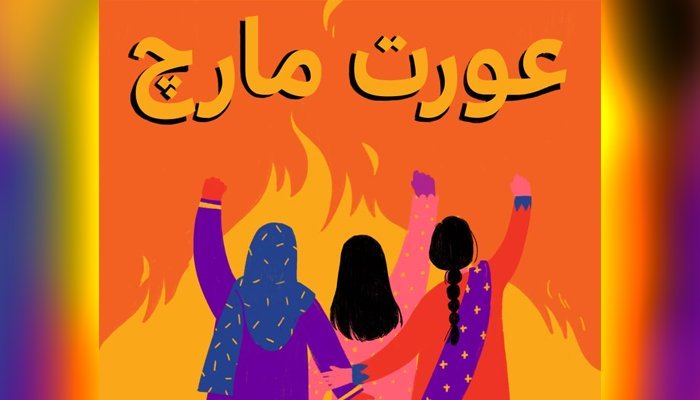
    A mural created by participants of the Aurat March 2020 at Lahore’s Hussain Chowk was torn down Saturday evening.

    While talking to a media outlet a volunteer Amna Chaudhry said, “We had arranged a poster competition where female illustrators and designers were told to design posters for the march and send them in.”

    They decided to install a mural in the city after receiving an overwhelming response, “All the artists were called to put up their posters on the wall to showcase the spirit of the march and promote it,” Chaudhry said.

    But after four to five hours they had put up their posters, they were torn down. “The posters were not just torn, somebody had ripped through them,” the volunteer said.

    Chaudhry also told that before even planning the activity permission had been taken from the authorities. “We had chosen Hussain Chowk as it is the center of the city and a good place for promotion purposes,” she said.

    Organizers of the Aurat March posted the before and after pictures of a mural on the march’s official social media accounts after which support started coming in for them.

    Many activists condemned the incident. Salman Sufi, the founder of the Salman Sufi Foundation, called it a show of the “insecurities deeply embedded within certain elements of society”.

    Human rights lawyer Nighat Dad took to Twitter and wrote that if the posters put up by women receive this much hatred, what about the hatred received by women who stand up for their rights.

    Chaudhry said that the incident did not and will not bring the spirits of the volunteers and organisers down. “You can tear down the posters but you can’t tear us apart. We will resist all things like these and keep putting up posters,” she said.

    Chaudhry added that they will soon file a complaint. “We have shared the posters on social media and have asked supporters to print them out and put them up in their neighborhoods as a form of resistance.”

    The Aurat March will take place across Pakistan on March 8. Fundraisers for the march have started in several cities.

    “For those who ask why we march – this is why!” Chaudhry added.

  • Pakistan has a cure for coronavirus and Chinese can’t stop thanking for it

    Pakistan has a cure for coronavirus and Chinese can’t stop thanking for it

    Pakistan has an effective drug for COVID-19, over 300,000 pieces of which have been exported to China, said an article published by Economic Daily – China Economic Net (CEN) on February 21, which has gotten 5.71 million page views and 38,000 likes.

    In nearly 10,000 comments, in addition to a lot of thanks to Pakistani friends for their help, some netizens were interested in the “multinational enterprise” mentioned in the CEN reporter’s article and wanted to know the hero behind the scenes who urgently dispensed the effective drugs at a Bayer — German multinational pharmaceutical and life sciences company — subsidiary in Pakistan.

    On February 20, after noticing that the official Weibo account of Bayer China said it had made an emergency deployment of chloroquine phosphate tablets in Pakistan at the beginning of this month, the CEN reporter quickly contacted to verify the matter.

    The official Weibo account of Bayer China confirmed the news and said that the batch of medicines was completed in 24 hours. 200,000 of the 300,000 tablets were “sold” to Guangzhou Pharmaceutical Holdings Limited (GPHL) at zero yuan.

    READ: Iran blames Pakistan for spread of coronavirus

    Earlier, Economic Daily reported that on February 5, GPHL first purchased 15,000 tablets of chloroquine phosphate in Pakistan through various channels, and then purchased another 200,000 tablets. The drugs arrived in Guangzhou at 7 pm on February 8.

    Data from clinical trials being performed in China has revealed that chloroquine phosphate could help treat the new coronavirus disease, Covid-19.

    China National Center for Biotechnology Development deputy head Sun Yanrong said that chloroquine, an anti-malarial medication, was selected after several screening rounds of thousands of existing drugs.

    AFP has also verified claims pertaining to the effectiveness of the drug against the virus.

    It took less than four days from purchasing in Pakistan to arriving in Guangzhou. In addition to the international and domestic airline time, it is not easy for Pakistan, a country with less developed transport infrastructure that is suffering from a severe locust plague, to urgently collect, transport and cooperate to undertake the fastest international rescue for dispensing the effective drugs to treat COVID-19.

    The CEN reporter learned from further interviews that chloroquine phosphate production was suspended in China for 20 years. In order to deliver the first batch of effective drugs successfully, from February 5 to 8, in addition to GPHL and Bayer, there are many more heroes behind the scenes, such as China Southern Airlines and Urumqi Customs.

  • Shatrughan Sinha reveals the story behind his mysterious visit to Pakistan

    Shatrughan Sinha reveals the story behind his mysterious visit to Pakistan

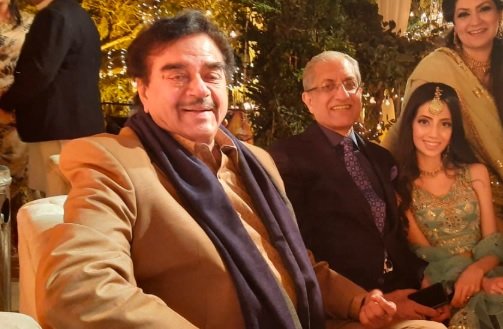
    Pakistanis were taken aback after pictures of Bollywood actor and ex-BJP member Shatrughan Sinha attending a wedding in Lahore went viral on social media with people wondering if it was actually him or a lookalike. Though it was later confirmed that the actor was indeed in Pakistan, details about his visit were not known and people were very curious to find out, especially considering tense Indo-Pak relations.

    As Sinha returned to India after spending two-three days in Pakistan, the ex-member of the Lok Sabha took to Twitter to share details of his visit. Sinha revealed that his visit was purely a personal one and he was here to attend a wedding on the invitation of a dear friend. On his visit, he interacted with several prominent personalities including Reema and former Chief Justice of Pakistan Asif Saeed Khosa.

    Sinha also said that he had a lovely time meeting the President of Pakistan Dr Arif Alvi and his wife in Lahore, adding that he knew the family very well and had attending Dr Alvi’s son’s wedding a few years back in Karachi.

    For good measure, Sinha decided to tag Indian journalists, activists and politicians in his tweets.

    Sinha’s visit comes as a surprise, especially considering that last year, the All India Cine Workers Association (AICWA) had banned and boycotted Mika Singh from the film industry after the singer performed at a wedding in Pakistan. Since then, Bollywood and Indian actors have refrained from interacting with Pakistani artists or people.

    The relationship between the two neighbouring countries went from bad to worse after the Modi government scrapped Article 370 stripping Indian-occupied Kashmir of its special status. The valley has been under lockdown ever since.

  • Faryal Makhdoom, Amir Khan welcome baby boy

    Faryal Makhdoom, Amir Khan welcome baby boy

    Boxing champion Amir Khan and his wife Faryal Makhdoom have welcomed their third child – a baby boy. The couple previously have two daughters: Lamaisah, four, and 21-month-old Alayha.

    The boxer shared the happy news on his social media.

    https://www.instagram.com/p/B84BsxhjzKd/

    The couple had announced their third baby in August 2019, with a gender reveal balloon and an emotional Faryal.

    https://www.instagram.com/p/B1b0EFUhGSM/

    Since then, Faryal has been documenting her pregnancy on Instagram, sharing snaps of her growing baby bump.

    https://www.instagram.com/p/B8l-LzzhWT4/

    Faryal and Amir tied the knot in 2013 and have been embroiled in more than just a few controversies over the years.

    While Amir was mired in cheating claims, a family feud between Faryal and her in-laws threatened to break apart the couple. In 2017 Amir split from his wife and publicly accused her of cheating on him with boxer Anthony Joshua, before withdrawing his claims and reconciling with his pregnant wife.

    But with the latest baby, it appears that all is well and we hope things stay this way.

  • Day 3: A weekend of ideas, stories and books

    Day 3: A weekend of ideas, stories and books

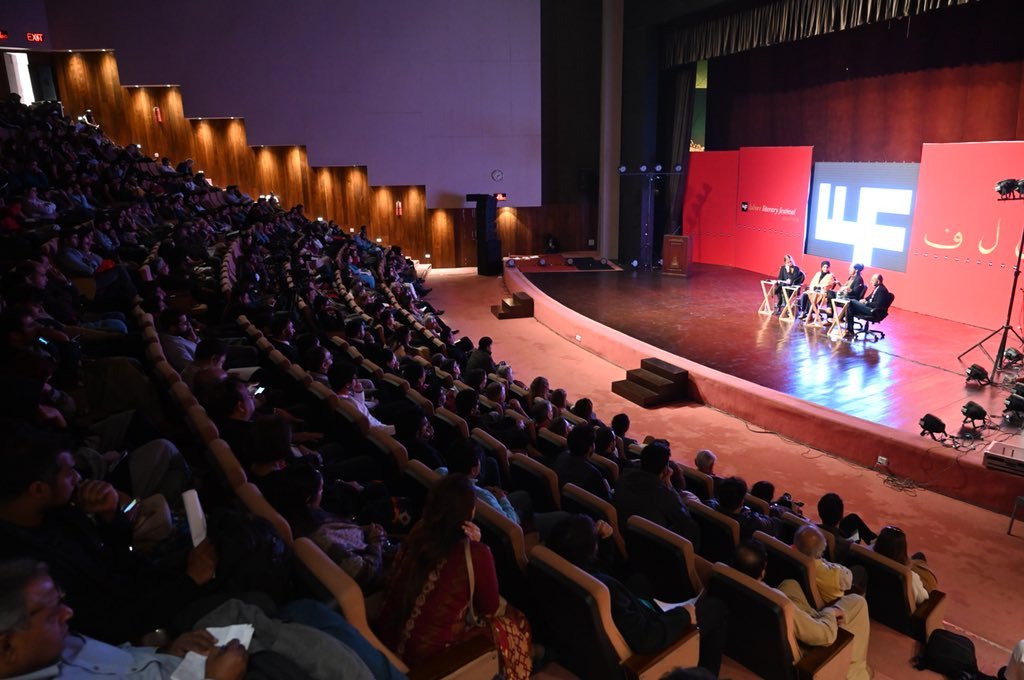
    There’s much to see on the third and last day of the Lahore Literary Festival (LLF) that I think I’ll be session hopping because the panels I’m interested in will unfortunately overlap – unless of course I’m so glued to one that I’m not tempted to listen to another at the same time.

    In hall one, historian and founder of the Jaipur Literary Festival, William Dalrymple will be presenting his latest book, The Anarchy: Post-Mughal Politics which given his past writings promises to be a stimulating session on the rise and fall of the East India Company and the dangers of corporate greed. So that’s between 10 and 11 am though another panel focused on new writing from Pakistan discussing the Zeenat Haroon Rashid Prize would also be interesting because as an editor I’d be curious to read and explore contemporary fiction and nonfiction coming out of Pakistan. Another panel — yet agin at the same time slot though timely given the Lahore Biennale is still on in the city until February 29 so go see that if you can — is on art in public places with French museum consultant, Alexandre Colliex in conversation with Zahra Rashid Khan, the curator of Foundation Divvy Art. With the biennale showcasing artists from Pakistan and abroad with works displayed in public spaces including museums, historical sites (Lahore Fort) and old marketplaces, this session is important as a way to discuss whether a city such as Lahore interested to conserve its art and history is able to do so with its resources or does it need attention from the experts. Also, this one should be interesting because Colliex is a roving museum advisor to governments in the Global South; he’s been involved in the Shenzhen government’s new Museum of Contemporary Art and Planning Exhibition, for example.

    The next hour (11:15-12:15pm) has two slotted sessions that will definitely pique everyones’ interest as both panels are relevant to important debates that interest us. So you’ll be spoilt for choice in this time slot. A discussion of how traditional media outlets are coping with the rise of social media will definitely bring some important insights to the fore given the panelists who know the digital medium well. Unfortunately newspapers literally shrinking in size the world over given the rise of digital platforms is clearly evident. Even 24/7 TV now left behind as news breaks on social media and political debates have twitter as their next battle zone, so we see it is the beginning of the end for print (as the demise of Herald and Newsline magazines have demonstrated)— unless it reinvents its model and its content dissemination methods. The Current’s founder, Marium Chaudhry will be on this panel so go see what she says about an increasing younger readership and their interests and shares her insight into how digital news mediums will capture the market share.

    Dare I say the session in hall 2 with American-Iranian analyst and a former US State Department advisor, Vali Nasr and Ambassador Riaz Mohammad Khan in conversation with journalist Ahmed Rashid will be a big draw in this time slot because firstly, it’s very pertinent to current political challenges in Afghanistan and second, both men have first-hand experience in Afghanistan — Nasr was part of the team with Richard Holbrooke that recommended negotiations with the Taliban instead of opting for a military solution during the Obama administration; and Khan, the author of Pakistan-Afghanistan: The Way Forward for Bilateral Relations and a former foreign secretary has vast experience in this region.

    After lunch, (1:30-2:30pm) and on a lighter note I’ll go listen to author and police officer, Omar Shahid Hamid on cricket, citizenship and the post-colonial narrative. I’ve read Omar’s latest novel, The Fix, so I highly recommend this session with Sri Lankan author, Romesh Gunesekera. Happening at the same time, if you’re interested in how Urdu reads in translation, then go listen to Spanish writer, Rocio Moriones Alonso, translator of the worlds of Manto and Fahmida Riaz — appears to be an ambitious project worthy of the spotlight.

    Mahira Khan and journalist Fifi Haroon will be up next at 2:45pm talking about Pakistan’s new cinematic wave — I’d recommend getting your seat in time because even though Hall 1 will squeeze everyone in, Mahira is the superstar for this weekend. I’m going to see what she has to say considering she is also an UN advocate for refugees. At the same time, there’s a a session on Punjabi drama and more art talk — this year the curators have widened the parameters of the festival to bring in the best.

    As they say, leave the best for last. However, in this instance, the first because the inaugural session on Friday will have presented an interview with Nobel Laureate Orhan Pamuk. [Book suggestion: If you have an interest in his works and in Turkey, The Last Word bookshop has copies of an illustrated version of his novel, Istanbul, with old black and white photographs of the city when Pamuk was an adolescent which is worth buying and getting signed cause it’s like a collector’s copy.] The last session (4-5pm) will see Pamuk and Mohsin Hamid (The Reluctant Fundamentalist; Moth Smoke) talking about how literature can shape a more democratic world which I know will be an engrossing one when both writers are adept at telling stories highlighting pressing sociopolitical issues through their fiction. It will be interesting to see if they have similar or divergent views — is fiction essentially a voice for the voiceless? For writers, it all starts with ideas and stories and telling it as you experience and imagine.

    Eight years on and LLF is still thinking, embracing a wider global vision and themes abound: freedom of expression; Afghanistan and Taliban negotiations; India, Kashmir; cricket; new Pakistani cinema; children’s story books; Urdu literature in Spanish and more. For me, it’s all about books, writers and thinking. Writers can take our reality and turn that into fiction something our politicians — and even journalists forcibly muzzled and strapped in current times — often don’t dare to do.