Blog

  • Injured young markhor released into the wild after treatment

    A three-year-old young Astore Markhor, who fell from a cliff, was released into its habitat three days after it was rescued and after receiving full treatment for the injuries.

    According to the Gilgit-Baltistan wildlife department, the markhor had fallen from a cliff in Jutial Nullah area three days ago. Locals had discovered the markhor and handed it over to the wildlife department, who shifted it to the veterinary hospital in Gilgit for treatment.

    Doctors at the hospital said that the injured markhor received minor injuries in its legs and was suffering from fever. It received treatment for three days after which the doctors felt that it was well enough to be released into the wild.

    However, the wildlife staff will keep an eye on the young goat till it rejoins its herd.

    Pakistan’s national animal, markhor, is a large Capra species native to Central Asia, Karakoram and the Himalayas. According to the International Union for Conservation of Nature’s (IUCN) Red List, it is listed as a near-threatened species since 2015.

    Its horns are a highly sought after trophy. On December 12, an Italian citizen hunted the first Markhor of the season. According to the Gilgit – Baltistan wildlife department, Carlo Pasco successfully hunted a markhor from the conservation area.

    The hunter paid $85,000 as permit fee for hunting the rare wildlife species. The Wildlife department claims that 80% of the amount paid by hunters is given to the local community to invest in themselves and the conversation of these animals.

  • Girl power: Pakistan’s first all-female peacekeeping team receives UN Medal in Congo

    Girl power: Pakistan’s first all-female peacekeeping team receives UN Medal in Congo

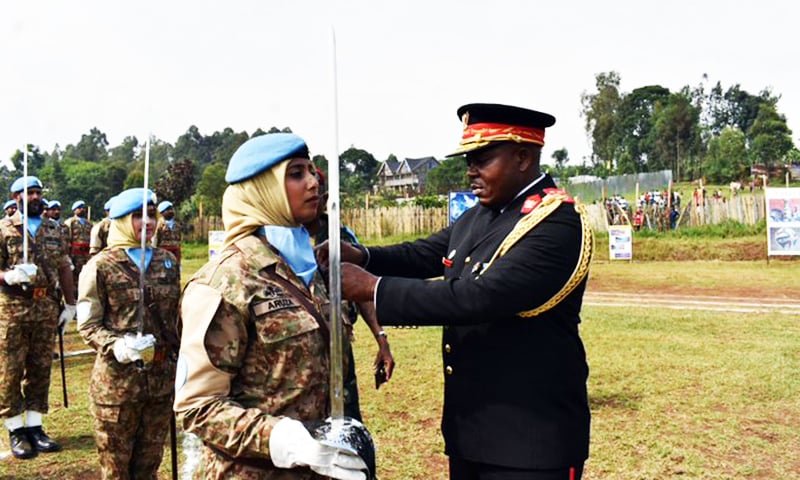
    Members of the first-ever Pakistani Female Engagement Team (FET), which is deployed with the United Nations Organisation Stabilisation Mission in the Democratic Republic of Congo (MONUSCO), were recently awarded the UN Medal at a ceremony in Adikivu in South Kivu, one of the provinces of the central African country.

    According to APP, this team of 15 female Majors and Captains was the first ever Pakistani Female Engagement team in any UN peacekeeping mission around the world.

    Officers in the team include psychologists, stress counsellors, vocational training officers, gender advisers, doctors, nurses, operations officers, information officers and logistics officers, according to a message received at UN Headquarters in New York.

    17 more female officers will be joining the team in early February.

    UN Peacekeepers rely heavily on engaging with the local community — which feels more comfortable liaising and sharing information with military troops that include women alongside men.

    “Throughout their deployment the Pakistani female officers worked hard to win the trust of the community,” the message added.

    The Pakistani FET, according to the mission, has implemented many successful projects including vocational training, medical outreach, regular sessions of support for students, local women and teachers exposed to trauma; and psychological workshops for Congolese police personnel.

    “This team’s extraordinary endeavours to serve the UN is worthy of praise”, the press release concluded.

  • Teacher, student suspended from college over TikTok video get married

    Teacher, student suspended from college over TikTok video get married

    A teacher and his young student expelled from a college for allegedly posting an indecent video clip of themselves on TikTok have contracted court marriage, earlier this week.

    According to reports, Rafaqat Hussain, a 38-year-old English teacher at the Government Postgraduate College Haripur and his 24-year-old student Zainab Ali tied the knot at a local court in Abbottabad. Zainab’s mother and Rafaqat’s cousins and friends were present in the courtroom.

    Speaking about the marriage, the groom expressed that he was very happy adding, “We were in a relationship and were waiting for our families’ permission to get married.”

    Rafaqat is already married and has three children with his first wife.

    According to the couple, the 20-second clip that shows Rafaqat and Zainab together at a local fish-point was shared on the popular video-sharing social networking application TikTok by someone with ill-intent.

    “Today, it has been established that we were in a serious relationship,” said the professor.

    Rafaqat said the clip wasn’t meant to be shared on TikTok, but someone hacked into Zainab’s cellphone, stole the clip and shared it on social networking platforms. The college suspended Rafaqat and Zainab after the clip went viral for violating the college discipline, Principal Dr Muhammad Ishfaq said.

  • Which celebrity friend of outgoing ISPR chief are you?

    Which celebrity friend of outgoing ISPR chief are you?

  • Which celebrity friend of outgoing ISPR chief are you?

    Which celebrity friend of outgoing ISPR chief are you?

  • Apple is closing all offices and stores in China through February 9

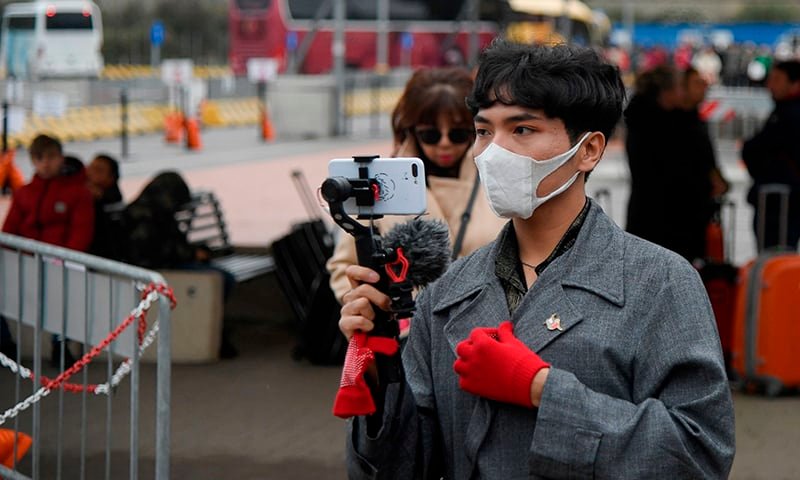
    Apple is no longer closing just one store in China over coronavirus worries — Apple is closing them all. The company is shutting down all its corporate offices, stores, and contact centres in mainland China through February 9, according to a statement provided to Bloomberg’s Mark Gurman.

    The deadly coronavirus outbreak that has killed over 200 people in China and infected nearly 10,000 worldwide, has been declared a global health emergency by the World Health Organisation (WHO). It has triggered the first mandatory CDC quarantine in the United States in 50 years and prompted a ban on foreign nationals returning from China. In addition, airlines have been forced to temporarily suspend all flights to the country. In these circumstances, it makes sense for Apple to shut down its stores and offices in China.

    However, Apple says its online store will remain open.

    Meanwhile, it’s not clear if Apple’s Chinese factories, run by Foxconn, will also be shutting down and more factory workers dismissed. Foxconn, on Tuesday, had said that it would be “operating on a holiday schedule and didn’t anticipate any impact in production”.

    Nintendo, which manufactures its consoles in China, has said that the coronavirus is already impacting the production of the Nintendo Switch game console.

  • Coronavirus causes fright for Indian phone, carmakers

    Coronavirus causes fright for Indian phone, carmakers

    Coronavirus outbreak in China could start to disrupt India’s production of smartphones. This spread can delay component shipments that are important for the production of smartphones, reports have said.

    India is the world’s biggest smartphone maker after China but is still largely dependent on China for supplies of parts such as cells, displays panels, camera modules and printed circuit boards.

    “Those disruptions were already planned but if it gets prolonged, for March and April, production will have serious trouble,” said S N Rai, the co-founder of homegrown smartphone maker Lava.

    China’s OnePlus said its Indian operations could manage, in the short term at least.

    “We are well covered because we have the entire production in India, we already have enough stock, and even going forward many of the components will anyway be coming directly from other markets,” said Vikas Agarwal, the India head of OnePlus.

    However, Beijing has expressed confidence in uprooting the “devil” virus that has been declared a global emergency by the World Health Organization (WHO).

    Giants like Alphabet Inc’s Google and Sweden’s IKEA have closed operations in China.

    India’s Tata Motors, which counts China as a major market for its luxury Jaguar Land Rover cars, said on Thursday it was worried about the coronavirus and warned that the outbreak could impact productions and profits.

    For now, the industry just hopes the outbreak can be contained within the next two weeks. “If the problem persists beyond February 10, we have a real problem at hand,” said Pankaj Mohindroo, head of the India Cellular & Electronics Association, an industry lobby group.

  • Woke students in ‘secular’ India

    The BJP coming to power has only removed the lid from the internal realities of the unsuccessful story of Indian democracy.

    Unlike Pakistan, where student unions were banned during the military rule of Ziaul Haq, in India, student unions on campuses have successfully sustained till date. In the past few years, Jawaharlal Nehru University (JNU) has been mentioned as a refrain in discussions on student politics — particularly in terms of burgeoning progressive politics — the spillover effect of which has reached not only Pakistan, but major parts of the globe as a good omen for the oppressed.

    The student union of JNU, better known as JNUSU, was recognised as a symbol of resistance, the voice of voiceless and a representative of the marginalised and vulnerable communities within India. JNUSU gained popularity across the world after its former president Kanhaiya Kumar was arrested from campus in 2016 due to his association with a protest gathering held at JNU.

    The protest was organised by some students of the varsity on February 9, 2016, in order to commemorate the judicial killing of Afzal Guru (hanged Feb 9, 2013) and also to question the violation of human rights by the Indian state in Indian occupied Kashmir (IoK).

    Consequently, the fascist Bharatiya Janata Party (BJP) government pressed charges against the students who had organised the protest, as well as Kanhaiya, who had addressed the protest gathering. Kanhaiya, Umar Khalid and Anirban Bhattacharya were the three students who were jailed following the registration of an FIR [First Information Report] against them.

    With already popular Azadi slogans taking a different tone following Kanhaiya’s arrest, students – especially Kashmiri — took a tone that went on to prove their courage at the forefront of the struggle against Indian Prime Minister (PM) Narendra Modi’s fascist regime.

    The recent wave of mass-mobilisation in India started in the aftermath of the controversial Citizenship Amendment Act (CAA) that grants the government the right to declare people, unable to produce citizenship documents, as “illegal immigrants” and allows any declared illegal immigrant, except Muslims, to become a citizen of India on the grounds of persecution in neighbouring Muslim states.

    CAA’s implementation, however, comes after forming a National Register of Citizens (NRC). NRC has been implemented in the Indian state of Assam where people, who have not made it to the register, have either already been detained in camps or are facing the threat of landing in the same since there is no way to prove which countries do these allegedly illegal immigrants belong to.

    The massive mass-scale protests in India against the discriminatory CAA law drew much attention after the December 15 protest led by students of Jamia Millia Islamia University in a Muslim locality of New Delhi. With police cracking down on these protesting students by not only baton-charging but also shooting them, and that too on campus, tables started to turn on the Indian state.

    With students of Aligarh Muslim University protesting on campus against the brutality met out to their peers from Jamia Millia Islamia University, a new wave of resistance took over India. Fierce confrontation meted out to the cops, especially by female students, in what turned out to be the defining moment for the anti-CAA movement, as more people, although largely Muslims, joined the protests, and the same still goes on.

    Outside their campuses, students of Jamia Millia and Aligarh University are much more involved in mobilising and organising the ongoing protests. However, they are subsumed by the grandiosity of JNU and its student leadership that has expressed solidarity to Jamia students by joining one of the protests outside JNU.

    Despite a huge communication gap and both Pakistan and India’s coercive forces employed to keep people away from each other, the engagement of student-political activists gives us hope that a broader united front to fight injustice and oppression will someday be built.

    While mass participation of students, youth and religious minorities in the protests against BJP’s plan of constructing a Hindu Rashtra, which according to their publicised map, is extended to Afghanistan, seems insufficient to deal with, it is important, as well as necessary, to demand that the newly-passed legislation by the parliament be rolled back.

    But would it ensure peace and security for Muslims and other marginalised communities like Dalits, who too are at risk after the promulgation of CAA and NRC? Or in other words, does the struggle for safeguarding Indian constitution in itself, guarantee protection to religious minorities?

    Apart from the popular discourse propagated around the Indian constitution that claims it is ‘secular’, the deployment of state apparatus against lower caste people within Hindus and other marginalised and religious minorities, tell a different story, which has become clearer under the BJP. The destitution of religious minorities in terms of poverty, employment, education and above all, political representation, stands in testimony to the fact that they were reduced to ‘second-class citizens’ in the largest democracy of the world even when BJP was not in power.

    The BJP coming to power has only removed the lid from the internal realities of the unsuccessful story of Indian democracy. Therefore, it becomes much more significant for the protesters from Asam to Uttar Pradesh and from Jamia Millia to Shaheen Bagh to consolidate these anti-BJP forces in one political project which possibly would push the current discourse beyond constitutionalism, instead of leaving the burden of saving constitution and secularism on the shoulders of already underprivileged Muslim community of India.

    Amid all the recent political developments in Pakistan and India, there has been a convergence of progressive ideas across the border which is largely manifested in the unconditional solidarity extended by the Progressive Students’ Collective (PSC) among other progressive student organisations in Pakistan to their counterparts in India.

    Despite a huge communication gap and both the states’ coercive forces employed to keep people away from each other, the engagement of student-political activists gives us hope that a broader united front to fight injustice and oppression will someday be built.

  • ‘Saaf Bath’ initiative to set up portable public toilets with focus on facilitating women

    ‘Saaf Bath’ initiative to set up portable public toilets with focus on facilitating women

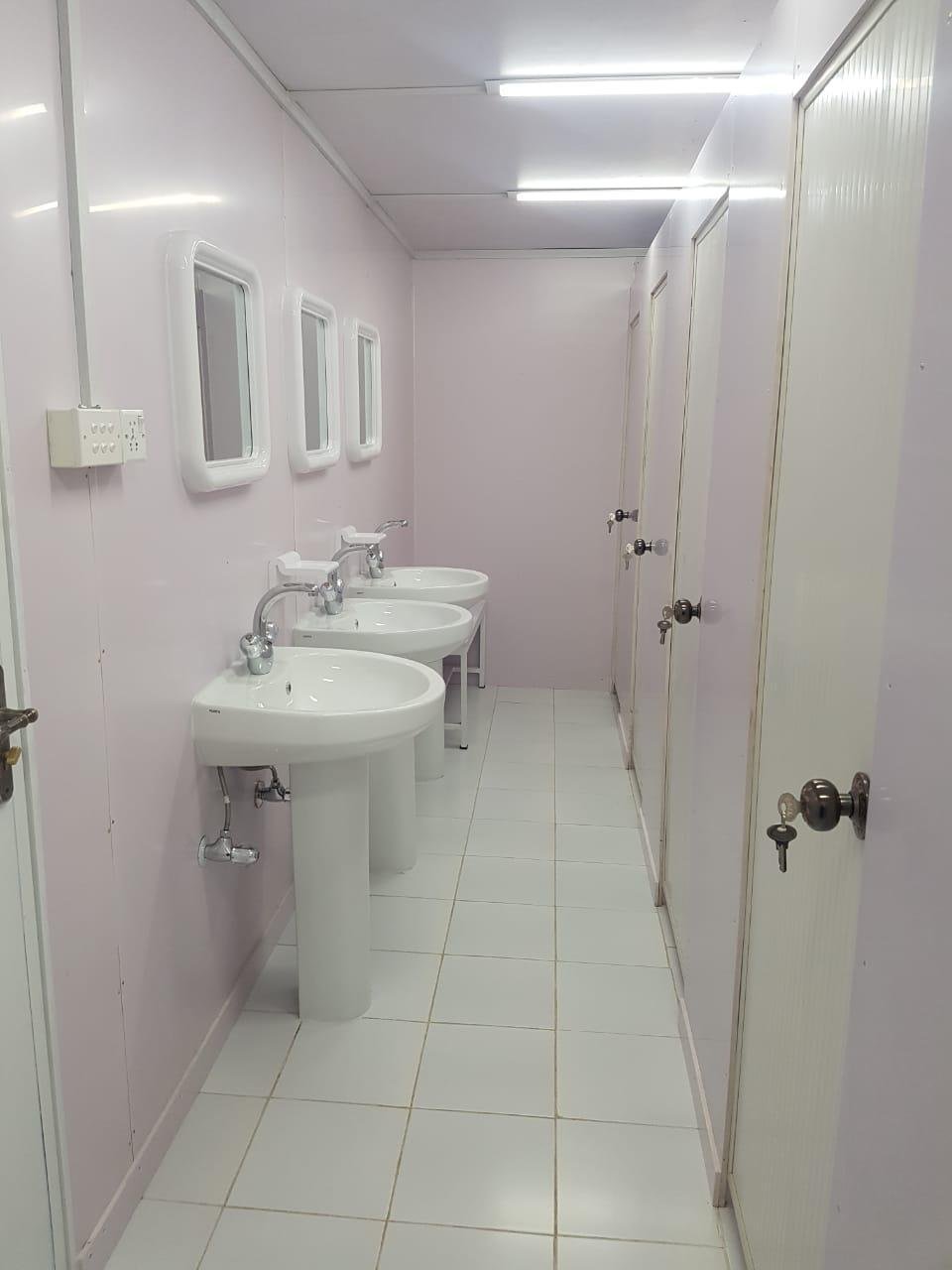
    The Salman Sufi Foundation (SSF) has launched a new project ‘Saaf Bath’ to benefit pedestrians, especially women, who do not have access to clean public toilets in Pakistan.

    According to a press release, the foundation will set up portable public toilets in Lahore and Karachi during the first stage of the project expected to complete by February 2020. The project aims to facilitate women, who are vulnerable to major diseases due to the lack of availability of clean and hygienic bathrooms.

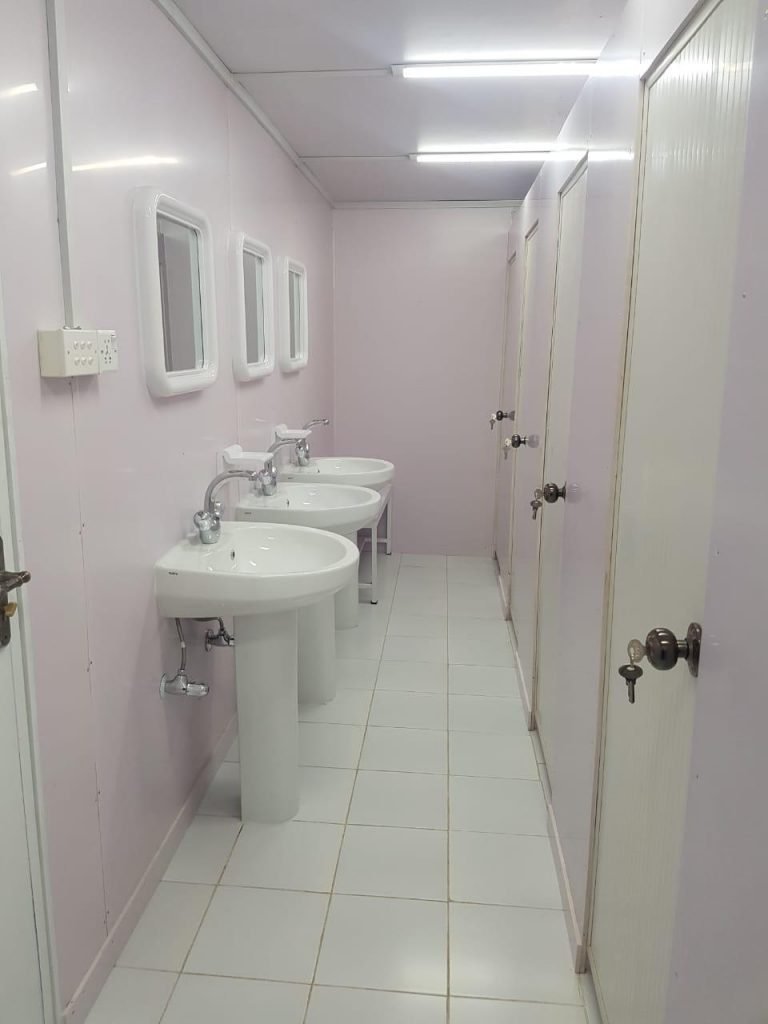
    The SSF is partnering with numerous corporate companies to install portable toilets in all major cities of the country, especially those areas with a large number of female pedestrians. These toilets will set a standard for a public toilet and there will be a proper model that everybody would be asked to follow.

    The restrooms will also be made accessible for the aged and the differently-abled and will be maintained by the foundation’s coordinating officers daily. The foundation will also ensure that sufficient hand sanitizer and water is available for the public. In addition, there will also be a diaper station as well as the availability of sanitary pads.

    “Many women in Pakistan face severe issues in their menstrual cycle because of the lack of sanitized products and clean places,” said Sufi.

    Shedding light on the project, Salman Sufi told The Current: “Initially, we will be launching two to three toilets in Lahore and Karachi. After that, the foundation plans to expand this to the female schools and colleges in Sindh and Punjab. We are working with LDA in Lahore and the commissioner officer in Karachi regarding these.

    “We have requested the Sindh government to give us access to female colleges where we can install portable washrooms”, he added.

    Sharing further details, Sufi said, “We will be setting a standard for a public toilet and there will be a proper model that everybody would be asked to follow. The toilets will be equipped properly, there will be a diaper station as well as sanitary pads available. Many women in Pakistan face severe issues in their menstrual cycle because of the lack of sanitized products and clean places”.

    The project is in line with the foundation’s plan of starting an overall health and sanitation campaign exclusively for women. According to a 2015 report by the World Health Organisation (WHO), Pakistan was the third-largest country where over 43 million people defecate openly.

  • Coronavirus: Eight Chinese nationals deported from Islamabad airport

    As many as eight Chinese nationals have been deported from the Islamabad International Airport as coronavirus fear grips the entire world following the World Health Organization’s (WHO) declaration of a global emergency over the spreading virus and Chinese authorities increasing the toll to 213 dead and nearly 10,000 infections.

    According to reports, a flight from Dubai with eight Chinese passengers on board landed in Islamabad on Friday. The Chinese nationals — five men and three women — were screened and later sent back to Dubai after being disallowed from boarding a Pakistan International Airlines (PIA) flight from the federal capital to Beijing. 

    All eight individuals, reports said, were deported through a private airline carrier.

    The Civil Aviation Authority (CAA) has partially suspended all direct flight operations between Pakistan and China amid fear of the deadly coronavirus. According to a notification issued by CAA, the direct flight operations between two countries will remain suspended till February 2.

    CORONAVIRUS:

    In mid-December, some people in the central Chinese city of Wuhan began complaining of flu and pneumonia-like symptoms. Some had a high fever. Doctors were perplexed. To find out what might be causing their illness, geneticists analysed the DNA of the virus that had infected them.

    At once, the scientists realised the virus was new to science.

    As of January 23, experts at WHO in Switzerland estimated that at least 557 people have contracted the rapidly spreading disease. All countries have since been taking precautionary measures to curb the menace of the deadly disease.