Blog

  • Slow art: the master illuminator of Tehran

    Slow art: the master illuminator of Tehran

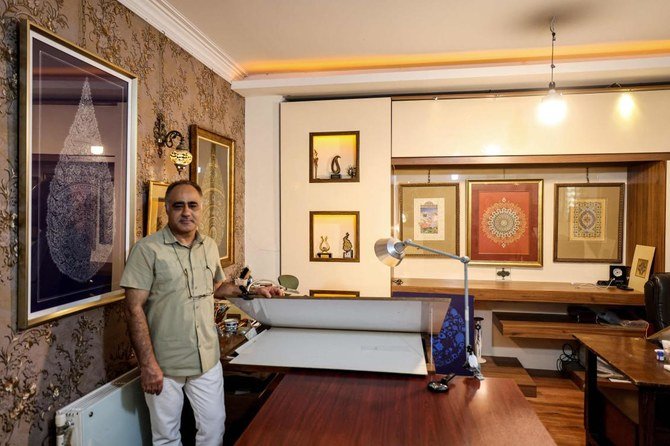
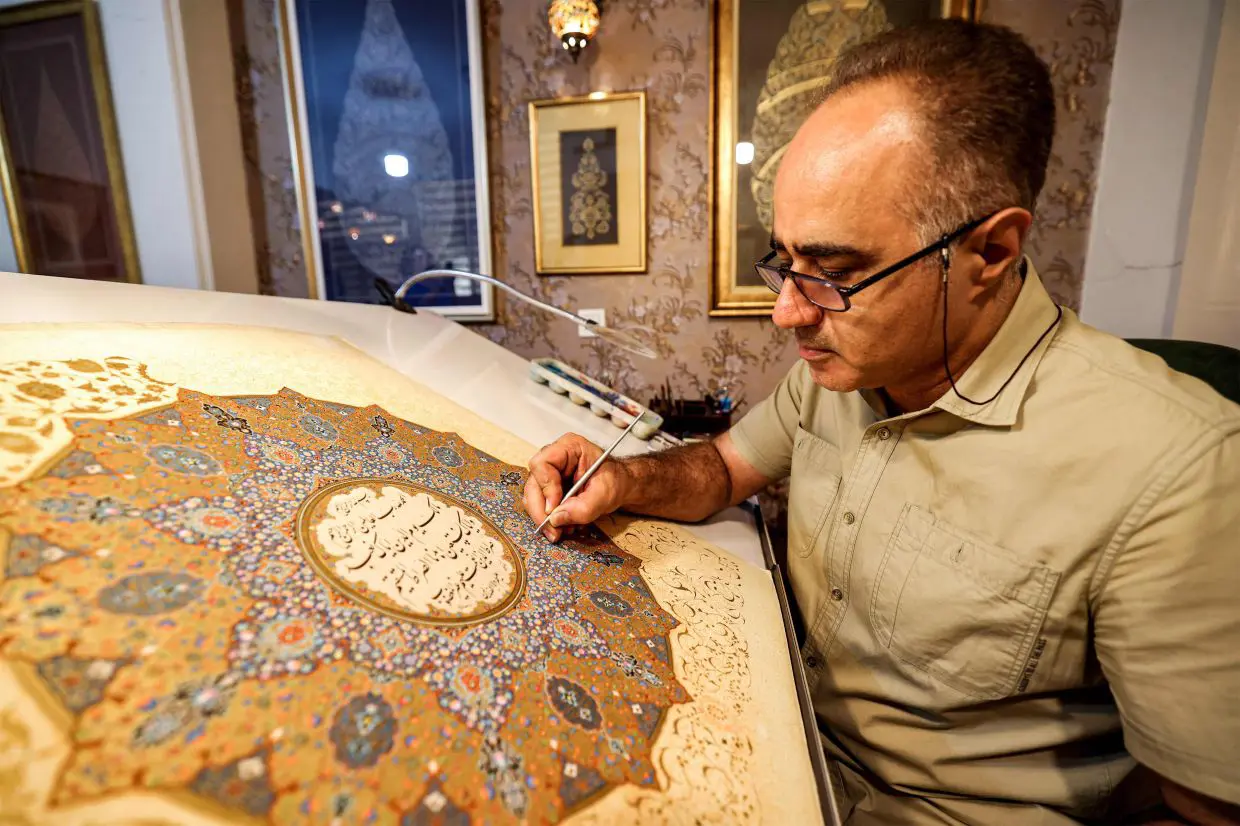
    Iranian artist Mohammad Hossein Aghamiri sometimes labours for six months on a single design, very carefully — he knows a single crooked line could ruin his entire artwork.

    In the age of AI-assisted graphic design on computer screens, the centuries-old tradition of Persian illumination offers an antidote to rushing the creative process.

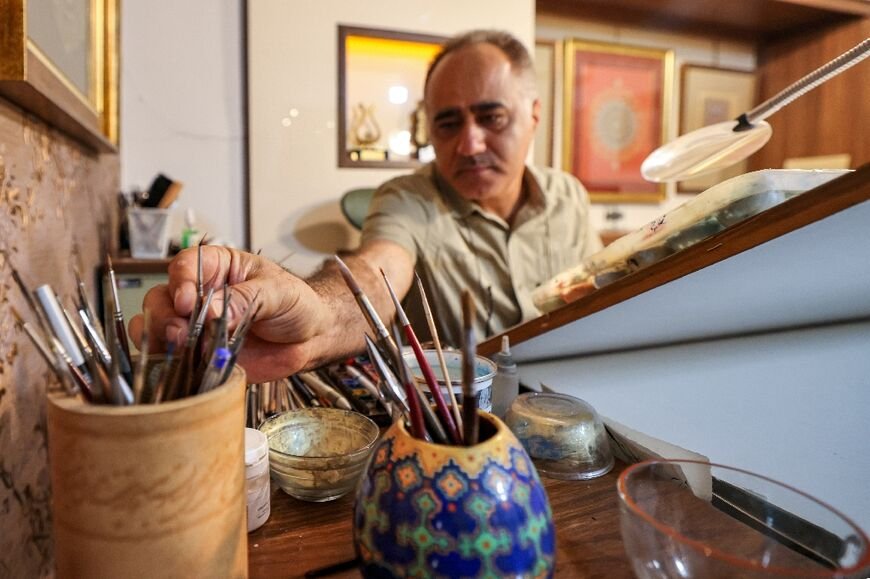
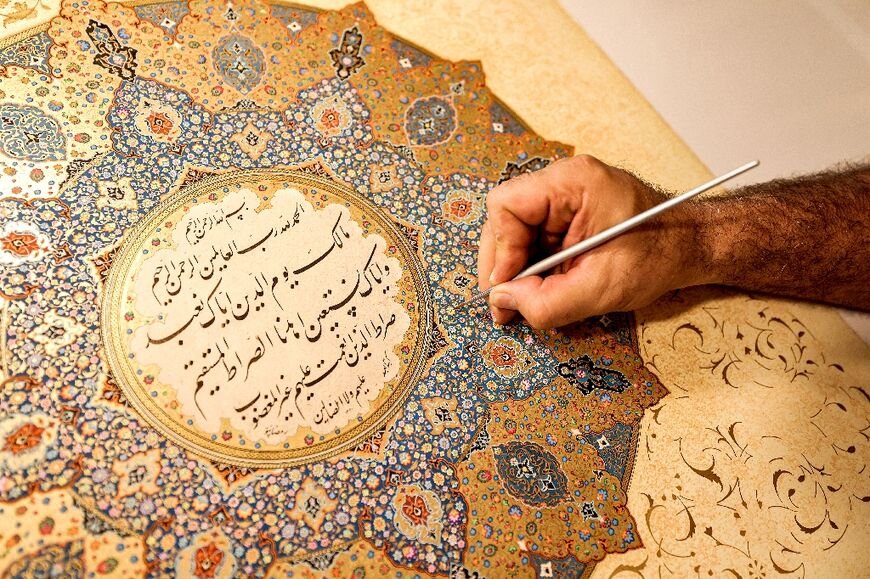
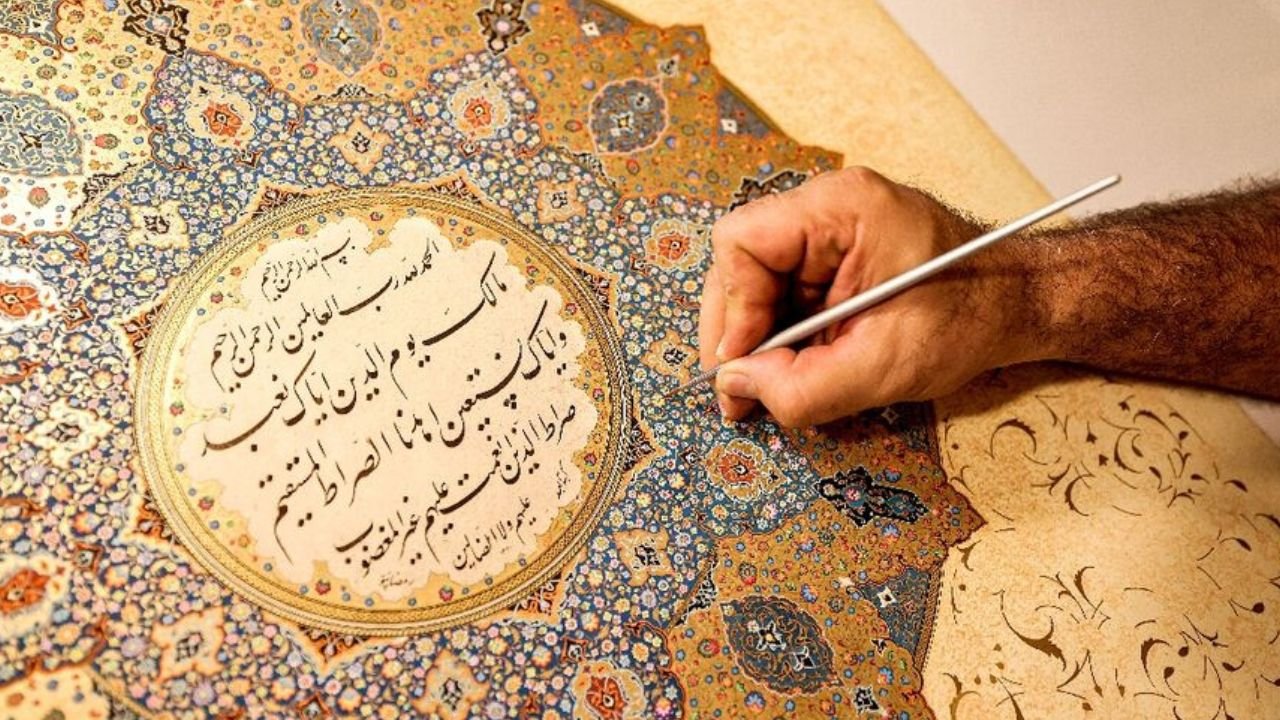
    Aghamiri’s fine brush moves natural pigments onto the paper with deliberate precision as he creates intricate floral patterns, religious motifs and elegantly flowing calligraphy.

    The exquisite artwork has for centuries embellished literary manuscripts, religious texts and royal edicts as well as many business contracts and marriage certificates.

    Aghamiri, 51, is one of Iran’s dozen or so remaining masters of the ancient illumination art of Tazhib, which was inscribed last year on UNESCO’s list of intangible heritage.

    “It is a very unique job that requires a lot of patience and precision,” Aghamiri, a veteran of the craft with over 30 years’ experience, told AFP in his downtown Tehran studio.

    “It’s not accessible to everyone.”

    Tazhib’s non-figurative and geometric flourishes have traditionally adorned the margins of holy books and epic poems.

    The artform dates back to the Sassanid era in pre-Islamic Iran but flourished after the seventh century advent of Islam, which banned human depictions.

    Aghamiri says it often takes him months to finish one design and that a single misplaced stroke that disrupts its symmetrical harmony can force him to start over.

    – Global workshops online –

    When AFP visited, he was working on a so-called shamsa design, a symbolic representation of the sun, about 50 centimetres across with intertwined abstract, geometric and floral patterns.

    He said he started the piece over four months ago and aimed to finish it within six weeks, using natural pigments such as lapis lazuli, saffron, gouache and pure gold, from China.

    “Gold has a very strong visual appeal,” said Aghamiri. “It’s expensive and it enhances the perceived value of the work.”

    Aghamiri hails from a family of artists and artisans with a rich history in Iranian craft traditions including calligraphy, miniature painting and carpet design.

    His work has been showcased in museums in Iran and in nearby Arab countries of the Gulf region where interest in Oriental and Islamic art continues to grow.

    “Eighty percent of my works are sold in the region, especially in the Emirates and Qatar” as well as in Turkey, he said.

    In recent years, Aghamiri garnered interest abroad and even began teaching the ancient art online to students from across the world, notably the United States.

    Soon, he also hopes to hold workshops in Britain for his craft, which he says is fundamentally different from European illumination art, which flourished in the Middle Ages.

    European designs, he said, are more figurative and can depict human faces, animals and landscapes, and often illustrate biblical scenes.

    UNESCO labelled the Persian art of illumination as part of the Intangible Cultural Heritage of Humanity in December 2023, at the request of Iran as well as Turkey, Azerbaijan and Uzbekistan.

    “Twenty years ago, I didn’t have much hope” for the future of Persian illumination, said Aghamiri. “But things have changed, and I see that this art is becoming more and more popular.”
  • Heavy taxes imposed on makeup and toiletries

    Heavy taxes imposed on makeup and toiletries

    Imported products used in make-up, skin and hair care have come under regulatory duty, after which these products have become more expensive by upto 55 percent, reports Geo.

    Budget for the year 2024-25 has imposed heavy taxes on imported milk, fruits, honey, apples, cherries, figs, mangoes making them 20 to 45 percent more expensive while the government increased regulatory duty from 5 to 55 percent on several other products.

    Apples and lychees 45 percent, imported cherries and frozen fish 35 percent, corn and natural honey 30 percent, imported milk, milk cream, dates, figs, pineapples, guavas and pomegranates are also subject to 25 percent regulatory duty. Curd, butter and fruits also became expensive after the implementation of 20 percent regulatory duty.

    50 percent regulatory duty has been imposed on imported shaving cream and soap, 45 percent on imported jewelry, 10 percent on imported overcoats, caps, jackets, trousers, skirts and shorts for men and women.

    Regulatory duties on waterproof leather shoes, wash basins, bathtubs and imported commodes have also been increased.

  • How did Madiha Imam fall for an Indian filmmaker?

    How did Madiha Imam fall for an Indian filmmaker?

    Sometimes, love finds you in the most unexpected places. On the set of the Bollywood movie ‘Dear Maya’, a special connection formed between two individuals. Madiha Imam recently shared how she met her husband, Moji Basar, while working on the film. Moji, who comes from northern India, is both a filmmaker and an MMA trainer. The film set the stage for their love story, making Madiha’s journey in the film industry even more special.

    “My husband is from India, from the Northern part, and he’s a filmmaker as well as an MMA trainer. He has worked on various projects in Bollywood, and we first met during the making of my Bollywood film, Dear Maya,” she narrated.

    While discussing her new family, Madiha said, “My in-laws have a unique culture that surprised me with their customs. I loved how they welcomed me into the family. The whole area is very tribal, and the entire tribe came down to welcome me when Moji took me for the reception.”
    Madiha, the star of ‘Bayhadh’ and ‘Dil Manay Na’, married Moji Basar on May 1, 2023. She posted pictures of the wedding with the caption, “Married 1-5-2023, remember us in your prayers as we embark on this new chapter of our lives.”

  • After UN body’s statement on Khan, US asks Pakistan to respect human rights

    After UN body’s statement on Khan, US asks Pakistan to respect human rights

    After the recent statement by United Nations working group on arbitrary detention calling the detention of Pakistan Tehreek-e-Insaf (PTI) founder Imran Khan in violation of international law, the US State Department has asked Pakistan to respect people’s fundamental human rights.

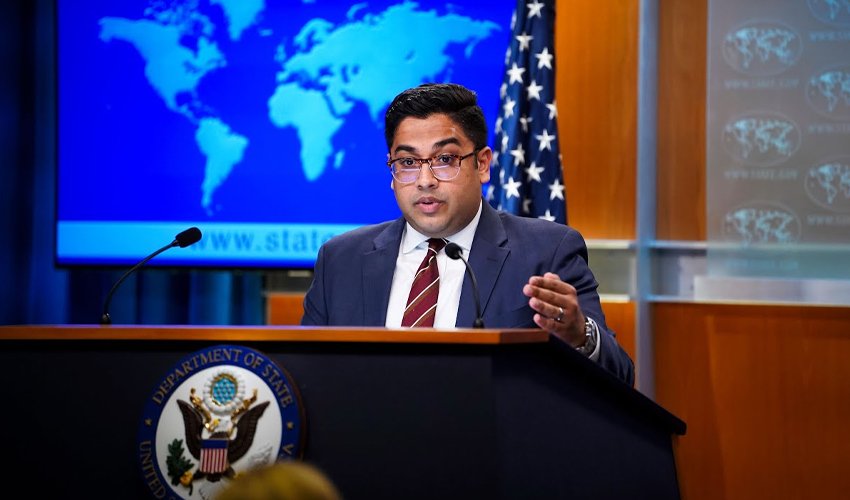
    Addressing a press briefing on Monday, Principal Deputy Spokesperson Vedant Patel said that US officials have consistently and privately and publicly urged Pakistani authorities to respect the rights of its people in line with its constitution and international commitments.

    A journalist asked Patel a question regarding the resolution passed by the US House of Representatives seeking an investigation into the February 8 elections but the spokesperson refused to comment on it.

    “We urge the Government of Pakistan to respect human rights and fundamental freedoms, including the freedom of expression, freedom of association, peaceful assembly, and the freedom of religion as well,” he said.

  • At least 27 crushed to death in India religious gathering: govt

    At least 27 crushed to death in India religious gathering: govt

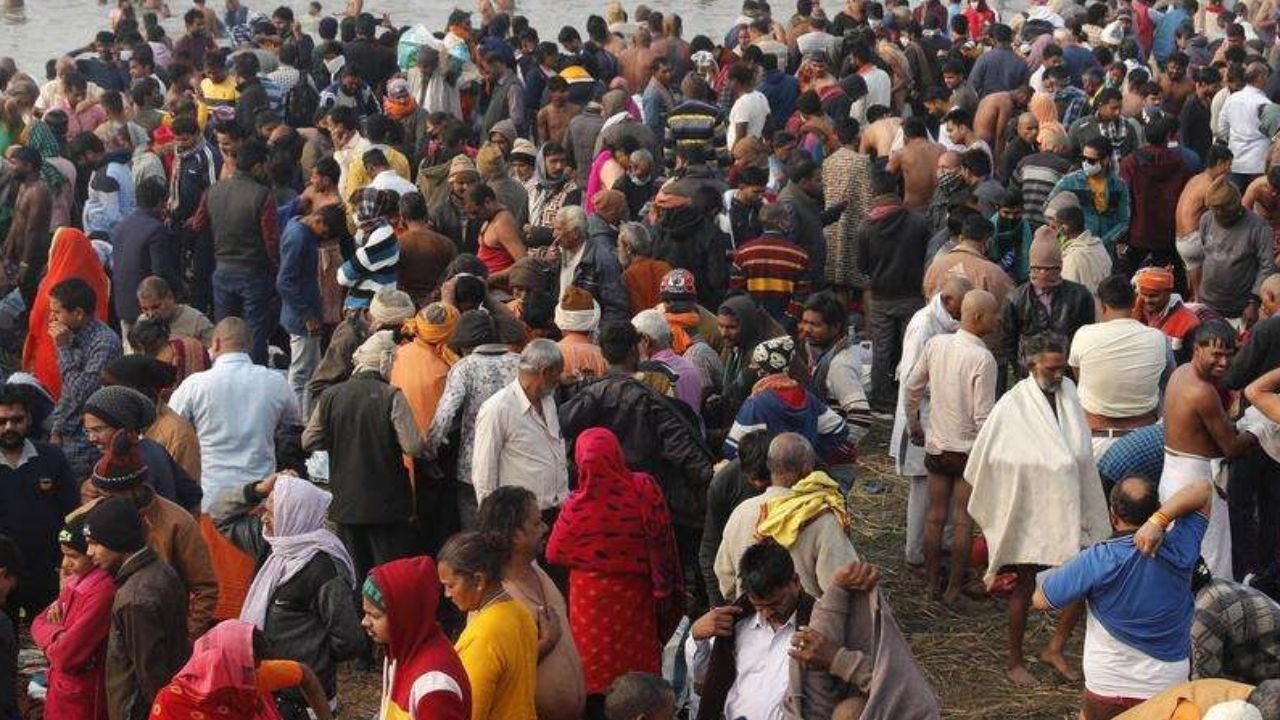
    At least 27 people were crushed to death at a Hindu religious gathering in northern India, with several more injured and fears the toll could rise, government medics said Tuesday.

    “We have received 27 bodies so far… bodies are still coming,” Uttar Pradesh state senior medical officer Ram Mohan Tiwari told AFP.

    Crowds had gathered to celebrate the Hindu deity Shiva in the city of Hathras, some 140 kilometres (87 miles) southeast of New Delhi.

    Umesh Kumar Tripathi, chief medical officer, told reporters the dead were 25 women and two men.

    “Many injured have also been admitted,” Tripathi said. “The primary reason is a stampede during a religious event.”

    Deadly accidents are common at places of worship in India during major religious festivals.

    At least 112 people were killed in 2016 after a huge explosion caused by a banned fireworks display at a temple marking the Hindu new year.

    The blast ripped through concrete buildings and ignited a fire at a temple complex in Kerala state, where thousands had gathered.

    Another 115 devotees died in 2013 after a stampede at a bridge near a temple in Madhya Pradesh.

    Up to 400,000 people were gathered in the area, and the stampede occurred after a rumour spread that the bridge was about to collapse.

    About 224 pilgrims died and more than 400 others were injured in a 2008 stampede at a hilltop temple in the northern city of Jodhpur.

  • Was the ‘Khalil Ur Rehman Qamar viral clash’ set up by Samaa or the real thing?

    Was the ‘Khalil Ur Rehman Qamar viral clash’ set up by Samaa or the real thing?

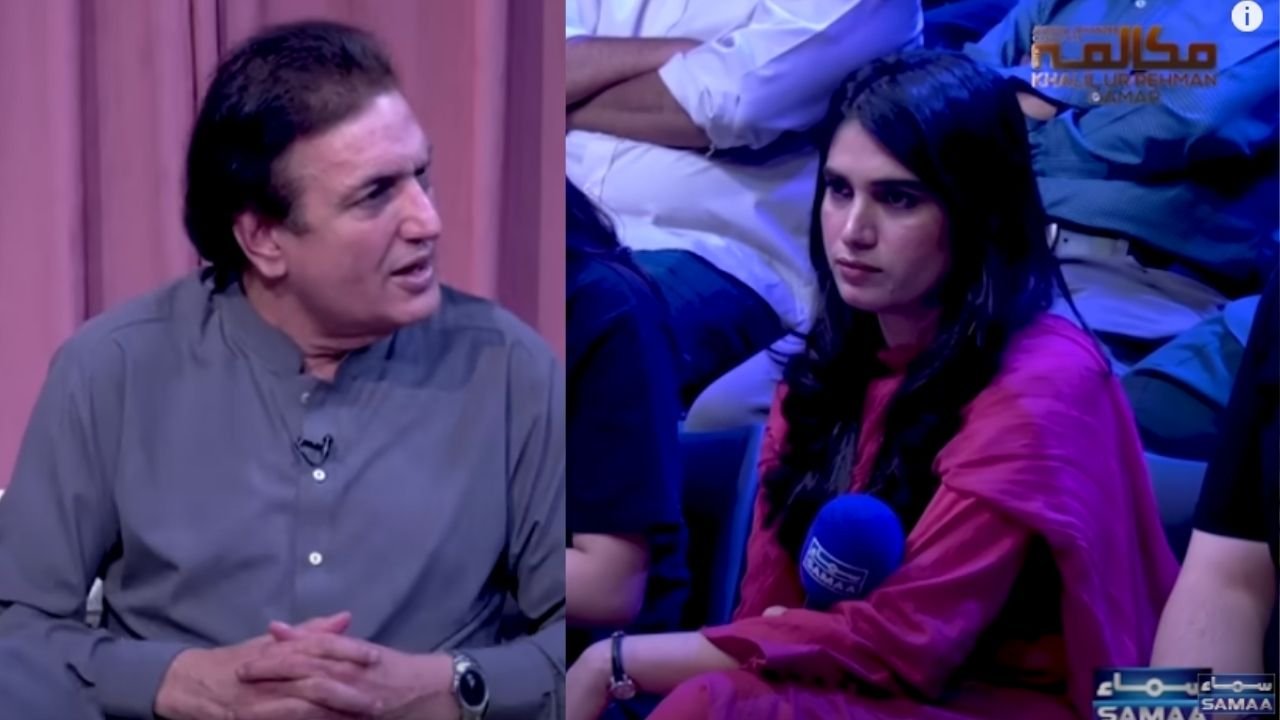
    Pakistani controversial screenwriter Khalil ul Rehman Qamar recently made headlines with his outburst at a woman in Samaa TV’s show Mukalma

    .
    The woman in the viral clip, Azba Abdullah, who was seen countering Sahil and Qamar, garnered praise from all over the social media. She posted a video of herself explaining that the debate was entirely impersonal and questions will be raised if anyone says something against women such as calling them ‘jahil’.

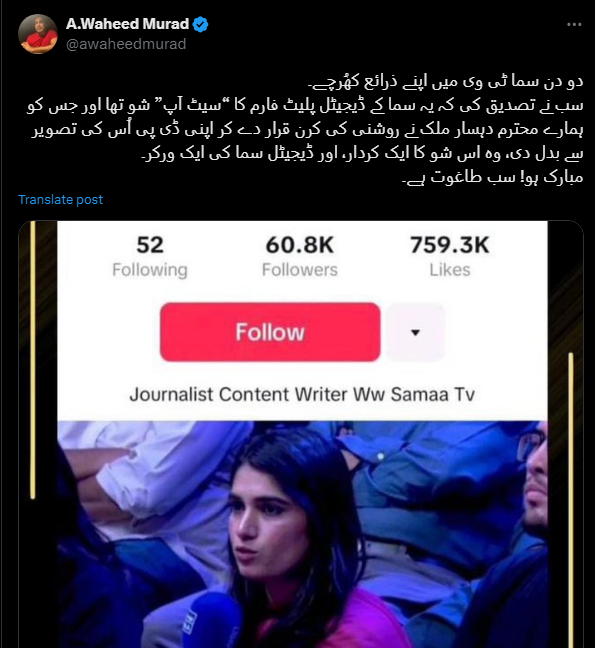
    The statement prompted people to speculate whether the show was staged. Journalist Abdul Waheed Murad tweeted on X (formerly Twitter), claiming that the show was a “setup” and the woman was a worker at Samaa.

    However, an inside source told The Current that the woman is indeed an employ of the channel but she sat down on the show as audience numbers were thin. The argument that transpired between the three of them was extemporaneous. The source claimed that nothing was staged.

    In the recent viral footage Sahil Adeem claimed that 95 percent of women in Pakistan are uneducated, causing an uproar among the audience.“If you have called girls ‘Jahil,’ you should apologize or show me where the Quran says to use this word for those who don’t know certain things,” Azba said angrily. In response, Sahil shared Arabic verses, which angered the girl. Her reaction to the use of Arabic upset Khalil ul Rehman Qamar, leading to a heated argument between him and the girl.

  • Targets set to control growing population in Pakistan

    Targets set to control growing population in Pakistan

    The federal government has set targets to curb population growth as part of its five-year plan.

    Sources report that the Prime Minister approved the Ministry of Planning’s proposal during the NEC meeting. According to the plan, the target is to reduce the annual population growth rate to 1.1 percent by 2030. The latest census in 2023 recorded a growth rate of 2.55 percent, one of the highest in the region.

    The Ministry of Planning is aiming to decrease the total fertility rate to 2.2 percent by 2030. In FY 2024, the rate stood at 3.32 percent.

    Sources indicate that efforts are underway to increase intentional contraception usage to 60 percent by 2030. As of FY 2024, the rate was 39.36 percent.

    It has been reported that a limited adoption of modern contraception methods has caused Pakistan to witness 2.5 million intentional abortions annually.

    As of now, Pakistan’s population is at 241.49 million according to the 2023 census.

  • New tourist ‘glass train’ to soon run between Rawalpindi, Murree

    New tourist ‘glass train’ to soon run between Rawalpindi, Murree

    Punjab Chief Minister Maryam Nawaz Sharif has given the green light to a tourist ‘glass train’ project connecting Rawalpindi and Murree, aimed at boosting tourism in the region.

    The approval came during a meeting chaired by the Chief Minister in Murree.

    The government plans to enlist international consultants for the execution of the glass train project.

    The chief minister sanctioned several other development and beautification projects for Murree.

    A decision was also made to demolish high-rise hotels that block out the natural scenery along Mall Road Rawalpindi.

    The construction and extension of the old Rawalpindi-Murree-Kashmir Road was also approved.

    Moreover, the government has committed to removing hotels around GPO Chowk and restoring historical buildings.

  • Gang of five gouge out man’s eyes over theft charge

    Gang of five gouge out man’s eyes over theft charge

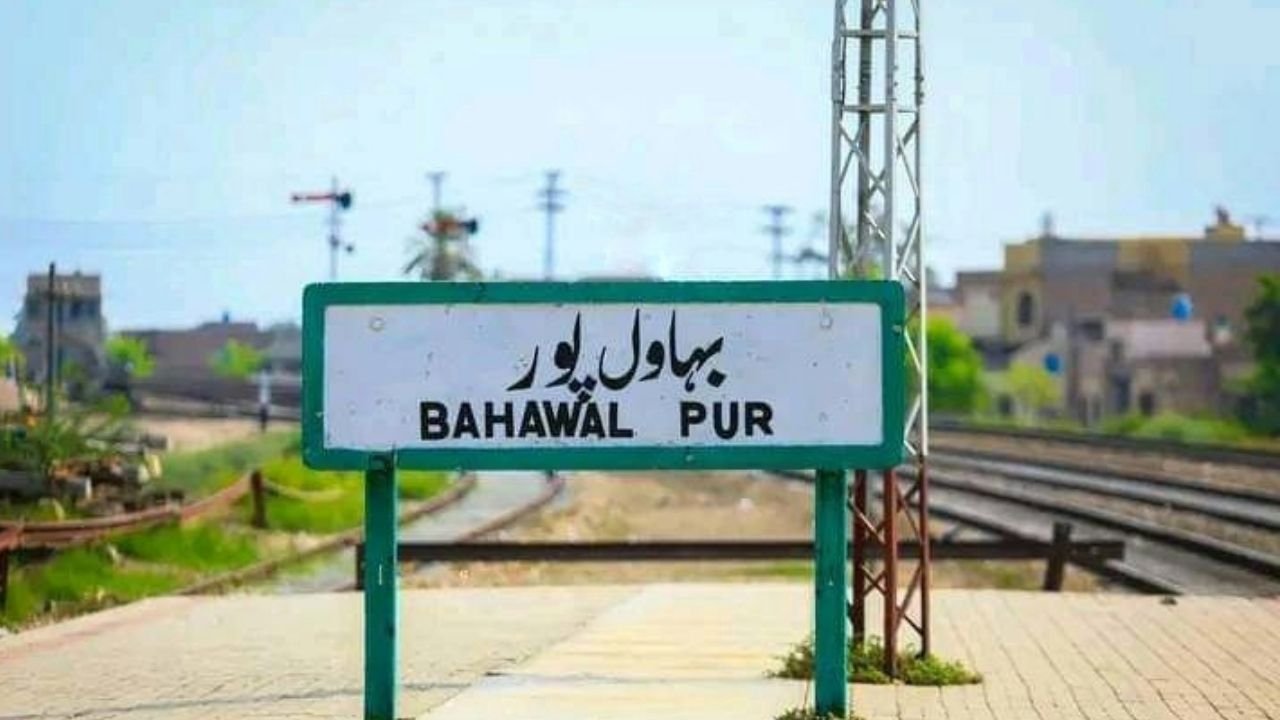
    Five people allegedly gouged out the eyes of a man during a brutal assault at a village near Bahawalpur on Monday.

    The man was identified as Sufian.

    The suspects assaulted Sufian on charges of stealing a donkey cart, allegedly gouging out his eyes.

    Sufian has completely lost vision in one eye, while the other eye has also sustained serious damage. The marks of the beating are visible on his body.

    A police team was dispatched to the scene to arrest the culprits, while the victim was admitted to the emergency ward of Bahawalpur Victoria Hospital (BVH).

    A local police spokesman stated that the motive behind the gruesome crime was a land dispute. He also confirmed that one suspect, Iqrar Hussain, has been arrested.

  • KP Minster defines climate change as garbage being converted into pacifiers for children

    KP Minster defines climate change as garbage being converted into pacifiers for children

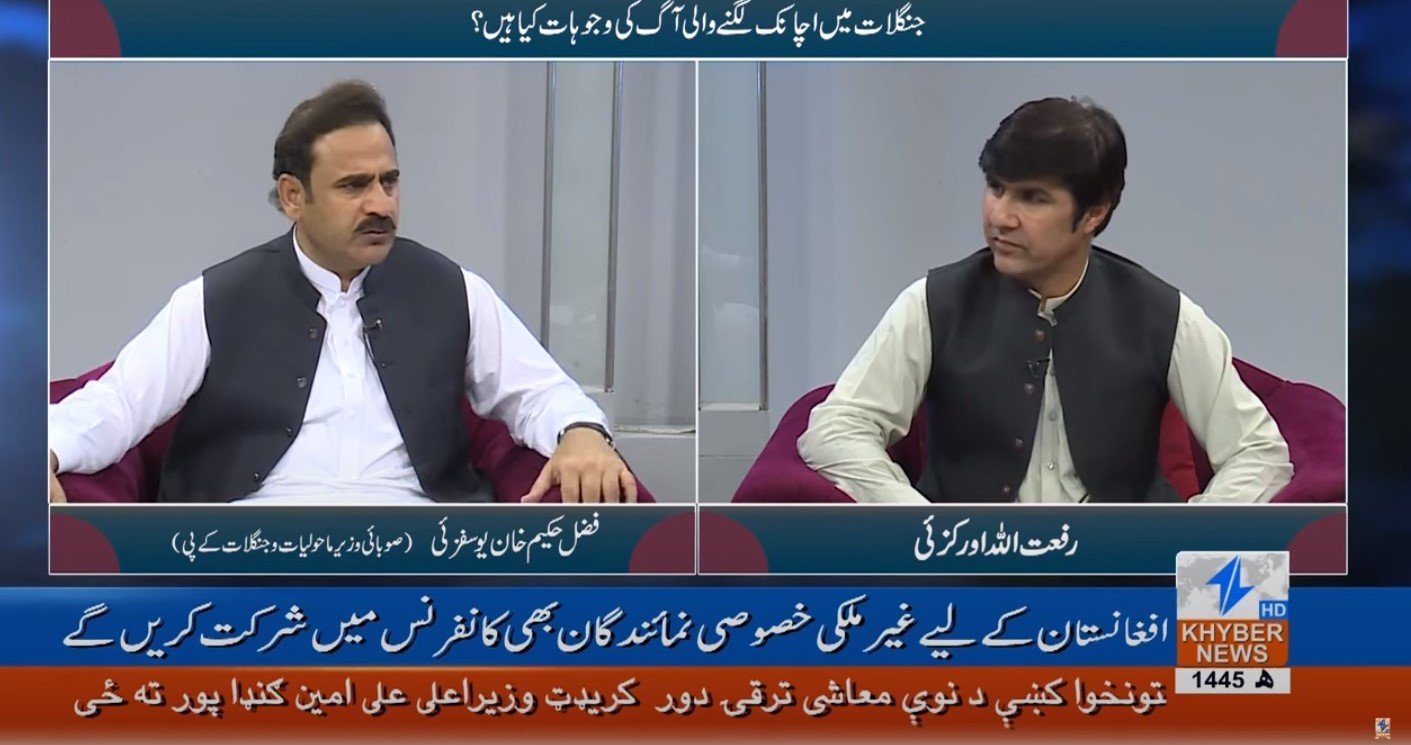
    A shocking interview of Khyber Pakhtunkhwa’s (KP) Minister for Environment and Climate Change, Fazal Hakeem Khan, has shocked netizens. The interview, conducted in Pashto, shows the minister defining climate change as “ragpickers pick up junk, hand it over to industries to make pacifiers for babies who then grow up stunted.”

    The provincial minister gave an interview to a local channel, Khyber News, with the host of the programme Rafat Ullah Orazakzai, asking him to tell what climate change is – the portfolio he’s in charge of.

    The host asked the minister to explain his thoughts further, and the climate minister did not hold back.

    “Our environment is being destroyed by China and India. I will cool down certain districts so the glaciers in the country stop melting,” he said, displaying incredible ignorance of what he is supposed to govern.

    Journalist Iftikhar Firdous tweeted about the interview saying, “In the middle when he doesn’t know, the answers he shifts the topic to Imran Khan’s imprisonment and why people love him. These are the people who run this system we expect to deliver.”