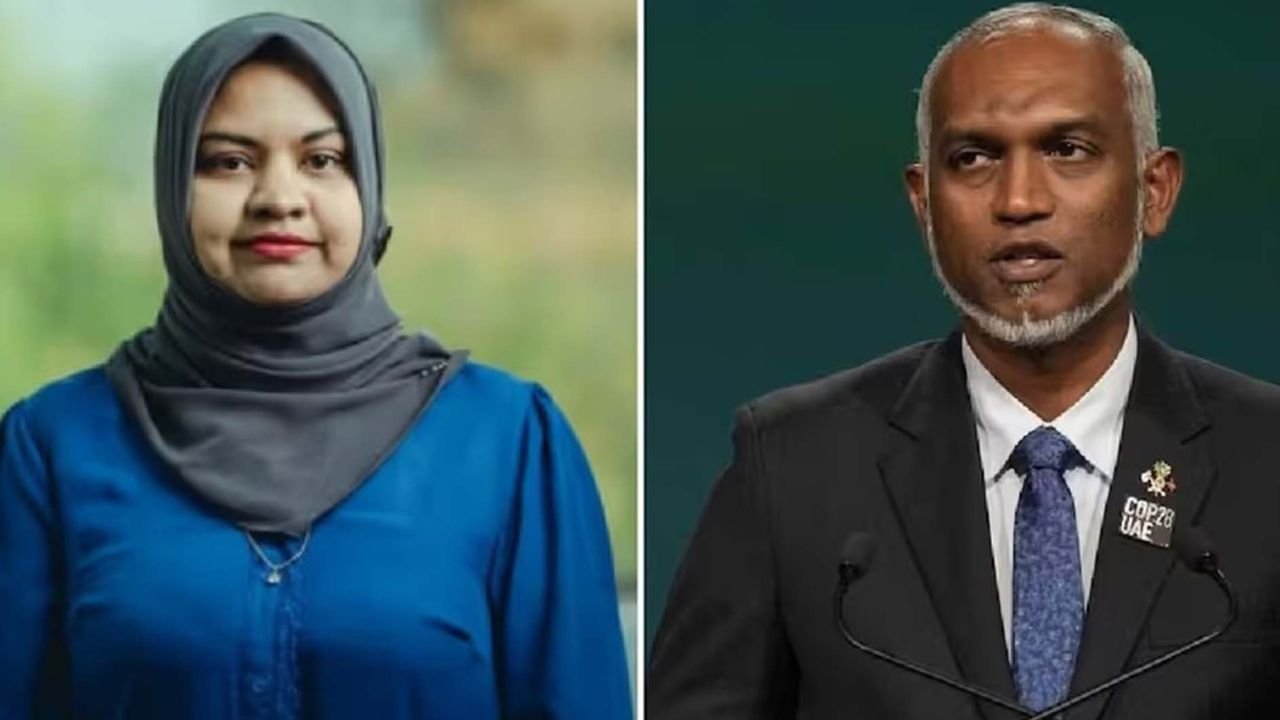
Local police in the Maldives have arrested two serving ministers for allegedly performing black magic on President Mohamed Muizzu. Ministers Shamnaz Saleem, Adam Rameez, and two others were apprehended, reported international media.
Maldives Minister Fathimath Shamnaz Ali Saleem is the state minister for Environment, Climate Change, and Energy in the Maldives. Her ex-husband, Adam Rameez, was a minister at the President’s Office. On June 23, they were arrested and remanded in custody for seven days on charges of allegedly performing black magic.
“Shamnaz, alongside two other individuals, was arrested on Sunday. All three of them have been remanded in custody for seven days. She was suspended from her post on Wednesday as per the Environment Ministry,” news portal Sun.mv reported, adding that Rameez was also suspended on Thursday.
“Rameez, during his time at Male City Council, was known as a close aide of Muizzu, who was the mayor at that time,” Sun.mv said. “However, he has been absent from the public light in the past five months or so,” the report added.
Shamnaz and Rameez worked with Muizzu as members of the Male City Council when he was mayor.
The Maldives government has yet to make an official statement on this situation.
Background
After Muizzu was elected President last year, Shamnaz resigned from the Male City Council and later transferred to the Environment Ministry. Her role is vital in a nation facing the brunt of the climate crisis.
A 62-year-old woman was stabbed to death by three neighbours in April 2023 after she was accused of conducting black magic, aalthough the police investigation found her to be innocent, according to a local Mihaaru news website.
In 2012, during a crackdown on an opposition political rally, the police accused the organizers of hurling a “cursed rooster” at officers who were raiding their offices
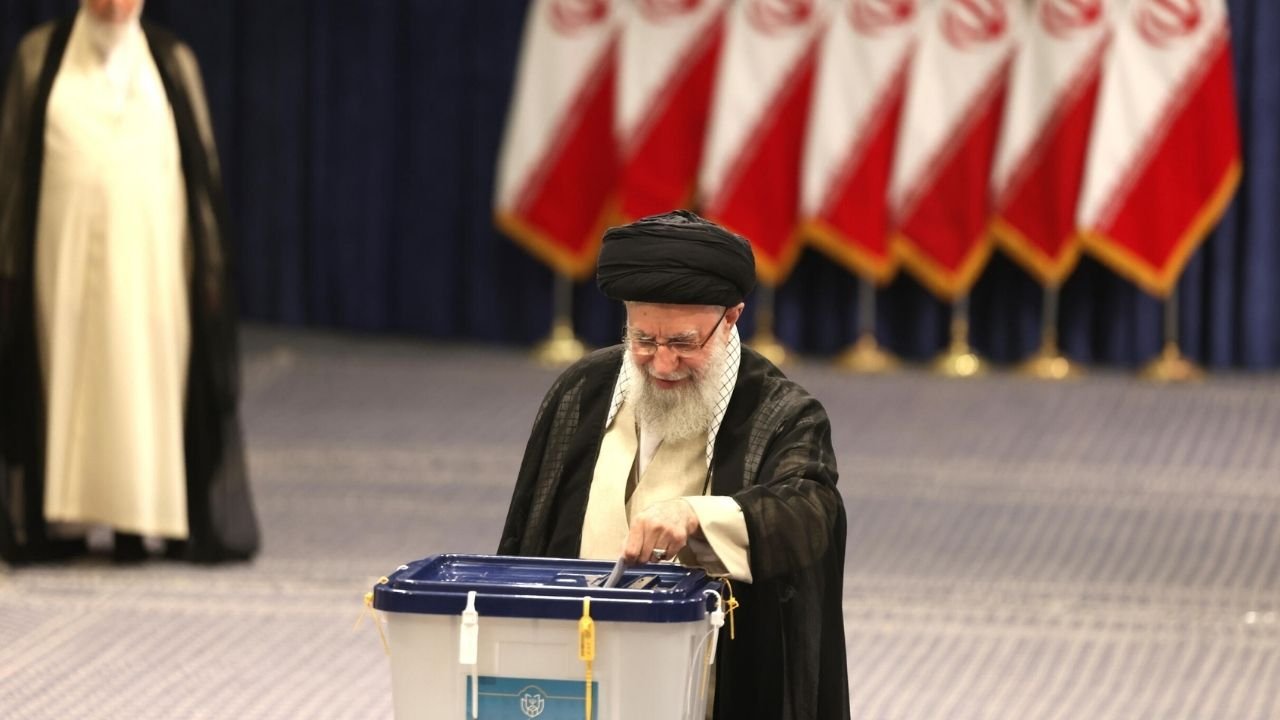
Tehran (AFP) – Polls in Iran opened on Friday for a presidential election following the death of ultraconservative president Ebrahim Raisi in a helicopter crash last month.
Ultimate political power in Iran is held by Khamenei, the supreme leader.
Khamenei insisted this week that “the most qualified candidate” must be “the one who truly believes in the principles of the Islamic Revolution” of 1979 that overthrew the US-backed monarchy.
The next president, he said, must allow Iran “to move forward without being dependent on foreign countries”.
However, Khamenei also said that Iran should not “cut its relations with the world”.
During campaign debates, Jalili criticised the moderates for having signed the 2015 nuclear accord which promised Iran sanctions relief in return for curbs on the programme.
Jalili said the deal, which the United States withdrew from in 2018 under then-president Donald Trump, “did not benefit Iran at all”.
Pezeshkian has urged efforts to salvage the agreement and lift crippling sanctions on the Iranian economy.
“Are we supposed to be eternally hostile to America, or do we aspire to resolve our problems with this country?” he asked.
The contentious issue of the compulsory head covering for women also emerged during the campaign, almost two years since a vast protest movement swept the country after the death in custody of Mahsa Amini, 22.
An Iranian Kurd, Amini had been arrested for an alleged violation of the country’s strict dress code for women.
In the televised debates, all candidates distanced themselves from the sometimes heavy-handed police arrests of women refusing to wear the hijab head covering in public.
Pourmohammadi, the only clerical candidate, said that “under no circumstances should we treat Iranian women with such cruelty.”
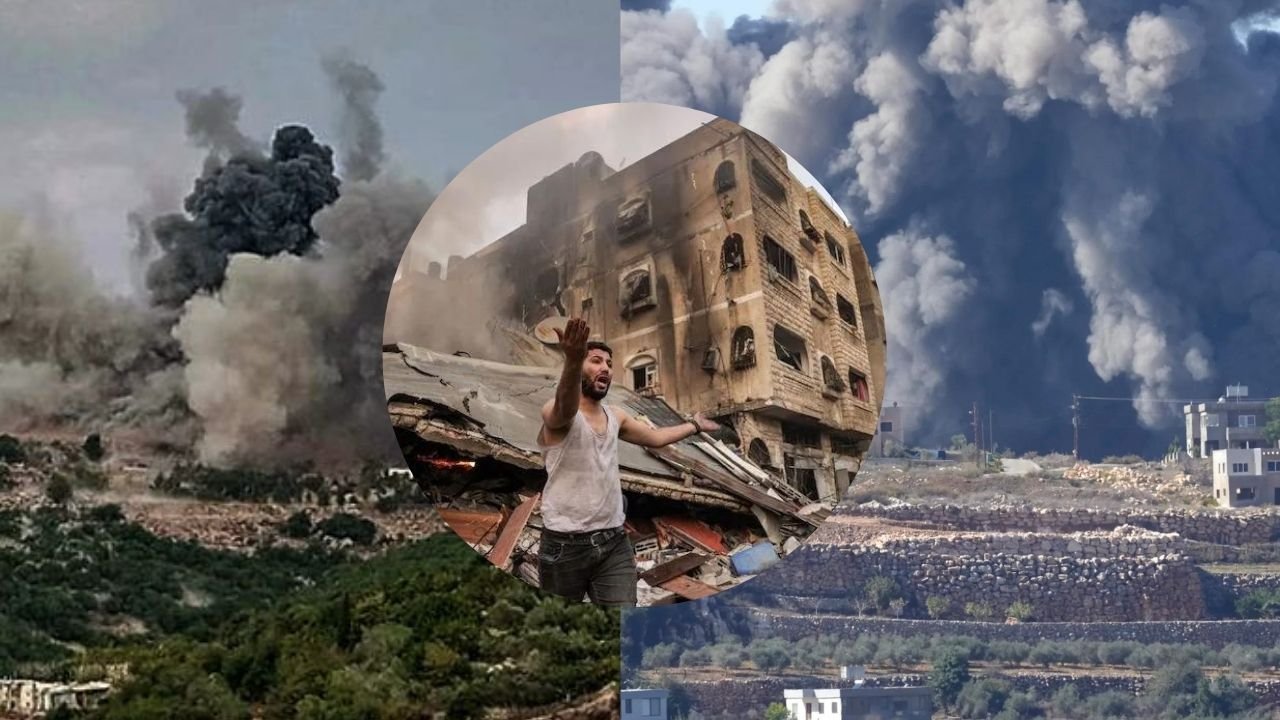
Israel launched air strikes on Gaza Thursday after warning Hezbollah, Hamas’s ally in Lebanon, to avoid a large-scale war that would send the neighbouring country “back to the Stone Age”.
Defence Minister Yoav Gallant made the comment during a visit to Washington, where he discussed the Gaza war, long-running efforts toward a truce, and ways to avoid a wider regional conflagration.
As cross-border tensions between Israel and Hezbollah have risen, Gallant stressed that “we do not want war, but we are preparing for every scenario”.
Israeli Defense Minister Yoav Gallant during his visit to Washington this weekDrew ANGERER
“Hezbollah understands very well that we can inflict massive damage in Lebanon if a war is launched,” he said of the fighter group.
Israel and Hezbollah have traded near daily cross-border fire since October 7.
But tensions have surged since Israel said this month that its Lebanon war plans are ready, sparking threats from Hezbollah that, in the event of all-out war, none of Israel would be safe.
US Defense Secretary Lloyd Austin told Gallant this week that a war with Hezbollah could have “terrible consequences for the Middle East” and urged a diplomatic solution.
A Palestinian boy sits on a war-damaged road at al-Bureij refugee camp in the central Gaza Strip on June 26, 2024Eyad BABA
UN humanitarian coordinator Martin Griffiths warned that Lebanon was “the flashpoint beyond all flashpoints” and that a full war would be “potentially apocalyptic”.
Germany has joined Canada in advising its citizens in Lebanon to leave the country, reiterating warnings first issued shortly after October 7.
In the latest clashes on Wednesday, Lebanese media reported about 10 Israeli strikes near the border, while Hezbollah claimed six attacks against Israeli military positions.
A US official said Washington was engaged in “fairly intensive conversations” with Israel, Lebanon and other actors and believed that no side sought a “major escalation”.
Meanwhile, the Gaza war at the heart of regional tensions ground on, despite comments Sunday by Israeli Prime Minister Benjamin Netanyahu that the “intense phase” of the assault on Gaza was nearing an end.
An Israeli Air Force F-16 Jet fighter aircraft flies over the border area between northern Israel and southern LebanonJACK GUEZ
Israeli air strikes overnight and early Thursday killed at least five people in Gaza City, said Gaza’s civil defence agency and Al-Mamdani hospital medics.
One person was killed when a warplane bombed a house in Beit Lahia, paramedics said.
Heavy fighting, artillery shelling and helicopter fire were reported Thursday around northern Gaza’s Shujayia market, as well as approaching Israeli ground vehicles.
Hamas’ press office in Gaza reported “a significant displacement of residents” there and said people “are fleeing to areas of refuge in Gaza City that are already overcrowded”.
An anonymous witness told AFP the situation was “very difficult and frightening in Shujayia after the arrival of occupation (Israeli) vehicles and air fire.”
“Residents are running through the streets in terror… a number of wounded and martyrs lie in the streets.”
A handout picture released by the Jordanian army shows humanitarian aid being airdropped from a military aircraft over southern Gaza on June 25, 2024-
Shelling also targeted Gaza City, sending plumes of smoke into the sky, and Israeli forces blew up several buildings in far-southern Rafah, witnesses said.
The Israeli military also said it had “attacked terrorists who were in a school complex in Khan Yunis” in the south, where the civil defence agency said it had recovered several bodies.
US officials, including Secretary of State Antony Blinken, have voiced hope a Gaza ceasefire could also lead to a reduction in hostilities on the Lebanese border.
However, months of talks towards a truce and hostage release deal have so far failed as Israel has rejected Hamas’ demands for a permanent end to fighting and full troop withdrawal.
Israel has killed at least 37,765 people, also mostly civilians, according to data from Gaza’s health ministry.
This handout picture released by the Israeli army on June 25, 2024 shows an Israeli army tracked vehicle during operations in the Gaza Strip-
The war and siege have triggered a dire humanitarian crisis, with Gaza hospitals struggling to function and food, drinking water and other essentials hard to come by.
USAID officials said Wednesday that just 1,000 of the 7,000 tonnes of aid shipped from Cyprus to Gaza had been distributed, blaming looting and security problems.
Gaza’s humanitarian crisis is intense, said US doctors and nurses returning from the territory, who reported patients in the few remaining hospitals were dying in large numbers.
Israeli tanks seen in central Gaza, gunfire heard
One of the volunteer medics, former US army combat surgeon Adam Hamawy, said he had worked in many war-torn and natural disaster-hit countries in the past 30 years.
“But the level of civilian casualties that I experienced was beyond anything I’d seen before,” the 54-year-old told AFP.
“Most of our patients were children under the age of 14,” he said. “This has nothing to do with your political views.”
The International Cricket Council (ICC) T20 World Cup 2024 final is scheduled to be held tomorrow between India and South Africa, but the day is likely to be affected by rain.
Rain is forecast in Barbados on Saturday, starting early morning.
A reserve day has been set for the finals on Sunday, but there is a possibility of rain in Barbados on the reserve day as well.
An extra time of 190 minutes has been scheduled for both the days of the final match. The official duration of the match is from 10:30 AM to 1:40 PM local time and in case of extra time, the game can continue till 4:50 PM.
Note: If the final cannot be completed, then India and South Africa will jointly be declared T20 champions.
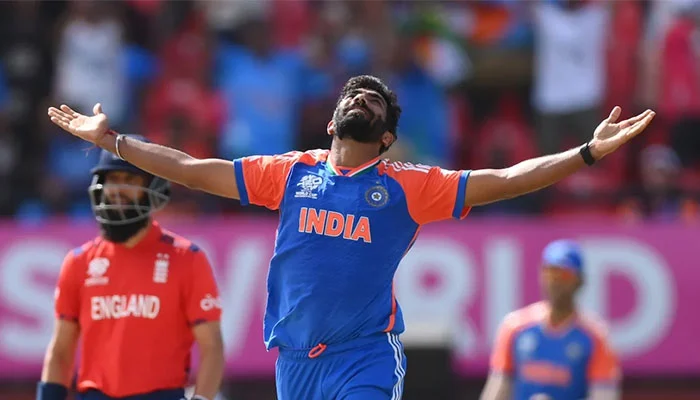
In the second semi-final of the ICC Men’s T20 World Cup, India qualified for the final after defeating the defending champion England.
England captain Jos Buttler won the toss and invited India to bat first.
First inning:
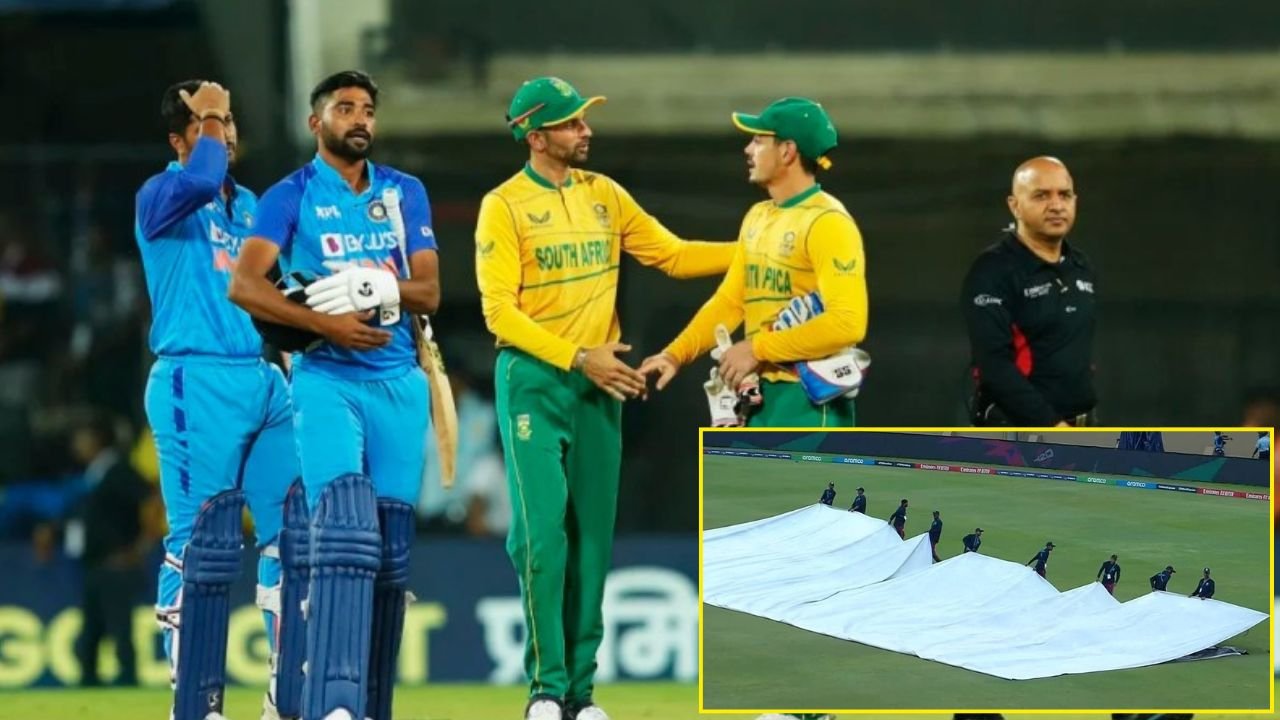
When India scored 65 runs for 2 wickets in 8 overs, the match was stopped due to rain and the pitch was covered with covers, but the match resumed after some time.
India did not have a good start against England, Virat Kohli failed to play a big innings this time too and was bowled by scoring only 9 runs.
Newcomer batsman Rishabh Pant also failed to score big and returned to the pavilion for 4 runs, while captain Rohit Sharma and Surya Kumar Yadav played responsible batting and hit attractive shots all around the ground.
However, then Rohit Sharma was dismissed for 57 and Surya Kumar Yadav scored 47 runs. Apart from this, Hardik Pandya returned for 23 runs, Shiv Dubey for zero and Akshar Patel for 10 runs while Jadeja remained not out for 17 runs.
Thus, India scored 171 runs for the loss of 7 wickets in the allotted 20 overs.
On behalf of England, Chris Jordan took 3 wickets, Adil Rashid, Topley, Archer and Sam Curran took one wicket each.
Second inning:
Harry Brooke and Jos Buttler scored 25 runs and Jofra Archer scored 21 runs and Liam Livingston scored 11 runs.
England’s Moeen Ali was dismissed for 8, Phil Salt scored 5 runs, Jonny Bairstow was dismissed for zero while Sam Curran and Adil Rashid scored 2 and 2 runs respectively.
India’s Axar Patel and Kuldeep Yadav took 3 wickets each while Jasprit Bumrah took 2 wickets.
Remittance flows to Pakistan are expected to rebound and grow by approximately 7 per cent, reaching $28 billion in 2024, with a further increase of 4 per cent to around $30 billion in 2025, according to the World Bank’s ‘Migration and Development Brief 40’ released on Wednesday.
In 2023, Pakistan experienced a 12 per cent decline in remittance inflows, dropping to $27 billion, due to weak economic conditions, including a balance of payments crisis. Despite these challenges, Pakistan emerged as one of the top five recipient countries for remittances in 2023.
“The top five recipient countries for remittances in 2023 are India with an estimated inflow of $120 billion, followed by Mexico ($66 billion), China ($50 billion), the Philippines ($39 billion), and Pakistan ($27 billion),” the report stated.
Despite the global demand for labour in countries like the USA and those within the OECD, Pakistan’s internal economic struggles caused remittances to drop.
The World Bank noted that many remittances were likely sent through informal channels in 2023, due to robust labour market conditions in destination countries.
“Recent economic crises in Pakistan highlighted that delays in reforms not only deterred Foreign Direct Investment (FDI) but also negatively impacted formal remittance flows,” the report added.
Home remittances play a crucial role in supporting Pakistan’s external account, stimulating economic activity, and supplementing the incomes of remittance-dependent households.
During the first 11 months of FY24, workers’ remittances recorded an inflow of $27.093 billion, a 7.7 per cent increase compared to $25.146 billion during the same period in FY23.
The report also revealed that with a share of 8 per cent of GDP, Sri Lanka and Pakistan are tied as the second most remittance-dependent countries in South Asia. Overall, remittances to South Asia grew by 5.2 per cent in 2023, reaching $186 billion, though this growth rate slowed from 12 per cent in 2022.
This growth was primarily driven by India, which saw a 7.5 per cent increase to $120 billion, supported by strong labour markets in the United States and Europe.
The slowdown was partly due to reduced outflows from GCC countries, impacted by declining oil prices and production cuts. Remittance flows to South Asia are projected to grow by 4.2 per cent in 2024.
The World Bank highlighted that the economic conditions in South Asia’s largest recipients—India, Pakistan, and Bangladesh, which collectively receive 91 per cent of the region’s remittances—will be crucial in driving remittance growth.
However, a weak economic recovery in Pakistan and Bangladesh poses a significant risk, potentially leading migrants to favour informal money transfer channels, thus reducing formal remittance growth.
Foreign exchange reserves held by the State Bank of Pakistan (SBP) fell by $239 million, reaching $8.896 billion as of June 21, according to data released by the central bank on Thursday.
The total liquid foreign reserves held by Pakistan stood at $14.207 billion, with net foreign reserves held by commercial banks at $5.311 billion. The central bank attributed the decline to external debt repayments.
“During the week ended on June 21, 2024, SBP reserves decreased by $239 million to $8.896 billion due to external debt repayments,” the SBP stated.
This comes after a $31 million increase in the central bank’s reserves the previous week. In May, the SBP’s reserves had surged by $1.114 billion, surpassing $9 billion for the first time in nearly two years.
This increase was primarily due to the disbursement of the last $1.1 billion tranche from the International Monetary Fund (IMF) under its $3 billion Stand-By Arrangement.
The fluctuating reserves highlight the ongoing financial challenges faced by Pakistan, particularly in managing its external debt obligations and maintaining a stable economic outlook.
Aamir Khan, Salman Khan and Shah Rukh Khan may be the biggest stars in Bollywood but which one of them is the most professional when it comes to work ethics?
Ace actor Nawaz Uddin Siddiqui has a fair idea of what working with the Khans is like. The three Khans have worked together on several films with Nawazuddin Siddiqui. In a recent interview with ‘Let’s Talk’, he discussed the qualities that make them superstars.
“Salman Khan is a fun-loving person, Shah Rukh Khan works very hard, and Aamir Khan is a perfectionist”. I never felt jealous of the three Khans’ success. I aspire to be a good actor and never wanted to be a superstar,” he added. When asked which of the three Khans is the best, ge refused to name a favourite, instead praising each one’s qualities.
Nawazuddin Siddiqui said that “Shah Rukh Khan is a very enthusiastic person who works tirelessly until the task is complete. His incredible hard work taught me humility.” He also said that “Aamir Khan is a perfectionist who has given us exceptional cinema, and his filmmaking is vast and diverse.”
Nawazuddin has worked with Salman Khan in films like ‘Bajrangi Bhaijaan’ and ‘Kick’, with Shah Rukh Khan in ‘Raees’, and with Aamir Khan in ‘Talash’ and ‘Sarfrosh.’
The price of gold in Pakistan saw an uptick on Thursday, with 24-karat gold being sold at Rs241,000 per tola, marking an increase of Rs400 per tola.
The Karachi Sarafa Association reported that the price of 24-karat gold per 10 grammes rose to Rs206,619, reflecting an increase of Rs343.
The price of 22-karat gold also experienced an increase, being quoted at Rs189,400 per 10 grammes.
In contrast, silver prices in the domestic market remained stable. The price of 24-karat silver stood unchanged at Rs2,850 per tola and Rs2,443 per 10 grammes.
On the international front, spot gold traded near $2,304 an ounce, registering an increase of $5.6 or 0.24 per cent from the previous session.
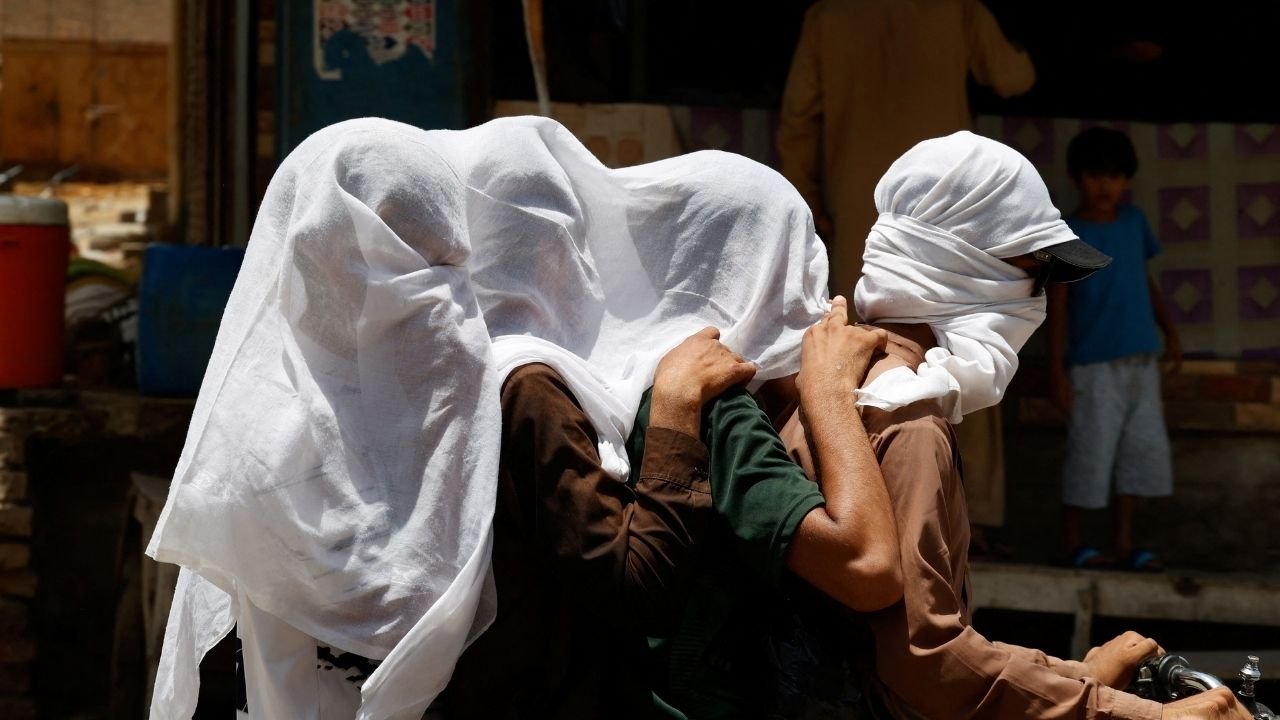
Karachi Commissioner Syed Hasan Naqvi has denied the reported death toll of the heatwave that has engulfed the coastal city, asserting that the actual number of deaths is lower than claimed and remains unconfirmed by officials.
Speaking at a press briefing on Wednesday, the commissioner disclosed that ten people had succumbed to heatstroke over the past two days, with approximately 1,700 cases of heatstroke reported across the city.
Providing specifics on recent fatalities, Naqvi stated that eight deaths occurred on Monday and two on Tuesday.
Meanwhile, the Edhi Foundation estimated around 568 deaths from heatwave-related medical emergencies, and the Human Rights Commission of Pakistan voiced concerns on the impact of the extreme weather and its extent.
It is reportedly the first time since 2015 that temperatures in Karachi reached 42°C in June, with “feels like” temperatures peaking at 51°C.
Addressing the unverified reporters, the commissioner urged welfare organisations to verify death figures with government authorities before releasing them to the public.
Naqvi also instructed Karachi-Electric (KE) to refrain from load shedding between 12am and 6am during the heatwave, which typically lasts two to three days.
The Karachi administration has established 124 heatwave centres equipped with water facilities as well as specialised wards in hospitals to provide medical aid to those affected by heatwave.