Blog

  • PIA’s flight to Canada lands back in Karachi after four hours

    PIA’s flight to Canada lands back in Karachi after four hours

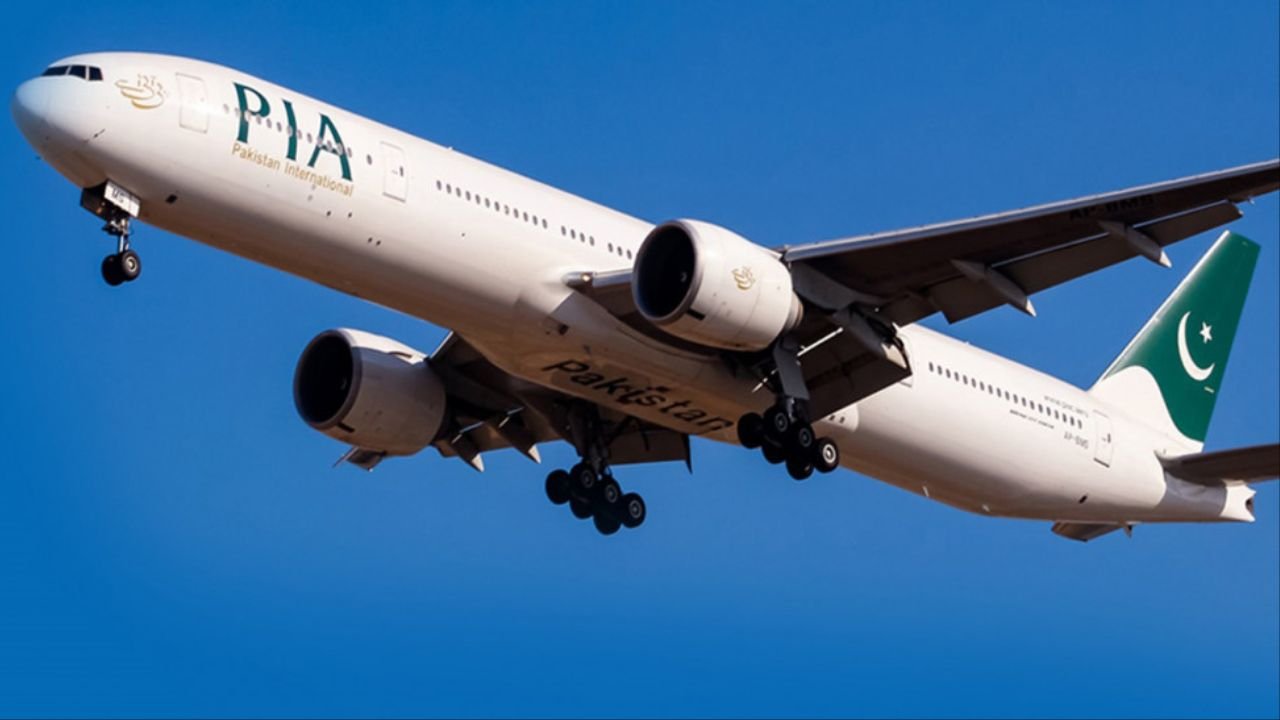
    A Pakistan International Airlines (PIA) flight from Islamabad to Toronto was diverted back to Karachi on Friday after a technical fault was noticed by the captain only four hours into the journey.

    The Boeing 777 with 268 passengers onboard was scheduled to take off from Islamabad Inter­national Airport at 2:15 pm on Friday, but departed an hour late. When flying over Russia the pilot noticed a technical issue and decided to head back.

    PIA spokesperson Abdullah Hafeez Khan said that PIA flight PK-781 was diverted back to Karachi after it developed a technical fault, reported Dawn.
    He said that after the issue was detected, the plane landed in Karachi around 1 am on Saturday.

    The spokesperson claimed that the technical problem with the aircraft was minor, but the captain preferred to return back, rather than to continue the long flight over the Atlantic.

    The decision to bring the aircraft back to Karachi was made due to better arrangements at the engineering base and availability of spare parts, he said.

    Arrangements to receive the flight at Karachi Airport were said to be in place and the passengers were accommodated at the airport hotel.
    The flight is now scheduled to depart for Toronto at 1pm today (Saturday).

    The aircraft, bearing registration number AP-BGZ, had previously reported the same fault, according to Dawn.

  • Writing letter to army chief in nation’s interest, says Imran Khan

    Writing letter to army chief in nation’s interest, says Imran Khan

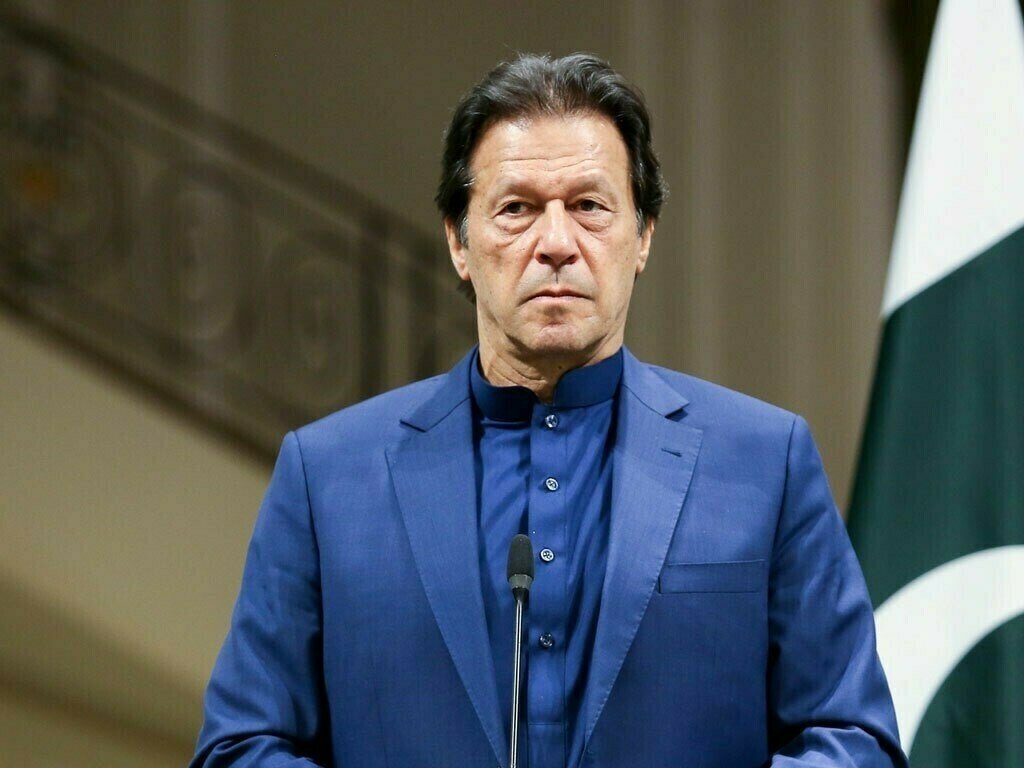
    Pakistan Tehreek-e-Insaf (PTI) founder Imran Khan said on Friday that he will write a letter to Chief of Army Staff (COAS) General Syed Asim Munir not for his personal benefits but for the sake of the country.

    Talking to journalists at Adiala jail during the hearing of the £190 million case, Imran praised Chief Justice of Pakistan (CJP) Qazi Faez Isa, calling him a courageous person.

    Khan also questioned why the petitions of PTI workers regarding May 9 are not being heard.

  • Taxpayers have paid over Rs 927 million on Parliament’s renovation

    Taxpayers have paid over Rs 927 million on Parliament’s renovation

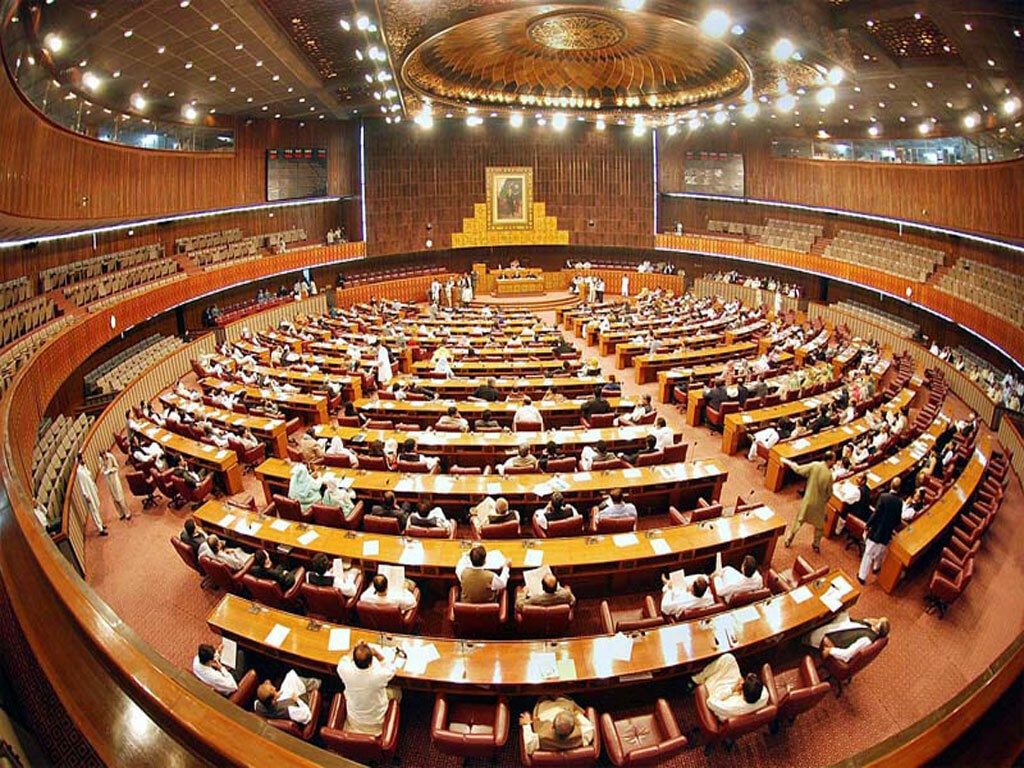
    The Interior Ministry on Thursday revealed that over Rs 927 million have been spent on the makeover of the National Parliament infrastructure over the past five years, ARY News reported.

    According to the report, the interior ministry said that Rs 108 million was spent on renovation in 2019-20.

    Over Rs 171 million in 2020-21, Rs 286 million in 2021-22, Rs 302 million in 2022-23, and Rs 60 million was spent on the renovation in 2023-24.

    The National Parliament is made up of the Senate (Upper House) and the National Assembly (Lower House).

    Last year, ex-Senate Chairman Sadiq Sanjrani also constituted a parliamentary committee to rename the building to something that aligns with Pakistan’s cultural heritage.

  • ‘Humein bhi Imran Khan wali luxuries chahiye’; prisoners demand equal treatment

    ‘Humein bhi Imran Khan wali luxuries chahiye’; prisoners demand equal treatment

    In a new development, prisoners across the province of Punjab have demanded the same special facilities provided to founder Pakistan Tehreek-e-Insaf (PTI) Imran Khan in Adiala Jail.

    The inmates penned a letter to Punjab prisons inspector general expressing their desire to be given the same amenities as Imran Khan.

    In the letter, concerns were expressed about the “open violation” of the Prison Rules 1978 regarding the services available to the former Prime Minister.

    Khan is currently incarcerated in a better-class (B-class) facilities prison at Adiala Jail under high security due to his status of being a former ruler of the country.

    Geo News reported that there is a dedicated kitchen for preparing Khan’s meals and he occupies two of the seven special cells, typically accommodating 35 prisoners. The remaining five of the cells remain vacant for security reasons.

    The details, stated in a report submitted to the Lahore High Court by a jail superintendent last month, also include that Khan uses a yard equipped with exercise machines and other amenities for his daily walks and recreational activities.

  • Pakistan’s Nida Dar becomes highest wicket taker in T20 Internationals

    Pakistan’s Nida Dar becomes highest wicket taker in T20 Internationals

    Pakistan’s women cricket team captain Nida Dar has become the highest wicket-taker in Women’s T20 Internationals with 137 wickets.

    After taking the 137th wicket, Nida Dar sailed past Australia’s Megan Schutt’s record of 136 wickets.

    England defeated Pakistanby 65 runs in the second T20 International and got a 2-0 lead in the three match series.

  • German Embassy issues student visa application schedule

    German Embassy issues student visa application schedule

    The schedule of applications for student visas has been announced by the German Embassy in Pakistan.

    Student visa registration for the winter semester 2024-25 starts from May 21.

    According to the embassy, appointments for students with an admission letter for the 2024 summer semester will not be offered by the end of MA, while any admission letter for the 2024 summer semester after May 15 will automatically be cancelled.

    Affected students will be notified via email.

    The move is being taken to streamline the visa process and address the high volume of applications received by the embassy.

    Preference will be given to applicants and PhD students with scholarships from German institutions, while there is a special online registration category for students who have achieved a CGPA of 3.7 or above.

    Applicants must prepare a comprehensive set of documents for their visa application, including various forms, copies of passports and IDs, educational records, proof of financial means and health insurance.

  • My father was bombed several times, revealed Shaheen Afridi

    My father was bombed several times, revealed Shaheen Afridi

    Star bowler Shaheen Shah Afridi has surprised fans by revealing that his father was bombed two or three times.

    Talking on the PCB podcast, Shaheen revealed, “My father was in the police and gave 25 years to the department. He was bombed two, three times and in one attack he was seriously injured and it was a very difficult time for our family, our house was also targeted.”

    The speedster also talked about his childhood and relationship with his brothers said, “I was fond of cricket since childhood. There were matches with other schools. My brother was fond of studies so he would sit in exams in my place while I played cricket.”

    He recalled that he was the youngest in the house, so he got used to getting scolded by his elder brothers. “My second-ranked brothers used to scold and could not even say anything in front of the elders, so they used to listen to the scolding silently. My father supported him. I also had the advantage of being younger because whenever my elder brothers scolded me, my parents supported me and stopped them from scolding me.”

    Shaheen is the part of national cricket team squad for the England series starting from May 22 and T20 World Cup which is scheduled in America and West Indies from June 1 to June 29.

  • ‘Danger behind the beauty’: more solar storms could be heading our way

    ‘Danger behind the beauty’: more solar storms could be heading our way

    Tourists normally have to pay big money and brave cold climates for a chance to see an aurora, but last weekend many people around the world simply had to look up to see these colourful displays dance across the sky.

    Usually banished to the poles of Earth, the auroras strayed as far as Mexico, southern Europe and South Africa on the evening of May 10, delighting skygazers and filling social media with images of exuberant pinks, greens and purples.

    But for those charged with protecting Earth from powerful solar storms such as the one that caused the auroras, a threat lurks beneath the stunning colours.

    “We need to understand that behind this beauty, there is danger,” Quentin Verspieren, the European Space Agency’s space safety programme coordinator, told AFP.

    Mike Bettwy of the US Space Weather Prediction Center said that “we’re focused on the more sinister potential impacts” of solar storms, such as taking out power grids and satellites, or exposing astronauts to dangerous levels of radiation.

    The latest auroras were caused by the most powerful geomagnetic storm since the “Halloween Storms” of October 2003, which sparked blackouts in Sweden and damaged power infrastructure in South Africa.

    There appears to have been less damage from the latest solar storms, though it often takes weeks for satellite companies to reveal problems, Bettwy said.

    There were reports that some self-driving farm tractors in the United States stopped in their tracks when their GPS guidance systems went out due to the storm, he told AFP.

    ‘Definitely not over’

    These strange effects are caused by massive explosions on the surface of the Sun that shoot out plasma, radiation and even magnetic fields at incredibly fast speeds born on the solar wind.

    The recent activity has come from a sunspot cluster 17 times the size of Earth which has continued raging over the week. On Tuesday it blasted out the strongest solar flare seen in years.

    The sunspot has been turning towards the edge of the Sun’s disc, so activity is expected to die down in the short term as its outbursts aim away from our planet.

    But in roughly two weeks the sunspot will swing back around, again turning its gaze towards Earth.

    In the meantime, another sunspot is “coming into view right now” which could trigger “major activity in the coming days”, ESA space weather service coordinator Alexi Glover told AFP.

    So the solar activity is “definitely not over”, she added.

    It is difficult to predict how violent these sunspots could be — or whether they could spark further auroras.

    But solar activity is only just approaching the peak of its roughly 11-year cycle, so the odds of another major storm are highest “between now and the end of next year”, Bettwy said.

    What threat do solar storms pose?

    Geomagnetic storms such as the recent one create a magnetic charge of voltage and current, “essentially overloading” things like satellites and power grids, according to Bettwy.

    The most famous example came in 1859 during the worst solar storm in recorded history, called the Carrington Event.

    As well as stunning auroras, the storm caused sparks to fly off of telegraph stations. The charge that originated from the Sun was so strong that some telegraphs worked without being plugged into a power source.

    So what would happen if such a powerful geomagnetic storm struck Earth again?

    Bettwy said most countries have improved their power grids, which should prevent prolonged outages like those that hit Sweden in 2003 or Canada in 1989.

    Still, he suggested people have an emergency kit in case electricity is knocked out for a day or two. Fresh water might also help in case filtration plants go offline.

    Astronauts are particularly at risk from radiation during extreme solar activity. Those on the International Space Station usually take the best shelter they can when a bad storm is expected.

    Bettwy said a massive solar storm could expose astronauts to an “unhealthy dose” of radiation, but he did not think it would be lethal.

    Emphasising that he did not want to “instil fear”, Bettwy added that radiation can also potentially “get through the fuselage” of planes flying near the north pole.

    Airlines sometimes change routes during extreme solar storms to avoid this happening, he added.

    Several upcoming missions are expected to improve forecasting of the Sun’s intense and unpredictable weather, aiming to give Earth more time to prepare.

    If the ESA’s Vigil mission, planned to launch in 2031, was in place today, it would give us far more information about the currently rotating sunspot, Glover said.

    dl/tw/sco

    © Agence France-Presse
  • Ali Muhammad Khan will move IHC against Adiala jail officials

    Ali Muhammad Khan will move IHC against Adiala jail officials

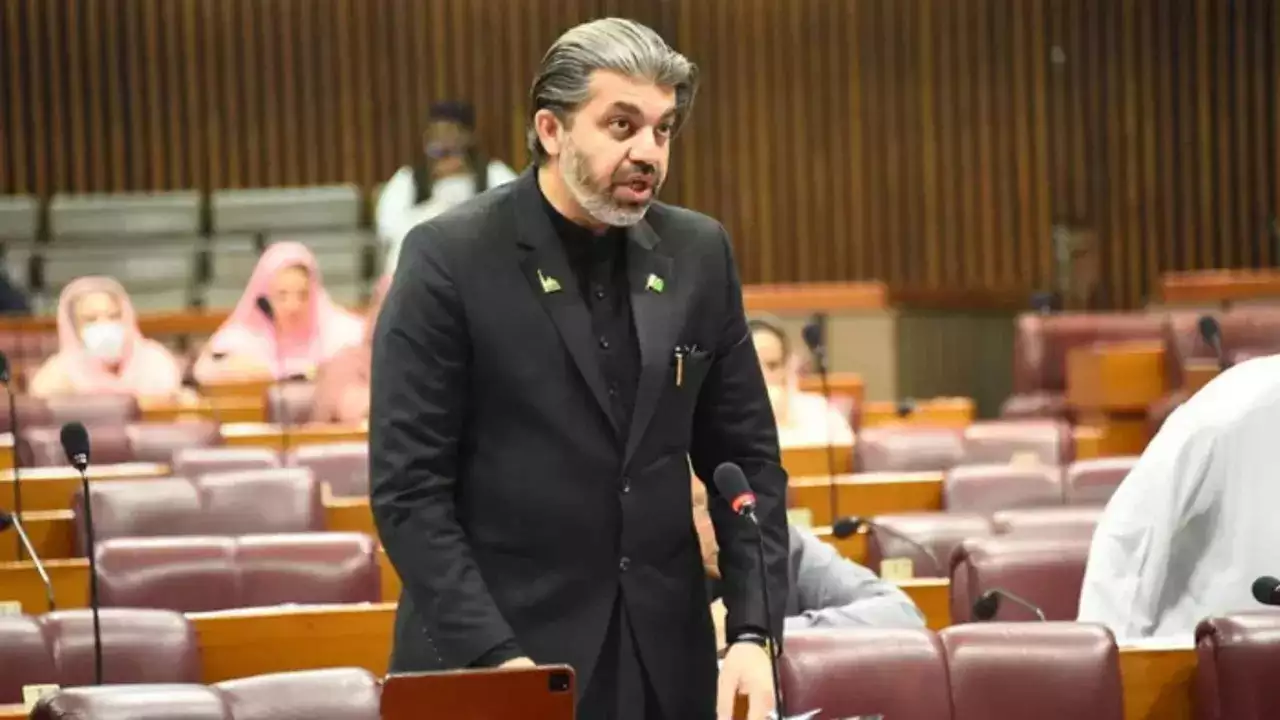
    Pakistan Tehreek-e-Insaf (PTI) leader Ali Muhammad Khan said on Friday that he will file a plea against the Adiala jail administration in the Islamabad High Court (IHC) for not allowing him to meet incarcerated former Prime Minister Imran Khan.

    “I am going to the high court against the jail administration. We were not allowed to meet Imran Khan during the previous appearance, and we are not allowed to meet now,” the politician said, expressing displeasure.

    The senior PTI leader stated while talking to journalists outside Adiala jail that he will file a contempt of court petition against Adiala jail officials.

    He recalled that when he was imprisoned in Adiala, jail officials treated him badly. He also said that they are doing the same thing again by not allowing him to meet former Prime Minister Imran Khan.

    However, the politician expressed confidence in the country’s security agencies to ensure Khan’s safety during his appearances in cases at the Supreme Court.

  • Weekly inflation eases as tomato and onion prices drop

    Weekly inflation eases as tomato and onion prices drop

    According to data released by the Pakistan Bureau of Statistics (PBS), the SPI for the week ending on May 16, 2024, showed a decline of -1.06 per cent compared to the previous week. However, in a year-on-year comparison, the SPI surged by 21.22 per cent compared to the same period last year.

    The Combined Index, a key metric monitored by economists and consumers alike, stood at 309.25, indicating a decrease from 312.56 recorded a week earlier. This contrasts with the index of 255.12 registered during the corresponding period last year.

    Among the 51 items tracked, prices exhibited mixed trends, with 39.22 per cent of items experiencing an increase, 31.37 per cent witnessing a decrease, and 29.41 per cent remaining stable.

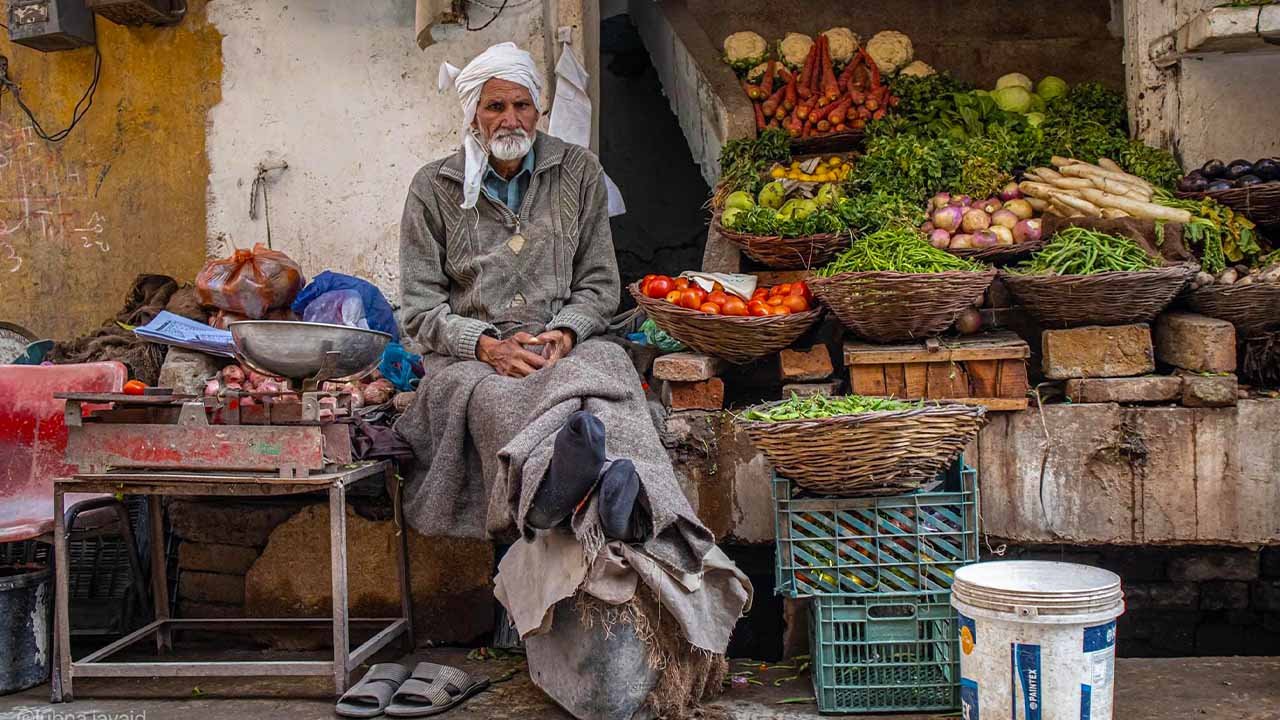
    Notable decreases were observed in the prices of tomatoes (31.18 per cent), onions (21.84 per cent), garlic (7.76 per cent), wheat (5.48 per cent), and petrol (5.32 per cent). Conversely, significant increases were noted in the prices of cooked daal (1.96 per cent), shirting (1.74 per cent), potatoes (1.46 per cent), beef (1.11 per cent), and mutton (1.04 per cent).

    Analysis of the weekly SPI percentage change across income groups revealed a uniform decrease, ranging between -1.02 per cent and -1.17 per cent. The lowest income group experienced the most significant weekly fall at 1.17 per cent, while the highest income group recorded a decline of 1.06 per cent.

    On an annual basis, SPI trends across income segments indicated increases ranging between 14.54 per cent and 24.58 per cent. The lowest income group saw a 14.54 per cent increase in the yearly SPI, while the highest income group experienced a 19.07 per cent rise.