Blog

  • Which dashing bowler does Natasha Ali want as her hero?

    Natasha Ali, actor and contestant on ‘Tamasha 2’, expressed her desire to have fast bowling sensation Haris Rauf as the main actor and Babar Azam in the role of her brother in a movie.

    During a talk show on ‘Show Time’ she was joined by veteran actor Babar Ali. Natasha chose the two cricketers from Pakistan’s national cricket team for her dream cast in a film. “I would like to cast Haris Rauf as my hero, whereas, for his brother, I would choose Babar Azam,” she remarked, leaving the live audience in splits.

    Natasha then said, “I think Muhammad Rizwan would be a good villain. Maybe it’s his face, or maybe just how he looks in pictures. But remember, villains don’t always have to look mean. There are handsome villains too!”

    “Honestly, I don’t know a lot about him, but I think Iftikhar Ahmed would be good for the father’s role,” Natasha said. “And Shaheen Afridi could play the funny character in the film,” she added.

    Meanwhile, when Babar Ali was asked about his picks for the upcoming World Cup, he chose Babar Azam, Hassan Ali, Shaheen Shah Afridi, Imam ul Haq, Haris Rauf, Muhammad Rizwan, Shadab Khan, Saud Shakeel, Muhammad Wasim, and Muhammad Haris.

  • Why did Juggan Kazim kiss ASP Shehrbano’s hand?

    Why did Juggan Kazim kiss ASP Shehrbano’s hand?

    Juggun Kazim was invited as a guest in ‘showtime with Ramiz Raja’ where the host, Hina Niazi, asked her about inviting ASP Sherbano to her show.
    Juggun responded, “Wait a minute, you’ve invited me too, so here I am. I have a habit of loving everyone; I even kiss on the forehead and especially with girls, my habit is to hug and love them. She’s a 24 or 25-year-old girl, my stepdaughter is 26, so she’s the same age as my children. And she has done something that even men three times bigger in size couldn’t do. So, I must have hugged such children 50,000 times, whether they belong to any profession.”

    On 01 March, 2024, the ASP rescued a woman from a frenzied mob in Lahore’s Ichra market. Kazim defended her actions, emphasizing that they were a gesture of love and support for Shehrbano during a trying time.

    ASP Shehrbano Naqvi appeared in Kazim’s morning show on Pakistan Television Network where the program host kissed her hand.
    Naqvi is being feted continuously since she personally saved a woman from a charged mob in Ichra Bazar, Lahore, at risk to her own safety.

  • Greta Thunberg shows up at protest to denounce Israel’s participation in Eurovision

    Greta Thunberg shows up at protest to denounce Israel’s participation in Eurovision

    Continuing with her support for the Palestinian cause, climate activist Greta Thunberg joined thousands of demonstrators marching through the streets of Malmo in Sweden, on Thursday, spamming Israel’s participation in Eurovision.

    This year’s Eurovision song contest began on Tuesday, in the southern Swedish city of Malmo. The grand finale is scheduled for Saturday, but the war in Gaza is ‘looming’ over the festivities.

    “I am a Eurovision fan and it breaks my heart but I’m boycotting. I can’t have fun knowing that Israel is there participating when all those kids are dying. I think it’s just wrong” 30-year-old protester Hilda (who did not want to provide her surname), told members of the press. Israel’s military offensive has killed at least 34,904 people in Gaza, mostly women and children.

    In 2022, Russia’s state broadcaster was excluded from the European Broadcasting Union (which oversees Eurovision), in the wake of the war in Ukraine. “I feel like if they can remove Russia why can they not do it to Israel?” 29-year-old, Margo Mustafa said in an exchange with reporters’.
    “The people are here for Eurovision trying to celebrate. There’s nothing to celebrate. It’s an ongoing war” she added.

    An excess of 5,000 people gathered on Thursday afternoon, in Malmo’s main square, according to an estimate. Signs in the crowd read: “Liberate Palestine”, “EUR legitimises genocide” and “colonialism cannot be washed in pink.”

    Israel’s entrant, “Hurricane” by singer Eden Golan, is set to compete in Thursday’s semi-final. It has already been partially re-written and given a new title, after Eurovision organisers deemed the original version to be ‘too political’.

    Protester Cecilia Brudell, told the press “At six and nine, my children are now at an age where they want to watch Eurovision but this year we are completely boycotting it”.

    Since the new year, numerous petitions have demanded Israel’s exclusion from the 68th edition of the annual music competition. At the end of March, contestants from nine countries, including Swiss favourite Nemo, called for a ‘lasting ceasefire’.

  • Further reduction in solar panel prices

    Further reduction in solar panel prices

    Dealers of solar panels have revealed that the price per watt has come down to 40 rupees or below, with the average rates of panels of various types and brands reduced to 37 rupees.

    The rates have reportedly crashed due to oversupply, coming down by 30 per cent in just six months.

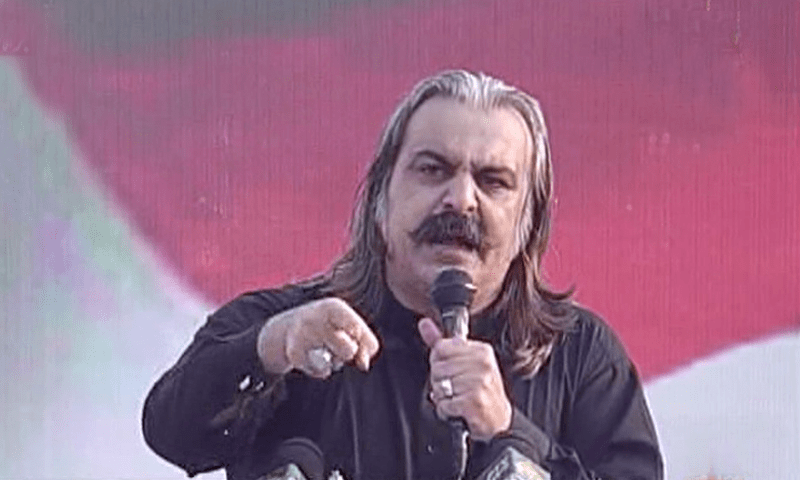
  • Governor rule will not be tolerated in Khyber Pakhtunkhwa, says Gandapur

    Governor rule will not be tolerated in Khyber Pakhtunkhwa, says Gandapur

    Khyber Pakhtunkhwa (KP) chief minister Ali Amin Gandapur said on Thursday that the KP government will resist any efforts to impose governor rule in the province.

    He condemned the May 9 incidents and said that those who are responsible for violent protests should be held accountable.

    Gandapur emphasised that, despite facing eight FIRs in eight different districts, none of the allegations have been proven to be true.

    Gandapur also warned undemocratic forces who want to undermine the democratic process.

    “I will not remain silent for the chief minister’s seat, and if governor rule is imposed, we will take over the governor’s house,” Gandapur said.

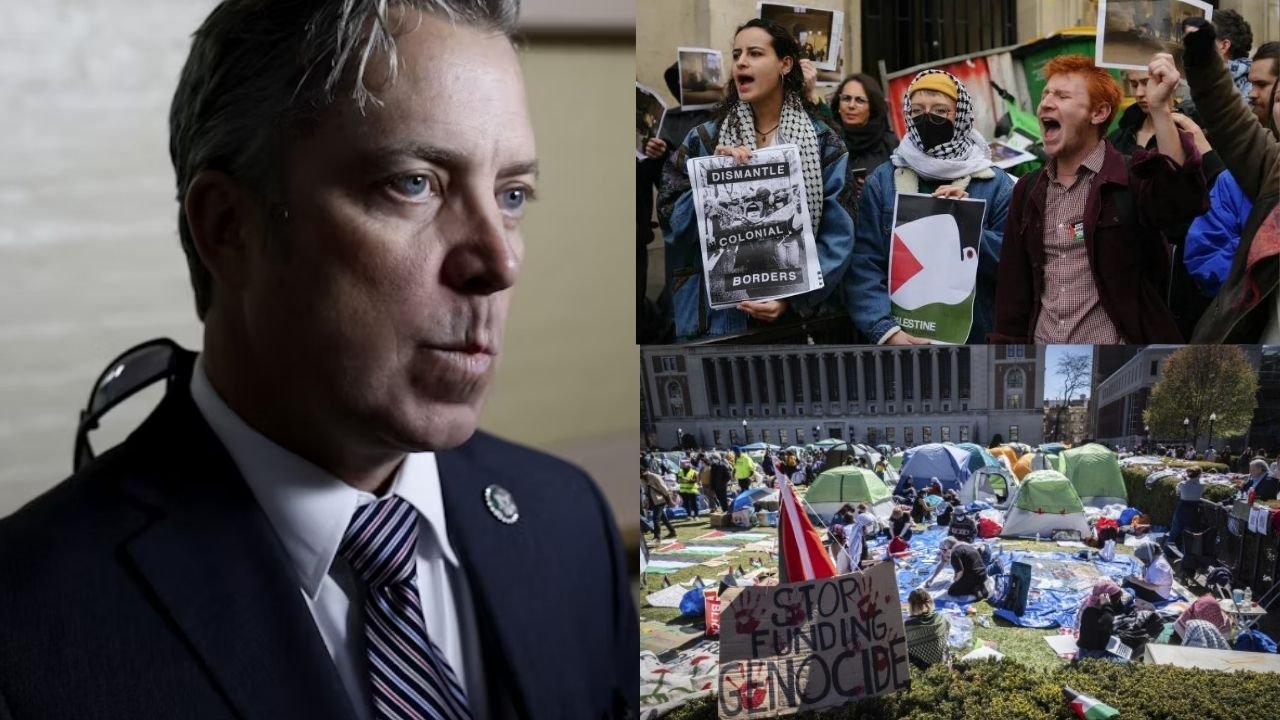
  • Congressman Andy Ogles introduces bill to send protesting students to Gaza

    Congressman Andy Ogles introduces bill to send protesting students to Gaza

    Republican lawmaker Andy Ogles has decided that the violent detention of college students participating in Gaza solidarity protests isn’t enough of a punishment. Instead, he believes the only way to encourage the students to stop using their right to protest is to ship them off to Gaza.

    Ogles, a Tennessee Representative, introduced a new bill into the House proposing that students who were arrested for protesting against Israel’s war on Gaza should be sent abroad to “provide community service” for a minimum of six months in the war-torn strip.

    He proposed this bill on Wednesday.

    https://www.yahoo.com/news/college-anti-israel-agitators-could-173040790.html?

    “Any person convicted of unlawful activity on the campus of an institution of higher education beginning on and after October 7, shall be assigned to Gaza for the purpose of providing community service… for a period not fewer than six months,” the bill reads.

    It is not currently clear what the exact parameters of the proposed community service would be, though the bill points to the term’s definition in U.S. Code, which are identified by universities “through formal or informal consultation with local nonprofit, governmental, and community-based organizations.”

    Even though it’s unlikely to gain momentum, the bill could impact approximately 2,100 students who were arrested while participating in peace protests in recent weeks.

    It’s at least the second time Ogles has hatefully condemned the citizens of Gaza and their American allies who want an end to the war. In February, the Tennessee Republican ruthlessly advocated for the complete extermination of Palestine while engaging in a fiery spat with an activist.

    “You know what? So, I think we should kill ’em all, if that makes you feel better,” Ogles, a self-described Christian, told a protester asking him about dead Palestinian children. “Everybody in Hamas.”

    “Hamas and the Palestinians have been attacking Israel for 20 years. And It’s time to pay the piper,” the lawmaker had remarked.

    Meanwhile, more than 34,000 Palestinians have been killed, and more than 77,000 Palestinians have been injured in the conflict, according to data from the Gaza Health Ministry. Most of the victims have been women and children.

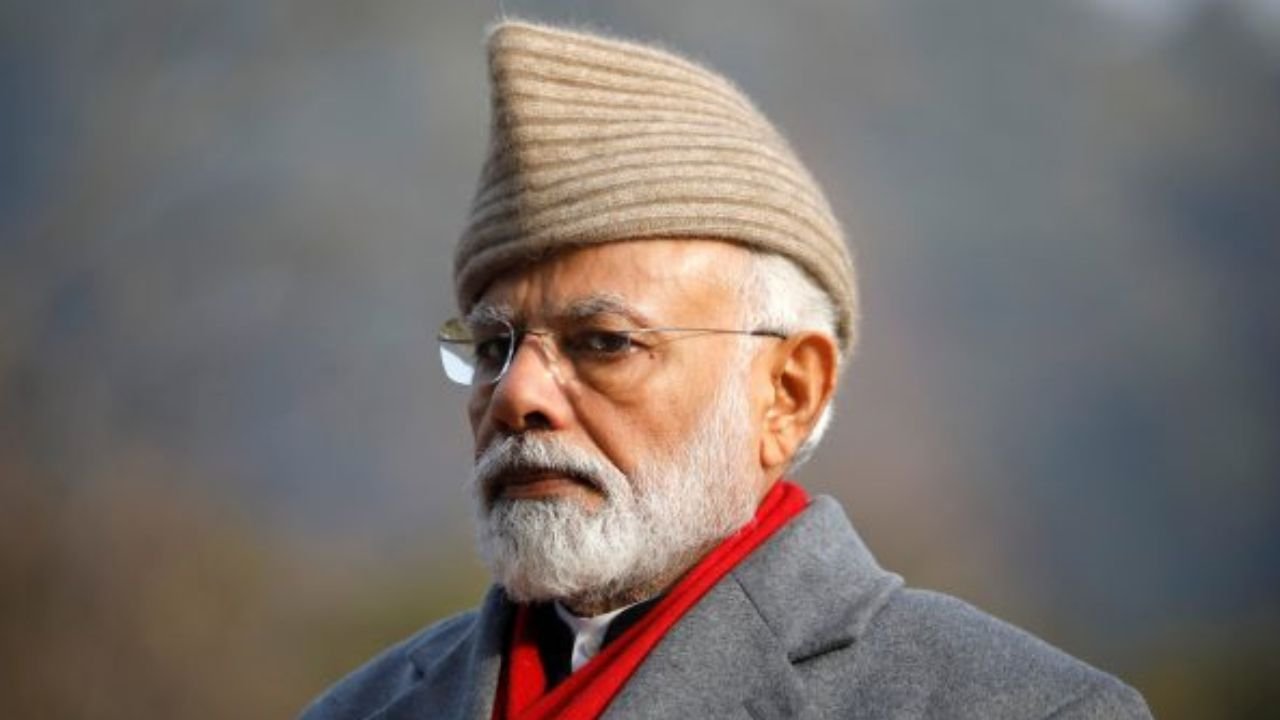
  • India vote a chance for Kashmiris to signal opposition to Modi

    India vote a chance for Kashmiris to signal opposition to Modi

    Srinagar (India) (AFP) – Prime Minister Narendra Modi’s campaign speeches claim his quelling of an insurgency in Indian-occupied Kashmir (IOK) as one of his greatest achievements, but many in the disputed region see India’s election as a chance to signal their disagreement.

    Widely expected to win the biggest poll in history, Modi’s ruling Bharatiya Janata Party (BJP) did not field any candidates in Kashmir for the first time in nearly three decades. Experts say they would have been roundly defeated if they had.

    Modi’s government cancelled the limited autonomy Kashmir had under India’s constitution in 2019, a move accompanied by a huge security clampdown, mass arrests of local political leaders and a months-long telecommunications blackout.

    Violence in the Muslim-majority region has since dwindled, and the BJP has consistently claimed that its residents supported the changes.

    But some Kashmiri voters in this year’s national elections will be eager to express their frustrations with the end of their territory’s special status.

    “I have never voted in the past. But this time, I will… to show that I am not happy with what India is doing with us,” a middle-aged man told AFP in the main city of Srinagar, declining to be identified for fear of retribution.

    “How can India say that Kashmiris are happy when we are actually suffocating in a state of fear and misery?”

    ‘Voice their disagreement’

    Kashmir has been divided between India and Pakistan since their independence in 1947. Both claim it in full and have fought two wars over control of the Himalayan region.

    Rebel groups opposed to Indian rule have waged an insurgency since 1989 on the side of the frontier controlled by New Delhi, demanding either independence or a merger with Pakistan.

    The conflict has killed tens of thousands of soldiers, rebels and civilians in the decades since, including a spate of firefights between suspected rebels and security forces in the past month.

    India is in the middle of a six-week election, with voting staggered across phases to ease the logistical burden of staging a vote in the world’s most populous country.

    Modi and his ministers have championed the end of Kashmir’s special status, saying at campaign rallies it has brought “peace and development”, and the policy is popular among voters elsewhere in India.

    But many in the valley have chafed at increasing curbs on civil liberties that have curtailed media freedoms and brought an effective end to once-common public protests.

    Many are also upset with the 2019 decision to end constitutional guarantees that reserved local jobs and land for Kashmiris.

    Open campaigning for separatism is illegal in India, and established democratic parties in Kashmir have historically differed on whether to collaborate with the government of the day in New Delhi or to pursue greater autonomy.

    But antipathy towards Modi’s Hindu nationalist government had helped paper over differences between rival parties by forging a common sense of opposition, parliamentary candidate Waheed Ur Rehman Para told AFP.

    “There’s a huge solidarity silently in Kashmir today for each other, irrespective of party lines,” he said.

    Para is standing for a seat that takes in Srinagar, the territory’s biggest city, on behalf of the Peoples Democratic Party (PDP), which was a BJP ally before 2019 but is now campaigning for the reinstatement of Kashmir’s autonomy.

    Voters were preparing to “convey to Delhi that the consent of decisions about Kashmir is most important and it should lie with the locals”, he said.

    ‘Want to win every heart’

    Political analyst and historian Sidiq Wahid told AFP the election was being seen by Kashmiris as a “referendum” on the Modi government’s policies in the territory.

    “The BJP is not fielding any candidates for a very simple reason,” he said. “Because they would lose, simple as that.”

    Modi’s party retains a presence in Kashmir in the form of a heavily bunkered and almost vacant office in Srinagar.

    The complex is under constant paramilitary guard by some of the more than 500,000 troops India has permanently stationed in the region.

    The BJP has appealed to voters to instead support smaller and newly created parties that have publicly aligned with Modi’s policies.

    India’s powerful home minister Amit Shah, a close acolyte of Modi, said at a campaign rally last month the party had made a tactical decision not to field candidates.

    He said he and his allies were in no rush to “see the lotus bloom” in Kashmir, a reference to the BJP’s floral campaign emblem, but would instead wait for the people of the valley to understand its good work.

    “We are not going to conquer Kashmir,” he told the crowd. “We want to win every heart in Kashmir.”

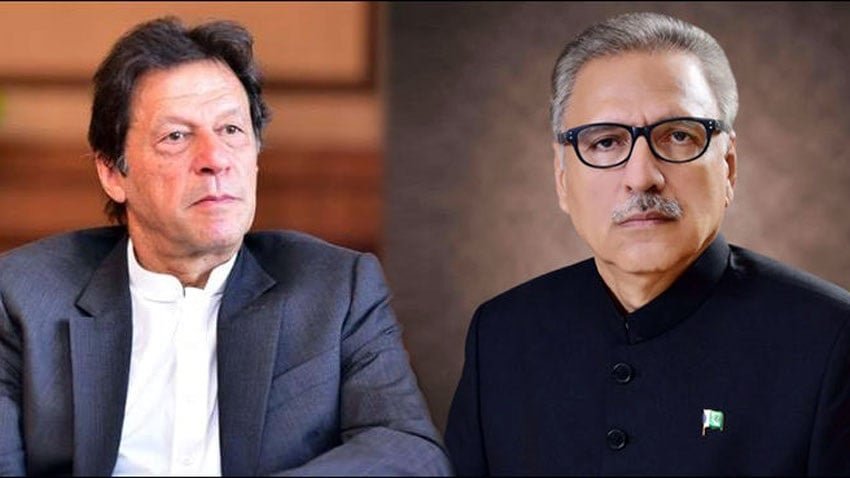
  • Imran Khan gives Arif Alvi important task

    Imran Khan gives Arif Alvi important task

    Pakistan Tehreek-e-Insaf (PTI) founder chairman Imran Khan took a major step in his recent meeting with former president Dr Arif Alvi at Adiala jail by assigning an important responsibility to him.

    PTI secretary general and opposition leader in parliament, Omar Ayub Khan, confirmed to journalists that Alvi is working actively to bridge the gap between PTI and the establishment.

    The decision to assign the responsibility to Dr Arif Alvi came a day after the PTI founder refused to apologise for May 9 riots.

    However, Dr Arif Alvi said, while talking to the media, that Imran Khan is still ready to make sacrifices for the nation and the country. He also stated that some PTI workers were involved in the May 9 incidents, but wiping out the entire party was wrong.

    The May 9 violence was triggered across the country after deposed Prime Minister Khan’s arrest in the £190 million settlement case last year.

  • iCube Qamar’s moon images are out

    iCube Qamar’s moon images are out

    Pakistan’s first satellite mission ‘iCube Qamar’ has successfully entered the moon’s orbit and its first image has been released.

    Institute of Space Technology informed Geo News that iCube Qamar successfully entered lunar orbit on May 8 and has completed three orbits around the moon.

    The mission will orbit the Moon for about three to six months.

    According to the Institute of Space Technology, the first Pakistani satellite completes its orbit in 12 hours. Qamar’s signals will be received on Earth after traveling a distance of 360,000 to 400,000 km.

    The spokesman said that in-orbit testing of iCube Qamar’s controllers, subsystems, and protocols is ongoing. The mission will remain in experimental stages for five to six days after reaching the lunar orbit.

    iCube Qamar was sent into space with the Chinese mission Cheng 6 on May 3 from the Hainan Space Launch Site.

  • Hotter, drier, sicker? How a changing planet drives disease

    Hotter, drier, sicker? How a changing planet drives disease

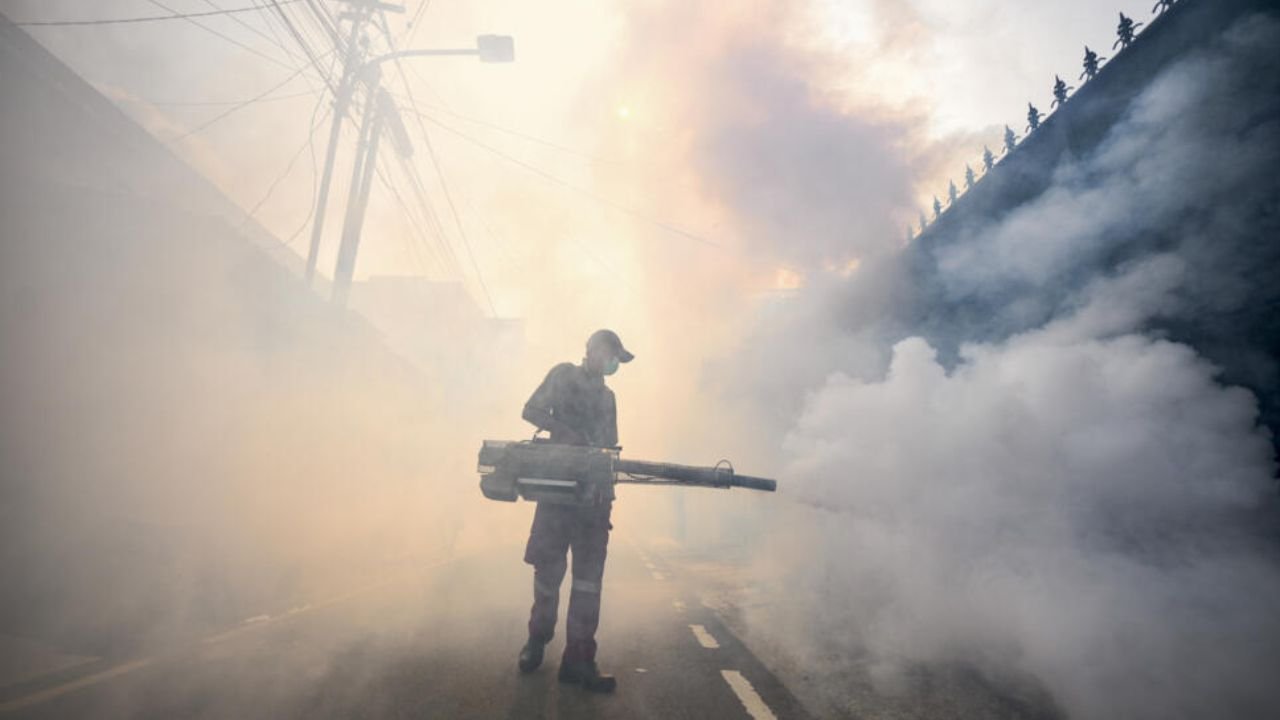
    Bangkok (AFP) – Humans have made our planet warmer, more polluted and ever less hospitable to many species, and these changes are driving the spread of infectious disease.

    Warmer, wetter climates can expand the range of vector species like mosquitos, while habitat loss can push disease-carrying animals into closer contact with humans.

    New research reveals how complex the effects are, with our impact on the climate and planet turbocharging some diseases and changing transmission patterns for others.

    Biodiversity loss appears to play an outsize role in increasing infectious disease, according to work published in the journal Nature this week.

    It analysed nearly 3,000 datasets from existing studies to see how biodiversity loss, climate change, chemical pollution, habitat loss or change, and species introduction affect infectious disease in humans, animals and plants.

    It found biodiversity loss was by far the biggest driver, followed by climate change and the introduction of novel species.

    Parasites target species that are more abundant and offer more potential hosts, explained senior author Jason Rohr, a professor of biological sciences at the University of Notre Dame.

    And species with large populations are more likely to “be investing in growth, reproduction and dispersal, at the expense of defences against parasites”, he told AFP.

    But rarer species with more resistance are vulnerable to biodiversity loss, leaving us with “more abundant, parasite-competent hosts”.

    The warmer weather produced by climate change offers new habitats for disease vectors, as well as longer reproductive seasons.

    “If there are more generations of parasites or vectors, then there can be more disease,” Rohr said.

    Shifting transmission

    Not all human adaptation of the planet increases infectious disease, however.

    Habitat loss or change was associated with a drop in infectious disease, largely because of the sanitary improvements that come with urbanisation, like running water and sewage systems.

    Climate change’s effects on disease are also not uniform across the globe.

    In tropical climates, warmer, wetter weather is driving an explosion in dengue fever.

    But drier conditions in Africa may shrink the areas where malaria is transmitted in coming decades.

    Research published in the journal Science this week modelled the interaction between climate change, rainfall and hydrological processes like evaporation and how quickly water sinks into the ground.

    It predicts a larger decline in areas suitable for disease transmission than forecasts based on rainfall alone, with the decline starting from 2025.

    It also finds the malaria season in parts of Africa could be four months shorter than previously estimated.

    The findings are not necessarily all good news, cautioned lead author Mark Smith, an associate professor of water research at the University of Leeds.

    “The location of areas suitable for malaria will shift,” he told AFP, with Ethiopia’s highlands among the regions likely to be newly affected.

    People in those regions may be more vulnerable because they have not been exposed.

    And populations are forecast to grow rapidly in areas where malaria will remain or become transmissible, so the overall incidence of the disease could increase.

    Predicting and preparing

    Smith warned that conditions too harsh for malaria may also be too harsh for us.

    “The change in water availability for drinking or agriculture could be very serious indeed.”

    The links between climate and infectious disease mean climate modelling can help predict outbreaks.

    Local temperature and rainfall forecasts are already used to predict dengue upticks, but they offer a short lead-time and can be unreliable.

    One alternative might be the Indian Ocean basin-wide index (IOBW), which measures the regional average of sea-surface temperature anomalies in the Indian Ocean.

    Research also published in Science this week looked at dengue data from 46 countries over three decades and found a close correlation between the IOBW’s fluctuations and outbreaks in the northern and southern hemispheres.

    The study was retrospective, so the IOBW’s predictive power has not yet been tested.

    But monitoring it could help officials better prepare for outbreaks of a disease that is a major public health concern.

    Ultimately, however, addressing increasing infectious disease means addressing climate change, said Rohr.

    Research suggests “that disease increases in response to climate change will be consistent and widespread, further stressing the need for reductions in greenhouse gas emissions”, he said.