Blog

  • Japan introduces armpit sweat-infused rice balls

    Japan introduces armpit sweat-infused rice balls

    Sweat-infused rice balls, shaped in the armpits of young pretty girls is a surprising culinary hit in Japan.

    The rice ball snack, locally known as onigiri, is a traditional food item in Japan. The recipe has been given a culinary twist which is making waves locally and said to fetch prices as high as ten times those of regular Onigiri in certain restaurants.

    According to the South China Morning Post (SCMP), young women use their armpits to shape the balls in this new bizarre twist to the onigiri. Strict measures are taken to ensure hygiene and safety in the process. Before commencing, all ingredients and body parts that will come into contact with the food undergo thorough disinfection. The chefs then partake in physical activity to induce sweating, using their armpits instead of their hands to shape the rice balls.

    Review of the taste

    As per SCMP, a diner who tried the new version expressed that it is not different or does not have a distinctive flavour from the usual taste of rice balls.

  • Legendary football coach César Luis Menotti passes away

    Legendary football coach César Luis Menotti passes away

    Legendary Argentine football coach Cesar Luis Menotti has died after a long illness.

    According to Argentine media, Luis Menotti had been ill for the past few months and died on Sunday in Buenos Aires.

    Menotti was the head coach of Argentina’s 1978 FIFA World Cup winning team on home soil.

    He also won trophies with Spanish club Barcelona, and he was the coach of Argentina’s under-20 team that won the Youth World Cup.

    Menotti was a big fan of Pakistan Hockey Team. His strategy to win the World Cup was inspired by Pakistan Hockey Team. He expressed in an interview that he wanted the Argentina football team to play like Pakistan hockey team.

  • ‘Everybody is vulnerable’: Fake US school audio stokes AI alarm

    ‘Everybody is vulnerable’: Fake US school audio stokes AI alarm

    A fabricated audio clip of a US high school principal prompted a torrent of outrage, leaving him battling allegations of racism and anti-Semitism in a case that has sparked new alarm about AI manipulation.

    Police charged a disgruntled staff member at the Maryland school with manufacturing the recording that surfaced in January — purportedly of principal Eric Eiswert ranting against Jews and “ungrateful Black kids” — using artificial intelligence.

    The clip, which left administrators of Pikesville High School fielding a flood of angry calls and threats, underscores the ease with which widely available AI and editing tools can be misused to impersonate celebrities and everyday citizens alike.

    In a year of major elections globally, including in the United States, the episode also demonstrates the perils of realistic deepfakes as the law plays catch-up.

    “You need one image to put a person into a video, you need 30 seconds of audio to clone somebody’s voice,” Hany Farid, a digital forensics expert at the University of California, Berkeley, told AFP.

    “There’s almost nothing you can do unless you hide under a rock.

    “The threat vector has gone from the Joe Bidens and the Taylor Swifts of the world to high school principals, 15-year-olds, reporters, lawyers, bosses, grandmothers. Everybody is now vulnerable.”

    After the official probe, the school’s athletic director, Dazhon Darien, 31, was arrested late last month over the clip.

    Charging documents say staffers at Pikesville High School felt unsafe after the audio emerged. Teachers worried the campus was bugged with recording devices while abusive messages lit up Eiswert’s social media.

    The “world would be a better place if you were on the other side of the dirt,” one X user wrote to Eiswert.

    Eiswert, who did not respond to AFP’s request for comment, was placed on leave by the school and needed security at his home.

    ‘Damage’

    When the recording hit social media in January, boosted by a popular Instagram account whose posts drew thousands of comments, the crisis thrust the school into the national spotlight.

    The audio was amplified by activist DeRay McKesson, who demanded Eiswert’s firing to his nearly one million followers on X. When the charges surfaced, he conceded he had been fooled.

    “I continue to be concerned about the damage these actions have caused,” said Billy Burke, executive director of the union representing Eiswert, referring to the recording.

    The manipulation comes as multiple US schools have struggled to contain AI-enabled deepfake pornography, leading to harassment of students amid a lack of federal legislation.

    Scott Shellenberger, the Baltimore County state’s attorney, said in a press conference the Pikesville incident highlights the need to “bring the law up to date with the technology.”

    His office is prosecuting Darien on four charges, including disturbing school activities.

    ‘A million principals’

    Investigators tied the audio to the athletic director in part by connecting him to the email address that initially distributed it.

    Police say the alleged smear-job came in retaliation for a probe Eiswert opened in December into whether Darien authorized an illegitimate payment to a coach who was also his roommate.

    Darien made searches for AI tools via the school’s network before the audio came out, and he had been using “large language models,” according to the charging documents.

    A University of Colorado professor who analyzed the audio for police concluded it “contained traces of AI-generated content with human editing after the fact.”

    Investigators also consulted Farid, writing that the California expert found it was “manipulated, and multiple recordings were spliced together using unknown software.”

    AI-generated content — and particularly audio, which experts say is particularly difficult to spot — sparked national alarm in January when a fake robocall posing as Biden urged New Hampshire residents not to vote in the state’s primary.

    “It impacts everything from entire economies, to democracies, to the high school principal,” Farid said of the technology’s misuse.

    Eiswert’s case has been a wake-up call in Pikesville, revealing how disinformation can roil even “a very tight-knit community,” said Parker Bratton, the school’s golf coach.

    “There’s one president. There’s a million principals. People are like: ‘What does this mean for me? What are the potential consequences for me when someone just decides they want to end my career?’”

    “We’re never going to be able to escape this story.”

  • Scotland qualifies for Women’s T20 World Cup for first time

    Scotland qualifies for Women’s T20 World Cup for first time

    Scotland’s women’s team has qualified for their first World Cup after defeating Ireland in a T20 qualifier and will compete in the tournament in Bangladesh later this year.

    Scotland have now become the first qualifying team to make it to the tournament after defeating Ireland in the first semi-final.

    Ten teams competed for two spots in the 2024 T20 World Cup in a two-week qualifying event in Abu Dhabi.

    Batting first, Ireland Women were restricted to 110 runs for the loss of 9 wickets in response to which Scotland easily achieved the target.

    This is the first time in nine editions that the Scotland Women’s team will play in the T20 World Cup.

    The Women’s T20 World Cup will start from October 3 and the final will be played on October 20.

  • IMF team set to visit Pakistan to discuss new programme before budget finalisation

    IMF team set to visit Pakistan to discuss new programme before budget finalisation

    An International Monetary Fund (IMF) mission is set to visit Pakistan in May to discuss a potential new financial programme, the IMF announced on Sunday.

    This visit comes as the Pakistani government begins crafting its annual budget for the next financial year with the aim of stabilising the economy and implementing necessary reforms.

    The announcement follows the completion of a short-term $3 billion programme last month, which helped Pakistan avoid a sovereign default.

    Prime Minister Shehbaz Sharif’s government is now seeking a more comprehensive and longer-term agreement with the IMF to ensure sustained economic recovery and growth.

    “A mission is expected to visit Pakistan in May to discuss the FY25 budget, policies, and reforms under a potential new programme for the welfare of all Pakistanis,” the IMF stated in an email response to Reuters.

    However, the exact dates of the visit and the specifics of the programme were not disclosed.

    Pakistan’s fiscal year runs from July to June, and the budget for fiscal year 2025 must be presented before June 30.

    The IMF emphasised the importance of accelerating reforms, stating that the size and duration of the new programme would be determined by the reform package and the country’s balance of payments needs.

    Pakistan’s economy, which is valued at around $350 billion, has shown signs of stabilisation following the last IMF programme, with inflation decreasing from a record high of 38 per cent in May 2023 to about 17 per cent in April 2024.

    However, the country still faces significant fiscal challenges and a high deficit, and growth has stagnated due to strict import controls.

    The current growth rate is expected to be around 2 per cent this year, a slight improvement from the negative growth rate experienced last year.

    In a recent interview with Reuters, Finance Minister Muhammad Aurangzeb expressed optimism about reaching an agreement on a new IMF programme in May. Pakistan is expected to seek at least $6 billion in additional financing from the IMF, including funding under the Resilience and Sustainability Trust.

    The forthcoming IMF visit is crucial for Pakistan as it prepares its budget and seeks to implement reforms to strengthen the economy.

    The discussions are likely to focus on fiscal discipline, economic growth, and the welfare of all Pakistanis, with an emphasis on achieving long-term stability and sustainability.

  • 70% of environment journalists report attacks, threats, pressure: UN

    70% of environment journalists report attacks, threats, pressure: UN

    Seventy percent of environmental journalists from 129 countries, polled in March, reported experiencing attacks, threats or pressure related to their job, UNESCO said Thursday.

    Of those, two in five subsequently experienced physical violence, it said in a report released on World Press Freedom Day. More than 900 reporters were questioned for the poll.

    The UN Educational, Scientific and Cultural Organization warned of an increase in violence against and intimidation of journalists reporting on the environment and climate.

    “Without reliable scientific information about the ongoing environmental crisis, we can never hope to overcome it,” UNESCO director general Audrey Azoulay said in a statement.

    “And yet the journalists we rely on to investigate this subject and ensure information is accessible face unacceptably high risks all over the world, and climate-related disinformation is running rampant on social media.”

    UNESCO said at least 749 journalists and news media outlets reporting on environmental issues were “targeted with murder, physical violence, detention and arrest, online harassment or legal attacks” between 2009 and 2023.

    More than 300 of those attacks occurred between 2019 and 2023 –- a 42 percent increase on the preceding five-year period.

    “The problem is global, with attacks taking place in 89 countries in all regions of the world,” the agency added.

    At least 44 environmental journalists have been killed for their work in the past 15 years, with convictions in only five cases, said the report.

    On top of hundreds of reported physical attacks, “a third of journalists surveyed said they had been censored,” it added.

    “Almost half (45 percent) said they self-censored when covering the environment due to fear of being attacked, having their sources exposed, or due to an awareness that their stories conflicted with the interests of concerned stakeholders.”

    At a press freedom conference in Chile this week, UNESCO will announce the launch of a grants program to provide legal and technical support to over 500 environmental journalists facing persecution, said the statement.

  • Japan town begins blocking Mt Fuji view from ‘bad-mannered’ tourists

    Japan town begins blocking Mt Fuji view from ‘bad-mannered’ tourists

    Fujikawaguchiko (Japan) (AFP) – Work has begun in a small Japanese town to erect a barrier blocking views of the country’s most famous sight, Mount Fuji, after locals complained of bad behaviour by photo-hungry tourists.

    Fujikawaguchiko town began building panels of mesh netting at a spot where unending flows of mostly foreign tourists visit daily to take photos of the majestic mountain sitting behind a Lawson convenience store.

    Photos taken from a narrow stretch of pavement across a busy road from the Lawson store — which are ubiquitous in Japan — are widely shared online.

    Local officials and residents say while the town welcomes visitors, they need to stop tourists from continuously crossing the street, ignoring red lights, littering, trespassing, illegally parking and smoking outside of designated areas.

    “It became not uncommon for people to yell at us when we asked them to move their cars, and for them to throw their lit cigarettes (on the ground),” a dentist’s office located across the street from the Lawson shop said in a statement.

    By the middle of this month, the town plans to complete the barrier, which will stand 2.5 metres (8 feet) high and stretch more than 20 metres long to block the view of the mountain, with hopes that it will discourage tourists from loitering there.

    The town’s move has prompted national and international headlines, as Japan experiences growing problems of overtourism, particularly at popular sites like the narrow private alleys of Kyoto, and even trails on Mount Fuji itself, where tourists love to photograph themselves and post on social media.

    The Fujikawaguchiko town hall has been inundated with telephone calls from Japanese people, many of them non-local residents, who have criticised the move to block the view.

    “It is not that we do not want people to see Mount Fuji. The issue is that there are so many people who are not able to observe basic rules,” a town official told AFP.

    ‘Basic manners’

    Having the net barrier is unfortunate but perhaps necessary, area residents say.

    “We welcome foreigners for the revitalisation of the community, but there are so many violations of basic manners, like crossing the road, dumping garbage and trespassing into people’s properties,” a 60-year-old resident told AFP.

    “After all, they are here for Mount Fuji, so having that barrier is very unfortunate,” said the woman, who identified herself as Watanabe.

    “There might have been other ways to deal with it, but for now I feel it cannot be helped,” she said.

    Some tourists expressed understanding and voiced hopes that the town would create a designated photo spot.

    But others speculated that the barrier may only make matters worse.

    “Stop people? I don’t think so because when there is a will there is a way. People will just be on the left side of it or right side of it,” said 29-year-old Australian tourist Trinity Robinson.

    “There definitely will be a way to still get the shot. It will just be more dangerous, really.”

    As a possible solution, a 37-year-old local man, who gave his name as Ama, called on visitors to check out other scenic locations in the area.

    “Mount Fuji from here (near the Lawson shop) is fantastic. But there are so many other places around here where you can visit and see beautiful views,” he said.

  • Story behind sudden resignations in Pakistan Cricket Board

    Story behind sudden resignations in Pakistan Cricket Board

    The series of resignations of the directors of the Pakistan Cricket Board (PCB) continues, but the internal story behind the resignations of the top officials has come to light.

    Sohail Imran has reported for Geo that resignations are not being given in the board but resignations are being taken by force, neither is anyone leaving out because of boredom nor is there any disagreement with anyone.

    According to board sources, de-politicization of PCB is the top priority at the moment, so no one can stay in office on the political basis or because of relationships, groupings or recommendations. The formula of ‘Right Man for the Right Job’ will be strictly followed on board .

    Chairman Mohsin Naqvi had initially conveyed the message to all officials.

    After Chairman Mohsin Naqvi assumed office, resignations of 6 senior officials have accepted while more resignations are likely to be come in the coming days in the board.

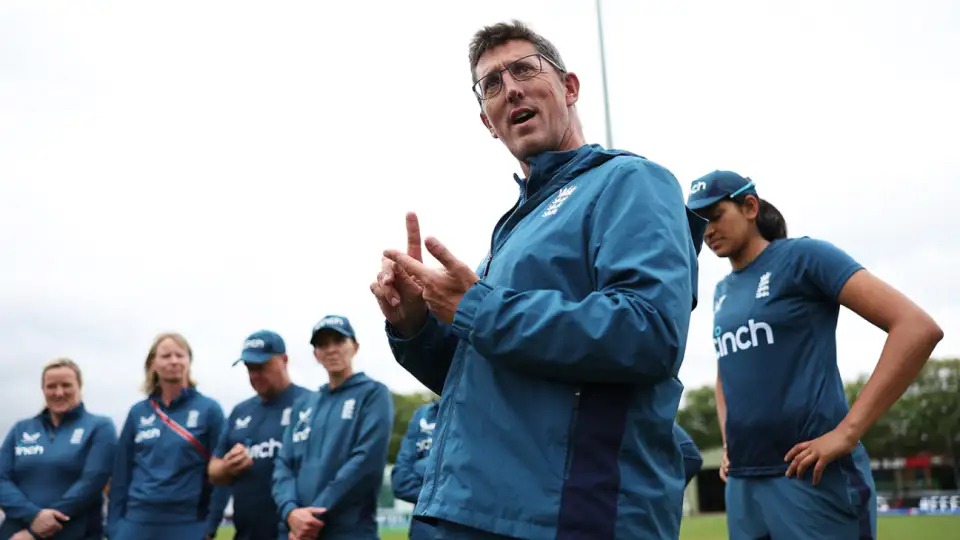
  • England Women’s cricket coach using AI to pick team

    England Women’s cricket coach using AI to pick team

    England Women’s cricket coach Jon Lewis revealed Friday he is using artificial intelligence to aid team selection, saying the technology helped his side square last season’s Ashes.

    Lewis first became familiar with the work of London-based PSi when he took charge of the UP Warriorz franchise in India’s Women’s Premier League.

    Now the 48-year-old former England paceman uses the company to assist with his decisions about squad composition, team balance and in-game match-ups between players.

    The system plots projected outcomes depending on the composition of each side.

    “I can send multiple different line-ups to the PSi in London and they run, I think, about 250,000 simulations per team that I send, with all different permutations that could happen through the game,” he said.

    “We are able to run simulated teams versus the simulated opposition to give us an idea about how those teams may match up against each other.

    “I came across it during my time at UP Warriorz and it’s something I looked at and thought it could add some value to the England Women’s cricket team.”

    Lewis said he still favoured a “people-first approach” but he added: “What data can do is give you a really objective view of what could happen and what has happened previously. I think it will help with borderline decisions in terms of selection and match-ups.”

    Lewis, who has spoken to England’s rugby union coach Steve Borthwick about his own use of the PSi model, said the system had proved its worth as his side drew last season’s multi-format Women’s Ashes series against arch-rivals Australia.

    “There was one selection particularly last year, one period of the Ashes that we targeted as a team,” said Lewis, speaking at the announcement of England’s squad for T20 and ODI series at home to Pakistan later this month.

    “There were a couple of selections where AI really helped because both players I was thinking about picking were both in really good form and were both really selectable and it did help with those selections.

    “We saw a real strength in Australia and we matched up our strength to that. That worked really, really well and it helped us win the T20 series in particular, which got us back in the Ashes.”

    AI is becoming an increasing feature of top-level sport, with International Olympic Committee president Thomas Bach saying last month it could help identify talented athletes “in every corner of the world”.

    He said AI could also provide more athletes with access to personalised training methods.

  • CDWP gives go-ahead to 10 development projects valued at Rs115 billion

    CDWP gives go-ahead to 10 development projects valued at Rs115 billion

    In a key meeting held on Friday, the Central Development Working Party (CDWP) approved a total of 10 development projects, with an overall cost of Rs115.458 billion.

    Out of these, eight projects totaling Rs17.297 billion were given the green light by the CDWP forum, while two projects, valued at Rs98.161 billion, were recommended to the Executive Committee of the National Economic Council (ECNEC) for final approval.

    Deputy Chairman Planning Commission Mohammad Jehanzeb Khan chaired the meeting, attended by Secretary Planning Awais Manzur, Planning Commission members, Additional Secretary Planning, and representatives from federal ministries and provincial governments.

    The meeting’s agenda covered a range of sectors, including agriculture and food, energy, governance, health, higher education, physical planning and housing, science and technology, transport and communication, and water resources.

    A notable project from the agriculture and food sector, the “Sindh Livestock and Aquaculture Development Project,” valued at Rs38.36 billion, was recommended to ECNEC for final approval.

    This World Bank-assisted project aims to improve competitiveness, inclusivity, climate resilience, and sustainability in Sindh’s livestock and aquaculture sectors.

    Another significant project from the energy sector, the “765/500/220/132kV Islamabad West Substation,” worth Rs59.801 billion, was also referred to ECNEC for final approval.

    This World Bank-backed initiative is part of the National Transmission and Modernization Project Phase-I and aims to address increasing power demands in the Islamabad region through a new substation and related transmission lines.

    The governance sector saw approval for the “Modernization and Upgradation of Pakistan Mint Phase-II” project, costing Rs2.48 billion, as well as the “Federal Project Management Unit (FPMU) Post-Flood 2022 Reconstruction Program” project, valued at Rs2.38 billion.

    In the physical planning and housing sector, five projects were discussed, including the “Smart Environmental Sanitation System and Landfill Project” in Gwadar, worth Rs3.277 billion, and the “Construction of Audit House, Lahore,” valued at Rs1,528.931 million. Both projects received approval from the CDWP forum.

    A project related to science and technology, the “Establishment of Regional Nuclear Safety Inspectorate at Lahore,” costing Rs515 million, was also approved by the CDWP. This project aims to enhance nuclear safety and oversight in the region.

    The approval of these projects underscores the government’s commitment to advancing critical infrastructure, promoting sustainable development, and addressing energy needs, among other priorities. The recommendations to ECNEC signal the importance of these projects for the country’s growth and development.