Blog

  • Understanding GSP+ status: What it means for Pakistan’s trade relations

    Understanding GSP+ status: What it means for Pakistan’s trade relations

    The Pakistan Tehreek-e-Insaf (PTI) has vehemently dismissed accusations levelled by Federal Information Minister Attaullah Tarar, labelling them as unfounded and baseless.

    In a statement issued today, the PTI refuted claims made by Tarar, asserting that they are nothing but a concoction of falsehoods and rhetoric aimed at maligning the party’s reputation.

    Earlier, Tarar had accused the PTI of plotting to undermine Pakistan’s Generalised Scheme of Preferences Plus (GSP+) status.

    He alleged that the party’s spokespersons were actively engaged in activities detrimental to the country’s interests under the directives issued from confinement.

    Understanding GSP+ and its significance for Pakistan’s economy

    The GSP+ status, a cornerstone of Pakistan’s trade relations with the European Union (EU), holds significant importance for the nation’s economy.

    Under this scheme, selected developing countries, including Pakistan, receive extensive trade concessions aimed at fostering sustainable development and good governance practices.

    The European Union’s GSP+ Scheme is founded on the effective implementation of 27 United Nations conventions covering various aspects such as human rights, labour rights, climate change, narcotics control, and corruption.

    Once granted GSP+ status, beneficiary countries are subject to rigorous monitoring to ensure compliance with the stipulated conventions and reporting requirements.

    The dialogue on GSP+ compliance involves various stakeholders, including international monitoring bodies, civil society, trade unions, and businesses.

    Regular monitoring visits are conducted by the EU to assess the progress of beneficiary countries in addressing the outlined issues.

    The significance of GSP+ for Pakistan’s economy cannot be overstated, particularly for its textile industry and workforce.

    Over the past decade, Pakistan has witnessed a notable increase in exports to the EU, accompanied by a surge in EU imports, owing to the preferential treatment offered under the GSP+ scheme.
  • Pakistan clears hurdles for IMF review, final agreement expected

    Pakistan clears hurdles for IMF review, final agreement expected

    The newly elected government of Pakistan has indicated its intention to secure a new loan from the International Monetary Fund (IMF).

    In line with this, representatives from the IMF are scheduled to visit Pakistan for the second review of the ongoing Stand-By Arrangement (SBA). The review is set to take place from March 14 to 18 in Islamabad.

    According to a statement released by the finance ministry, Pakistan has successfully met all structural benchmarks, qualitative performance criteria, and indicative targets required for the IMF review.

    This upcoming review marks the final evaluation of the SBA, with a staff-level agreement anticipated upon its completion.

    Once this agreement is reached, the final tranche of $1.1 billion under the SBA will be disbursed, subject to approval from the IMF’s Executive Board.

    Last summer, Islamabad secured a vital rescue package from the IMF, preventing a potential sovereign debt default.

    The successful completion of the final review is expected to unlock approximately $1.1 billion.

    Prime Minister Shehbaz Sharif has instructed his finance team, led by newly appointed Finance Minister Muhammad Aurangzeb, to begin preparations for seeking an Extended Fund Facility (EFF) once the standby arrangement concludes on April 11.

    The IMF has expressed readiness to develop a medium-term programme if Pakistan submits an application for one.

    Notably, the government has not officially disclosed the amount of additional funding it intends to seek through a successor programme from the IMF.

  • Is Imran Khan living a ‘luxurious’ life in jail? Atta Tarar explains

    Is Imran Khan living a ‘luxurious’ life in jail? Atta Tarar explains

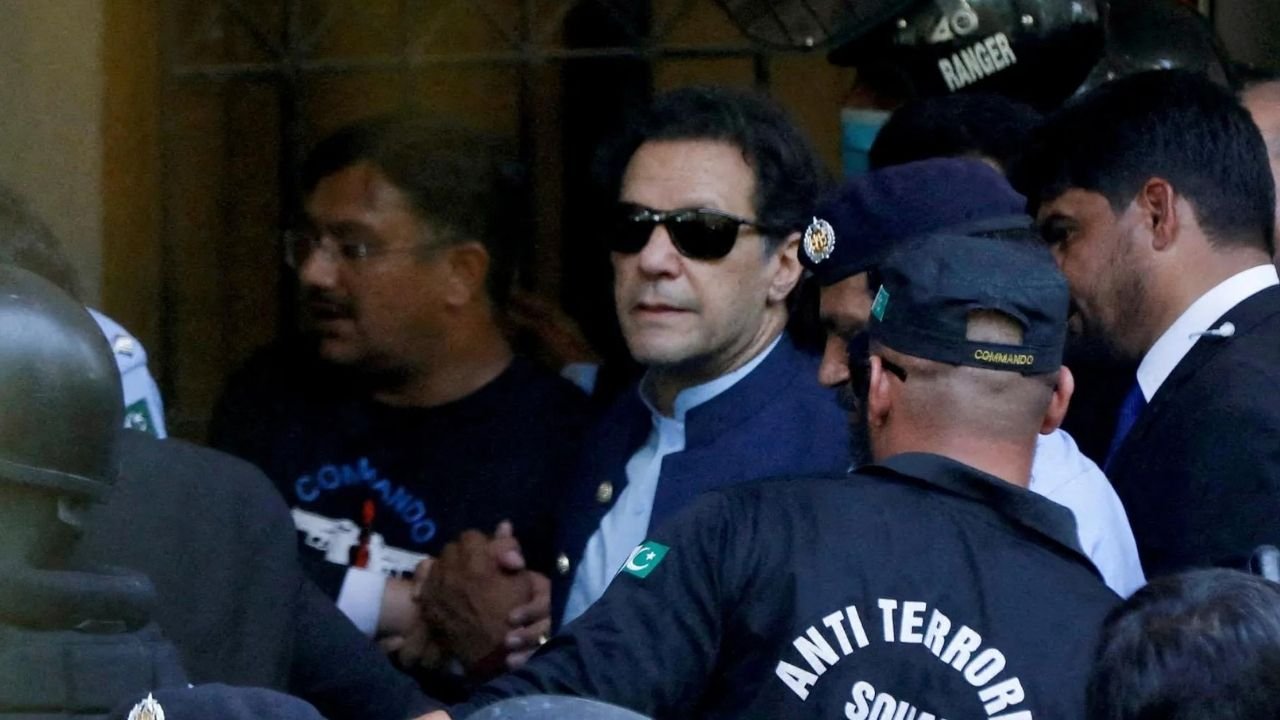
    In a press conference held on Wednesday, Information Minister Attaullah Tarar asserted that incarcerated founder of Pakistan Tehreek-e-Insaf (PTI) Imran Khan is living a luxurious life in jail.

    The former Prime Minister has three rooms, a kitchen, and access to exercise equipment, among other amenities desired by the detained leader, Tarrar elaborated.

    The minister said that PTI has been actively seeking the revocation of the country’s Generalized System of Preferences (GSP) Plus status from the European Union (EU). The GSP+ status, initiated in 2014 and recently extended until 2027, grants Pakistan favorable trade terms, including duty-free or minimal-duty exports to the European market, to foster good governance and sustainable development.

    Minister Tarar alleged that PTI spokespersons, purportedly receiving directives from incarcerated party members, are orchestrating a scheme to undermine Pakistan’s GSP+ status. He claimed that PTI’s criticism of the government’s treatment of its founder, Imran Khan, in prison serves as a pretext for their efforts to jeopardize the country’s trade privileges.

    Furthermore, Tarar accused PTI of engaging in a conspiracy to destabilize Pakistan’s economy, citing PTI’s alleged correspondence with the International Monetary Fund (IMF) as evidence. He emphasized the incumbent government’s commitment to economic recovery and lambasted PTI for purportedly prioritizing political gain over national interests.

    In response to Tarar’s claims, a PTI spokesperson categorically denied any intention of petitioning the EU to revoke Pakistan’s GSP+ status, dismissing the allegations as baseless and accusing Tarar of disseminating falsehoods. The spokesperson highlighted PTI’s dedication to national prosperity and defended Imran Khan’s role in facilitating the IMF program, attributing delays to the incompetence of previous administrations.

    The exchange underscores escalating tensions between the ruling government and the opposition party, with both sides trading accusations amid mounting economic challenges. As Pakistan navigates through critical issues, including inflation and unemployment, political discord continues to cast a shadow over efforts to steer the nation towards stability and growth.

    When asked about the ban on X (former Twitter) in Pakistan, the information minister claimed that there is no ban on the platform and people are using it.

    We counter-checked his claim and X is still not accessible in Pakistan without a virtual private network (VPN).

  • UN aid agency in Gaza hit by Israel, injuries reported

    UN aid agency in Gaza hit by Israel, injuries reported

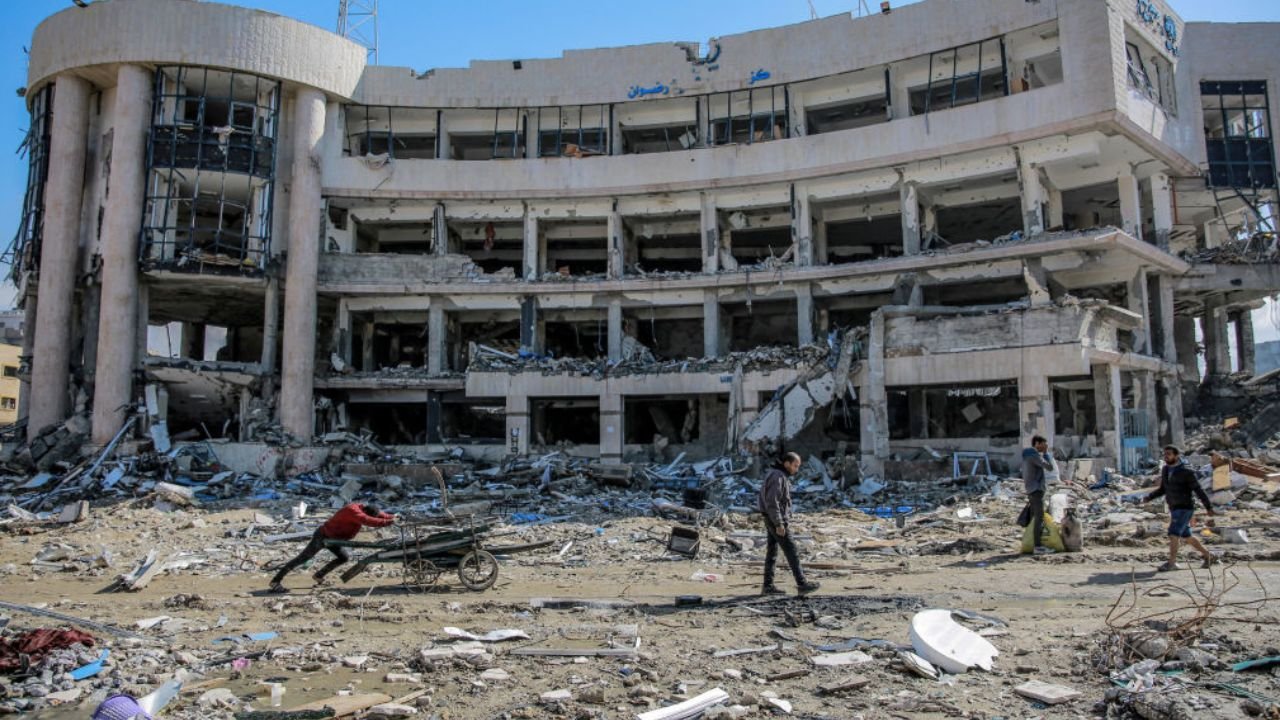
    The United Nations agency for Palestinian refugees said one of its aid warehouses in the war-ravaged Gaza Strip was “hit” on Wednesday, wounding scores of people.

    “At least one UNRWA staff member was killed and another 22 were injured when Israeli forces hit a food distribution centre in the eastern part of Rafah” in southern Gaza, the agency said in a statement.

    The health ministry in Gaza Strip earlier had said four people were killed in the “bombing of the warehouse”.

    Wednesday’s incident comes amid mounting concern about worsening humanitarian conditions in Gaza, where Israel has carried out military operations since October intended to eliminate the Hamas militant group.

    “Today’s attack on one of the very few remaining UNRWA distribution centres in the Gaza Strip comes as food supplies are running out, hunger is widespread and, in some areas, turning into famine,” said UNRWA chief Philippe Lazzarini.

    He also said the UN had shared coordinates of the facility with the Israeli army on Tuesday.

    An UNRWA spokeswoman said the facility was used “to distribute much-needed food and other lifesaving items to displaced people in southern Gaza”.

    At least 165 UNRWA employees have been killed since the beginning of the war on Gaza, Wednesday’s UNRWA statement said.

    “More than 150 UNRWA facilities were hit, some totally destroyed, among them many schools,” it said.

      ‘How can they bombard us?’ 

     An AFP photographer saw victims of the strike on Wednesday arriving at Al-Najjar hospital in Rafah, at least one of whom was identified by other people at the hospital as a UN employee.

    Witnesses said the strike compounded security fears in Rafah, which is overcrowded with 1.5 million mostly displaced people, further marring the normally festive Muslim fasting month of Ramazan which began on Monday.

    “It’s an UNRWA centre, expected to be secure,” said Rafah resident Sami Abu Salim.

    “Some came to work to distribute aid to the people in need of food during the holy month of Ramazan. Suddenly, they were struck by two missiles.”

    Hasan Abu Auda, displaced from Beit Hanoun in northern Gaza, said people had come to the warehouse “to sustain themselves for their daily meals”.

    “It’s Ramazan today,” he said. “How can they bombard us during the month of Ramazan?”

    Israel’s aggressive military campaign in Gaza has killed at least 31,272 people, mostly women and children, according to the health ministry in the Hamas-run territory.

    Gaza’s dire food shortages after more than five months of war have resulted in 27 deaths from malnutrition and dehydration, most of them children, the ministry says.

    Cumbersome Israeli security checks on all cargoes entering the territory slow down the delivery of aid, and some trucks are sent back when they are found to contain forbidden items, aid workers say.

    Israeli authorities say bottlenecks are caused by aid piling up on the Palestinian side as there are not enough trucks to distribute it.

  • Nearly 230,000 children, new mothers risk dying of hunger in Sudan: NGO

    Nearly 230,000 children, new mothers risk dying of hunger in Sudan: NGO

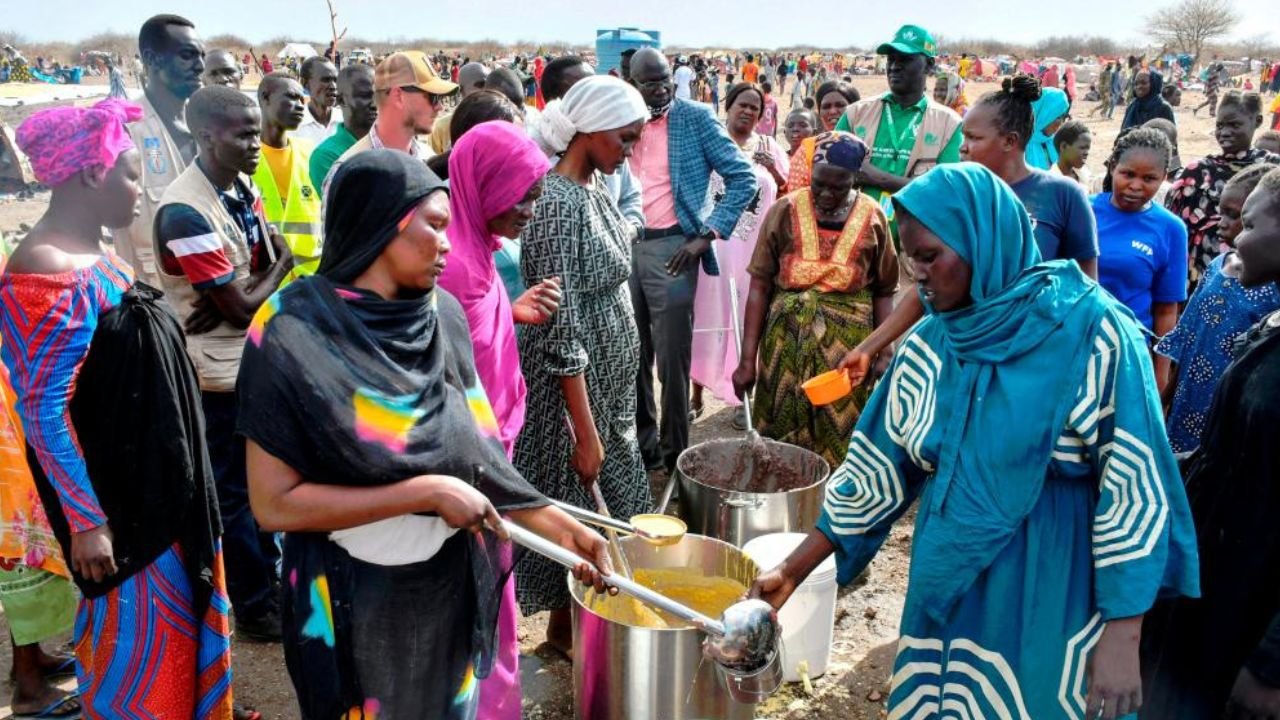
    Without critical action, nearly 230,000 children and new mothers in war-ravaged Sudan are “likely to die from hunger”, Save the Children warned on Wednesday.

    Nearly 11 months of fighting between the forces of two rival generals has killed thousands and displaced eight million people in the northeast African country, the United Nations says.

    The bombing and destruction of fields and factories have plunged Sudan into “one of the worst” nutrition situations in the world, said Arif Noor, Save the Children’s country director in Sudan.

    “Nearly 230,000 children, pregnant women and new mothers could die in the coming months,“ the British non-governmental organisation said.

    The charity said “more than 2.9 million children in Sudan are acutely malnourished and an additional 729,000 children under five are suffering from severe acute malnutrition — the most dangerous and deadly form of extreme hunger”.

    It warned “about 222,000 severely malnourished children and more than 7,000 new mothers are likely to die” under the current levels of funding which “only covers 5.5 percent” of Sudan’s total needs.

    The United Nations’ World Food Programme sounded the alarm on Sudan this month, warning the war risked triggering the world’s largest hunger crisis.

    The conflict, which experts have warned could last years, is being fought between Sudan’s army chief Abdel Fattah al-Burhan and Mohamed Hamdan Daglo, his former deputy and commander of the paramilitary Rapid Support Forces (RSF).

    Noor warned the situation would only worsen as the consequences of the current fighting take hold.

    “No planting last year means no food today. No planting today means no food tomorrow. The cycle of hunger is getting worse and worse with no end in sight — only more misery,“ he said.

    Already, more than half of all Sudanese, including 14 million children, require humanitarian assistance to survive, the United Nations says.

    The UN has described a “climate of sheer terror”, reporting the use of heavy artillery in densely populated urban areas, sexual violence as a weapon of war, the destruction of hospitals and schools.

    The United States has accused both sides of war crimes and alleged the RSF has carried out ethnic cleansing and crimes against humanity.

    A report before the UN Human Rights Council details gross violations and abuses of international human rights law and possible war crimes.

    Earlier in March, the UN’s human rights chief Volker Turk called the conflict a “living nightmare” and said it had “slipped into the fog of global amnesia”.

    The conflict has driven 18 million people into food insecurity, including five million who are only one stage away from famine.

    Humanitarian organisations have been prevented from entering Sudan or moving freely and have come under attack by both sides. – AFP

  • Navin Waqar has a very tough workout plan

    Navin Waqar has a very tough workout plan

    Navin Waqar, known for her acting career, has overcome various challenges in her life and profession. Despite facing hardships, she has overcome obstacles and succeeded. Navin has also developed a passion for fitness, maintaining a healthy lifestyle through regular gym routines and nutritious eating habits.
    The actress shared a workout video on her Instagram account with the caption “You are your only limit.”
    She looks strong as she goes through her gym exercises, making you want to go to the gym too. Take a look at some of her workout routines below:

  • ‘Have asked Shehbaz to engage politically with Khan’, Ali Amin Gandapur meets PM

    ‘Have asked Shehbaz to engage politically with Khan’, Ali Amin Gandapur meets PM

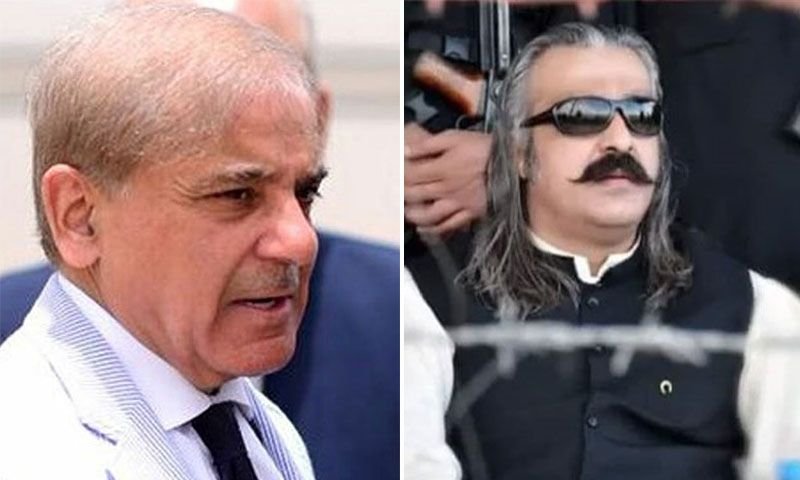
    Chief Minister of Khyber Pakhtunkhwa Ali Amin Gandapur met Prime Minister Shehbaz Sharif on Wednesday, indicating a possible melting of ice between Pakistan Tehreek-e-Insaf (PTI) and Pakistan Muslim League-Nawaz (PML-N).

    Addressing a press conference with Ahsan Iqbal, Gandapur said that the meeting was positive. “I have asked the prime minister to politically engage with Imran Khan. Political engagement will lead to a political solution,” he told the members of the press.

    Gandapur also said Shehbaz confirmed that Gandapur would be allowed to meet Khan in Rawalpindi’s Adiala Jail where authorities have increased security and barred ex-PM Khan from holding meetings owing to “threat alert”.

  • Gold price drops by Rs1,800 per tola as PKR records modest gains

    Gold price drops by Rs1,800 per tola as PKR records modest gains

    Gold prices in Pakistan experienced a downturn on Wednesday, echoing the global market trend.

    The precious metal, commonly known as the yellow metal, was priced at Rs228,300 per tola, marking a decrease of Rs1,800 over the course of the day.

    Data released by the All Pakistan Gems and Jewellers Sarafa Association (APGJSA) revealed that the price of 10 grammes of gold stood at Rs195,730 after a decrease of Rs1,544.

    This decline follows a Rs100 reduction in gold prices per tola observed on Tuesday within the country. Internationally, gold was valued at $2,179 per ounce on Wednesday, reflecting a $18 decrease with a premium of $20.

    Meanwhile, silver prices remained stable at Rs2,600 per tola during the same period.

    On another front, the Pakistani rupee showed a slight improvement against the US dollar, appreciating by 0.11 per cent in the interbank market on Wednesday.

    At the close, the local currency settled at 278.79, gaining Re0.29 against the greenback, as reported by the State Bank of Pakistan (SBP).

    On Monday, the rupee experienced a marginal decline, settling at 279.08 against the US dollar, according to the State Bank of Pakistan (SBP).

  • China warns proposed TikTok ban will ‘come back to bite’ US

    China warns proposed TikTok ban will ‘come back to bite’ US

    Beijing (AFP) – Beijing warned on Wednesday that a proposed ban on Chinese-owned video-sharing app TikTok would “inevitably come back to bite the United States”.

    The US House of Representatives is set to vote later Wednesday on a bill that would force the app to cut ties with its Chinese owner or get banned in the United States.

    The legislation is the biggest threat yet to the video-sharing app, which has surged to huge popularity across the world while raising fears among governments and security officials over its Chinese ownership and potential subservience to the Communist Party in Beijing.

    Ahead of the vote, foreign ministry spokesperson Wang Wenbin condemned the proposed ban.

    “Although the United States has never found evidence that TikTok threatens US national security, it has not stopped suppressing TikTok,” he said.

    “This kind of bullying behaviour that cannot win in fair competition disrupts companies’ normal business activity, damages the confidence of international investors in the investment environment, and damages the normal international economic and trade order,” he added.

    “In the end, this will inevitably come back to bite the United States itself,” Wang said.

    The vote is likely to occur at 10:00 am (1400 GMT) and is expected to pass overwhelmingly in a rare moment of bipartisanship in politically divided Washington.

    The fate of the bill is uncertain in the Senate, where key figures are against making such a drastic move against an hugely popular app that has 170 million US users.

    President Joe Biden will sign the bill, known officially as the “Protecting Americans from Foreign Adversary Controlled Applications Act,” into law if it comes to his desk, the White House has said.

    TikTok staunchly denies any ties to the Chinese government and has restructured the company so the data of US users stays in the country, the company says.

    TikTok CEO Shou Zi Chew is in Washington, trying to shore up support to stop the bill.

    “This latest legislation being rushed through at unprecedented speed without even the benefit of a public hearing, poses serious Constitutional concerns,” wrote Michael Beckerman, TikTok’s vice president for public policy, in a letter to the bill’s co-sponsors seen by AFP.

  • Teenager on bicycle stabs two Israelis at West Bank checkpoint

    Teenager on bicycle stabs two Israelis at West Bank checkpoint

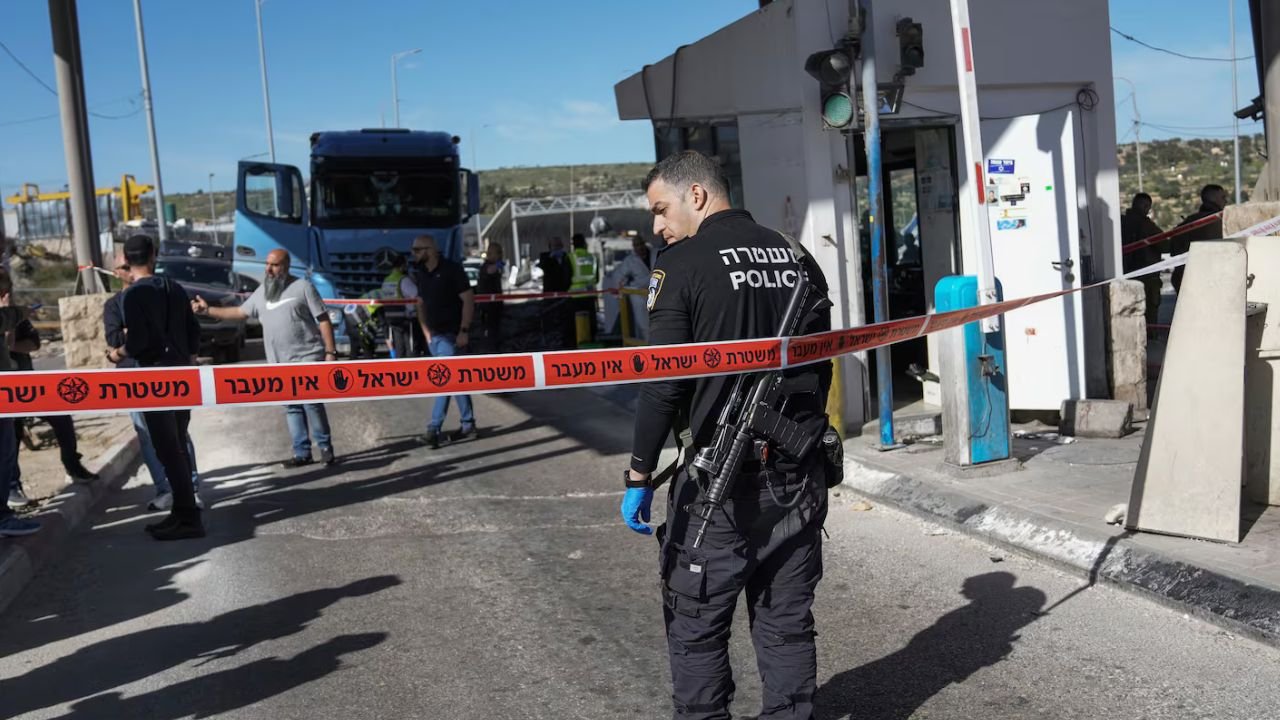
    A 15-year-old boy riding a bicycle stabbed two Israeli security personnel at a checkpoint in the occupied West Bank on Wednesday before he was “neutralised,” police said.

    The attack occurred at around 8:15 am (0615 GMT) at the Tunnels checkpoint south of Jerusalem when the teenager arrived on a bicycle, the force said in a statement.

    “When security forces at the crossing attempted to check him, the terrorist drew a knife and began stabbing the forces present at the scene,” the police said.

    “An armed civilian guard immediately engaged with the terrorist, and simultaneously IDF (army) forces at the location responded with precise gunfire neutralising the terrorist.”

    Two security personnel were wounded in the stabbing, the police said. It was unclear whether the attacker had been killed.

    The knife attack comes a day after a 12-year-old Palestinian boy died after being shot by Israeli border police at a refugee camp in Israeli-annexed east Jerusalem.

    Rami Hamdan al-Halhuli, 12, suffered a fatal gunshot wound during clashes between residents of the Shuafat refugee camp and police, who said the child had aimed fireworks at them.

    Hundreds of extra police have been deployed in the Old City of east Jerusalem since the Muslim fasting month of Ramadan began on Monday.

    myl-jd/kir

    © Agence France-Presse