Blog

  • Establishment wants  government of its choice, says Maulana Fazlur Rehman

    Establishment wants  government of its choice, says Maulana Fazlur Rehman

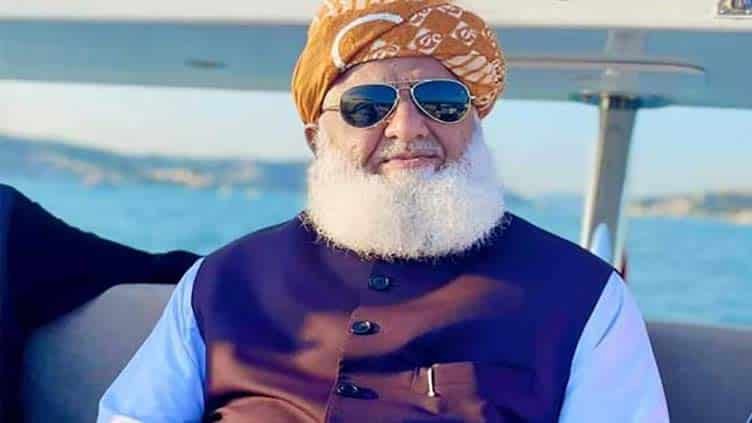
    Jamiat Ulema-e-Islam-Fazl (JUI-F) chief, Maulana Fazlur Rehman, continues to be disgruntled after the 2024 nationwide elections, criticising the results. He predicted that the “system would collapse” because the establishment wants a government of its choice.

    While addressing a press conference in Peshawar on Tuesday, Maulana alleged that “the establishment wants assemblies and people in them of their choice.”

    “We received information before the elections that it has been decided to reduce the JUI-F’s inclusion [in the assemblies]. Different styles of rigging occurred in every polling station during the polls.”

    “If they think there was no rigging in the polls, then the May 9 narrative is apparently buried. They cannot run the country, and this system will collapse. Those who are sticking to the system will be crying in the coming days,” Fazl predicted.

    The JUI-F chief also said that there is no difference between the elections of 2018 and 2024, emphasising that a public representative should not be a “representative of the establishment.”

  • Bushra Ansari’s heartfelt message to pet lovers

    Bushra Ansari’s heartfelt message to pet lovers

    Veteran actress Bushra Ansari often makes videos about her life to inspire her followers.
    She recently posted a video with a kind message for people who love pets.

    “I know a family with 29 pets. They eat special food, play with special toys, and even have special things. They always have someone ready to drive them around.

    They spend a lot of money on their pets. I think they could spend less and maybe adopt a child. It’s important to care for kids too.”

    She also talked about people who have adopted children and are giving them a happy life, specifically mentioning singer Hadiqa Kiani, who adopted a child.

    You can watch the video here:

  • Israel minister says Arab trade ties unphased by Gaza war

    Israel minister says Arab trade ties unphased by Gaza war

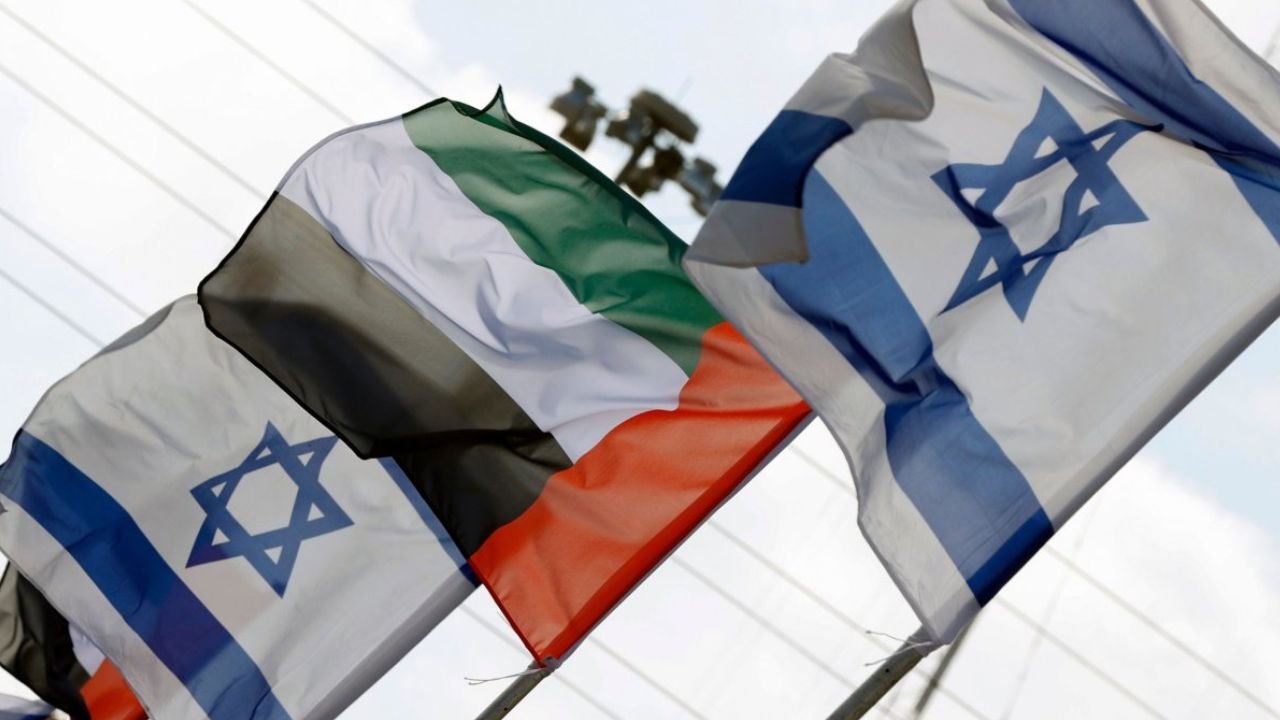
    Abu Dhabi, United Arab Emirates – Israel’s economy minister on Tuesday said trade relations with Arab states had not been affected by the Gaza war, the cost of which he added his country was able to bear.

    “There is no change at all” in trade relations, Nir Barkat told journalists on the sidelines of the World Trade Organization’s 13th ministerial meeting in Abu Dhabi.

    “Things are very stable… I think the leadership understands we have the same goal, which is to collaborate in a peaceful way.”

    When asked about Israel’s economic losses due to the war, Barkat said it could add “anywhere between 150 to 200 billion shekels ($42-55 billion)” to the country’s national debt.

    “That’s not something Israel cannot bear mid- to long-term,” he said.

    In January, Israel’s cabinet approved an additional 55 billion shekels ($15 billion) to meet the cost of the war, while the mobilisation of reservists and the displacement of communities on the borders with Gaza and Lebanon have disrupted the economy.

    The war began when the Palestinian Islamist group Hamas launched an unprecedented attack on Israel on October 7 that resulted in the deaths of about 1,160 people, mostly civilians, according to an AFP tally based on official figures.

    Israel has vowed to destroy Hamas and responded with a relentless offensive in Gaza. ccording to health ministry, at least 29,878 people, mostly women and children, have been killed.

    Confronted with the conflict, Arab countries that have normalised relations with Israel in recent years have been forced to balance diplomacy with fiercly pro-Palestinian Arab public opinion.

    They include the United Arab Emirates, which normalised ties with Israel in 2020 as part of the US-brokered Abraham Accords.

    Barkat said the Gaza war could help Israel boost sales of military technology, noting there is “high interest” from many countries, without specifying if Arab states were among them.

    “Especially after this war we are probably going to be leading many, many initiatives… of how next-generation warfare is going to look like,” he said.

    “Anybody that thinks they are threatened by regimes of Iran then they would have to tap us to better understand what we have learnt and what the solutions and security challenges are,” he added.

    “We are way ahead of everyone.”

    apo-ho/dcp/dv

    © Agence France-Presse

  • Watch: Drunk Pakistani passenger restrained in international flight

    Watch: Drunk Pakistani passenger restrained in international flight

    An unruly and drunk flyer on Sunday forced the cabin crew to physically restrain him using cable ties during an international flight from Dubai to Islamabad.
    The incident happened on an Emirates flight where a man’s behaviour was described by a witness as drunk and “extremely violent”, according to a US-based outlet. The individual was subdued by the crew initially but with help from fellow passengers, he was tackled to the ground.

    A video has emerged on social media platforms showing a restrained passenger in an airport wheelchair. The viral footage captures the individual’s attempt to headbutt a male flight crew member, who, along with another crew member, successfully pushes him to the floor. Subsequently, two male crew members hold the passenger down while two female flight attendants secure his legs using cable ties.

    In a post on X, a Pakistani journalist Amir Mateen shared details from a fellow passenger, describing the man’s aggressive behavior and subsequent restraint by the Emirates cabin crew. Mateen raised questions regarding the passenger’s release, suggesting potential connections enabling his departure despite the incident.

    “This happened in Dubai flight to Islamabad this morning. Sent by a passenger who remained terrified during the flight: “Drunk guy extremely violent. Restrained and handcuffed by Emirates cabin crew but I think Pak authorities let him go as he was well connected,” said Amir Mateen, who was a person on board.

    This incident adds to a series of similar occurrences in recent months, including a mid-air altercation on a Southwest Airlines flight in February and other incidents of disruptive behavior aboard flights.

  • Usama Mir becomes spin bowler with most wickets in an innings in PSL

    Usama Mir becomes spin bowler with most wickets in an innings in PSL

    Usama Mir has become the spin bowler with the most wickets in an innings in the nine-year history of Pakistan Super League (PSL).

    In the last match of the ninth edition of the tournament, played at Gaddafi Stadium Lahore on Tuesday, Multan Sultans against Lahore Qalandars, Usama Mir took six wickets while conceding 40 runs in four overs. The bowler’s mother also came to watch the match in the stadium.

    Multan Sultans defeated defending champions Lahore Qalandars by a huge margin of 60 runs and achieved their fifth victory in the event. Chasing Multan Sultans’ target of 215 runs, Lahore Qalandars were bowled out for just 154 runs in 17 overs.

  • Qalandars played bad cricket in all three areas, says team head coach Aqib Javeed

    Qalandars played bad cricket in all three areas, says team head coach Aqib Javeed

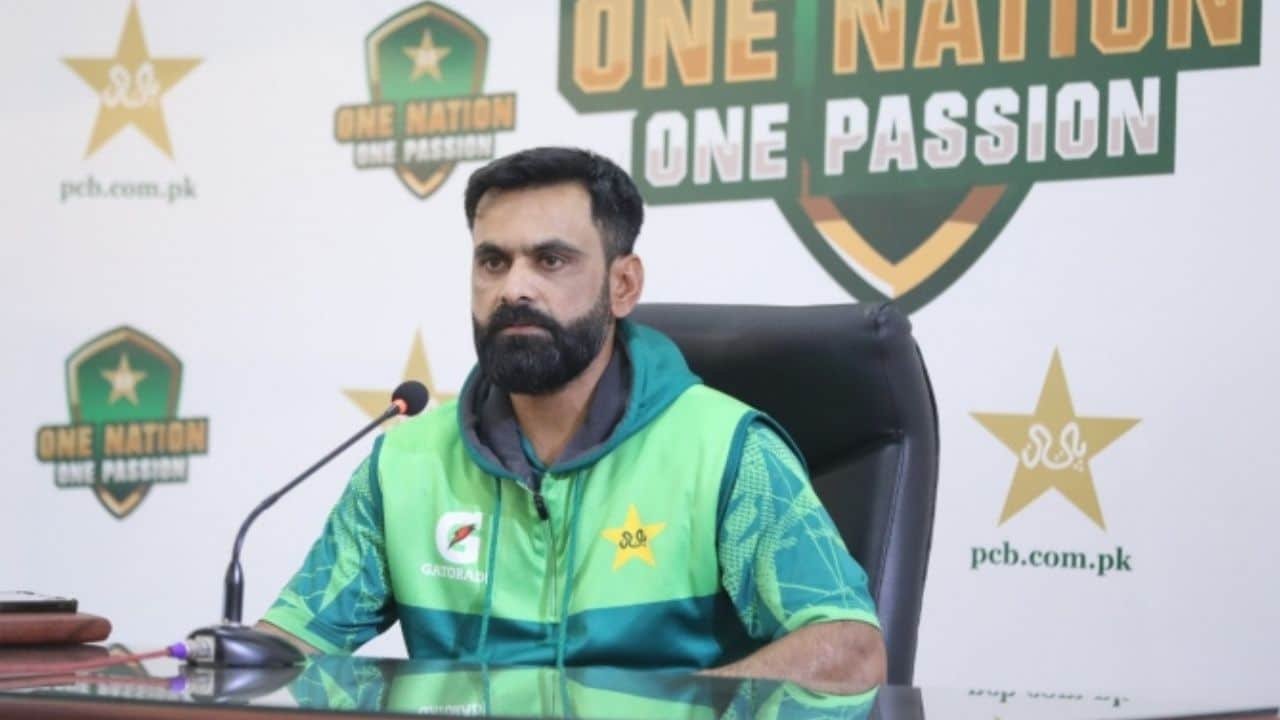
    Lahore Qalandars’ head coach Aqib Javed has criticised his team for playing bad cricket. “Multan Sultans had very limited players but despite that, they showed the best performance. Lahore team played very bad cricket today,” he remarked after yet another poor performance by the team.

    “Our team relies a lot on bowling. This year we lost due to incomplete bowling, Qalandars could not form a combination. Bowling and fielding looked off color, 200 runs are being made on Lahore pitch,” the irate former fast bowler said.

    “We have different variety of spinners, but when we don’t get wickets, things become difficult. We try different things, some efforts succeed, some failed against Sultans. Qalandars played bad cricket in all three areas, did not play cricket like they did in previous matches.”

  • PSL 9: Multan Sultans defeats Lahore Qalandars by 60 runs

    PSL 9: Multan Sultans defeats Lahore Qalandars by 60 runs

    In the 14th match of PSL 9, Multan Sultans defeated Lahore Qalandars by 60 runs, this is the sixth consecutive defeat of Qalandars in the event.

    Multan Sultans scored 214 runs for the loss of 4 wickets in the allotted overs and set Lahore Qalandars a target of 215 runs to win. After Muhammad Rizwan was dismissed for no runs, opener Usman Khan played a brilliant innings of 96 runs and played an important role in taking the team’s total to 211 runs.

    Iftikhar Ahmed remained not out by scoring 40 runs off 18 balls, Reza Hendricks also scored 40 runs.

    Chasing 215 runs by Multan Sultans, Qalandar’s team collapsed on 154 runs in 17 overs. Sahibzada Farhan was prominent by scoring 31 runs, van der Dusen returned to the pavilion by scoring 30 runs.

    Fakhar Zaman was dismissed on 23 runs, Kamran Ghulam scored 12 runs, Sikandar Raza was also a guest for 17 runs, captain Shaheen Shah Afridi scored 9 runs.

    Leg-spinner Usama Mir took 6 wickets for Sultans and became the first spinner to take 6 wickets in PSL.

  • ‘Cringe’; Maryam Nawaz slammed for adjusting police officer’s dupatta

    ‘Cringe’; Maryam Nawaz slammed for adjusting police officer’s dupatta

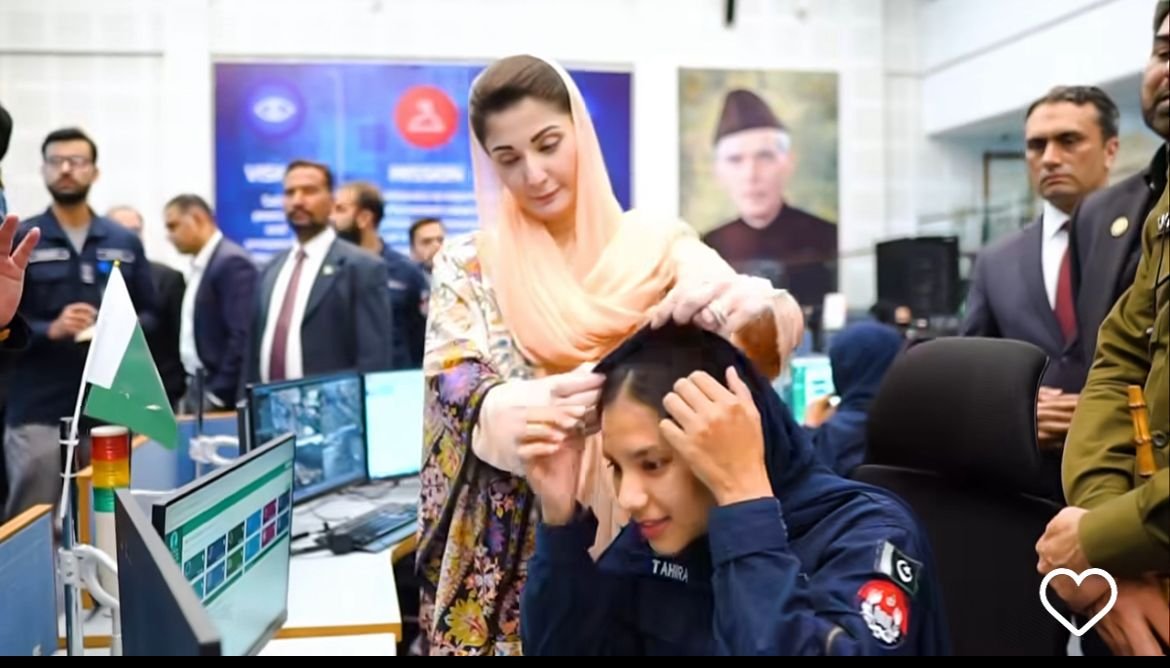
    Maryam Nawaz, the Vice-president of Pakistan Muslim League-Nawaz (PML-N) and newly appointed Chief Minister of Punjab, has managed to land into controversy on her second day on the job.

    A video posted on X (formerly Twitter) by an account claiming to be Team MNS shared a video of Maryam listening to a female police officer showing her something on a computer screen. While the officer is talking, her dupatta slips off her head. Maryam Nawaz then puts the dupatta back on her head.

    The account wrote: “CM Maryam Nawaz Sharif’s act of adjusting a police officer’s dupatta is a powerful reminder that leadership is about compassion and understanding.”

    The video, posted on Tuesday evening, has set off a furious debate with many people finding the gesture cringe inducing and an invasion into the police officer’s personal space.

    We at The Current agree that the gesture is indeed an invasion of personal space, and just a few days after the Ichra incident, completely unnecessary. The police officer performs serious duties, we are quite sure she can take care of her dupatta herself.

  • Nepra approves Rs7.056 per unit hike for power consumers

    Nepra approves Rs7.056 per unit hike for power consumers

    In a setback for the already burdened public grappling with inflation, the National Electric Power Regulatory Authority (Nepra) has greenlit a fuel cost adjustment, paving the way for a Rs7.0562 per unit increase in tariffs for March 2024.

    This decision grants state-run power distribution companies the authority to impose additional charges, projecting a staggering financial burden of around Rs56 billion on consumers.

    This figure could potentially soar to nearly Rs66 billion, taking into account the 18 per cent general sales tax (GST).

    It’s important to note that this tariff adjustment is applicable across all consumer categories, except for electric vehicle charging stations (EVCS) and lifeline consumers.

    The Central Power Purchasing Agency (CPPA), representing the distribution companies, had initially sought Rs7.13 per unit in its petition.

    Earlier this month, The News highlighted the plea from ex-Wapda distribution companies (XWDiscos) seeking Nepra’s approval for the Rs7.13 per unit increase.

    This was attributed to a significant drop in hydropower production and systemic constraints, such as the incapacity of the high-voltage direct current (HVDC) transmission line to efficiently transport economically viable power from southern producers to the north.

    Amidst these developments, commentators express concern over the substantial surge in fuel costs, reaching Rs14.6206/kWh for January 2024.

    In response, Nepra has taken decisive action, initiating an investigation under Section 27-A of the NEPRA Act to uncover the reasons behind this significant fuel cost, as claimed by CPPA-G for January 2024.

  • Daraz Group plans layoffs amid market challenges

    Daraz Group plans layoffs amid market challenges

    In an internal communication obtained by Reuters on Tuesday, Alibaba-owned e-commerce platform Daraz Group revealed its decision to implement layoffs across the company.

    Acting CEO James Dong stated that the move aims to “adopt a more streamlined and agile structure” to address challenges faced by the company in the market.

    While the memo did not specify the exact number of individuals affected by the layoffs, it acknowledged the necessity of saying farewell to numerous valued members of the Daraz family.

    The company, operating in Pakistan, Bangladesh, Nepal, Sri Lanka, and Myanmar, declined to provide details on the percentage or absolute number of employees impacted.

    Last year, Daraz employed 3,000 individuals globally. However, the company had to reduce its workforce by 11% due to various challenges, including difficult market conditions, the Ukraine crisis, supply chain disruptions, inflation, higher taxes, and reduced government subsidies.

    James Dong emphasised the group’s commitment to addressing the market’s unprecedented challenges and stated, “Despite our efforts to explore different solutions, our cost structure continues to fall short of our financial targets. Facing unprecedented challenges in the market, we must take swift action to ensure our company’s long-term sustainability and continued growth.”

    Dong outlined the group’s strategy moving forward, highlighting a focus on improving the consumer experience.

    This involves diversifying the offerings of value-for-money products, expanding product categories, and enhancing the operational efficiency of sellers on the Daraz platform.

    The company, founded in Pakistan in 2012 as an online fashion retailer, was acquired by Chinese internet giant Alibaba in 2018. James Dong assumed the role of acting CEO in January, succeeding outgoing CEO Bjarke Mikkelsen.

    Mikkelsen had previously noted that Pakistan and Bangladesh are the group’s largest markets.

    Daraz Group, encompassing e-commerce, logistics, payment infrastructure, and financial services, serves more than 30 million shoppers, boasts 200,000 active sellers, and collaborates with over 100,000 brands, according to company statements provided to Reuters.