Blog

  • Zargat forests in Balochistan still on fire after three days

    Zargat forests in Balochistan still on fire after three days

    It has been three days since the forest fire in Zargat mountain in Balochistan’s Musa Khel district started spreading but local authorities have failed to control it.

    On Thursday, fire ignited in the forests of the mountains. The fire is reportedly so intense that its flames can be seen 18 kilometers away from the city of Musa Khel, affecting olive groves and wildlife.

    The caretaker chief minister of Balochistan had given instructions for emergency measures to extinguish the fire on Thursday, but the residents of the area say that the fire could not be controlled till now.

  • PTI leader Salman Akram Raja arrested in Lahore

    PTI leader Salman Akram Raja arrested in Lahore

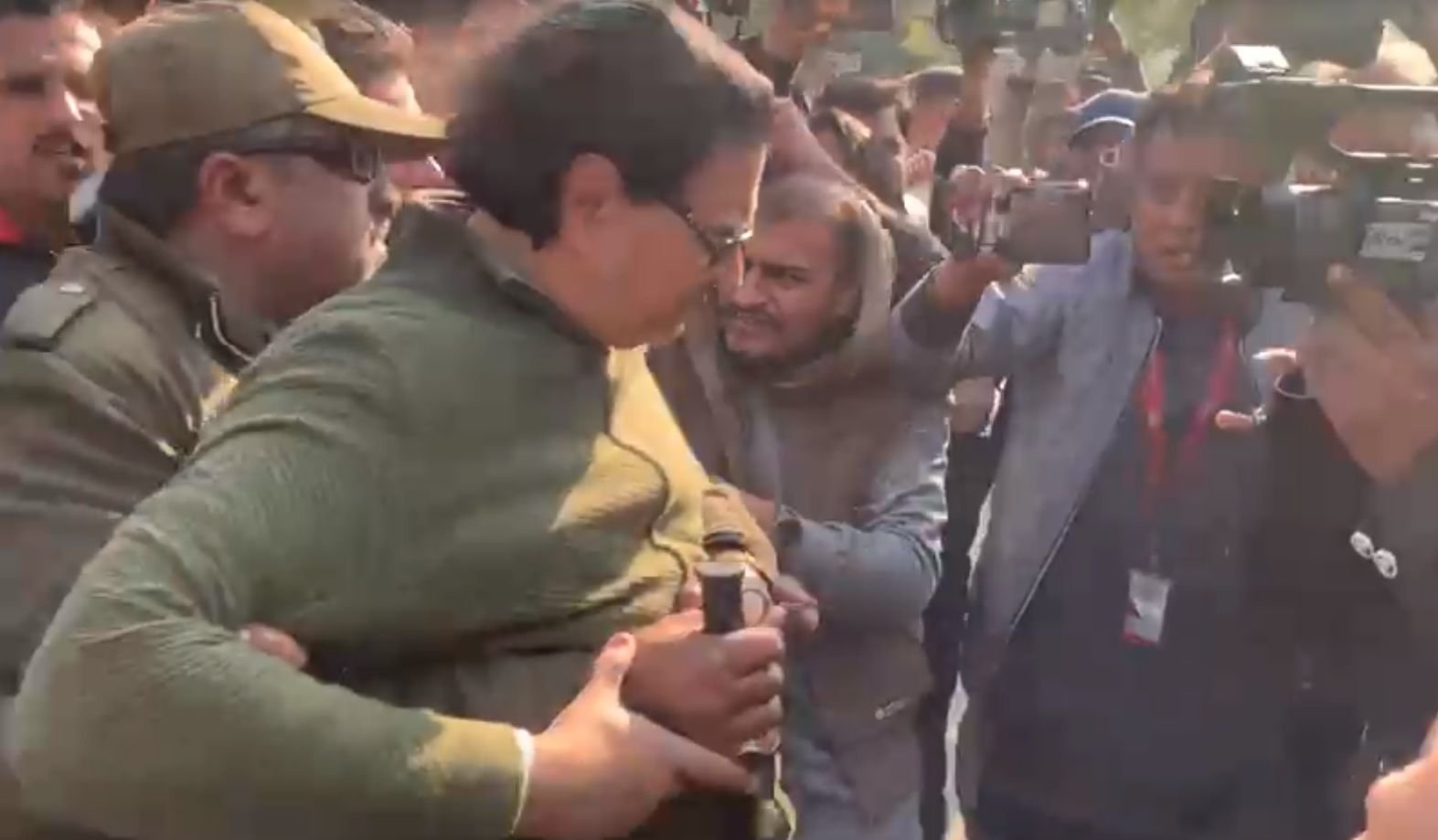
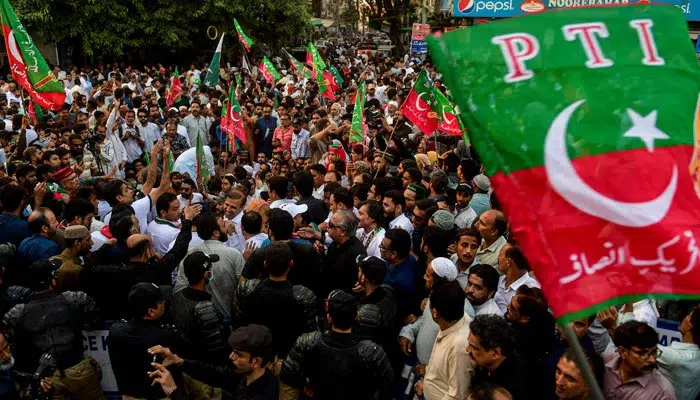
    Pakistan Tehreek e Insaf (PTI) leader and lawyer Salman Akram Raja has been arrested by the police near PTI’s Jail Road office, for participating in the party’s call for nationwide protest against electoral rigging. Salman participated as a PTI backed independent candidate in general elections

    “They’re arrested me illegally, and I’m with the public, we will continue raising my voice for truth” he said while being arrested

    PTI yesterday had called for nationwide protests against electoral rigging.

  • Commissioner Rawalpindi claims serious rigging in elections, resigns from post

    Commissioner Rawalpindi claims serious rigging in elections, resigns from post

    Commissioner Rawalpindi Liaqat Ali Chattha has announced his resignation after claiming that the general elections 2024 were rigged in his division.

    While holding a press conference at Rawalpindi Cricket Stadium Liaqat Ali Chattha said, “I did injustice in Rawalpindi Division during the elections. We changed the losing margins to 50 thousand leads, 13 MNAs of Rawalpindi Division were losing, they got 70 thousand leads and toyed with the country.”

    Accepting responsibility of election rigging in Rawalpindi Division and handing himself over to the police, he announced resigning from my post. “I should be given the death penalty in Rawalpindi’s Kachehri Chowk,” he remarked.

    He said that Election Commission of Pakistan, Chief Election Commissioner and Chief Justice of Pakistan are also involved in the rigging of the election. “These people should also resign from their positions.”

    He said “I was under pressure from social media and overseas Pakistanis, I tried to commit suicide this morning after Fajr prayer, then I thought why not? Let me put all the things in front of the people, why should I die a forbidden death, I am going through grief and political people are going around to become ministers after wearing a sherwani, the stabbing in the back of the country does not let me sleep, I want to remove the burden of my grief. I want a peaceful death.”

    However Caretaker Information Minister Punjab Aamir Mir vehemently denied the allegations of Commissioner Rawalpindi Liaquat Ali Chatta and called it a political stunt.

    The Commissioner was due for retirement in just three weeks.

  • Trump fined $355 mn, banned from NY business in fraud trial

    Trump fined $355 mn, banned from NY business in fraud trial

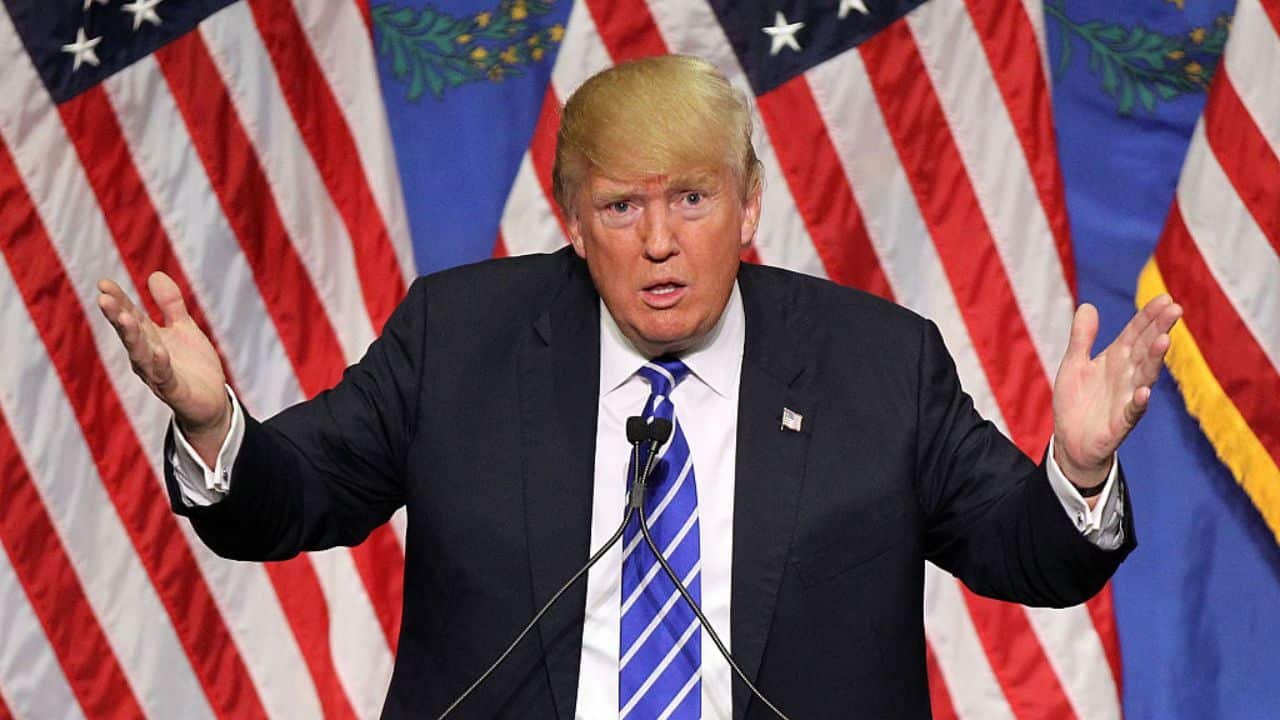
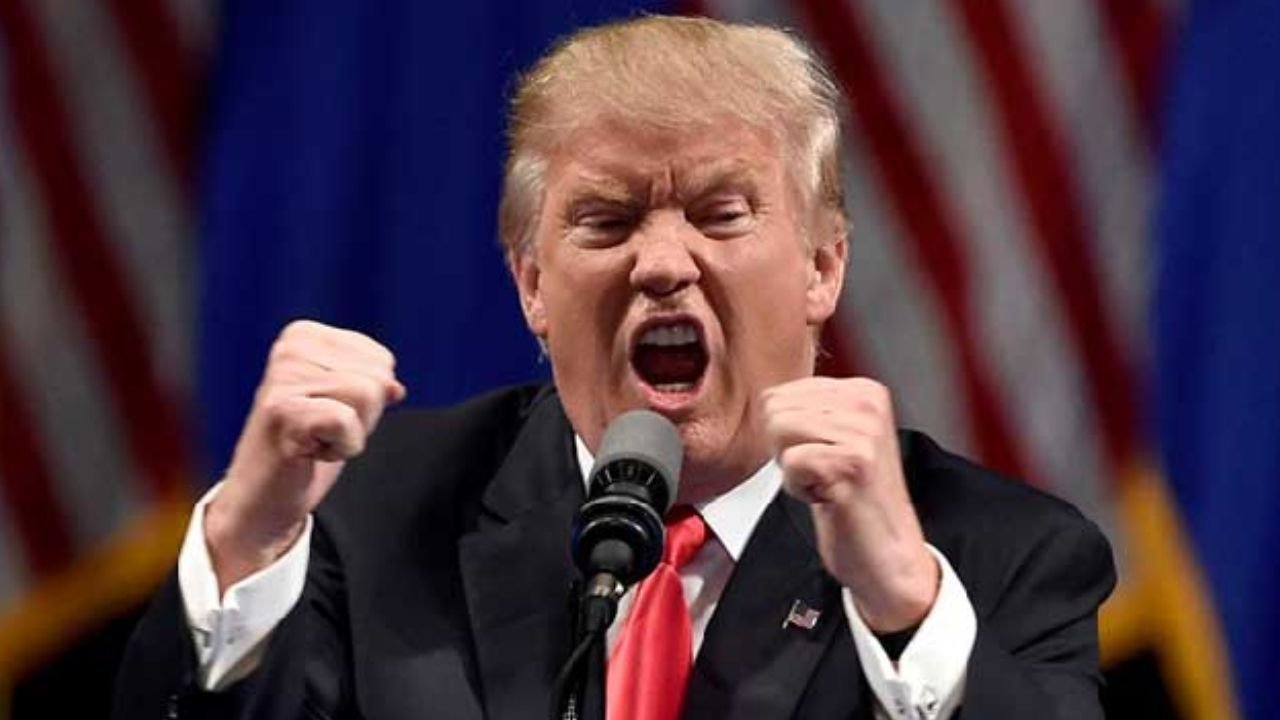
    A New York judge ordered Donald Trump to pay $355 million over fraud allegations and banned him from running companies in the state for three years Friday in a major blow to his business empire and financial standing.

    Trump — almost certain to be the Republican presidential nominee this November — was found liable for unlawfully inflating his wealth and manipulating the value of properties to obtain favorable bank loans or insurance terms.

    Trump lashed out on social media calling the ruling a “Total SHAM,” the judge in the case “crooked” and the prosecutor who brought it “totally corrupt.” His legal team said he would “of course” appeal.

    As the case was civil, not criminal, there was no threat of imprisonment. But Trump said ahead of the ruling that a ban on conducting business in New York state would be akin to a “corporate death penalty.”

    Trump, facing 91 criminal counts in other cases, has seized on his legal woes to fire up supporters and denounce his likely opponent, President Joe Biden, claiming that court cases are “just a way of hurting me in the election.”

    However, Judge Arthur Engoron said the financially shattering penalties are justified by Trump’s behavior.

    “Their complete lack of contrition and remorse borders on pathological,” Engoron said of Trump and his two sons, who were also defendants, in his scathing ruling.

    “They are accused only of inflating asset values to make more money… Donald Trump is not Bernard Madoff. Yet, defendants are incapable of admitting the error of their ways,” he added, referring to the perpetrator of a massive Ponzi scheme.

    Trump’s sons Eric and Donald Trump Jr. were also found liable in the case and ordered to pay more than $4 million each, prompting Don Jr. to claim on social media that “political beliefs” had determined the outcome.

    Engoron also extended the mandate of retired judge Barbara Jones as an independent monitor of Trump’s business affairs, as well as ordering the appointment of an independent director of compliance to the Trump Organization, with candidates to be nominated by Jones.

    “Conditions that Judge Engoron imposed, such as having Judge Jones monitor the Trump companies, may be onerous. I do expect an appeal,” said Richmond University law professor Carl Tobias.

    It was as a property developer and businessman in New York that Trump built his public profile which he used as a springboard into the entertainment industry and ultimately the presidency.

    The judge’s order was a victory for New York state Attorney General Letitia James. She had sought $370 million from Trump to remedy the advantage he is alleged to have wrongfully obtained, as well as having him barred from conducting business in the state.

  • Top UN court rejects South Africa request for more Gaza measures

    Top UN court rejects South Africa request for more Gaza measures

    THE HAGUE: The UN’s top court Friday rejected South Africa’s request to put more legal pressure on Israel to halt a threatened offensive against the Gaza city of Rafah, saying it was “bound to comply with existing measures.”

    Pretoria has already filed a complaint against Israel in the International Court of Justice (ICJ) in The Hague, alleging that its assault on Gaza amounts to a breach of the Genocide Convention.

    The court has yet to rule on the underlying issue, but on January 26 it ordered Israel to ensure it took action to protect Palestinian civilians from further harm and to allow in humanitarian aid.

    South African officials on Tuesday filed a further request to the court, asking it to order new measures in the light of Israel’s preparation of a new operation against Rafah.

    More than half of Gaza’s 2.4 million population have sought shelter there from Israel’s offensive on the Gaza Strip.

    The ICJ’s judges acknowledged that the recent developments “’would exponentially increase what is already a humanitarian nightmare with untold regional consequences’” — citing remarks by UN Secretary-General Antonio Guterres.

    But although Israel needed to act immediately to ensure the safety and security of Palestinians, that did not require “the indication of additional provisional measures,” they added.

    Israel remained “bound to fully comply with its obligations under the Genocide Convention and with the said Order,” the ICJ ruling said.

    Hamas’s October 7 attack resulted in the deaths of about 1,160 people in Israel, mostly civilians, according to an AFP tally based on official Israeli figures.

    Militants also took about 250 people hostage, around 130 of whom are still in Gaza, including 30 who are presumed dead, according to Israeli figures.

    Israel’s assault on Gaza has since killed at least 28,775 people, mostly women and children, according to the territory’s health ministry.

    Israel’s foreign minister on Friday said the country would coordinate with Egypt before launching any military offensive in the southern border city of Rafah.

    “We will operate in Rafah after we coordinate with Egypt,” Israel Katz told journalists on the sidelines of the Munich Security Conference, where 180 dignitaries have gathered to discuss conflicts around the globe.

    Fears had been growing for the hundreds of thousands of people who have fled the north of Gaza to Rafah as Israeli troops advanced into the territory to wage war on Hamas.

    But Israel is now planning a major operation in the overcrowded city. With the border to Egypt closed, nearly 1.5 million Palestinians are essentially trapped there.

  • PTI to hold countrywide protests over alleged rigging

    PTI to hold countrywide protests over alleged rigging

    The Pakistan Tehreek-e-Insaf (PTI) will hit the streets today at 12pm across the country to protest against what they claim is rigging and tampering with election results from February 8th.

    Major parties that won the most seats have been looking for allies and making alliances to form the next governments at both the national and provincial levels.

    The PTI expressed disappointment with the election results, where its affiliated candidates won over 90 National Assembly seats, making them the largest group. They announced plans to hold peaceful protests countrywide against what they called “record-high rigging” in the recent general elections.

    “The PTI has called for country-wide protests against the unprecedented, massive, brazen rigging in general elections 2024, where PTI’s win of 180 National Assembly seats and a two-thirds majority in the parliament, was cut down to half,” the party said in a statement.

  • Yearly basis: Weekly inflation stays above 34%

    Yearly basis: Weekly inflation stays above 34%

    In the week concluding on February 15, 2024, the Weekly Sensitive Price Indicator (SPI) for the Combined Group exhibited a slight decrease of 0.78 per cent week-over-week (WoW).

    However, compared to the same period last year, the SPI surged by 34.25 per cent YoY, according to data released by the Pakistan Bureau of Statistics (PBS).

    The combined index, standing at 315.18, marked a slight dip from 317.65 recorded on February 8, 2024. A year ago, on February 16, 2023, the index was substantially lower at 234.77.

    Analysing the data further, out of the 51 items monitored, the average price of 22 items increased, 11 items witnessed a decrease, and 18 items remained stable.

    Notably, PBS did not release SPI data last week, following a 0.28 per cent WoW decline in the preceding week.

    During the week under review, significant decreases were noted in the prices of eggs (28.82 per cent), chicken (4.23 per cent), onions (3.48 per cent), LPG (2.85 per cent), and gur (1.13 per cent).

    Conversely, notable increases were observed in the prices of bananas (4.64 per cent), potatoes (2.80 per cent), match boxes (1.31 per cent), long cloth (1.29 per cent), and cooked daal (0.77 per cent).

    Analysing the SPI percentage change by income groups, a uniform decline of -0.82 per cent to -0.72 per cent was witnessed across all quantiles.

    The lowest-income group experienced a weekly decline of 0.78 per cent, while the highest-income group recorded a decrease of 0.77 per cent.

    On a yearly basis, SPI increased across all quantiles, ranging between 28.68 per cent and 38.54 per cent. The lowest-income group saw a 28.68 per cent increase, while the highest-income group recorded a 32.08 per cent rise.

    The average price of Sona urea fell to Rs4,513 per 50 kg bag, marking a 0.50 per cent decrease from last week and a significant 54.84 per cent increase from the previous year.

    Meanwhile, the average cement price recorded at Rs1,234 per 50 kg bag marked a 2.05 per cent increase from the previous week and a 14.27 per cent hike from the prices recorded last year.

    In a volatile market environment, these fluctuations in the SPI indicate the dynamic nature of the economic landscape, impacting consumers across various income groups.

  • Political instability, IMF loan conditions threaten Pakistan’s economic growth

    Political instability, IMF loan conditions threaten Pakistan’s economic growth

    In January, Pakistan experienced a boost in economic activity, thanks to the financial aid provided by the International Monetary Fund (IMF), as reported by Bloomberg Economics Tracker.

    However, there are three key developments that may impact future economic conditions.

    Firstly, the aftermath of the inconclusive February 8 election has resulted in persistent political instability, presenting a potential obstacle to new investments.

    Secondly, there is a likelihood of more stringent conditions associated with additional IMF loans. Lastly, there is an increasing probability that the State Bank of Pakistan will delay rate cuts.

    Despite the challenges, January saw a positive trend with a 0.9 per cent increase in economic activity compared to December, breaking a four-month contraction streak.

    The injection of IMF loans and eased trade restrictions contributed to this improvement, enabling increased purchases of essential import supplies.

    Looking ahead, the unresolved election outcome may prolong political uncertainty, affecting potential investments.

    The recent hike in gas prices on February 15 will likely drive inflation higher, further reducing the chances of a March rate cut.

    Considering these developments, Bloomberg Economics is considering revising its growth outlook.

    While Bloomberg currently predicts 2.1 per cent GDP growth through June 2024 (up from a 0.2 per cent contraction in the previous fiscal year), the consensus estimate is 2.5 per cent, and the IMF forecasts 2 per cent.

    It’s essential to note that the Bloomberg Economics monthly tracker assesses inflation-adjusted indicators of activity.

  • 24-karat gold price increases by Rs1,300 per tola

    24-karat gold price increases by Rs1,300 per tola

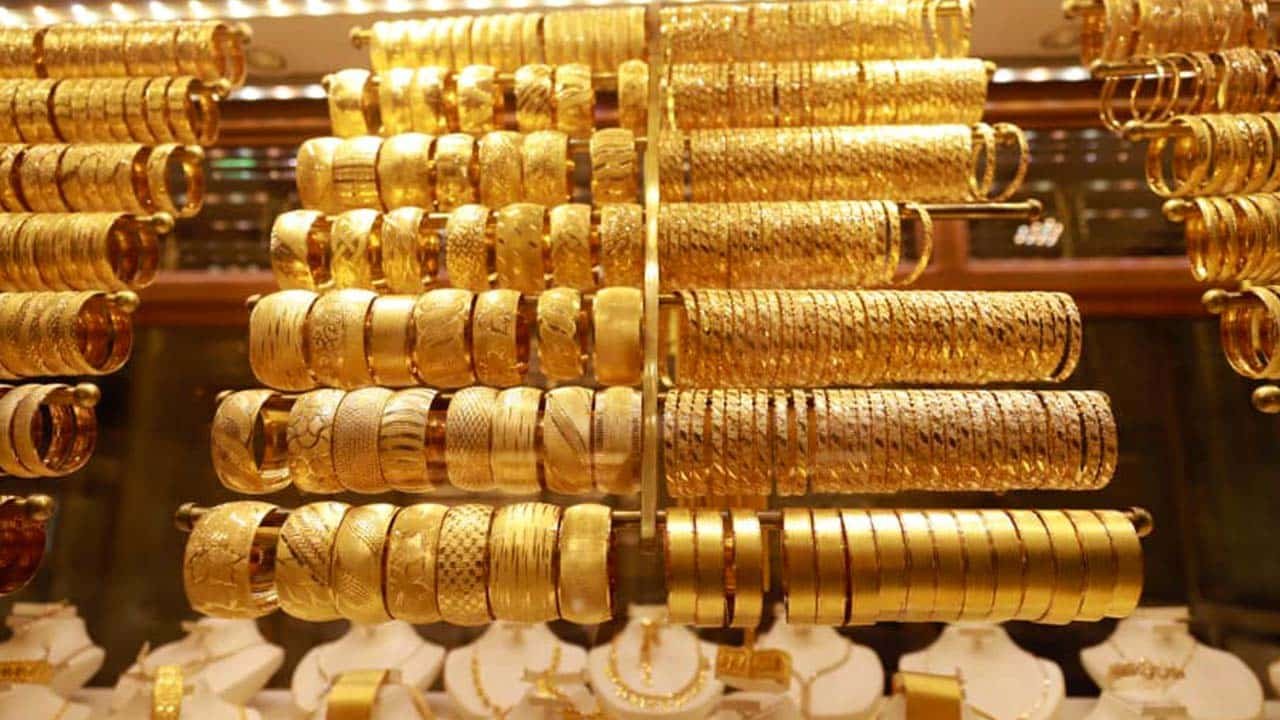
    In a persistent upward trend, the domestic bullion market showcased further gains, particularly in the value of 24-karat gold, which surged by Rs1,300 per tola to reach Rs212,400 on Friday.

    According to the latest report from the Karachi Sarafa Association, the price of 10-gram 24-karat gold experienced a notable increase, reaching Rs182,099 and reflecting a gain of Rs1,115 compared to the previous session.

    Simultaneously, the price of 10-gram 22-karat gold saw an uptick, settling at Rs166,924.

    Despite the positive momentum in the gold market, silver prices remained steady, with 24-karat silver holding at Rs2,580 per tola and 10-gram silver trading at Rs2,211.93.

    Interestingly, despite today’s substantial rise in gold prices and the prevailing political instability in the country, local gold is on track to record a weekly loss.

    This comes on the heels of hotter-than-anticipated US inflation data released on Wednesday, causing gold to dip below the $2,000 mark for the first time in two months.

    Bloomberg reported that the American Consumer Price Index (CPI) data disappointed investors, reversing recent declines in price pressures and dampening expectations for rate cuts this year.

    However, the international spot gold has rebounded strongly since Wednesday’s decline, currently trading at $2,007.61, reflecting a gain of over $3 day-over-day.

    Amidst these global dynamics, the fluctuation in the domestic currency plays a crucial role in determining the domestic gold rate.

    It’s noteworthy that the Pakistani Rupee (PKR) snapped its 13-week-long and historic winning streak against the US Dollar, experiencing a marginal drop of 8 paisa.

    Given that gold is denominated in US dollars, a depreciation of the PKR against the dollar contributes to the rise in the value of PKR-denominated gold.

    The bullion market’s resilience in the face of global challenges highlights its sensitivity to both local and international economic factors, providing a nuanced perspective for investors and stakeholders.

  • Russian opposition leader Alexei Navalny dies in prison

    Russian opposition leader Alexei Navalny dies in prison

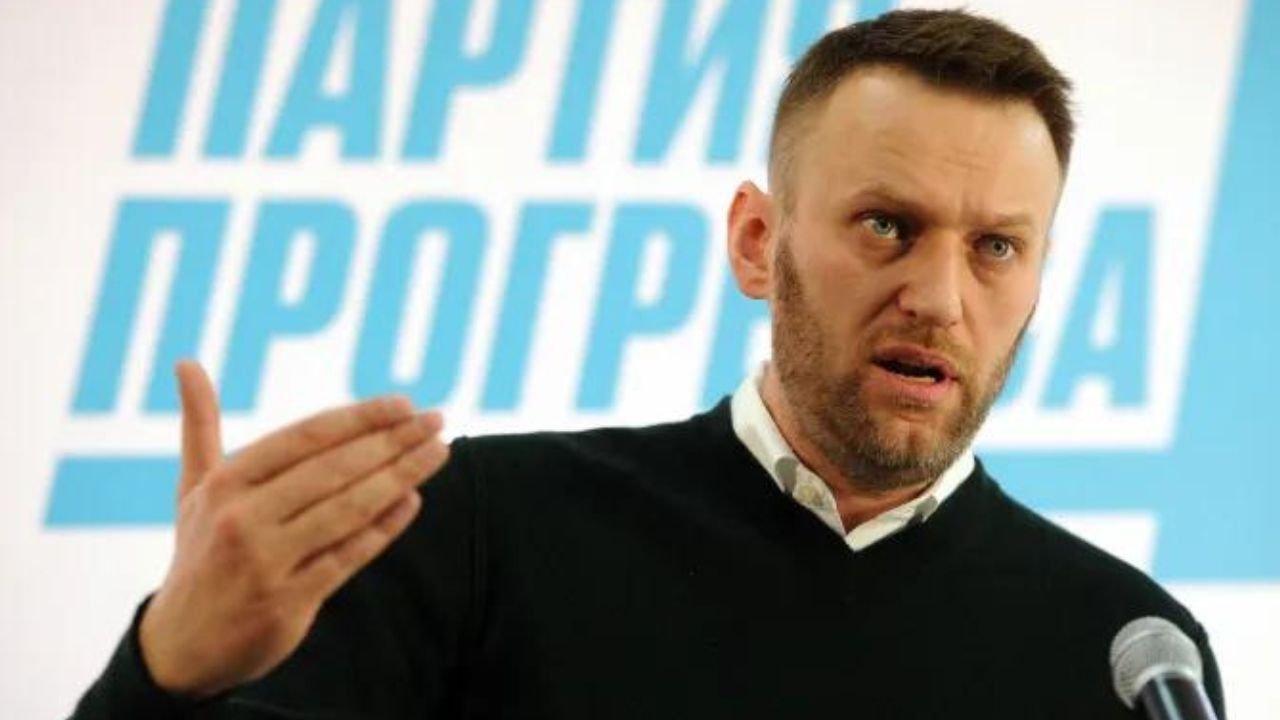
    Moscow, Russia – Russian opposition leader Alexei Navalny died Friday in the Arctic prison colony where he was serving a 19-year-term, Russia’s federal penitentiary service said.

    Western governments immediately attacked the Kremlin over the death of the most outspoken critic of President Vladimir Putin.

    Navalny lost consciousness after a walk and could not be revived by medics, the prison service said.

    “Navalny felt bad after a walk, almost immediately losing consciousness. Medical staff arrived immediately and an ambulance team was called,” it said.

    “Resuscitation measures were carried out which did not yield positive results. Paramedics confirmed the death of the convict. The causes of death are being established.”

    The 47-year-old was Russia’s most prominent opposition leader and won a huge following with his criticism of corruption in Vladimir Putin’s Russia.

    Russia’s Investigative Committee said it had opened an investigation into the death.

    Navalny’s press secretary Kira Yarmysh said his team had not been informed of his death.

    “Alexei’s lawyer is now flying to Kharp,” where his prison colony is, she said in a post on social media.

    Citing his spokesman, Russian news agencies reported that Putin had been informed of Navalny’s death.

    Western governments and Russian opposition figures on Friday said the Kremlin was responsible for his death.

    Latvia’s president said he had been “brutally murdered by the Kremlin”.

    “The Russian government bears a heavy responsibility,” Norway’s Foreign Minister Espen Barth Eide wrote on X, formerly Twitter.

    France’s foreign minister said Navalny had paid with his life for resisting oppression.

    Opposition leader

    Navalny’s exposes, posted on his YouTube channel racked up millions of views and brought tens of thousands of Russians to the streets, despite Russia’s harsh anti-protests laws.

    He was jailed in early 2021 after returning to Russia from Germany, where he was recuperating from a near-fatal poisoning attack with Novichok, a Soviet-era nerve agent.

    In a string of cases he was sentenced to 19 years in prison on charges widely condemned by independent rights groups and in the West as retribution for his opposition to the Kremlin.

    His return to Russia despite facing jail put him on a collision course with Putin, after Navalny blamed the poisoning attack in Siberia on the Kremlin.

    “I’m not afraid and I call on you not to be afraid,” he said in an appeal to supporters as he landed in Moscow, moments before being detained on charges linked to an old fraud conviction.

    His 2021 arrest spurred some of the largest demonstrations Russia had seen in decades, and thousands were detained at rallies nationwide calling for his release.

    In prison, Navalny’s team said he had been harassed and repeatedly moved to a punitive solitary confinement cell.

    He said guards had subjected him and other inmates to “torture by Putin”, making them listen to the president’s speeches.

    From behind bars he was a staunch opponent of Moscow’s full-scale military offensive against Ukraine.

    The Kremlin moved to dismantle his organisation, locking up his allies and sending dozens of others into exile.

    Late last year he was moved to a remove Arctic prison colony in Russia’s Yamalo-Nenets region in northern Siberia.

    The last post on Navalny’s Telegram channel, which he managed through his lawyers and team in exile, was a tribute to his wife, Yulia Navalnaya, posted on Valentine’s Day.