Blog

  • Judge postpones decision on Cher’s conservatorship request for son, Elijah Blue Allman

    Judge postpones decision on Cher’s conservatorship request for son, Elijah Blue Allman

    In a courtroom drama unfolding on Friday, Los Angeles Superior Court Judge Jessica A. Uzcategui deferred a ruling on the immediate establishment of a conservatorship for Elijah Blue Allman, son of iconic singer and actor Cher.

    The court is set to revisit the contentious issue on January 29, as attorneys representing both parties continue to spar over the necessity and urgency of the conservatorship.

    Cher, a recipient of Oscars and Grammys, filed a petition last week, seeking control over the finances of her 47-year-old son, Elijah Blue Allman. The legal move comes as Cher expressed concerns about Allman’s struggles with addiction and mental health, asserting that his inability to manage his finances could potentially jeopardise his life.

    During Friday’s hearing, Judge Uzcategui determined that Cher’s legal team had failed to provide Allman and his lawyers with the requisite documents, impeding their ability to present a comprehensive case. Consequently, she postponed a decision, setting the stage for a follow-up hearing later this month.

    Cher’s attorney, Gabrielle Vidal, emphasized the urgency of the conservatorship, highlighting a pending payment from a trust established by Allman’s late father, musician Gregg Allman. Vidal argued that the immediate establishment of the conservatorship was critical, describing it as a “life-and-death proposition.” However, Uzcategui remained unconvinced.

    The judge pointed to Cher’s legal team’s reluctance to share information directly with Allman’s attorneys, citing confidentiality concerns. Cher’s lawyers defended their decision, stating that they had shared the documents with Allman’s court-appointed lawyer instead.

    In a court filing preceding the hearing, Allman acknowledged his struggles with addiction and irresponsible spending but asserted that a conservatorship was unnecessary. He revealed that he is under the care of a doctor, has been sober for over three months, attends Alcoholics Anonymous meetings, and is willing to undergo regular drug tests.

    In the filing, Allman expressed gratitude for his mother’s love and support but made it clear that he does not require her “unsolicited help or support” at this time. Allman was present in court on Friday but offered only brief responses to the judge’s inquiries. His legal team opted not to comment after the hearing.

    Cher did not attend the hearing, and her attorneys did not immediately respond to requests for comment. As the legal battle unfolds, the fate of the conservatorship hangs in the balance, with both sides set to present their cases in the coming weeks.

  • American couple’s dog eats cash worth more than 11 lac and they retrieve it through vomit and poop

    American couple’s dog eats cash worth more than 11 lac and they retrieve it through vomit and poop

    A Pittsburgh couple’s dog Cecil ate through 4,000 dollars in cash, leading his owners to embark on a difficult recovery mission.

    The couple, Clayton and Carrie Law were in shock when their dog ate the huge sum they had just withdrawn from the bank. Clayton had set the money on the kitchen table and within 30 minutes their usually restrained dog just decided to hop onto it. The dog ingested about half the money and ripped up the other half, Clayton said.

    After searching online, the couple found that damaged currency can be mailed or dropped off at the U.S. Bureau of Engraving and Printing’s office along with a letter stating the estimated amount and the reason for damage.

    However, this is expected to take six months to three years. Instead of waiting, Carrie said the couple called their bank to see if they could deposit damaged currency. They learned this happens often, and the bank advised them to wait until Cecil expelled the cash – one way or another.
    That same night, the dog vomited almost 100 dollars, the couple told USA Today in an interview.

    During the next three days, Cecil excreted a couple of 50 and 100-dollar bills. The couple had a system in place: Clayton would pick up the feces and stand at their sink, sorting what came out. Meanwhile, Carrie would try to match the serial numbers on the scraps of bills and tape them together.
    The Laws were able to recover around $3,500 of the original $4,000 Cecil ripped up and ate. They still have the recovered money in their home and they are planning to see if the bank will accept it.

    When Carrie posted a video of what happened on Instagram, she initially thought only a few friends would see it and engage with it.
    Since it was posted on Dec. 14, the video has received nearly 11.6 million views on Instagram.

  • Cost of living rises in Pakistan: Weekly inflation jumps by 0.81%

    Cost of living rises in Pakistan: Weekly inflation jumps by 0.81%

    In a recent report by the Pakistan Bureau of Statistics (PBS), the Weekly Sensitive Price Indicator (SPI) for the Combined Group witnessed a marginal increase of 0.81 per cent Week on Week (WoW), concluding on January 04, 2024.

    The SPI also exhibited a substantial 42.86 per cent Year on Year (YoY) surge when compared to the corresponding period from the previous year.

    The Combined Index, reflecting the overall price movement, stood at 313.66 as of January 04, 2024, compared to 311.14 on December 28, 2023. In contrast, a year ago on January 05, 2023, the index was reported at 219.56.

    Out of the 51 items considered, the average prices of 19 items experienced an increase, 09 items observed a decrease, and 23 items remained stable throughout the week.

    During this period, notable price hikes were observed in tomatoes (16.04 per cent), chicken (13.98 per cent), eggs (3.20 per cent), onions (3.04 per cent), and bananas (2.13 per cent).

    Moreover, significant decreases were noted in the prices of potatoes (8.68 per cent), tea Lipton (1.29 per cent), garlic (0.68 per cent), and cooking oil 5 litre & vegetable ghee 2.5 kg (0.54 per cent) each.

    Analysing the weekly SPI percentage change across income groups revealed a universal increase ranging from 0.79 per cent to 0.84 per cent. The Lowest Income Group experienced a rise of 0.81 per cent, while the highest income group recorded a slightly lower increase of 0.8 per cent.

    On a yearly basis, the SPI change across different income segments exhibited a general increase ranging from 35.33 per cent to 46.38 per cent. The Lowest Income Group saw a yearly rise of 35.33 per cent, while the highest income group recorded an increase of 41.35 per cent.

    Noteworthy price points in the market included Sona urea, with an average price of Rs4,618 per 50 kg bag, marking a 0.02 per cent increase from the previous week and a substantial 72.45 per cent surge compared to the previous year.

    In contrast, the average Cement price recorded at Rs1,226 per 50 kg bag showed a 0.47 per cent decrease from the previous week but stood 17.43 per cent higher than prices observed last year.

    These fluctuations in the SPI underscore the dynamic nature of the market, reflecting both short-term variations and longer-term economic trends.

    As consumers and businesses navigate these changes, analysts are closely monitoring the SPI for insights into broader economic patterns.

  • PKR ends week in green, settles at Rs281.4 vs USD

    PKR ends week in green, settles at Rs281.4 vs USD

    The Pakistani rupee demonstrated resilience, marking its third consecutive session of gains against the US dollar with a 0.1 per cent appreciation in the inter-bank market on Friday. 

    According to the State Bank of Pakistan (SBP), the rupee concluded at Rs281.4, reflecting an increase of Re0.27.

    In a noteworthy development, the SBP’s foreign exchange reserves experienced a significant boost of $1.3 billion over a two-week period, attributed to official inflows from international financial institutions facilitated by the government of Pakistan. 

    The upward trajectory in the SBP’s foreign exchange reserves was evident in the final weeks of December. Inflows totaling $852 million were reported for the week ending December 22, 2023, followed by an additional $464 million by December 29, 2023. 

    Cumulatively, an impressive $1.316 billion contributed to the SBP’s reserves during this fortnight.

  • Covid testing of foreign arrivals starts again in Pakistan

    Covid testing of foreign arrivals starts again in Pakistan

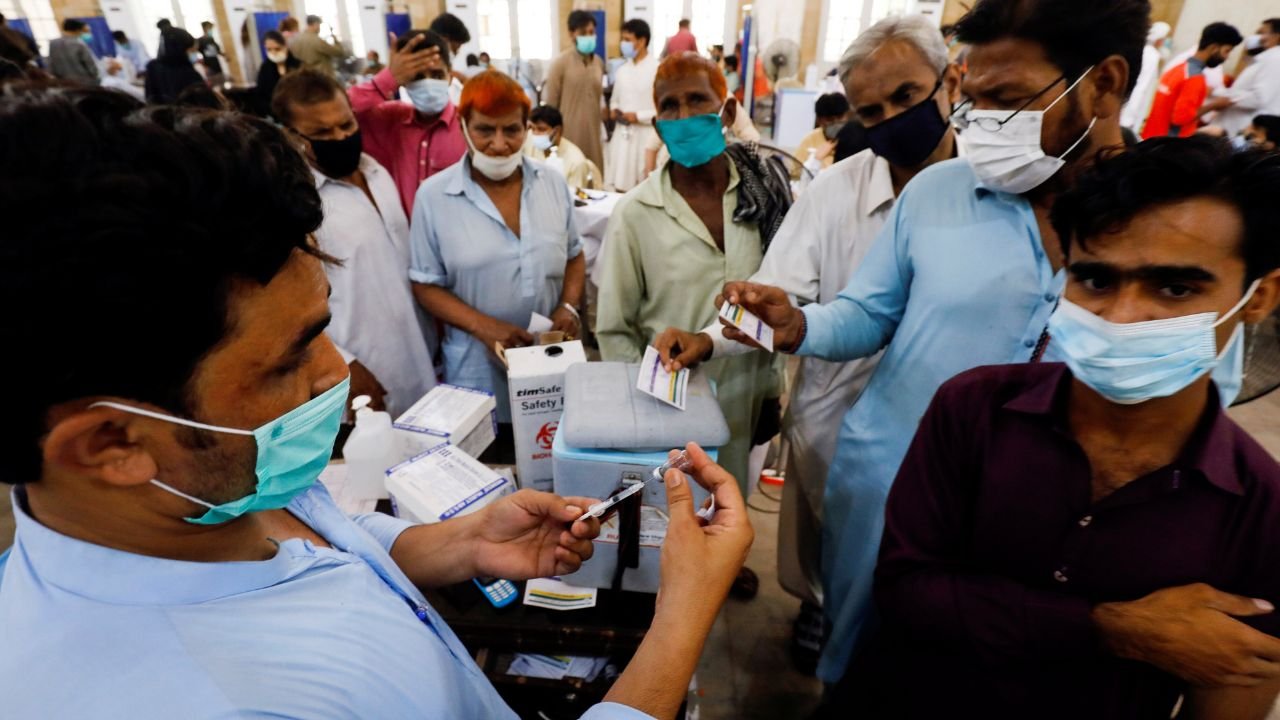
    The National Institute of Health (NIH) has provided COVID-19 testing kits to the Border Health Services Department in Islamabad, reports Geo.

    According to the officials of the Federal Ministry of Health, 40,000 rapid diagnostic kits have been given to the Border Health Services Department.
    The authorities told Geo that COVID testing of those coming from abroad has started at many airports including Islamabad. Two percent of the passengers coming from abroad will be subjected to mandatory Covid testing.

    Officials said that genome sequencing of a few detected Covid cases is also being carried out.

    Testing kits have not yet arrived at Multan and Faisalabad International Airports.

    Meanwhile, a new sub-variant of the Omicron strain of coronavirus named JN.1 has health experts on alert, as it has been classified as a “variant of interest” by the World Health Organisation (WHO) due to its fast-growing spread. A staggering fifty percent increase in COVID-19 infections has been observed worldwide.

  • Israeli Minister Lays Out Post-war Gaza Plan As Fighting Rages

    Israeli Minister Lays Out Post-war Gaza Plan As Fighting Rages

    Israel’s defence minister has publicly presented for the first time proposals for the post-war administration of Gaza, where officials said Friday unrelenting bombardment has killed dozens over 24 hours.

    Defence Minister Yoav Gallant’s plan for the “day after”, shared with the media late Thursday but not yet adopted by Israel’s war cabinet, says that neither Israel nor Hamas will govern Gaza and rejects future Jewish settlements there.

    The minister’s broad outline was unveiled on the eve of US Secretary of State Antony Blinken’s fourth trip to the region since October 7.

    Questions over the future of the besieged Palestinian territory have multiplied as Israel insists it will continue with its military operations despite international calls for a ceasefire.

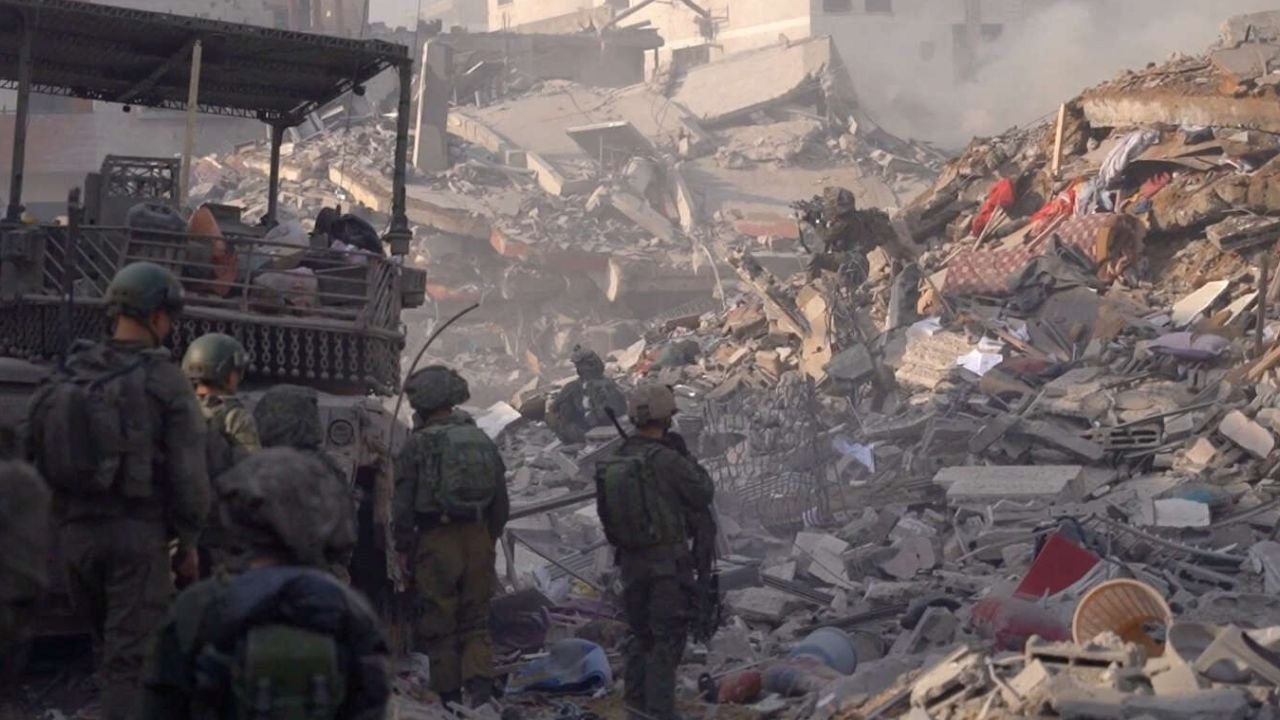
    Much of the Gaza Strip has been reduced to rubble, while civilian deaths have soared and the UN has warned of a humanitarian crisis that has left hundreds of thousands displaced, facing famine and disease.

    Bombing continued through the night in the southern areas of Khan Yunis and Rafah as well as parts of central Gaza, according to AFP correspondents.

    The Israeli army said its forces had “struck over 100 targets” across Gaza over the past 24 hours, including military positions, rocket launch sites and weapons depots.

    The health ministry said it had recorded 162 deaths also over the past 24 hours.

    A fighter jet hit the central area of Bureij overnight, killing “an armed terrorist cell”, the army said, after what it described in a statement as an attempted attack on an Israeli tank.

    And “a number” of Palestinian militants were killed in clashes in Khan Yunis, a major city in southern Gaza that has become the focus of the fighting, the army said.

    According to Gallant’s proposed outline, the war will continue until Israel has dismantled Hamas’s “military and governing capabilities” and secured the return of hostages.

    After Israel achieves its objectives — for which the proposal sets no timeline — Palestinian “civil committees” will begin assuming control of the territory’s governance, it said.

    “Hamas will not govern Gaza, (and) Israel will not govern Gaza’s civilians,” the plan said, while offering little concrete detail.

    “Palestinian bodies will be in charge, with the condition that there will be no hostile actions or threats against the State of Israel.”

    Israel launched its campaign against Hamas after the militant group’s October 7 attack, which resulted in the deaths of around 1,140 people, most of them civilians, according to an AFP tally based on official Israeli figures.

    The militants also took around 250 hostages, 132 of whom remain in captivity, according to Israel, including at least 24 believed to have been killed.

    Israel’s relentless bombardment and ground invasion have killed at least 22,600 people, most of them women and children, according to the Gaza health ministry.

    Conditions for Gaza’s civilians are precarious, with the United Nations estimating 1.9 million people are displaced.

    AFPTV footage showed entire families, seeking safety from the violence, arriving in the southern border city of Rafah in overloaded cars and on foot, pushing handcarts stacked with possessions.

    “We fled Jabalia camp to Maan (in Khan Yunis) and now we are fleeing from Maan to Rafah,” said one woman who declined to give her name. “(We have) no water, no electricity and no food.”

    A spokesman for the UN agency for Palestinian refugees, UNRWA, told AFP that Rafah is overwhelmed by the influx.

    “The city is usually home to only 250,000 persons. And now, it’s more than 1.3 million,” said Adnan Abu Hasna.

    “We have recently noticed a major collapse in health conditions” and a “significant spread” of disease, he added.

    Ahmad al-Sufi, head of the Rafah emergency committee said there was an urgent need for 50,000 tents to house the refugees.

    At Al-Amal hospital in Khan Yunis, one of Gaza’s few medical facilities still operating, the Palestinian Red Crescent Society said seven displaced people, including a five-day-old baby, were killed while sheltering in the compound.

    Dozens more were killed in nearby strikes during three days of bombardment, the Red Crescent said, reporting renewed artillery shelling and drone fire in the area on Friday.

    During his visit, Blinken plans to discuss with Israeli leaders “immediate measures to increase substantially humanitarian assistance to Gaza”, State Department spokesman Matthew Miller said.

    Germany’s top diplomat Annalena Baerbock will also travel to the region, foreign ministry spokesman said, beginning Sunday in Israel and also meeting with Palestinian leaders.

    She plans to discuss “the dramatic humanitarian situation in Gaza” and tensions on the Israel-Lebanon border, spokesman Sebastian Fischer said.

    Aid entering the besieged territory has slowed to a trickle during the war.

    The UN’s humanitarian office OCHA said on Thursday that it had been unable to deliver “urgently needed life-saving” aid north of Wadi Gaza — an area including Gaza City — for four days “due to access delays and denials” and active fighting.

    The war in Gaza and almost daily exchanges of fire across the border since October 7 have threatened to draw Israel’s northern neighbour into a regional conflagration.

    A strike on Tuesday in Lebanon, widely assumed to have been carried out by Israel, killed Hamas deputy leader Saleh al-Aruri.

    It hit the south Beirut stronghold of the powerful Iran-backed Hezbollah movement.

    Hezbollah has vowed that the killing on its home turf will not go unpunished, while Israeli army chief Herzi Halevi said troops on the border were “in very high readiness”.

    Israel’s military said on Friday its fighter jets had conducted fresh strikes against Hezbollah targets just across the border in Lebanon.

    The frequent bombardments has driven 76,000 people from their homes on the Lebanese side of the border, the UN’s migration agency said on Thursday. Israel evacuated thousands of its civilians from the border area in the early weeks of the war.


  • ICC has changed the law of stumping review

    ICC has changed the law of stumping review

    The International Cricket Council (ICC) has changed the law of stumping review, according to which ‘the field umpire can only check the batter’s crease position’.

    Old Rule:

    According to the media report, if the off-field umpire had approached the third umpire to clear his doubts about the appeal of stumping by the fielding side in cricket, other types of outs including catches behind the wickets would have been checked and there would have been a chance to get a wicket, but this law has been changed since December 1.

    If the on-field umpire had checked the stumping, the bowling side would have got a free review. Now a straight and clear law has been introduced in this regard, in which it will be seen only from the side angles whether the batter was outside the crease at the time of stumping or not.

    New Rule:

    If the field umpire seeks the opinion of the third umpire, then he will make a decision only regarding stumping, even if there is any other type of dismissal, the decision will not be given in favor of the bowling side, for this a review will have to be taken.

    Another law change made it clear that if a player suffering from a concussion is currently suspended from bowling, his replacement will not be allowed to bowl. Only 4 minutes will be given to decide whether to assist or take off the field, the TV umpire will now be able to check all types of no balls, not just front foot.

  • Animal, featuring Ranbir Kapoor, to hit Pakistani Netflix soon

    Animal, featuring Ranbir Kapoor, to hit Pakistani Netflix soon

    Pakistani fans of Ranbir Kapoor can rejoice as the Bollywood superstar’s latest movie, Animal, is coming soon to Netflix. According to Hindustan Times, the Sandeep Reddy Vanga directed venture will be available on the streaming service from January 26.

    According to India Today, the longer version of the action-packed film is set to come out on the streaming platform in 2024. Notably, Netflix’s official Instagram page has posted pictures of the popular Bollywood actor from the film’s premiere.

    Director Karan Johar has declared Animal as the best film of the year, stressing that despite his own 2023 romance Rocky Aur Rani, he strongly believes Animal is unparalleled. According to Hindustan Times, Karan stated, “I cannot disagree with you more because Animal is the best film of the year.”
    He compared it to the time when he praised Kabir Singh and faced judgment. Karan said, “I thought, ‘I’m going to say something and I’m going to get bad looks from certain people, but I don’t care anymore.”
    Karan Johar explained why he is so passionate about Animal, emphasizing its bold and conviction-driven storytelling that defies traditional norms in popular cinema. He praised a unique sequence in the film where a song is played while the hero is getting beaten up, highlighting the cleverness in the storytelling. Johar added, “Animal’s popularity and acceptance, in my opinion, are revolutionary. It is a conviction that I would like to possess.”

  • Senate approves resolution asking for delay in elections

    Senate approves resolution asking for delay in elections

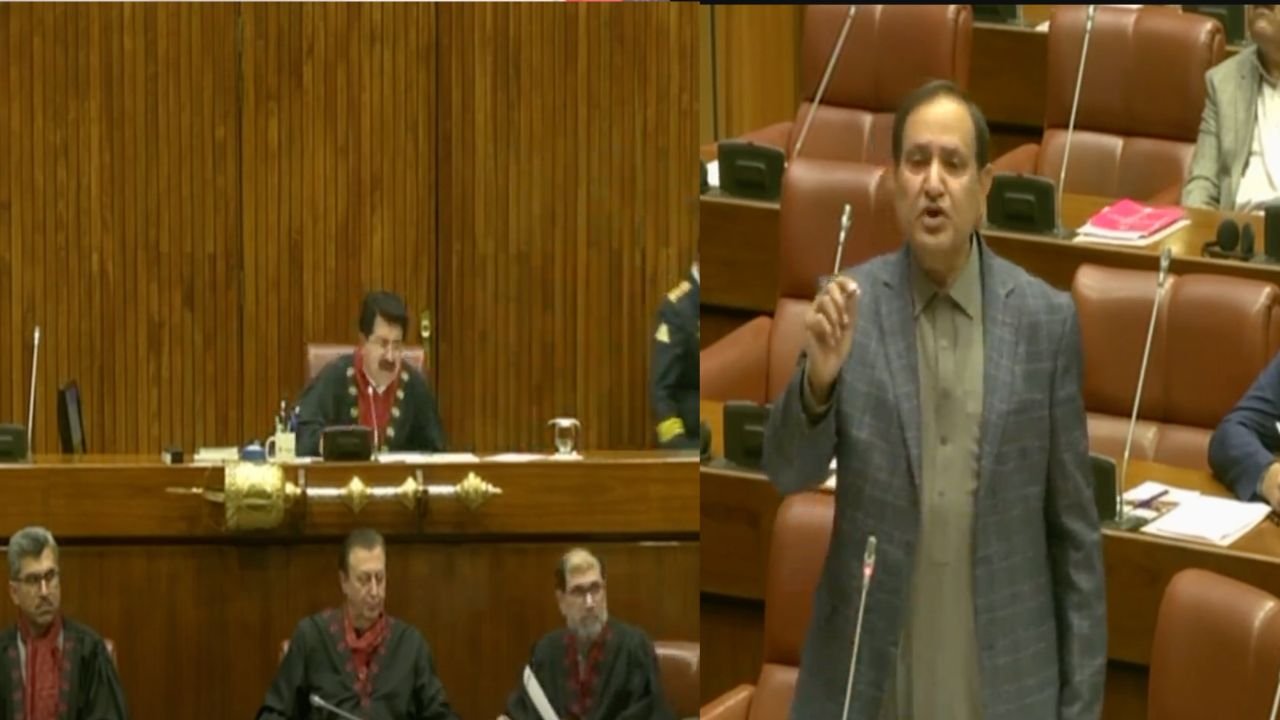
    The Pakistani Senate has approved a resolution to postpone the general elections scheduled for February 8 in the country.

    Senator Dilawar Khan tabled the resolution in the sparsely attended Upper House which garnered required support despite opposition from Information Minister Murtaza Solangi and Senator Afnan Ullah Khan of the Muslim League (N).

    13 out of 14 senators present in the House voted in favor of the resolution.

    As Senator Dilawar read the resolution out loud, he said that the Constitution upheld the right to vote for every citizen of Pakistan, and the Election Commission of Pakistan (ECP) was bound to conduct free and fair polls contingent upon inclusivity and ensuring the participation of all regional people.

    “The vote turnout in colder areas remains notably high during the moderate weather conditions. January and February are recognised as the coldest months in the majority of the areas in Balochistan and Khyber Pakhtunkhwa,” he said.

    Senator Dilawar Khan cited severe cold weather prevalent in many regions, making participation in those areas challenging.

    He also highlighted recent security incidents, including attacks on Mohsin Dawar and members of Jamiat Ulama-e-Islam Fazl (JUI-F), as well as security forces in Balochistan and Khyber Pakhtunkhwa.

    Aimal Wali of the ANP also expressed reservations over the elections.

    During the debate, Senator Dilawar Khan emphasized the existence of threats against individuals during election rallies, underscoring the need to address these security challenges before proceeding with the elections.

    He proposed delaying the February 8 election schedule and called for the Election Commission to act, expressing trust in the Senate Election Commission.

    Senator Afnan Ullah Khan of the Muslim League (N) opposed the resolution, seeking to validate Senator Dilawar Khan’s concerns.

    He acknowledged security challenges but argued that conditions were not as dire as in 2008 and 2013 when elections proceeded under more adverse circumstances.

    Afnan Ullah questioned the rationale behind using security as a pretext for postponing the elections, expressing skepticism about the proposed delay, questioning whether Great Britain and the United States postponed elections during major conflicts.

    He asserted that using weather conditions as a reason for election delay was unfounded, pointing out that elections had been held twice in adverse circumstances before.

    Information Minister Murtaza Solangi also voiced his opposition to the resolution. However, despite these objections, the Senate moved forward, approving the resolution to postpone the general elections slated for February 8.

    The controversy surrounding the decision continues, with differing opinions on the validity of the reasons presented for delaying the electoral process.