Blog

  • What is the situation of Air Quality Index in South Asia?

    What is the situation of Air Quality Index in South Asia?

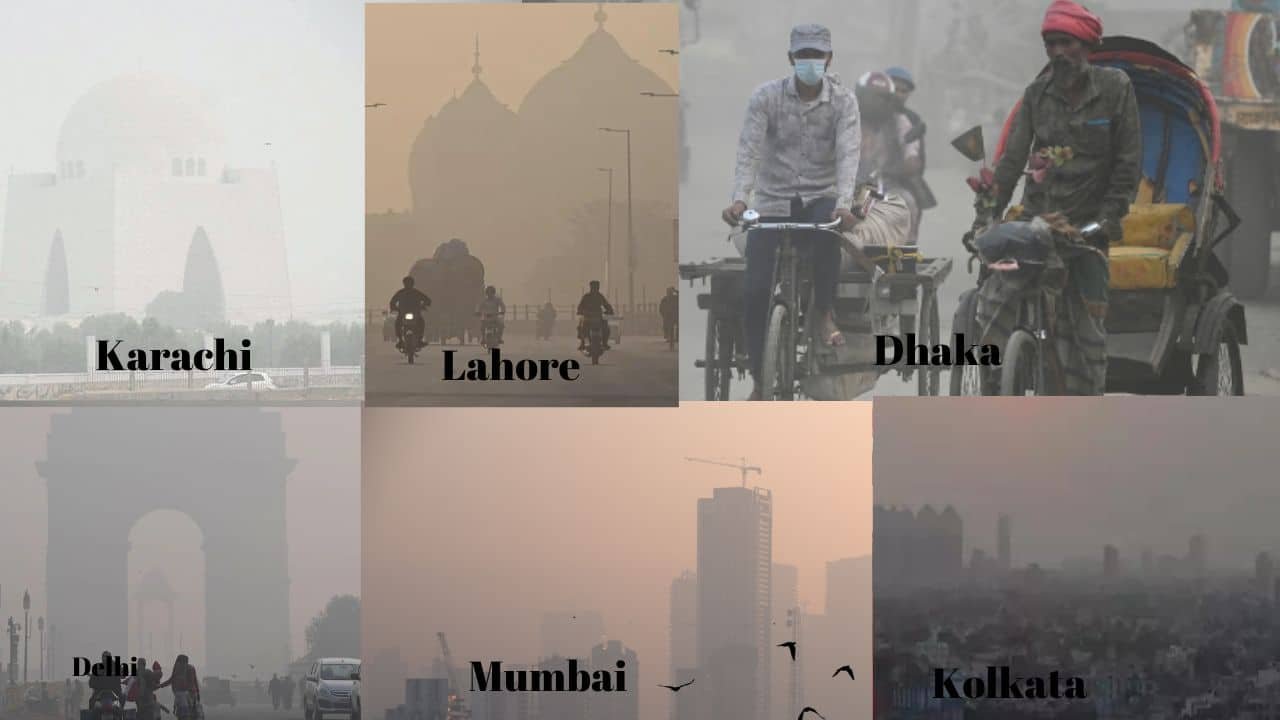
    Six of the top ten cities plagued by the worst pollution on the Air Quality Index are from the South Asian region. Delhi, Mumbai, and Kolkata from India, Lahore and Karachi from Pakistan, and Dhaka from Bangladesh.

    Post-Diwali, the air quality index in India is pretty bad as three of its highly-populated cities are facing a rise in air pollution. While Delhi is at the top, Mumbai and Kolkata are competing closely for the sixth and seventh spot on the chart.

    Lahore has seen a major drop in the past few days after a short spell of rain, however, the air is steadily getting dense as it retained its second position in the chart for two days in a row. Karachi holds the fourth spot after Baghdad.

    The Capital of Bangladesh, Dhaka, is a relatively new entrant. It holds the tenth position with an “unhealthy” status in air quality.

    Population growth and rapid industrialization are the two major factors contributing to the thickening of air with particulate pollutants in South Asia. This is a threat to all living beings, from animals to plants. Life expectancy is severely reduced in these cities and pollution-related illnesses are rampant. The situation of the poor quality index calls for strict action to be taken for the safety of residents of the world’s most populous region-South Asia.

  • Kapil Dev speaks up in Babar Azam’s support

    Kapil Dev speaks up in Babar Azam’s support

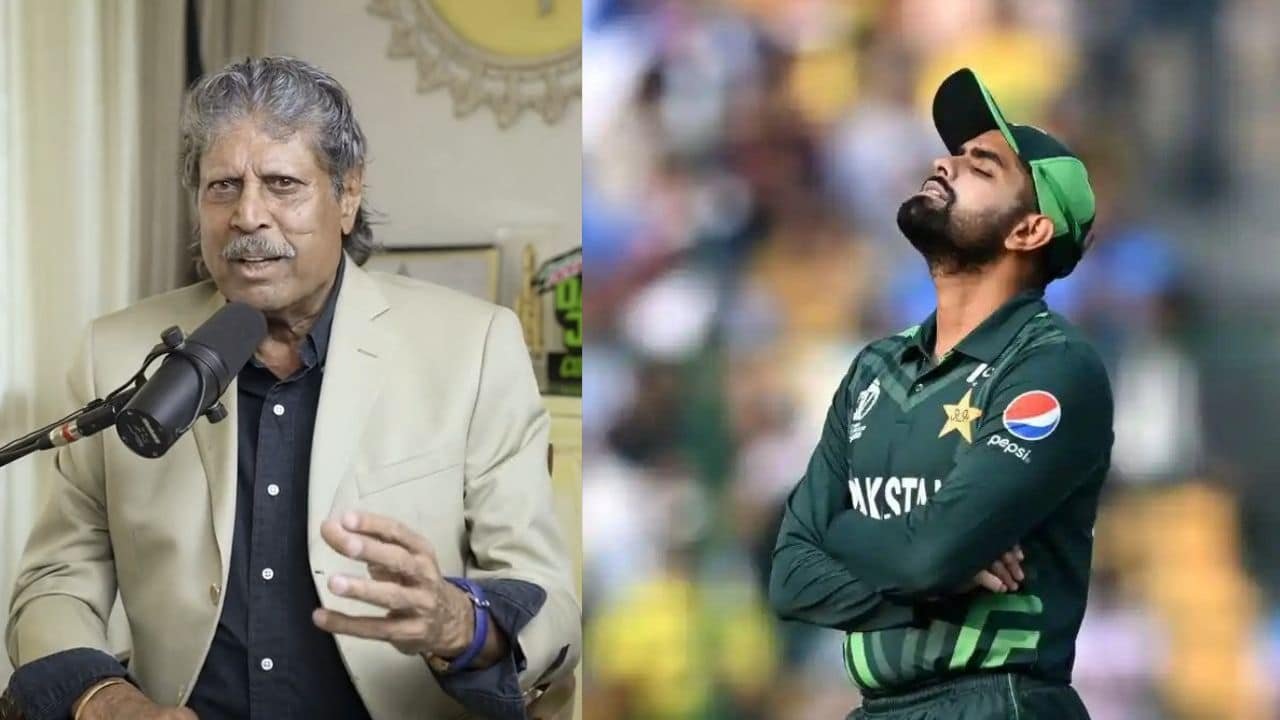
    Indian cricket legend Kapil Dev has spoken up against the criticism of Pakistan captain Babar Azam after the team failed to make it to the semi finals of the World Cup.

    Pakistani cricketers, including the captain, are being severely criticized by former players and social media users. Some former Pakistani players have also advised Babar to leave the captaincy so that he can focus on his batting.

    During a podcast, Kapil Dev said, “Because of the current performance of the team, people are taunting Babar Azam, criticizing him, but remember that this is the same player who brought Pakistan to the number one ranked team a month ago”.

    He said, “People are watching Babar today because he did not perform well but they forgot yesterday when he was performing. Don’t judge a player based on his current performance, see how he plays, how much passion and talent he has, a player can get out on the first ball, there is no batsman like that in the world who could not get out on the first ball”.

  • ‘It was never about Hamas’: Kardashians’ makeup artist slams the destruction of Gaza

    ‘It was never about Hamas’: Kardashians’ makeup artist slams the destruction of Gaza

    Among the many public figures who are speaking out against the genocide in Gaza, is acclaimed makeup artist Ariel Tejada, known for working with the Kardashian family, especially Kim Kardashian.

    Tejada has a history of collaborating with the Kardashian sisters, especially being known as Kylie Jenner’s go-to makeup artist. The Kardashian family publicly announced their support for Israel, while Kim was slammed on social media for the costumes her children wore on Halloween, with many saying they mocked the injured children of Gaza.

    READ MORE: ‘She knew what she was doing’: Twitter users outraged at Kim Kardashian’s insensitive Halloween costume

    Tejada uploaded a reel where he was singing ‘Depression get the best of me’ by Zevia and wrote why he could relate to the song at this moment:

    “This very specific part of this song has been hitting home more than ever. With the genocide/ ethnic cleansing happening with the people of Palestine, I cannot even begin to imagine the grief , and the feeling of hopelessness and sadness, and fright these people feel right now.

    My heart is with every Mother who has lost their baby,

    Every friend whose lost their person to confide in.

    And all the little babies/ kids and innocent lives that have been taken through the immense mass killing and brutality. My heart is with all of you! And I will continue to do my part in helping to use my platform and my voice! To make sure your story is heard! May God be with all of you.”

    In the caption of the post Ariel wrote:

    “I’m hopeful that if we all continue to use our voices, we can make a difference for the people of Palestine and all of humanity! Don’t stop posting and spreading the word and horrific images of what’s going on to wake people up! #ceasefire #freepalestine.”

    On his Instagram stories, Ariel criticised the occupation by Israeli forces as an agenda to take over Gaza rather than destroying Hamas:

    “It was never about Hamas. Anyone that wants to use that as their argument to try and sway my stance, please refrain from speaking to me. Save the bullshit for someone else. 1.5 million people displaced from their homes. This is insane.”

    Ariel shared another post highlighting that more blood was spilt in Gaza than there is clean water for civilians. In the caption he wrote: “Let that sit with you.”

  • Senate passed resolution against Supreme Court decision on civilian trials in military courts

    The Senate of Pakistan passed a resolution on Monday against the Supreme Court’s decision on civilians’ trial in the military courts, urging that the implementation of the judgment be stopped “unless it is considered by a larger bench.”

    A five member bench of Supreme Court (SC) last month unanimously declared civilians’ trial in military courts null and void.

    “Without prejudice to the generality of the foregoing the trials of civilians and accused persons, being around 103 persons […] shall be tried by criminal courts of competent jurisdiction established under the ordinary and/or special law of the land in relation to such offences of which they may stand accused,” the short order read.

    Independent Senator Dilawar Khan from Khyber Pakhtunkhwa (KP) moved the resolution on Monday, stating that the decision is legally flawed as the larger bench did not announce the verdict and should not be implemented.
    The resolution observed with “apprehension that the invalidation of the jurisdiction of army courts is likely to facilitate vandals and abettors of terrorism and anti-state activities”.

    “The Senate of Pakistan calls upon the apex court to reconsider its decision, urging alignment with the national security paradigm and sacrifices of the martyrs in order to address the concerns raised regarding the ramifications of the judgment on the security and stability of the nation.”

  • Shahid Afridi wants Babar Azam to lead team on Australia tour

    Shahid Afridi wants Babar Azam to lead team on Australia tour

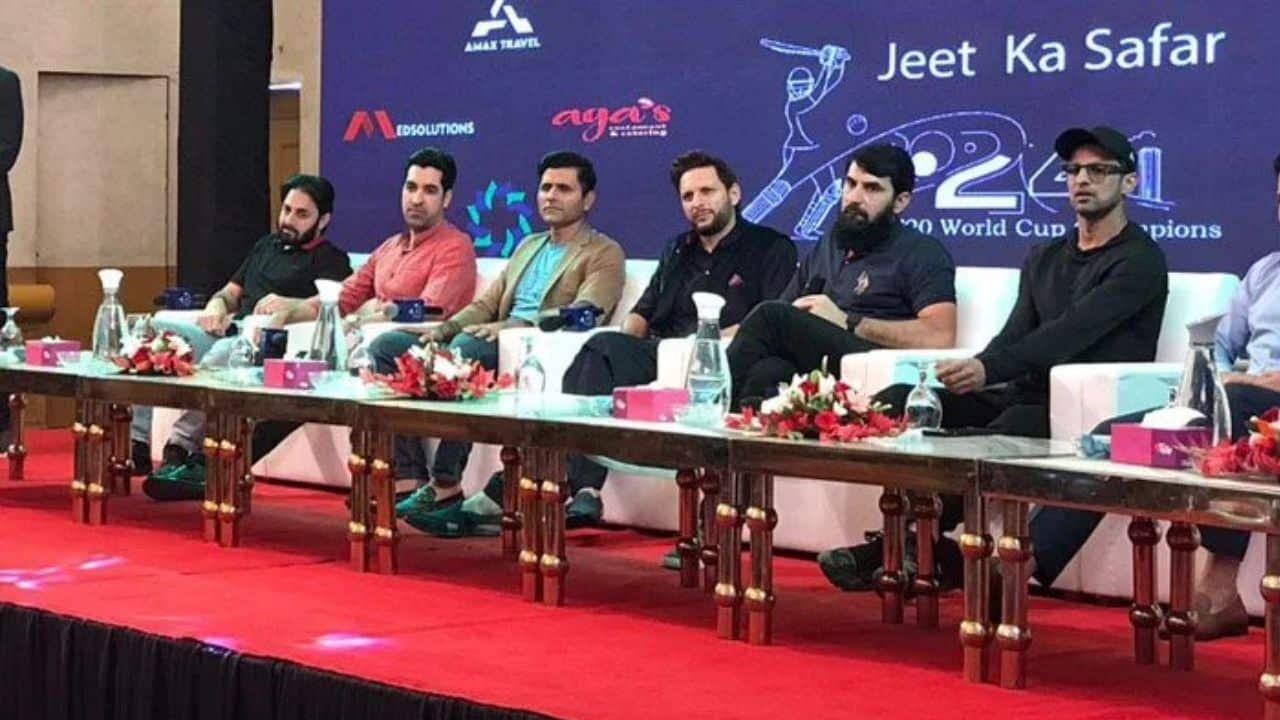
    Former captain of the national cricket team Shahid Afridi has said that Babar Azam should lead the team on the tour of Australia scheduled to begin in December.

    Speaking at the event in Karachi, Shahid Afridi said “We have time to decide, I had a lot of hope from this team, we did not perform according to our skills. You need to work on grassroots cricket. Babar Azam should lead the tour of Australia, in big events you have to take the pressure, if you make so many mistakes then you can’t win.”

    Former captain and wicketkeeper Rashid Latif said that the country had focused on T20 cricket for a long time, playing fewer Tests and less first-class cricket.

    Rashid Latif said, “Our fast bowlers did not bowl well in the World Cup. If the spinners were good, the result could have been different. Not only the players but the management should also be questioned”.

  • South Asia worst in world for water scarcity: UN

    New Delhi (AFP) – More children in South Asia are struggling due to severe water scarcity made worse by the impacts of climate change than anywhere else worldwide, the United Nations said Monday.

    “A staggering 347 million children under 18 are exposed to high or extremely high water scarcity in South Asia, the highest number among all regions in the world,” the UN children’s agency said in a report.

    The eight-nation region, comprising Afghanistan, Bangladesh, Bhutan, India, Nepal, Maldives, Pakistan and Sri Lanka, is home to more than one-quarter of the world’s children.

    “Climate change is disrupting weather patterns and rainfall, leading to unpredictable water availability,” the UN said in its report.

    The report cites poor water quality, lack of water and mismanagement such as over-pumping of aquifers, while climate change decreases the amount of water replenishing them.

    “When village wells go dry, homes, health centres and schools are all affected,” UNICEF added.

    “With an increasingly unpredictable climate, water scarcity is expected to become worse for children in South Asia.”

    At the UN COP28 climate conference in December in Dubai, UNICEF said it will call for leaders “to secure a livable planet”.

    “Safe water is a basic human right,” said Sanjay Wijesekera, UNICEF chief for South Asia.

    “Yet millions of children in South Asia don’t have enough to drink in a region plagued by floods, droughts and other extreme weather events, triggered increasingly by climate change”.

    Last year, 45 million children lacked access to basic drinking water services in South Asia, more than any other region, but UNICEF said services were expanding rapidly, with that number slated to be halved by 2030.

    Behind South Asia was Eastern and Southern Africa, where 130 million children are at risk from severe water scarcity, the report added.

  • Pakistan expects positive outcome in talks with IMF, eyes $700 million disbursement

    Pakistan expects positive outcome in talks with IMF, eyes $700 million disbursement

    Pakistan is optimistic about the successful completion of the initial review under the $3 billion standby arrangement (SBA) with the International Monetary Fund (IMF). 

    According to reports, the ongoing negotiations, now in their final phase, are anticipated to culminate positively, marking a crucial milestone. 

    Commencing on Monday, policy-level discussions between Pakistani authorities and the IMF are scheduled to persist until November 15, spearheaded by Finance Minister Shamshad Akhtar.  

    The Pakistani delegation, including key figures such as State Bank of Pakistan Governor Jameel Ahmad and Federal Board of Revenue Chairman Malik Amjed Zubair Tiwan, along with representatives from the finance and energy ministries, has been actively engaged in the deliberations. Nathan Porter leads the IMF team in this dialogue. 

    During the latest session, the IMF delegation articulated their recommendations and requirements, while technical-level talks involved the sharing of pertinent economic data with the international lender’s team, according to The News.  

    Sources within the finance ministry assert that Pakistan has diligently fulfilled all stipulated conditions set forth by the IMF. 

    It is anticipated that the staff-level agreement will be finalised during the ongoing policy-level talks, paving the way for the disbursement of approximately $700 million to Pakistan upon the successful completion of the first review. 

    Earlier this month, the IMF review mission commended the Pakistani government for its commendable progress towards economic recovery, as stated by the finance ministry.  

    The IMF’s $3 billion loan programme, sanctioned in July, played a pivotal role in averting a sovereign debt default. The initial tranche of $1.2 billion was disbursed in July, with the remaining amount contingent on subsequent reviews. 

    Finance Minister Shamshad Akhtar has unequivocally ruled out any requests to the IMF for an extension of the SBA programme’s timeframe or an increase in its size. 

  • Govt expected to hike petrol price on Thursday

    Govt expected to hike petrol price on Thursday

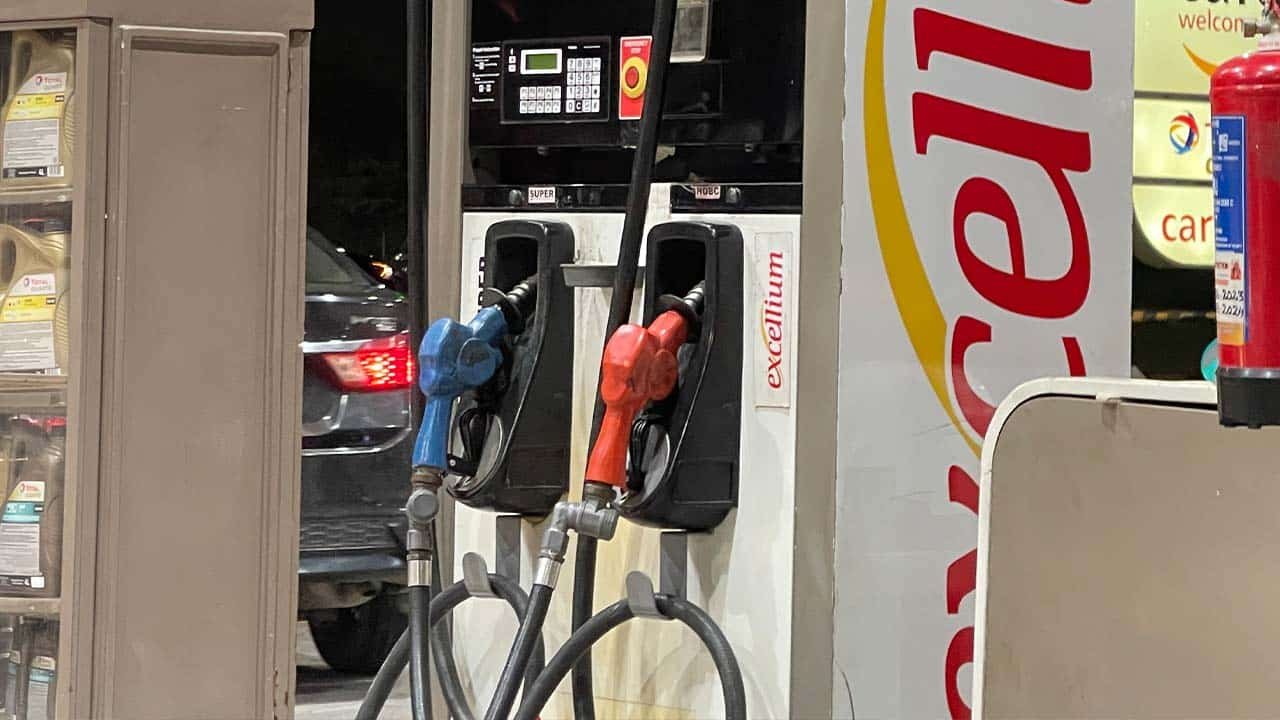
    In the final fortnight of November 2023, the per litre price of petrol in Pakistan is projected to experience an increase of Rs3.18, while high-speed diesel (HSD) is anticipated to undergo a reduction of Rs8.30 per litre on Thursday, November 16.

    Sources have indicated that the pricing trajectory of petroleum products is poised for a mixed trend in the latter half of the current month of November 2023.

    The price of petrol is forecasted to rise from Rs283.38 per litre to Rs286.56 per litre, marking an uptick of Rs3.18 per litre.

    Correspondingly, the cost of HSD/diesel is expected to decrease by Rs8.30 per litre, moving from Rs303.18 per litre to Rs 294.88 per litre.

    Additionally, the price of kerosene oil is projected to witness a decline of Rs5.61 per litre, transitioning from Rs211.03 per litre to Rs205.42 per litre.

    Furthermore, the price of light diesel oil (LDO) is set to experience a reduction of Rs8.33 per litre, shifting from Rs189.46 per litre to Rs181.13 per litre.

    These price adjustments are calculated based on current government taxes and the prevailing US dollar exchange rate, as per informed sources.

    According to Profit, the government may uphold the price of petrol due to outstanding forex adjustments, while a reduction of Rs10 per litre is expected for diesel (HSD).

    Notably, starting from 1st November 2023, the government has imposed a petroleum levy (PL) of Rs60 per litre on petrol and diesel, alongside receiving an Inland Freight Equalization Margin (IFEM) of Rs7.71 per litre on petrol and Rs0.60 per litre on diesel.

    Additionally, the Dealers’ Margin (inclusive of extra margin) on petrol and diesel presently stands at Rs8.64 per litre.

    Similarly, the margin for Oil Marketing Companies is fixed at Rs7.87 per litre.

    Furthermore, the Distributors’ Margin (inclusive of extra margin) on diesel is currently set at Rs8.12 per litre, and on petrol, it is Rs7.87 per litre, effective from 1st November 2023.

    On 1st November, the government maintained the prices of petrol and diesel at Rs283.38 per litre and Rs303.18 per litre, respectively.

    Simultaneously, the price of kerosene oil witnessed a reduction of Rs3.82 per litre, establishing the new price at Rs211.03 per litre.

    The price of LDO was also decreased by Rs3.40 per litre, fixing the new price of LDO at Rs189.46 per litre for the first half of November 2023.

  • Anti-power theft measures lead to Rs46 billion in recoveries

    Anti-power theft measures lead to Rs46 billion in recoveries

    The government’s unyielding efforts against power theft have produced significant results, surpassing Rs46 billion in recoveries, as announced by Rashid Langrial, Secretary Power Division, Government of Pakistan, in a statement on X (formerly Twitter).

    It’s noteworthy that the anti-power theft campaign commenced on September 7, and the reported outcomes cover the period up to October 31.

    Langrial highlighted the government’s commitment, stating that they have undertaken unprecedented measures, including reshuffling, suspending, prosecuting, and even arresting their own staff.

    Approximately 470 individuals per day have been detained, marking a substantial increase in the rate of apprehension.

    The Secretary highlighted the government’s determination to eliminate external influences, thanks to the unwavering support of the Prime Minister, the Minister-in-Charge, and other segments of state power.

    While revealing the results for the initial two months (53 days), Langrial underscored the importance of placing the figures in context.

    The estimated annual losses across the national grid for the current year stand at Rs589 billion. Notably, around Rs199 billion of these losses are attributed to ex-FATA, Baluchistan tube wells, and AJK.

    However, Langrial clarified that these specific areas are not the primary focus of the campaign due to their unique circumstances. AJK, for instance, handles its own bills but disputes payments on contractual grounds.

    Ex-FATA, exempted from metres due to a policy of appeasement post-integration, and Baluchistan tube wells face enforcement challenges, among other factors.

    Langrial disclosed that efforts are concentrated on the remaining problem space of Rs390 billion, of which Rs46 billion has been recovered in 53 days, averaging Rs867 million per day.
    He cautiously acknowledged that maintaining

    the same level of state support and field effort is crucial for resolving 80 per cent of the problem space, albeit with some uncertainty.

  • Pakistan’s stock market surges above 56,500 for the first time in history

    Pakistan’s stock market surges above 56,500 for the first time in history

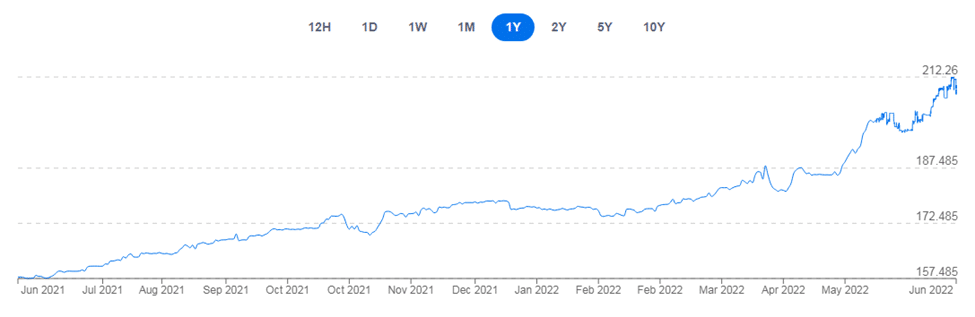
    The bullish momentum persisted in the Pakistan stock market today, propelling the key stock gauge to an unprecedented level above 56,000 for the first time in history.

    By the session’s close, the index had reached a historic high of 56,523.58, marking an impressive surge of 1,132.21 points, or 2.04 per cent day-on-day. Notably, the KSE-100 index had experienced a notable gain of 2,268.33 points, or 4.27 per cent, in the preceding week.

    Throughout the day, the index remained in positive territory, achieving an intraday high of 56,583.59 (+1,192.22) and a low of 55,644.68 (+253.31) points. The KSE-100 Index witnessed a total volume of 300.341 million shares traded.

    The prevailing positive sentiment is attributed to the recent PIB auction on November 8, which exhibited a substantial decline in yields.

    This decline may indicate market expectations of an earlier-than-anticipated reduction in interest rates.

    Additionally, investors are anticipating a higher weighting for Pakistan in the upcoming review by global index provider Morgan Stanley Capital International (MSCI), scheduled for tomorrow.

    In today’s session, out of the 100 index companies, 57 closed higher, 23 closed lower, 1 remained unchanged, and 19 were untraded.

    The strength of the KSE-100 index was supported by sectors such as power generation and distribution, fertiliser, commercial banks, cement, and automobile assembly.

    Contributing positively to the index were companies like HUBC, EFERT, MTL, BAHL, and MCB, accumulating significant points.

    On the other hand, the KSE-100 Index faced a downturn primarily due to the refinery sector, Inv. Banks/Inv. Cos./Securities Cos., Transport, Leather & Tanneries, and Automobile Parts & Accessories.

    Companies exerting downward pressure on the index included MEBL, UPFL, KEL, OGDC, and NATF. The intricate dynamics of today’s market underscore the varied performances across different sectors and companies within the KSE-100 Index.