Blog

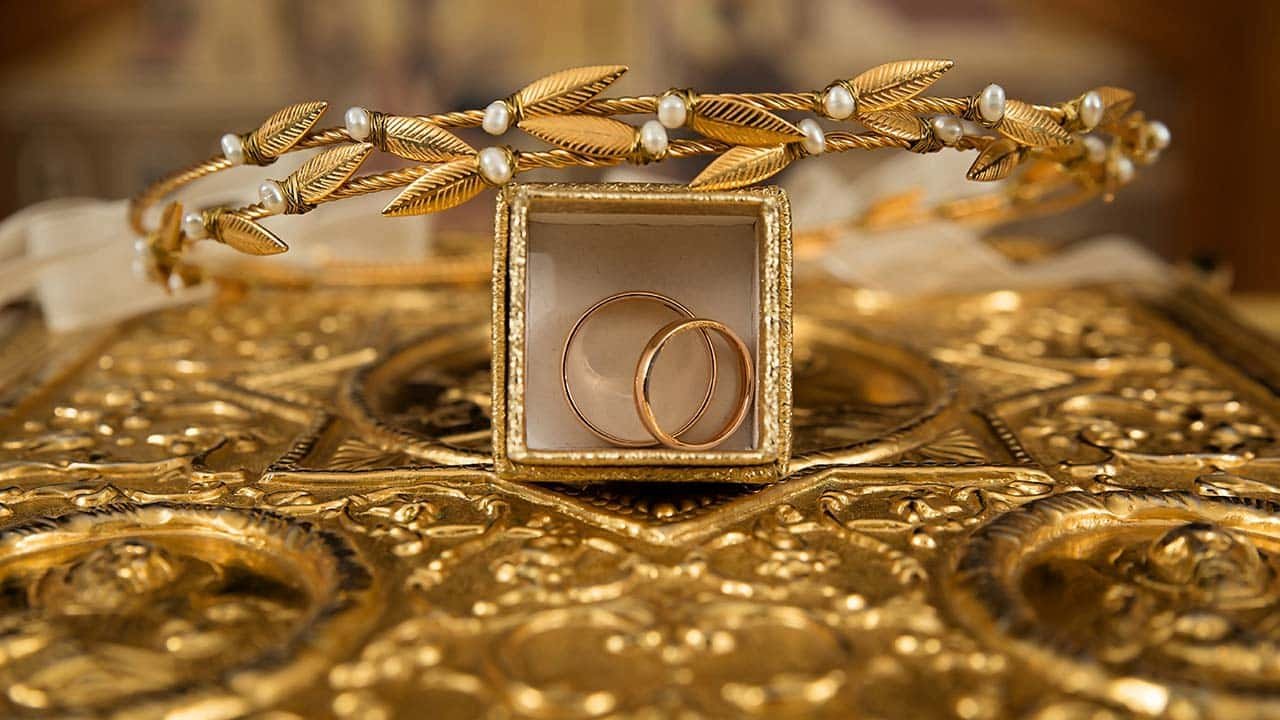
  • Global market impact: Gold price in Pakistan drops by Rs2,400 per tola

    Global market impact: Gold price in Pakistan drops by Rs2,400 per tola

    On Thursday, gold prices in Pakistan experienced a decline, mirroring the global market trend.

    The value of the yellow metal reached Rs211,800 per tola, marking a decrease of Rs2,400. 

    The 10-gram gold was traded at Rs181,584, reflecting a Rs2,058 drop, as reported by the All Pakistan Gems and Jewellers Sarafa Association (APGJSA). 

    In the preceding session, gold prices had risen by Rs200, settling at Rs214,200 per tola.

    The international gold rate, accompanied by a $20 premium, was established at $1,968 on Thursday, indicating a $20 reduction in the global market, according to APGJSA. 

    In the midst of these changes, silver rates remained steady at Rs2,580 per tola in Pakistan.

  • This is how Pakistan can still qualify for semi-finals

    This is how Pakistan can still qualify for semi-finals

    New Zealand’s victory against Sri Lanka has made it difficult for Pakistan to qualify for the semi-finals of the World Cup.

    Pakistan will be playing its next match against England on Saturday.

    These are the possible scenarios in which Pakistan can qualify:

    1-First priority is to win the toss which is not in their hands.

    2-If they win the toss and bat first, they should make a mountain of runs to defeat England by 287 runs, for example:

    If Pakistan makes 300 runs they should restrict them to 13 runs.

    If they make 400 runs they should restrict them to 113 runs.

    3-If Pakistan loses the toss and bowls, first they would have to restrict them to 50 runs and chase it down in 2.3 overs or restrict them on 150 and chase in 3.4 overs which is almost impossible.

  • Kiwis have won against Sri Lanka and Pakistan is worried

    Kiwis have won against Sri Lanka and Pakistan is worried

    In the 41st match of the World Cup, New Zealand easily defeated Sri Lanka by five wickets, making their way to the semi-finals very easy and Pakistan’s seemingly impossible.

    Sri Lanka’s inning:

    The Sri Lankan team was bowled out for 171 runs in 46.4 overs, Kaushal Perera was outstanding by playing an innings of 51 runs.

    Apart from this, Dhananjaya De Silva scored 19 runs, Angelo Mathews scored 16 runs, Asalanka scored 8 runs, and Mahesh Theshanka scored 38 runs.

    On behalf of New Zealand, Trent Boult dismissed three players by giving 37 runs, Lockie Ferguson, Mitchell Santner and Rachin Ravindra took two wickets each while Tim Southee took one wicket.

    New Zealand’s inning:

    Sri Lanka’s target of 172 runs was easily achieved by New Zealand at the loss of 5 wickets in 23.2 overs.

    Dion Conway 45, Daryl Mitchell 43, Richan Ravindra scored 42 runs, captain Kane Williamson scored 14 runs and Mark Chapman scored 4 runs, Glenn Phillips remained unbeaten with 17.

    For Sri Lanka Angelo Mathews took two wickets while Maheesh Theshanka and Chameera took one wicket each.

  • Eight Gaza hospitals bombed in three days: What we know about day 34

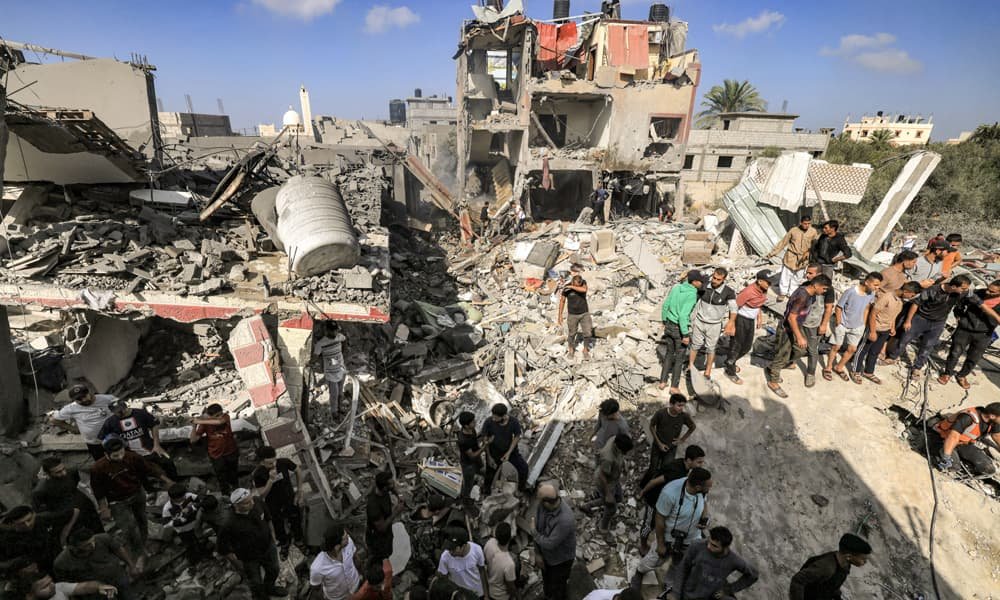
    Eight Gaza hospitals bombed in three days: What we know about day 34

    The latest death toll in Gaza from October 7 till now stands at 10,744 Palestinians and 1,405 Israelis.

    More than 1,000 USAID employees call for ceasefire

    More than 1,000 staffers at the US Agency for International Development (USAID) have signed a letter pushing for an “immediate ceasefire” in Gaza.

    Officials from USAID’s departments and overseas missions are among the signatories, increasing the number of government employees who have been against US support for Israel’s military offensive in Gaza

    On Wednesday, more than 100 Congressional staffers staged a walkout.

    Eight Gaza hospitals bombed in three days

    Gaza’s government media office has reported that eight hospitals have been bombed by Israeli forces in the past three days and 18 hospitals are out of service since October 7.

    The premises of al-Shifa Hospital and al-Nasr Hospital were shelled by Israeli artillery cannons.

    “The bombing of hospitals is a war crime according to international humanitarian law, and is criminalised by 16 international agreements and UN resolutions that call for the protection of these health facilities,” the statement read.

    War crimes lawsuit filed by Palestinian groups
    Three renowned human rights organisations operating from the occupied West Bank and the Gaza Strip have filed a lawsuit with the International Criminal Court (ICC) “calling for it to consider apartheid and genocide in its continuing investigation of the situation in Palestine,” Al Jazeera reports.

    The lawsuit by Al Haq, Al Mezan and the Palestinian Centre for Human Rights remarked that Israel’s actions in Gaza are war crimes, asking that arrest warrants be issued for Israeli officials, including President Herzog, PM Netanyahu and Defence Minister Gallant.

  • Why the mass killings and exodus of Gazans from the North to the South is being called the second Nakba

    On Wednesday, Motaz Azaiza, one of the journalists sharing details of Israeli atrocities in Gaza, shared a picture of Gazans walking on a highway in a long line. “People evacuating the city to the south of the strip. It’s literally a new Nakba.”

    Nakba is the most momentous event in all of Palestinian history, especially the history of the last century with Israelis. It literally means “catastrophe” and refers to the ethnic cleansing of Palestinians by the Israelis in 1948. It has been 75 years now that zionist forces took 78 percent of the historic land of Palestine and killed about 15,000 Palestinians in a series of 70 massacres. 7,50,000 Palestinians out of 1.9 million were made refugees in their own land as Israel established a Jewish majority state, fulfilling their Zionist motives.

    The official commemoration of this expulsion and ethnic cleansing by Palestinians around the world was done on May 15, 1948, but the facts reveal more than half of the displacement was already done by then.

    Since then, there have been many Arab-Israeli wars and many attempts to displace Palestinians. Israel, originally given 55 percent of the land by the UN, now owns 85 percent of it. However, it openly wishes to have control over all of it. In his address to the UN in September, Benjamin Netanyahu displayed two maps that showed the occupied West Bank, East Jerusalem, and the Gaza Strip as part of Israel. The repeated calls to move to the South after October 7, is actually more than revenge.

    In one of the videos posted by Motaz, it can be seen that tens of thousands of Palestinians are moving to the South- in front of the Israeli army- raising their hands to show that they are unarmed. In a number of incidents, these caravans have been bombed too.

    This has been confirmed as the Israeli government claims that some 50,000 people have fled Northern Gaza to the South.

    On the other hand, there are hundreds of thousands of people who are not obeying these orders because they believe there is no place safe from Israel’s bombings and that they would rather die at home.

    Palestinian journalist Ahmed Abu Artema in his message to The News International has already called for the world to take action as he firmly thinks “This is the second Nakba”.

  • Saudi Arabia will not use oil as a weapon to achieve ceasefire in Gaza

    Saudi Arabia will not use oil as a weapon to achieve ceasefire in Gaza

    Right before the October 7 attacks by Hamas on Israel followed by Israel’s declaration of war against the Palestinians resulting in a death toll of 10,5000+, Saudi Arabia and Israel were steering towards the establishment of ties despite their conflict of views over the Palestine issue.

    Saudi Crown Prince Mohammad bin Salman (MbS) reportedly asked the US for “security guarantees and access to civilian nuclear technology and advanced weapons in exchange for a deal.”

    Moreover, Saudi diplomats asserted that Israel must concur with the establishment of a Palestinian state as defined in the 2002 Saudi Peace Initiative. And while this particular demand was rejected by Israeli Prime Minister Benjamin Netanyahu and Jewish ministers in his government, a deal was almost at hand between the two countries.

    However, after October 7, people in support of Palestine across the world, particularly the Muslim world, have demanded from Saudi Arabia to take a stand against the atrocities committed by Israel on Palestinian soil — to use their power to put an end to the attacks.

    However, their concerns seem to have fallen on deaf ears.

    The Saudi Minister of Investment, Khalid bin Abdulaziz al-Falih, has remarked that the Kingdom is still willing to consider normalising relations with Israel, depending on a peaceful solution to the Palestinian issue.

    During a discussion session at the Bloomberg New Economy Forum held in Singapore, Falih responded to a question in regard to normalisation of ties between the two countries: “This matter was on the table, and it is still on the table, and it is clear that the recent withdrawal (from the talks) explains why Saudi Arabia is so determined to make a solution to the Palestinian conflict part of broader normalisation in [West Asia].”

    When asked if Saudi Arabia would use economic devices like oil to push for a ceasefire in the Gaza Strip, he reportedly laughed and replied: “This is not on the table today. Saudi Arabia is trying to achieve peace through talks that seek peace.”

    Falih also offered details of the three summits that Saudi Arabia is expected to host in the coming days which will be attended by Arab, African and Islamic countries, an effort to promote a “peaceful solution to the Israeli-Palestinian conflict”.

    In 1973, Saudi Arabia imposed an oil embargo on the United States and other countries for their support of Israel in the Yom Kippur War against Egypt and Syria.

  • Bangladesh police clash with 25,000 protesting garment workers

    Up to 25,000 garment workers clashed with police in Bangladesh on Thursday, officials said, as protests rejecting a government-offered pay rise forced the closure of at least 100 factories outside Dhaka.

    A government-appointed panel raised wages on Tuesday by 56.25 percent for the South Asian nation’s four million garment factory workers, who are seeking a near-tripling of their monthly wage.

    Bangladesh’s 3,500 garment factories account for around 85 percent of its $55 billion in annual exports, supplying many of the world’s top brands including Levi’s, Zara and H&M.

    But conditions are dire for many of the sector’s four million workers, the vast majority of whom are women whose monthly pay starts at 8,300 taka ($75).

    Police said violence broke out in the industrial towns of Gazipur and Ashulia outside the capital after more than 10,000 workers staged protests in factories and along highways to reject the panel’s offer.

    “There were 10,000 (protesting) workers at several spots. They threw bricks and stones at our officers and factories, which were open,” Mahmud Naser, Ashulia’s deputy industrial police chief, told AFP.

    “One of our officers was injured. We fired rubber bullets and tear gas to disperse the workers,” Naser said.

    He said more than 100 factories were shut down in Ashulia and surrounding areas.

    Thousands of workers also clashed with the elite Rapid Action Battalion (RAB) and police at Konabari and Naujore in Gazipur, with police using batons and tear gas to drive them into alleys, AFP correspondents at the scene said.

    “Some 15,000 workers blocked the road at Konabari, and vandalised vehicles and other properties. We had to disperse them to maintain law and order,” Gazipur municipality administrator Sayed Murad Ali told AFP.

    At least two injured workers were taken to hospital, police said.

    Intimidation

    The workers are seeking a wage rise to 23,000 taka and unions representing them have rejected the panel’s increase as “farcical”.

    Police say at least three workers have been killed since the wage protests broke out in key industrial towns last week, including a 23-year-old woman shot dead on Wednesday.

    At least six police officers have also been injured in the protests.

    Unions say the panel’s wage increase fails to match soaring prices of food, house rents and schooling and healthcare costs.

    They have also accused the government and police of arresting and intimidating organisers.

    “Police arrested Mohammad Jewel Miya, one of the organisers of our unions. A grass-roots leader… was also arrested,” Rashedul Alam Raju, the general secretary of the Bangladesh Independent Garment Workers Federation (BIGWUF), told AFP.

    Another union leader, speaking on condition of anonymity, said at least six union leaders had been arrested and unions were being threatened by police to call off the protests and accept the wage offer.

    There was no immediate comment from police about the arrests.

    The United States has condemned violence against protesting Bangladeshi garment workers and “the criminalisation of legitimate worker and trade union activities”.

    In a statement, State Department spokesman Matthew Miller urged the panel “to revisit the minimum wage decision to ensure that it addresses the growing economic pressures faced by workers and their families”.

    Thea Lee, the US Department of Labor’s deputy undersecretary for international affairs, called for the release of BIGWUF organiser Miya.

    The Netherlands-based Clean Clothes Campaign, a textile workers’ rights group, has also dismissed the new pay level as a “poverty wage”.

    The minimum wage is fixed by a state-appointed board that includes representatives from the manufacturers, unions and wage experts.
  • Lockdown restrictions revised in Punjab

    Lockdown restrictions revised in Punjab

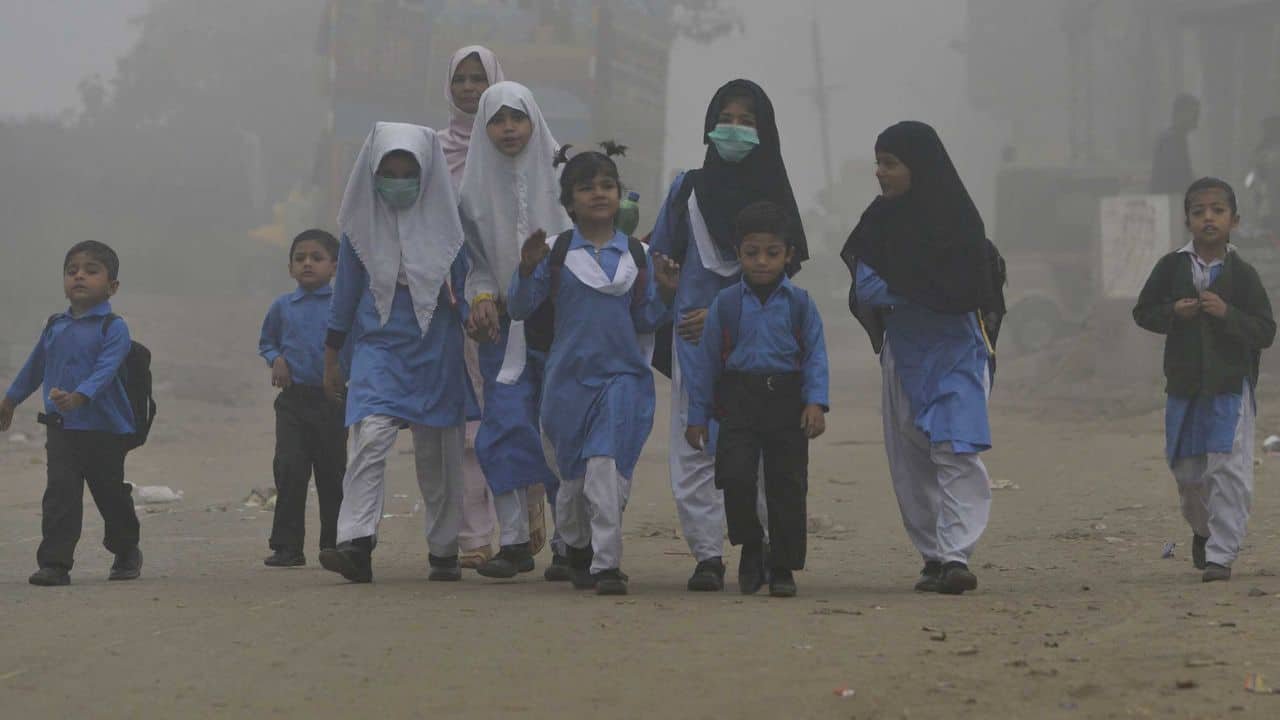
    The Punjab government on Thursday revised the terms of the lockdown imposed in multiple districts of the province as major cities grapple with crippling fog.

    In its amended notification, the Primary and Secondary Healthcare Department of the province notified that call centres and international information technology companies will be allowed to operate during the lockdown.

    While markets in the eight smog-hit districts will be allowed to operate today and tomorrow; however, shopping malls and markets will be closed on Saturday and Sunday.

    The notification also states that cinema halls, restaurants and gyms will remain open today as per routine.

    The decision will remain in effect in Lahore, Nankana Sahib, Sheikhupura, Kasur, Gujranwala Narowal, Hafizabad and Sialkot.

    Previous Notification

    A day earlier, an environmental and health emergency had been declared in Lahore, Gujranwala, and Hafizabad divisions for four days due to the prevailing smog conditions.

    Caretaker Chief Minister Mohsin Naqvi made the announcement during a press conference on Tuesday when the air quality index (AQI) in the city measured 390, falling under the category of hazardous.

    At this AQI level, the city maintained its position as one of the most polluted cities with citizens experiencing a hazy and smoggy atmosphere throughout the day. The air quality was severely poor, making it nearly impossible to breathe normally outdoors.

    Notification issued on Tuesday detailed that from Thursday to Sunday i.e., November 9, 2023, to November 12, 2023, all markets, shopping malls, restaurants, cinemas, gymnasiums, schools (public and private), and offices (public and private) will remain closed in Lahore, Nankana Sahib, Sheikhupura, Kasur, Gujranwala Narowal, Hafizabad and Sialkot.

    Also, the movement of people will be limited to and from these areas by public and private transport.

    The following will be exempted from closure:

    • Pharmacies/ Medical Stores
    • Medical Facilities and Vaccination Centers
    • Petrol Pumps
    • Oil Depots
    • Tandoors
    • Bakeries,
    • Grocery / Karyana stores
    • Milk / Dairy Shops
    • Sweet Shops,
    • Vegetable / Fruit Shops
    • Chicken / Meat Shops
    • E-commerce
    • Postal / Courier Services
    • Utility Services (Electricity, Natural Gas, Internet, Cellular Networks /Telecom.

    Large departmental stores will only keep their grocery /pharmacy sections open while all other sections will remain closed.

    It has been suggested by the government that people buy groceries and medicines within the vicinity of their residence.

  • Major Breakthrough in Fatima Murder Case

    Major Breakthrough in Fatima Murder Case

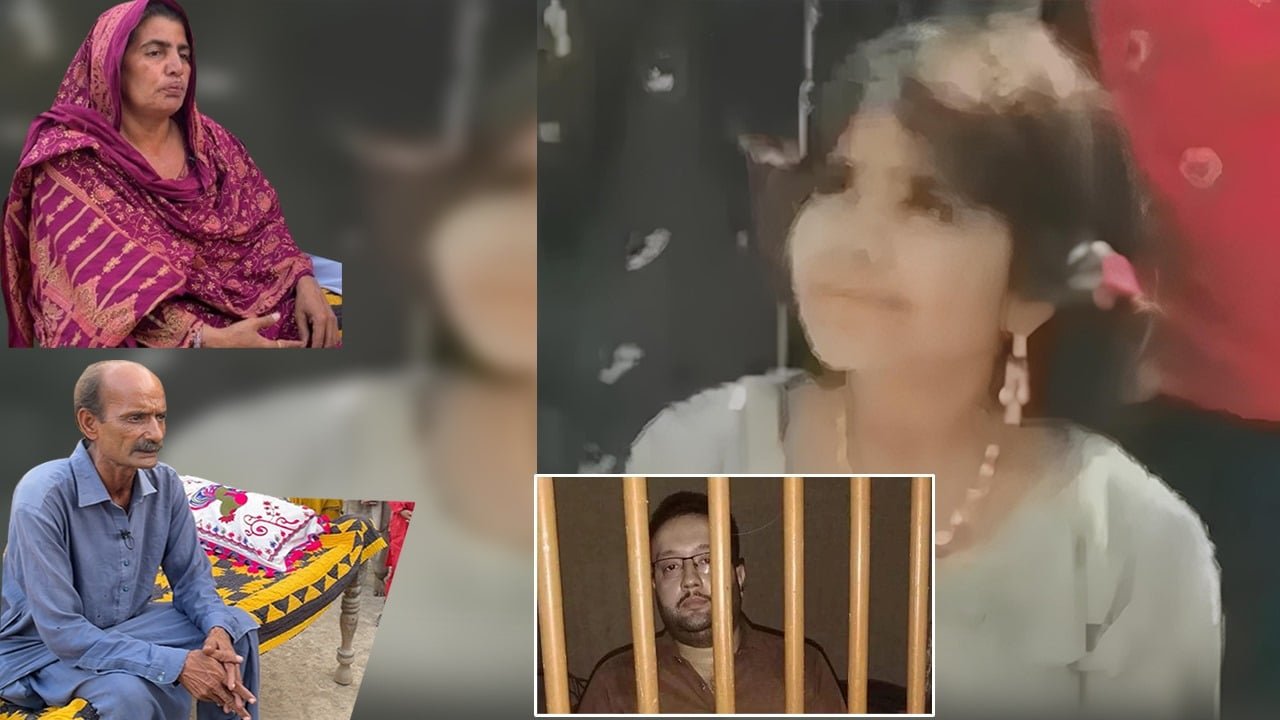
    Sindh’s caretaker Minister of Law and Human Rights, Muhammad Umar Sumro, confirmed that DNA samples collected from Pir Asad Shah, the prime suspect in Fatima murder case, have matched with the semen traces found on the victim’s clothing.

    He was addressing the National Judicial Conference at a local hotel in Karachi.

    On August 14, ten-year-old Fatima Pharriro was brutally subjected to physical and sexual violence, allegedly by Pir Asad Shah and his wife Hina Shah, and was found dead at their haveli in Ranipur.

    A case was lodged on the complaint of her mother, Shabnam Khatoon, under Sections 302 (intentional murder) and 34 (acts done by several persons in furtherance of a common intention) of the Pakistan Penal Code (PPC) at Ranipur police station and an investigation was initiated.

    The minister further highlighted that DNA samples initially did not yield a match due to the alleged tampering of evidence by officials of the health department, reportedly under the influence of the suspect.

    A breakthrough occurred when the samples were sent to a facility in Punjab for processing, and the subsequent analysis established a clear match between the DNA obtained from the suspect and the samples found on the victim’s clothes.

    According to an earlier DNA report from the Liaquat University of Medical and Health Sciences in Jamshoro, the examination of the semen stains on the deceased girl’s clothing had revealed “mixed DNA profiles,” providing crucial evidence in the ongoing investigation of this tragic case.

    Court Updates

    On November 8, all suspects were produced by jail authorities, and the final charge sheet was submitted by the investigation officer. for the charge frame.

    According to the final challan report, the DNA report has not been submitted to the court yet.

    The DNA report has been submitted to Police Surgeon Karachi, as per the final post-mortem report, the supplementary post-mortem report will be submitted after the DNA report.

    Therefore, after receiving the supplementary post-mortem report, it will be produced.

    Fatima’s case
    A domestic maid, 10-year-old child Fatima Phuriro, was found dead under suspicious circumstances in Ranipur.

    The child had been working as a domestic worker at a haveli owned by an influential local, Pir Asad Shah Jilani.

    Fatima’s mother, Shabana, was informed about the death by the employer who asked her to remove the body from the premises.

    According to DIG Sukkur Javed Jiskani, the parents initially did not share the facts of the case with the police and claimed that the girl was suffering from gastroenteritis.

    While her diagnosis was also confirmed by Dr Abdul Fatah Memon who treated her, the DIG revealed that Fatima was taken to the hospital either by the Pir or his staff and that the SHO was present at the time she was pronounced dead.

    It was not until videos of the child were leaked by an unknown source and circulated on social media that the case caught the media’s eye. By then, the family had buried Fatima on August 15.

    The body was later exhumed and sent for an autopsy which revealed that the girl had been raped both vaginally and anally.

    Fatima’s parents revealed heartbreaking details when we talked to them in September this year.

  • PTI takes U-turn by forming committee for ‘political engagement’ with rivals

    PTI takes U-turn by forming committee for ‘political engagement’ with rivals

    In preparation for the upcoming general elections, Pakistan Tehreek-e-Insaf (PTI) has announced the creation of a ‘political engagement committee’ on Wednesday. The committee’s job is to talk to other political parties that PTI will compete against in the upcoming elections.

    The five-member committee includes Senator Ali Zafar, Senator Dr Humayun Mohmand, Ali Muhammad Khan, Ali Asghar Khan and Raoof Hasan, the party notification shared on its official X account stated.

    The development comes days after ecent announcement by the previous ruling party that they plan to participate in the upcoming elections in every constituency, both at the local and national levels.

    The political party led by Imran Khan usually strongly criticizes its rivals, especially the Pakistan Muslim League-Nawaz (PML-N), Pakistan People’s Party (PPP), Jamiat Ulema-e-Islam (JUI-F), accusing them of corruption and stealing from the country.
    However, now PTI is willing to set aside old disagreements to work together to form new political partnerships, so they can be stronger in the upcoming general elections on February 8 next year.
    A day earlier, the PML-N and the Muttahida Qaumi Movement-Pakistan (MQM-P) announced that they will “jointly contest” the upcoming polls.