Blog

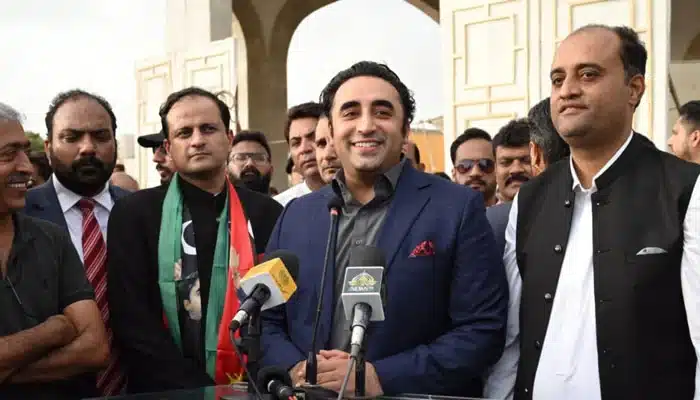
  • Bilawal Bhutto predicts the next PM will not be from Lahore

    Bilawal Bhutto predicts the next PM will not be from Lahore

    Pakistan People’s Party (PPP) Chairman Bilawal Bhutto Zardari said on Monday that the next prime minister will not be from Lahore, a pointed reference to Pakistan Muslim League-Nawaz (PML-N), one of the strongest parties in the city.

    The former foreign minister told members of the media that PPP will take part in elections “on its own” and on the basis of its manifesto.

    “We won’t look towards anyone [else] and [will rely] on public’s [support] for [success in elections],” Bilawal said, adding: “[Although] anyone can be a candidate for the prime minister, the final decision is that of the people.”

    Terming PPP’s win in Sunday’s local government by-polls “a trailer”, Bilawal said that, “The people proved [by voting] that they are with the PPP.”

    “February 8 will be the day of victory for the manifesto of [Zulfikar Ali] Bhutto Shaheed and Benazir Bhutto,” he added.

    Election Commission of Pakistan (ECP) announced last week that general elections will take place on February 8, 2024.

    The ECP announced polls date after consulting with President Arif Alvi.

  • Time out ‘disgraceful’ from Shakib: Angelo Mathews lashes out at Bangladesh

    Time out ‘disgraceful’ from Shakib: Angelo Mathews lashes out at Bangladesh

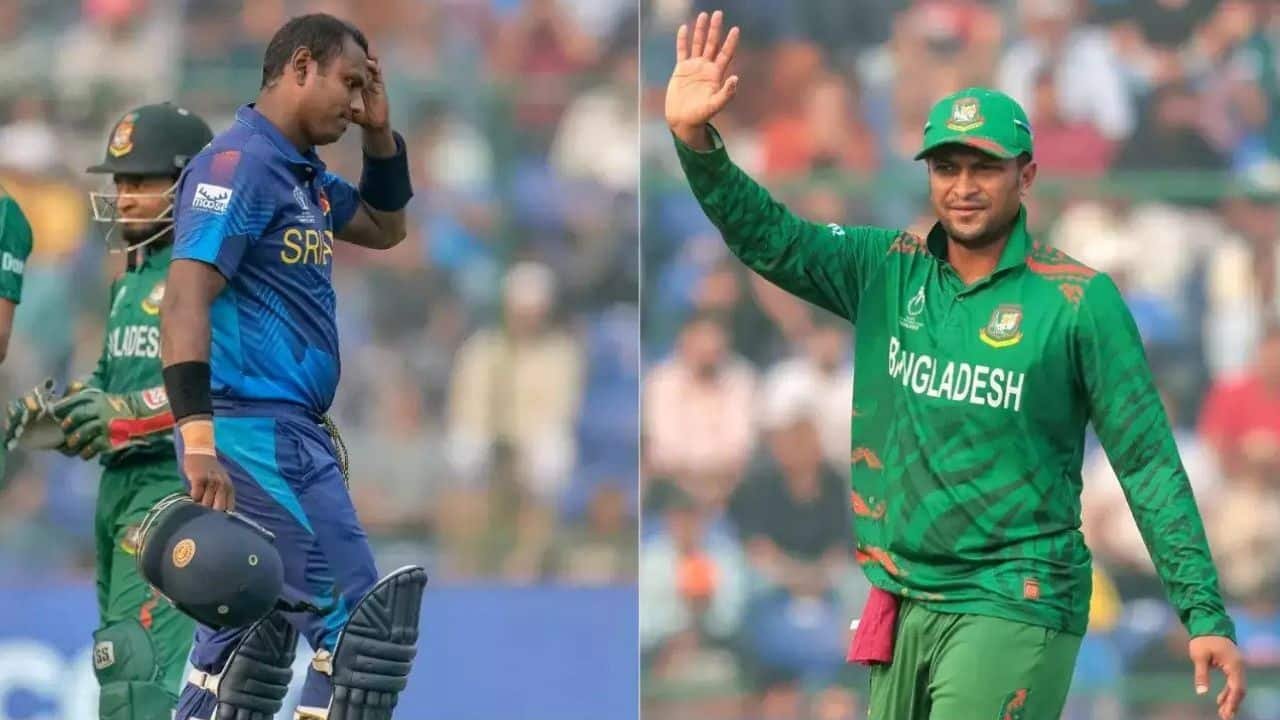
    On Monday night, Sri Lankan cricketer Angelo Mathews became the first player in the 146-years-old history of the game to be given a time out dismissal during the match between Bangladesh and Sri Lanka.

    The controversial dismissal took place right after Sri Lanka lost its fourth wicket and Angelo Mathews came to the crease to bat, trying to tighten his helmet strip. The strip, however, broke, leading to Matthews calling for a new helmet. Bangladesh captain Shakib Al Hassan then appealed to umpire for timed out, and umpire agreed after a conversation with the third umpire.

    According to the rules of the game, after the fall of a wicket, the upcoming batsman should face the ball in two minutes. Anglo Mathews took a little more time to face the next ball and got out.

    The Sri Lanka asked Shaking to withdraw the appeal, but he declined.

    During the press conference after the match, a journalist asked Mathews, “How did you feel when you werr given timed out?”

    He replied, “I have not done anything wrong. I had two minutes to get to the crease and get myself ready. I don’t know where common sense went. Obviously I think that was disgraceful from Shakib and Bangladesh.”

    When the same question was asked from Bangladesh captain Shakib al Hassan, he said, “I felt like I was at war. I have done whatever I had to for my country.”

    Angelo Mathews shared a screenshot on X with a timestamp in which he said, “4th umpire is wrong here! Video evidence shows I still had 5 more seconds even after the helmet gave away! Can the 4th umpire rectify this, please? I mean safety is paramount as I just couldn’t face the bowler without a helmet.”

    Social media reacted angrily to Shakib. Here are some reactions:

  • Poet Rupi Kaur rejects White House invitation for Diwali citing ‘genocide’ of Palestinians

    Canadian poet and illustrator Rupi Kaur has released a statement on her X account, announcing that she rejected an invitation from the White House for Diwali. In her statement, the ‘Milk And Honey’ writer said she rejected the invite because of USA’s active participation in the genocide of Gaza.

    The Palestinian death toll has risen to 10,000 since Israel begun it’s bombardment of the Gaza strip.

    “Today, the American government is not only funding the bombardment of Gaza, they continue to justify this genocide against Palestinians- regardless of how many refugee camps, health facilities, and places of worship are blown to bits. They reject the call for a humanitarian ceasefire- a baseline action being demanded by the United Nations, organisations like Doctors Without Borders, Red Cross and a majority of countries. The UN says 70% of the dead are women and children. We have seen Israel use phosphorus bombs, which Amnesty International says must be investigated as a war crime. We’ve seen footage on CNN of Israeli settlers kicking out and occupying the homes of Palestinians in the West Bank.”

    “As a community,” Rupi further urges. “We cannot remain silent or agreeable just to get a seat at the table. It comes at too high a cost to human life. Many of my contemporaries have told me in private that what’s happening in Gaza is awful, but they aren’t going to risk their livelihood or “a chance at creating change from the inside”. There is no magical change that will happen from being on the inside. We must be brave. We must not be tokenized by their photo-ops. The privilege we lose from speaking up is nothing compared to what Palestinians lose each day because this administration rejects a ceasefire.”

    Social media users applauded Rupi’s heroic stance against the White House. With many Gazan’s like Palestinian academic Refaat writing:

    “Thank you from Gaza.”

    “This is principle, solidarity, and love in action. If only other writers, actors, “activists” and public figures from South Asia and the Middle East had Rupi’s courage and heart,” Fatima Bhutto wrote.

  • What is olive harvesting season in Palestine?

    You have probably come across posts about the olive harvest season in Palestine. But do you know what it is?

    A festive season in Palestine, olive harvest falls every year in the months of October and November.

    In 2021, Al Jazeera reported that about 80,000 to 100,000 Palestinian families financially depend upon the olive harvest which includes more than 15 percent women.

    Palestine Trade Center (PalTrade) reported that the olive sector was worth $160m and $191m.

    But over the years, strict Israeli control, settler attacks and a poor capitulation due to harsh climate has affected the festivity.

    ‘The olive season in Palestine is much more than an economic practice, it’s a palpable example of one of Palestine’s many “cultural ecosystem services.”’, writes Dr. Yara Dahdal, projects manager at Nature Palestine Society in a blog post.

    Cultural ecosystem services, as Dr. Dahdal explains, are the “intangible benefits that people gain from ecosystems through recreation, tourism, intellectual development, spiritual enrichment, reflection, and creative and aesthetic experiences”.

    These have “positive impacts on human health and social ties, and solid cultural connections to identity. In this sense, the olive harvesting season in Palestine is an integrated socio-ecological system, extending its benefits beyond the total number of tons of harvested olives each year”, she adds.

    History

    As Palestine has been harvesting olives for thousands of years, olives became a symbol of their resilience against Israeli occupation.

    In 2008, the United Nations revealed that almost half of all cultivated land in the occupied West Bank and Gaza is planted with approximately 10 million olive trees.

    Whereas in 2019, Palestinian Central Bureau of Statistics reported that about 177,000 tonnes of olives were pressed, producing 39,600 tonnes of olive oil – roughly 30,000 litres (7,925 gallons).

    Jenin, Tubas and Northern Valleys produced the highest quantity of olive oil, followed by Tulkarm and Gaza.

    Israeli attacks

    A 2012 study published by The Applied Research Institute Jerusalem (ARIJ) revealed that Israeli authorities have uprooted 800,000 Palestinian olive trees in the West Bank since 1967.

    Data by the International Committee of the Red Cross (ICRC) revealed that in a single year alone (August 2020 – August 2021), more than 9,300 trees were wrecked in the West Bank.

    In addition to the destruction, Palestinian farmers in the West Bank need Israeli permits to access their land in restricted areas near illegal Israeli settlements.

    Israeli settlements are Jewish communities built illegally on Palestinian land. Today, between 600,000 and 750,000 Israeli settlers live in at least 250 illegal settlements in the occupied West Bank and East Jerusalem.

    In most cases, Palestinian farmers are, in fact, prohibited to access most of their land close to settlements.
  • Pakistan’s debt burden surges by Rs14,506 billion in one year

    Pakistan’s debt burden surges by Rs14,506 billion in one year

    Pakistan’s international debt burden has continued its ascent, soaring to a staggering Rs63,966 billion as of the conclusion of August 2023.

    In a recent briefing session focused on the nation’s debt situation, it was disclosed that foreign debt had surged to $24,174 billion by the end of August, while local debt had concurrently reached Rs39,791 billion.

    The data presented during the briefing demonstrated a substantial increase of Rs14,506 billion in total loans over the past year. 

    It’s worth noting that in August 2022, the loan volume was a more modest Rs49,571 billion. During that period, the foreign debt stood at $18 trillion, and the local debt was at Rs32,152 billion.

    Prior to this development, the International Monetary Fund (IMF) had demanded a tax collection plan of Rs6,670 billion from Pakistan by June 2024. 

    An IMF review mission arrived in Pakistan to assess the country’s economic performance during the initial three months of the current fiscal year, spanning from July to September.

    The IMF has insisted on a comprehensive tax collection report from all sectors as part of its projection report. 

    Negotiations for the next $700 million tranche commenced on Thursday.

    According to ARY News, reports indicate that the IMF team has emphasised the importance of the Federal Board of Revenue (FBR) achieving its tax collection revenue targets without any shortfall.

     Furthermore, the IMF team has called for a report from the FBR on the progress of tax cases pending in court.

    The FBR has shared details of one million new taxpayers added to the tax net with the IMF team, and the IMF has requested specific data on tax collection from various sectors. 

  • Pakistani rupee experiences 11th consecutive session of decline against US dollar

    Pakistani rupee experiences 11th consecutive session of decline against US dollar

    .

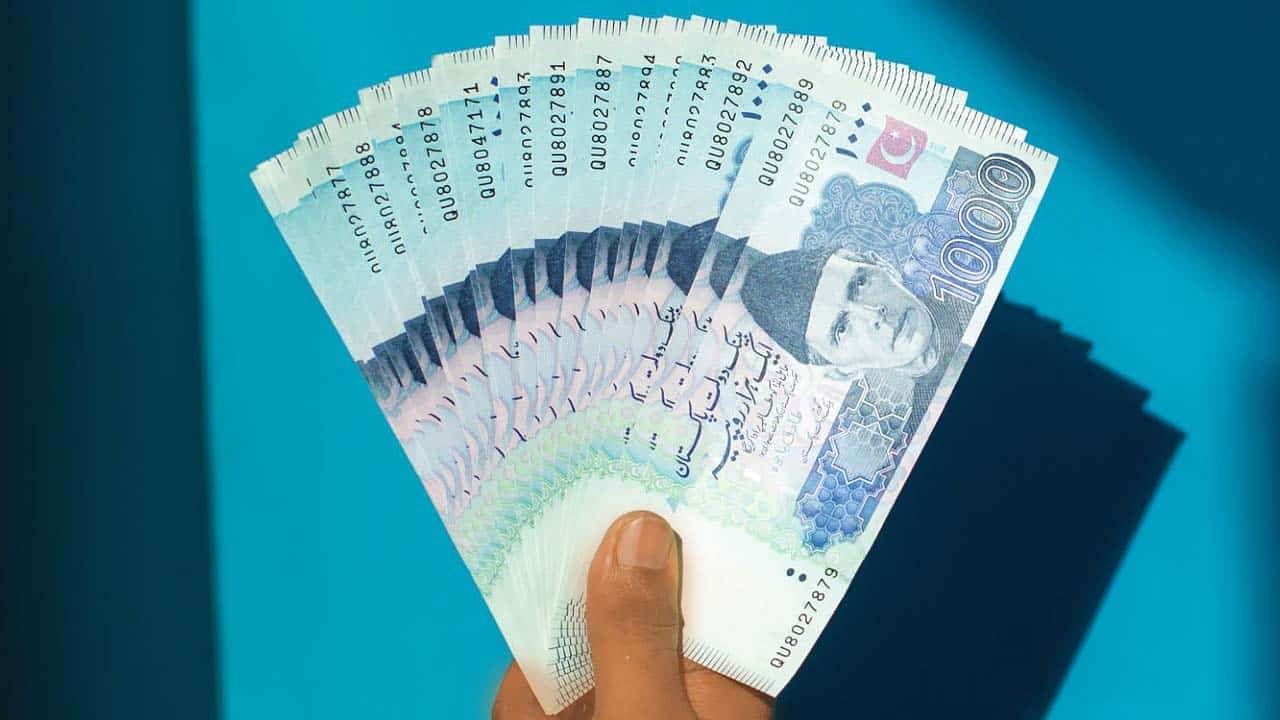
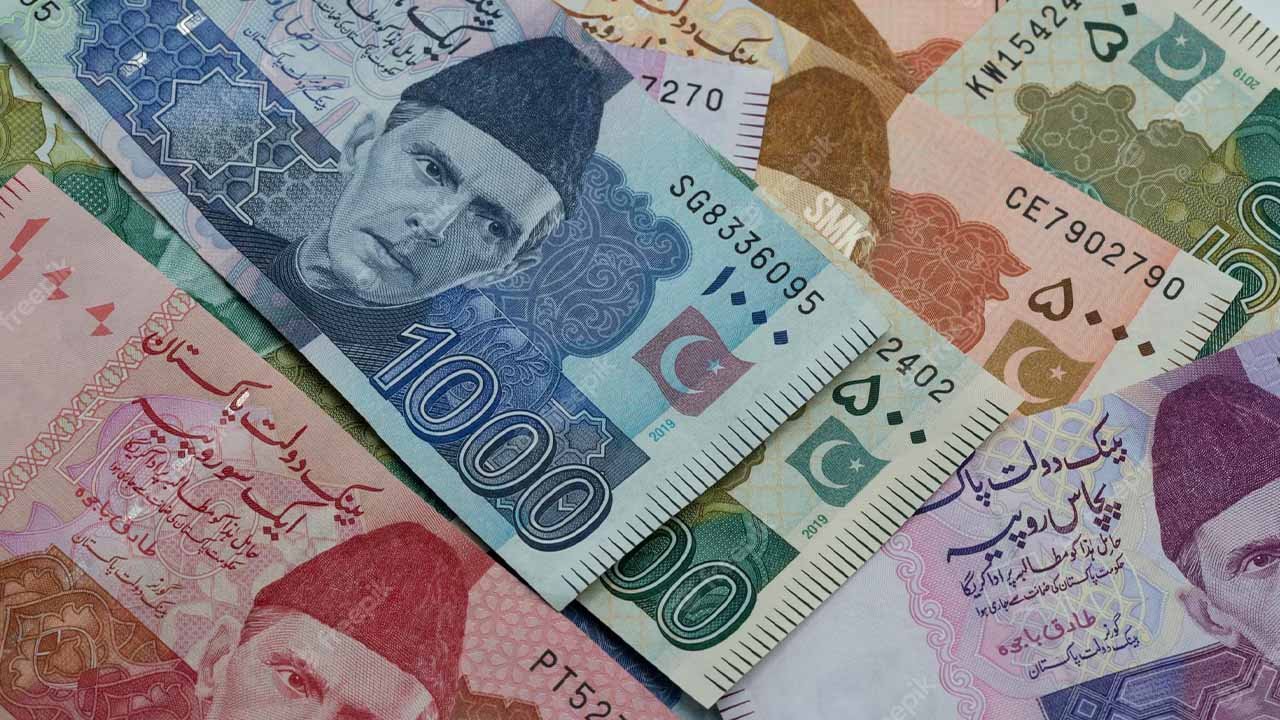
    The Pakistani rupee faced its eleventh consecutive session of losses against the US dollar, depreciating by 0.34 per cent in the inter-bank market on Monday.

    According to the State Bank of Pakistan (SBP), the rupee settled at 285.29, marking a decline of Re0.98.

    In the preceding week, the rupee had also suffered losses against the US dollar, closing 1.33 per cent lower at 284.31 in the inter-bank market, equivalent to a decrease of Rs3.74. This marked the third consecutive week of declines for the local currency.

    Prior to this recent trend, the Pakistani rupee had maintained a positive trajectory for 28 consecutive sessions, one of the longest appreciation runs, gaining a cumulative 10.93 per cent since reaching a record low of 307.1 in the inter-bank market on September 5.

    This surge was largely attributed to efforts to combat smuggling and increased controls on exchange companies.

    However, the situation has since shifted in favour of the US dollar, with global currencies remaining stable on Monday but appearing poised to continue their recent uptrend. This comes as the US dollar retreated following a moderation in the Federal Reserve’s hawkish stance.

    Internationally, major global currencies showed stability early on Monday, with the US dollar index flat at 105.11 and the euro at $1.0726.

    The dollar index experienced its most significant decline since mid-July, falling over 1 per cent last week and reaching a six-week low.

    Weakness in US job data, softer global manufacturing figures, and declining longer-term Treasury yields also contributed to the dollar’s weakened position.

  • ‘No one leaves their home by choice’: Mahira Khan appeals for Afghan refugees

    ‘No one leaves their home by choice’: Mahira Khan appeals for Afghan refugees

    Actress and UN ambassador Mahira Khan joins the rallying cry to protect Afghan refugees from deportations. Right now, Aurat March reports several Pakistani Pushtuns were picked up and taken to deportation centers because they ‘looked Afghan’.

    READ MORE: ‘Afghan-looking’ Pakistanis taken to holding centres for deportation, says Aurat March

    The ‘Humsafar’ actress shared pictures wearing her UNICEF vest and standing next to women. In the caption she wrote:

    “No one leaves their home behind by choice.
    Here in Pakistan, I’ve been proud of our tradition of hospitality towards those in search of safety, dignity and respect.
    For over 40 years we have provided safety to our Afghan brothers and sisters in need.

    There are people who are still in need of our kindness and compassion, who are at risk if they return.

    I appeal to my government to continue to support those who need it.”

    Several prominent celebrities have raised their voices as gruesome stories of the brutal treatment of Afghan refugees arrive from activists. Sanam Saeed appealed to the Pakistani government to show mercy to those seeking a better life. She wrote on X (formerly Twitter):

    “Deporting refugees who seek shelter here will not make our fundamental issues go away. It looks like we are deflecting blame from challenges that the govt or the country overall is facing. At a time like this in the world right now, we need to show more mercy.”

    READ MORE: ‘Show more mercy’: Sanam Saeed calls for Pakistani government to stop deporting Afghan refugees

  • ‘Afghan-looking’ Pakistanis taken to holding centres for deportation, says Aurat March

    ‘Afghan-looking’ Pakistanis taken to holding centres for deportation, says Aurat March

    In a series of video documents and reports released by the organization’s Lahore Chapter, a number of Pakistani Pashtuns are seen talking about how they are being taken in to deportation centres because they ‘look Afghan’. Their minor children, and in one case an Afghan’s wife and a two-month-old baby, been taken to holding centres in multiple raids conducted by the police.

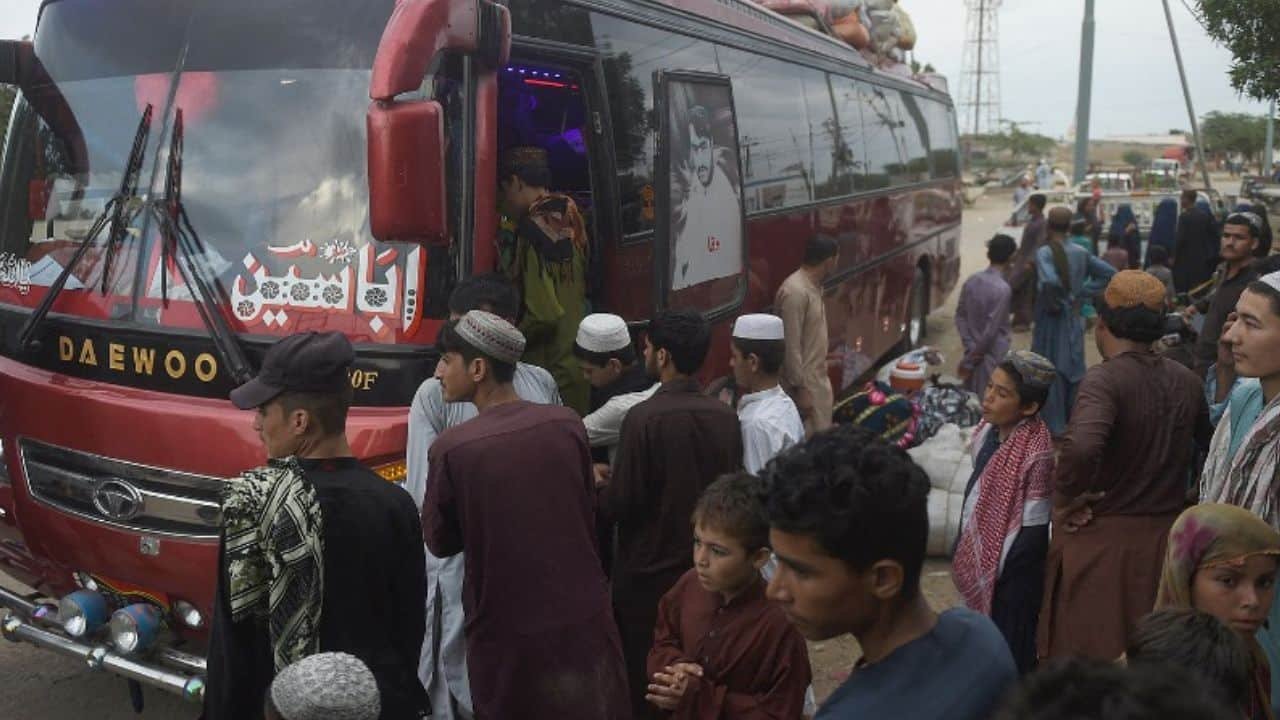
    The victims, visibly distressed, are complaining about the lack of information and resources as they do not know where the detainees are being taken and why. Some of them are being told that they will be taken to the borders for deportation because they do not hold registration cards and are assumed illegal by the government, even though their guardians hold the required documents.

    There are incidents of minor legal document holders being deported too. One such example is 16-year-old Mansour, brother of Yaseen who holds a PoR card but he says the police have confiscated it from him putting him at further risk. The child is being sent on a bus to the border.

    Aurat March is claiming that there is a large number of poor Pakistani Pashtuns running from one police station to the other, trying to prove with their CNICs and birth certificates of their detained children, that they are legal citizens and not illegal immigrants.

    Unfortunately, as confirmed by Aurat March, a video of a man doing rounds on social media where he is being told by the authorities that his son, a 17-year-old has been sent to Afghanistan after being picked up in a raid in Karachi, is true.

    In another video, a man from Waziristan, a Pakistani citizen is showing his child’s birth certificate, which was missing a day ago and has received a call from his son who is now sent to Chaman for deportation. He goes on to prove his citizenship by showing his Watan card and the ID cards of his deceased father and brother too. He alleges that the money and the photocopy of the father’s ID card had been snatched away from the kid by the police.

    Activist Mehrub Awan posted on X a video of a police officer outside the Sultanabad detention centre stating that “The Pakistanis deported accidentally can’t be brought back”.

    Lawyer Moniza Kakar, while talking to The Current, explains that the number of 1.7 million as stated by the government is a vague one, and the number is not definite since registration of Afghans stopped when the Taliban took over. All those who entered Pakistan after that were given a token which has no legal status. Consequently, they also can’t have access to any legal shelter. Even then, petitions have been filed in the Supreme Court and Sindh High Court where Lawyers Umer Gilani and Sara Malkani will be representing.
    Many, including women and children, are being confused by authorities, allegedly for having an accent or looking similar to Afghans, said Kakar.

    The government, however, is silent, raising questions over the transparency of the system and the very rushed way in which the process is being conducted. We have reached out to the interior ministry for a comment but they have not responded.

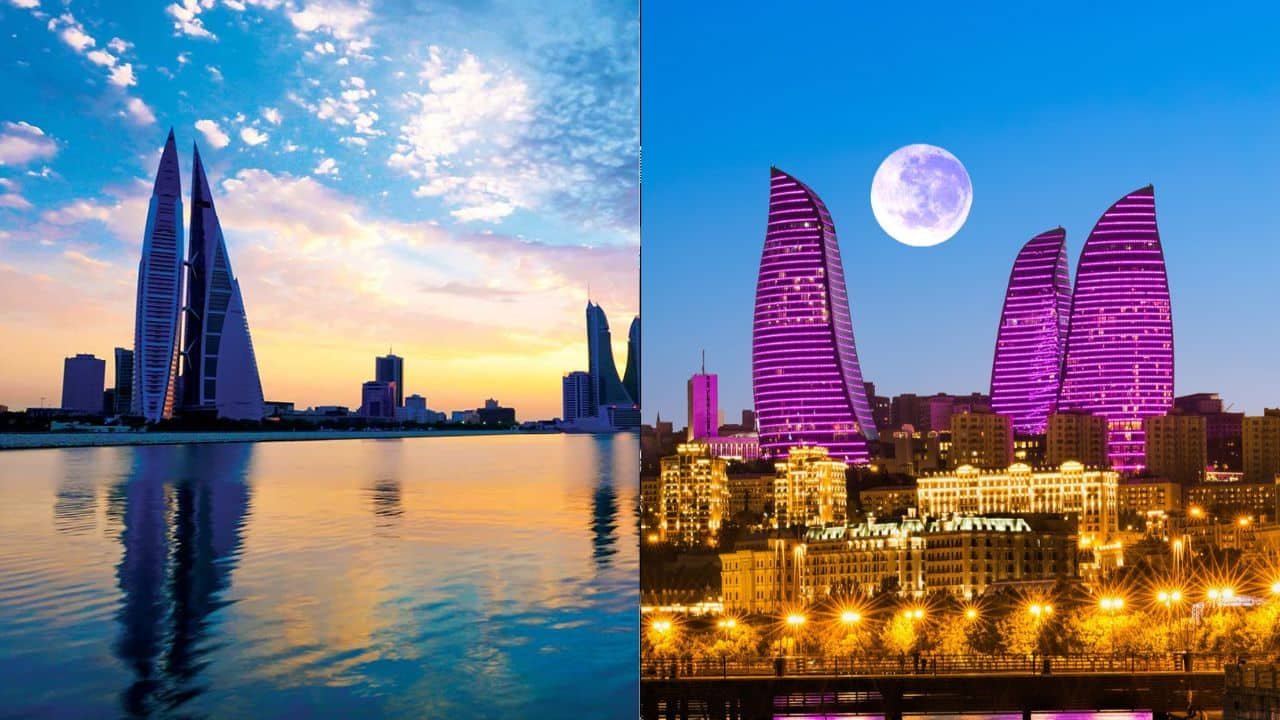
  • Pakistanis kay liye Bahrain aur Azerbaijan jana hua asaan

    Pakistanis kay liye Bahrain aur Azerbaijan jana hua asaan

    In an effort to facilitate tourism and strengthen cultural ties, the government of Azerbaijan has launched a user-friendly online service for the issuance of e-visit visas to citizens from various countries, including Pakistan.

    This exciting development launches in November 2023, providing Pakistani tourists a hassle-free entry into Azerbaijan.

    Azerbaijan visit visa fee November 2023:

    • Standard Category: For a single-entry 30-day electronic visit visa, Pakistani tourists can avail of the standard category at a fee of $69. The processing time for visa applications in this category ranges from 3 to 5 days

    • Urgent Category: In the urgent category, the visit visa for Pakistan nationals costs $119. This option offers a swift consideration period, with visa applications processed within three to five hours

    On the other hand, Bahrain’s Ministry of Interior, Nationality, Passport, and Residence Affairs (NPRA) has unveiled an efficient and convenient online visa application system for Pakistani nationals, offering three distinct types of visit visas.

    This new initiative aims to enhance travel experiences for visitors from Pakistan, whether they are planning a two-week vacation or a more extended stay in Bahrain.

    Visa types and application process:

    Pakistani travelers seeking to explore Bahrain’s tourism or business opportunities can now choose from the following visit visa options:

    1. Visit Visa – 2 Weeks Single Entry
    2. Visit Visa – Three Months Multiple Entry
    3. Visit Visa – One-Year Multiple Entry

    Application process

    1. Visit the official website and click on the “Apply for Visa” link on the homepage
    2. Fill out the eligibility page and proceed to view the available visa types and their respective conditions
    3. Select the desired visa type and click “Apply now”
    4. Complete the online application form as prompted, following the subsequent steps
    5. Attach the required documents, and if you are applying for multiple visas with the same credit card, use the “Submit another application” button to repeat the process
    6. Make the initial payment for the application fee using a credit card through a secure payment gateway, and keep note of the Application Reference Number(s) provided
    7. NPRA will process your application, and once approved, an email notification and a PIN will be sent to you
    8. Visit the Visa homepage and select “Pay for Application.” Provide the necessary information and enter the PIN to access your applications

    Should your application not be approved, you will receive an email containing instructions on contacting the relevant Embassy or NPRA.

    Required documents

    To complete your visa application, ensure you have the following documents:

    • A copy of your passport, including the family page and any additional information pages

    • A copy of a confirmed return air ticket

    • A copy of your hotel booking in Bahrain. If you plan to stay with a relative or friend, provide a copy of their ID reader’s printout

    • A copy of a bank statement under your name, covering the last three months with a balance of not less than the equivalent of USD 1000

    Visa fee information

    The total fee for applying for a two week long visit visa is nine Bahraini Dinar.

  • Seven water facilities ‘directly hit’ in Gaza: What we know about day 31

    In the month that has passed since Israel declared war on Gaza following the Hamas attacks in Israel on October 7, almost 9,800 Palestinians have been killed.

    200 people in Gaza killed in a night

    Palestinian Health Ministry revealed that last night’s Israeli air raids killed more than 200 people.

    Palestinian activist Saleh al-Jafarawi shared a video from one of the areas attacked by Israel.

    450 Hamas positions targeted, Israel claims

    Since October 7, Israel has claimed to have hit about 450 Hamas targets which include fighters, military compounds, observation posts, antitank missile launch posts and tunnels.

    According to Al Jazeera, the army has also claimed to have tracked down an opening to Hamas’s tunnels close to the Sheikh Hamad Hospital in Gaza.

    And while schools and hospitals have been targeted by Israel on assertion that Hamas is using these facilities and civilian infrastructure as a means to defend its underground operations, Hamas has, time and again, denied the claims.

    Thousands of civilian casualties have resulted in the attacks on UN-run facilities, refugee camps, schools, mosques and churches, resulting in the killing of civilians.

    Joint statement by humanitarian organisations

    The heads of 18 humanitarian organisations, including the UN, have issued a rare joint statement calling for an “immediate humanitarian ceasefire” in Israel and Palestine.

    “Enough is enough,” the statement said. “This must stop now.”

    The letter signed by the heads of the 18 organisations is known by Inter-Agency Standing Committee.

    175 medical staff killed since October 7

    Palestinian Health Minister Mai al-Kaila has reported that since October 7, 175 medical personnel and 34 civil defence workers have been killed in the Gaza Strip.

    Additionally, 16 out of 36 hospitals and 51 out of 72 clinics are no longer in service after they have either been attacked by Israel or they are out of fuel and medicine to keep the centres running.

    70 Palestinians arrested in occupied West Bank

    At least 70 Palestinians have reportedly been arrested during raids in the occupied West Bank, according to the Palestinian Prisoner’s Commission and the Prisoner’s Society.

    Since October 7, more than 2,000 people have been arrested including 49 women and 17 journalists.

    Water facilities destroyed

    The UN relief agency has revealed that seven water facilities in the Gaza Strip were “directly hit and sustained major damage” on Saturday and Sunday.

    Credits: Al Jazeera