Blog

  • “The red carpet for his return is not being rolled out by the PML-N but by someone else,” Shah added

    “The red carpet for his return is not being rolled out by the PML-N but by someone else,” Shah added

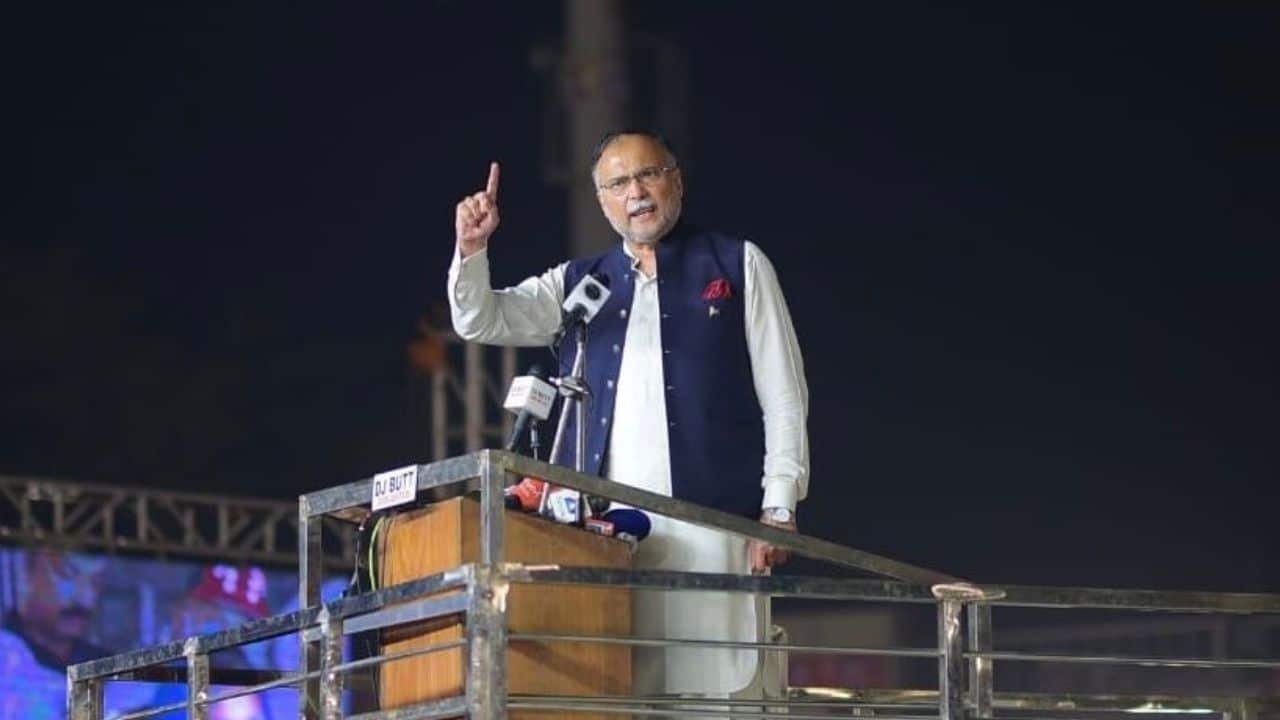
    Pakistan People’s Party (PPP) leader Kursheed Shah criticised former prime minister and Pakistan Muslim League-Nawaz (PML-N) head Nawaz Sharif, alleging that he had engaged in negotiations with powerful quarters to come back to power.

    “If Nawaz Sharif comes to power by dealing with powerful circles at this age, then what would be left of his politics,” he asked rhetorically.

    “The red carpet for his return is not being rolled out by the PML-N but by someone else,” Shah added.

    Observing that despite facing a lot of problems, PML-N is still doing “backdoor politics”, Khursheed Shah stated that he told the PML-N chief that he was committing a mistake by climbing on “someone else’s shoulder” to come into power.

    The former leader of the opposition also questioned how a convict and fugitive could address a public gathering in Lahore.

    “This is a dangerous trap in which the PML-N is trapped. What was the difference between Pakistan Tehran-e-Insaf (PTI) chairman [Imran Khan] and Nawaz Sharif?”

    Shah asserted that Nawaz Sharif is being taken into power, just as PTI chief Imran Khan was given power in 2018.

  • We don’t take sides, says BBC journalist

    We don’t take sides, says BBC journalist

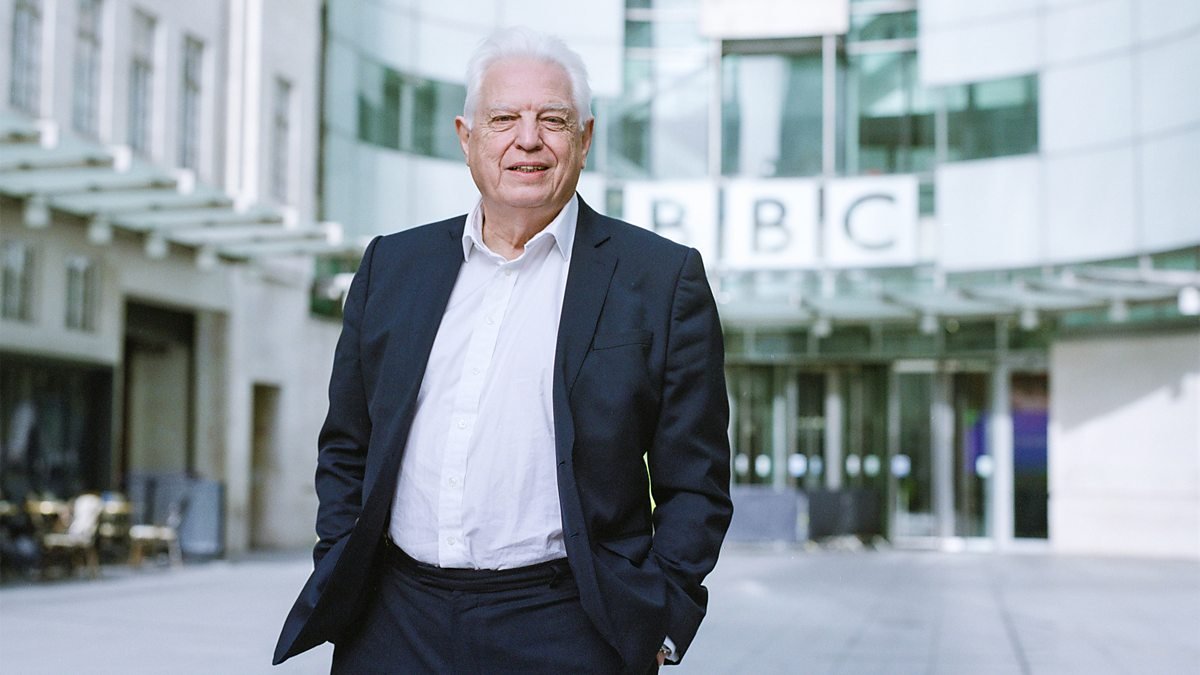
    Journalist John Simpson recently responded to criticism on why the BBC did not refer to Hamas’ gunmen (who attacked Israel on October 7) as terrorists.

    Referring to government ministers, newspaper columnists, and “ordinary people”, the foreign correspondent and world affairs editor of BBC News pointed out that it is not the job of a news agency to take sides or hand out labels.

    “Terrorism is a loaded word, which people use about an outfit they disapprove of morally. It’s simply not the BBC’s job to tell people who to support and who to condemn – who are the good guys and who are the bad guys,” he said.

    He reminded the people that the basis of his answer goes right back to the BBC’s founding principles.

    “The key point is that we don’t say it in our voice. Our business is to present our audiences with the facts, and let them make up their own minds.”

    With 50 years of reporting experience on the Middle East, Simpson has seen the aftermath of of Israeli bombing and artillery attacks on civilian targets in Lebanon and Gaza.

    “The horror of things like that stay in your mind forever”, he said. “But this doesn’t mean that we should start saying that the organisation whose supporters have carried them out is a terrorist organisation, because that would mean we were abandoning our duty to stay objective.

    And it’s always been like this in the BBC. During World War Two, BBC broadcasters were expressly told not to call the Nazis evil or wicked, even though we could and did call them “the enemy””

    He also quotes a BBC document stating, “there must be no room for ranting” and that the “tone had to be calm and collected”.

    “We don’t take sides”, he concluded. “We don’t use loaded words like ‘evil’ or ‘cowardly’. We don’t talk about ‘terrorists’. And we’re not the only ones to follow this line. Some of the world’s most respected news organisations have exactly the same policy.”

  • Cricket has been officially included in Olympics

    Cricket has been officially included in Olympics

    Cricket has been approved to be formally included in the Olympics, fulfilling a long standing demand by fans of the sport.

    The International Olympic Committee (IOC) session in Mumbai approved the inclusion of cricket in the 2028 Los Angeles Olympics. The Organizing Committee has proposed the inclusion of five sports in the Olympic Games apart from cricket, including baseball, softball, flag football, lacrosse in the 2028 Olympics Los Angeles.

    According to the IOC, cricket will be played in the T20 format at the Los Angeles Olympic Games 2028.

  • McDonald’s in Turkey, UAE, Oman donate to Gaza: Pakistani twitter users question their franchise

    McDonald’s in Turkey, UAE, Oman donate to Gaza: Pakistani twitter users question their franchise

    After controversy rose a few days ago when #BoycottMcDonalds began trending on X (formerly Twitter) after the fast food giant’s Israeli franchise announced that they were providing free food to soldiers carrying out operations in Gaza. Several McDonalds country franchises, including Pakistan, released statements distancing themselves from the Israeli chapter. However a few of them have announced donations for Gaza.

    Read more: McDonalds Pakistan, Turkey, Lebanon release statements; dissociate themselves from Israel

    The Turkey franchise released a statement where they distanced themselves from the Israeli branch and announced they were donating $1 million dollars to provide relief and aid to the communities currently suffering in Gaza.

    McDonald’s franchise in UAE wrote they were deeply saddened by the events in the region, and announced that they were sending AED 1 million dollars to Emirates Red Crescent for their ‘Tarahum for Gaza’ campaign.

    In Oman, the McDonald’s franchise wrote that the company was standing with Gaza in these difficult times, and have donated $100,000 dollars towards relief efforts.

    The McDonald’s franchise in Pakistan released a statement on Saturday, distancing themselves from the Israeli branch, but many Twitter users questioned why the company did not announce solidarity with Gaza and donated to provide humanitarian aid like the rest of the countries had.

    Veteran actress Nadia Jamil was among the critics as she wrote: “But do you stand with Palestine? That’s the answer we all want.”

    “If you are a Pakistani entity then where is your condemnation of Israel bombings? Where are your meals for Gaza? This wouldn’t cut it unfortunately,” another user wrote.

    “Spineless chain. Could have supported Palestine but all they care about is their commercial interests and not making international stakeholders unhappy,” another user wrote.

  • Pulitzer prize winning journalist Azmat Khan shadow-banned by Instagram on Gaza posts

    Shadowbanning by Instagram continues as Israel’s war on Gaza is being criticized. This time Pulitzer winning journalist Azmat Khan has been targeted by the social media giant.

    Azmat is an investigative reporter with New York Times, a Carneige Fellow and the Birch Assistant Professor at Columbia Journalism School.

    She took to Twitter (now X) and wrote, “After posting an Instagram story about the war in Gaza yesterday, my account was shadowbanned.”

    Khan expressed concerns affirmed by fellow journalists, “It’s an extraordinary threat to the flow of information and credible journalism about an unprecedented war.”

    She laid it all out for the world to know that the situation is getting dire for the journalists reporting from the war-zone. There are already extraordinary challenges to getting information from the ground — the killing of journalists, internet blackouts and electricity cuts— but these reports from journalists raise troubling questions about free press in this war.

    Other journalists weighed in by pointing out the rampant shadowbanning which may cause the valuable on-ground documentation to be lost. Alessandro Accorsi hinted at the “mistake” by which meta banned all content related to Sheikh Jarrah back in 2021.

  • 11 Palestinian journalists killed in Gaza war: union

    11 Palestinian journalists killed in Gaza war: union

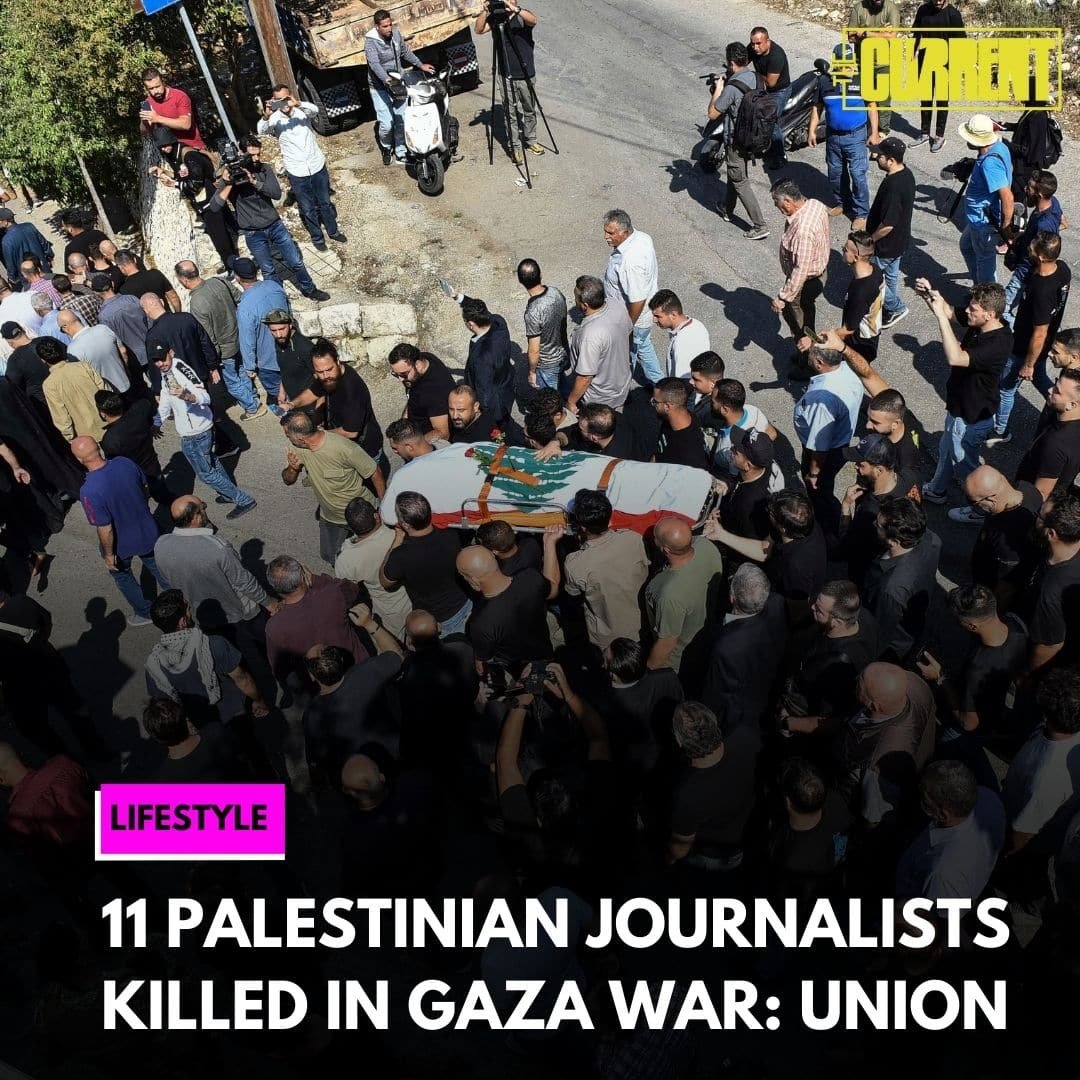
    Eleven Palestinian journalists have been killed in the war in Gaza since Israel launched its blistering air campaign on the coastal enclave, the Palestinian journalists’ union said Monday.

    Twenty other journalists have also been injured in the conflict since it erupted on October 7 after Hamas militants carried out a deadly attack on Israel that triggered a devastating war.

  • Imran Khan is a virus : Ahsan Iqbal

    Imran Khan is a virus : Ahsan Iqbal

    In a fiery political showdown, senior leaders of the Pakistan Muslim League-Nawaz (PML-N), Hamza Shehbaz and Ahsan Iqbal, launched scathing verbal attacks on the Pakistan Tehreek-e-Insaf (PTI) chief Imran Khan on different occasions on Sunday.

    During a political rally in Kasur, Hamza Shehbaz fiercely criticized the PTI chief, citing his failure to substantiate corruption allegations against Nawaz Sharif and Shehbaz Sharif.

    Hamza accused the PTI chairman of concealing state gifts in the Toshakhana case, a scandal that has drawn considerable public attention.

    Hamza argued that Imran Khan forced the public to bear the burden of him violating the agreement with the International Monetary Fund (IMF).

    He praised Nawaz Sharif, saying, “In 1990, there was no motorway in Southeast Asia. At that time, Nawaz Sharif envisioned building a motorway from Islamabad to Lahore. The world praised the motorway project when it was completed.”

    Meanwhile, Ahsan Iqbal, another senior figure within the PML-N, branded the PTI chief as a “virus” during a workers’ convention.

    Iqbal said: “The PTI chief is an inept person who harmed the country during his tenure,” adding that the PTI had launched a campaign against the entire country.

    Recounting the tenure of PTI, Iqbal said, “PML-N leaders were jailed in fake cases. We faced bogus cases.”

    He stated, “The PML-N will start its election campaign across the country after October 21.”

  • To understand what is happening in Palestine, give these must-see films a watch

    To understand what is happening in Palestine, give these must-see films a watch

    As the Palestinian genocide unfolds and the world watches in horror, we have seen several celebrities and politicians provide one-sided, incorrect narratives in an attempt to foil the voice of Palestinians. We understand that it is important now more than ever to amplify the voices of oppressed communities living in Palestine in order to get a complete perspective of what they have been suffering under Israel’s oppression for years. Which is why we are listing down films and documentaries made by Palestinian people about Israel’s occupation and which goes back to 1948.

    Check out some of these recommendations below:

    1 Farha (2022)

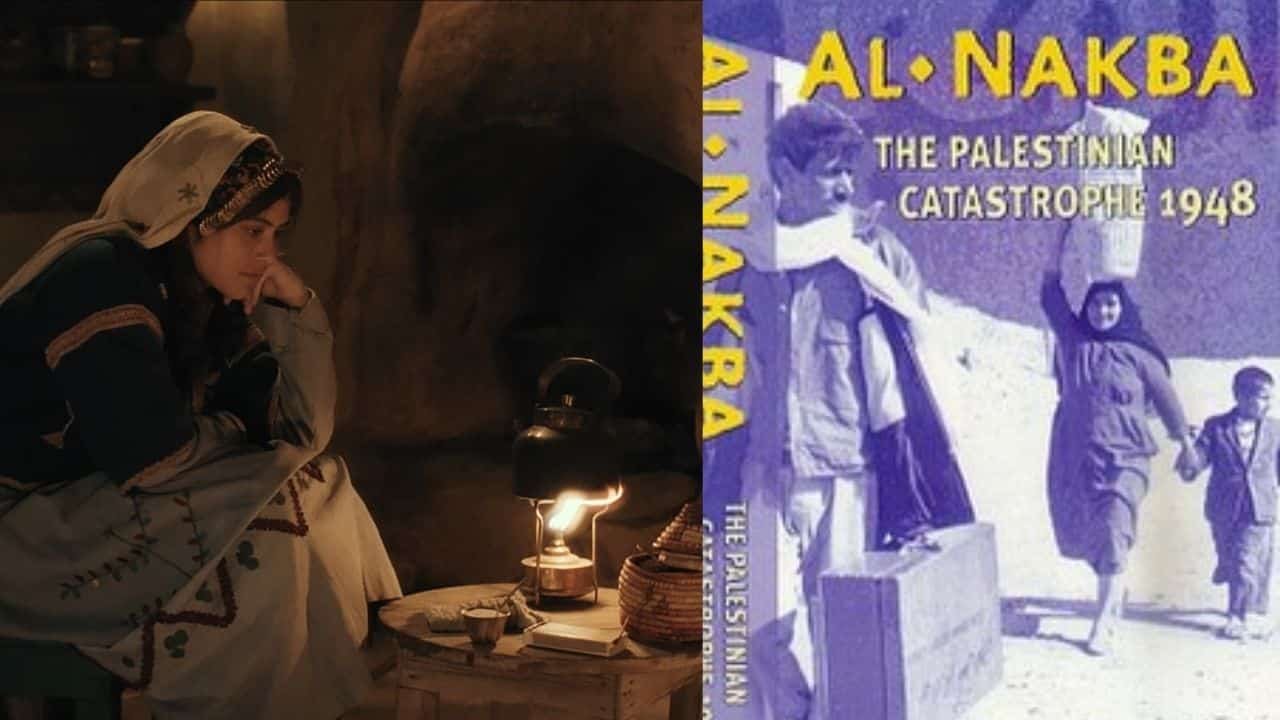
    Written and directed by Palestinian filmmaker Darin J. Sallam, the film explores the coming-of-age experience of a young girl Farha in the backdrop of the 1948 Nakba, when countless Palestinians were murdered or expelled from their homes by Zionist militants. The film is available to watch on Netflix.

    2 Five Broken Cameras (2011)

    Palestinian farmer Emad Burnat chronicles his West Bank village’s resistance to Israeli encroachment, which lasted for five years. The film won the 2012 Sundance Film Festival award as well as the 2013 International Emmy Award. Watch the documentary here

    3 Promises (2002)

    Israeli-American filmmaker B. Z Goldberg interacts with seven Palestinian children from West Bank and Jerusalem to learn about the Israeli-Palestinian war from their perspective. The documentary can be streamed on Apple TV.

    4 Al Nakba: The Palestinian Catastrophe (1997)

    Directed by Benny Brunner, the documentary examines the Nakba that led to the expulsion of 750,000 Palestinians. The documentary is divided into four episodes, and can be watched on YouTube.

  • A school in India charges plastic bottles as fee

    A school in India charges plastic bottles as fee

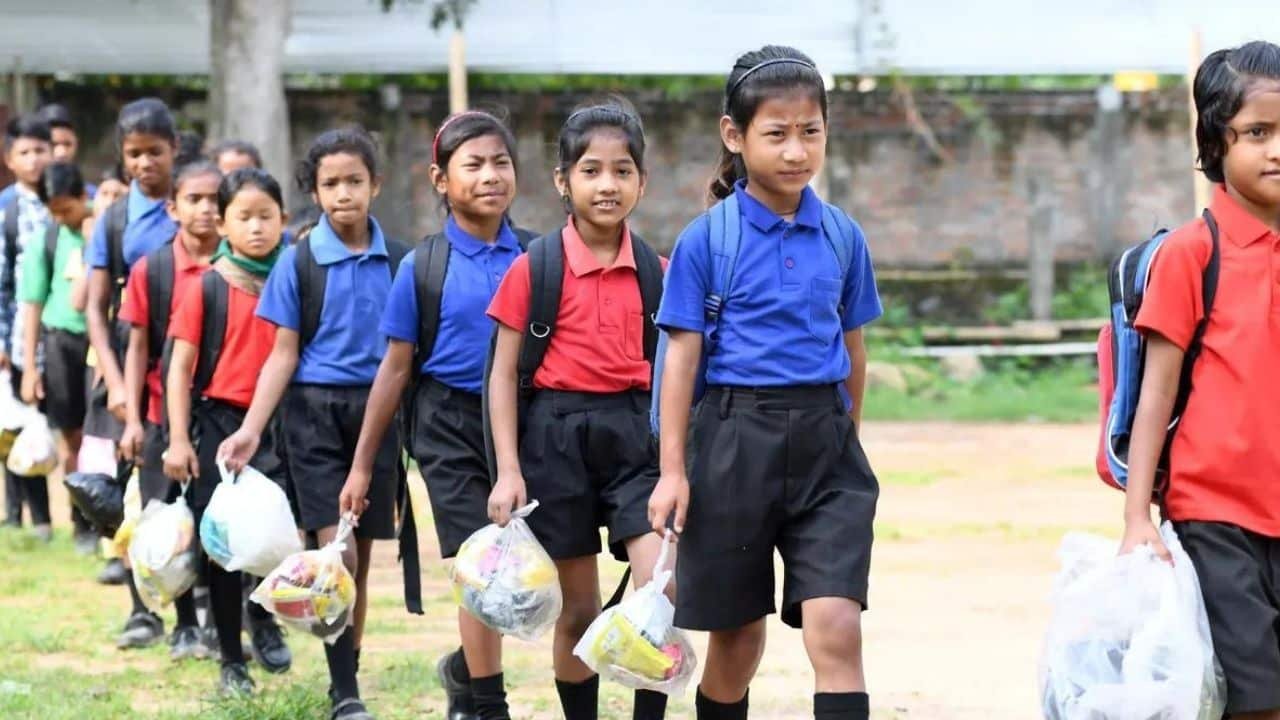
    A school in India has adopted a unique means of educating underprivileged children while creating awareness about environmental concerns at the same time.

    In a remote village of the Indian state of Assam, plastic bottles are taken from children as fees.

    The school was started by a couple, Mazin Mukhtar and Parmita Sarma, in 2016 to reduce the growing pile of garbage in the village and to provide free quality education to the children.

    While no fee is taken from the students, they have to deposit 25 plastic bottles full of waste to the school every week.

    By recycling these plastic bottles and the waste they contain, roads, bricks and toilets are made.

    Older students earn a living by teaching the younger children.

    Apart from education, children are taught different languages, recycling of plastics, carpentry and gardening.

  • Why was Pakistan defeated by India in World Cup 2023?

    Why was Pakistan defeated by India in World Cup 2023?

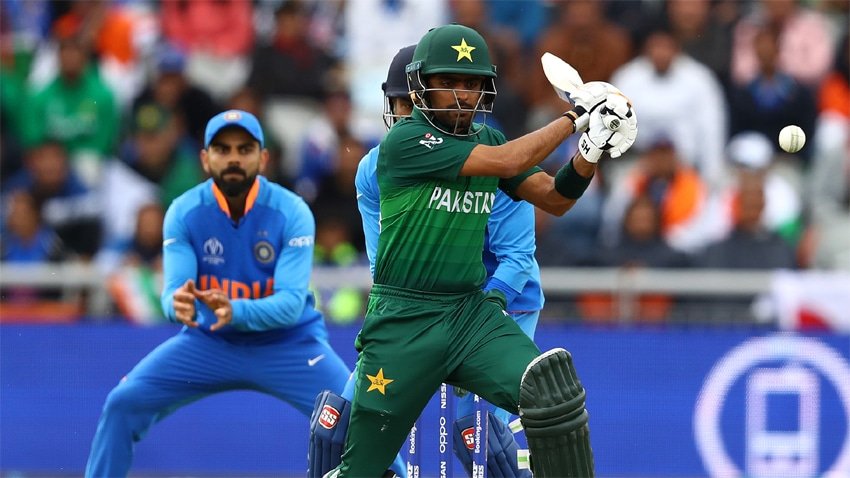
    India defeated Pakistan by seven wickets in the 12th ICC Cricket World Cup match played on October 14 in Ahmedabad’s Narinder Modi Stadium in India.

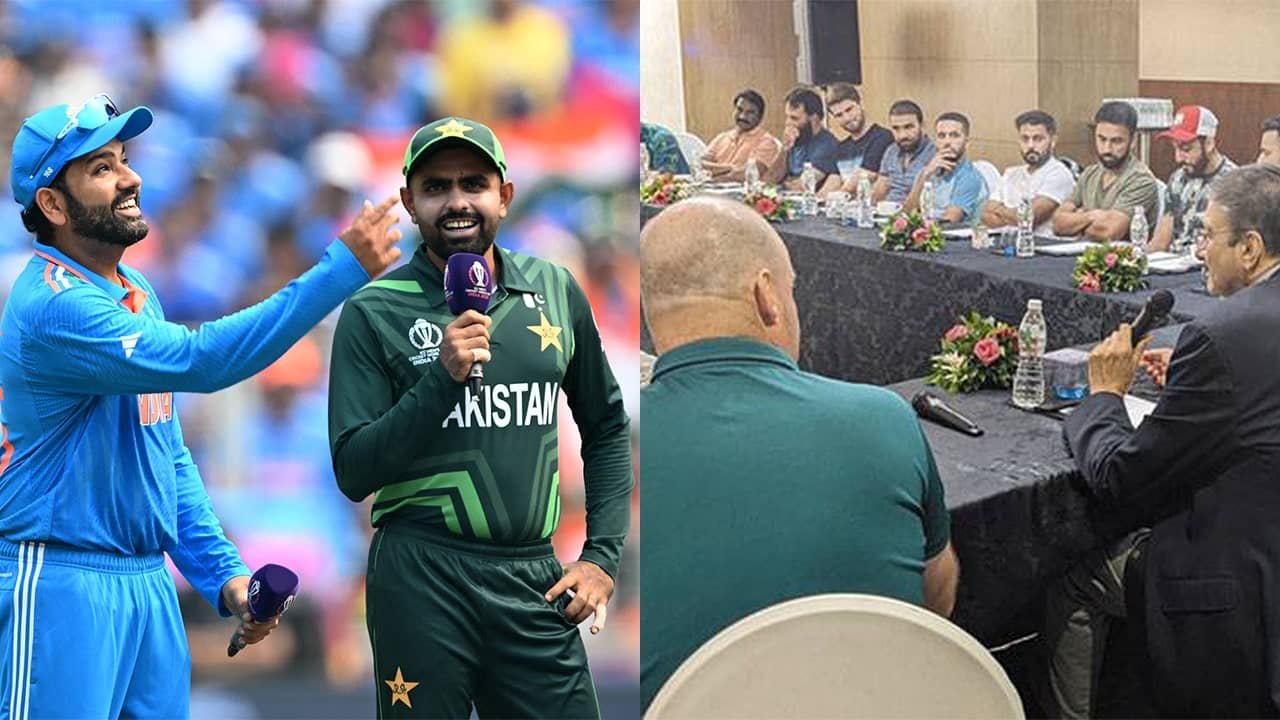
    The Indian captain Rohit Sharma won the toss and decided to bowl first. Pakistan started collapsing after 155/2 when Babar Azam was bowled out after scoring 50 runs. The remaining eight players returned to the pavilion while adding only 36 runs to the total. Pakistan set a total of 191 runs that India achieved in 30.3 overs while losing only three wickets.

    Fans started blaming the whole team and raising questions about Babar Azam’s captaincy, but no one talked about all the other issues that played a major role in this defeat.

    1: Lack of psychological training

    Pakistan cricket board hired psychologist Maqbool Babri before the Asia Cup 2023 to provide counseling to the Pakistani men’s cricket team. The duty of a sports psychologist is to improve stress management, effective teamwork, visualization, and many other psychological problems that an athlete faces during the game.

    First of all, we should ask PCB management what type of psychological training has been provided to our players to play the biggest match of cricket in India, our arch-rival. What type of training do they get to control their stress amidst a hostile crowd of 132,000? They should be asked about what type of training session is given for mental strength and how to use biofeedback and neurofeedback.

    2: Lack of bowling variations

    Pakistani bowlers were conceiving runs during the power play and also during the middle overs. They were not getting wickets in middle overs. A question should be asked of bowling coaches, whether they are unaware of Indian conditions which are similar to Pakistani conditions? Why were our bowlers unable to introduce more variations when the same is being done by their Indian counterparts?

    3: Defensive approach in batting

    ODI (One Day International) cricket is not a game of 250 or 260 runs anymore, now every team aims to score 300+ runs from the very beginning. Other teams have attacking opening pairs that score 60+ runs in power play and give very good momentum to the middle order. If we look at our openers they play defensively from the start of the match and due to their defensive batting style, get out early and leave the load on the middle order. Openers should have an attacking mindset and put pressure on the opponent’s bowlers.

    4: Zero support in the stadium

    Pakistan cricket team was playing with almost zero support from fans in the stadium because India had not issued any visa for Pakistan spectators.

    5: Chanting and booing by Indian fans

    Indian fans started booing at the start of the match when Pakistan captain Babar Azam came out for the toss.

    After this incident, Indian spectators started chanting “Hum tumhary baap hein” during the match when Babar Azam was batting.

    Another incident occurred when Muhammad Rizwan was returning to the pavilion and Indian spectators started chanting “Jai Shree Ram”.

    Remember that before this match Pakistan’s team received support from fans in Hyderabad. Pakistani cricketers also shared on social media that Heydrabad’s people were loving and amazing hosts.

    6: Harassing Pakistan player Muhammad Rizwan

    Indian lawyer Vineet Jindal, who has filed a complaint against Pakistani cricket presenter Zainab Abbas for old tweets, has now filed a complaint to the ICC (Internation Cricket Council) against Pakistan wicket-keeper batsman Muhammad Rizwan for his tweet in support of Palestinians and praying in the stadium.