Blog

  • Two former cricketers, one umpire to be included in National Selection Committee

    Two former cricketers, one umpire to be included in National Selection Committee

    Pakistan Cricket Board (PCB) has decided to include Aleem Dar, Azhar Ali and Aqib Javed in the National Selection Committee while Hasan Cheema will join as a data analyst.

    The official announcement is expected soon.

    Former fast bowler Aqib Javed is likely to be appointed as the convener, and Azhar Ali will be given the responsibility of youth development.

    Muhammad Yusuf resigned from the post of selector two weeks ago.

    According to the sources, a disagreement arose between Muhammad Yusuf and a coach over giving cricketers opportunities despite their poor performances. The coach had been against making changes and preferred to maintain the status quo, while Yusuf insisted on giving new players a chance.

    The coach had emphasized the importance of consistent policies and avoiding haste, but Yusuf had been keen on including Kamran Ghulam, Zahid Mehmood, and Muhammad Ali in the squad for the series against England.

    However, Muhammad Yusuf gives the reason for resigning from the selection committee due to personal reasons.

  • World Bank raises Pakistan’s GDP growth forecast to 2.8% for FY25

    World Bank raises Pakistan’s GDP growth forecast to 2.8% for FY25

    The World Bank has projected that Pakistan’s economic activity will keep getting better with GDP growth to hit 2.8 per cent in FY25, slightly up from the previous projection of 2.3 per cent.

    These insights were mentioned in a report named Pakistan Development Update: The Dynamics of Power Sector Distribution Reforms.

    The report mentions several positive factors for Pakistan’s economy, including the removal of import restrictions, easing of domestic supply chain disruptions, and falling inflation ratings.

    Also, business confidence is likely to improve with upgrades in Pakistan’s credit rating and lesser political uncertainty.

    Pakistan’s agriculture sector is also projected to grow at average rate of 2.4 per cent during FY25–26. The World Bank said that the absence of import controls will enhance the availability of farm inputs, which will support recovery in agricultural sector over the medium term.

    The report also predicts that growth in agriculture and industry will benefit the services sector, which is projected to grow by an average of 3.2 per cent during FY25–26.

    This growth will be led by key sub-sectors including wholesale and retail trade, along wit transport and storage, which are expected to recover with the revival of imports and surging demand.

    Output growth is forecasted to drop to 3.2 per cent in FY26 due to stricter macroeconomic policies, high inflation, and lingering policy uncertainties.

    On the inflation front, the World Bank expects consumer price inflation around 11.1 per cent in FY25, slowing further to 9 per cent in FY26, driven by lower commodity prices, tight macroeconomic policies, and high base effects.

    Still, inflation is expected to remain high in the short term due to increasing energy prices, an increase in money supply through open market operations (OMOs), and new tax measures as a part of ongoing fiscal consolidation efforts.

    Externally, Pakistan’s current account deficit is also expected to remain low at 0.6 per cent of GDP in FY25, inching up slightly to 0.7 per cent in FY26, as local demand improves and import restrictions remain lifted.

  • Pakistan’s Nooh Butt wins three Gold and one bronze medal in Common Wealth Powerlifting Championship

    Pakistan’s Nooh Butt wins three Gold and one bronze medal in Common Wealth Powerlifting Championship

    Pakistani powerlifter Nooh Butt won the title of the Commonwealth Powerlifting Champion in the 120 kg category In the ongoing Commonwealth Powerlifting Championship in South Africa, winning three Gold and one bronze medal in the championship.

    Pakistan’s top lifter won three gold medals and one bronze medal in the championship.

    Nooh Butt also excelled in the bench press and squat, winning the gold medal in the 120 kg open category. He won the gold medal in the squat category by lifting a weight of 370 kg, while in the bench press, he bagged another gold medal by lifting a weight of 210 kg.

    He bagged a bronze medal in the deadlift category by lifting 280 kg. In the open category, he lifted a total weight of 860 kg and won the title.

    Previously, he won several medals for Pakistan in weightlifting, but after differences with the Pakistan Weightlifting Federation, he switched from weightlifting to powerlifting.

  • Beyond the surface: Analysing SBP’s 30-month foreign reserves high

    Beyond the surface: Analysing SBP’s 30-month foreign reserves high

    Pakistan’s foreign currency reserves have risen to $15.98 billion, of which $5.28 billion are held by commercial banks and $10.7 billion by the State Bank of Pakistan (SBP). This is the highest level of reserves in 30 months achieved via the inflow of the IMF loan: A sign of short-term stability.

    Pakistan’s economic woes seem to be coming to a close with the upcoming Shanghai Cooperation Organization (SCO) summit in Islamabad, which begins October 16-17.

    Foreign investments, including possible multi-billion dollar settlements from Saudi Arabia in the Reko Diq mining operation and loans for the ML-1 railway project, are expected to come to Pakistan. These funds are expected to immediately give relief to the economy but will also alter the value of the PKR.

    It is possible that the foreign investment funds will increase the value of the PKR. This happens because when foreign funds arrive, they have to be converted into PKR before they are to be invested in local projects. As a result, the demand for PKR shoots up and the value of the PKR goes up. However, this appreciation is usually short-lived. Once the foreign funded projects are completed, the PKR tends to lose value again.

    This historical pattern is linked to Pakistan’s huge trade deficit, which was $24.09 billion for just the fiscal year 2023-24 alone. This is due to Pakistan importing much more than it exports.

    The imports that exceed exports are responsible for the outflow of foreign reserves which causes the PKR to depreciate.

    Historically, to prevent the PKR from depreciating too much, the SBP has come in and started selling off foreign currency reserves to support the value of the PKR when it starts to depreciate. However, the sale of reserves is not a viable option to stabilize the PKR value in the long term as Pakistan runs a persistent trade deficit.

    The more PKR the SBP buys, to artificially increase the value of the PKR, the more it depletes its reserves. Without any rise in the inflow of foreign currency from exports, this practice of artificially propping up the PKR is not sustainable.

    The recent rise in reserves and the temporary boost from the SCO summit may give a sense of stability, but they don’t address the core underlying economic problems. Structural changes in exports and imports will help the rupee to remain under pressure unless the trade deficit is curbed.

    While the SBP interventions may provide immediate relief, they only treat the symptoms, not the cause. To achieve true economic stability, the government needs to enforce reforms. Reducing the trade deficit by increasing exports to build sustainable foreign reserves is the need of the hour for Pakistan.

    While the 30 month foreign reserves high is a reprieve for the state bank, it’s just that: A reprieve. The real question, though, is whether Pakistan will be able to grow when world leaders leave Islamabad after the conclusion of the SCO.

  • Tennis star Rafael Nadal announces retirement

    Tennis star Rafael Nadal announces retirement

    The famous star of the tennis world and the king of the clay court, Rafael Nadal of Spain, has announced his retirement from the game of tennis. He will say goodbye to international tennis after the Davis Cup in November.

    The 38-year-old Spaniard, known in international tennis circles as Rafa, confirmed his retirement in a video message on social media, saying he wanted to inform his fans that he is now retiring from professional tennis.

    Nadal said, “The truth is that I had a difficult few years, especially the last two years; I don’t think Ican play full tennis anymore.”

    Nadal will be on court for the last time in November this year when he will represent Spain at the Davis Cup in Malaga.

    Nadal started his career in 2001 at the age of 15, during which time he won 22 Grand Slam titles, including 14 French Open, 4 US Open and 2, 2 times Australian Open and Wimbledon Championship.

    The left-handed Nadal was known as the king of the clay court. In addition to 38 ATP Masters titles, Nadal also won the 2008 Olympic gold medal and four Davis Cup titles for his country. The left-handed Nadal was known as the king of the clay court. In addition to 38 ATP Masters titles, Nadal also won the 2008 Olympic gold medal and four Davis Cup titles for his country.

  • Sadia Imam reveals her husband stopped her from working after marriage

    Sadia Imam reveals her husband stopped her from working after marriage

    TV host Sadia Imam has admitted for the first time, after 12 years of marriage, that her husband stopped her from working after her wedding.

    Sadia Imam married Pakistani-born German industrialist Adnan Haider in 2012, and they have a daughter.

    After marriage, Sadia Imam stayed away from showbiz for a long time, but in recent years, she has appeared in TV programs and at events. In 2020, during an interview, she denied rumors of quitting showbiz and clarified that it was her husband who stopped her, but she had not left the industry.

    Now, however, Sadia Imam has openly admitted that her husband did stop her from working in showbiz after marriage.

    The actress recently appeared on Samaa TV’s morning show, where she discussed challenges before and after marriage, sharing her own experiences.

    During the show, she mentioned that in the past, mothers used to train their daughters well, but that seems to have changed now. She explained that, despite being a well-known actress, her mother would insist she attend family weddings and other functions. “Even if I didn’t want to, I would still go to family events because of my mother’s insistence.”

    Sadia Imam said that her parents instilled in her the habit of attending family gatherings, which she still practices today. She believes that this strengthens family bonds and provides valuable lessons. She noted that such training isn’t seen in today’s generation, as the upbringing of girls has changed.

    Speaking about women who want to work or pursue a career after marriage, Sadia Imam said that there is a mindset in society that needs to change. She emphasized, “This mentality can be changed through media, including TV programs.”

    She revealed, “My husband liked me as an actress before marriage, but after we got married, he stopped me from working in showbiz.”

    She shared, “I had the talent and desire to continue my work in showbiz, but there was nothing, just my husband’s ego problem preventing me from working in showbiz.”

  • Indian student lists Emraan Hashmi and Sunny Leone as parents on exam form

    Indian student lists Emraan Hashmi and Sunny Leone as parents on exam form

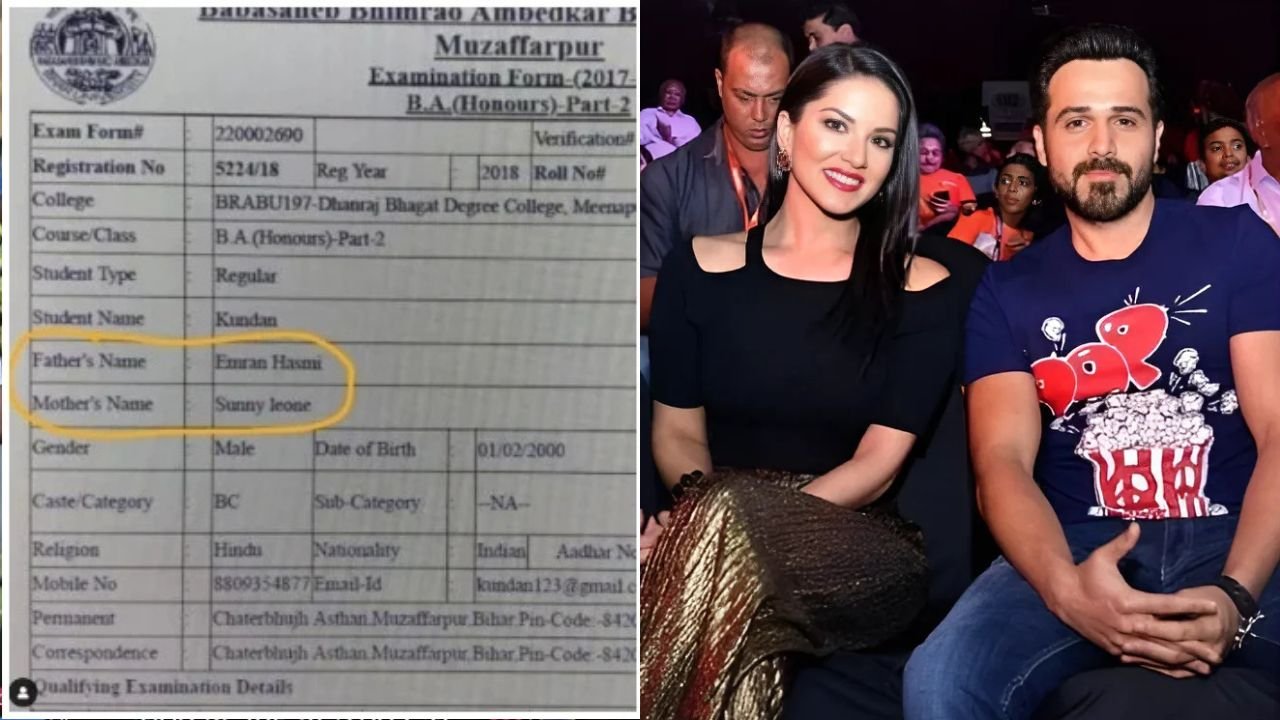
    An Indian student has social media’s new favourite after listing Bollywood actors Emraan Hashmi and Sunny Leone as his parents on an exam form.

    The funny incident amused people online, and a photo of the exam form submitted to Babasaheb Bhimrao Ambedkar Bihar University quickly went viral on social media.

    The student, Kundan, is from Dhanraj Bhagat Degree College in Muzaffarpur, Bihar. He reportedly completed his Bachelor of Arts (Honors) between 2017 and 2020.

    The photo was first posted on an Instagram account called “Indianrareimages” and has since been widely shared, sparking humorous reactions and comments.

    It’s unclear whether the student made the mistake intentionally or by accident, but it has left people both laughing and curious about the form’s authenticity.

  • Balochistan allows ISI to screen civil servants before appointments

    Balochistan allows ISI to screen civil servants before appointments

    Chief Minister of Balochistan Sarfraz Bugti has allowed the national spy agency ISI to vet and screen civil screen service appointments in Balochistan in a notification dated October 1.

    Geo Fact Check reported that the notification, which was shared by a Facebook user on October 7, is indeed true.

    ISI has been appointed as a ‘Special Vetting Agency’ (SVA) for verifying and screening civil service appointments of officers from BPS-17 posts and above.

    SVA’s approval would be required before appointing administrative secretaries, divisional commissioners, and deputy commissioners in the province as well.

    It should be noted that in June 2022, then-prime minister Shehbaz Sharif also authorised the ISI to act as the Special Vetting Agency (SVA) for the verification and screening of civil officers’ appointments.

  • Can you imagine Kabhi Main Kabhi Tum with different actors?

    Can you imagine Kabhi Main Kabhi Tum with different actors?


     When it comes to casting the perfect actors for a drama serial, every little detail counts, especially for a drama like ‘Kabhi Main Kabhi Tum’ which has become popular because of its gripping storyline and brilliant performances.
     
    But have ever wondered what the drama would be like with a completely different cast?
     
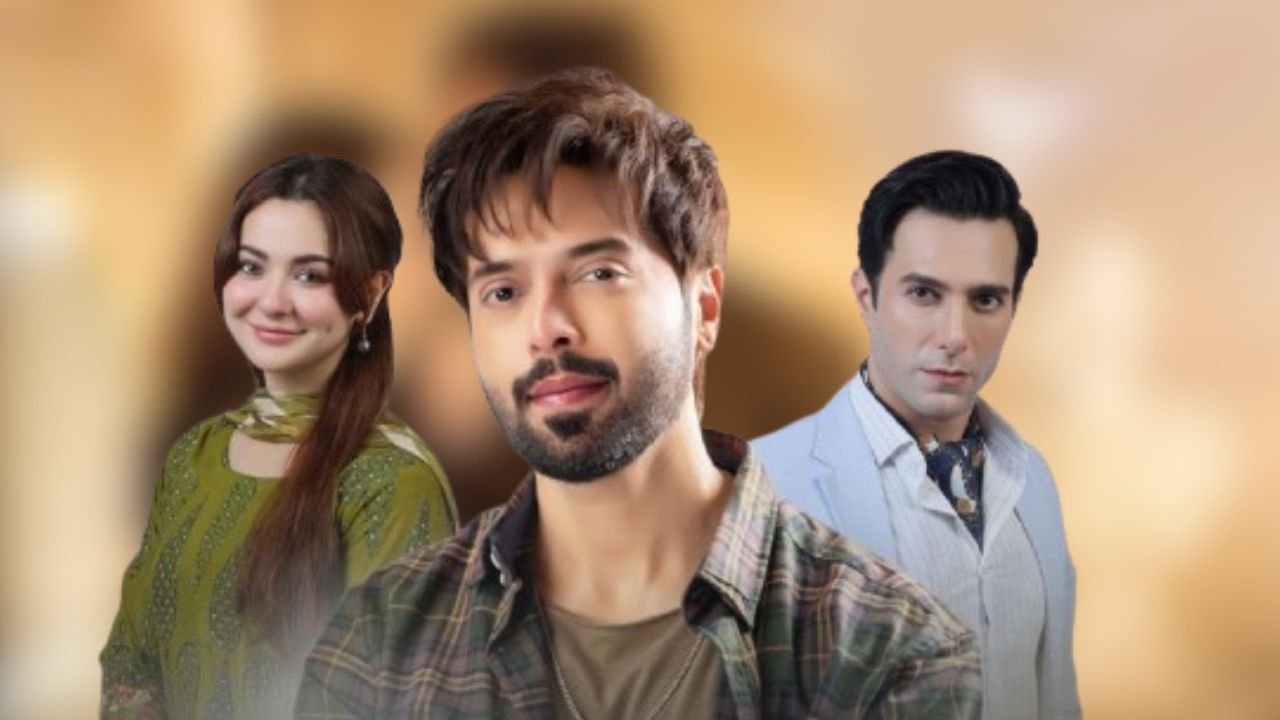
    Hania Aamir plays the character of Sharjeena, and Emmad Irfani plays the character of Adeel.
     
     
    Recently, Kabhi Main Kabhi Tum director Badar Mehmood appeared on Gloss Etc by Maliha Rehman.
      
    “This is a collective decision, when the story is written and the script is prepared, there are some writers’ inputs involved. The writer (Farhat Ishtiaq) specifically told me that she wanted Hania Aaamir to be cast, and for Emmad Irafani, she mentioned that too. Fortunately, we got both of them because, as you know, there are timeline issues and commitments. The only concern is that there shouldn’t be any commitments. So it was just luck that we managed to get both of them for this drama.”
     
    The host asked, “They also said that if the chemistry is good, the drama will progress well. Did you know from the beginning that this romance might require some censorship?”
     
    Mehmood replied, “Until now, we haven’t had to face any issues on TV. However, when the 25th episode aired, a censor issue came up that I had to address because it was related to romance. In the 25th episode, there’s a scene where Fahad is lying on the bed, and Hania is resting her head on his shoulder. I initially took a wider shot, but then I made it more compact. I thought, when I saw the drama that was the wider shot with both of them lying down and talking. I made it more compact so that it wouldn’t cause too much concern on TV.”


    Badar also highlighted how important it is to show closeness in a respectful way, especially when it involves portraying different types of relationships on screen.
     
    “It also depends on the relationship, if it’s a husband-wife relationship, I feel there should be some allowance for that. I spoke to the censor board and said, ‘It’s a husband-wife relationship, it should be fine.’ But if it’s a boyfriend-girlfriend relationship, I understand that certain boundaries should definitely be maintained. That’s the beauty of a husband-wife relationship, it should be  shown,” Badar Mehmood added.
     
    Kabhi Main Kabhi Tum is written by Farhat Ishtiaq and directed by Badar Mehmood.

    The drama airs every Monday and Tuesday at 8:00 PM on ARY Digital.

  • What is Reko Diq and how does it help us?

    What is Reko Diq and how does it help us?

    Reko Diq has been deemed a game changer for Pakistan as its natural resources have the potential to improve the country’s struggling economy.

    However, the question remains: How can the Reko Diq project change Pakistan’s financial dynamics?

    The Pakistani government first signed an agreement on the Reko Diq copper and gold reserve in 1993 with the Australian mining company Broken Hill Proprietary (BHP) Minerals.

    In 2000, BHP handed over the project to Tethyan Copper Company (TCC), a joint venture of Antofagasta of Chile and the Barrick Gold Corporation.

    The Diplomat Magazine reported that in 2006, TCC invested $200-400 million to take over the project and convert the exploration permit into a mining license. However, in 2011, the Balochistan government rejected TCC’s application, and in 2013, Pakistan’s Supreme Court ruled against the mining license.

    Meanwhile, when the Balochistan government cancelled the mining license, TCC filed for international arbitration at the International Centre for Settlement of Investment Disputes (ICSID), alleging a breach of contract.

    A new agreement was signed in 2022, under which Barrick agreed to a 50 percent stake, down from the previous 75 percent.

    In 2024, after the withdrawal of Barrick Gold Cooperation from Riko Diq, Pakistan and Saudi Arabia entered into a preliminary agreement for Islamabad to sell a 15 percent stake in the mining project to Saudi investors.

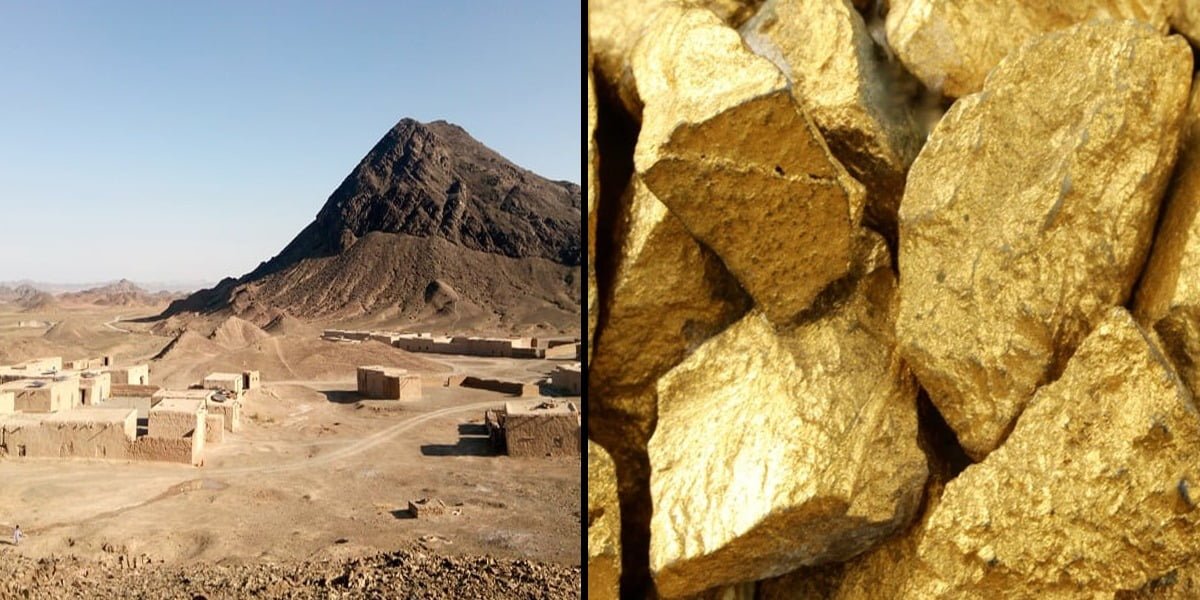
    Reqo Diq covers an area of 3.3 million acres in the Chagai district, bordering Iran and Afghanistan. Beneath this dusty surface lies one of the world’s largest undeveloped gold and copper reserves.

    A geological Survey in 1978 discovered the gold and copper resources in Chaghi.

    According to Dawn News, estimated deposits of Riko Diq are around 200,000 tons of copper and 250,000 ounces of gold a year for nearly 50 years.

    Chagai is one of the poorest areas of Pakistan and South Asia. With one of the lowest literacy rates and the highest infant and maternal mortality rates, Chagai district ranks lowest in Pakistan on most social and human development indicators.

    Saudi Minister for Investment Khalid bin Abdulaziz Al-Faleh addressed the Pakistan Saudi Arabia Business Forum in Islamabad on Thursday, saying that the ties between his country and Pakistan “have no limits” and that this extends to economic cooperation as well.

    Prime Minister Shehbaz Sharif on Wednesday said that Pakistan and Saudi Arabia will sign an agreement worth around two billion dollars.

    “I think there are essentially no limits to what Saudi Arabia and Pakistan can do in the economic sphere, just like there are no limits to our friendship, to our bonds, to our historic relations,” stated the Saudi Minister.

    Al Faleh stated that Saudi Arabia intends to invest in Pakistan’s infrastructure and mining sectors, and his delegation would sign 25 agreements across various fields.