Blog

  • SRK hasn’t forgiven his son’s imprisonment and here is proof

    SRK hasn’t forgiven his son’s imprisonment and here is proof

    Mess with the scorpio, earn the sting.

    If history has proven something, its that SRK will always get the last word.

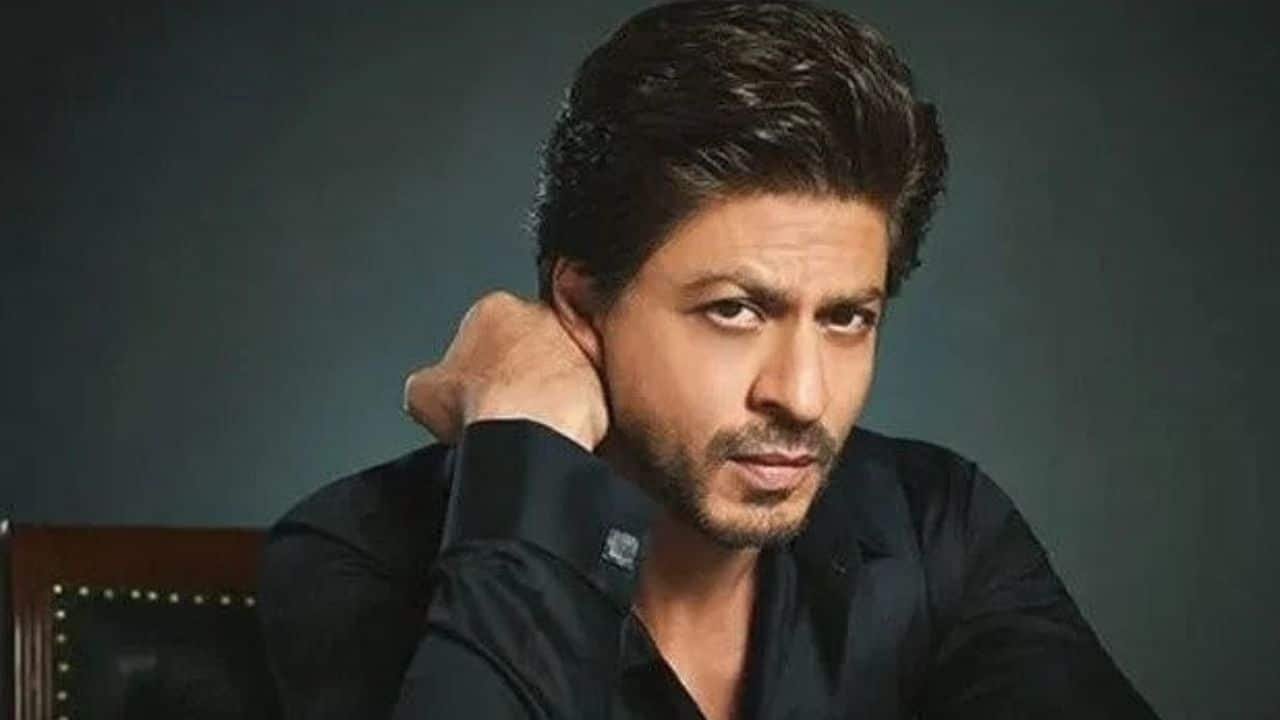
    Recently, the official trailer of the action/thriller ‘Jawan’ was released on Youtube. A clip from the trailer has generated a lot of buzz. Right when the clip credits Gauri Khan as the producer of the film, Shah Rukh can be heard saying, ‘Betay ko hath lagane se pehlay baap say baat karo.”

    As soon as the clip was noticed by social media, netizens applauded the burn, praising SRK for aiming the stinger directly at the people responsible for his son Aryan’s arrest.

  • Asia Cup 2023: Sri Lanka defeats Bangladesh by five wickets

    Sri Lanka beat Bangladesh by five wickets in their first match of Asia Cup 2023 played at Pallekele Stadium in the island nation.

    Bangladesh’s Captain Shakib-al-Hassan won the toss and chose to bat first. Bangladesh team collapsed at 164 runs in 42.4 overs. Najam-ul-Husain Shanto was the top scorer with 89 runs on 122 deliveries, while only four other batsmen could get into double figures. Bangladesh set up a target of 165 runs for the Lankans to chase.

    Matheesha Pathirana becoming the top wicket taker with four scalps.

    In the second inning, while chasing the target of 165 runs, Sri Lanka lost three early wickets on the score of 43. Asalanka and Samarawickrama then set a partnership of 78 runs that led Sri Lanka to victory.

    Read More: Pakistan, India match in trouble as bad weather looms

    Asalanka remained unbeaten with 62 runs on 92 balls while Samarawickrama scored 54 runs on 77 balls.
    Shakib al Hassan was the top wicket-taker from the Bangladesh side with two wickets.

    The next match of Asia Cup 2023 will be played on September 2 between Pakistan and India at Pallekele stadium.

  • ECP will keep an eye on election campaigns and expenses

    ECP will keep an eye on election campaigns and expenses

    The Election Commission of Pakistan (ECP) has said on Thursday that it will keep an eye on election campaigns and expenses in the upcoming general elections, stating that the decision has been taken after consultations with political parties.

    According to ECP, the services of the army, police, and other law enforcement agencies will be sought to ensure a safe and peaceful environment at polling stations.

    The electoral watchdog has said that this matter came up in the meeting about the upcoming general elections with Tehreek-e-Labaik Pakistan (TLP) and Pakistan Muslim League (Quaid-i-Azam) PML(Q)

    Chief Election Commissioner (CEC) Sikandar Sultan Raja, ECP secretary, and other senior officers were part of the meeting.

    The TLP’s delegation comprised of party leaders Chaudhry Rizwan, Mohammad Qasim, Ziaur Rahman, and Chaudhry Azhar, whereas the PML-Q was represented by Mohammad Tariq Hussain, Farukh Khan, Ghulam Mustafa, Rizwan Sadiq, and Hafiz Aqeel Jalil.

  • Elon Musk’s X to launch audio and video calls soon

    Elon Musk’s X to launch audio and video calls soon

    In a significant development for the social media landscape, Elon Musk, the owner of Twitter (now known as X), has officially announced the imminent launch of audio and video call features on the platform. 

    This revelation marks a departure from the platform’s previous attempts, which were either delayed or abandoned. Now, it appears that users can finally anticipate the long-awaited feature.

    The unveiling of this groundbreaking feature came directly from Elon Musk himself, who detailed that audio and video calls will be accessible on a wide range of devices, encompassing Android, iOS, Windows, and MacOS platforms. 

    Remarkably, this feature is designed to function seamlessly without the necessity of traditional phone numbers. Instead, X will serve as a global address book, relying on user-generated usernames. In Musk’s words, “This set of factors is unique,” emphasising the distinctive nature of this forthcoming addition.

    However, Elon Musk has remained tight-lipped regarding a specific launch date for this exciting feature, simply indicating that it is “coming soon. This cryptic announcement has left users eagerly anticipating its arrival.

    Notably, this isn’t the first time Twitter (X) has teased the possibility of audio and video calls. Just last month, the company’s designer shared tantalising screenshots of what users can expect from the feature. 

    One such preview showcased a phone receiver icon prominently positioned at the top right corner of Twitter (X) direct messages (DMs), signalling the impending arrival of the functionality. Upon tapping this icon, users will be presented with the choice to initiate audio or video calls, promising a more immersive and interactive communication experience.

    As the tech world eagerly awaits further updates and a definitive release date, Twitter (X) users can anticipate a transformative shift in their social media interactions, thanks to Elon Musk’s ambitious vision for the platform’s future.

  • Relief plan for electricity bills to be revealed in 48 hours: PM Kakar

    Relief plan for electricity bills to be revealed in 48 hours: PM Kakar

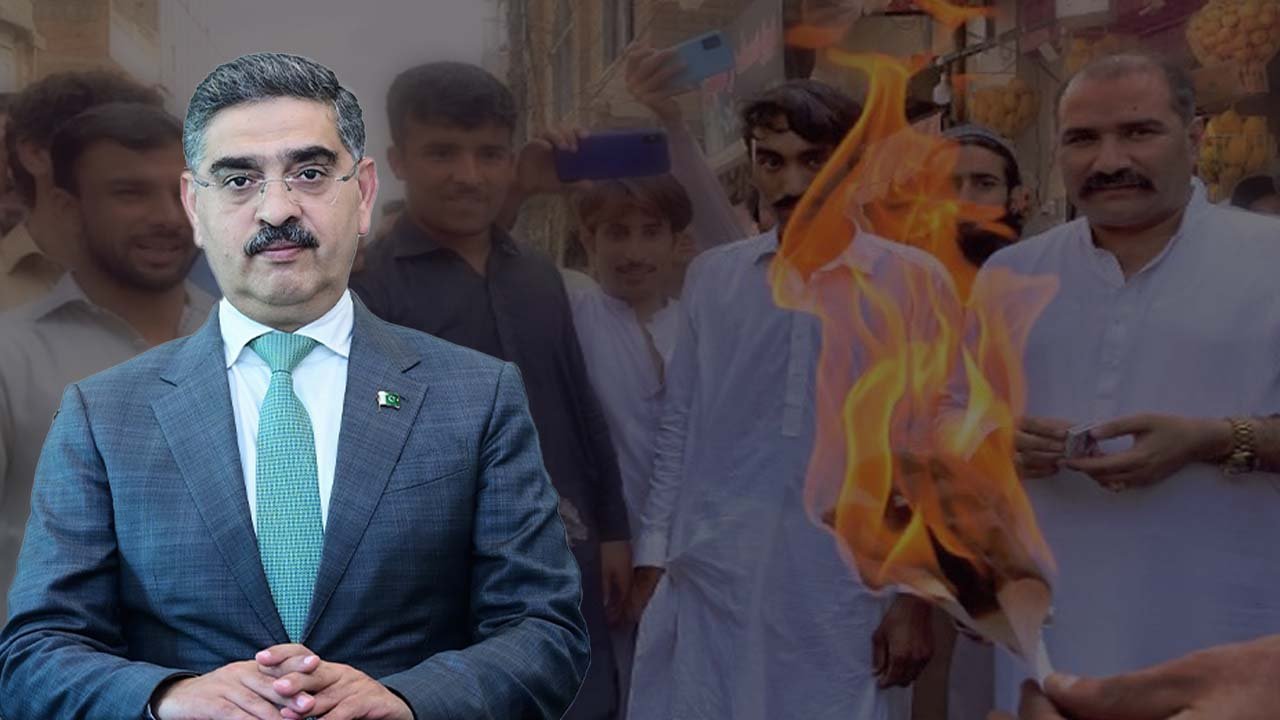
    Caretaker Prime Minister Anwaar ul Haq Kakar made an announcement on Thursday, revealing that his administration will unveil a relief plan for addressing the widespread protests triggered by escalating electricity bills within 48 hours.

    PM Kakar informed me that his government conducted an exhaustive review of electricity bills spanning the last two months. He highlighted that all institutions were questioned regarding their utilisation of complimentary electricity and stressed that the issue of exorbitant electricity bills needed a measured perspective.

    According to Geo, the caretaker prime minister underscored that while the electricity bills must be settled, it is imperative to comply with the terms outlined by the International Monetary Fund (IMF). He attributed the surge in electricity bills to independent power producers (IPPs) and transmission line losses, emphasising that collaboration with the IMF was underway to address the matter. Despite the prevalent inflation, PM Kakar argued against an extensive strike.

    In addressing the allocation of free electricity units, PM Kakar assured that the military does not avail itself of free electricity; rather, it is funded through the defence budget.

    Additionally, he clarified that the judiciary does not enjoy complimentary electricity, and in the Wapda sector, only certain employees from grades 1 to 16 benefit from this provision. Employees in grades above 17 receive free units.

    PM Kakar expressed his perspective that most protests originate from employees in grades 1–16. He suggested redirecting financial assistance towards officers in grades 17 to 22 instead of offering free electricity. He emphasised the need for stakeholders to formulate a policy within the following 48 hours.

    Regarding the impending general elections, PM Kakar assured that the elections would occur as scheduled, with the understanding that the Election Commission of Pakistan holds the authority in this matter. He asserted that adherence to the interpretation of the law by the Supreme Court is essential and should be respected.

    Frustrated citizens, grappling with soaring inflation, have been participating in demonstrations against substantial increases in electricity tariffs and heightened taxes nationwide.

    In light of the ongoing public outcry over exorbitant electricity bills, the caretaker government is contemplating the possibility of allowing individuals burdened by inflation to settle bills for up to 400 units in six-month installments. This proposal emerged following discussions held during a cabinet meeting, which also addressed the influence of IMF conditions on elevated energy costs.

    During the session, caretaker Finance Minister Dr Shamshad Akhtar updated the attendees about ongoing negotiations with the IMF, highlighting its pivotal role in the escalated energy tariffs.

  • Petrol price increased to historic high of Rs305.36 per litre

    Petrol price increased to historic high of Rs305.36 per litre

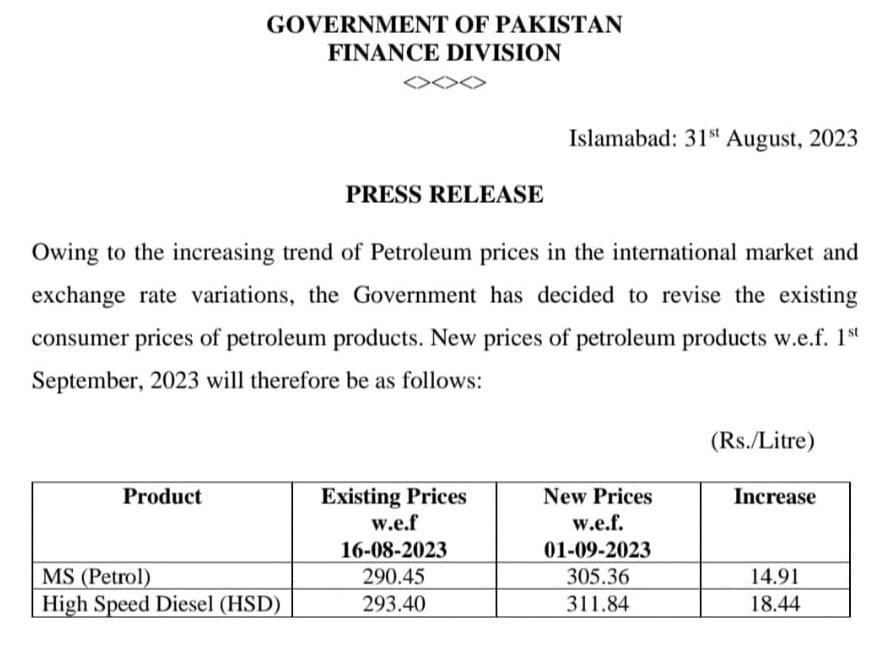
    For the first time in Pakistan’s history, the price of petrol has crossed the Rs300 mark due to a recent hike of Rs14.91. This brings the new petrol price to Rs305.36 per litre. The diesel price has also increased by Rs18.44, now at Rs311.84 per litre.

    The government has attributed these revisions to the upward trajectory of global petroleum prices and the consequential fluctuations in exchange rates.

    A statement issued by the finance ministry highlights that due to the escalating trend of petroleum prices in the international market and the subsequent shifts in exchange rates, the Government has opted to recalibrate the prevailing consumer prices of petroleum products.

    In the days ahead, the effects of these significantly heightened petrol and diesel prices will become evident. These price fluctuations are poised to have a substantial impact on individuals who rely on personal vehicles, such as bikes and cars, as well as those who depend on public transportation services.

  • IMF should help Pakistan uphold right to electricity, says HRW

    IMF should help Pakistan uphold right to electricity, says HRW

    For the past week, Pakistan has witnessed extensive protests against the recent surge in electricity prices. In several cities, these protests escalated into violence.

    The government-sanctioned price increase arrives at a critical juncture as Pakistan grapples with one of the most severe economic crises in its history. This crisis imperils the fundamental rights of millions, including access to healthcare, nutrition, and a satisfactory standard of living.

    According to Human Rights Watch, successive Pakistani governments have failed in reforming the country’s energy sector, contributing to the current crisis. The recent surge in prices is linked to a substantial US$3 billion agreement between the International Monetary Fund (IMF) and Pakistan.

    This pact, sanctioned in July 2022, stipulates the government’s obligation to eliminate energy and fuel subsidies, transition to a market-driven exchange rate, and implement tax increments.

    While Human Rights Watch fundamentally opposes fossil fuel subsidies due to their adverse climate impact, the removal of these subsidies without substantial investment in social security often results in disproportionate repercussions for individuals with low incomes.

    Elevated electricity prices can further elevate the costs of essential commodities like food, housing, and services.

    Recognising the right to an adequate standard of living, Human Rights Watch asserts that access to dependable, secure, clean, and affordable electricity without discrimination is imperative.

    Given the situation, it is imperative for the IMF to conduct a comprehensive assessment of the consequences of these adjustments. Rather than abrupt subsidy removal, the IMF should establish a comprehensive reform strategy aimed at mitigating price escalations and facilitating a seamless transition to sustainable energy sources.

    Such reforms could encompass the implementation of a universal social protection system designed to extend benefits to individuals at higher risk of income insecurity, including children, elderly citizens, and people with disabilities.

  • SBP likely to hike key policy rate by up to 300 basis points next month

    SBP likely to hike key policy rate by up to 300 basis points next month

    The Monetary Policy Committee (MPC) of the State Bank of Pakistan (SBP) will likely meet at its upcoming meeting to decide on the key policy rate, and the market anticipates a possible rate increase of up to 300 basis points.

    According to the analysts contacted by the Brecorder, the SBP is likely to increase the rate from its current historic high of 22 per cent. As per the advance calendar issued in July, the SBP is currently slated to hold its MPC meeting on September 14.

    Notably, the central bank has previously taken the initiative to declare changes in its key policy rate through ’emergency’ meetings, similar to what occurred in June.

    Market speculation hints that the central bank might adopt a more patient approach this time, making an emergency meeting less probable.

     Tahir Abbas, the Head of Research at Arif Habib Limited (AHL), foresees a rate hike ranging between 100 and 150 basis points.

    He emphasised, the inflation rate is projected to remain elevated not only in August but also in the upcoming months. Furthermore, the persistent depreciation of the currency might compel the SBP to push interest rates upwards.

    Abbas added, “We expect a policy rate hike of around 100-150 bps.”

    In a previous report, AHL stated that headline inflation is expected to climb higher in August, surpassing the 28.3 per cent figure recorded in July 2023.

  • What will Imran Khan be reading in jail?

    What will Imran Khan be reading in jail?

    What will Imran Khan be reading in jail?

    On Wednesday, in a clip posted on X (formerly Twitter) Aleema Khan could be seen talking to the media, stating that her brother , former Prime Minister Imran Khan is doing well in Attock jail. Aleema Khan said that her brother told her that he has gotten time for himself after years. “He has started finishing the Quran for the second time and has also read Islamic history,” she said, adding that Imran Khan will adjust to any environment, no matter the conditions.

    Later in the day, Intazar Hissain Panjutha, Imran Khan’s lawyer, took to X, asking for book recommendations on the history of Pakistan, history of the region and current affairs.

    Today he posted a picture of the books being sent to Imran Khan for reading.

    So what is Khan reading?

    How Democracies Die by Daniel Ziblatt and Steven Levitsky
    Published in 2018, this book is on comparative politics about how elected leaders can gradually destabilise the democratic process to increase their power.

    Monsoon By Robert D. Kaplan
    It reflects upon the vitality of India, Pakistan, China, Indonesia, Burma, Oman, Sri Lanka, Bangladesh, and Tanzania for American power. Kaplan uncovers the effects of population growth, climate change, and extremist politics on the unstable region.

    People’s History of the United States by Howard Zinn
    Zinn presents a different side of history from the more conventional “fundamental nationalist glorification of country”, exposing the exploitation and manipulation of the majority by rigged systems that cater to a few elite rulers from across the orthodox political parties.

    Guns, Germs, and Steel by Jared Diamond
    Diamond dismantles racially based theories of human history while discussing the way that the modern world came to be.

    World Order by Henry Kissinger
    The book escorts the reader through to the complex mechanisms that have governed international relations throughout history.

    Secrets of Divine Love: A Spiritual Journey into the Heart of Islam by A. Helwa
    Helwa uses references from the Quran, ancient mystical poetry, and stories of prophets and spiritual masters to help one grow spiritually and strengthen connection with God.

    The Narrow Corridor by Daron Acemoglu and James A. Robinson
    The writers contend that a country’s rise and fall is dependent on culture, geography, or chance, but on the power of their institutions.

    Active Measures: The Secret History of Disinformation and Political Warfare by Thomas Rid
    A history of disinformation which tracks the increase in secret organized deception operations from the interwar period to contemporary internet trolls.

    The Revenge of Geography by Robert D. Kaplan
    Another book by Kaplan in the list. This one explores the role geography and the national borders play in world conflicts.

    Indus Divided by Daniel Haines
    Indus Divided talks about the significance of the Indus Basin river system for Indian and Pakistan and the dispute between the two countries after the partition in 1947.

    Empires of the Indus: The Story of a River by Alice Albinia
    It is part-memoir, part-essay in which the writer reiterates her journey through Central and Southern Asia.

    The China-Pakistan Axis: Asia’s New Geopolitics by Andrew Small
    The book explores the outcome of Sino-Pakistani ties for the West, India, Afghanistan, and for Asia, overall. It highlights the sensitive facets of their relationship including Beijing’s support for Pakistan’s nuclear program, China’s dealings with the Taliban, and the Chinese military’s planning for crises in Pakistan.

    Balthasar’s Odyssey by Amin Maalouf
    It is a novel revolving around a quest to find a book supposedly published during the days of the Ottoman Empire.

    The Next 100 Years: A Forecast for the 21st Century by George Friedman
    The writer predicts the future wars — why and where will they happen and how they will be fought; who will acquire economic and political power and who will lose; and how new technologies and cultural trends will change the way we live in the new century.

    As Through a Veil: Mystical Poetry in Islam by Annemarie Schimmel
    It is a story of Islamic poetry that covers the ambit of traditions and cultures, from Arabic religious verse to the Persian Sufis and the popular folk poetry of India and Pakistan.

    Adrift: How Our World Lost Its Way by Amin Maalouf
    The book traces how civilizations have divided throughout the 20th century, combining personal narrative and historical analysis to caution in regard to the future.
  • WAPDA opposes ending facility of free units to employees

    WAPDA opposes ending facility of free units to employees

    WAPDA and the Ministry of Water Resources have opposed the termination of free units facility to the employees of electricity companies, reports Jang News.

    According to sources, the Ministry of Water Resources is of the opinion that there will be no savings by removing the free units.

    The finance ministry has proposed ending the facility of free electricity units, while Nepra has proposed to give utility allowance instead of free units.

    Moreover, the power division has proposed to give the employees an amount equal to the free units in monthly salary and the power division has presented the monetization proposal in the federal cabinet meeting.

    Jang news reports that according to sources, free units are being given to 1 lakh 89 thousand 171 retired and serving employees.

    Additionally, three crore 47 lakh 58 thousand 825 free units are being given to retired and serving employees every month.