Blog

  • Taxes in your electricity bill: What Pakistanis are paying and what for?

    Taxes in your electricity bill: What Pakistanis are paying and what for?

    Protests against exorbitant electricity prices continued to grip Pakistan as consumers from all corners of the country voiced their frustration by burning electricity bills and chanting slogans denouncing overcharging. With Pakistan facing a severe economic crisis and inflation rates surging to a staggering 29 per cent, citizens are grappling with the overwhelming impact of inflated electricity costs.

    The outcry has intensified as incumbent authorities adhering to an IMF deal have slashed power sector subsidies, resulting in unprecedented price hikes that have burdened already inflation-weary citizens. The new pricing structure has set electricity rates at a record high, significantly affecting the cost of living for the nation’s over 240 million inhabitants.

    Central to the grievances is the manner in which electricity bills are calculated. The basic charge is linked to kilowatt-hours (kWh) or units consumed, a component that carries an array of additional taxes. These taxes, directly borne by the masses, have contributed to the mounting frustration felt by the population.

    An individual from Gujranwala recently shared an eye-opening example of the impact of these charges. Despite consuming around 212 units in the previous month, he received an electricity bill of Rs10,500, while the cost of the electricity consumed was merely around Rs6,400. The disparity between consumption and billing has drawn attention to the various components contributing to the final cost.

    For those consuming slightly over 200 units, the Fuel Price Adjustment (FPA) accounts for approximately Rs250. This adjustment is contingent on the price of the fuel used in electricity generation. If the cost of fuel rises during power generation, WAPDA (Water and Power Development Authority) levies an additional charge in subsequent billing cycles.

    Breaking down the bill further, it reveals a complex web of charges. An electricity duty of around Rs100 is imposed, accompanied by a General Sales Tax (GST) of Rs1,316.

    Additional charges include Income Tax amounting to Rs900 and Extra Taxes totaling Rs366. The bill also features a peculiar charge of Rs227 labeled as ‘Further Taxes,’ which has prompted criticism from citizens questioning its purpose and transparency.

    Additional charges on the bill encompass Rs365 for Sales Tax, Rs680 for Financing Cost Surcharge (FC Surcharge), and Rs115 designated as ‘Taxes on FPA.’ Notably, non-filers of income tax are subjected to supplementary charges on their utility bills.

    As confusion mounts among consumers regarding the breakdown of charges, it is imperative for electricity consumers to comprehend the various taxes levied on their monthly bills. Diverse categories of consumers are subject to a range of taxes, duties, and surcharges, contributing to the complex structure of electricity pricing in Pakistan.

    Below is a list of the taxes and levies imposed on electricity consumers in Pakistan:

    Electricity Duty: Ranging from 1.0 per cent to 1.5 per cent of Variable Charges, this provincial duty is levied on all consumers.

    General Sales Tax (GST): At a rate of 17 per cent of the electricity bill, GST is levied on all consumers under the Sales Tax Act 1990.

    PTV License Fee: Domestic consumers pay Rs35, while commercial consumers pay Rs60 as PTV license fee in their electricity bills.

    Financing Cost Surcharge: This surcharge of Rs0.43 per kWh applies to all consumer categories except lifeline domestic consumers.

    Fuel Price Adjustment (FPA): FPA represents the difference between actual fuel charges and reference fuel charges. Positive variation leads to a charge, while negative variation benefits the consumer.

    Extra Tax: Imposed on industrial and commercial consumers not registered in the active taxpayer list, rates range from 5 per cent to 17 per cent based on different bill amount slabs.

    Further Tax: Levied at a 3 per cent rate on all consumers without a Sales Tax Return Number (STRN), except for domestic, agriculture, bulk consumers, and street light connections.

    Income Tax: Charged at varying rates depending on the applicable tariff and the electricity bill amount.

    Sales Tax: Commercial consumers face a 5 per cent sales tax on bills up to Rs20,000 and a 7.5 per cent tax on bills exceeding Rs20,000.

    With public discontent on the rise, authorities are urged to address the concerns of citizens and seek a balanced approach that mitigates the impact of these charges on the already struggling populace.

    As the nation grapples with economic uncertainties, finding a solution that eases the burden on citizens while ensuring the sustainability of the power sector remains a pressing challenge.

  • Blasphemy: what happened to the man who falsely accused 14-year-old Rimsha?

    In August 2012, Rimsha Masih was arrested on blasphemy charges. At the time, Masih was only 14 years old. She had allegedly desecrated the pages of Holy Quran by burning them.

    But what really went down?

    A local Muslim boy, Hammad, had asked Rimsha Masih to hand over the trash bag she was carrying. He inspected it and took the bag to the cleric of the local mosque named Hafiz Mohammed Khalid Chishti. As evidence against the girl, Chishti showed a few burned pages of the Holy Scripture to the police. As this incident came to light, there was a collective outrage from the local Muslims. And as narrated by Mohammad Hanif in an article for The Guardian, 300 local Christian families were forced to escape their residence and seek refuge in a forest in Islamabad.

    Chishti told AFP News that he thought Rimsha had ‘“deliberately” burnt the pages as part of a Christian “conspiracy” to insult Muslims and that action against such activities should have been taken “sooner”.

    Resultantly, minor Rimshah Masih was arrested. She spent more than three weeks on remand in an adult jail. During her trial, her age was evaluated through medical reports that concluded it to be 14 but with a “mental age younger than that”. This supported the claims of Masih being a child with Down’s Syndrome that the accuser’s lawyer rejected stating that the doctors are “favouring the victim and the state is also supporting her”.

    Rimsha was released on bail the following month of September after the police clarified in court that she was not guilty of the accusations made against her and that it was, in fact, the cleric himself who allegedly conspired against the young girl.

    But did Rimsha Masih get justice in the face of a false blasphemy case?

    Following Rimsha Masih’s acquittal, Hafiz Mohammed Khalid Chishti was arrested. Several witnesses against him were taken into record. It was claimed that Chishti had included the Holy Scriptures in the trash bag himself in order to portray Rimsha as the desecrator. The witnesses also claimed that Chishti believed that this was the only way to drive out Christians from their community.

    This meant that Chishti himself was now guilty of desecrating the Holy Scripture. The-then Investigation Officer (IO) Munir Jafferi, while talking to The Express Tribune, said that Chishti could be sentenced to life imprisonment if convicted of desecrating the Holy Book.

    He was sent on 14-day judicial remand under Section 295-B of the Pakistan Penal Code.

    By 2013, Rimsha Masih and her family escaped to Canada because even in her innocence, she was not safe in Pakistan. They were given permanent Canadian residency on “humanitarian and compassionate grounds”.

    All the while, that same year, all witnesses against Chishti withdrew their claims, and thus, the court dismissed all charges against him.

    History of Blasphemy Laws in Pakistan

    In 1860, the British colonisers introduced the Indian Penal Code. It consisted of a chapter that criminalised offences relating to religion in order to counter Muslim-Hindu-Sikh conflict in the Indian Subcontinent:
    Section 295, Injuring or defiling place of worship, with intent to insult the religion of any class
    Section 296, Disturbing religious assembly
    Section 297, Trespassing on burial places, etc.–Whoever, with the intention of wounding the feelings of any person (Section 297)
    Section 298, Uttering words, etc., with deliberate intent to wound religious feelings

    But in 1927, the laws buoyed out as vague clauses were added in the Penal Code, further deregulating the conflicts. As per 295 A, “Deliberate and malicious acts intended to outrage religious feelings of any class by insulting its religion or religious beliefs” was also a punishable offence.

    It is to note that the maximum punishment under these laws was from one year to a maximum of 10 years in jail, with or without a fine.

    In some instances, people took the law into their own hands. A case often recounted from the pre-partitioned India is of an objectionable book on Islam. It was written by a man named Pandat Chamupatt but anonymously published. The publisher was a journalist, Mahashe Rajpal, who owned a publishing house called ‘Rajpal & Sons’.

    The book was deemed as blasphemous by Muslims. Lawsuit against the publisher was filed under section 153 A: “Promoting enmity between different groups on ground of religion, race, place of birth, residence, language, etc.” Punjab High Court in Lahore, however, acquitted the publisher of the charges on “technical grounds” since the law did not highlight ‘adverse discussions of the life and character of a deceased religious leader’.

    The British Raj then made amendments to the law and included section 295-A to punish “deliberate acts intended to outrage religious feelings of any community… by words, either spoken or written”.

    The acquittal, nonetheless, led to protests, criticism, and threats; and after several failed attempts, the editor of the publishing house was assassinated in 1929.

    The next reported case was in Karachi in 1934. Nathu Ram, an active member of Arya Samaj, too, had allegedly written an objectionable book on the history of Islam.

    This, once again, prompted an angry reaction by the Muslims. After a trial, he was imprisoned for a year and fined for his offence. Ram had filed an appeal in the court but during one of his hearings in March 1936, he was attacked and killed.

    His killer was a man named Abdul Qayum from Hazara from the North West Frontier Province (now Khyber Pakhtunkhwa). Muslims back then gave him the status of Ghazi and a shrine was built after his death.

    Even then, however, killings over blasphemy were comparatively a rarity.

    Post-1947, with Muslims and Hindus officially divided, the anti-blasphemy laws remained intact in Pakistan.

    These laws were cemented under the dictatorship of General Zia-ul-Haq.

    General Zia made changes to the Penal Code and added five new clauses between 1980 to 1986, including:
    295 B, which criminalises the desecration of the Quran.
    295 C, which criminalises with life imprisonment or the death penalty any direct or indirect desecration of Prophet Muhammad (PBUH).
    298 A, which criminalises direct or indirect desecration of wives and relatives of Prophet Muhammad (PBUH).

    At first, section 295-C only contained life imprisonment as the punishment for blasphemy but it was replaced with death penalty as the parliamentarians pushed it on the basis of ijma (consensus of Islamic scholars). The Federal Shariat Court (FSC), too, defended the death penalty for blasphemy even though four out of seven ulemas that were consulted by the FSC opposed the ruling. The opponents of the death penalty included Jamaat-e-Islami’s founder, Maulana Maududi; head of the Barelvi sect, Ahmad Raza Khan; and the head of the Deobandi sect, Mahmood Deobandi.

    They all agreed that blasphemy was a pardonable offence and that “death penalty cannot be given for single offences”.

    In 2010, Dawn published an article tracing the qualitative results of the anti-blasphemy laws. While less than 10 cases of blasphemy were reported between 1927 and 1986; post-1986, as many as 4,000 cases were recorded. Then, between 1988 and 2005, 647 people were charged out of which 50 percent were non-Muslim. More than 20 people have been murdered for alleged blasphemy.

    49 per cent of 361 cases of blasphemy offences registered between 1986 and 2007 were against non-Muslims even though non-Muslims make less than four per cent of the total population.

    The situation began to worsen in 2011 with the murder of former governor of Punjab, Salmaan Taseer, who was vocal against the anti-blasphemy laws and supported Asia Bibi who was then given death penalty for committing blasphemy (but acquitted in 2019). Taseer’s killer, Mumtaz Qadri, was arrested and was later hanged but he became a hero to many who hailed him for his deed. More than 100,000 people attended his funeral and his shrine is still visited by hundreds.

    Lawyer Asad Jamal recalls the day after Salmaan Taseer’s death. He was on Mall Road, Lahore, where he spoke with sepoys regarding Taseer’s murder. “No one wanted to condemn the act”, he still remembers. “It was very telling of the direction the country was heading towards.”

    Since 2011, the number in cases, accusations, and killings have increased. In a report by Centre for Research and Security Studies (CRSS), as of 2021, 43 people have been extrajudicially killed since 2011 and 1,185 accused.

    When it comes to the role of lawyers and judges in blasphemy cases, Jamal believes that it is simply reflective of the socio-political situation of Pakistan. The state of affairs have worsened over the past 20 years. Apart from frail economy and political rifts, there is a major element of fundamentalism that comes in the shape of parties like TLP and their massive support.

    “Such an environment doesn’t encourage a lot of lawyers to take up blasphemy cases.”

    He also adds that very few lawyers have “worthwhile legal skills” to take up blasphemy cases. Many simply do not want to deal with these issues. People like Asma Jahangir and Abid Hasan Minto were not mainstream but exceptions. Apart from being courageous, they were competent. “But now, the times have changed,” he adds.

    Peter Jacob, a human rights activist and the director of Centre for Social Justice (CSJ), says that while some politicians condemn violence against the minorities like the recent Jaranwala case, it, nonetheless, always has a cost one has to bear due to the sensitivity of the matter.

    While talking about the youth belonging to religious minorities, Jacob has noticed a segment within Christians and Hindus who are actively participating in political discussions on- and offline. The examples are the recent protests held in various cities across Pakistan, including Karachi, Lahore, Swat, Kurram district, and Rawalpindi against the Jaranwala incident.

    “I am quite impressed by their sense of belonging and their affiliation with the case of a better Pakistan, their respect for human rights and democracy. Civil liberty will play a role of a natural healer — healing of the society and articulation of the way forward out of these troubled times,” he added.

    Jacob, however, believes that there has to be resolve at the national level by powerful quarters to understand the height of radicalisation that has taken place in order to control the lethality of the problem. “While there is political fragmentation, a free and fair atmosphere must be created where political forces can play their role and come up with people-centric solutions that will entail the process of self-healing and accountability.”
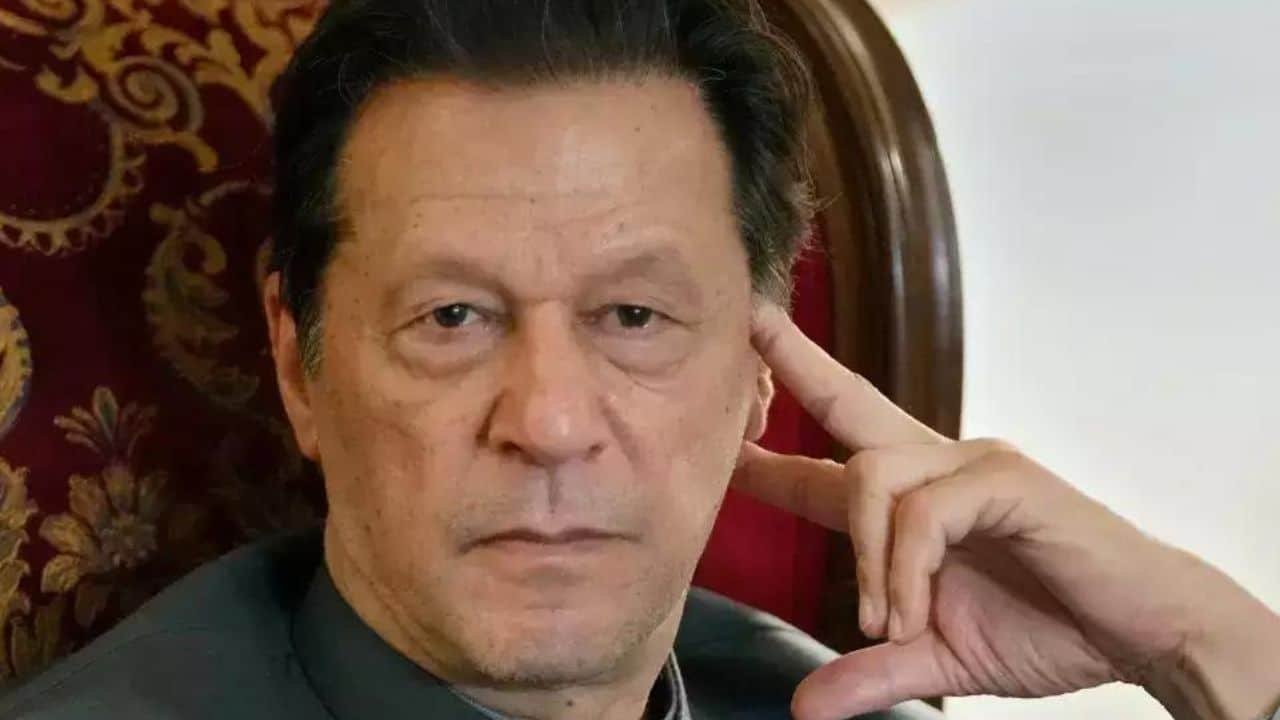
  • Tuesday 11AM to decide Khan’s fate as court to announce the Toshakhana appeal verdict

    The Islamabad High Court (IHC) will resume hearing today of former Prime Minister Imran Khan’s petition seeking suspension of sentence by the trial court in the Toshakhana case.

    A two-member bench, comprising Chief Justice Aamer Farooq and Justice Tariq Mehmood Jahangiri, is hearing the case, and in today’s hearing, the Election Commission of Pakistan’s (ECP) lawyer Amjad Parvez will give his arguments, as he was not present in the last hearing on Friday because of health reasons.

    On the request of his assistant lawyer, the court postponed the hearing until today (Monday). Due to the lawyer’s unavailability, the court also instructed the electoral authorities to make other arrangements.

    Pakistan Tehreek-e-Insaf (PTI) attorney, Latif Khosa, finished his arguments in the last hearing.

    The IHC will announce the verdict tomorrow (Tuesday) at 11am.

    Earlier, Judge Humayun Dilawar sentenced Imran Khan to three years imprisonment and fined him one lakh rupees. According to the judgement, “Charges of misdeclaration of assets have been proven against the PTI chairman.”

  • BCCI president Roger Binny, vice president Rajeev Shukla to visit Pakistan

    BCCI president Roger Binny, vice president Rajeev Shukla to visit Pakistan

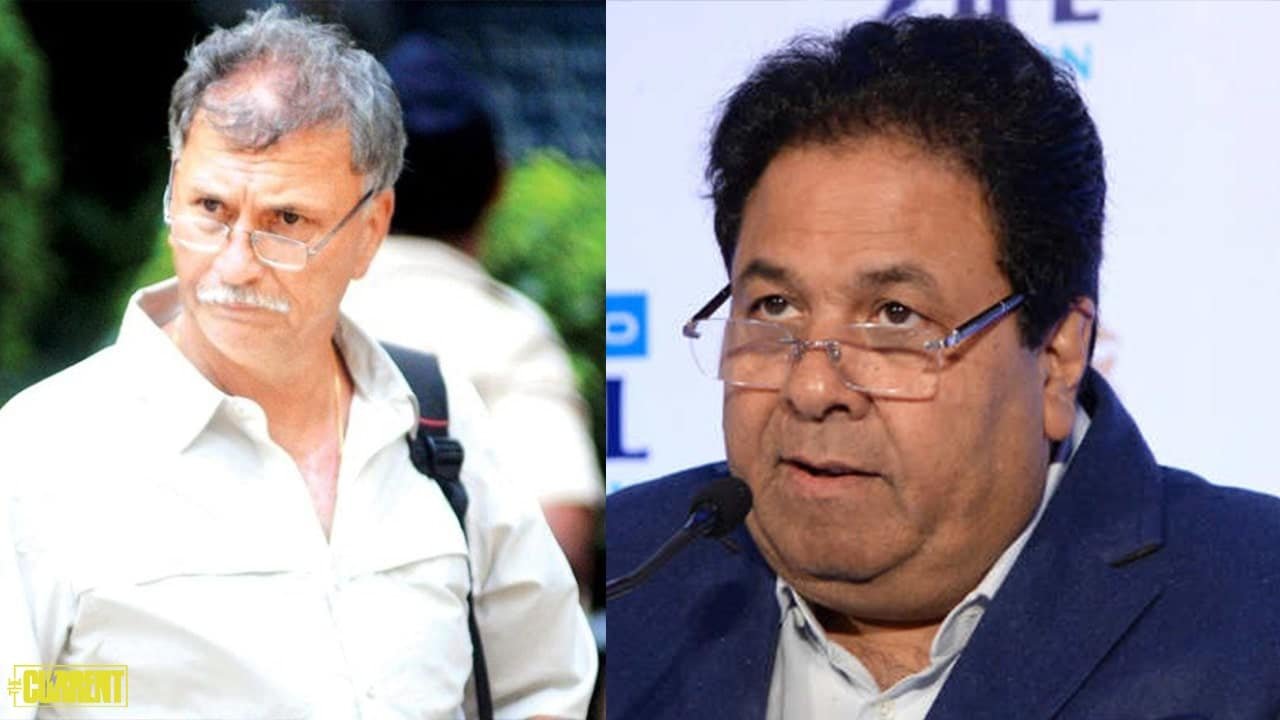
    Roger Binny President of BCCI (Board of Control for Cricket in India) will travel to Pakistan as board representative to attend the official PCB’s dinner to memorialize the hosting of the tournament.

    Chairman PCB Zaka Ashraf sent an official invitation to all higher officials of BCCI(Board of Control for Cricket in India) on August 15, with all participating teams including BCCI confirming their attendance.

    After returning from Sri Lanka Binny and Vice President Rajeev Shukla will travel to Pakistan via Wagah Border. After that, they will attend the Pakistan-India fixture in Palle Kele.

    Binny’s confirmation to travel to Pakistan will come at a time when both sides of the border are quarreling on serval matters. The Government of Pakistan ended this uncertainty by giving the clearance to PCB to travel to India for the World Cup 2023.

    Read More: Pakistan’s World Cup 2023 cricket kit unveiled

    It is likely that both members will attend the match on 3 or 5 September in Gaddafi Stadium during their two-day visit.

    Pakistan is hosting the Asia Cup but will be the venue for only four out of 13 matches due to ‘security concerns’ of the Indian team.

    India and Pakistan are placed in the same group as Nepal. Pakistan and India could play a maximum of three games if they met in the finals of Asia Cup 2023.

  • Ban on abayas in state-run schools in France

    The French education minister has imposed a ban on students, prohibiting them from wearing abayas in state-run schools. The ban will be imposed from the next academic year starting September 4.

    France has always prohibited religious manifestations in state schools and government spaces as they “violate secular laws”.

    Ban on abayas has been implemented after months of debate over the attire worn in schools.

    Education Minister Gabriel Attal, while talking to France’s TF1 TV, said: “When you walk into a classroom, you shouldn’t be able to identify the pupils’ religion just by looking at them,

    “I have decided that the abaya could no longer be worn in schools.”

    With an increasing number of students wearing abayas, the political divide has widened as the right-wing parties are pressing for a ban while the left-wing is advocating for the rights of Muslim women and girls.

    “Secularism means the freedom to emancipate oneself through school,” added Attal. He believes that abaya is “a religious gesture, aimed at testing the resistance of the republic toward the secular sanctuary that school must constitute.”

    France implemented a strict ban on religious signs in schools back in the 19th Century which included Christian symbols like large crosses. The purpose was to eliminate any Catholic influence on public education. Now that people from other religions have a significant presence in French society, the laws have been updated and are targeted at the Muslim headscarf and Jewish kippa.

    France first imposed a ban on headscarf in state-run schools in 2004 while full face veils were banned in public in 2010.

  • Pakistan’s World Cup 2023 cricket kit unveiled

    Pakistan’s World Cup 2023 cricket kit unveiled

    Pakistan Cricket Board (PCB) unveiled the national cricket team’s ICC World Cup 2023 kit in Lahore today (Monday). The kit is named ‘Star Nation Jersey’, which has a star and Pakistan flag on the chest side.

    Here is the design of Pakistan cricket team’s World Cup 2023 kit:

    Which one is your favourite design from all jerseys that Pakistan cricket team wore for cricket World Cups over the years? Here are the designs of all jerseys:

    You can pre-order the new World Cup 2023 jersey from PCB’s official online store.

    Read More: Arshad Nadeem becomes first Pakistani to win silver medal at World Athletics

    Pakistan’s schedule for the ICC World Cup 2023:

    October 6 – vs Netherlands in Hyderabad

    October 10 – vs Sri Lanka in Hyderabad

    October 14 – vs India in Ahmedabad

    October 20 – vs Australia in Bengaluru

    October 23 – vs Afghanistan in Chennai

    October 27 – vs South Africa in Chennai

    October 31 – vs Bangladesh in Kolkata

    November 4 – vs New Zealand Bengaluru (Day match)

    November 11 – vs England in Kolkata

    The day matches will start at 10:00am Pakistan Standard Time (PST) while all other matches will be day-night fixtures starting at 01:30pm (PST).

  • TV, 29 books, four pillows and so much more: list of things provided to Khan in jail

    TV, 29 books, four pillows and so much more: list of things provided to Khan in jail

    The details of a report submitted to the Supreme Court (SC) regarding the facilities available in Attock Jail to Pakistan Tehreek-e-Insaf (PTI) Chairman Imran Khan, who was arrested after his conviction in the Toshakhana case, have come to light.

    On the orders of the Chief Justice of Pakistan (CJP) Umar Atta Bandial, the Attorney General submitted a report to the apex court regarding the facilities provided to the PTI Chairman in jail.

    The report states that Chairman PTI has been kept in the most secure high observation block in Attock Jail and the adjoining barracks of Chairman PTI have also been kept vacant.

    Chairman PTI is kept in a barrack measuring 9 by 11, the wall of the washroom of Chairman PTI is 6 feet high and the size of the washroom is 7 by 4. The walls of Khan’s washroom have also been plastered and distempered. 

    The report states that being a prisoner of a better class, Chairman PTI has also been given the facility of mattress, air cooler, four pillows, a table and a chair. Apart from this, Imran Khan has also been provided with four English translations of the Holy Quran and 25 historical books.

    The Attorney General’s report states that Khan has been provided with a 21-inch TV and a daily newspaper; he is also provided with staff for the check-in barracks, washrooms and cleaning of clothes, and additional 54 officers have been assigned duty in jail for his security.

    The report states that according to the law, the prisoner’s family can meet for two to three hours on Tuesday, while the prisoner’s lawyers can meet for two to three hours on Wednesday. Khan’s wife and lawyers have met him three times. Chairman PTI is examined by a team of five doctors.

    It also states that Imran Khan is served desi chicken cooked in desi ghee on his request and is also provided mutton prepared in desi ghee.

    The PTI chief has been provided better class facilities in jail, the report stated, adding that the suspect has been given all the facilities according to the jail manual, rules and law.

    Imran Khan is allowed to walk in the corridor in front of the jail, as per the report.

  • ‘Bijli k mehngay bills ki handi PDM hakoomat ny pakai’, says Saira Bano

    ‘Bijli k mehngay bills ki handi PDM hakoomat ny pakai’, says Saira Bano

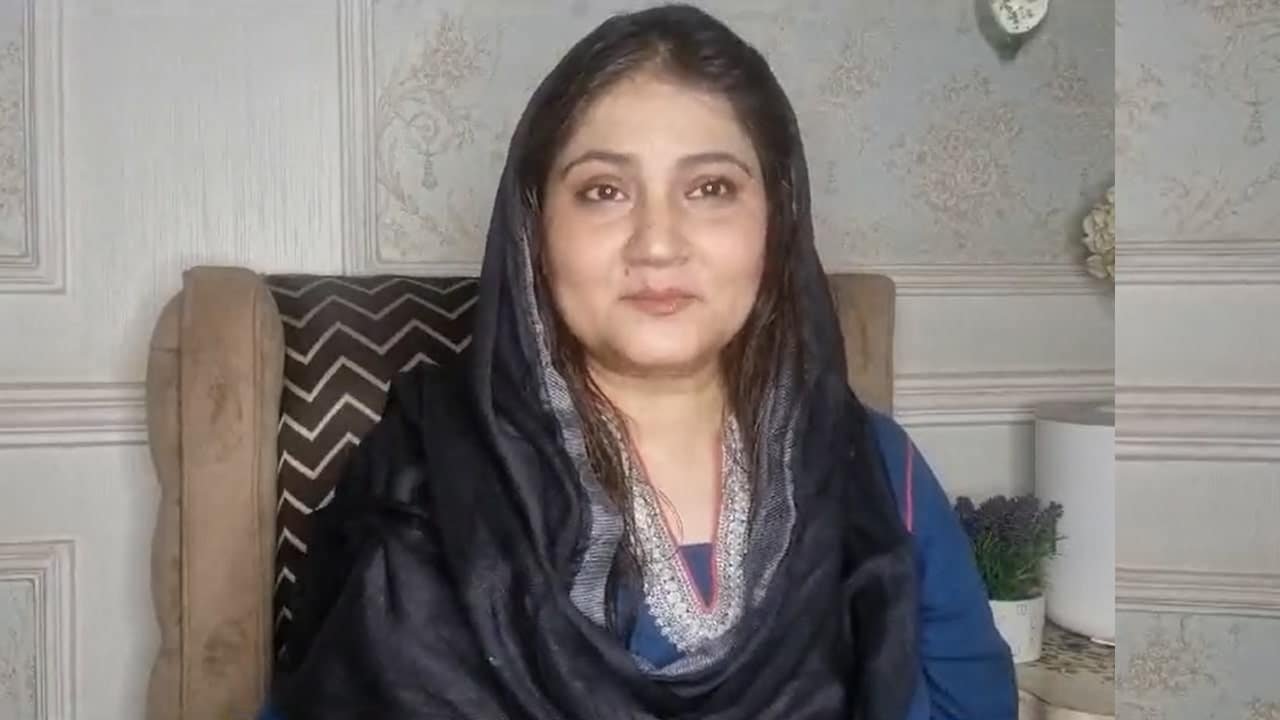
    Senior leader of the Grand Democratic Alliance (GDA), Saira Bano, has asked in her video why parties who have been in government for the past 16 months, are calling for protests against high electricity bills, terming the action “incomprehensible”.

    The Pakistan Democratic Movement (PDM) government is responsible for inflation as well as the “handi” of high electricity bills, Bano stated.

    She further said in her video that every citizen is facing difficulty paying their electricity bill, stressing that the situation is the same for rich and poor in Pakistan due to inflation.

    On the other hand, Pakistan Peoples Party (PPP) has directed party workers to take part in the protests against exorbitant electricity bills and become the “people’s voice,” Geo News has reported.

    Secretary General (SG) of PPP, Syed Nayyer Hussain Bokhari, instructed workers on Sunday to protest at the union council and tehsil levels.

    According to Nayyer Bokhari, every citizen of the country is worried about the electricity bill. He further added, ” PPP workers should become the voice of the people and start protesting against inflated electricity tariffs”.

    The protests started across the country because of exorbitant electricity bills, with protesters demanding a reduction in their electricity bills as well as the removal of extra taxes on utility bills. The protesters also mentioned that they would not pay their bills if their demands were not met.

    Earlier, the Jamaat-e-Islami (JI) announced on Saturday that it would stage a protest against the exorbitant electricity bills.

    Read More: PM Kakar sets 48-hour deadline for relief plan amid electricity bill protests

    Addressing a seminar in Lahore, JI Ameer Sirajul Haq lashed out at political opponents and the caretaker government, saying, “The caretaker government is following the footsteps of the previous governments in terms of taking wrong decisions for the sake of the country.”

  • Shah Rukh Khan endorses a gaming app and protests erupt outside his home, security increased

    Shah Rukh Khan endorses a gaming app and protests erupt outside his home, security increased

    Bollywood star Shah Rukh Khan’s recent endorsements were met with severe backlash from the public, including an NGO which felt the actor was encouraging younger minds to play online games. The actor recently endorsed a gaming app A23, an online platform, for which a commercial was released in which the ‘Pathaan’ actor said “Chalo saath khelein’.

    Protests followed and were led by the NGO Untouch Youth Foundation, which called for celebrities to be held accountable for promoting online gaming apps which could ‘corrupt their minds of the youth of India’. Demonstrations were held outside Mannat house, SRK’s residence, and police officials were deployed in case of security threats.

    In an official statement, the organisation said they were calling for a protest against gaming apps like Zuppee, Jungly Rummy, and called out actors who endorsed these products.

    “Famous actors and actresses work in these advertisements and they are working towards misguiding society. The protest will be held outside Shah Rukh Khan’s Mannat bungalow on behalf of Untouch India Foundation.”

    The president of Untouch India Foundation, Krishchandra Adal, said:

    “The new generation is involved in playing Junglee rummy. If someone is playing Junglee rummy or gambling outside, the police arrest them, but big Bollywood stars promoting online games are misleading the young generation. The Bollywood stars also know it is wrong, but they are getting money so they are promoting them. We make these stars famous by watching their movies and spending our money on them. We demand these advertisements to stop. These apps are illegal, we can not find them on Google, but these apps are uploaded on private websites.”

  • ‘No one was available’: Ali Rehman on why transgender actors weren’t hired for Guru

    ‘No one was available’: Ali Rehman on why transgender actors weren’t hired for Guru

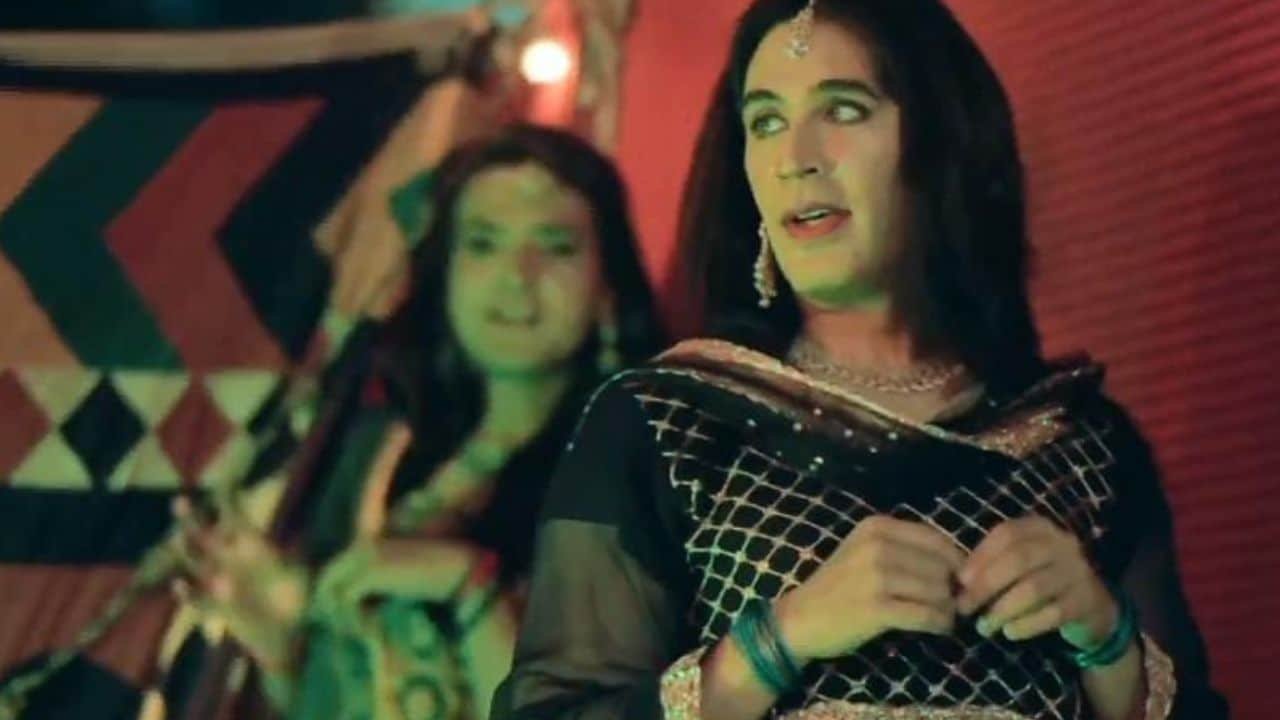
    Actor Ali Rehman Khan is currently playing the role of a transgender woman in the Express Entertainment drama ‘Guru’. The drama is facing intense backlash from social media users, especially transgender activists like Shahzadi Rai, who condemned the limited spaces allowed to members of the transgender community within the entertainment industry to be able to tell their own stories.

    Speaking to The Current, the activist expressed her dismay at how cis men were constantly taking up roles about people belonging to the third gender, and used the incorrect term used to describe the community like ‘intersex’.

    “People who do not want to declare themselves as intersex, why are you pushing the label on them? And roles that are about the third gender, you should give them to people who identify under it. A man’s role would be played by a man, while a woman’s role would be played by a woman.”

    READ MORE: Transgender activist Shehzadi Rai, Twitter users criticise ‘Guru’ for hiring cis man to play intersex character

    Several social media users also pointed out that films like ‘Joyland’ which starred transgender actress Alina Khan were met with intense backlash and banned in the country, but it was dramas like ‘Guru’ which were not met with the same scrutiny since members of the transgender community aren’t involved in production.

    Speaking to BBC Urdu, the actor has come forward to address these allegations, saying that despite the studio’s best efforts, they couldn’t find transgender actors to take on the role, and encouraged more members of the community to come into the field.

    “We were planning that one or two of the chelas in the show should be members of the transgender community. But we did a lot of auditions and couldn’t find any actors. And with a huge production there is a lot at stake, since you have to shoot for 40-50 days. You can’t just rely on one actor: you have to have a cohesive list.”

    The actor went on to express his desire to see more transgender people coming into acting, who can play these kinds of roles even more efficiently than he has.

    The actor also elaborated on how he had prepared for the leading role, revealing the process involved. He spoke with members of the transgender community, along with watching documentaries and movies related to the topic.