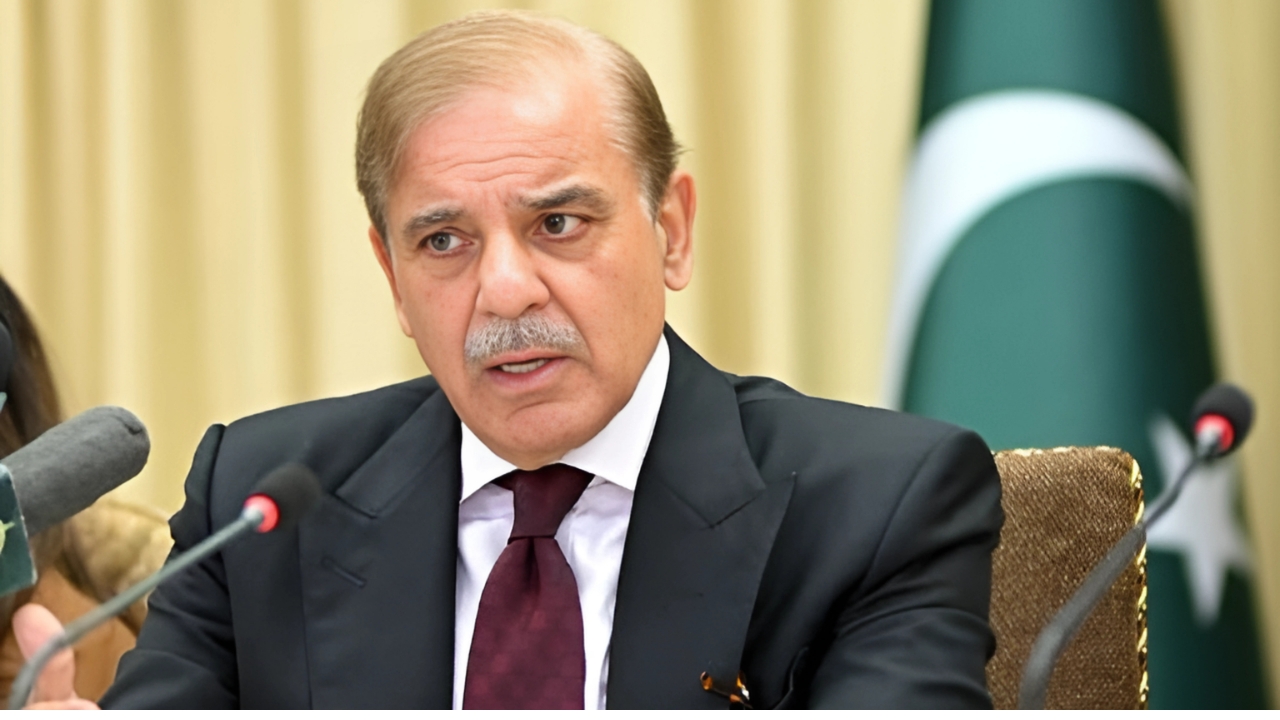
Prime Minister Shehbaz Sharif has instructed relevant authorities to take action against tax defaulters, evaders, and any party that is facilitating them, according to a report by Dawn News.
The prime minister was briefed by the finance ministry regarding the country’s economy and a recent high-profile meeting with the International Monetary Fund (IMF). Shehbaz Sharif’s meeting with the finance ministry was reportedly attended by several important ministers, including Muhammad Aurangzeb, Ahad Cheema, Attaullah Tarar, Dr. Mussadik Malik, and PM’s coordinator Rana Ahsan Afzal, among many others.
In his meeting with the finance ministry, Sharif emphasised the importance of holding tax evaders accountable – as compliance with tax laws will “play a role in the national progress”. He stressed the link between economic growth and tax compliance: An issue Pakistan has always struggled with.
The severity of non-compliance can be noted by the FBR’s goal to collect at least 10 billion rupees from traders. However, the government failed to meet this target by almost one million per cent – which is an alarmingly large gap between the objective and collection. This is because the FBR was only able to collect a measly one million rupees from traders due to compliance issues.
Despite these setbacks, Mr Sharif noted that the economy was showing signs of stability, which was highlighted by the booming stock market. He attributed this revival of the economy to government measures, which he claimed have also increased levels of foreign investment.
Aside from matters of taxation, the finance ministry also outlined the steps that are already being taken to curb tax evasion and punish those involved in facilitating such practices. Moreover, the meeting also included a briefing on economic indicators and inflation, to which Mr Sharif expressed great satisfaction.
This is because, in just the past year, the inflation rate has plummeted from an uneasy 38 per cent to a more acceptable seven per cent. Moreover, the interest rate has also fallen from 22% to 15%, which spells great news for businesses and unemployed individuals as the expansion of businesses will create job opportunities.
In the meeting, Mr Sharif stressed how providing relief to the public remains a top priority, stating that all available measures are being employed to honour public commitments. Despite these efforts, PM Shehbaz’s popularity has been challenged by public criticism over high taxes on energy, which have significantly raised energy costs.
While many Pakistanis simply view the existing tax levels as burdensome, it is important to note that Sharif’s focus on enforcement regarding tax inequalities is impartial, as tax evaders of any kind are not to be shown any leniency regardless of their background.