Tag: 4g

  • ‘We do not comment on rumours,’ Telenor Pakistan responds to reports suggesting that the company is being sold for $1 billion

    ‘We do not comment on rumours,’ Telenor Pakistan responds to reports suggesting that the company is being sold for $1 billion

    Multiple online news outlets reported that Telenor, a telecom operator, intended to sell its business in Pakistan for $1 billion, which ignited a debate on social media.

    There is a lot of uncertainty about the authenticity of this news since a few Telenor employees have also denied the reports and asserted that they are fake.

    The company has yet to make an official announcement in this regard, with the exception of responding to a Twitter user’s question who asked whether these reports are legit. “We do not comment on speculations and rumours,” Telenor replied. 

    According to Bloomberg, Telenor is moving forward with plans to sell its business in Pakistan, which might be worth $1 billion, according to people familiar with the situation.

    The Norwegian telecommunications operator is working with Citigroup Inc. and will welcome first-round bids for the firm later this month, according to insiders.

    Telenor announced in July that it would conduct a strategic assessment of its Pakistan unit after incurring a 2.5 billion-krone ($244 million) loss on operations in the growing market.

    The people predict that strategic customers with operations in Pakistan from the Middle East and Asia will express interest. They stated that there is no assurance that the ongoing discussions would result in a transaction. Telenor and Citigroup representatives declined to comment.

    Telenor’s stock increased as much as 2.4 per cent on Wednesday. The company’s market worth increased to $13 billion as the stock rose 1.8 per cent in Oslo.

    In October, Telenor said that the third quarter’s underlying profitability in Pakistan decreased by 22 per cent, in part as a result of the nation’s growing energy costs. This had a negative effect, but it was partially offset by a gain from Pakistan’s repeal of a SIM tax.

    One of Telenor’s four Asian countries, Pakistan, saw a gain of 600 million crowns ($57.79 million), which was related to a court ruling on the applicability of tax on SIM cards for mobile phones from 2014 to 2020.

    In recent years, Telenor, which serves 175 million users across eight countries in the Nordic region and Asia, has worked to reduce expenses and increase cash flow in order to fund greater dividends and 5G expenditures. The company’s greatest efforts to date have involved attempts to consolidate markets in South-East Asia, including a $8.6 billion acquisition in Thailand and a $15 billion merger to create a telecoms leader in Malaysia.

    Telenor Asia, which also manages the company’s operations in Pakistan and Bangladesh, is in charge of both units.

    During the first three quarters of 2022, Telenor Pakistan’s income decreased by about 8 per cent in Norwegian Kroner terms but increased by 4 per cent in Pakistani Rupee terms, staying at NOK 3.390 billion (Rs82.57 billion) as opposed to NOK 4.270 billion (Rs79.36 billion) during the same period of 2021.

    In comparison to NKO 1.425 billion (Rs26.68 billion) during the same period last year, or in 2021, Telenor Pakistan reported total revenues of NOK 1.320 billion (Rs29.53 billion) during the third quarter of 2022. This represents a 7.5 per cent decline in NOK terms and a 10 per cent increase in rupee.

    Intense floods throughout the quarter had a negative impact on the Group’s business in Pakistan. Consumers’ purchasing power was impacted by the circumstance, which also resulted in network failures and raised prices.

  • IT sector’s GDP contribution will increase from 2.7% to 13% by 2025: MoITT

    IT sector’s GDP contribution will increase from 2.7% to 13% by 2025: MoITT

    According to estimates from the Ministry of Information Technology and Telecommunication (MoITT), the GDP share of the digital and information technology (IT) sectors would rise to 13 per cent by 2025 as a result of the rapid growth of the digital economy over the next five years.

    MoITT’s offical documents reveal that the size of the digital economy will significantly increase over the next five years as Pakistan’s adoption of digital technology expands. In the upcoming years, the GDP’s share of the digital economy will increase, according to Brecorder.

    While the GDP contribution of the digital and IT sectors will rise from 2.7 per cent to 13 per cent, the GDP contribution of the Information and Communication Technology (ICT) core industry will rise from 1.2 per cent to 8.15 per cent.

    According to the data that is currently available, Pakistan’s digital economy is measured in two ways, i.e. The key industries of ICT, digital technology, and IT. The ICT core industry’s share of the global GDP in 2019 was 1.2 per cent. The IT and telecom industry in Pakistan makes about 2.7 per cent of the country’s GDP.

    Modern ICTs have the ability to accelerate social and economic growth, and this promise will be further realised with the maturation of four enabling technologies: IoT, cloud computing, big data analytics, and AI.

    The cornerstone for nations to build a digital economy and improve their overall economic competitiveness and well-being is ICT infrastructure and services. They can support sustainable cities and communities by lowering poverty and hunger, improving health, generating new jobs, reducing climate change, and enhancing energy efficiency.

    In low- and middle-income nations, mobile remains the main method by which many users access the internet (LMICs). The Information Technology University (ITU) estimates that 87 per cent of broadband connections in developing nations occurred through mobile devices in 2019. Mobile networks and devices are propelling economic growth by connecting consumers and businesses and delivering public and commercial e-services across a range of industries.

    According to the report, Pakistan’s mobile ecosystem is becoming more and more crucial to the country’s economic development due to its direct impact on GDP and the productivity and efficiency benefits it fosters in a variety of economic sectors.

    The majority of nations currently use 4G as the cornerstone of mobile broadband, and this number is continually increasing. The switch from 4G to 5G is happening at the same time all across the world.

    In 2019, 4G connections made up more than 50 per cent of all mobile connections worldwide for the first time, according to the most recent GSMA research. In low and middle-income countries (LMICs), 4G covered 82 per cent of the population compared to 90 per cent for 3G. Compared to 10 years for 3G, LMICs took about seven years to reach more than 80 per cent coverage for 4G.

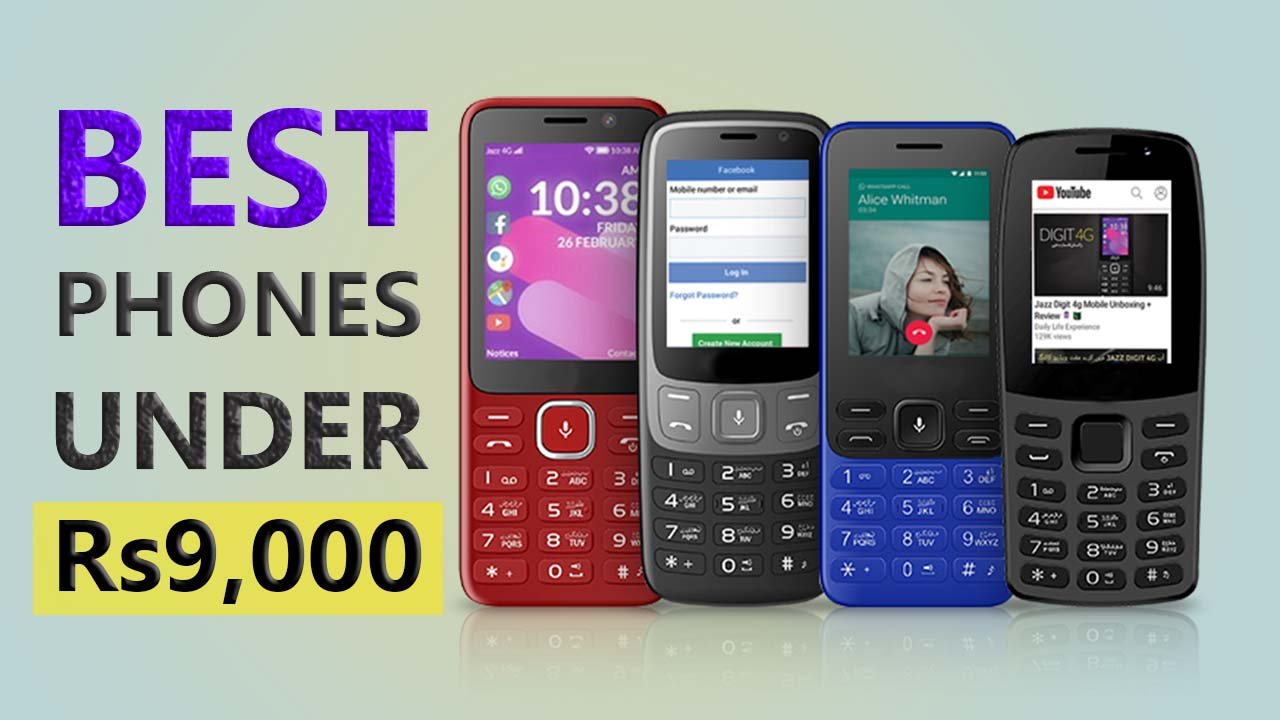
  • Best mobile phones under Rs9,000 in Pakistan with WiFi and dual 4G support

    Best mobile phones under Rs9,000 in Pakistan with WiFi and dual 4G support

    Owing to exorbitant PTA approval charges and soaring production costs, phone prices have hit an all-time high in Pakistan. Customers have a relatively limited number of options on the market.

    While some customers are able to afford the hefty PTA approval fees, others consider getting a second phone so they can continue using their SIM as PTA approval charges for certain premium smartphones have increased up to Rs132,000.

    Below are some of the most affordable phones on the market right now, which surprisingly support the majority of applications like Facebook and WhatsApp.

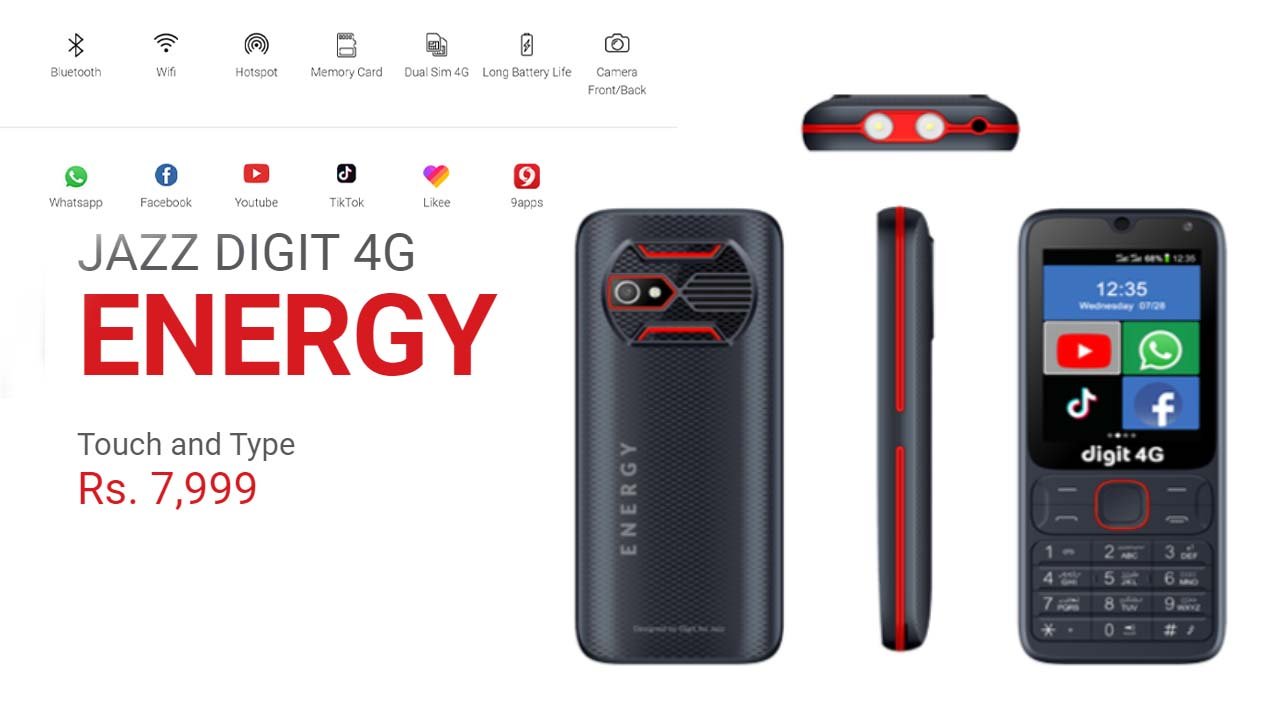
    JAZZ DIGIT 4G – ENERGY

    Touch and Type

    Price: Rs7,999

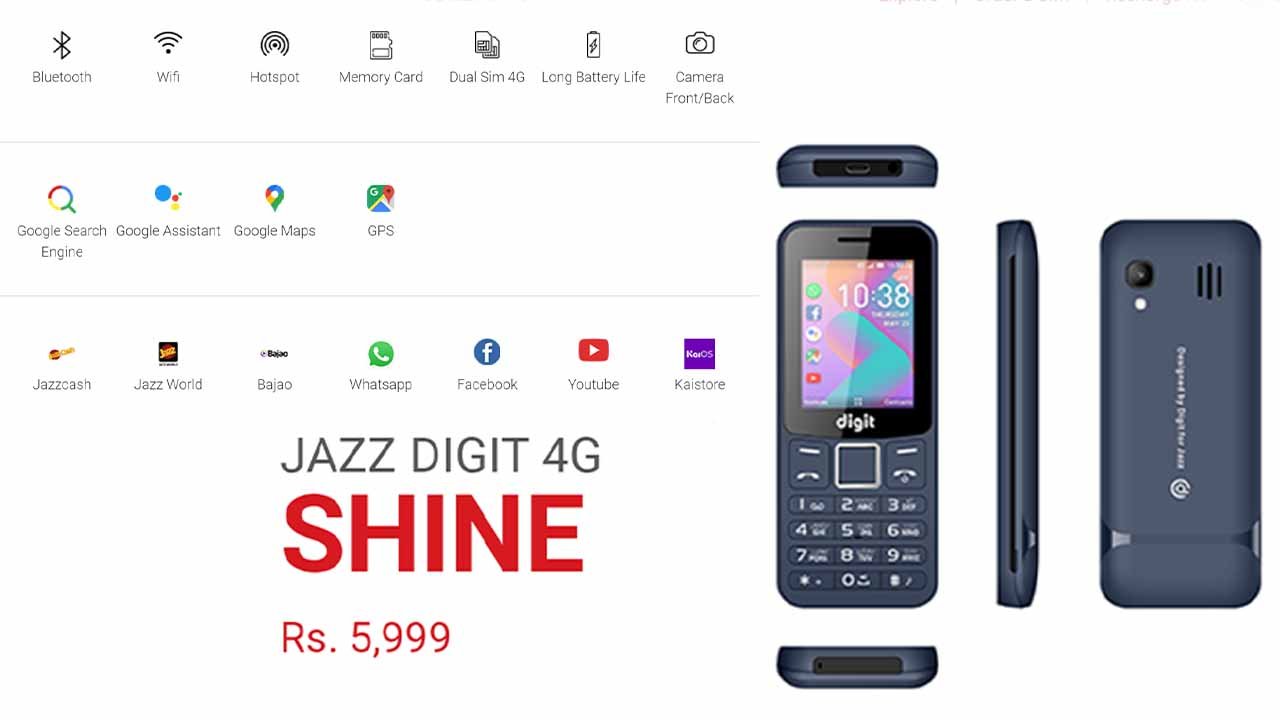
    JAZZ DIGIT 4G – SHINE

    Price: Rs5,999

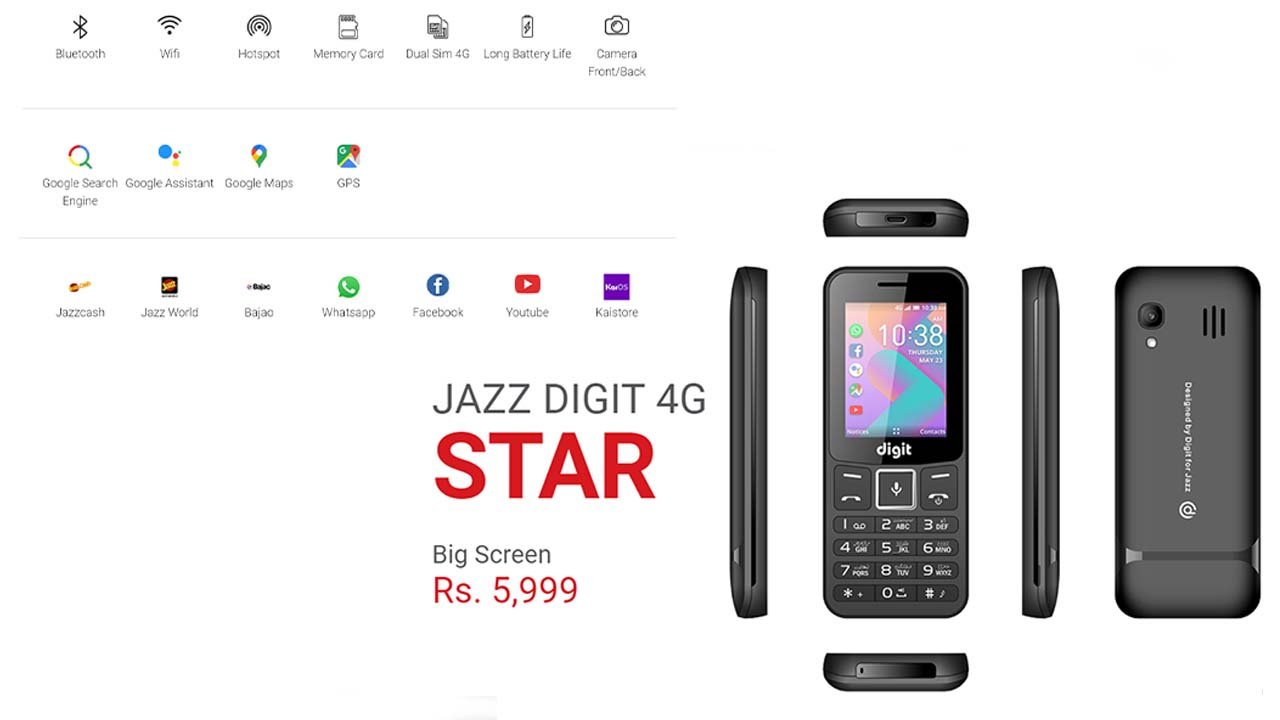
    JAZZ DIGIT 4G – STAR

    Price: Rs5,999

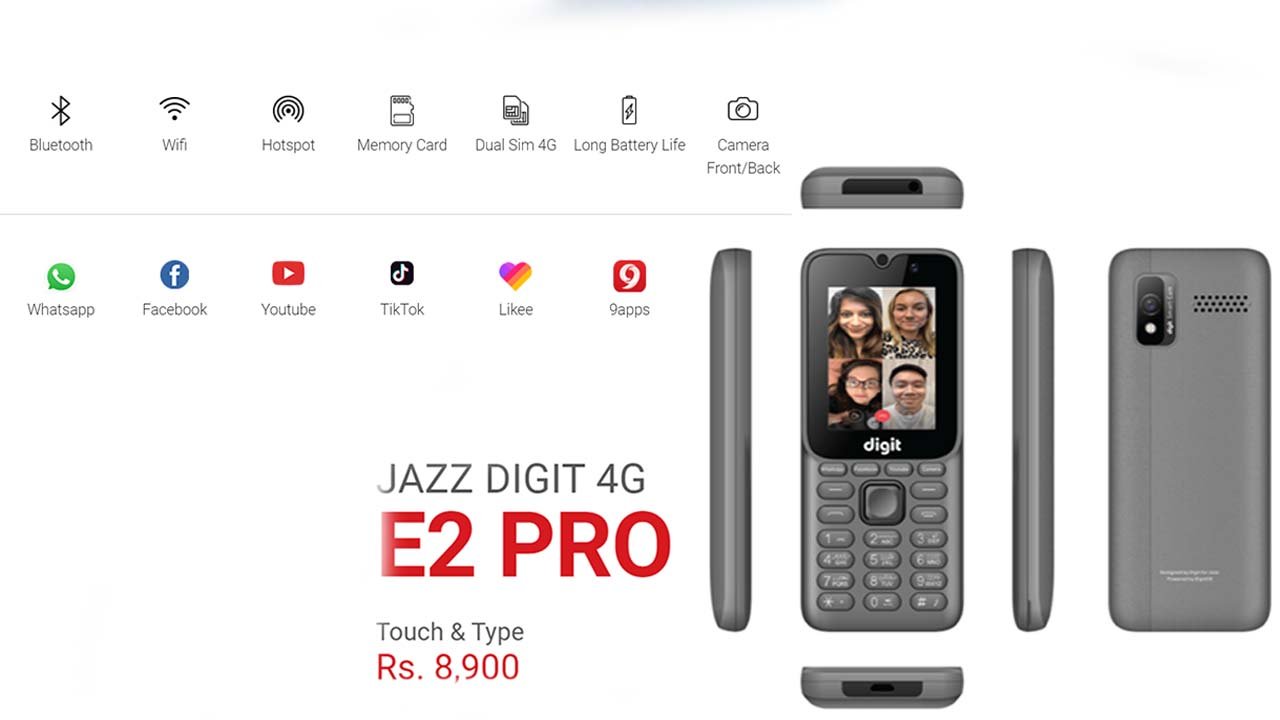
    Jazz Digit 4G – E2 PRO

    Touch & Type

    Price: Rs8,900

    These bar phones also have outstanding battery life and can be used to provide a hotspot for your primary smartphone.

    All of these mobile devices are currently available at Jazz franchises or local stores and can be easily unlocked if a user wants to switch to a different network.

  • Pakistan has now 118.57 million 3G, 4G users

    Pakistan has now 118.57 million 3G, 4G users

    According to the Pakistan Telecommunication Authority (PTA), the country’s 3G and 4G user base climbed by 3.07 million from 115.75 million at the end of June 2022 to 118.57 million at the end of July 2022.

    By the end of July 2022, Pakistan had 195.26 million cellular users, up from 194.58 million at the end of June 2022.

    Cellular mobile’s teledensity increased from 88.34 per cent at the end of June to 88.61 per cent at the end of July. By the end of July 2022, the overall teledensity had increased from 89.53 per cent to 89.8 per cent, according to Brecorder.

    By the end of June 2022, the Monthly Next Generation Mobile Service (NGMS) penetration was 52.55 per cent; by July 2022, it was 53.8 per cent.

    Jazz’s overall 3G user count decreased by 0.109 million from 5.947 million at the end of June to 5.838 million at the end of July. By the end of July 2022, there will be 39.296 million Jazz 4G users, up from 38.039 million at the end of June.

    While the number of Zong 4G customers climbed from 28.906 million at the end of June to 29.695 million at the end of July, the number of 3G subscribers fell from 3.197 million at the end of June to 3.108 million.

    While the number of Telenor 4G customers climbed from 21.831 million at the end of June to 22.401 million at the end of July, the company’s 3G subscribers declined from 3.542 million at the end of June to 3.480 million at the end of July.

    By the end of July, there were 3.468 million Ufone 3G users, down from 3.509 million at the end of June. Ufone’s 4G user base climbed by 0.49 million over the reviewed period, from 9.419 million at the end of June to 9.909 million at the end of July.

    As of July 2022, the PTA had received 14030 complaints from customers of various telecom providers, including cellular operators, PTCL, LDIs, WLL operators, and ISPs. According to the PTA, 13709 complaints, or 97 per cent of them, were successfully resolved.

    A sizable portion of the total telecom subscriber base is made up of cellular mobile subscribers.

    The most complaints are therefore related to this group. By July, there had been 13,342 complaints made against CMOs, of which 13,174 (98 per cent) had been resolved.

    Data from the PTA shows that Jazz received 5,752 complaints, Telenor received 2450, Zong received 3827, and Ufone received 1,287.

    Additionally, the PTA received 140 complaints about basic telephone, of which 86 were resolved in July 2022. In addition, 438 of the 533 complaints made against ISPs were resolved.

  • Number of 3G, 4G users in Pakistan increases to 113.89 million

    Number of 3G, 4G users in Pakistan increases to 113.89 million

    The latest data from Pakistan Telecommunication Authority (PTA) reveals that the number of 3G and 4G users grew by 1.14 million from 112.75 million in April 2022 to 113.89 million in May 2022.

    Pakistan’s cellular subscriber base grew by 0.25 million to 193 million by the end of May 2022, up from 192.75 million at the end of April, according to Brecorder.

    By the end of May, cellular mobile teledensity had risen from 87.6 per cent to 87.67 per cent. By the end of May, the total teledensity had risen to 88.81 per cent, up from 88.74 per cent in April.

    The monthly penetration of Next Generation Mobile Services (NGMS) at the end of April had risen to 51.73 per cent, up from 51.24 per cent.

    Network providers

    The total number of 3G users on Jazz fell from 6.222 million at the end of April to 6.068 million at the end of May, a reduction of 0.154 million. By the end of May, the number of Jazz 4G users had risen from 36.567 million to 37.168 million.

    Zong 3G subscribers fell from 3.357 million at the end of April to 3.272 million at the end of May, while 4G users grew from 27.952 million at the end of April to 28.317 million at the end of May.

    Telenor 3G subscribers fell from 3.696 million at the end of April to 3.613 million at the end of May, whereas Telenor 4G users enhanced from 21.216 million at the end of April to 21.494 million at the end of May.

    By the end of May, there were 3.576 million Ufone 3G users, up from 3.673 million at the end of April. Ufone’s 4G users increased from 8.761 million at the end of April to 9.052 million at the end of May, a 0.291 million increase over the previous month.

  • Pakistan is finalising policy guidelines to launch 5G

    Pakistan is finalising policy guidelines to launch 5G

    The government intends to introduce 5G across the country, despite the fact that widespread 4G coverage is viewed as a major requirement before its launch. Also, 5G services can be offered in locations where 4G services are already available.

    Although all telcos in Pakistan have switched to 4G or LTE networks, a few companies are still unable to provide stable connectivity in a number of locations. Also, network providers frequently fail to deliver an acceptable, 4G standard connection speed despite hefty mobile data charges.

    To meet license requirements for the 5G network, cellular operators are forced to extend 4G coverage.

    According to Brecorder, the government of Pakistan is intending to introduce 5G in the country, according to official documents, and the Ministry of Information Technology and Telecommunication (MOIT&T) is in the phase of finalising policies for 5G in consultation with the Pakistan Telecommunication Authority (PTA) and relevant authorities.

    The former administration intended to offer 5G services in the country in the first quarter of 2023. Unfortunately, no consulting assistance has been utilised for this purpose thus far. The reports also revealed that the PTA spent no expenses as no consultancy services had been obtained for its deployment.

    The MOIT&T has analysed seven bands for the implementation of 5G services. As per official documents, the government is currently reviewing the possibilities available for the prompt deployment of 5G services in the ccountry.

    The following bands are being considered for 5G service adoption as low, mid and high bands:

    700 MHz; 2.3 GHz; 2.6 GHz; 3.5 GHz; MiIIimeter wavebands; C-Band (3.6-4.2) GHz; and Unlicensed Backhaul Frequency bands (P2P & P2MP).

    In light of these bands, the ministry has requested that the Frequency Allocation Board (FAB) share the present status and availability of all 5G spectrum in the above-mentioned frequency bands.

    Network providers are actively extending their infrastructures. Pakistan presently has 90 per cent teledensity and 89 per cent mobile penetration. The total number of cellphone consumers is 193.4 million. These figures are steadily rising. According to license terms, all CMOs are working to expand 4G coverage nationally.

    Approximately 60 per cent of the populace has access to 4G coverage. New rollout criteria have been imposed on operator licenses in order to accelerate 4G implementation in Pakistan.

    Furthermore, population-based rollout obligations are being implemented in order to give 4G coverage to the greatest number of Pakistanis.

  • 90’s favourite Nokia is gearing up for a comeback with new devices

    90’s favourite Nokia is gearing up for a comeback with new devices

    Nokia was confronted with a major challenge following the judicial decision in the lawsuit brought against HMD Global. To refresh your memory, a business called VoiceAgeEVS LLC sued the Finish giant in German courts for illegally deploying VoLTE technologies in Nokia handsets.

    Nokia Mobile in response, filed a complaint, which was dismissed, resulting in the withdrawal of smartphones from some European countries. HMD takes intellectual property rights carefully, according to Nokia Mobile, and is ready to provide and acquire licenses on conditions that are fair, reasonable, and nondiscriminatory.

    Pursuant to VoiceAgeEVS LLC’s discontent with HMD’s legal exercises, a partial ban on Nokia smartphones was imposed. Nokia has already taken measures to ensure that enhanced voice service (EVS) is no longer integrated into its devices sold in Germany, allowing for uninterrupted distribution. In Germany, Austria, and other European nations, phones like the Nokia XR20 and X20 are now eligible for sale in online stores.

    Read more: PTA records 1.73 million new 3G, 4G users in one month

    Nokia C21 is the latest addition to the C-series family, as announced by HMD Global, the house of Nokia devices.

    The new Nokia C21 adds even more value to the popular C-series by preserving the exceptional build quality, hallmark security assurances, and all-day battery life. It costs Rs17,000 and offers improved photos, privacy, and speed for a more enjoyable experience.

  • Waziristan at par with Pakistan after PM launches 3G, 4G services; ‘olive revolution’ also announced

    Waziristan at par with Pakistan after PM launches 3G, 4G services; ‘olive revolution’ also announced

    Prime Minister (PM) Imran Khan has announced that 3G/4G internet services will become operational in Waziristan from today (Wednesday).

    PM Imran shared that the news with the people of Waziristan while addressing a Kamyab Jawan Programme’s cheque distribution ceremony in Wana.

    “We are trying to resolve your problems. From today, 3G and 4G services will become functional,” he said, adding that it was the demand of the youth of the area that they had 3G and 4G services.

    The premier shared that 3G and 4G services were not available in the region earlier as the government feared that it might be used for terrorism. He added that he spoke to the army leadership about the issue and was informed that it was a need of the youth of the area.

    “I spoke to the army and we decided that we will provide this facility,” said PM Imran.

    The premier assured the people that the government will also allocate more scholarship for the people of the area.

    He also told the people that he will bring an olive revolution to the area, as the product is commonly grown there.

    “Olive will bring a lot of money to the area,” he said, announcing that a dam will also be built in the area to resolve water woes of the locals.

    The PM assured the people that his government will work on uplifting the poor segments of the society and backward areas including the tribal districts.