Tag: 5G

  • Pakistan to introduce 5G by end of 2021

    Pakistan to introduce 5G by end of 2021

    In an attempt to catch on with the rest of the world in terms of the latest technology, Pakistan Information Technology Minister Aminul Haq has announced that the government will introduce 5G wireless technology by December 2021.

    In a statement, the IT minister said that the government was taking effective measures to introduce the latest service in Pakistan and it would ensure that this is done by the end of next year.

    The trial run of 5G would start from a hospital in Islamabad and Zong, a Chinese telecom company, would help the government in this regard, he said. However, before this step, the government will have to connect Islamabad, Karachi, and Gwadar via fibre optics network, he added.

    Furthermore, the IT ministry has established a policy committee on bidding for the 5G service. The committee has the representation of the members of all the stakeholders — telecom companies and the Frequency Allocation Board.

    The committee is currently looking for an international consultant to auction the 5G licences, which would be followed by the biddingprocess, its starting price, and other conditions.

    In August 2019, Pakistan successfully tested 5G network in the country. “Zong has become the first operator in Pakistan to successfully conduct a 5G trial and this is yet another milestone for the company,” Wang Hua, chairman and CEO of Zong, had said following the trials.

    Khaleej Times had reported that the 5G service in Pakistan will be 100 times faster than the current levels, while the network will be 10 times faster than existing broadband connections available in the country. “5G home routers speed has been recorded at 4 gigabytes per second, which means that it can download a 50gb file in just two minutes,” the report had added.

    But the road to 5G isn’t easy and Pakistan still has to go a long way to achieve this milestone. For example, the United States only has 5G coverage in 25 cities, whereas in China, only 50 cities have 5G coverage. “On top of it, the kind of 5G available for now is some kind of speed boost over 4G instead of the full-fledged 5G services,” said a report by Profit magazine.

  • How 5G will affect you

    How 5G will affect you

    Qualcomm, an American multinational telecommunication company makes the 5G chips and modems that every 5G phone in the US will rely on. However, Qualcomm isn’t the only major 5G player, of course — Huawei, Nokia and Ericsson are all leaders too. Nevertheless, Qualcomm’s investments in 5G research and development mean that it has a strong hand in getting more business. 

    Here how 5G wil affect our lives.

    Every high-end phone could be 5G in 2020

    In a confident statement by Qualcomm, “all premium phones will support 5G in 2020 such as Galaxy Note 10 Plus 5G, LG V50, Oneplus 7 pro 5G. But there’s a little nuance here too. 4G only options are still valuable during the 5G transition because they come with a lower price tag. 

    5G laptops will appear in 2020

    Lenovo has already announced that it will introduce 5G connected PCs in early 2020. We may not see those laptops hit the market for a while, but you’d better believe that some laptop-makers will jump at the chance to be the first to bring 5G to computing — just as you see happening right now with phones, but Qualcomm bets that the hunger for 5G laptops will grow over time. 

    5G will replace wifi routers at home and office 

    5G hubs that work like Wi-Fi for your home are already here. One example of fixed 5G is the HTC 5G Hub, a device that plugs into your router to deliver home broadband. 

    Moreover, they’re designed to deliver the same dramatically high-speed internet, say between 500 (Mbps) to over one (GB) per second. 

    Self-driving cars that talk to each other 

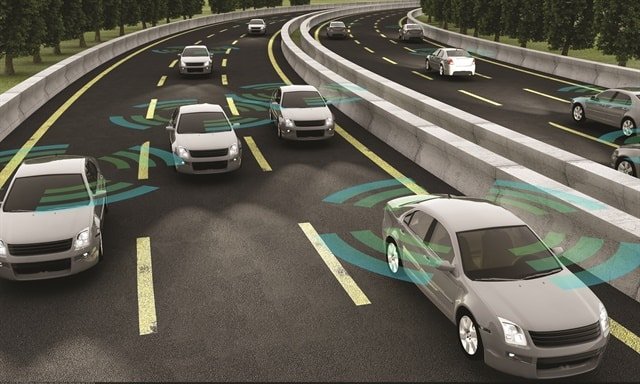
    Qualcomm showed a self-driving car fitted with 5G sensors runs the same route as a car without 5G. The 5G powered sensors take in data from other connected vehicles, understanding when a car door is opening at the curb, if there’s an obstruction in the road and when pedestrians are finished crossing the streets. At the end of the demo, the 5G-connected car is better informed of obstructions and arrives at the destination much faster. 

    But the reality could be decades away. Before 5G autonomous cars become common, self-driving vehicles will be be the norm.

  • Jazz conducts successful 5G tests

    Jazz conducts successful 5G tests

    Jazz has successfully tested out the fifth generation of mobile technology. Twitter handle of Jazz announced the news. When launched, 5G will meet the evolving needs of tomorrow’s customers.

    https://twitter.com/jazzpk/status/1213472918941896704

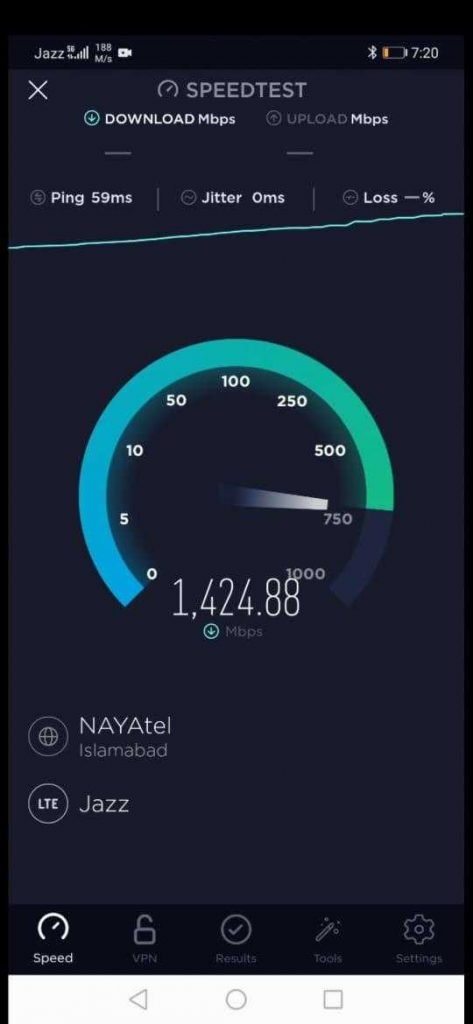
    The tests were conducted at Jazz’s Digital Headquarters in Islamabad, where average download speeds of 1425 Mbps and upload speeds of 68 Mbps were achieved.

    Jazz
    CEO Amir Ibrahim, talking about the successful 5G trials, said, “We are pleased
    with the initial 5G trials and are ready to fast track the technology across
    Pakistan, whenever the process gets started by the government. These trials
    showcase our commitment towards a digital Pakistan, which is why we have been
    the frontrunners in deploying the latest mobile technology.”

     “Successful conclusion of these 5G trials is a
    matter of pride for us as we have always tried to provide the latest
    technologies to the masses,” said Jazz CTO Khalid Shehzad. “Our network is
    spread throughout Pakistan and once the pre-requisites are set for the
    commercial launch of 5G in the country, Jazz will ensure no one is left behind
    in attaining the benefits this next-gen technology will offer.”

    Jazz
    is ready to offer 5G’s game-changing potential whenever the government allows
    for the commercial launch.

  • Huawei to launch 6G soon?

    Huawei to launch 6G soon?

    Chinese tech giant Huawei has already started working on 6G, the
    next generation of mobile networks after 5G, claims company CEO, Ren Zhengfei.

    5G is presently believed as the next generation of
    mobile communication, providing super-fast data speeds being important to new
    technologies like self-driving cars. While most counties in the world are still
    waiting for 5G, Huawei CEO Ren Zhengfei claims that the company
    is already doing research on 6G.

    As per reports, Huawei has been working on 6G along with 5G. However, the development of 6G is still underway and has a long way to go before it becomes a reality. The technology is still 10 years away as there are a lot of other things that need to be taken care of.

    Before a new mobile network generation can
    commercialize, standards need to be set by the industry. This has already
    happened in 5G’s case and discussions are ongoing for 6G, but standards can
    take years to form. It is also unclear what 6G will be used for.

    The company is currently focusing its efforts and
    resources on 5G deployment. It has signed more than 50 commercial 5G contracts,
    more than its closest competitors Nokia and Ericson.

  • Pakistan becomes first country in South East Asia to conduct successful 5G test

    Pakistan becomes first country in South East Asia to conduct successful 5G test

    Pakistan has become the first country in South East Asia to conduct a successful 5G network test, Dunya News has reported.

    According to the reports, Chinese telecom company Zong conducted the test on Pakistan’s Independence Day (August 14), paving way for a new digital revolution in the country.

    5G is the fifth generation of cellular network technology with 10 times faster data download and upload speeds as compared to 4G, with wider coverage and more stable connections.

    The network’s home router speed has been recorded as four 4 gigabytes (GB) per second, which means that with 5G you can download a 50 GB file in just two minutes.

    It is estimated that 5G technology will bring industrial opportunities worth $1.2 trillion to South Asia and South East Asia over the next five years.

    Pakistan Telecommunication Authority (PTA) had in June, invited applications for 5G wireless network trials in the country and presented the framework for test and development of future technologies.

  • How 5G will change everything?

    How 5G will change everything?

    China and the United States are in a race over who will master the technology first. On May 15, the United States President Donald Trump banned Huawei in the country. The reason cited was a “threat to national security”.China already leads the world in the mobile market sector, so it is very well expected that China will be on the top when it releases its 5g technology.

    5G will change everything but How?

    Wifi Everywhere

    An entire building can get a direct 5G connection from a nearby cell, and within that building, every device can take advantage of 5G’s speeds via existing wifi connections, including TVs, game consoles, phones, desktop computers, laptops, etc.

    Faster Downloading

    5G will allow downloading 20 times faster than 4G.  The 5G technology will be up to twenty times faster than the 4G. downloading a two-hour long movie takes six minutes on a 4G network, while it will only take 3.6 seconds on a 5G network.

    Smart Vehicles

    When a whole city is online with 5G, and cars can communicate directly with other cars and traffic lights, traffic signals will respond appropriately. One day, you can quit waiting at a stop light when no other cars are around. The system will know when other vehicles are approaching fast enough to warrant a red light on your side, and will otherwise let you cross the intersection effortlessly.

    Vehicles require GPS to know exactly where they’re located. The latest generation of GPS chips are even more accurate, direct car-to-car communication will make the whole experience even better, specifically when it comes to safety and traffic jams.

    Smarter Healthcare

    Exchanging information with your doctor or should be something you can tap into at any time, especially in emergency situations. An “on-demand doctor” will be there all the time.

    Imagine the near future where smart wearable not only monitor your heart rate but also your blood sugar, hemoglobin, etc. The last thing you’d want in an emergency is for your device to not be able to communicate important data to your doctor because the connection was slow. With 5G your wearable will be able to quickly contact a server to update your health records for your doctor to see or to alert a family member that you need instant attention.