Tag: Abuse

  • ‘Abuse every day’: Indian female medics speak out after brutal murder

    ‘Abuse every day’: Indian female medics speak out after brutal murder

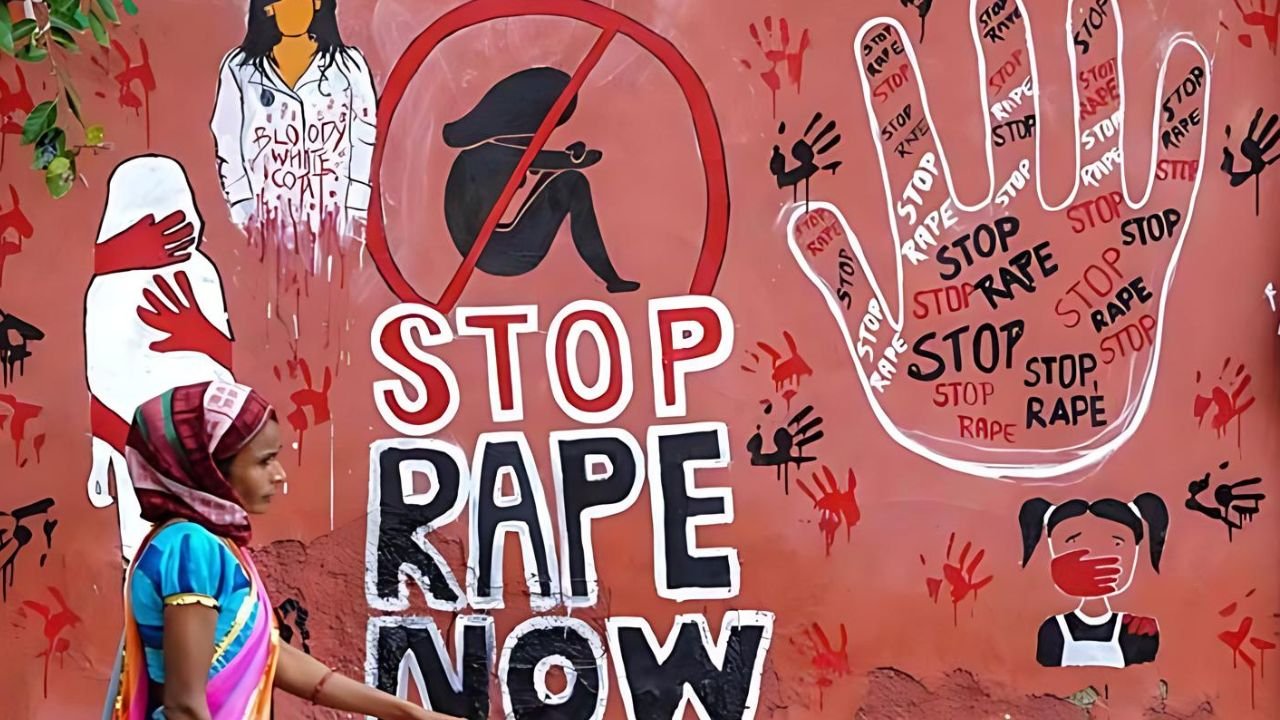
    Saving lives was the childhood dream for 28-year-old Indian doctor Radhika, but after the brutal rape and murder of a colleague her own safety has increasingly become a top concern.

    Earlier this month, at the government-run hospital where Radhika works in the eastern city of Kolkata, the battered and bloodied body of a 31-year-old woman doctor was found, sparking outrage.

    One man has been detained, but the attack has focused anger on the lack of measures for female doctors to work without fear, and triggered protests and medical strikes.

    “I was on night duty just two days before this incident,” Radhika said at Kolkata’s R.G. Kar Medical College and Hospital.

    “What she did is what any of us do -– resting whenever, wherever we can”.

    The murdered doctor — who has not been formally named but is being called “Abhaya”, or “fearless” by protesters — was found in the teaching hospital’s seminar hall, suggesting she had gone there for a break during a long shift.

    Radhika, whose name has been changed for fear of repercussions at her work, said conditions such as long working hours — with barely any time to eat or rest — were not unusual.

    “This could have been any of us, and this still can be any of us,” she added.

    – Attacks all too common –

    Tens of thousands of ordinary Indians have joined protests, channelling anger not only at the chronic issue of violence against women, but also at the failure to provide secure working conditions for them.

    According to the philanthropic organisation Dasra, women make up nearly 30 percent of doctors in India and 80 percent of nursing staff.

    Attacks on female medics are all too common.

    India’s Supreme Court on Tuesday ordered a national task force to examine how to bolster security for healthcare workers, saying the brutality of the killing had “shocked the conscience of the nation”.

    “The lack of institutional safety norms at medical establishments, against both violence and sexual violence against medical professionals, is a matter of serious concern,” the court order read.

    It highlighted a lack of CCTV cameras and a failure to screen visitors to hospitals for weapons.

    Medical superintendent Indira Kabade, who works at KC General Hospital in the southern city of Bengaluru, said she worries her staff can get home safely.

    “We never know if anyone is following them from the hospital,” said Kabade, adding she and many female colleagues want “airport-like security”, including police posted inside the campus.

    “Despite us working non-stop to save lives, there is a need to rethink safety at workplace,” Kabade said.

    The gruesome nature of the doctor’s killing has invoked comparisons with the horrific 2012 gang rape and murder of a young woman on a Delhi bus.

    Nearly 90 rapes a day were reported in 2022 in the country of 1.4 billion people.

    – Foul toilets –

    Exhausted doctors sleep where they can, snatching rest on a chair or the floor.

    “They are just completely tired and their bodies cannot push anymore,” Radhika said.

    There are restrooms for doctors — but men and women have to share, and some have no lock.

    She described one moment of terror when two men barged into the room as she rested.

    “I was really scared,” she said.

    Foul sanitation — including often one toilet for male and female medics — illustrate a failure by the authorities to provide basic infrastructure.

    The situation was particularly worrying when the women were menstruating, Radhika said.

    In the Himalayan territory of Kashmir, doctor Rubeena Bhat said some medics would rather use washrooms in houses neighbouring the hospital.

    “It’s that bad,” she said.

    – ‘Abuse every day’ –

    One female doctor in Thiruvananthapuram, a city in the southern state of Kerala, said she and her colleagues faced abuse every day, from verbal insults to physical molestation.

    “There is no end to it,” she said.

    Female doctors have been encouraged to participate in self-defence classes organised by the medical association.

    “Doctors are called gods or angels by some people,” the Kerala-based doctor said.

    “So we think we are immune to crimes. And when such a crime happens at a place which we consider the safest place, we are all afraid”.

    But while questions remain over her safety, Radhika is certain of her future.

    “I will fight and continue to be in the healthcare service”, she said.

  • Avicenna College case: PMDC to initiate probe into girl’s death

    The Avicenna Medical College continues to spiral deeper into controversy with Pakistan Medical and Dental Council (PMDC) taking notice of the death of a female student, and launching a probe into the matter, reports Dawn.

    On the other hand, University of Health Sciences (UHS) has taken up the serious complaints of students about imposition of heavy fines, harassment, torture and physical punishments. It has directed all the affiliated public and private sector medical colleges of Punjab to establish ‘Students Counselling Cells (SCCs)’, to be constituted of senior faculty members, including teachers from the psychiatry departments, besides the students themselves to address the issues of harassment of any kind and other such complaints. It declared the setting up of cells mandatory to prevent incidents like the one that recently surfaced at the Avicenna Medical College in Lahore.

    The decision was made in a meeting chaired by UHS Vice Chancellor Prof Dr Ahsan Waheed Rathore, exclusively called after the mysterious death of a girl student, Mahnoor Nadeem, of the Avicenna Medical College, followed by a protest by its students.

    The students had alleged that the girl had died due to mental stress she had to suffer in the ‘toxic environment’ created by the college management. They condemned the college’s owner and the faculty for imposing heavy fines, ranging from Rs50,000 to Rs100,000, and strict punishments and humiliation.

    “It is our duty to ensure the holistic well-being of our students, particularly in light of the demanding nature of professional education in the medical and dental fields,” reads a letter issued by the Vice Chancellor to all the 12 public and 44 private medical institutes of Punjab. The letter was addressed to the principals of the medical colleges.

    “I am writing to emphasize the importance of paying special attention to the psychological well-being of our students. The rigors of professional education can often take a toll on their mental health, and it is imperative that we provide them with the necessary support and guidance to navigate through these challenges successfully,” reads the letter.

    The UHS VC urged the principals to consider establishing a dedicated students counselling cell at their institutions.


    Answer within 72 hours

    Additionally, the Avicenna Medical College has been directed to give its point of view within 72 hours so that responsibility could be ascertained.
    “The PMDC, as the apex regulatory body for medical and dental education in Pakistan, is deeply saddened by the loss of a promising medical student and extends its heartfelt condolences to the family and loved ones affected by this unfortunate incident.

    “In line with its commitment to upholding the highest standards of professionalism, ethics, and patient care, the PMDC has initiated a thorough investigation to ascertain the facts surrounding the incident,” the statement issued by the council stated.

    PMDC President Prof Dr Rizwan Taj stated, “We are deeply concerned about the circumstances leading to the untimely demise of a medical student and are committed to ensuring that justice is served. The welfare and well-being of students are of paramount importance to us, and any form of misconduct or mistreatment will not be tolerated.”

    He also added that Mahnoor’s family will be welcomed to reach the council to file the complaint.

    The PMDC will also collaborate with relevant authorities and stakeholders to implement measures aimed at preventing similar incidents in the future.

  • Nisho reveals years of abuse by ex-husband in emotional vlog

    Nisho reveals years of abuse by ex-husband in emotional vlog

    Lollywood star Sahiba recently met her biological father, Inam Rabbani, after 42 years, and she documented their emotional reunion in a vlog. Husband Rambo convinced Sahiba to meet her biological father, who had been trying to reconnect with her. Following their meeting, Sahiba’s mother, legendary actress Nisho was asked about her ex-husband. The star has now opened up about her marriage to Inam Rabbani and the hardships she endured during that time.

    She said, in a YouTube video, “I recounted our love story with Inam from our teenage years. We exchanged letters during that time, but Inam had to leave the country when our families opposed our marriage. Despite facing opposition, I pursued my dream of entering showbiz and eventually became a star. Upon Inam’s return, we decided to get married. However, throughout our marriage, I endured emotional abuse from his family. Tragically, when I was pregnant, Inam abandoned me and left.”

    She emphasized that she never stopped Sahiba from meeting her father. “I allowed him to see her when she was five, and did not stop her now from meeting him. But Inam never reached out to his daughter in 42 years.”
    Nisho revealed that Inam had married again after their divorce, but claimed that he also left that woman, taking all her belongings and her children as well. “I am grateful that I took Sahiba with me, so Inam couldn’t take her away.”

    Dropping a bombshell, she said Inam would never have come back if Sahiba was not rich. “He is poor now and his health is not right either; therefore, he has come back.” She has advised Sahiba and Rambo to help him as he is her father, and she would not stop them from helping him when he needs it.

  • Behind closed wallets; The cycle of financial abuse of house help in Pakistan

    Behind closed wallets; The cycle of financial abuse of house help in Pakistan

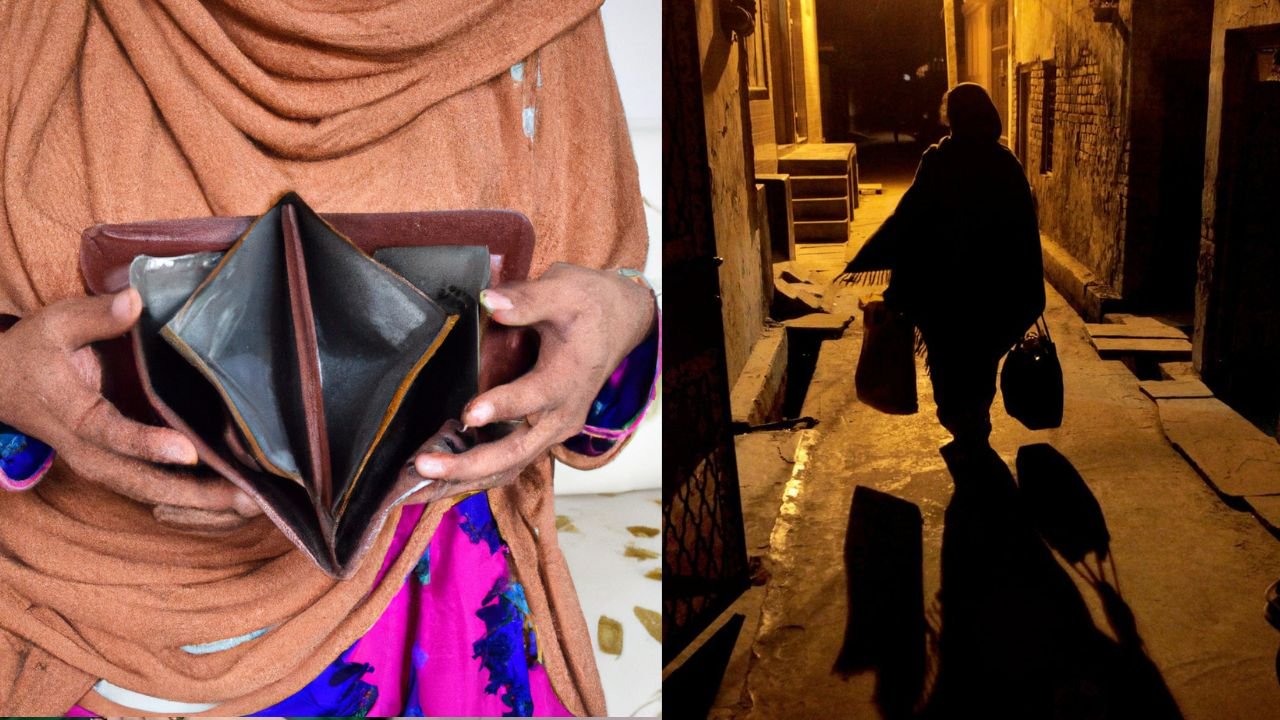
    Sonia, a 27-year-old woman, and mother of a 5-year-old daughter works as a house help. In eight years of married life, her husband has never had a stable job, nor does he bother to find work on a daily wage basis.

    Sonia has been paying off loans taken by her husband, Afzal, and her in-laws. In the initial months of her marriage, she sold whatever she had to buy a motor rickshaw for her husband so that they could have a source of daily income. Within no time Afzal sold the vehicle, taking additional loans to marry off Sonia’s sister-in-law.

    The debt piled up to 150,000 rupees. Sonia was working in two homes at that point, earning Rs20,000 from one for cooking food twice a day and Rs5,000 from the other for cleaning and washing the dishes. This was their sole family income in which they had to do grocery, pay the bills, feed their daughter and themselves, and look after the in-laws in addition to buying medicine for her mother-in-law.

    When she reminded her husband that he was supposed to work too if they wanted to get rid of the loans, she was beaten not only by Afzal but by his family too. From here started a never-ending cycle of financial exploitation and physical abuse. She endured two miscarriages due to the beatings and excessive work. She sometimes thinks that things would’ve been different if her father was alive.

    “I don’t blame my parents. This is what happens to people in our class. I just think that maybe if my father was alive, I would’ve had the option to tell him everything and he might have allowed me to take divorce and go back to my home. I don’t have that option anymore. I must live and survive here. I have a kid now. I can’t leave her,” she said while sobbing.

    Sonia is not the only one who goes through this cycle. I called up as many people as I could in different parts of Pakistan, family, friends, colleagues, acquaintances, and strangers to ask about their house help. Every woman had a similar story. A drug-addicted husband, an abusive husband, a husband who doesn’t work and keeps taking loans which the wife must pay. A never-ending circle of exploitation, harassment, and abuse.

    “There are very few people who respect us. It is not easy to clean someone’s dirt or wash their dishes with days-old rotten food. It is embarrassing to ask them for additional money to pay off loans. Sometimes I even have to take a loan from one person to pay off the previous one and the cycle goes on,” Sonia elaborated while talking about how draining her routine is as she does all the house chores and then works in the homes of other people too.

    She doesn’t want her daughter to end up like her. Instead she desires an education for her child, better career options. But whenever she brings the topic up, Afzal doesn’t take it seriously. He even spent the money they were given by different people to help finance their daughter’s education. Sometimes it was Eid gifts for sisters, other times it was a loan given to a friend. Sonia never got her money back.

    Doctor Ramish Fatima, who works in the periphery of Multan, details how such cases are quite normal and how these women suffer especially during their pregnancies. “These women keep working till the last month of their pregnancy and they must go back to work a few days after giving birth because they must pay off loans. If they fail to do so, they are beaten by their in-laws. In some cases, husbands work on minimum wages, but mostly don’t as they are drug addicts, and they physically abuse their wives after being intoxicated,” she explained.

    Ramish has been working in the periphery for over seven years now and most of the time she has dealt with such emergency cases. As a feminist and human rights activist, she believes that the solution to these problems is education and financial independence. She further emphasizes the importance of systemic upgrades and overall behavioral change in society towards women.

    Punjab Domestic Workers Act was enacted in 2019 throughout the province to regulate their terms of employment and working conditions of service, to provide them social protection and ensure their welfare, and to provide for the matters ancillary.
    The act states that “No child under the age of 15 years shall be allowed to work in a household in any capacity” while every other day we see cases of severe physical abuse and sexual exploitation against underage domestic workers.

    In the same manner, this act requires every employer to issue a letter of employment showing the terms and conditions of employment including nature of work and amount of wages.

    Regarding registration of Domestic Workers and Employers, this act states, “Every domestic worker, to benefit from the fund, shall make an application for registration in a manner as prescribed by the Governing Body, and every such domestic worker shall be provided by the Governing Body with a security number and identity card, which shall be renewable after completion of every three years. Provided that none of the domestic workers shall be eligible to get more than one security number and identity card. Every employer shall make an application for registration in a manner as prescribed by the Governing Body, and every such employer shall be provided with a registration number, which shall be renewable after completion of every three years.”

    Hiba Akbar, a lawyer who teaches at LMUS, believes that such laws are made to just get done with the binding of international treaties without any intention of implementing it.

    “Every time we see a shocking case of abuse of domestic workers we talk about laws but a law already exists. How many domestic workers are paid minimum wage? How many workers and employers are registered? Does anyone even know where they can register,” she questions. If the government was serious about implementation, she stresses, they would’ve made all the information public and ensured the safety and security of domestic workers.

    She further argues that financial abuse comes from employers too who believe that giving their house help food and clothes once in a while, that too of substandard quality, won’t help them in breaking the cycle of financial abuse and recurring loans.

    In 2023, Kashf Foundation, a registered Non-Banking Microfinance Company regulated by the Securities and Exchange Commission of Pakistan which started in 1996, gave 140,572 Easy Loans ranging from 10,000 to 35,000 rupees for short periods, as per their annual report.

    Their research in 2023 on low-income households highlighted that income spent on meeting food expenses has increased from 30% of their income in 2018 to 45% of their income in 2023 while earnings didn’t keep pace with the increase in food prices in real terms.

    Gender and Financial Inclusion expert Zainab Saeed explains that Pakistan has one of the lowest rates of financial inclusion in the world and only 7 percent of Pakistani women are financially included.

    She further says that most of the loans by microfinance institutions aren’t interest-free but have a service charge. Most microfinance institutions borrow money to lend money in addition to the cost of funds and running operations. Akhuwat, an interest-free loan program usually for small businesses, doesn’t solely focus on women but caters to women clients as well.

    “Turnaround times vary across institutions- for example Kashf is two days, you get the loan in two days. Other institutions have different turnarounds, like for Akhuwat, it is 10 to 30 days depending on what the set date for disbursement is in the month. Instant credit or nano loans like Jazz Cash have higher interest rates,” she says while emphasizing that a lot of women don’t even know how to use apps like Jazz Cash.

    As far as requirements are concerned, most of these institutions lend money to those who have their computerized national identity cards (CNIC), some require guarantors while others might demand post-dated cheques.

    When asked about how surety regarding on-time paybacks is made, Zainab said, “It is a trust-based environment so most people tend to pay back their loans on time. People don’t want to be blacklisted from Credit Information Bureau. Some institutions also go for appraisals like Kashf did a very detailed credit appraisal with household cash flows and that helped them to turn in the credibility of the loan.”

    For defaulters, there is legal recourse available but tending to civil courts given the judicial system of Pakistan is not the best solution. Generally, there are very few non-performing loans in the world of microfinance banks, as per Zainab. People end up paying back, some institutes take action to make an example out of it but they usually don’t end up taking that route.

    As these are not interest-free loans, ‘interest rate may vary from flat 25 to 30 percent’ which might seem high but, “the way the repayment is structured allows people to repay,” explains Zainab. “They Usually do monthly repayments. For instance, for a 10 thousand rupees loan, they are paying back 12 thousand 500 rupees. It is then 1000 to 1100 rupees a month. With microfinance institutions, there is a lot of transparency regarding installment dates and amounts which is lacking in other places,” she added.

    As a country with a low literacy rate and even lower financial inclusion of women in Pakistan, the path of loans, financial independence, and empowerment still seems like a far-fetched dream.

  • ‘Anti hero’ Taylor Swift sparks outrage for befriending  allegedassaulter Jackson Mahomes

    ‘Anti hero’ Taylor Swift sparks outrage for befriending allegedassaulter Jackson Mahomes

    ‘It must be exhausting always rooting for the Anti Hero’? Not for Taylor Swift it seems so.

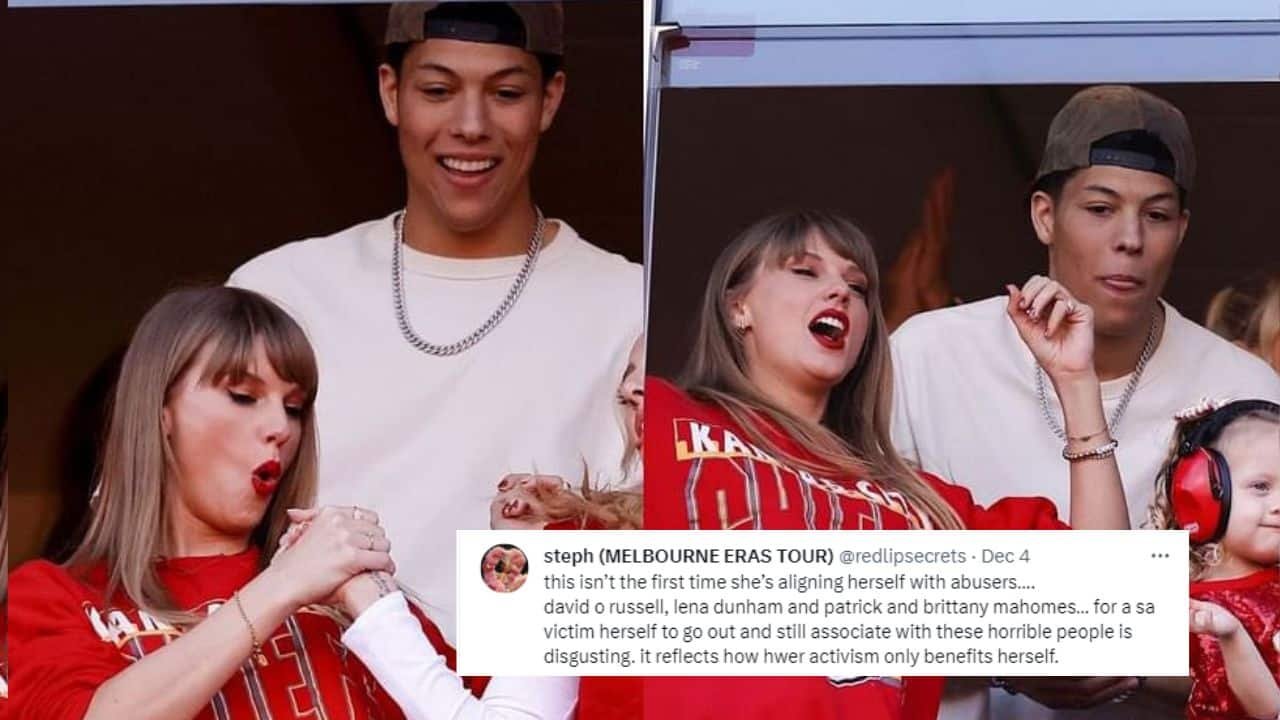
    Taylor Swift has garnered backlash from fans because of the singer’s silence on the ongoing genocide of Gaza, and several videos showed Israeli fans dancing to the screening of ‘Eras tour’ movie. Now, fans are outraged after the singer who wrote ‘Mad Woman’ was spotted laughing along side the younger brother of NFL player Patrick Mahomes, Jackson Mahomes, who is accused of sexual assault.

    A twitter thread by a Swiftie, detailing the charges filed against Jackson, who was seen in a video grabbing a woman and forcibly kissing her, is going viral. Jackson was arrested and charged with three counts of sexual battery and misdemeanour. But he was released on $100,000 bail.

    The thread further revealed reports that alleged Jackson had tried to bribe the victim to force her to withdraw the case, which had attracted further outrage.

    Taylor Swift attended a football game where her boyfriend Travis Kelce was playing, and several videos showed her high fiving Jackson, attracting intense backlash. Many criticised the singer as a hypocrite, for speaking up against sexual assault and rape but refusing to defend others who do the same thing.

    Swifties were also taken aback when Taylor’s best friend and wife to Patrick, Brittany Mahomes, defended her brother-in-law in an Instagram story by writing “He’s just a human trying to live his own life”, when a fan asked her about the sexual assault allegations.

    Many slammed Taylor Swift for failing to live up to her political beliefs and the feminist stance she had reaffirmed with songs like ‘Dear John’, ‘All Too Well’ or ‘Would’ve Could’ve Should’ve’ where Taylor has publicly discussed surviving abusive relationships and sexual harassment.

    Others were shocked that Taylor continued to remain silent about her friendship with Brittany Mahomes, when she was named as Time Magazine’s Silence Breakers in the 2017 issue, when the singer had gone to court after her abuser sued her.

    The Boycott, Divest Sanctions Movement (BDS) also called out Taylor Swift and Beyonce for allowing their films to play in an apartheid state where the genocide of Gaza is still going on. On their official Instagram account, the movement acknowledged that the two singers had refused multiple offers to play in Israel, but urged them to pull their films and music from playing in the country.

  • McDonald’s UK faces weekly sex abuse claims

    London (AFP) – McDonald’s boss in Britain said Tuesday the US fast-food giant faces “one to two” sexual harassment allegations from workers every week, as he vowed to tackle the issue recently exposed by the BBC.

    Alistair Macrow, chief executive of McDonald’s UK and Ireland, told a watchdog parliamentary committee that the chain’s management also receives around five reports a week of bullying.

    He said that his employees’ accounts of alleged harassment and racism were “truly horrific and hard to listen to”.

    It follows the BBC reporting in July numerous allegations of sexual misconduct, racism and bullying by staff at McDonald’s outlets in Britain.

    The company says it has dismissed 18 employees and taken 75 disciplinary measures, after examining 157 reported cases, since the scandal emerged.

    Some 249 cases remain to be investigated, it has said.

    Law firm Leigh Day recently launched group legal action against McDonald’s after the BBC aired the accusations, which included employees’ claims they were “groped and harassed almost routinely”.

    McDonald’s UK opened a specialist unit to investigate the allegations, which stemmed from the accounts of around 100 staff, according to the British broadcaster.

    Appearing before lawmakers in parliament, Macrow reiterated that he was “absolutely determined to root out any of these behaviours”.

    He pledged to identify individuals who are responsible for them and “make sure they are eradicated from our business”.

    But earlier in the hearing, union leaders claimed that, contrary to those assertions, the situation had not improved within McDonald’s since it launched its internal probes.

    The unions also claim that the firm has a history of using out-of-court settlements in response to such allegations, including non-disclosure agreements (NDAs).

    The Bakers, Food and Allied Workers Union alleged four years ago that more than 1,000 female employees of the fast-food giant were victims of sexual harassment and abuse.

    This year’s BBC investigation revealed that many female employees under the age of 18 reported being sexually or emotionally harassed.

    One ex-employee, Shelby, who was only 16 when she started working at McDonald’s, told the broadcaster that she was constantly touched in an inappropriate and unwanted ways by older male employees in the kitchen.

    The fast-food chain has 177,000 employees in the UK, many of whom are young workers, including teenagers.

  • ‘Cheap knockoff of Kabir Singh’: Viral clip from Danish Taimoor’s new drama has Twitter in fits

    ‘Cheap knockoff of Kabir Singh’: Viral clip from Danish Taimoor’s new drama has Twitter in fits

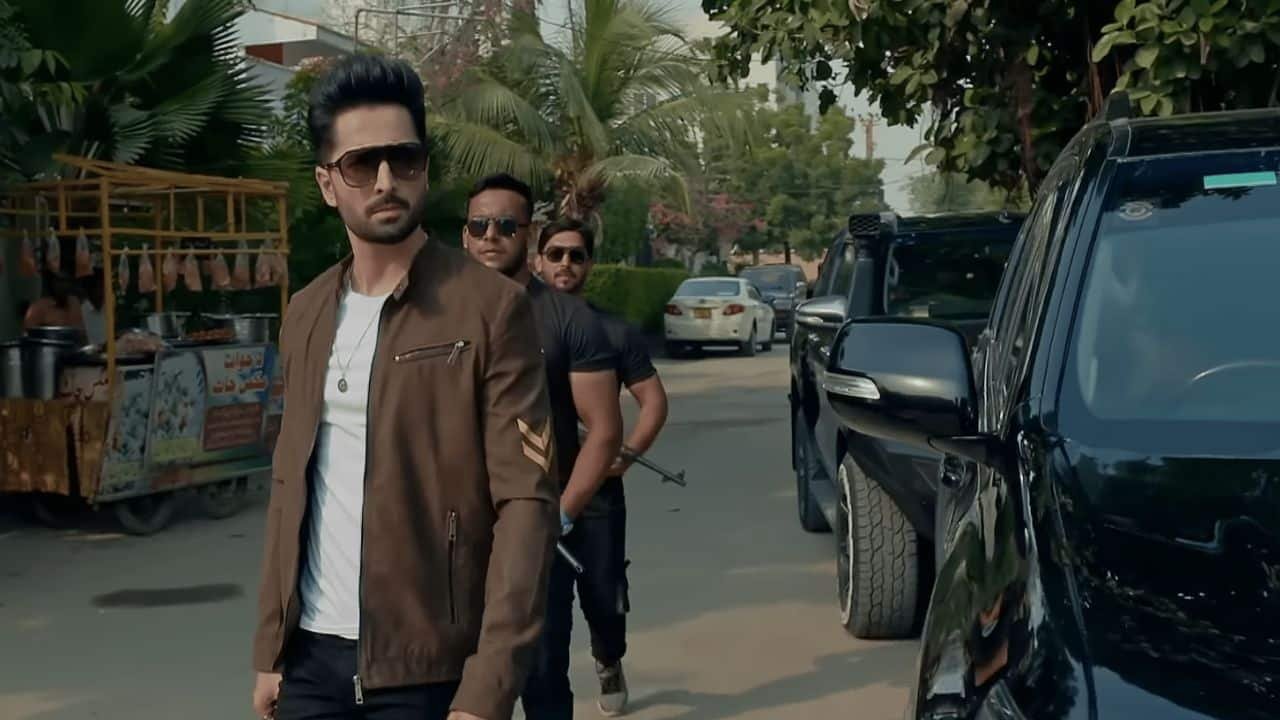
    Once more, Danish Taimoor’s dramas are providing meme fodder for the internet. A clip from the actor’s series ‘Rah e Junoon’ is trending after drawing comparisons between Danish’s character and a well known misogynist, Bollywood villain Kabir Singh. This led to many mocking the show by calling it ‘Kabir Singh from Daraz’.

    This led to Internet users coming with all sorts of hilarious quips to roast the clip.

    Really Danish where’s the range! Give us something other than toxic university boy roles

    Twitter users are done with Danish Taimoor’s tasteless choice of scripts. He made the internet laugh with a scene from ‘Kaisi Teri Khudgarzi’ where it looks like the hero gets off on the miserable cries of his lover.

    And then in ‘Ishq Hai’, Danish thought what’s a better way to make yourself a hero on screen than kidnapping a woman, threatening to shoot yourself if she doesn’t marry you?

  • Five suspects granted bail in two honour killing cases

    Five suspects granted bail in two honour killing cases

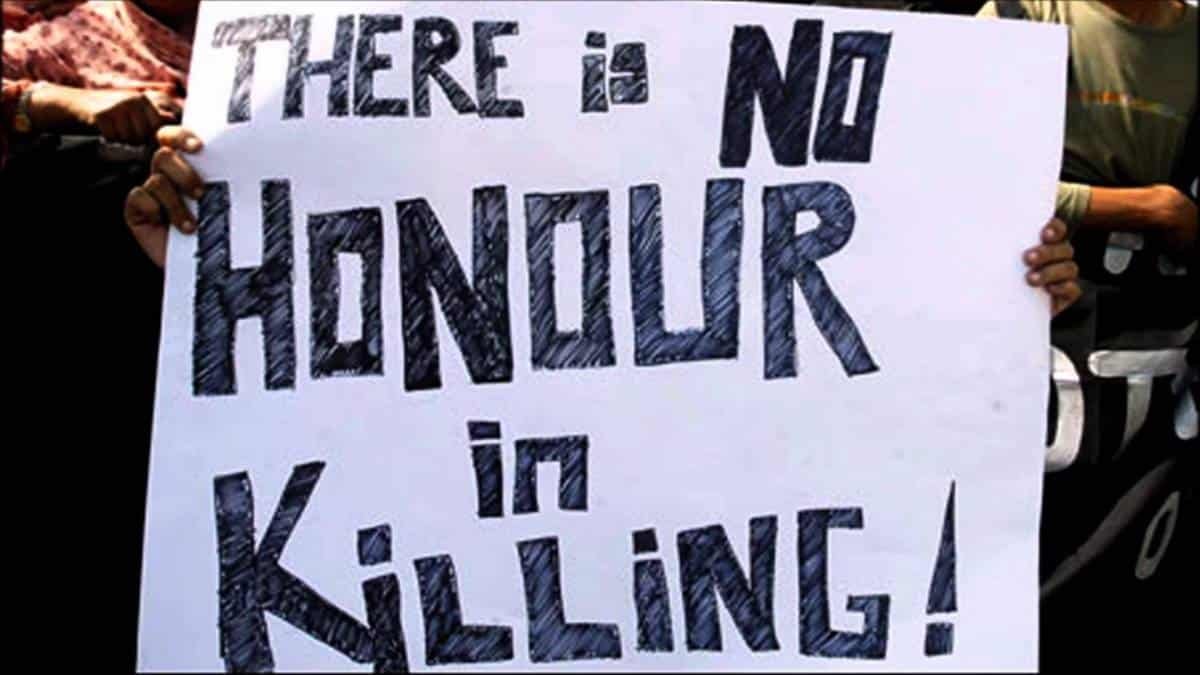
    Peshawar High Court has granted bail in two separate cases involving honor killings.

    The first case involved Swat resident, Akhtar Ali, suspected of being involved in the killing of his wife and another man over three months ago.

    The bail was granted by Justice Shahid Khan of a single-member bench, who directed the submission of two surety bonds of Rs200,000 each for Ali’s release.

    The incident, which took place on July 22, 2023, was initially reported at the Shaheedan Wenai police station in Swat under sections 302 and 311 of the Pakistan Penal Code and Section 15 of the Arms Act.

    The complainant in the FIR, station house officer of the police station, Mohammad Zaib Khan, claimed that he along with a police team went to the crime site after learning about the murder of a man and a woman and found out that the deceased were killed by the petitioner, who suspected that the two had an extramarital affair

    During the hearing, the bench noted that the case lacked substantial evidence against Ali.

    It added that the complainant in the case had neither disclosed the name of the person who informed him about the involvement of the petitioner nor did he produce any other “cogent and reliable information, which could prima facie spoke about the guilt or otherwise of the petitioner.”

    Lawyers Saeed Khan, Askar Khan, and Dunya Zeb, representing the petitioner, emphasized the absence of witnesses and evidence connecting Ali to the crime.

    They added that the murders took place at nighttime and that there was no evidence to connect the petitioner with the commission of the offense.

    Similarly, the court also granted bail to Habib Khan and his three sons – Talim Khan, Owais Khan, and Zarif Khan – from Lower Dir district.

    It accepted the joint bail petition of suspects on the condition of furnishing two surety bonds of Rs100,000 each.

    They were arrested on suspicion of the honor killing of Habib’s daughter-in-law, Nish Bibi, whose body was found at their residence on Sept 23, 2023.

    An FIR was lodged by the mother of the girl, who alleged mistreatment and torture by her husband and in-laws.

    The complainant claimed that her daughter was married to Dawood six years ago but she didn’t have kids and she often asked her husband for medical treatment.

    She claimed that for the same reason, relations between the couple were strained and that she was mistreated by her husband and in-laws and was also tortured by them.

    Legal counsel Shabbir Khan Daulatkhel defended the petitioners, maintaining that the prosecution’s case was founded on rumors, lacking any concrete evidence against the accused.

    The initial bail application of the petitioners was rejected on Oct 12, 2023, by an additional sessions judge in the Chakdara area of Lower Dir district.

  • ‘Horrible human’: Social media outraged after Amy Schumer targets black actress

    ‘Horrible human’: Social media outraged after Amy Schumer targets black actress

    Comedian Amy Schumer is going viral for her Islamophobic, anti-Palestinian content since Hamas’ attacks on Israel on October 7, followed by the Gaza strip getting bombarded relentlessly by the country.

    Now, an African American- Filipino actress Asia Jackson shared the hateful messages she recieved from Amy for her pro-Palestine stance.

    Asia slammed the double standards in the industry , pointing out how Palestinian-American models Gigi and Bella Hadid had to make careful statements about their support for Gaza, while Amy Schumer continues to make racist comments against Muslims and Palestinians.

    Schumer then followed Asia on Instagram and messaged her in private. In screenshots shared by Asia, Amy was seen berating the actress by calling her an anti-semite and also accused her of not understanding the backlash against Jews who feel like targets of racism right now. Mind you, never lecture a Black and Asian actress on facing fear and racism.

    Asia slammed the comedian, who has a history of making racist and abelist comments in the past, for degrading her in this manner. Especially for lecturing a woman from a minority community on racism.

    She further pointed out how Amy continues to spew racist comments from her elite mansion while the Israeli military bombed refugee camps in Gaza and murdered countless babies and civilians.

    Social media users were outraged at Amy’s unhinged behavior, and called her a ‘raging racist’.

    “Amy Schumer made fun of a black comic (for being black and made fun of him for having the disease that would go on to kill him) and then stole his material after he died. Like, not history’s greatest monster, but certainly in the discussion,” a user revealed.

  • ‘Mayi Ri’ ends with mixed responses from fans

    ‘Mayi Ri’ ends with mixed responses from fans

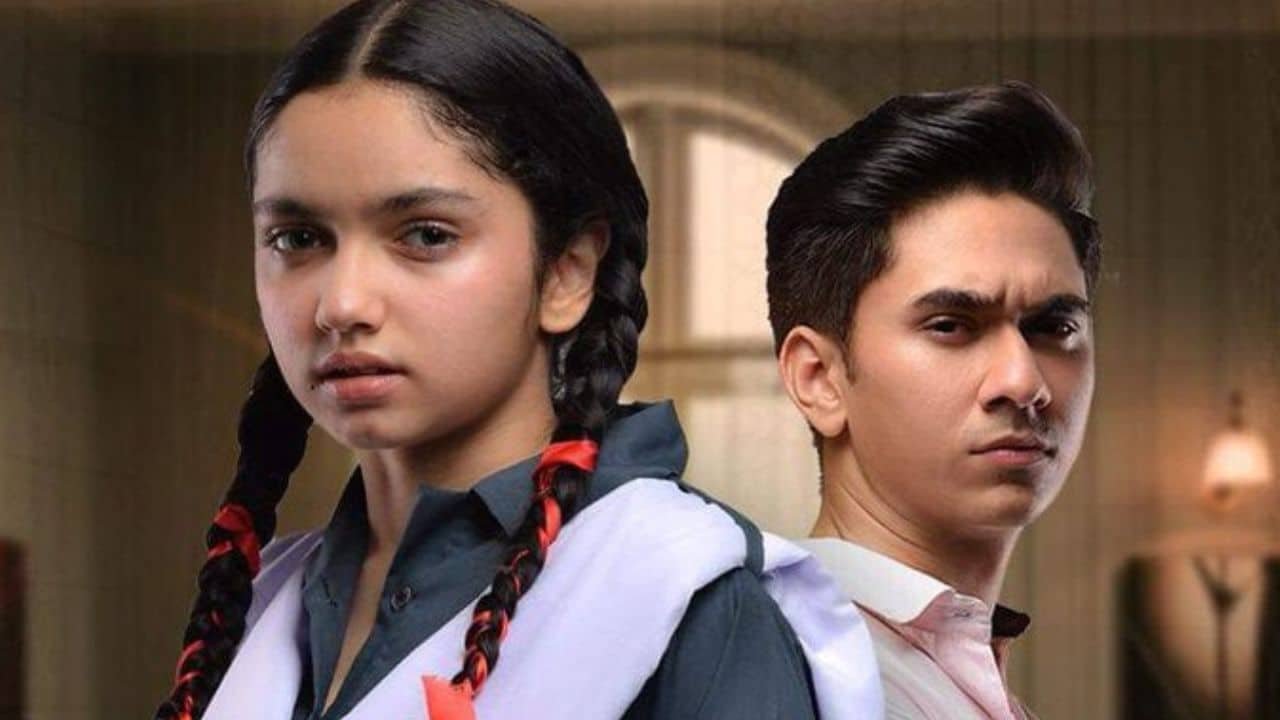
    The drama ‘Mayi-Ri’ attracted widespread controversy on social media after it depicted an underaged girl being forcibly married to her cousin, later giving birth to a baby girl. However the drama has ended now, with main leads Ainy (Aina Asif) and Fakhar (Samar Jafri) choosing to end their relationship as he decides to go abroad for studies.

    Social media had mixed reactions to the ending. Many fans were happy to see a Pakistani drama deciding not to stigmatise divorce, showing Ainy empowered by her family to chase her dreams and complete her education on her own. In the last scene, Ainy gives a college graduation speech where she strongly advocates for the right of women to chase their dreams, revealing that she has set up a house with her mother called ‘Ayesha Home’ to help young children escape abuse.

    As pop culture writer Sadaf Haider wrote: “Mxed feelings about #MayiRi ending Congratulations on understanding Divorce can be be a blessing Allah has allowed it for a reason Big thank you to The writer for allowing Aini & Fakhir to move on from a child marriage And women supporting each other.”

    Social media users defended Ainy for divorcing Fakhir, working on her independence and following her own dreams. Users shared the clip of Ainy speaking at her college graduation ceremony, applauding the powerful stance the show took against child marriage.

    However, other social media users were disappointed at how Fakhir chose to run away from his responsibilities for wife and child to study abroad, calling this twist, “heartbreaking.”

    But for us, the best part of the drama was how divorce was not treated as a taboo, but as an empowering a step towards a woman’s future. We’re incredibly happy with the direction the show took, and hope more writers and producers take a page from their book, to show that it’s better to live alone than to live in an abusive marriage.