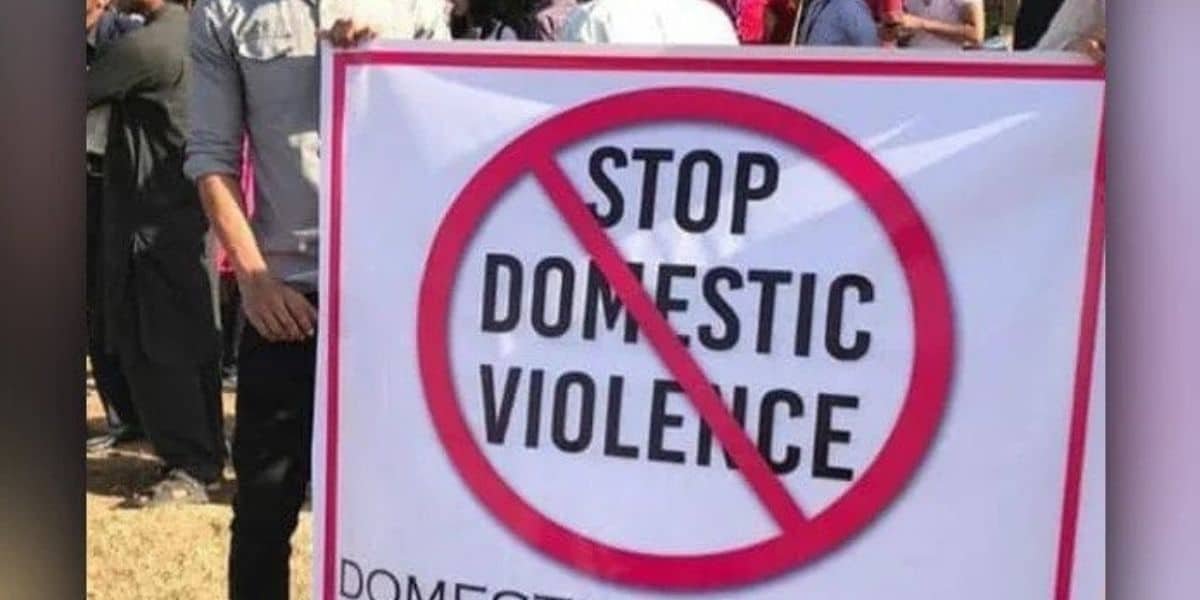
A Pakistani man and four of his family members in Britain have been sentenced to years in prison after forcing his wife to become a house slave, subjecting her to cruelty and torture from October 2017 to April 2019.
The husband, Mohammed-Shuaib Arshid, brought his wife from Pakistan to the UK, after an arranged marriage, to their house in Hillingdon, West London, where he lived with his mother Nabila Shaheen, father Arshid Sadiq, brother Aqeel Arshid, and sister Zaib Arshid.
According to court details, the woman was forbidden from leaving the house or attending college, and could not contact her family members back in Pakistan. Her personal identity documents were taken from her, leading her to begging her husband for purchasing basic toileteries as she had no cash of her own.
The woman was subjected to torturous behavior by being forced to cook and clean around the house all day, and on one occasion was even forced to drink engine oil by the family. She was threatened with death by family members.
The court said that during these two years, the woman was subjected to both mental and physical abuse at the hands of the five family members, leaving her with long term psychological trauma.
According to Paul Jenkins, a senior district crown prosecutor for the CPS: “The victim believed that they were moving into a safe family home with a loving husband, but the subsequent actions of [the family] proved that this was not the case.
“The victim was subject to regular abuse whilst under their care, resulting in serious physical and psychological harm.”
A CPS spokesman spoke of the survivor’s plight: “Being the victim of violence or sexual assault is undoubtedly a harrowing experience – but when this abuse is ‘honour-based’, the challenges can often feel impossible to overcome.
“If someone is seen to have dishonoured or brought shame on a family or community, they can be ‘punished’ through threatening behaviour, rape, kidnap, false imprisonment, female genital mutilation, forced marriage and even murder – also known as honour killings.”
The husband Mohammed-Shuaib Arshid was jailed for 11 years; father Arshid Sadiq to seven years; mother Nabila Shaheen to four years; the siblings Aqeel and Zaib to 21 months each.
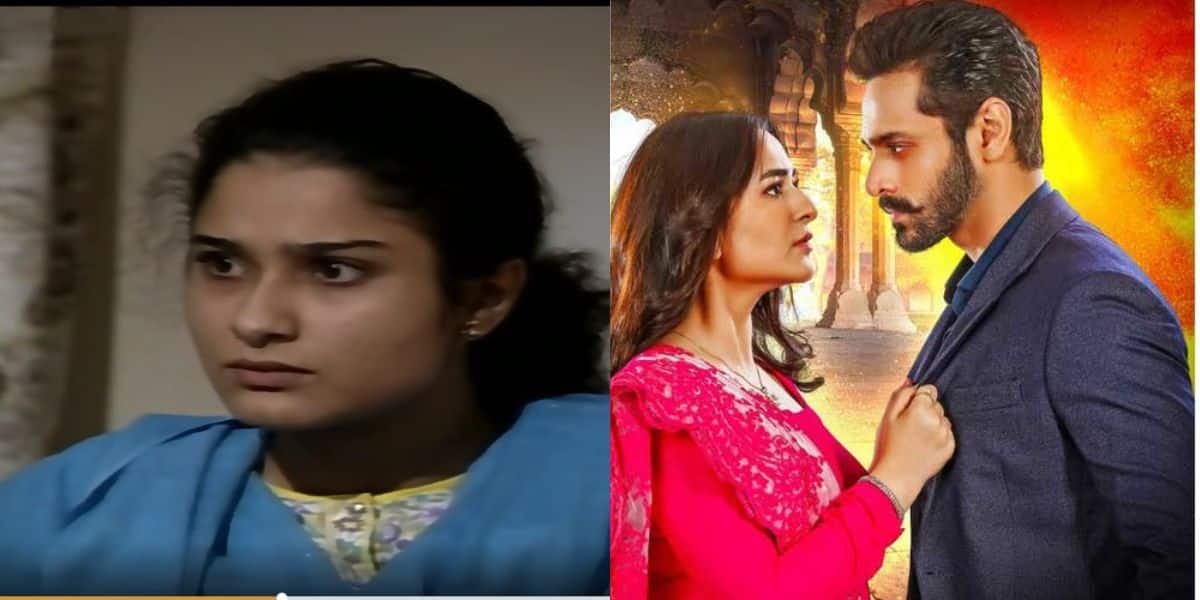
In a triggering scene, a house helper is seen violently beaten, dragged across the floor by her hair as her husband screams at her to give him more money. The woman keeps refusing, since the man is a drunkard who steals all their money to gamble it away. When the house help begins crying for help, another woman steps outside from her apartment and stands between them to protect her. The drunkard orders her to leave, as its a personal matter between a husband and his wife. But the woman refuses to do so, threatening to call the police. She takes the beaten woman inside her house.
Did this scene come from a recent hit drama like ‘Tere Bin’, or from a forgotten, classical drama from the 90’s which talked about post- partum depression, pressure to give birth to sons and struggles of a working class family to make a living for their three daughters? Haseena Moin’s ‘Aahat’ was decades ahead of its time when it came to discussing sensitive topics, giving women the catharsis they need that decades later, ‘Tere Bin’ glorified with toxic relationships.
In several ways, Aahat was ahead of its time when it pulled back the curtain to reveal the struggles Pakistani women underwent, talking about the things that today’s television dramas would have been called ‘vulgar’. It explores the struggles of Rabiya, who gave birth to a fourth daughter, and is being pressurised by her mother-in-law to give her a son, or her husband must marry another woman. Rabiya’s pain is nothing new for Pakistani women, who bear the brunt of family problems, and the drama never shies away from being blunt about the pain: like a scene where Rabiya is made to isolate herself from her children in a room until she is able to give birth to a healthy son, under the orders of a peerni. Or the taunts for only giving birth to daughters which puts pressure on her health as she toils around the house, regardless of the warnings of her doctor and friend.
But most importantly, what makes ‘Aahat’ the exemplary drama that proved Haseena Moin knew what Pakistani women yearned for, better than the writers today, was how she crafted female friendships that rose from the pains women shared with each other. Rabiya’s friendship with the brilliant and witty Naheed (played by Talat Naseer) is what guides her to take a stand for herself and eventually for her children. Naheed’s boldness and selfless love for Rabiya rescues her in moments when her post-partum depression make the worst of her, like in the first episode, she immediately begins working around the house after undergoing a critical surgery, because her mother-in-law refuses to take care of her three daughters, calling them a burden. Or the humiliation Rabiya endures because of the limited money her husband makes, that eventually push her into making shocking decisions. It was Naheed who offered her safety, and eventually proved that the drama was a love letter to the magic of female friendships.
In an episode when Rabiya has to make a critical decision, Naheed reminds her that she will never be granted a place on the table, but she needs to keep raising her voice to make it happen.
“Hum aurtoon kay pass koi jagah nahi hoti’ she urges. “Mein isliee har dafa chala rahi hoti hoon kyun kay mujhay pata hai kay istarhaan meri awaaz koi sunay ga. Islie apni awaaz uthaya karo ta ke log tumhein sunien.”
Would this message remain evergreen in the years ahead ? Tere Bin, currently rated as a critical hit drama on Pakistani screens, proved that the enduring message of friendships and female empowerment has been lost forever. For 58 episodes, the drama stomped out any effort Moin made to give Pakistani women the space they needed to find their voice; instead glorifying the opposite with a clueless storyline featuring two toxic characters, and an even toxic slutty savitri who plotted to break them apart. From the first five episodes, Meerub was slapped for refusing to marry Murtasim, lead a toxic storyline of stalking, abuse, harassment, and even marital rape to a point. What was once a space crafted by the gentle and clever writing of Haseena, is now bombarded with 45 minutes of Haya plotting to make sure Murtasim catches Meerab in a scene that makes him slap her and then divorce her so Haya could become his wife.
The wound left behind by the passing of Haseena bleeds anew when we come to realise that what television dramas show on our screens is what even female drama writers today staunchly believe is what the audience needs. When the writer of Tere Bin Nooran Mahkdoom, had been questioned about the controversial marital rape episode, she defended it as ‘a demand of a serial’, a complete 180 from the time when a decades old drama written in the times of Zia had not only condemned domestic abuse and rape, but even made sure that the message that abusers should be punished is given to the audience.
The problem never was just about Tere Bin, but the complete decline in the quality of our dramas, pushed by an industry that now considers that any show featuring one of out the following: domestic violence, wailing women, a satti savitri desperately wanting a man’s attention. Pick one of them and you have a hit on your hands, even get a Pride of Pakistan award ready. Take a stand and make a drama like ‘Udaari’ that talks about child abuse and sexual assault, PEMRA is at your doorstep ready to call you a traitor for going against the Islamic Republic of Pakistan.
In a time even Pakistani women can’t find a place to be still, with the economy ravaging, human rights violations growing even worse by the day, public spots becoming hunting grounds for rapists and harassers, the grief we carry in our bodies is understood by no one better than Haseena Moin, and the prevailing message that becomes relevant as currently a hit drama featuring two cousins falling in love features a scene accusing women for falsifying rape accusations for the sake of attention. It’s no surprise that more women are turning to classical dramas because the gentleness and sharp writing of Moin will keep outshining whatever dumpster bin dramas we’re fed in the name of ‘hit dramas’.
As women across Iran continue to protest against strict hijab laws, universities have taken stringent measures by suspending and initiating violent crackdowns against female students to suppress the uprisings, The Guardian has reported.
More women have posted video recordings of themselves dancing or walking without the hijab, while several students spoke to the publication to reveal that at least 60 students have been banned from their university, called at disciplinary committee hearings and harassed on campus for not wearing the hijab.
According to the Student Council of Iranian Universities, at least 40 female students have been conditionally suspended from their campuses for failing to follow the hijab rule. While The Human Rights Activists (THRA) in Iran reported that at least 64 students have been suspended and three expelled.
Nine suspended activists told the publication that arrests of young women are on the rise, and they were warned of serious consequences if they did not adhere to the mandatory policy of wearing their hijab.
“We’re being mass banned from the campus for refusing to wear a hijab, and in the past few days there has been a violent crackdown on us for peacefully sitting in protest,” said a student who was studying in a university in Tehran. She further revealed that security officials had violently thrown women out of classrooms.
Another anonymous student from Mashhad spoke about her suspension for protesting on the 40th day of Mahsa Amini’s death:
“I have been slapped with repeated temporary suspensions for protesting on the 40th day of Mahsa Amini’s death. Considering that I will be suspended again next semester, I will fall behind a whole year. I dream of studying abroad, but unfortunately, given the current situation, my future is dark.”
Another student’s account revealed that sharing social media posts related to Mahsa Amini’s death could have severe consequences leading to being suspended and failing their courses, as violent crackdowns continue to rise in Iran.
“Three days after I shared a post about death sentences, the university security team confiscated my phone after raiding our residence hall,” spoke a student from Tehran. “They also collected protest posters or anything related to the ongoing revolution and warned us of worse consequences.
“I doubt the officers barging into our dormitories are from the university’s security team. I’ve never seen them before. The next day, I was temporarily suspended along with three of my friends.”
Another student in Tehran revealed: “The university administration is acting like an extended arm of the Islamic Republic. I was preparing my applications for a master’s in the EU, but I fear I’ll neither receive a recommendation letter, nor will I receive the relevant grades necessary for my application. I’ve been warned by my university’s administration that I’ll get zero grades if I don’t apologise and retract my social media posts in support of the revolution.”
Professors who support the protests have also been violently attacked or expelled from campuses.
The protests in Iran began in September 2022 after the brutal death of 22 year old Mahsa Amini, who was severely beaten by Guidance Patrol officers for refusing to wear a hjijab. She later passed away in a hospital from her injuries. Since then, nation wide protests began through out Iran as the slogan ‘Zen, Zendagi, Azaadi’ was adapted as a protest against human rights violations committed by the Iranian government.
On Thursday, a video from the Instagram account sab.chutzpah.hai went viral on social media. The clip, shared by the anonymous account of a woman, detailed her account of a visit to F-9 park in Islamabad, where a man flashed her, then kept following her around as she ran to her car and tried to look around for police authorities, but found no one present for help.
The incident prompted a response from the Islamabad police who wrote in the comment section that they wished to get in touch with the survivor to arrest the culprit.
When The Current reached out to A*, she revealed that the incident took place on the June 26.
She recounted that she visited the park to walk a bit around afternoon before attending her class at the university. She had been walking around the track which was near the parking lot, when suddenly she realised that someone was closely walking behind her.
“There weren’t a lot of people in the park that day, and not even police men,” said A. “Which is odd because police officers are constantly patrolling the park and questioning people about their coming and going.”
The woman recalled that the man was walking next to her as if they were together, and suddenly he came close to her and said “Aap ko jism dubwana hai [Do you want your body massaged]”?
“I remembered being completely taken aback and shocked by this,” recounted A. “Then I threatened him to leave or I’ll call the police. But he was already aware of the fact there were no police officers present at the park and he didn’t stop walking behind me as I rushed to my car. I was frantically rushing to my car, while trying to find some police man standing around who could stop this man, but there were two cars there and in one a driver was present, and I was afraid that he might be involved with the man.”
A said she sat in her car and tried to start it, but the man stood outside her window and kept jerking off as he looked at her directly.
“I was incredibly worried and scared of what was going on,” she said. “So then I decided to make proof of this and recorded a video. I tried to hide behind the window blinds so he can’t notice, but he did and he tried to conceal his face, but I made the video. My car started immediately and when I came to the gate, there was no police man in sight even though it was afternoon.”
A chose to remain anonymous and did not want her identity to be revealed to the police, as she hasn’t revealed the incident to her family, and decided to share this video with a public account instead.
“They had shared a similar video of a man assaulting a woman,” she said. “That’s when I decided that I should share my experience with them.”
On whether officials from the Islamabad Police had reached out for more details, A said they had informed the admin of the page that an FIR had been launched and a man hunt was underway in search of the harasser.
She recounted that the incident had taken a toll on her mental health:
“I feel so conscious about men around me now,” confessed A. “I don’t go out now without my mother.”
Previously, a gang-rape case in February had drawn anger from activists and residents of Islamabad, when a woman and her colleague were attacked by two armed men, who raped her at gunpoint.
A senior police official from the Islamabad Police told The Current that since the culprit has been identified in a video, all efforts will be made to catch him. “We will get all evidence from him regarding the immoral incident. Once the actions have been established what he was doing, we will charge him and then file a case for trial. We would encourage the victim to reach out to us directly and report it without going public but if she doesn’t, even then we will follow the law that will lead to prosecution subjected to availability of evidence.”
The police official also said that the judiciary should also ensure in such cases that perpetrators are punished so that such harassment incidents must be discouraged and such practices must be stopped. “We would encourage all victims to report harassment incidents so that we can take proper action against perpetrators of harassment. In any civilised society, there are laws that deal with flashing or masturbation in public and other forms of harassment. We hope that our judiciary also makes a commitment to punishing harassers as it is against the norms, values and laws of Pakistan.”
Feroze Khan is once more going viral on the internet for all the wrong reasons. The actor is now promoting the most absurd ways to help women overcome depression.
In a viral now-deleted post, a person had asked the actor how she could cure depression about her future, to which Khan responded:
“Obey your men. Give them your responsibility and sit back and enjoy grapes. I’d do that if I was a woman. Be a queen.”
Sir, how is this even proper advice? Cure your depression by completely submitting yourself to the men in your life?
Once more, Feroze jee proves how undefeatable his critical thinking skills are, when a fan questioned him about his misogynist views by reminding him that it was due to the struggles and hard work of his sister, ‘Maula Jatt’ actress Humaima Malick, that Khan was able to achieve such monumental fame, which brings into question why he holds such misogynist views.
To this Feroze had to respond:
1 , I’m gonna be loud. 2, will have no fear. 3, do you think she would’ve achieved this without my dad and us brothers backing her up ? *mic drop*
Classy behavior, putting down the hard work of your sister just to boost up your ego.
Twitter users obviously did not have the time or the fortitude to put up with Khan’s misogynist views and were ready to shut him down.
On Saturday, actress Nazish Jahangir set social media ablaze when during a podcast with controversial YouTuber Nadir Ali, the model turned actor claimed that she did not identify as a feminist, because apparently “not all crying women are truthful.”
“…l believe in equality, and I still confidently say that not all crying women are truthful. I am always standing with the right person whether it is a woman or a man.”
The abysmal part of this conversation begun when Nazish Jahangir went on to address Aurat March, saying that the movement is responsible for the rise of divorces in the country, adding that it was not a solution to any problem:
“I don’t believe in these Aurat Marches. It’s not benefiting the women for whom we are fighting. They are not reaching the women they’re standing up for. Such poor women would be sitting in villages and making food while they chant slogans on the streets here. I think these fake feminist movements will never get you justice,”
“I wonder who they are protesting for then. Are they protesting for us? Because our league knows everything about it. We know our rights and we know the value of equality. The ratio of khula has also increased after these marches,” The ‘Thays’ actor claimed. “I’m not asking women to bear cruelties or abuse. They can leave their houses if they like but at least give it a shot. Our parents are the biggest example of sacrificing and surviving relationships with patience and love. Because now women are getting divorced only after one month.”
Yes this is a deeply messed up argument, there is a lot to unpack and a lot of myths to dissect which are once more churning up harmful stereotypes towards organisations working for women’s rights. Perhaps the worst statement was about Aurat March encouraging divorces in Pakistan. A sweeping statement Jahangir gave without any proof that it is true.
In reality, Aurat March is not the reason why women are choosing divorce Aurat March is the solution to a long term issue: the limited support and neglect shown towards women in a patriarchal society that demands that everything be sacrificed for the sake of a marriage.
Since Ms Jahangir is from the acting profession, and our dramas claim to know best about what women should want from a marriage, can we all collectively recall one drama that has portrayed a healthy marriage? Can we say that ‘Tere Bin’, which features a man stalking and slapping his wife was what women should look up to in order to understand how to keep their marriages intact?
Furthermore, if Ms Jahangir is claiming that women who break away from their marriages do not understand sacrifice and hard work because Aurat March tells them to be less tolerant, then she needs to be aware that more women in Pakistan have died trying to stay married. Sara Inam was murdered by her husband in Islamabad after three months of marriage, was the murder her own fault? Qandeel Baloch‘s murderer, her brother, was pardoned by the court despite confessing his crime to authorities, only because his parents pardoned him. Just five days ago, another man walked free from a court in Karachi after murdering his daughter, because he was once again pardoned by his family. Another man in Lahore murdered his wife and then sent her body back to her family via a rickshaw.
All these nameless women, the countless ways they were let down by the law and society in Pakistan. How is that we know about them, Ms Jahangir? It’s definitely not because of the family system, which continues to hide predators, and pardon them after unforgivable crimes. This heroic act solely belongs to Aurat March, which has time and time again raised placcards for countless women you claim it does not protect.
You claim to say that Aurat March cannot help the women in villages because they’re too busy shouting slogans, but it is through Aurat March that we know these women’s names. Working class women like Dua Zehra, whose parents couldn’t make an announcement at a mosque because she was a Shia, and who was slammed by media organisatons, who claimed she had disohonored her family. It was local activists who pressurised authorities to take child abduction seriously, helping her come back home.
Claiming that you’re unaware about a topic is one thing, but making sweeping generalisations about women’s rights, especially during a time when laws seek to further restrict women’s access to escaping abusive marriages, and more feminist activists are being trolled onine, it is incredibly disheartening to see a public figure as yourself talking without properly fact checking yourself.
If you are still confused about how to be a well informed and articulate public figure, then take an example from Ayesha Omar and Kiran Malik, who carefully broke down why watching the rise in divorce rates is a good sign that more women are learning to stand up for themselves and escape their abusive marriages.
After a video showing an alleged altercation between models Hasnain Lehri and Nirma Jacob at the Texpo Fashion Week went viral on Saturday, Lehri has come up with a response.
In the video, the female super model can be seen distraught after Lehri allegedly physically and verbally assaulted her, demanding that event organisers take her safety seriously.
Several models and influential designers like Kamiar Rokni, Eman Suleman and Zara Peerzada have taken to social media to condemn the incident, and demanded that the abuser be held accountable for his actions.
Now in a statement to Express Tribune, Lehri has denied that he physically assaulted Jacob:
“I categorically deny all accusations of physical altercation and abuse. I come from a very respectful family, we aren’t the kind of people who would get into an issue as petty as this.”
He went on to explain how the events had unfolded, which began when Jacob bumped in to him during the ramp walk:
“During the crossing at the ramp, Jacob hit my shoulder. We went backstage and she walked towards me, asking me to learn how to walk on the ramp. This resulted in an argument and she brought my deceased father into the conversation.”
He added that there were witnesses like organisers Tehmina Khaled, Tehmim and choreographer Nubain Ali, to whom Lehri had gone to raising concern, and they had told Lehri that Jacob was known for her unprofessional behavior with other models.
Lehri revealed how the fight had started `”When the show was done, I packed my bag, readying to leave; Nubain approached me and asked me what the issue was. As Nubain and I were discussing, this is when [Jacob] returned and started the argument again,” Lehri went on. “She then told me to f–k off, and I said it back. That’s when she took out her phone and started recording me.”
Lehri went on to reveal that he asked Jacob four times not to record her, after which he had snatched the phone from her hands:
“This isn’t acceptable and I took her phone. That is all I did. I took the phone from her hand and kept it with me because she was recording me without my consent. She just wanted to show her side of the story. I wish I had taken out my phone and started recording how [Jacob] was misbehaving as well.”
Lehri denied that he had raised his hand on Jacob, and said Jacob and her friends were trying to intimidate him:
“With God as my witness, I can swear on the Holy Book that all I did was take her phone. I didn’t assault anyone, I didn’t physically abuse her. [Jacob’s] three friends teamed up against me. They will support her.”
Addressing the fact that he refused to give back Jacob’s phone, and the arrival of the police, Lehri revealed that the police could see that he didn’t assault the female model, which is why they had let him go:
“If I was in the wrong and the alleged physical assault did happen, why would the police let me leave? I was free to go. I respect my fraternity but [Jacob] is grossly manipulating the whole situation.”
A backstage video filmed at the Texpo Fashion Week, showing an alleged altercation between models Hasnain Lehri and Nimra Jacob has gone viral on social media.
According to sources, female model Nimra Jacob had been assaulted by Lehri, after which she can be seen demanding from show organisers to take models’ safety seriously. At one point in the video, Lehri is seen being restrained by a few men present backstage.
Pakistan’s top most fashion models Hasnain Lehri and Nimra Jacob involved in a clash following Texpo Fashion Show in Karachi. According to the eye witnesses, Lehri took Jacob’s mobile for allegedly filming him at the backstage and Jacob accused Lehri for raising a hand on her.… pic.twitter.com/HiRRM8I66C
— Times of Karachi (@TOKCityOfLights) May 27, 2023
Since the video went viral, Jacob has addressed the incident on Instagram, demanding better treatment for models working in the fashion industry:
“You cannot mistreat me. You can’t bully me. And you surely will not put your hands on me without consequences. We, in the fashion industry, have seen too much abuse, disrespect, and complete, utter negligence for our safety to tolerate it anymore. I have no space in my heart for forgiveness when it comes to abuse, harassment, bullying, assault, etc. Without any plausible cause, threats were made at me. I was verbally abused, and physically assaulted. My property was taken and used to blackmail me. My female colleagues were harmed in the process of trying to protect me.
“This all happened at work,” the super model continued. “Where I made sure to bring it to the attention of the management that I was being threatened by the perpetuator before he even became violent. The management should have taken action the first time I mentioned concern for my safety. I’m lucky there were eye witnesses to this man’s horrific actions, there were people who witnesses it all. As traumatized as I am, I’m not standing alone.”
“I refuse to let anyone abuse, threaten, intimidate, or belittle my colleagues or myself in any way.
“Today I stand to let you know that I will call out these abusers, harassers, bullies for exactly who/what they are. Every single one of them. If we want the industry to be a safe space, we need to collectively take a stand and check disrespect at the door. We need to demand accountability for those who are supposed to ensure our safety at work. And demand zero tolerance for the perpetuators involved in spewing such violence and aggression at the workplace. I’m done with this toxic, abusive culture. No more! Enough is enough!”
Soon other notable fashion figures like designer Kamiar Rokni condemned the incident as well as toxic male behavior on his Instagram account, stating that he was standing in solidarity with female models:
“Toxic male behaviour needs to be addressed in the fashion industry. Violence against girls backstage at a fashion show is a new low. This cannot be allowed to happen again it is up to us to come together and make this a safe space for our girls. Our models are an invaluable part of our industry and we can’t stand around while they are abused.”
Model Fatima Ahsan, who was also spotted in the viral video, took to Instagram to address the incident, and demanded that show organizers and sponsors make safer environments for their models:
“So everyone’s been seeing videos from the show backstage and sending them to me, asking if I’m okay, thank you so much for your love and concern. I am fine. The incident took place with another model and could’ve happened to anyone. Luckily it didn’t escalate. But we live in a fragile country and today’s incident just reinforces how no one takes the woman’s side. We weren’t secure in the environment. And the men (except for 1 or 2), they either stood and watched or tried to brush our concerns under the table and get the women to retract. Later they said let them deal with it themselves, let’s leave. Yes, let’s leave the women by themselves in an already unsafe environment. No one in charge – none of the organisers – nobody took responsibility it was only the female models that came together and took a stand.
To all the men, show organisers, and everyone innvolved. Do better. You just walked away from injustice and we’ll remember that.”
Model Zara Peerzada called out the organisers who hire toxic men for their shows, and asked designers to stop being complicit:
“Stop hiring violent males to walk your shows, be in your shoots. It’s not complicated. How about when you see abuse taking place you address and intervene? It’s not complicated. Stop doing empowerment campaigns for women to sell your clothes when you don’t have an ounce of respect for them or their safety. It’s not complicated. This is not an isolated incident.”
Visual artist and designer Rehan Bashir called this a case that showed how “standards within the industry keep plummenting towards abysmal depths”, and expressed solidarity with female models
On Thursday, the federal government of Pakistan introduced rules to enforce the ‘Prohibition of Corporal Punishment Act, 2021’ throughout the capital city and territories, banning corporal punishment in public and private schools.
According to Dawn, the law was passed three years ago, however the rules were updated a couple of months ago and the act was finally launched on Thursday.
According to the act, teachers who are found guilty of inflicting violence on students will be punished through major penalities like compulsory retirement, dismissal from service or demotion to a lower post. Minor penalties include withholding promotion for a specific period or increment or financial advancement in accordance with the rules or orders pertaining to the service or post.
The law states:
“The child has the right to be shown respect for his personality and individuality and shall not be made subject to corporal punishment or any other humiliating or degrading treatment.”
Speaking at the launch at the Islamabad Model College for Girls in F-10/2, the Minister of Federal Education Rana Tanveer Hussain praised the act as a shift towards fostering a culture of non-violence and empowering the rights of children:
“Let us work together to implement these rules effectively and create an environment where every child feels safe and nurtured.”
Convener of the Parliamentary Caucus on Child Rights and Parliamentary Secretary Law and Justice, Mehnaz Akber Aziz, who was also present at the ceremony, discussed the significance of the rules towards improving the lives of children:
“The launch of the Prohibition of Corporal Punishment Rules is a testament to our commitment to ensuring children’s well-being and upholding their rights. These rules will provide clear guidelines and enforce strict measures to eradicate corporal punishment from educational institutions and child-related settings throughout Islamabad. I hope this will also incentivise the currently 2.4 million out-of-school children to head to schools.”
United Nations International Children’s Fund (UNICEF) Representative Abdullah A. Fadil spoke on why corporal punishment must be outlawed in Pakistan:
“Corporal punishment can inflict immediate pain and suffering, and sadly may also cause irrevocable damage that can last a lifetime. We need to act now and put all our weight behind this act so that all children in Pakistan are able to learn and grow in a safe environment and are protected in a society which respects and upholds their rights and dignity.”
Trigger warning: victim blaming, discussions of marital rape, assault
Pakistani drama ‘Tere Bin’ has been in the eye of a social media storm since yesterday a controversial scene from the drama serial went viral on Twitter. In the scene, the female lead Meerab (played by Yumna Zaidi) is raped by her husband Murtasim (played by Wahaj Ali) after she accuses him of attempting to start an affair with Haya.
Social media users, who had already labelled the drama as problematic for past controversies like slaps, attempted suicide, stalking and poor story pacing, declared that they were dropping their support for the once-popular drama. But it turns out, the writer behind the drama Nooran Makhdoom, is not moved by the backlash, defending it as a ‘a demand of the serial’, in an interview with Arab News Pk.
“It’s a situation which was the demand of the serial that will lead to the climax,” explained Makhdoom.
She also went on to defend the story by saying she won’t be changing the script because of fans:
“If the audience isn’t getting it, I can’t change it,” she said. “It’s just a drama. They should wait for the entire story to unfold instead of taking issue with every episode.”
Makhdoom also pointed out that such a horrfiying trope is not being used for the first time, and that the entire production team or director had not objected to the scene:
“It’s not like this has happened onscreen for the first time. It’s just that this project has received such wide recognition that people reacted strongly to the recent twist.”
Makhdoom also shared with Arab News that she had not initially added the slap and the spit scene, which was added in before filming, but she took complete responsibility for writing the script:
“If you speak of my social responsibility, I created a story and I stand by it,” she said. “And this is not an unusual occurrence; it has happened before.”
This revelation has led to more backlash on social media, with hasthags like ‘Shame on Tere Bin makers’ and ‘Nooran’ trending on Twitter, and users calling for a boycott of the drama.
SHAME ON TERE BIN MAKERS for getting us addicted on a toxic show like this. Like a drug. You lying if you say you won’t be there on Wednesday watching this show. You know you have become so deluded despite of all the red flags, “k shyd kch acha hojye”. i’m sorry for all of us
— Jia (Murtasim Khan Era ) (@Jiaharrington) May 20, 2023
how do u sit there and act like nothing happened knowing u traumatized millions of people without warning
If I hyped this show and gave it eyeballs, I feel obliged to condemn this atrocity too. I’ve never been more uncomfortable and traumatized seeing a piece of art. y’all marketed the “chemistry” & romance and misled the audience high time ‼️