Tag: ADB

  • Finance Minister Aurangzeb promises economic reforms in meeting with ADB

    Finance Minister Aurangzeb promises economic reforms in meeting with ADB

    Federal Minister for Finance and Revenue Senator Muhammad Aurangzeb has reaffirmed the government’s commitment to implementing its reform agenda and meeting structural benchmarks to lend permanence to macroeconomic stability, promote inclusive, sustainable growth and end Pakistan’s reliance on external borrowing.

    He made it clear that the only way this goal could be successfully achieved was by changing the “DNA of the economy” by moving it from away its usual boom-and-bust cycles and leading it to a sustained export-led growth encouraging investment and FDI flows into export-oriented sectors and getting access back to the international capital market.

    He made this observation during a meeting with a high-level delegation from the Asian Development Bank that called on the Minister at Finance Division today.

    The visiting delegation was led by Donald Bobiash, Executive Director of Asian Development Bank and Mr Shigeo Shimizu, Executive Director Asian Development Bank while Yong Ye, Country Director Asian Development Bank and other senior officers from the ADB and Finance Division were also present.

    Senator Muhammad Auragzeb welcomed the delegation and shared with them a roundup of ongoing structural reforms and the resultant growth trajectory and improvement in key economic indicators.

    He particularly highlighted an efficient management of twin deficits backed by buoyant remittances and healthy exports, a steep fall in inflation from a 38 per cent high of last year to a 44-month low of 6.9 per cent in September last, and reduction in the policy rate by 450 bps with expectations of more cuts in coming months.

  • ADB approves $400 million loan to rebuild Sindh’s flood-damaged homes, infrastructure

    ADB approves $400 million loan to rebuild Sindh’s flood-damaged homes, infrastructure

    The Asian Development Bank (ADB) has granted Pakistan a $400 million concessional loan to aid in the reconstruction of homes and infrastructure in Sindh province, heavily impacted by the 2022 floods.

    The funds will be used for the Sindh Emergency Housing Reconstruction Project, which aims to repair flood-damaged houses and community facilities while boosting livelihood recovery and enhancing resilience to climate change.

    The project is part of ADB’s broader response to Pakistan’s flood crisis and contributes to the bank’s pledge of $1.5 billion in aid from 2023 to 2025. Yevgeniy Zhukov, ADB’s Director General for Central and West Asia, emphasised that the initiative will help rebuild homes and restore essential services in Sindh, the province most affected by the floods. The disaster impacted 33 million people and caused extensive damage nationwide.

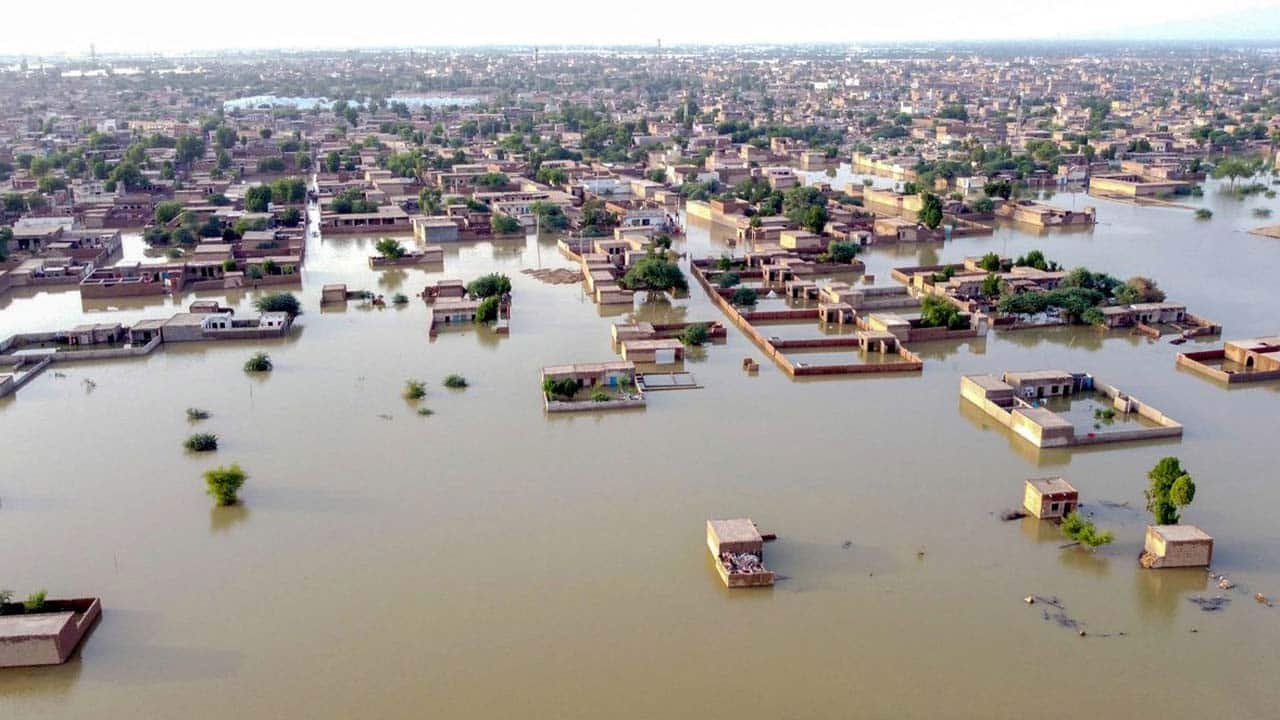
    Sindh sustained about 83% of the total housing damage from the floods, with roughly 2.1 million homes either destroyed or severely damaged. Two years later, many survivors are still living in inadequate temporary shelters lacking basic services like water, sanitation, and electricity.

    The ADB’s project will support the reconstruction of 250,000 homes with designs that are resilient to multiple hazards and environmentally friendly. Additionally, it will fund the construction of community infrastructure such as drinking water and sanitation facilities, covered drainage, and renewable energy solutions for 100,000 households in approximately 1,000 flood-affected villages.

    The project also includes conditional cash grants for livestock, agriculture, small businesses, and e-commerce. A $500,000 technical assistance grant will be provided to support the government’s capabilities in procurement, compliance, and management.

    Srinivas Sampath, ADB’s Director for Water and Urban Development, noted that the project not only aims to rebuild Pakistan effectively but also to promote community-driven climate resilience and disaster risk management strategies, better preparing the country for future hazards.

  • ADB approves $250 million loan to upgrade Pakistan’s power transmission system 

    ADB approves $250 million loan to upgrade Pakistan’s power transmission system 

    The Asian Development Bank (ADB) has granted a $250 million loan to Pakistan to enhance the country’s power transmission system, addressing persistent electricity shortages. 

    The approved aid aims to ensure a reliable electricity supply by expanding and enhancing the power transmission network in Punjab and Khyber Pakhtunkhwa provinces, as outlined in an official ADB statement. 

    The initiative, known as the Power Transmission Strengthening Project, focuses on fortifying the national grid’s stability by increasing transmission capacity. 

    The project includes the expansion of high-voltage transmission networks, specifically 500 kilovolt (kV) and 220 kV transmission line loops, with the goal of reducing transmission losses in Lahore, Punjab, through the replacement of outdated transmission lines. 

    ADB Director General for Central and West Asia, Yevgeniy Zhukov, emphasised the significance of a reliable power supply for inclusive and sustainable economic growth. 

    He expressed satisfaction in continuing ADB’s support for Pakistan’s pursuit of energy security and improved energy efficiency. 

    In addition to reinforcing power transmission, the project aims to complement ADB’s existing assistance to the National Transmission & Despatch Company Limited (NTDC). 

    This support targets energy security, climate resilience, and increased transmission capacity for the deployment of sufficient, reliable, clean, and cost-effective energy. 

    The project’s key objectives extend to enhancing the management of the national transmission system. 

    Beyond strengthening power transmission, ADB’s initiative will improve the project and financial management of NTDC, incorporating climate resilience in planning and operations. 

    To promote gender equality and women’s involvement in the energy sector, ADB plans to develop mentorship guidelines, conduct awareness campaigns, establish childcare centres, and provide technical training for female staff within NTDC. 

    The project also includes livelihood skills development for women in the designated areas, aiming to enhance their economic opportunities. 

    Additionally, local communities will receive training to enable them to respond effectively to climate-induced natural hazards. 

  • ADB approves $554 million for Pakistan flood victims

    ADB approves $554 million for Pakistan flood victims

    The Asian Development Bank (ADB) has approved a $554 million financing package for Pakistan flood victims.

    The financing, which includes a $475 million loan and a $3 million technical assistance grant from the Asian Development Bank (ADB), and a $5 million grant from the Government of Japan, will support the restoration of irrigation, drainage, flood risk management, on-farm water management, and transport infrastructure in the flood-affected provinces of Balochistan, Khyber Pakhtunkhwa, and Sindh.

    “ADB’s Emergency Flood Assistance Project will also incorporate climate and disaster resilience measures into the design of the infrastructure. ADB has repurposed an additional $71 million from existing loans to support the government’s flood-response efforts,” the statement issued by the bank has stated.

    “This year’s floods, which affected 33 million people and brought enormous damage to infrastructure and agriculture, are a devastating reminder of Pakistan’s acute vulnerability to climate change,” said ADB Director General for Central and West Asia Yevgeniy Zhukov.
    “This project will help to rebuild critical infrastructure in affected areas and restore rural livelihoods,” he emphasized.
    Torrential monsoon rains triggered the most severe flooding in Pakistan’s recent history. Hundreds of thousands of homes have been damaged or destroyed, while many public health facilities, water systems and schools have been destroyed or damaged. More than 33 million people have been affected by floods and flash floods in 94 districts.

  • ADB set to approve $1.5 billion loan for Pakistan today

    ADB set to approve $1.5 billion loan for Pakistan today

    A $1.5 billion programme loan for Pakistan is slated to be approved by the Asian Development Bank (ADB) on Friday (today) as part of the BRACE (Building Resilience with Active Countercyclical Expenditure) programme.

    According to Geo, the Board of the ADB will meet in Manila to discuss whether to approve a $1.5 billion programme loan for Pakistan. It is anticipated that this loan will be disbursed after receiving permission next week, assisting Islamabad in replenishing its depleting foreign exchange reserves.

    Additionally, it is anticipated that the Asian Infrastructure Investment Bank (AIIB) will approve $500 million in co-financing, bringing the total distribution to $2 billion for the current month.

    With a projected current account deficit of $10 to $12 billion and an external debt servicing obligation of $22.9 billion, Pakistan needs $34 billion for the current fiscal year. On the flip side, the terrible floods made the already bad situation with the economy even worse.

    Pakistan suffered losses of $32.4 billion, according to the group of international donors, which also included the World Bank, ADB, UNDP, and EU. Pakistan also needed $16.2 billion for building expenditures.

    An official document states that the $1.5 billion BRACE programme loan will assist Pakistan in responding to the deepening macroeconomic crisis exacerbated by the Russian invasion of Ukraine and the catastrophic floods that have affected close to 33 million people. Prior to the latest floods, Pakistani officials had already begun work on this programme loan.

    The amount of countercyclical actions taken by the government to lessen the negative effects of cumulative external shocks, particularly on the poor and vulnerable, comes to around $2.4 billion.

  • ADB to provide up to $2.5 billion under flood relief support to Pakistan

    ADB to provide up to $2.5 billion under flood relief support to Pakistan

    The Asian Development Bank (ADB) announced on Wednesday that it would provide support of $2.3–2.5 billion for relief efforts in the wake of disastrous floods that have left Pakistan severely damaged.

    The declaration was made during a meeting between Pakistan’s ADB Country Director Yong Ye and Finance Minister Ishaq Dar, as per a press release from the Finance Division.

    Ye offered his condolences for the loss of life and property as a result of the floods during the meeting and congratulated Dar on taking office.

    According to Dawn, the Balochistan Rural Development and Community Empowerment Programme would receive $1.5 billion of the promised aid, according to the ADB country director, and the request will be presented to the bank’s board this month.

    According to a press release, it was discussed that the Country Partnership Strategy for Pakistan 2021–25 is in accordance with the government of Pakistan’s vision.

    The finance minister was quoted as saying that he welcomed the delegation and valued ADB’s assistance in advancing sustainable development in the nation. Dar also informed the delegation of the flood’s damages and financial consequences.

    The administration had stopped the economy’s slide and put it on the correct course with its “pragmatic policy initiatives,” he continued while acknowledging that the economy still faced enormous obstacles.

    The finance minister also gave the ADB team an overview of the government’s priorities.

    Dar hailed the ADB delegation for their steadfast support and assured them of full government cooperation for the expeditious implementation of the current and new programmes.

  • Pakistan’s GDP likely to decrease to 2% in FY23 as flood damage may cost $30 billion

    Pakistan’s GDP likely to decrease to 2% in FY23 as flood damage may cost $30 billion

    Syed Zafar Ali Shah, Secretary of the Ministry of Planning, Development, and Special Initiatives, stated on Thursday that a preliminary estimate indicated that the GDP growth rate may remain at two percent in the current fiscal year and that the estimated cost of damage repair, including reconstruction, may be $30 billion as a result of the nation’s floods.

    He stated that we are gathering damage assessment data for a preliminary report and that the preliminary report and verification procedure would both be finished by October 15.

    According to The Nation, teams from the government and ten international development organisations, such as the World Bank (WB), the Asian Development Bank (ADB), the United Nations (UN), and others, are working together to prepare the preliminary report for the damage assessment of the country’s floods.

    In order to prepare early estimates on damage and reconstruction, he claimed that 100 specialists from development partners, such as the World Bank, the ADB, the UN, the EU, Turkey, etc., are currently working in 12 to 17 sectors.

    According to him, the Pakistani government would take the initiative in relief operations, and technical skills will be provided by professionals to evaluate the field damage and the cost of rehabilitation. The administration will solicit donations for reconstruction after making the final determination.

    In relation to the evaluation of the damage to the railways, Zafar Ali stated that it has been initially predicted that $2.3 billion will be needed for the reconstruction of the railroad tracks, bridges, and other associated facilities that have been harmed by floods. In total, 113 districts in Pakistan have been damaged by flooding, but 83 of those areas are catastrophe hit and require complete repair and rehabilitation work, according to him.

    He claimed that the cost to rebuild homes is projected to be $3 billion. However, he said that the provinces are consistently reassessing damage. When the water recedes, he said, the Sindh government will begin work on reassessing those places. He claimed that water covers the majority of Sindh’s railroad rails.

    He claimed that the Sindh flood had a significant negative impact on cotton, rice, and other crops. According to him, three million cotton bales are thought to have been lost. However, it appears that things are improving and the loss may only total 2.7 million bales, the secretary said, adding that it is still too early to provide a precise estimate of the cotton crop’s losses. He predicted that future wheat crop farming in Sindh and Khyber-Pakhtunkhwa would also be impacted.

    He claimed that the nation’s severe flooding has had an impact on 4.3 million families. He stated that more than 0.3 million people in Balochistan had been impacted by the floods. According to him, the ADB has authorised a $3 million grant to boost the Pakistani government’s emergency relief efforts in the wake of massive flooding around the nation.

    The planning secretary also mentioned that a Dutch expert would be working with NESPAK to update the flood prevention strategy for 2017. He said that the administration has so far used $303 million in donor funding that was intended for disaster relief. According to him, this sum consists of $3 million from the ADB and $300 million from the World Bank.

    Despite the $160 million in pledges made so far by the world community, he claimed that much more money will be needed to complete the reconstruction and rehabilitation.

    The planning secretary responded to a question concerning diverting PSDP-2022–23 monies for flood victims by saying that work is still being done on this issue, but no decisions have been made as of yet. He stated that the Benazir Income Support Program is now supporting the flood-affected population with Rs70 billion from the government.