Tag: affordability

  • Hajjis to get mobile sims and free internet

    Hajjis to get mobile sims and free internet

    Caretaker Minister for Religious Affairs and Inter-faith Harmony Aneeq Ahmed has said that the government will provide free-of-cost mobile SIMs with roaming internet packages for pilgrims, on Tuesday.

    He further stated that female abayas having a Pakistani flag on the backside and 13 Kg suitcases will also be provided to pilgrims performing hajj this year.

    The minister said that it was a historic step that the caretaker government has declared a significant reduction of one lac in government Hajj expenses, adding that a further Rs50,000 will also be reduced in the coming few days after which Hajjaj will get back their money in their accounts.

    He further revealed that a new mobile application has been designed to assist pilgrims, which will provide navigation support and enable constant communication between pilgrims and relevant officials.

    Initially available in English and Urdu, the application will later incorporate various regional languages, he said, adding that, the app will also provide digital training programs to every pilgrim.

    The minister also disclosed a project that the Ministry of Hajj in collaboration with the Ministry of Education has planned to convert city mosques into schools to enroll out-of-school children where the Imam of mosques will play a leading role.

    Minister said that mosques will play their role as community centers in every city area, adding that imams will resolve community issues as well after offering prayers.

    He said that the Ministry of Hajj is taking all four provinces on board and enhancing the connectivity of mosques.

    While describing another project, minister for religious affairs said that his ministry with the collaboration of health ministry has another project in which medical clinics will also be part of mosques.

    Lady health workers and other essential staff of doctors will also be provided in all masajid where they will facilitate to citizens visiting inside the masque of areas, he added.

  • Govt implements major gas price hike to tackle circular debt crisis 

    Govt implements major gas price hike to tackle circular debt crisis 

    On Monday night, the interim government made a significant announcement that will have a profound impact on the nation’s economy.  

    The decision involved a substantial increase in gas prices, set to take effect on November 1st, 2023. 

    Under this new pricing structure, non-protected domestic consumers will experience a substantial surge in their gas tariffs.  

    Specifically, rates will surge by a staggering 173 per cent for this category of consumers. Commercial users will see their gas prices climb by 136.4 per cent, while those in the export and non-export industries will face increases of 91 per cent and 83 per cent, respectively. 

    Further elaborating on the specifics of these changes, the revised monthly charges for protected consumers have been elevated from a mere Rs10 to a more substantial Rs400. For non-protected consumers, the monthly charges have surged from Rs460 to Rs1000, and for higher consumption slabs, the charges have escalated to a maximum of Rs2000. 

    In terms of actual consumption, the price per mmbtu will vary depending on usage. Users consuming up to 0.25 cubic metres will be charged Rs121 per mmbtu.  

    Those using up to 0.5 cubic metres will pay Rs150 per mmbtu; users with a monthly consumption of 0.60 cubic metres will incur charges of Rs200 per mmbtu; and those utilising 0.9 cubic metres will see rates set at Rs250 per mmbtu.  

    The steepest increase is witnessed by individuals using 1 cubic metre of gas per month, as their charges have surged from Rs400 per mmbtu to Rs1,000 per mmbtu. Users with gas consumption up to 1.5 cubic metres, previously paying Rs600 per mmbtu, will now be required to pay Rs1,200 per mmbtu starting from November 1st. 

    The changes in gas pricing also extend to small commercial users, such as local tandoors, who will be paying Rs697 per mmbtu from the aforementioned date.  

    The power sector will experience a range of charges, with rates fluctuating between Rs1,050 and Rs3,890 per mmbtu, while the cement industry will be subject to a consistent rate of Rs4,400 per mmbtu. 

    As for the export industry, gas pricing has been set at Rs2,100 to Rs2,400 per mmbtu, while non-export industries will be required to pay between Rs2,200 and Rs2,500 per mmbtu. These significant adjustments have been made to alleviate the burden on the nation’s economy. 

    The Power Division, in an official statement, justified the increase in gas prices by referencing the recommendations of the Oil and Gas Regulatory Authority, which sought to prevent an additional burden of Rs400 billion on the already burgeoning circular debt.  

  • PM Kakar aims to make Hajj more affordable and comfortable for pilgrims

    PM Kakar aims to make Hajj more affordable and comfortable for pilgrims

    On Monday, Caretaker Prime Minister (PM) Anwaar-ul-Haq Kakar issued a directive emphasising the provision of high-quality and affordable facilities for pilgrims during the Hajj without compromising the overall arrangements.

    During a meeting focused on the Ministry of Religious Affairs, he stressed the importance of ensuring that all necessary measures are taken to facilitate pilgrims in performing this significant religious ritual, as reported by the state news agency.

    The Prime Minister was briefed on the ministry’s performance, the actions taken for Hajj, and the preparations for the Hajj policy in 2024, according to a press release from the PM Office Media Wing.

    According to ARY News, the meeting was attended by Caretaker Minister for Religious Affairs Aneeq Ahmed and other ministry officials.

    In his address to the participants, the Prime Minister emphasised the need for rigorous oversight of private Hajj companies to ensure that pilgrims using private schemes do not encounter any difficulties. 

    He also requested the submission of the Hajj policy for approval by the federal cabinet.

  • Rawalpindi man lists nearly 30-year-old Honda Civic for sale at Rs1.5 million, says ‘it’s worth it’

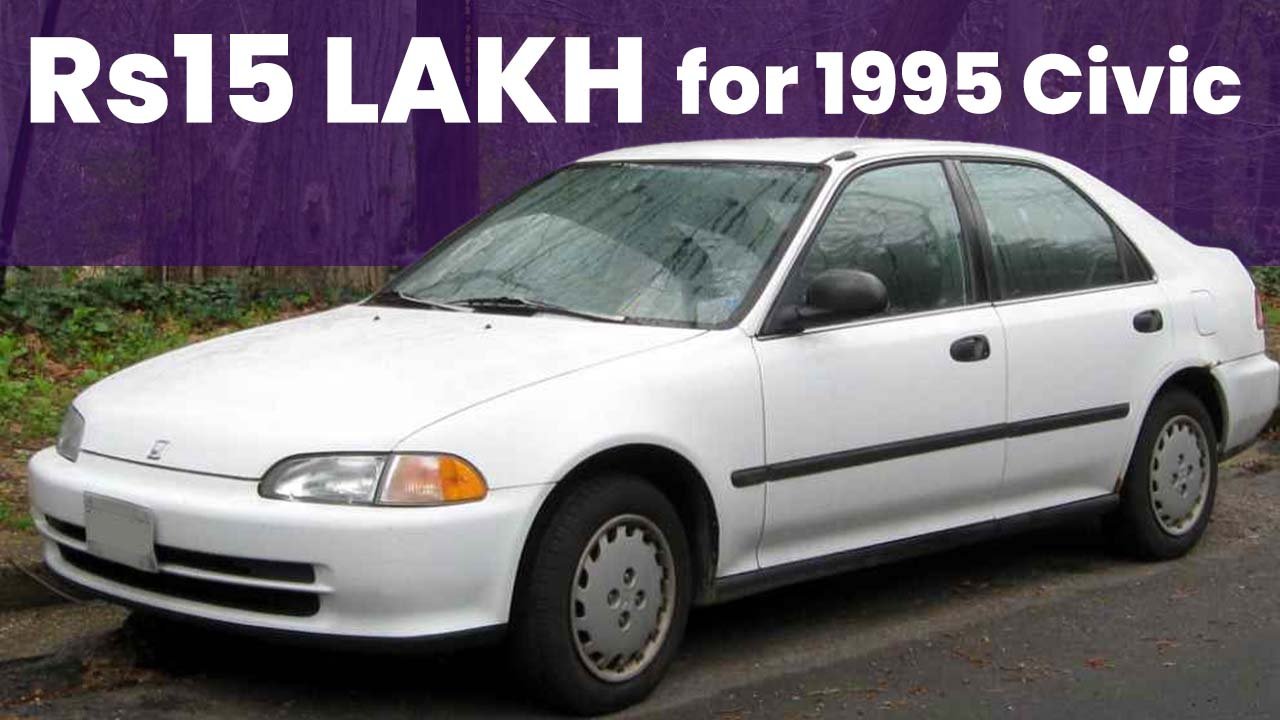
    Rawalpindi man lists nearly 30-year-old Honda Civic for sale at Rs1.5 million, says ‘it’s worth it’

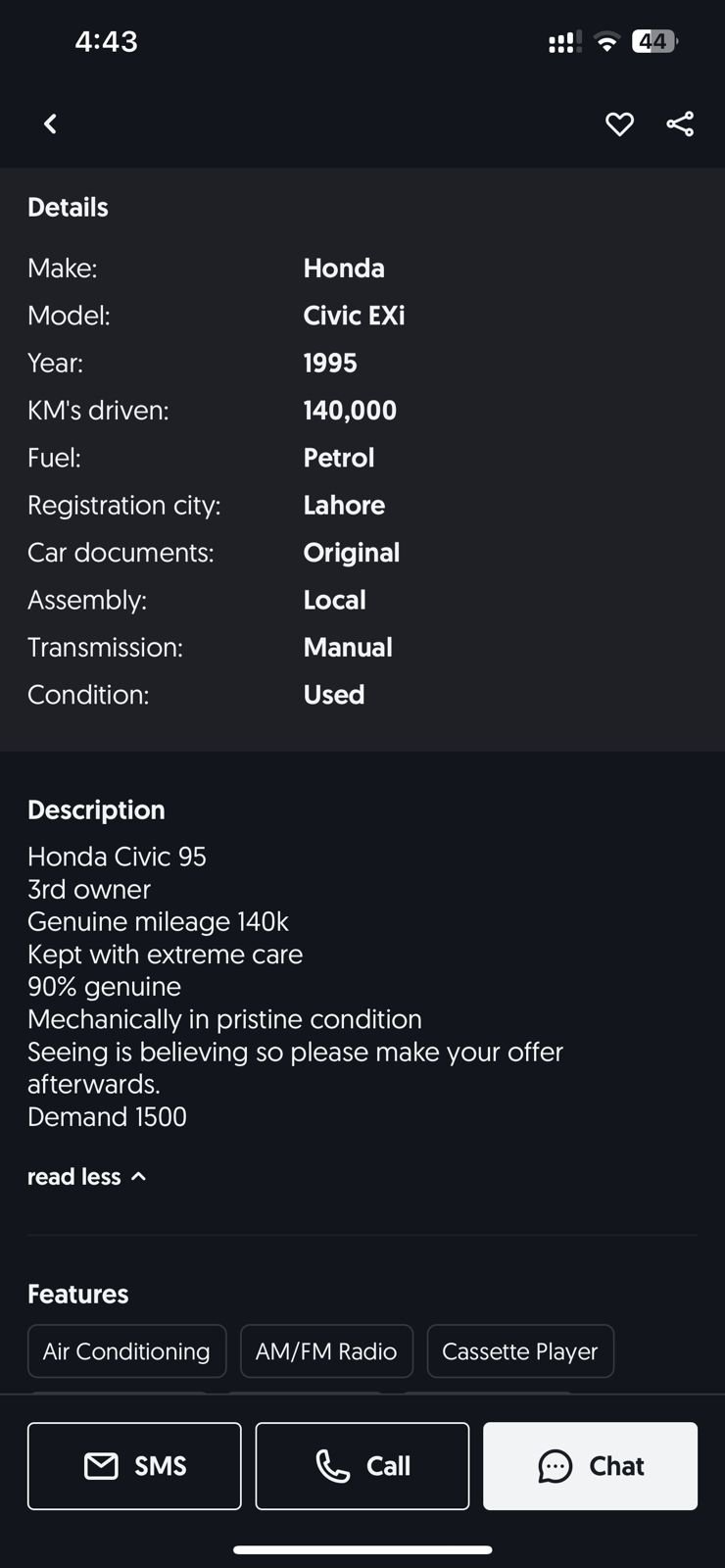
    With the rising prices of new cars rendering them unaffordable for many, even owners of older vehicles have begun to demand surprisingly high prices for their decades-old vehicles. In Rawalpindi, a seller recently posted an advertisement on the online buying and selling platform OLX Pakistan, listing a basic 1995 manual Honda Civic EXI at a staggering price of Rs1.5 million.

    The Current contacted him to ask if the price was a mistake. He confidently said it wasn’t and truly thinks his well-kept car is worth the Rs1.5 million price. He’s received many offers and a lot of interest in his nearly 30-year-old car. He also mentioned that he’s the third owner of this 1995 Honda Civic.

    It is noteworthy that a mere two years ago, cars of the same model year were being listed on online marketplaces for a significantly lower price, less than Rs600,000. However, the present scenario witnesses a surge in the asking price for these vehicles.

    This trend is not exclusive to a particular model but rather extends to nearly all used cars, given that even the cheapest car from Pak Suzuki Motors, the Suzuki Alto, now commands a price of nearly Rs3 million. Consequently, a considerable number of individuals, constrained by budgetary limitations, opt for pre-owned cars.

    While the price might raise eyebrows for a car of this kind, die-hard Honda Civic enthusiasts might willingly pay this hefty amount. That’s especially true if the car’s condition lives up to the seller’s claims.

    Given its popularity among Pakistan’s racing community and its appeal to those wanting to build a car from scratch, the price could find its justified niche.

  • First-ever discounted Russian crude oil cargo arrives in Karachi

    First-ever discounted Russian crude oil cargo arrives in Karachi

    Under a newly established agreement between Islamabad and Moscow, the inaugural shipment of discounted Russian crude oil arrived in Karachi on Sunday, marking the beginning of enhanced trade relations between the two nations.

    Departing from Russia over a month ago, the oil cargo reached Pakistan via Oman. Officials announced that the unloading process would commence on Monday, with the oil undergoing processing at the Pakistan Refinery Limited (PRL).

    During its lengthy voyage, the 100,000 metric ton oil shipment was divided into two parts in Oman due to the Karachi port’s limited capacity to accommodate larger vessels. Subsequently, two smaller ships, each carrying 50,000 metric tons of oil, embarked on their journey to Karachi.

    Upon the cargo’s arrival, Prime Minister Shehbaz Sharif expressed his enthusiasm on Twitter, describing Sunday as a “transformative day” and affirming the fulfillment of his commitment to the nation.

    He expressed the belief that these developments would contribute incrementally to prosperity, economic growth, energy security, and affordability. The Prime Minister further recognised and commended all those involved in this national endeavor who helped turn the promise of Russian oil imports into reality.

    Sources indicate that this Russian oil shipment will not be subject to the existing domestic oil pricing mechanism in the country. Consequently, the PRL will assume the benefits or losses associated with the Russian oil. Additionally, the sources stated that this shipment serves as a test case to evaluate the quality of the crude oil and the ratio of refined products. A report will be submitted to the federal government to inform future decisions regarding long-term commercial oil agreements.

    Pakistan had secured its order for the initial cargo of Russian crude oil at a discounted rate of up to $18 per barrel. Following the Platts crude oil prices, Islamabad applied a discount ranging from $16 to $18 per barrel, according to insider information.

  • Unchecked overcharging: Shopkeepers set their own rates for essential items during Ramzan

    At the start of Ramzan, prices of essential food items have witnessed an uncontrolled surge, with little intervention from the authorities concerned. Shopkeepers are selling essential food items at their desired rates instead of selling at government-announced rates.

    A recent survey of markets in Peshawar reveals an alarming increase in prices of food items, which have continued to soar with each passing day in this holy month.

    A vendor reported that the price of live chicken has surged to Rs350 per kg, while rice prices have increased by Rs70 per kg, reaching Rs335 per kg. Split chickpeas (chana dal) are now selling at Rs220 to Rs260 per kg, and the cost of beans has gone up by Rs60 per kg, with rates jumping from Rs281 to Rs339 per kg. According to a shopkeeper, the cost of spices has surged from Rs150 to Rs200 per kg and now stands at Rs600 per kg in the city.

    Oil and ghee prices have also skyrocketed by Rs62 per kg. Vegetables and fruits have become unaffordable for many, with garlic being sold at Rs360 and ginseng at Rs620 per kg. Peas cost Rs200, Arvi Rs180, Zucchini Rs170, green capsicum Rs150, and tomato Rs120 per kg.

    Fruits have also witnessed an upward trend in prices, with sweet oranges priced at Rs440 per dozen, oranges at Rs400 per dozen, banana at Rs300 per dozen, pomegranate Rs400, Iranian apple at Rs340 per kg, Kohati guava at Rs350, and strawberry costing Rs280 per kg.

    The meat market has also been hit hard by price hikes, with beef now selling at Rs800 to Rs1,000 per kg from its previous price of Rs700 per kg before Ramzan, while mutton prices have increased from Rs1,400 to Rs1,600 per kg and now stand at Rs1,800 per kg.

    Many shopkeepers have been charging prices of their own choosing, as district administration officials have not been able to check rates due to heavy rain and mud-stranded water. Butchers in the local market have expressed their dissatisfaction with the rates issued by the district administration, and have not faced any fines or raids from officials.