Tag: Afghan war

  • Deadly US drone strike in Kabul did not break law, says Pentagon

    Deadly US drone strike in Kabul did not break law, says Pentagon

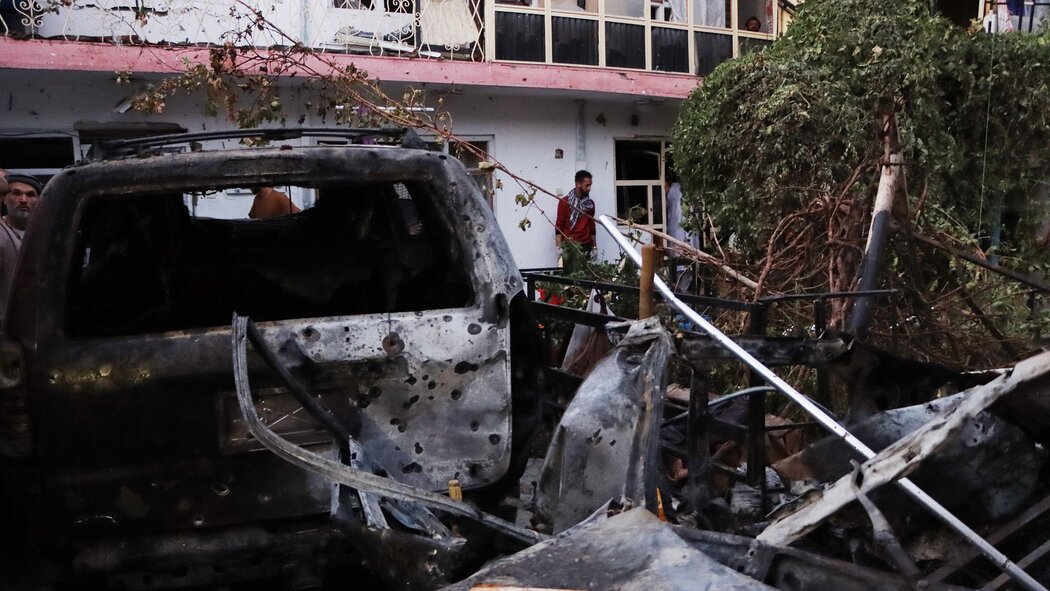
    Following an investigation, a Pentagon inspector general said that a United States (US) airstrike that killed 10 civilians in Afghanistan was a mistake but did not violate any laws and doesn’t recommend any disciplinary action, reported Al Jazeera.

    US Air Force Lieutenant General (Lt Gen) Sami Said stated: “They all have a genuine belief based on the information they had and the interpretation, that was a threat to US forces, an imminent threat to US forces. That’s a mistake. It’s a regrettable mistake. It’s an honest mistake. I understand the consequences, but it’s not criminal conduct, random conduct, negligence.”

    Lt Gen Said admitted that there had been execution errors and communication breakdowns among the US forces at the time that led to civilian casualties.

    Said was asked to investigate the August 29 drone strike on a white Toyota Corolla Sedan, which killed nine family members, including seven children and a man who worked for a US aid group.

    According to the US air force general, the forces believed that the car they were following was an imminent threat as the US military had intelligence that Daesh militants were planning a fresh attack on the evacuation operations but they followed the wrong car.

    He revealed, “We actually never ended up tracking the actual Toyota Corolla.”

    He also admitted that the people involved in conducting the operation thought the house at the site of the target was empty.

    “They were convinced that the compound didn’t have children in it. It turns out to be wrong,” he said. None of the individuals conducting the operation noticed a child entering the target area just two minutes before the attack was launched.

    According to Dawn, Washington is working to pay financial reparations to the victims’ families but nothing has been finalised.

  • ‘Ghani promised to fight till death but fled’: Antony Blinken

    United States (US) Secretary of State Antony Blinken has said that the former Afghan President Ashraf Ghani promised to fight till death but when the Taliban came, he fled, reports Dawn.

    In a show, Blinken was asked if he had personally tried to persuade Ghani to stay in Kabul. To which he replied that he was on the phone with the former President on the night of August 14 (a day before the Taliban’s takeover of Kabul). Blinken said that he was pressing him to accept a plan for transferring power to a new government.

    Secretary Blinken said that Ghani told him that, “he was prepared to do that, but if the Taliban wouldn’t go along, he was ready to fight till death. And the very next day, he fled Afghanistan.”

    This government would have been “led by the Taliban but would have included all aspects of the Afghan society,” he added while answering the question.

    Blinken claimed that he had engaged with the former President Ghani over many weeks and months.

  • ‘Since 2001, I have repeatedly warned that the Afghan war was unwinnable’: Imran Khan

    ‘Since 2001, I have repeatedly warned that the Afghan war was unwinnable’: Imran Khan

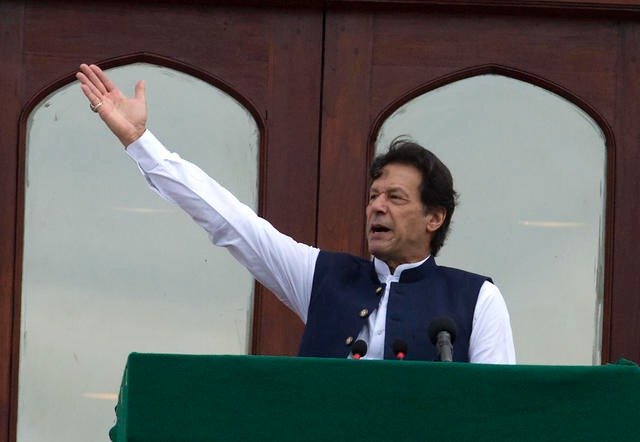
    Prime Minister Imran Khan says he was surprised to see that no mention was made of Pakistan’s sacrifices as a US ally in the war on terror for more than two decades. “Instead, we were blamed for America’s loss,” he wrote in an op-ed for The Washington Post.

    “Since 2001, I have repeatedly warned that the Afghan war was unwinnable. Given their history, Afghans would never accept a protracted foreign military presence, and no outsider, including Pakistan, could change this reality,” wrote PM Khan.

    PM Imran Khan lashed out at successive Pakistani governments, saying that they had sought to please the US instead of pointing out the flaws of a military-driven approach in Afghanistan.

    “Pakistan’s military dictator Pervez Musharraf agreed to every American demand for military support after 9/11. This cost Pakistan, and the United States, dearly,” he stressed.

    “Those the United States asked Pakistan to target included groups trained jointly by the CIA and our intelligence agency, the ISI, to defeat the Soviets in Afghanistan in the 1980s. Back then, these Afghans were hailed as freedom fighters performing a sacred duty. President Ronald Reagan even entertained the mujahideen at the White House.”

    “Once the Soviets were defeated, the United States abandoned Afghanistan and sanctioned my country, leaving behind over 4 million Afghan refugees in Pakistan and bloody civil war in Afghanistan. From this security, vacuum emerged the Taliban, many born and educated in Afghan refugee camps in Pakistan,” read the opinion piece.

    “Fast forward to 9/11, when the United States needed us again — but this time against the very actors we had jointly supported to fight the foreign occupation. Musharraf offered Washington logistics and air bases, allowed a CIA footprint in Pakistan, and even turned a blind eye to American drones bombing Pakistanis on our soil. For the first time ever, our army swept into the semiautonomous tribal areas on the Pakistan-Afghanistan border, which had earlier been used as the staging ground for the anti-Soviet jihad. The fiercely independent Pashtun tribes in these areas had deep ethnic ties with the Taliban and other Islamist militants,” wrote Khan.

    The prime minister pointed out how, between 2005 and 2016, 16,000 terrorist attacks were conducted against Pakistan by over 50 militant groups, who saw the US and Pakistan as collaborators.

    “We suffered more than 80,000 casualties and lost over $150 billion in the economy. The conflict drove 3.5 million of our citizens from their homes. The militants escaping from Pakistani counterterrorism efforts entered Afghanistan and were then supported and financed by Indian and Afghan intelligence agencies, launching even more attacks against us,” he wrote.

    The premier lashed out at former president Asif Ali Zardari, referring to him as “undoubtedly the most corrupt man to have led my country”, accusing him of not worrying about the collateral damage caused by US drone strikes. He said former prime minister Nawaz Sharif was no different.

    “Tragically, instead of facing this reality, the Afghan and Western governments created a convenient scapegoat by blaming Pakistan, wrongly accusing us of providing safe havens to the Taliban and allowing its free movement across our border. If it had been so, would the United States not have used some of the 450-plus drone strikes to target these supposed sanctuaries?”

    “Surely Pakistan is not to blame for the fact that 300,000-plus well-trained and well-equipped Afghan security forces saw no reason to fight the lightly armed Taliban. The underlying problem was an Afghan government structure lacking legitimacy in the eyes of the average Afghan,” he wrote.

    The prime minister said the “right thing” right now for the world to do would be to engage with the new Afghanistan government, adding that if assured of constant humanitarian aid, the Taliban will have a greater incentive to honour the global community’s demands.

    “Providing such incentives will also give the outside world additional leverage to continue persuading the Taliban to honor its commitments,” he wrote.

    “If we do this right, we could achieve what the Doha peace process aimed at all along: an Afghanistan that is no longer a threat to the world, where Afghans can finally dream of peace after four decades of conflict. The alternative — abandoning Afghanistan — has been tried before,” warned the prime minister.
  • ‘Not necessary,’ Afghan women to be banned from playing sports by Taliban

    The Taliban spokesperson has said that the Afghan women, including the country’s women’s cricket team, will be prohibited from participating in sports under the new Taliban regime, The Gurdian has reported.

    Ahmadullah Wasiq, the deputy chairman of the Taliban’s culture commission, claimed in an interview with Australian network SBS that women’s sport was neither appropriate nor required.

    “I don’t think women will be allowed to play cricket because it is not necessary that women should play cricket,” Wasiq said. “In cricket, they might face a situation where their face and body will not be covered. Islam does not allow women to be seen like this”.

    “It is the media era, and there will be photos and videos, and then people watch it. Islam and the Islamic Emirate [Afghanistan] do not allow women to play cricket or play the kind of sports where they get exposed.”

    On September 7, Taliban spokesperson Zabihullah Mujahid announced members of the new interim government in Afghanistan. Afghanistan will be led by Mohammad Hasan Akhund while the group’s co-founder Abdul Ghani Baradar will be the deputy Afghan leader.

  • Reema Khan reunites with husband Tariq, reveals ‘horrifying’ plight of Afghan refugees

    Actor Reema Khan has joyfully reunited with her husband Dr Syed Tariq Sahab as he came back from Doha and shed light on the ‘disturbing’ situation of Afghan refugees.

    “Thank God my husband is back from Doha safe and sound. However what he told me about the refugees is very disturbing,” wrote the Nikkah star adding, “Infants, toddlers, pregnant women and elderly had to stand in 105 degree for hours to get on the plane.”

    Reema continued, “Although I am relieved that he is back home, but it perturbs me to know that the Afghan refugees were worried and distressed, not to know where they were headed and what their future holds.”

    View this post on Instagram

    A post shared by Reema Khan (@iamreemakhan)

    Reema’s husband was in Doha, to help and take care of Afghan refugees who left the country after the Taliban took over.

    View this post on Instagram

    A post shared by Reema Khan (@iamreemakhan)

  • Female Afghan presenter who interviewed Taliban leader flees the country

    Beheshta Arghand, a female news presenter at TOLO News, has left Afghanistan according to CNN.

    “If the Taliban do what they said – what they promise – and the situation becomes better, and I know I am safe and there is no threat for me, I will go back to my country and I will work for my country. For my people,” she said while speaking to CNN.

    Talking about her experience of interviewing Taliban spokesperson, Arghand added that the interview was difficult, “but I did it for Afghan women.”

    “I told myself, ‘One of us must start…If we stay in our houses or don’t go to our offices, they will say the ladies don’t want to work,’ but I said to myself, ‘Start working,’” Arghand said.

    “And I said to the Taliban member, ‘We want our rights. We want to work. We want — we must —be in society. This is our right.’”

    On August 17, Arghand sat down with senior Taliban representative Mawlawi Abdulhaq Hemad. During the interview she talked about the Taliban’s home searches in Kabul and the general situation on the ground.

  • Posters of women vandalised in Kabul

    Posters of women vandalised in Kabul

    Images of women have been covered up or vandalised on storefronts around Kabul, AFP has reported.

    One of the salons in Kabul has been whitewashed to cover up advertisements pasted on its outdoor walls, showing the faces of smiling women in bridal regalia.

    Another shuttered salon, spotted on Tuesday as a Taliban fighter patrolled the street outside with an assault rifle slung over his shoulder, had its walls defaced with black spray paint to conceal the visages of its models.

    Read more- Afghan women fear for their lives as Taliban take charge

    “The Islamic Emirate is committed to the rights of women within the framework of the Sharia. Our sisters, our women will have the same rights and will be able to benefit from them,” Taliban spokesman Zabihullah Mujahid said on Tuesday.

    “They can have activities in different sectors and areas on the basis of our rules and regulations — in education, health, and other areas,” he said, adding that they will “work with us shoulder-to-shoulder”.

    Terrifying stories of mistreatment of women in Afghanistan are being discussed on social media and are also being reported by news outlets ever since the Taliban started gaining control of Afghanistan two months ago.

  • Kabul could be isolated by Taliban within the next 72 hours

    The capital of Afghanistan, Kabul, can be isolated by the Taliban within the next 72 hours, CNN has reported. A diplomatic source told CNN that one intelligence assessment indicated that Kabul could be isolated by the Taliban within the week, possibly within the next 72 hours, but stressed that does not mean the militant group would enter the capital.

    CNN also reports that personnel at the US Embassy in Kabul have been instructed to delete sensitive and materials “which could be misused in propaganda efforts”, as soon as possible. As per details, a notice was sent to the embassy staff with the instructions.

    The act of destroying sensitive material is a standard procedure applied to minimise the US footprint.

    “Drawdowns at our diplomatic posts around the world follow a standard operating procedure designed to minimise our footprint across various categories, including staffing, equipment, and supplies. Kabul Embassy is conducting their drawdown in accordance with this standard operating procedure,” a US State Department spokesperson said.

    United Nations Secretary-General Antonio Guterres has said that Afghanistan is spinning out of control. Every day, the conflict is taking a bigger toll on civilians, especially women and children. He also reminded all the parties of their obligation to protect civilians.

    The Taliban have taken control of 14 of Afghanistan’s 34 provincial capitals since Aug 6, Reuters has reported.

  • Top U.S. commander in Afghanistan says steps to end military mission launched

    Top U.S. commander in Afghanistan says steps to end military mission launched

    The commander of foreign forces in Afghanistan, U.S. Army General Scott Miller, on Sunday said an orderly withdrawal of foreign forces and the handing over of military bases and equipment to the Afghan forces had begun.

    Miller said he was acting on orders based on U.S. President Joe Biden’s decision to end America’s longest war, deeming the prolonged and intractable battle in Afghanistan no longer aligned with American priorities.

    Earlier this month Biden said he would withdraw troops from Afghanistan before Sept. 11, the 20th anniversary of the militant attacks on the World Trade Centre and the Pentagon that launched the Afghan war.

    Miller, who has been commanding the U.S. forces and the NATO Resolute Support Mission in Afghanistan in their fight against the Taliban and other Islamist militant groups since 2018, said foreign forces will continue to have “the military means and capability to fully protect themselves during the ongoing retrograde and will support the Afghan security forces.”

    “I’ve had the opportunity to talk to Taliban members with the Taliban Political Commission, and I’ve told them a return to violence, an effort to force a military decision, would be a tragedy for Afghanistan and the Afghan people,” Miller told reporters in the capital Kabul.

    The Taliban ruled Afghanistan from 1996 to 2001, when they were ousted by U.S.-led forces. Since then they have waged a long-running insurgency and now control wide swathes of territory.

    Security experts in recent weeks said they doubt if the Taliban will allow U.S. forces, whom they call invaders, to peacefully exit the country at a time when clashes between the Afghan forces and the Taliban have not ebbed.

    Foreign force withdrawal is slated to begin on May 1, in line with an agreement with the Taliban in 2020.

    “As we retrograde to zero U.S. forces, we will turn over the (military) bases primarily to the (Afghan) Ministry of Defense and other Afghan forces,” Miller said adding that the Taliban have committed to break their relationship with al Qaeda, the Islamist extremist group.

    The Taliban government’s sheltering of Al-Qaeda was the key reason for the U.S. invasion of Afghanistan after the September 2001 attacks.

    A United Nations report in January said there were as many as 500 al Qaeda fighters in Afghanistan and that the Taliban maintained a close relationship with them. The Taliban denies al Qaeda presence in Afghanistan.

  • Australian special forces killed Afghan prisoner to make room on plane: US marine

    Australian special forces killed Afghan prisoner to make room on plane: US marine

    A United States Marine Corps (USMC) helicopter crew chief accused Australian special forces of killing a hog-tied Afghan prisoner after being told he would not fit on the US aircraft coming to pick them up.

    The marine told ABC Investigations he was a door gunner providing aerial covering fire for the Australian soldiers of the 2nd Commando Regiment during a night raid in mid-2012. The operation took place north of the HMLA-469 base at Camp Bastion in Afghanistan’s Helmand Province.

    It was part of a wider joint Australian special forces-US Drug Enforcement Administration (DEA) campaign targeting illicit drug operations that were financing the Taliban insurgency. “We had done the drug raid, the Aussies actually did a pretty impressive job, wrangling all the prisoners up,” Josh said.

    “We just watched them tackle and hogtie these guys and we knew their hands were tied behind their backs.”

    He says the commandos then called up the US aircraft to pick them and about seven prisoners up. He says the Americans only had room on the aircraft for six. “And the pilot said, ‘That’s too many people, we can’t carry that many passengers.’ And you just heard this silence and then we heard a pop. And then they said, ‘OK, we have six prisoners’.

    “So it was pretty apparent to everybody involved in that mission that they had just killed a prisoner that we had just watched them catch and hogtie,” he said.

    Josh says neither he nor any of his crew spoke about what had just happened.

    “We were all being recorded on our comms,” he said.

    “All of us were pretty aware of what we just witnessed, and kind of didn’t want to be involved in whatever came next.”

    Josh says he later discussed the incident with his crewmates after returning to Camp Bastion.

    “This was the first time we saw something we couldn’t morally justify, because we knew somebody was already cuffed up, ready to go, taken prisoner and we just witnessed them kill a prisoner,” he said.

    “This isn’t like a heat of the moment call where you’re trying to make a decision. It was a very deliberate decision to break the rules of war.

    “I think that was the first thing that happened that didn’t quite sit right with us, where we were like, ‘OK, there’s no excuse, there’s no ambiguity, there’s no going around this one’.”