Tag: Afghanistan

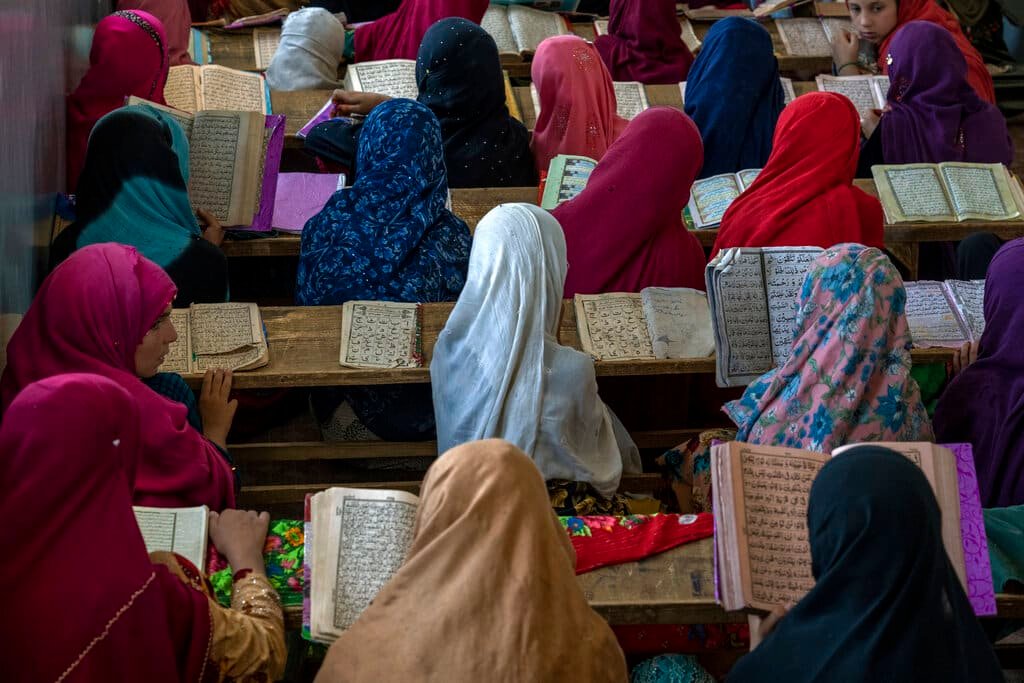
  • Today marks one year since Afghan girls were banned from attending school

    Today marks one year since Afghan girls were banned from attending school

    United Nations (UN) Secretary-General Antonio Guterres took to Twitter to urge Taliban authorities in Afghanistan to revoke the ban on girls’ education that was implemented a year ago.

    He said, “Sunday marks one year since girls were banned from attending high school in Afghanistan. A year of lost knowledge and opportunity that they will never get back. Girls belong in school. The Taliban must let them back in.”

    “It is profoundly damaging to a generation of girls and to the future of Afghanistan itself”, said Markus Potzel, the acting head of the United Nations Assistance Mission in Afghanistan (UNAMA). The UN has called the ban ‘tragic and shameful.

    According to UNAMA, more than a million teenage girls have been deprived of education across the county.

    Earlier this month, dozens of girls protested in an eastern Afghan city due to the closure of schools for girls.

    When the Taliban seized power in August last year, they did reopen high schools for boys on September 18 but banned secondary school girls from attending classes.

    Education Minister Noorullah Munir termed this act a “cultural issue”. He said that many rural people do not want their teenage daughters to attend school.

    Earlier this year, the Taliban said that schools for girls would be opened after March 21 with the caveat that girls and boys must be completely segregated in schools

    However, schools were opened for a small period of time and again were shut down

    At the time, the Ministry of Education said that the schools would be closed until a plan was drawn up in accordance with Islamic law and Afghan culture.

    Despite the fact that the international community has on multiple occasions made the education of girls a key demand for any future recognition of the Taliban administration, the group has barred Afghan girls and women with certain restrictions including covering themselves from head to toe and not to travelling alone.
  • Pakistani qaum, yeh cricket hai bhei, racism check mein rakho

    Pakistani qaum, yeh cricket hai bhei, racism check mein rakho

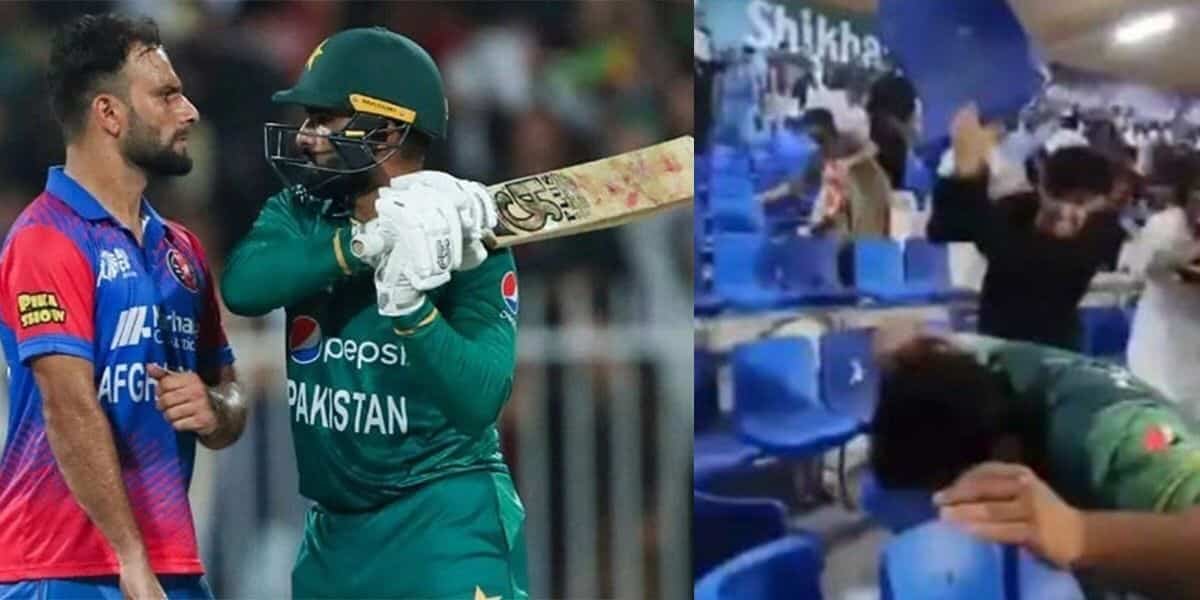
    Sports brings pride and recognition to a country and for Pakistan, cricket is one of the most celebrated games. It brings both joy and heartache to millions of Pakistanis. With Pakistan and Sri Lanka playing the final of Asia Cup 2022, we wish both teams luck but we obviously want Pakistan to win! Pakistanis all around the world will be rooting for our boys in green. Cricket and our men in green are a source of continuous pride for the country but what we witnessed from the audience stands in the match between Pakistan and Afghanistan was nothing but disappointing at so many levels. The Afghanistan-Pakistan cricket rivalry is fast crossing the acceptable margins, even surpassing the age-old rivalry between India and Pakistan.

    Afghanistan and Pakistan faced each other in an important Asia Cup fixture in the Super Four round, where the stakes were too high. Afghanistan needed a win to keep their chances alive, while Pakistan needed to clinch this win to be in the final. Afghanistan was close to victory but the Pakistani team bounced back at the last minute, stealing the game away. The event witnessed some heated moments between Afghan and Pakistani players, charging up the spectators on both sides. Afghan fans purportedly indulged in verbal abuse and later ended up throwing seats at the Pakistani fans, prompting many observers to say the spirit of the game has been ‘tainted’. Sports fabs across the world sometimes show uncouth behaviour, be it cricket or football or any other game. It is always difficult to see one’s own side lose but it does not mean that fans of the winning team should be subjected to violence.

    While the cricketing rivalry between Afghanistan and Pakistan may be in its infancy, it has got all the ingredients for a heated contest courtesy the political history both countries share. After the disappointing scenes between the fans, there was an immense backlash against the Afghans. But the reaction of many Pakistanis was quite disappointing and downright racist. Pakistanis calling Afghans ‘namak haram’ — racist term often used to address Afghan refugees living in Pakistan — was not just uncalled for but also wrong. No one should have to bear verbal abuses and being called ungrateful or other names. Refugees deserve to be treated with dignity. This is what we also demand from western nations when it comes to Muslim refugees so why display racism against refugees in our own country? Also, to taunt an entire nation and another country because of the shenanigans of a few fans is just wrong. It is a game and one needs to accept both win and defeat with grace.

    We just hope that the teams and supporters watching the Asia Cup final today show resolve and grace. May the best team win.

  • Pakistan to import vegetables from neighbouring countries to overcome shortage

    Pakistan to import vegetables from neighbouring countries to overcome shortage

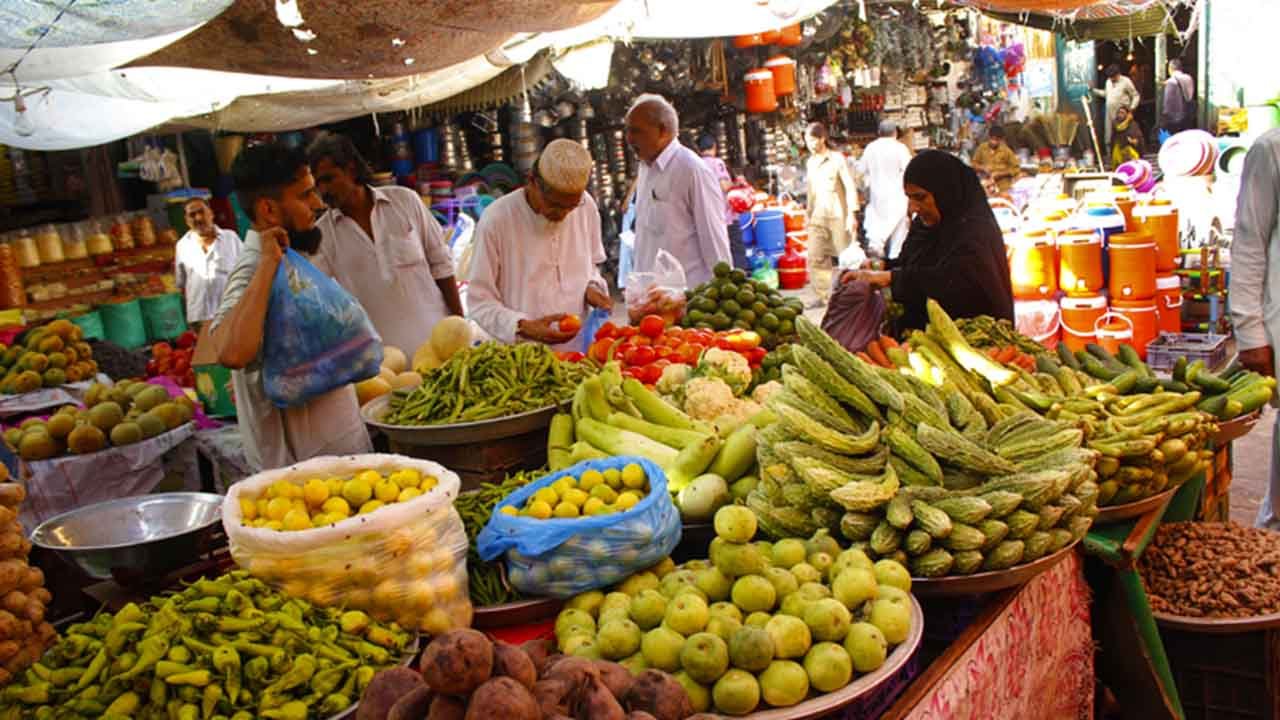
    After devastating floods ravaged the nation, Pakistani officials made the decision to import onions and tomatoes from Iran and Afghanistan due to the rising prices and imminent food crisis.

    The production and supply of vegetables and other crops has been impacted by the recent torrential rains and flooding.

    At a meeting presided over by Commerce Minister Naveed Qamar, the Ministry of Commerce made the announcement. The minister also examined the country’s supply of tomatoes and onions.

    To address the nationwide demand for these crops, the session voted to facilitate the import of onions and tomatoes from Afghanistan and Iran.

    According to The News, the panellists predicted that there will be a tomato and onion shortage in the nation within the next three months. They also stated that because recent flooding has harmed crops, a shortage and price increase are anticipated.

    The News reports that the importation of tomatoes and onions will help to uplift their availability and maintain their pricing.

    The Ministry of Commerce would collaborate with the FBR and the Ministry of National Food Security, it was decided at the meeting. The session also resolved to request reductions in taxes and charges from the federal cabinet’s Economic Coordination Committee for imported tomatoes and onions.

    Earlier, Qamar had emphasised the importance of taking quick action to make tomatoes and onions available to consumers and to stabilise the skyrocketing costs of these commodities. Due to a lack of supply in the market as a result of recent floods, the price of onions and tomatoes has reached Rs 300 per kg.

  • ’We never tried to oppress the media’: Imran Khan

    ’We never tried to oppress the media’: Imran Khan

    Pakistan Tehreek-e-Insaf (PTI) Chairman Imran Khan in his interview with The Guardian spoke at length about media freedom during his time as prime minister, forced disappearance in Pakistan, and Afghanistan.

    ‘We never tried to oppress the media’: Khan

    “In my time, we never tried to oppress the media. The only problem was that sometimes the … security agencies — three or four times we found out that picked someone up and immediately when we found out we would immediately have them released,” said Khan.

    They [security people] were responsible for picking up people: Khan

    “They [security forces] were responsible for picking up people, but according to them they were involved in this insurgency, which was going on in Balochistan and the tribal area bordering Afghanistan. So they would blame that, with some justification, because you could not convict terrorists in the courts because you wouldn’t get witnesses,” said Khan while speaking about forced disappearances and missing persons.

    Eventually Afghan women, the Afghan people, will assert their rights: Imran Khan

    “Eventually Afghan women, the Afghan people, will assert their rights. They are strong people,” he said. “But if you push the Taliban from the outside, knowing their mindset, they will just put up defences. They just hate outside interference,” said Khan about Afghanistan.

  • TTP leader Omar Khalid Khorasani killed in Afghanistan

    TTP leader Omar Khalid Khorasani killed in Afghanistan

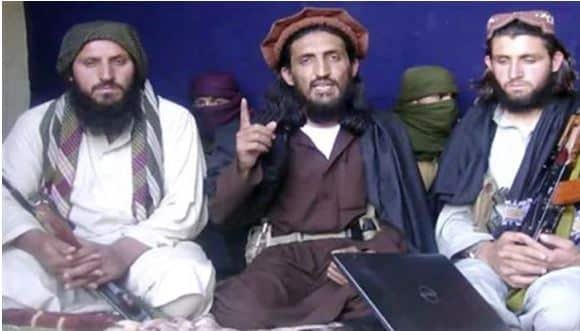
    Tehreek-e-Taliban Pakistan’s (TTP) senior commander Omar Khalid Khorasani has been killed in the Paktika province of Afghanistan.

    “A vehicle reportedly carrying TTP Mohmand chief Omar Khalid Khorasani, aka Abdul Wali Mohmand, Mufti Hassan, and Hafiz Dawlat Khan, was targeted in Sharki village, near Margha, in Bermal district of Paktika province,” one Afghan official told The Express Tribune.

    Omar’s real name was Abdul Wali Mohmand and he previously headed the TTP in the Mohmand Agency bordering Afghanistan.

    It is pertinent to mention here that Omar was a member of the TTP team involved in negotiations with Pakistani officials, Pashtun jirgas, and recently with religious scholars over the past few weeks.

    According to Dawn, in July 2017, one of the UN Security Council’s sanctions committees, upon Pakistan’s request, approved the addition of Jamaat-ul-Ahrar to the list of entities and individuals subject to the assets freeze, travel ban, and arms embargo.

    The United States added Omar’s name to the US State Department’s Rewards for Justice wanted list in March 2018. The US had announced a reward of up to $3 million for information on him.

  • Poliovirus detected in sewage samples from 7 cities in Pakistan

    Pakistan’s federal authorities have confirmed the presence of the poliovirus in seven cities after samples were collected from various cities in the country. The presence of the poliovirus was confirmed in the samples collected from Islamabad, Lahore, Rawalpindi, Peshawar, Bannu, Nowshera and Swat.

    Lahore and Islamabad were declared polio-free in April 2021.

    Federal Minister for Health Abdul Qadir Patel said in a statement that the government was committed to eradicating polio and had established a strategy to do so.

    “We have been taking steps to control the virus in seven cities that have reported positive environmental samples. I appeal to the parents to make sure that their children are vaccinated during every polio campaign,” said Qadir Patel.

    Read more – Shehbaz Sharif, Bill Gates discuss anti-polio campaign

    In order to raise awareness about the virus, the health ministry also solicited collaboration with civil society, religious scholars, academics and the media.

    Pakistan and Afghanistan are the only two countries where polio has not yet been eradicated. To formally eradicate the disease, a nation must be polio-free for three consecutive years. Nigeria was declared free from wild polio in August 2020.

  • ‘Justice delivered’: Biden says Al Qaeda leader Zawahiri killed in US drone strike in Afghanistan

    United States (US) President Joe Biden has confirmed that Al Qaeda leader Ayman al-Zawahiri was killed in Kabul, Afghanistan, over the weekend by a US drone strike.

    In a televised address, Biden said the strike in Kabul had been carried out on Saturday.

    “I gave the final approval to go get him,” he said, adding that there had been no civilian casualties.

    “Justice has been delivered and this terrorist leader is no more,” Biden said.

    Zawahiri, an Egyptian surgeon who had a $25 million bounty on his head, helped coordinate September 11, 2001, attacks on US soil.

    A senior US administration official said Zawahiri’s presence in the Afghan capital Kabul was a “clear violation” of a deal the Taliban had signed with the US in Doha in 2020 that paved the way for the US withdrawal from Afghanistan.

    In a statement, Taliban spokesman Zabihullah Mujahid confirmed that a strike took place and strongly condemned it, calling it a violation of “international principles”.

    Saturday’s drone attack is the first known US strike inside Afghanistan since the US withdrawal in August 2021.

  • Pakistan and Afghanistan to launch luxury bus service in August

    Pakistan and Afghanistan to launch luxury bus service in August

    Pakistan and Afghanistan will launch a luxury bus service between Peshawar and Jalalabad, as well as Quetta and Kandahar, by the end of August.

    During the visit of Pakistan’s official delegation to Kabul, the two nations have also agreed to boost bilateral trade by allowing unrestricted travel for trucks and other goods-carrying vehicles. Meetings were held between the delegation and other top Afghan officials, including the temporary ministers of foreign and commerce.

    In a joint statement released at the conclusion of three days of talks between Pakistani and Afghan officials (July 18–20), both sides committed to continuing their efforts to remove obstacles through mutual cooperation and coordination.

    The delegation from Pakistan was led by Commerce Secretary Muhammad Sualeh Ahmad Faruqui and included businessmen as well as senior members of various ministries. The delegation from Afghanistan was led by Nooruddin Azizi, the minister of trade and industry, and Amir Khan Muttaqi, the acting foreign minister.

    In order to ensure prompt clearance of trade and transit traffic and to address bottlenecks and obstacles on a priority basis, the official also agreed to make border crossing points more efficient.

    In an effort to further boost trade between the two nations, the two sides approved the implementation of the Temporary Admission Document (TAD), which permits free movement of vehicles engaged in bilateral trade but prohibits the loading and unloading of cargo at border crossing points.

    Additionally, all crossing points, particularly Torkham, Kharlachi, Ghulam Khan, and Chaman-Spin Boldak, will have longer operating hours, according to the authorities.

    The bilateral discussions were still centred on trade. Both parties concentrated on enhancing bilateral trade, transit, and accessibility as well as taking the necessary actions to facilitate trade and address issues faced by importers, exporters, traders, and business owners in Pakistan and Afghanistan.

    In parallel, a delegation from the Afghan business community headed by Khan Jan Alokozai, co-chairman of the Pak-Afghan Joint Chamber of Commerce and Industry (PAJJCCI), arrived in Pakistan on Thursday to take part in a roundtable of Pak-Afghan trade stakeholders. Members of the PAJCCI as well as senior business figures from the Kunar and Nangarhar Chambers of Commerce and Industry make up the delegation.

    Zubair Motiwala, chairman of the PAJCCI, lauded the efforts of the commerce chamber in setting up visits to Chaman, Torkham, and Swat for joint discussions on bilateral and transit trade, exploring new trade avenues, removing trade barriers, and aiding governments in formulating policy.

  • Mullah Omar’s buried car found after 21 years

    Mullah Omar’s buried car found after 21 years

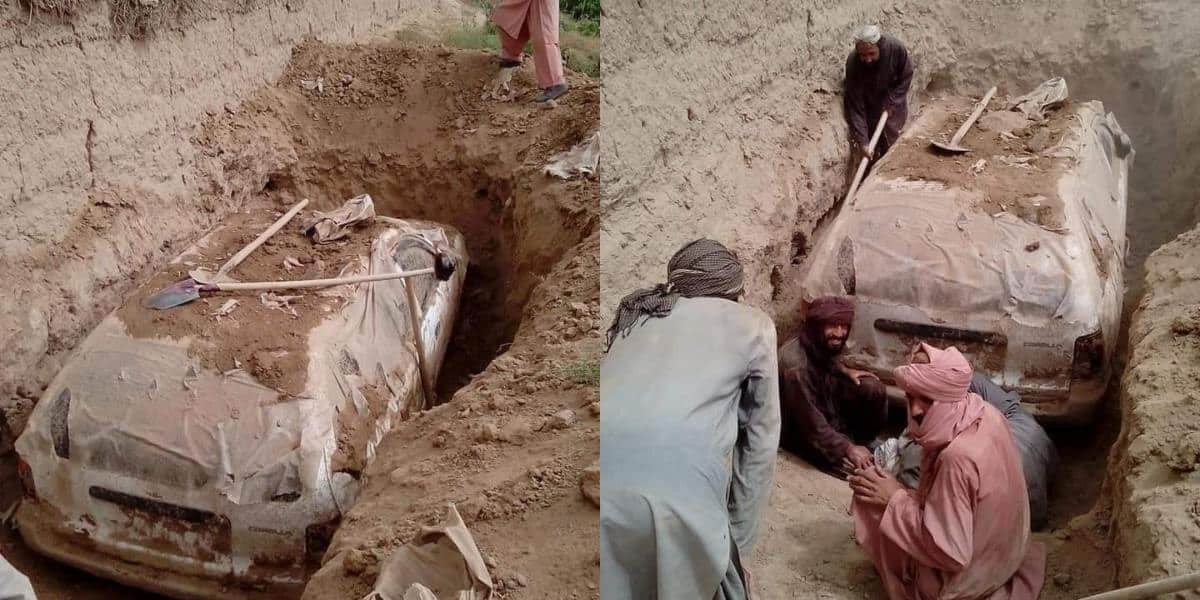
    The Taliban have discovered a white Toyota of Mullah Omar, the founding leader of the Taliban, which was buried 21 years ago. When the US forces invaded Afghanistan in 2001 as a response to the 9/11 attacks, Mullah Omar hid his personal vehicle by burying it.

    The car was discovered mostly unharmed and wrapped in plastic. However, the front mirror of the car was broken.

    Senior officials have demanded that the car should be placed in Kabul’s national museum.

    Omar died in 2013 reportedly due to illness. However, the news of his death was not revealed by the Afghan Taliban until July 2015.

  • Loadshedding situation to get better by mid-July, says Musadik Malik

    Loadshedding situation to get better by mid-July, says Musadik Malik

    Minister of State for Petroleum Dr Musadik Malik hoped that the loadshedding situation across the country will get better in the second half of July.

    Earlier, Prime Minister (PM) Shehbaz Sharif warned the nation of more power outages next month.

    Musadik further said that Pakistan is trying to import coal from Afghanistan. He said the major reason behind electricity loadshedding is the water shortage in dams, while the other reasons include coal price hikes and Liquefied Natural Gas (LNG) shortage in the international market.

    “Only 5,000 MegaWatts (MW) of electricity is being generated instead of 9,500 MW,” he said.

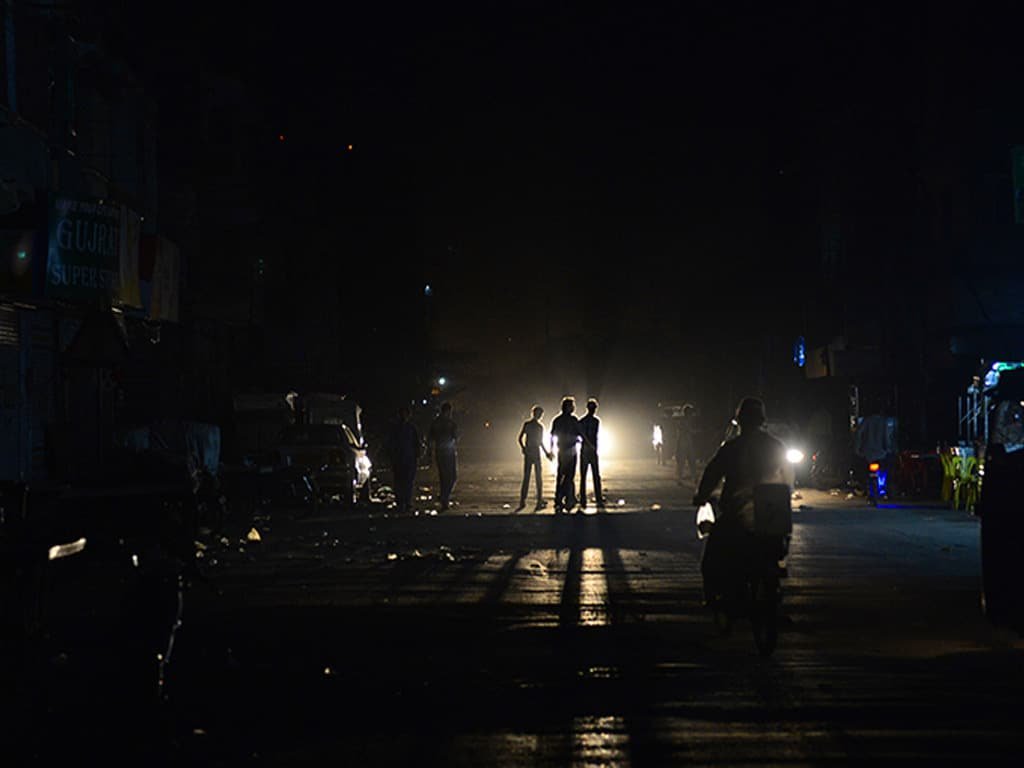
    On Monday, residents of Karachi came out on the streets due to the persistent loadshedding in their areas. The protests continued for more than 24 hours.

    Interestingly, the government has pledged to decrease loadshedding several times. Earlier this month, PM Shehbaz instructed the power authorities to reduce loadshedding throughout the country to two hours. However, the situation remained the same.