Tag: Afghanistan

  • ‘Pakistan cannot dictate to us’: Afghan Taliban spokesperson

    ‘Pakistan cannot dictate to us’: Afghan Taliban spokesperson

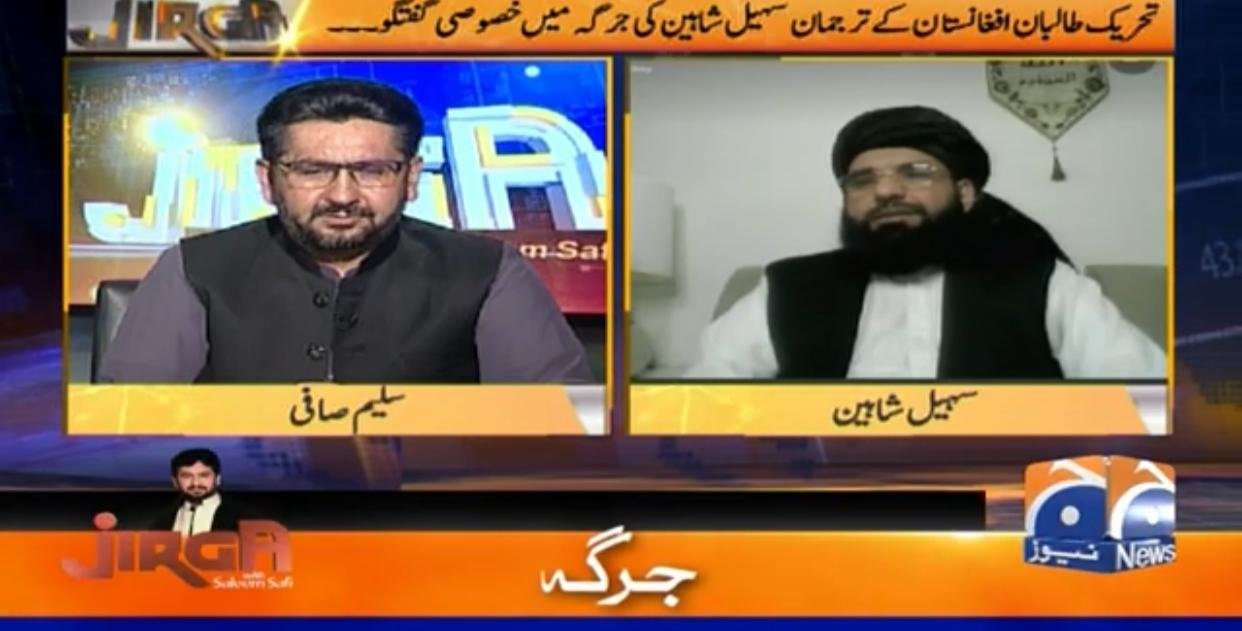
    The spokesperson for the Tehreek-e-Taliban Afghanistan Suhail Shaheen, while talking on Geo News’ programme ‘Jirga’ said that Pakistan “cannot dictate to us or impose its views on us”.

    Shaheen gave these remarks to senior journalist Saleem Safi. He further added that Pakistan is welcome to help the Taliban arrive at a settlement in Afghanistan.

    In the context of reports that the Afghan Taliban are not willing to listen to Pakistan, the spokesperson said: “We want brotherly relations. They are neighbours, a Muslim country, and we have shared values — historical, religious and cultural.”

    “They can help us in the peace process but can’t dictate to us or impose their views. And this is against international principles,” he added.

    Speaking of the Taliban’s demand for an Islamic Emirate of Afghanistan, Shaheen said that having an emirate is “a legitimate right of the people of Afghanistan”.

    “We say nothing about other governments. They should not impose their view,” he said, reiterating, “This is not in accordance with international principles either.”

    On whether the Taliban accept the outlawed Tehreek-e-Taliban Pakistan (TTP) or consider them opponents after the TTP emir swore loyalty to Afghan Taliban chief Mullah Haibatullah Akhunzada, Shaheen said: “I do not know of the TTP emir swearing allegiance [to our leader] but I will tell you the policy of the Islamic Emirate.”

    “We will not allow the use of Afghan soil, neither by an individual nor by any group. I have said this in many interviews and I think our position is clear and known to all.”

  • Maryam Nawaz believes the govt has recognised Israel, as PTI fails to deny reports

    Maryam Nawaz believes the govt has recognised Israel, as PTI fails to deny reports

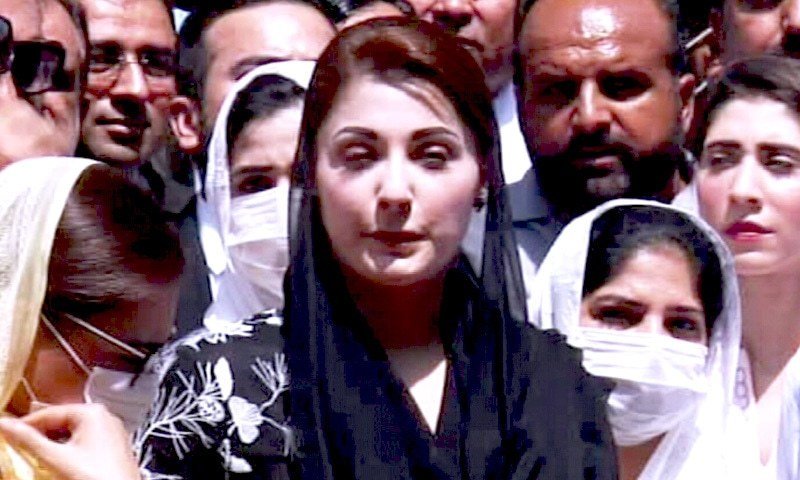
    Pakistan Muslim League-Nawaz (PML-N) Vice President Maryam Nawaz on Tuesday said she believed the Pakistan Tehreek-e-Insaf (PTI) government has recognised Israel as “it is not presenting a denial” to reports and statements emphasising Pakistan’s reported acceptance of Israel.

    Maryam stressed the government should inform the nation of its decision on Israel. “It’s not your personal decision, it’s something that is linked to 220 million people of Pakistan.”

    Commenting on the Afghanistan situation, the PML-N leader asked the government to bring its own house in order first.

    “Your foreign policy should not alter in view of a changing political landscape. It should not be based on your political standing,” said Maryam, calling for a unified stance on issues.

    Responding to a question on whether the PML-N had entered a deal with the government, Maryam said, “Why do you people call everything a deal. This is an inappropriate question. Why will there be any deal? Are we mad to have a deal with those we are [fighting] against?” she questioned.

    Maryam further added, “PML-N is in the strongest position in Azad Jammu and Kashmir (AJK), and if free and fair polls are held, then our party will win the election with an overwhelming majority.” She added that people had lost trust in the present system in view of “obvious rigging in the past elections”.

    The PML-N vice-president said the current approach of the government would take Balochistan further away. “I believe grievances of people of the province should be addressed,” she remarked.

    When asked for her point of view on Shahid Khaqan Abbasi’s statement that Shehbaz Sharif should generally refrain from making emotional remarks in public and that his [Shehbaz Sharif’s] statement was taken out of context, Maryam replied that she agrees with Khaqan that Shehbaz’s statement was taken out of context.

  • ‘Pakistan will not give airbases to US’: General Bajwa

    ‘Pakistan will not give airbases to US’: General Bajwa

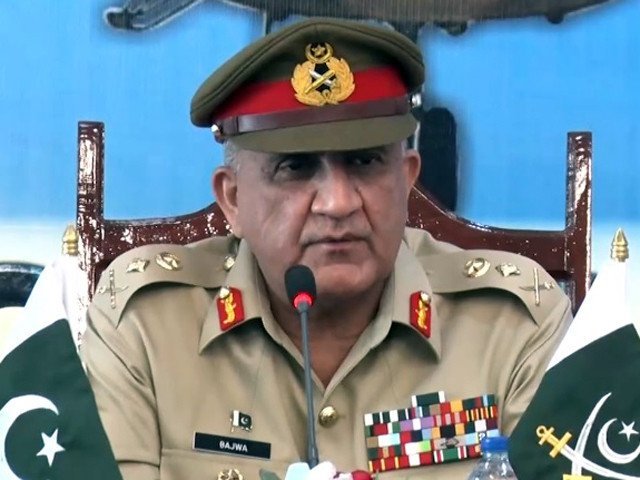
    Chief of Army Staff General Qamar Javed Bajwa on Thursday said Pakistan will not give airbases to the United States (US) if the government has decided against it.

    According to an official statement issued after the security briefing held on Thursday, the session was informed that Pakistan played a highly positive and responsible role in the Afghan peace process.

    “Pakistan’s efforts paved the way for dialogue between Afghan factions and warring groups,” the meeting was told, while it was also noted that due to Islamabad’s efforts, meaningful talks have begun between the US and the Taliban.

    “Sustained peace and stability in Afghanistan will lead to stability in South Asia,” the meeting was informed.

    The participants were further told that Pakistan would welcome a government that was truly representative of the Afghan people and that it would continue its responsible role for peace in Afghanistan.

    “Pakistan’s territory is not being used in the ongoing conflict in Afghanistan […] and we hope that Afghanistan’s land is not used against Pakistan,” the DG ISI had reportedly said during the session.

    A meeting of the National Security Committee was held on Thursday. Army chief and heads of security institutions participated in the meeting. A briefing on Kashmir, Afghanistan, and internal security challenges was under discussion.

    It should be recalled that the government had turned down a US request for setting up drone bases in Pakistan for future counterterrorism operations in Afghanistan. Prime Minister Imran Khan had in his speech that Pakistan could be partner with the United States in peace, but not in conflict.

  • DG ISI to brief lawmakers on Kashmir, Afghanistan, and security challenges

    DG ISI to brief lawmakers on Kashmir, Afghanistan, and security challenges

    “A meeting of the National Security Committee will be held today (Thursday). Army chief and heads of security institutions will participate in the meeting. A briefing on Kashmir, Afghanistan and internal security challenges will be discussed,” Minister for Information and Broadcasting Fawad Chaudhry tweeted on Thursday.

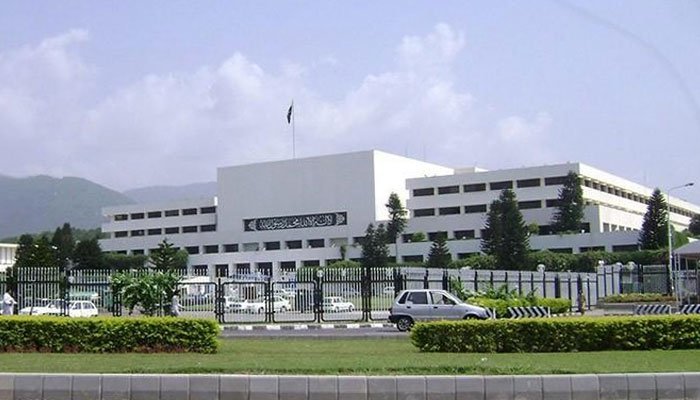
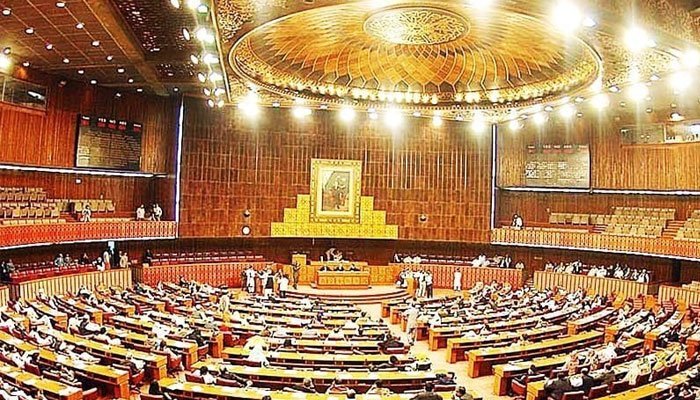
    Speaker National Assembly (NA) Asad Qaiser had summoned a session of the Parliamentary Committee on National Security on July 1 for an in-camera briefing on the latest regional situation in light of the US withdrawal from Afghanistan. Director-General of the Inter-Services Intelligence (ISI) Lieutenant General Faiz Hameed will brief the lawmakers.

    Leader of the Opposition in NA Shehbaz Sharif, Leader of the Opposition in the Senate Yousaf Raza Gillani, Pakistan People’s Party Chairman Bilawal Bhutto-Zardari, and other lawmakers will attend the meeting. According to reports, Interior Minister Sheikh Rasheed, Foreign Minister Shah Mahmood Qureshi, and Defence Minister Pervez Khattak will also be part of the in-camera meeting from the government’s side. Senate Chairman Sadiq Sanjrani will also attend the meeting as well as other parliamentarians.

    Prime Minister Imran Khan will not attend the briefing.

    Interior Minister Sheikh Rasheed said that Pakistan’s politics will change after today’s in-camera briefing on the situation in Afghanistan and other security issues. He said it will now centre on national security.

  • ‘Pakistan can be partners in peace with US but never in conflict’: PM Imran Khan

    ‘Pakistan can be partners in peace with US but never in conflict’: PM Imran Khan

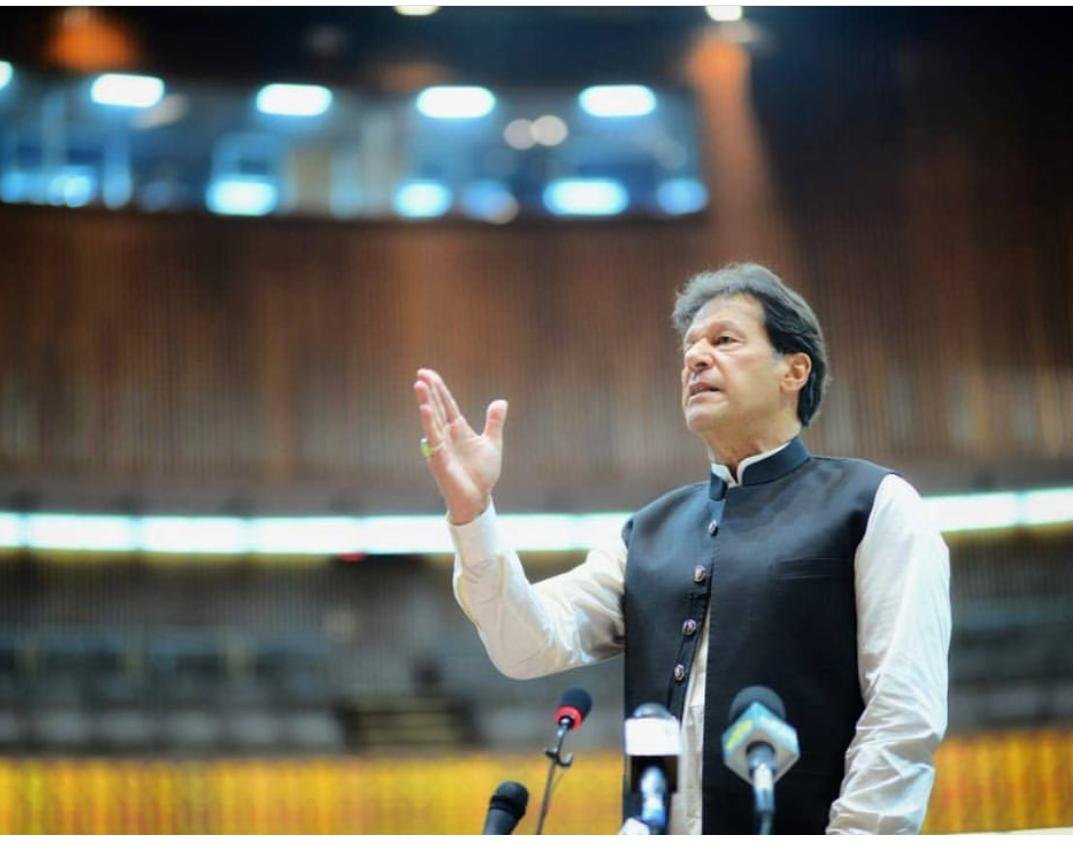
    Speaking at the budget session of the National Assembly (NA), Prime Minister Imran Khan once again reiterated, “Pakistan could be partners with the United States in peace but never in conflict.”

    PM gave his speech the day after the government smoothly passed Finance Bill 2021-22.

    The premier further added, “When we gave so many services, did they (US) praise us or acknowledge our sacrifices? Instead, they called us a hypocrite and blamed us. Instead of appreciating us, Pakistan was bad-mouthed.”

    “I have never felt more insulted than when Pakistan decided to join the US war on terror. We decided to become a frontline state for the American war on terror. I questioned repeatedly: what did we have to do with the war?”

    “Does any country get involved in another’s [war] and lose 70,000 lives?” he asked. “What they (US) said, we kept doing. Musharraf said in his book that he took the money [from the US] and sent people to Guantanamo.”

    The premier termed it as the “darkest period of our history” when Pakistan did not know which was a friendly country and which was not. “Have you heard of a friendly country carrying out attacks and drone strikes in your country?”

    In an apparent reference to Muttahida Qaumi Movement (MQM) founder Altaf Hussain, PM asked: “A terrorist is sitting in London for 30 years. Will they give us permission to attack him? If they will not give permission then why did we? Are we subhuman or half-human or do our lives not have enough value?”

    The prime minister said that in a meeting of the US Senate, an American commander had claimed that the Pakistan government did “not tell the truth” to its citizens. “We disrespected ourselves, the world did not disrespect us.”

    He said that overseas Pakistanis had to hide their faces after the raid by US Navy Seals in Abbottabad in which Osama Bin Laden was killed because “our ally did not trust us enough to carry out the attack”.

    The premier warned that a “very tough time” was coming for Pakistan in view of the situation in Afghanistan. He said he was thankful that the US had recognised there was no military solution to the conflict in the neighbouring country but it should have done so earlier.

    “Afghanistan has never accepted interference from outside. If we were proactive and a self-respecting government, stood up and said [the US] is wrong, then we would have protected them (Afghans).”

    The premier clarified that Pakistan did not want to have favourites or choose sides, insisting “whoever Afghan people choose, we are with them”.

    PM Khan invited the Opposition to work with the government on election reforms. “After 1970, all elections have been controversial,” he said.

    PM Khan said the recently held by-polls and Senate elections were made controversial as well.

    He said the government had been considering ways to make the elections acceptable to all the parties, and reminded the Opposition that election reforms would benefit democracy.

    “The time has come to make the country’s elections acceptable to everyone,” he said.

    He recalled that when he wanted to give a speech in parliament after being elected prime minister, the Opposition refused to allow him to speak claiming that the election had been rigged. “When Trump claimed the same, the media asked him to give proof.”

    “We did the same in 2013. We had asked the then government to hold recounting in four constituencies. We had to approach the court and as a result in all four constituencies, rigging was proved.”

    “After trying our best, we came to the conclusion that EVMs (electronic voting machines) are the only solution,” he said.

    The premier said his government was “ready to listen” if the Opposition had any other “advice” regarding the electoral reforms.

    The premier said if the country steps back from this aim, then there would be “no justification for Pakistan’s existence”.

    PM Imran Khan said that the budget reflected the PTI’s three core principles — justice, humanity, and self-sufficiency and praised his financial team for ensuring the budget embodies all three.

    He said that when the PTI government came to power, the country’s biggest problem was the current account deficit. “[Pakistan] had the biggest deficit in history, which means our currency was in danger. Our team was new and we had no experience … We took many difficult steps to stabilise our economy which were painful.”

    The premier thanked countries like the UAE, Saudia Arabia, and China for “protecting us from defaulting”.

    The premier lauded National Command and Operations Centre (NCOC) chief Asad Umar and Special Assistant to Prime Minister on Health Dr Faisal Sultan, the Pakistan Army, and others involved in curbing the spread of coronavirus.

    “The Opposition attacked us, we were criticised for two months for no lockdowns,” he recalled.

    PM Imran Khan said Pakistan’s coronavirus situation was better as compared to countries in the region and it was “due to Allah’s blessings and the poor people’s prayers”.

    He cited the government’s “protection” of agriculture as well as record crop production for the 3.9 per cent economic growth rate in fiscal year (FY)22.

    “We incentivised export industry and it grew 17 per cent in one year. Our exports in June were $2.7 billion, which is an all-time record for the month in Pakistan,” added PM Khan.

    “We held negotiations with the construction industry and tried to give them incentives because when [that industry] starts running, then 30 related industries also start running,” he added.

    Pakistan was moving towards becoming an Islamic welfare state for the first time, said PM Khan.

    “By next month, we will have data on all income levels of families and according to that, the lowest 40-50pc families will be brought under the [government’s social welfare] programme. We have dedicated Rs500bn for them,” he said, disclosing that it would include interest-free loans, health cards, technical education, low-cost housing, and scholarships.

    A day earlier, the National Assembly had passed the budget for the fiscal year 2021-2022, with a majority vote amid a dismal showing by the Opposition.

    PM gave his speech the day after the government smoothly passed Finance Bill 2021-22.

    The premier further added, “When we gave so many services, did they (US) praise us or acknowledge our sacrifices? Instead, they called us a hypocrite and blamed us. Instead of appreciating us, Pakistan was bad-mouthed.”

    “I have never felt more insulted than when Pakistan decided to join the United States war on terror. “We decided to become a front line state for the American war on terror. I questioned repeatedly, what did we have to do with the war?” said PM Khan.

    “Does any country get involved in another’s [war] and lose 70,000 lives?” he asked. “What they (US) said, we kept doing. [Former president Pervez] Musharraf said in his book that he took money and sent people to Guantanamo [Bay jail].

    The premier termed it as the “darkest period of our history” when Pakistan did not know which was a friendly country and which was not. “Have you heard a friendly country doing attacks and drone strikes in your country?” he asked.

    “A terrorist is sitting in London since 30 years. Will they give us permission to attack him?” he questioned in an apparent reference to Muttahida Qaumi Movement (MQM) founder Altaf Hussain.

    “If they will not give permission then why did we? Are we subhuman or half human or do our lives not have enough value?” he said angrily.

    The prime minister said that in a meeting of the US Senate, an American commander had claimed that the Pakistan government did “not tell the truth” to its citizens. “We disrespected ourselves, the world did not disrespect us.”

    He said that overseas Pakistanis hid their faces after the raid by US Navy Seals in Abbottabad in which Osama Bin Laden was killed because “our ally did not trust us enough to carry out the attack.”

    The premier warned that a “very tough time” was coming for Pakistan in view of the situation in Afghanistan. He said he was thankful that the US had recognised there was no military solution to the conflict in the neighbouring country but it should have done so earlier.

    “Afghanistan has never accepted interference from outside. If we were proactive and a self-respecting government stood up and said [the US] is wrong, then we would have protected them (Afghans).”

    The premier clarified that Pakistan did not want to have favourites or choose sides, insisting “whoever Afghan people choose, we are with them.”

    PM Khan invited the Opposition to work with the government on election reforms. “After 1970, all elections have been controversial,” he said.

    PM Khan said the recently held by-polls and Senate elections were made controversial as well.

    He said the government had been considering ways to make the elections acceptable to all the parties, and reminded the Opposition that election reforms would benefit democracy.

    “The time has come to make the country’s elections acceptable to everyone,” he said.

    He recalled that when he wanted to give a speech in parliament after being elected prime minister, the opposition refused to allow him to speak claiming that the election had been rigged, adding, “When [former United States president Donald] Trump claimed the same, the media asked him to give proof.”

    “We did the same in 2013. We had asked the then government to hold recounting in four constituencies,we had to approach the court and as a result in all four, rigging was proved.

    “After trying our best, we came to the conclusion that EVMs (electronic voting machines) are the only solution,” he said.

    The premier said his government was “ready to listen” if the opposition had any other “advice” regarding the reforms.

    The premier said if the country steps back from this aim, then there would be “no justification for Pakistan’s existence”.

    PM Imran Khan said that the budget reflected the PTI’s three core principles — justice, humanity, and self-sufficiency and praised his financial team for ensuring the budget embodies all three.

    He said that when the PTI government came to power, the country’s biggest problem was the current account deficit. “[Pakistan] had the biggest deficit in history which means our currency was in danger. Our team was new and we had no experience … We took many difficult steps to stabilise our economy which were painful.”

    The premier thanked countries like UAE, Saudia Arabia and China for “protecting us from defaulting”.

     The premier lauded National Command and Operations Centre (NCOC) chief Asad Umar and Special Assistant to Prime Minister on Health Dr Faisal Sultan, the Pakistan Army, and others involved in curbing the spread of coronavirus.

    “The opposition attacked us, we were criticised for two months for no lock downs,” he recalled.

    PM Imran Khan said Pakistan’s coronavirus situation was better as compared to countries in the region and it was “due to Allah’s blessings and the poor people’s prayers”.

    He cited the government’s “protection” of agriculture as well as record crop production for the 3.9 per cent economic growth rate in fiscal year (FY)22.

    “We incentivised export industry and it grew 17 per cent in one year. Our exports in June were $2.7 billion which is an all time record for the month in Pakistan,” added PM Khan.

    “We held negotiations with the construction industry and tried to give them incentives because when [that industry] starts running, then 30 related industries also start,” he added.

    Pakistan was moving towards becoming an Islamic welfare state for the first time, said PM Khan.

    “By next month, we will have data on all income levels of families and according to that, the lowest 40-50pc families will be brought under the [government’s social welfare] programme. We have dedicated Rs500bn for them,” he said, disclosing that it would include interest-free loans, health cards, technical education, low-cost housing and scholarships.

    A day earlier, the National Assembly had passed the budget for the fiscal year 2021-2022, with majority vote amid a dismal showing by the Opposition.
  • Not concerned by the contacts between India and Afghan Taliban, says Moeed Yusuf

    Not concerned by the contacts between India and Afghan Taliban, says Moeed Yusuf

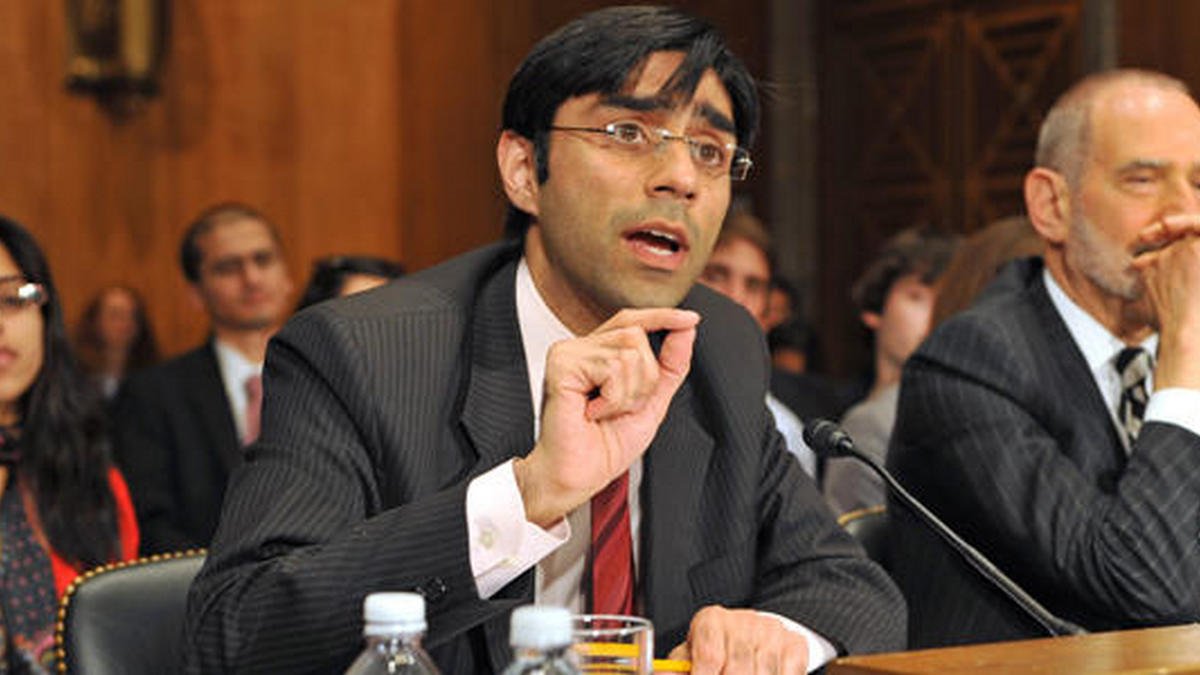
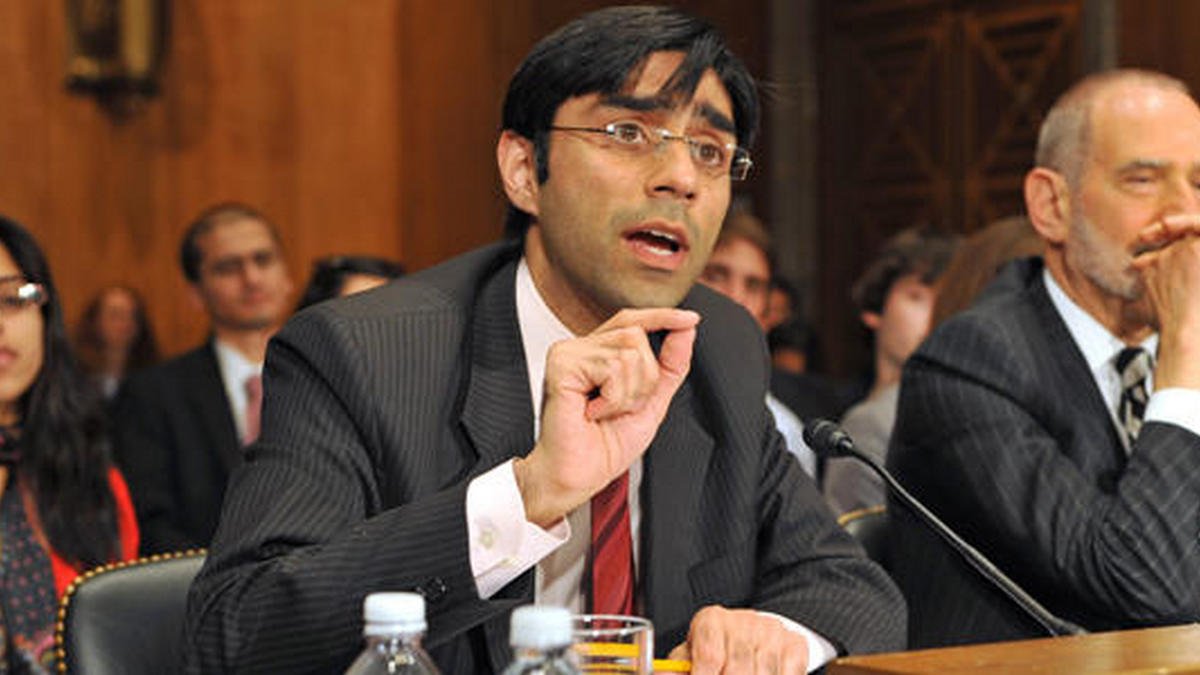
    National Security Adviser Dr Moeed Yusuf while speaking on Dawn News programme ‘Live with Adil Shahzeb’ said that India should be ashamed of meeting the Afghan Taliban  after having supported operations against the insurgent group for a long time.

    Yusuf was responding to the Indian External Affairs Minister Subrahmanyam Jaishankar’s recent stopovers in Doha to meet with the Taliban leadership twice in the last three weeks.

    “I want to ask this: with what [moral] standing did this Indian high-level official meet [the Taliban] there? Did they not feel ashamed?” Yusuf said when asked how Pakistan viewed the India-Taliban meetings.

    “[The Indians] kept having the Taliban killed daily and kept giving funds for operations against them and today they have reached there to have talks,” he added.

    Yusuf said the meetings were “a matter of shame” and not a strategic move.

    He emphasised that the Taliban, whom the Indians had met, were also “not stupid”, saying he was not concerned by the contacts between India and the insurgent group amid the United States withdrawal from Afghanistan.

    “You should also ask what response the [Indians] got from the [Taliban],” he added.

    Speaking about Pakistan-India relations, the NSA said there were no backdoor talks or dialogue between the two countries for now.

    ‘’India contacted us [and said] that they wanted to fix [relations] and we told them we desired the restoration of pre-August 2019 status of Indian-occupied Kashmir; besides, our policy is based on the ease of life for Kashmiris,’’ he stated.

  • In-camera briefing for lawmakers on Afghanistan, national security

    In-camera briefing for lawmakers on Afghanistan, national security

    Speaker National Assembly (NA) Asad Qaiser has summoned a session of the Parliamentary Committee on National Security on July 1 at 3pm for a briefing on the latest regional situation in light of the US withdrawal from Afghanistan.

    Speaker Asad Qaiser will chair the in-camera meeting. The meeting will discuss the situation in Afghanistan and its impact on Pakistan. Leader of the Opposition in NA Shehbaz Sharif, Pakistan People’s Party Chairman Bilawal Bhutto-Zardari and other lawmakers will attend the meeting. Interior Minister Sheikh Rasheed, Foreign Minister Shah Mahmood Qureshi and Defence Minister Pervez Khattak will also be part of the in-camera meeting from the government’s side. Senate Chairman Sadiq Sanjrani will also attend the meeting as well as other parliamentarians.

    Bilawal Bhutto tweeted that he had demanded on the floor of the house that the parliament be briefed on the Afghanistan situation by the relevant departments and institutions. “We welcome Speakers decision and will participate in NSC committee meeting on the topic.”

  • ‘Pakistan wants a civilised relationship with the US’: PM Khan

    Prime Minister Imran Khan recently gave an interview to The New York Times about Pakistan’s planned future strategy once the United States (US) leaves Afghanistan and said that in the past, the US kept expecting more from Pakistan, while previous governments “tried to deliver what they were not capable of”.

    The interview was published on June 25, when US President Joe Biden had his first face-to-face meeting with his Afghan counterpart, Ashraf Ghani, at the White House.

    Replying to a question related to Pakistan’s future relationship with the US after the withdrawal of American troops from Afghanistan, PM Khan said that Pakistan has always had a closer relationship with the United States than neighbouring India.

    “After 9/11, Pakistan again opted to join the US war on terror. Now, after the US leaves Afghanistan, basically Pakistan would want a civilised relationship, which you have between nations, and we would like to improve our trading relationship with the US,” he said.

    Mr Khan recalled that Pakistan has had a closer relationship with the United States than other nations in the region, such as India, and was a US partner in the war against terrorism, an argument used by previous Pakistani rulers as well without much success.

    “Now, after the US leaves Afghanistan, basically Pakistan would want a civilised relationship, which you have between nations, and we would like to improve our trading relationship with the US,” the prime minister replied.

    “Unfortunately, the relationship during the war on terror was a bit lopsided,” he said, adding, “It was a lopsided relationship because [the] US felt that they were giving aid to Pakistan, they felt that Pakistan then had to do US’s bidding. And what Pakistan did in terms of trying to do the US bidding cost Pakistan a lot … 70,000 Pakistanis died, and over $150 billion were lost to the economy because there were suicide bombings and bombs going on all over the country.”

    Asked if Pakistan was still using its leverage with the Taliban to move the peace talks towards a deal, Mr Khan said: “Pakistan has used the maximum leverage it could on the Taliban.”

    The prime minister said Pakistan has been emphasising to the Taliban that they should not go for a military victory because it would only lead to a protracted civil war. And since the Taliban are primarily a Pashtun movement, this will have two effects: Another influx of refugees into Pakistan and upset Pakistan’s efforts to lift its economy through trade, he explained.

    ‘We have signed very good trade deals with the Central Asian republics, but we can only go there through Afghanistan. If there is a civil war, all that goes down the drain,’ he said.

    “Let me assure you, we will do everything except use military action against the Taliban. I mean, we will do everything up to that,” Mr Khan said, adding: “All sections of our society have decided that Pakistan will take no military action.”

    The premier was also questioned whether Indo-Pakistan relations would improve if the Modi government leaves power. In response, he said that he “knows India better than any other Pakistani”.

    He said that he has had “love and respect from India [more] than anyone because cricket is a big sport”.

    “And the best way would be if India and Pakistan had a normal, civilised trading relationship. It would benefit both countries,” the PM said he told Modi.

    “So we tried. Didn’t get anywhere. I think that it is a particular ideology of the (Hindu nationalist group) Rashtriya Swayamsevak Sangh (RSS), which Narendra Modi belongs to, which just came up against a brick wall. And therefore the answer to your question is yes. Had there been another Indian leadership, I think we would have had a good relationship with them. And yes, we would have resolved all our differences through dialogue.”

    When asked if Pakistan would consider it an Indian win if Kashmir’s status quo remains the same, PM Imran Khan said that it would be a “disaster for India.”

    “[That is because] it will just mean that this conflict festers on and on. And so as long as it festers, it’s going to stop there being any relationship — normal relationship — between Pakistan and India.”

    The premier was questioned about Pakistan’s relationship with China and how it affects both the US and India. In response, he said that he finds it “very odd” that China and the US would become great rivals. 

  • ‘If the US President doesn’t want to talk with Pakistan,  Goodluck, no one is waiting here’: Moeed Yusuf

    ‘If the US President doesn’t want to talk with Pakistan, Goodluck, no one is waiting here’: Moeed Yusuf

    National Security Adviser Moeed Yusuf said that if US President Joe Biden doesn’t want to talk with Pakistan, then “good luck” as no one is waiting here for his call either.

    Speaking on Geo News programme, ‘Aaj Shahzeb Khanzada Kay Sath’, Moeed Yusuf said that the current Afghanistan situation is not good.

    Yusuf complained about the lack of coordination among the Pakistani and US officials in Afghanistan, saying we came to know about the withdrawal of foreign troops from the media.

    “We don’t want anyone to insult the US but if the finger is pointed at Pakistan, then it will be responded to,” Yusuf said.

    He was responding to a question asked about Prime Minister (PM) Imran Khan’s comments about Biden. In a recent interview, PM Khan had said that US President Joe Biden has not spoken to him since assuming office as president.

    “Whenever he has time he can speak to me. At the moment, clearly, he has other priorities,” he had told Axios anchor Jonathan Swan

    Yusuf said Pakistan’s prime minister was of the view that a military solution was not possible in Afghanistan, adding that had that advice been taken, things would have been much different.

    “Everyone wants stability in the country,” he said.

  • ‘Osama Bin Laden is a thing of the past, my focus is on the present and future’: Shah Mahmood Qureshi

    ‘Osama Bin Laden is a thing of the past, my focus is on the present and future’: Shah Mahmood Qureshi

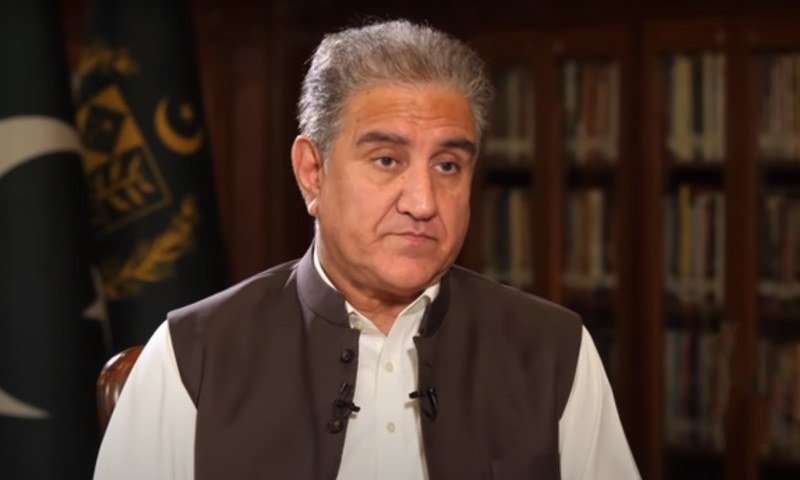
    Foreign Minister Shah Mahmood Qureshi on Tuesday appeared on Geo News programme “Aaj Shahzeb Khanzada Kay Saath” and said that former Al-Qaeda chief Osama Bin Laden (OBL) “is a thing of the past and my focus is on the present and the future”.

    Qureshi was asked once more about why it is that he, along with Prime Minister Imran Khan, avoid clarifying whether OBL is a martyr or terrorist.

    “Osama Bin Laden is a thing of the past. I am not concerned with the past. You are lost in the past. My focus is on the present and the future,” said Qureshi.

    Khanzada explained that he was asking for clarity because Pakistan paid a huge price for confusion in the past when it was said that there is a “dual policy with sympathy for terrorists”.

    “I wish to bring you out of the past,” Qureshi said, in response. “My friend, I wish to bring you out of the past. And I tell you, you must think about the future. That future will impact Pakistan, it’s economy and its society. We are absolutely clear on this. We are against terrorism.”

    Qureshi further added that PM Khan takes inspiration from the country’s founder, Quaid-e-Azam Mohammad Ali Jinnah.

    Qureshi was also asked why Pakistan is giving confused statements, when in the backdrop of the US defence secretary’s words about Afghanistan’s soil being used against the US by Daesh or Al-Qaeda in two years’ time, such remarks could come back to haunt us.

    To this Qureshi said: “No, no, no, no. We have great clarity on this. We will never want Afghan or Pakistan soil to be used against a third country, let alone America. I would never want it to be even used against any of our neighbours. Not at all.”

    “We have great clarity. We do not and never will support terrorist organisations and will never want for them to gain such power or importance that they become capable of striking the mainland, some other country, or some coalition partner who have done so much for Afghanistan,” added Qureshi.

    “We will have to admit one thing. The coalition there invested a great deal [in society]. They have invested billions of dollars, established institutions, promoted education, taught them governance. Who will want them to come under attack?” he said.

    In an interview with Afghanistan’s Tolo News, Foreign Minister Shah Mahmood Qureshi skipped a question when asked if Osama bin Laden was a martyr. Qureshi paused for a few seconds and then said, “I will let that pass.