Tag: Afghanistan

  • Another earthquake of 6.3 magnitude hits Afghanistan

    As per the United States Geological Survey, yet another earthquake occurred in Afghanistan at a shallow depth at around 5:10 am local time on Wednesday, with its epicenter about 29 kilometres north of the city of Herat.

    No casualties have been reported till now.

    According to the Associated Press, Ministry of Information spokesperson Abdul Wahid Rayan has said that at least 80 people have been injured and a landslide has blocked the main Herat-Torghundi highway.

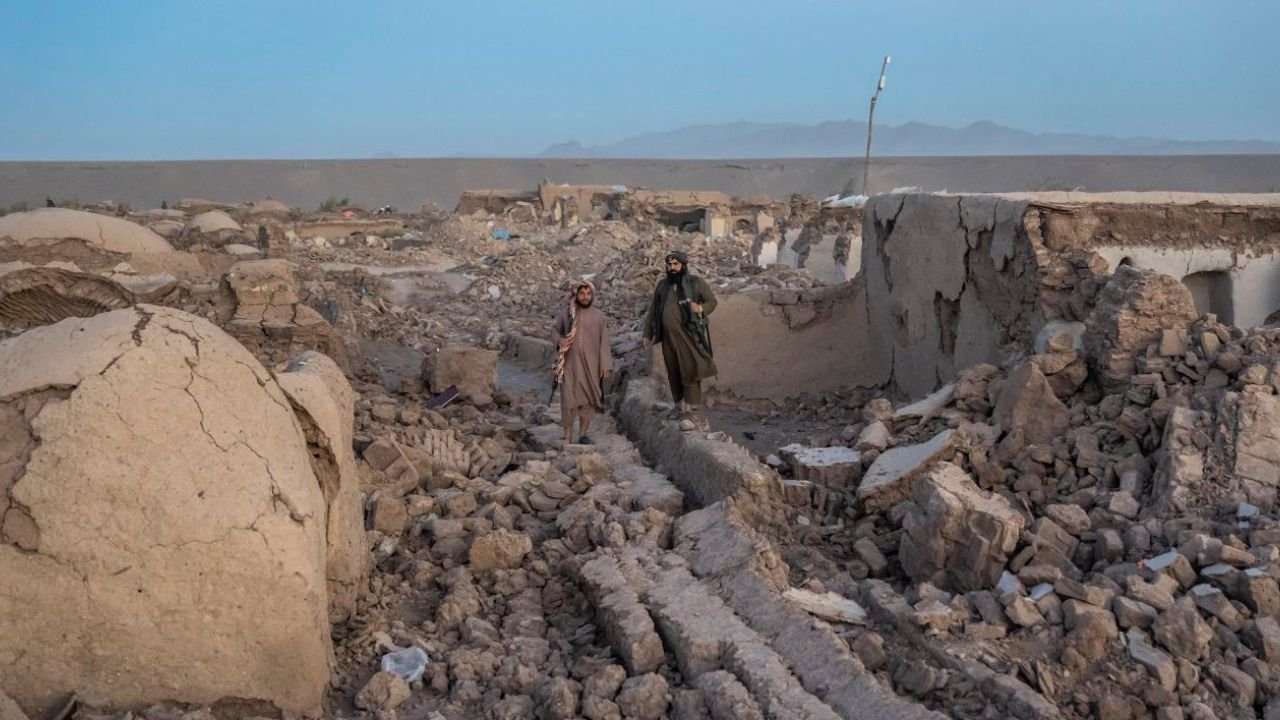
    This is the second deadliest aftershock in the region after Saturday’s earthquake which destroyed 11 villages and has devastated 12,000 people. The death toll has exceeded 2,400 fatalities. Afghanistan is frequently hit by deadly earthquakes, but this weekend’s disaster was the worst to strike the war-ravaged country in more than 25 years.

    Rescue efforts are being hampered by poor infrastructure and lack of resources.

  • Afghanistan Earthquake: Pakistan to send medical team, 50 tents, 500 blankets and more in humanitarian aid

    Afghanistan Earthquake: Pakistan to send medical team, 50 tents, 500 blankets and more in humanitarian aid

    As per the latest update, about 2,500 people have died as a consequence of a severe earthquake that jolted Afghanistan on Saturday.

    An earthquake of a magnitude of 6.3 hit the province of Herat in the troubled country, becoming one of the deadliest quakss experienced in the past two decades in Afghanistan.

    It jostled the districts of Zenda Jan and Ghorian.

    According to Abdul Wahid Rayan, spokesperson for the Ministry of Information and Culture, about six villages have been destroyed and hundreds of civilians have been buried under the debris

    As of Sunday, 1,240 people were injured and 1,320 houses were completely destroyed.

    While Afghanistan’s healthcare system is majorly dependent on foreign aid, China’s Red Cross Society has offered $200,000 in emergency cash aid.

    UN Spokesperson Stéphane Dujarric has stated, “The United Nations and our partners in Afghanistan are coordinating with the de facto authorities to swiftly assess needs and provide emergency assistance,”

    According to the UN, its Children’s Fund (UNICEF) has deployed teams “to join ongoing humanitarian efforts” and dispatched 10,000 hygiene kits, 5,000 family kits, 1,500 sets of winter clothes, blankets, 1,000 tarpaulins, and basic household items, “which will complement support provided by other UN agencies and partners”.

    Pakistan’s Caretaker Prime Minister Anwaarul Haq Kakar, posted a statement on X (formerly Twitter) stating that Pakistan stands in solidarity with Afghans during this difficult time.

    Pakistan Foreign Office also posted on social media stating that the country is in contact with Afghan authorities to get a “first-hand assessment of the urgent needs” of the victims and that Pakistan will extend “all possible support to the recovery effort.”

  • Illegal Afghan residents arrested in Islamabad

    Illegal Afghan residents arrested in Islamabad

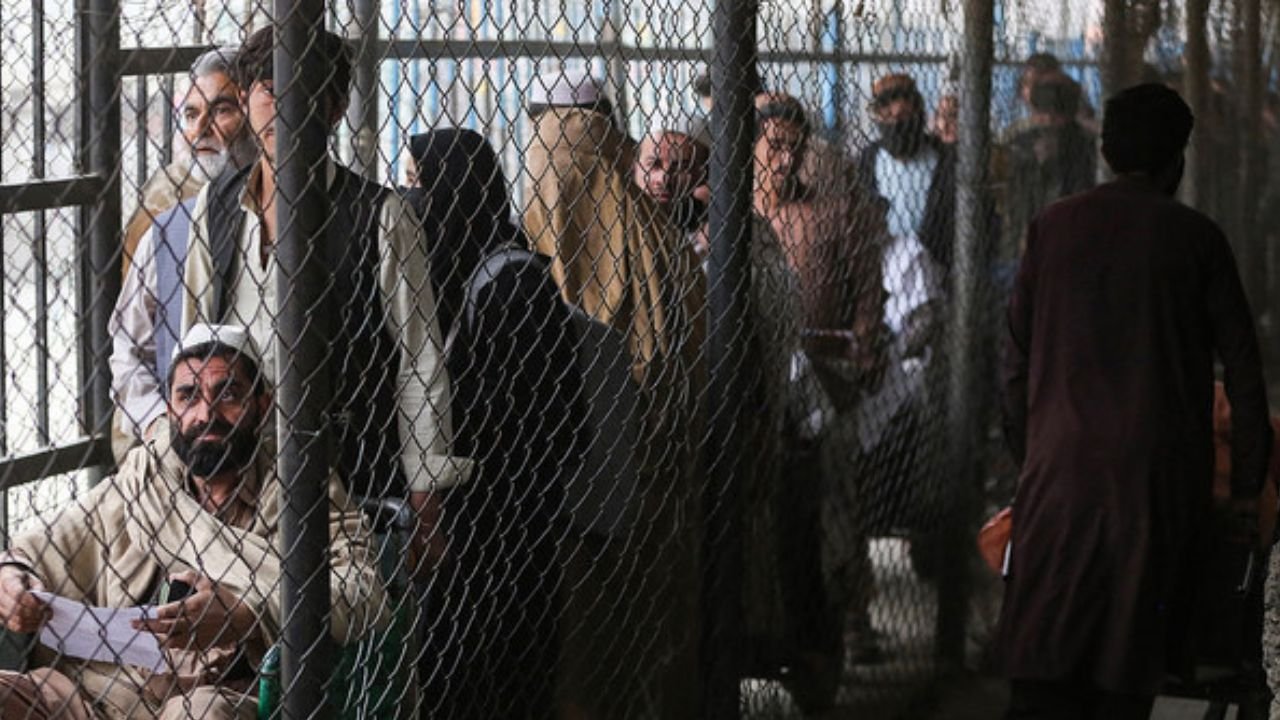
    The Counter-Terrorism Department (CTD) in Islamabad has conducted a major search operation on Sunday against Afghans residing illegally in the city.

    Afghans with legal documents are allowed to stay in Pakistan, while a crackdown on illegal residents and criminals is still in process.

    CTD has conducted operations in Bhara Kahu, Tarnool, Mehrabadi, Golra, Shams Colony and other areas.

    According to the CTD spokesperson, 375 Afghan citizens without any identification documents were arrested for illegal stay, while many criminals were also identified. The accused will be deported to Pakistan after completion of legal proceedings.

    During the operation, 400 Afghan nationals were released on providing proof of residency, while 25 Afghans will remain in detention until their documents are verified.

  • Risk of another poliovirus outbreak

    Risk of another poliovirus outbreak

    More evidence of poliovirus was found in five samples in Peshawar and Karachi and so, the chances of a poliovirus outbreak in the country have now increased.

    According to the Ministry of Health, polio virus found in the five samples in Karachi are genetically linked to the virus in Afghanistan. Whereas, the genetic testing of the virus found in the positive sample from Peshawar is ongoing.

    Previously, five Union Councils of Karachi have been declared at high risk of polio virus.Other places of detection include Hangu and Pishin.

    Earlier this week, Egyptian authorities made it mandatory for travellers from Pakistan, Afghanistan, and other countries to provide a polio vaccination certificate.“

    As informed by the Egyptian Authorities, passengers travelling to Egypt from Pakistan, Afghanistan, Malawi, Mozambique and Congo are requested to provide an international certificate of vaccination specifically polio vaccine, OPV or IPV (both are acceptable),” Pakistan’s Civil Aviation Authority (CAA) said in an advisory on its website on Monday.

    Additionally, last month, the International Health Regulations (2005) Emergency Committee as well as the World Health Organisation (WHO) expressed concerns over Pakistan’s efforts in eliminating polio virus.

  • Afghan Taliban capture 200 anti-Pakistan militants

    Afghan Taliban capture 200 anti-Pakistan militants

    The Afghan Taliban claim to have arrested 200 suspected militants for carrying out cross-border attacks against Pakistan.

    The news was reported as a delegation from Islamabad visited Kabul where the Afghan government hosted bilateral talks last week.

    They expounded on the crackdown against the proscribed Tehrik-i-Taliban Pakistan (TTP).

    Earlier this month, heavily armed militants attacked two Pakistani security posts in Chitral. The raid of September 6th killed four soldiers and 12 assailants for which TTP claimed responsibility.

    VoA spoke with Pakistani officials who said that Taliban leader Hibatullah Akhundzada has “forbidden his forces from launching cross-border attacks against Pakistan, calling them haram or un-Islamic”.

    Moreover, he has also “ordered Afghans not to collaborate with or give donations to the TTP for its so-called jihad against Pakistan and barred the militants from running donation collection campaigns in Afghanistan”.

    The Pakistani officials claimed that according to their assessment, the Taliban are “consciously distancing” themselves from groups they were previously with at the time of insurgency. These groups are now involved in criminal activities in Afghanistan — extortion, kidnapping for ransom, and terrorism.

    The officials highlighted that Taliban leaders are now in control and responsible for the country and must show the world that they do not function like an insurgent group.

  • Exclusive: Afghan parents struggle for five days to take son’s body back to country

    Exclusive: Afghan parents struggle for five days to take son’s body back to country

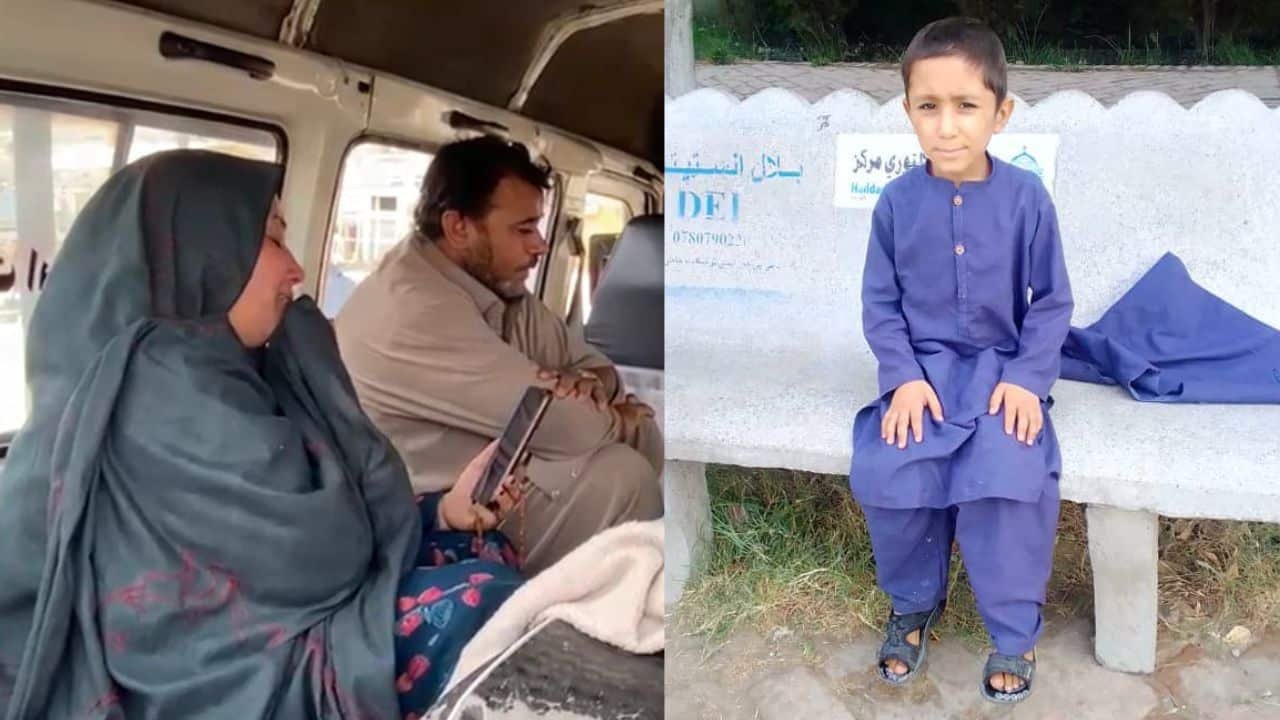
    A recent post on X (formerly Twitter) about Afghan parents unable to take their son’s body back to their country for burial has gone viral. In a photo, the parents can be seen crying beside their deceased son’s body in an ambulance in Peshawar.

    The family had come from Afghanistan to Peshawar for their son’s cancer treatment after he was diagnosed with a brain tumor. However, eight-year-old Muhammad Yasin passed away of the disease. The parents then wanted to return to their hometown in Afghanistan for the burial, but their route via the Torkham border had been closed due to Pak-Afghan security conflict.

    The Current reached out to Tahir Khan, the journalist who posted the picture, for an update on the case.

    Yaseen was the only brother to eight sisters, Tahir Khan said, adding that the child’s father, Gul Muhammad, drives a rickshaw in Jalalabad, Nangarhar province, Afghanistan.

    Around a year ago, Yaseen was diagnosed with brain cancer in Jalalabad. The doctors there recommended to the parents that they take him to Peshawar for his treatment.

    Despite his low income and hardships, Gul Muhammad did everything in his capacity to get his son treated.

    The family frequently travelled to Peshawar and back. The son and father received a pass which made it convenient for them to cross borders.

    In Peshawar they were always hosted by their hometown fellow who had been working as a farmer.

    Yaseen had undergone treatment at the IRNUM cancer hospital as well as Peshawar Hayatabad Complex.

    The tumor in his brain was successfully removed, with the child almost recovering. But all of a sudden, on September 4, Yaseen started feeling unwell while in Jalalabad. The parents brought him to Peshawar Hayatabad Complex where on September 7, Yaseen passed away.

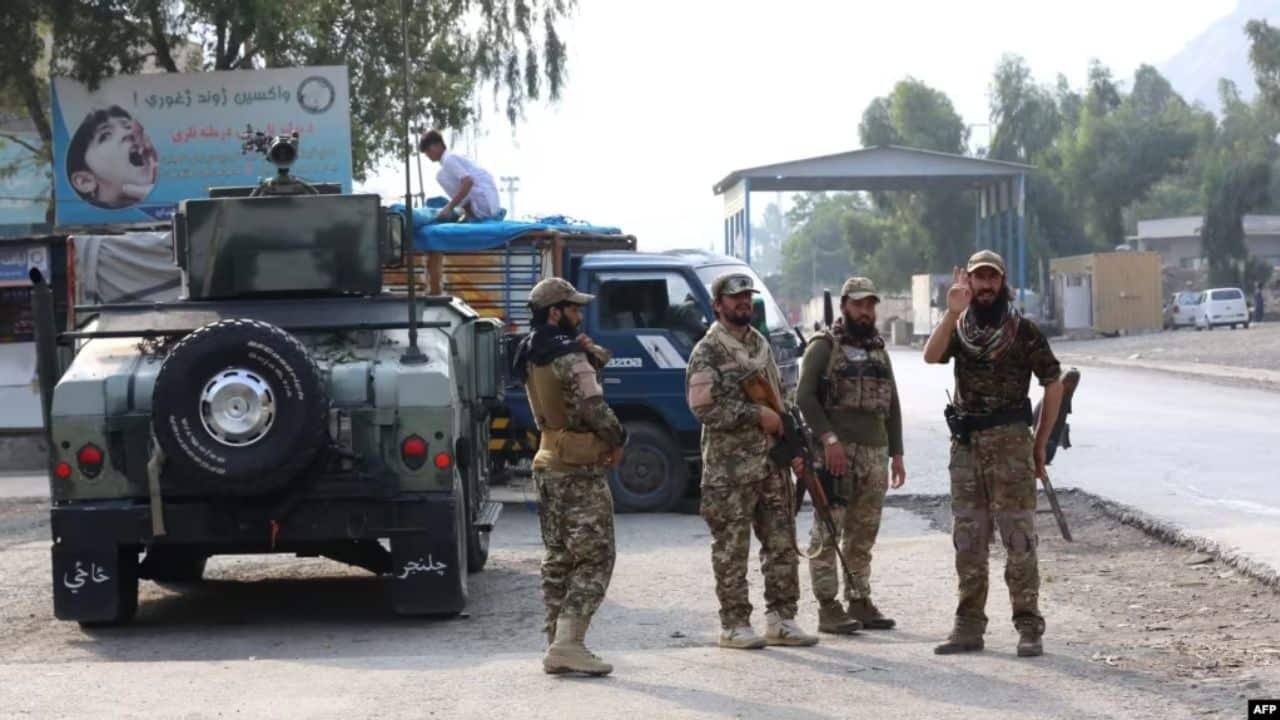
    Now, the parents wanted to take their son’s body back to their hometown for burial but on September 6, Pakistan closed its Torkham border with Afghanistan after two people, including a Frontier Corps (FC) official, were injured in an encounter between Pakistan and Afghan border forces.

    According to the officials, Afghanistan has also started the construction of a checkpoint on their side of the border in a prohibited area “without discussing it with the Pakistani side”, despite an already existing checkpoint, the Larram Post.

    The conflict between the two countries complicated the situation for the grieving family whose route back home was via the Torkham border. They went up to the border twice since the passing of their son, but were sent back.

    Tahir Khan shared their concern on X (formerly Twitter) in hopes that higher authorities would take notice and help the family cross the border.

    They were contacted by an unknown man a couple of days back, who called the family around 2:30 am, promising to help them cross the border, but after that one call, Gul Muhammad was never able to contact the unknown caller and potential helper again since he never picked up his call.

    And so, with no help received from the officials, and with their deceased son’s body lying in the hospital since five days, the family decided to take the longer way back home.

    They are currently on their way to Jalalabad via Kurram border. While Peshawar to Jalalabad takes only three hours via Torkham border, it can take the family approximately half a day or more to travel via the Kurram border.
  • Poliovirus in Afghanistan poses a threat to Pakistan

    The International Health Regulations’ Emergency Committee has expressed concern over the increasing number of polio cases in Afghanistan which also pose a threat to Pakistan because of constant travel between the two countries.

    The Polio Emergency Committee issued a statement on Friday stating that there is still a risk of poliovirus spreading worldwide considering the “cross-border spread into Pakistan” from the eastern Afghan border.

    According to the committee, five new wild poliovirus cases were reported in Nangarhar province of Afghanistan. There were 32 positive environmental samples this year so far in the eastern region except for one site in Kandahar in the southern region and one from Balkh in the north.

    During the committee meeting summoned by the director general of World Health Organisation on August 16, it was stated that one new case of wild poliovirus was reported in Pakistan since May, total cases being two in 2023. Both the cases were reported from Bannu district.

    According to the committee statement, there have been 15 environmental surveillance positive samples in 2023. And while action plan in southern Khyber Pakhtunkhwa has resulted in 160,000 more children being vaccinated, it remain a challenge nonetheless due to “political instability, insecurity in some areas, with front line workers requiring police patrols to accompany them, and vaccination boycotts where communities make demands for other services in exchange for allowing polio vaccination”.

  • Pakistan clinches thrilling victory against Afghanistan in 2nd ODI by one wicket

    Pakistan clinches thrilling victory against Afghanistan in 2nd ODI by one wicket

    In an intense match on Thursday in Hambantota, Pakistan narrowly defeated Afghanistan by one wicket, securing their series victory after a dominant performance in the first ODI.

    Naseem Shah, known for leading Pakistan to success in the Asia Cup 2022, once again played a pivotal role, guiding his team to victory in the final over when they needed 11 runs off 6 balls.

    During the chase of 301 runs, Pakistan faced setbacks with the early loss of Fakhar Zaman, but Imam-ul-Haq and Babar Azam’s partnership of 118 runs steadied the innings.

    After Babar’s dismissal, Pakistan’s victory seemed uncertain, but Shadab Khan’s 48 off 35 balls brought them back into the game. A dramatic final over included Shadab’s mankading and Naseem Shah’s heroics, ultimately leading Pakistan to triumph.

    In Afghanistan’s innings, Rahmanullah Gurbaz’s outstanding 151-run knock propelled his team to post 300-5, with a 227-run partnership alongside Ibrahim Zadran. Despite Gurbaz’s impressive display, Pakistan’s Shaheen Shah Afridi and Naseem Shah secured crucial wickets.

    The match highlighted Afghanistan’s batting prowess, but Pakistan’s resilience and Naseem Shah’s performance stood out, sealing a thrilling victory.

  • Activist Malala Yousafzai sends support to Afghanistan women’s football team

    Women’s rights activist and Noble Prize winner Malala Yousafzai has expressed her support for the women’s football team from Afghanistan, who were banned by the current Taliban government from playing the sport after the takeover in 2021. Currently, the team resides in Melbourne, Australia, where they escaped to in 2021, but right now the football team is not recognised by the government or the FIFA organisation.

    “I’m very sad. I was expecting a lot more for football’s governing body,” said Khalida Popal, who was the former captain of the women’s football team.

    “[Fifa needs] to stand with these women. We want leadership – we need a strong voice to stand with us. Don’t keep silent.”

    Currently, the Afghanistan Women’s Football team is being sponsored by the Australian professional football club Melbourne Victory, and now activist and Nobel Prize winner Malala Yousafzai has joined the ranks in calling for the team to be recognised by FIFA.

    The producer behind ‘Joyland’ was in Melbourne to watch the Women’s World Cup and shared a post of her meeting the team members of the Afghanistan women’s football team, writing that she was inspired by their bravery and determination.

    “I came to Melbourne because of a story. The New York Times published an incredible account of the keeper for the Afghanistan Women’s Team and how its founder @khalida_popal_girlpower helped the players escape near-certain death after the Taliban gained control and banned women’s sports. I was inspired by their bravery and determination. They were so proud to play for their national team and now they were burying their jerseys to avoid being caught and killed.

    Today, I finally met the AWT in person— including Fatima and Khalida — to continue to support their campaign to be recognised by FIFA. This is the power of stories and why we must continue to share them. You never know who could be listening.”

    The Pakistan-born activist urged her followers to read more about the football team and to donate funds to help support them as they live in exile and away from their families

  • Afghan women under Taliban rule: two years later

    Afghan women under Taliban rule: two years later

    15 August 2023 marked two years of the fall of Kabul when the Taliban seized the capital, capturing the government in Afghanistan in 2021.

    While the Afghan government tried to ward off the assault for the longest time, the inevitable took place, leaving many sections of society devastated. Among them were women who knew what the Taliban takeover would mean for their freedom.

    “We are going to allow women to study and work within our framework. Women are going to be very active in our society,”, the Taliban had promised in their first press conference following their takeover. But as many feared, these words never became a reality.

    So, what have the Afghan girls and women endured since 15 August 2021?

    In March 2022, a ban on girls’ secondary education was imposed moments after the education ministry reopened schools for both girls and boys. The ban further barred girls from joining universities.

    Women were denied entry in the job market. This includes exclusion from NGOs as well as the government sector. Ban on beauty salons left women even more helpless. While Afghanistan’s economy has been in shambles, families have been struggling to make ends meet and with women’s exclusion from the job market, especially sole breadwinners like widows or single mothers, are in serious financial crisis. Out of options and desperation, some women have resorted to the profession of nursing and midwifery just to escape the four walls of their house and earn.

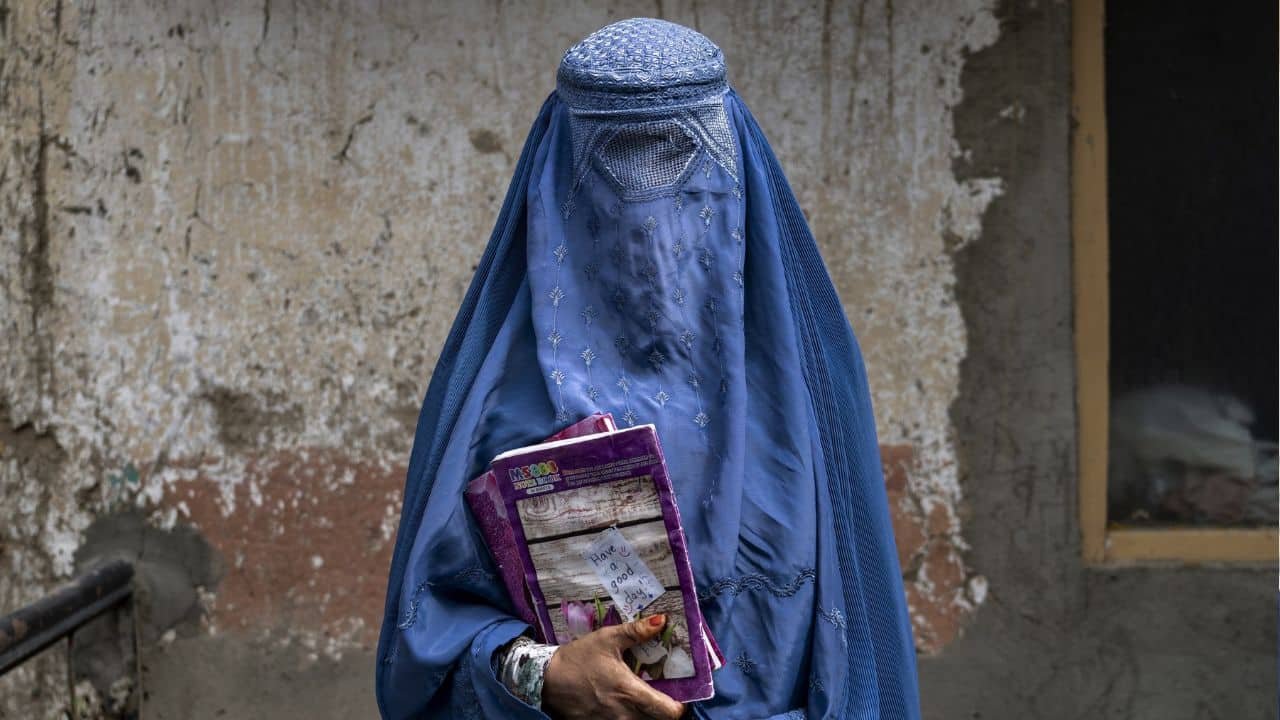
    Not only Afghan women cannot leave their house without a male chaperone (a mahram), but it is mandatory for them to wear burqas. They are also not allowed to wear make-up or heels, and are barred from accessing public places such as parks, gyms, marketplace etc.

    Having nothing to do with their lives as a result of numerous socio-political restrictions, young girls are forced into marriage. Others are sold in order to cover finances or compensate for debts. Parents fear for their daughters’ lives as they often know little about the families they are married into or sold to, but they find themselves to be powerless.

    There is a sense of fear and trauma amongst young girls and women which is leading to mental health issues.

    Following the takeover, valiant Afghan women have, nonetheless, taken their fight to the streets and have protested time and again. Resultantly, they have been threatened and even beaten, but two years on, their anger trumps fear and their struggle continues.