Tag: Africa

  • Macron believes France, allies ‘could have stopped’ 1994 Rwanda genocide

    Macron believes France, allies ‘could have stopped’ 1994 Rwanda genocide

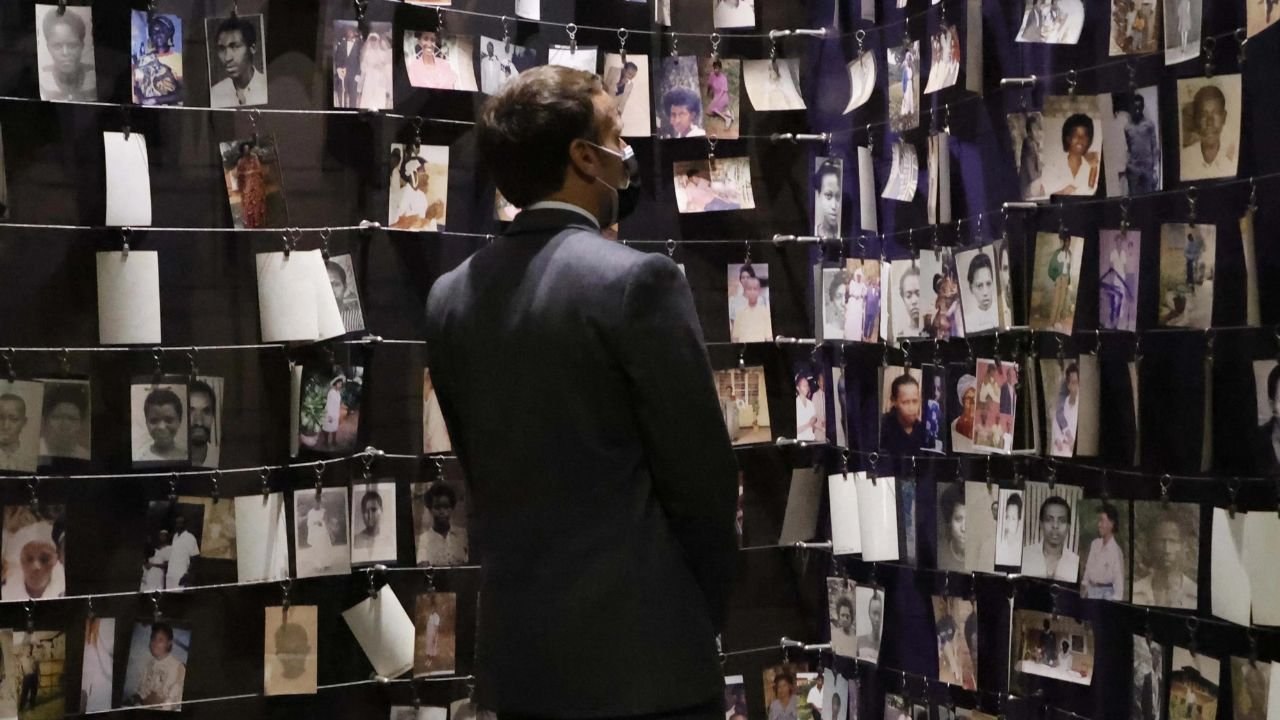
    President Emmanuel Macron believes France and its Western and African allies “could have stopped” Rwanda’s 1994 genocide but did not have the will to halt the slaughter of an estimated 800,000 people, mostly ethnic Tutsis, the presidency said on Thursday.

    In a video message to be published on Sunday to mark the 30th anniversary of the genocide, Macron will emphasise that “when the phase of total extermination against the Tutsis began, the international community had the means to know and act”, a French presidential official said, asking not to be named.

    The president believes that at the time, the international community already had historical experience of witnessing genocide with the Holocaust in World War II and the mass killings of Armenians in Ottoman Turkey during World War I.

    Macron will say that “France, which could have stopped the genocide with its Western and African allies, did not have the will” to do so, the official added.

    The president will not be heading to Kigali to attend commemorations of the genocide this Sunday alongside Rwandan President Paul Kagame, and France will instead be represented by Foreign Minister Stephane Sejourne.

    Macron, during a visit to Rwanda in 2021, recognised France’s “responsibilities” in the genocide and said only the survivors could grant “the gift of forgiveness”.

    But he stopped short of an apology and Kagame, who led the Tutsi rebellion that ended the genocide, has long insisted on the need for a stronger statement.

    A historical commission set up by Macron and led by historian Vincent Duclert also concluded in 2021 that there had been a “failure” on the part of France under former leader Francois Mitterrand, while adding that there was no evidence Paris was complicit in the killings.

    Marcel Kabanda, president of the Ibuka France genocide survivor association, welcomed Macron’s new message reported on Thursday.

    “It goes even further than the Duclert report or his message in Kigali” in 2021, he said.

    “I’m overjoyed he is giving France this positive image of a country that recognises its faults and grows through recognising its history,” he said.

    In his video message, Macron is to “reiterate the importance of the duty of remembrance, but also of developing and disseminating reference knowledge, in particular through the education of younger generations in France,” the presidency said.

  • World’s third biggest mosque opens to public ahead of Ramzan

    World’s third biggest mosque opens to public ahead of Ramzan

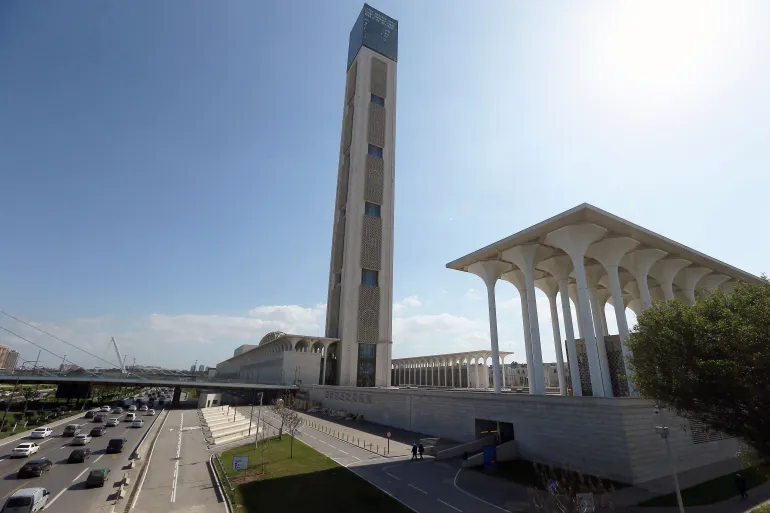
    Algeria has finally opened the third-biggest mosque in the world and the largest in Africa, ahead of the holy month of Ramzan, according to Al Jazeera.

    The inauguration of the mosque has taken several days due to unrest in the country. The Grand Mosque of Algiers was formally opened on Monday by Algerian President Abdelmadjid Tebboune.

    Djamaa El-Djazair is how the locals refer to it, and it can house up to 120,000 worshippers at once. With a height of 265 meters (869 feet), it has the highest minaret in the world.

    After seven years of construction, a vast modernist building spanning approximately 70 acres was completed, with marble and wood elements along with Arabic and North African architectural elements.

    It even has a library large enough to house a million volumes and a helipad. The massive structure was built by a Chinese firm, reportedly costing around $900 million.

    It is being marketed as the third-biggest mosque worldwide, following the holy mosque in Makkah and the Prophet’s mosque in Madina, both located in Saudi Arabia.

  • Over 95 Percent Of Sudanese Cannot Afford A Meal A Day: WFP

    Over 95 Percent Of Sudanese Cannot Afford A Meal A Day: WFP

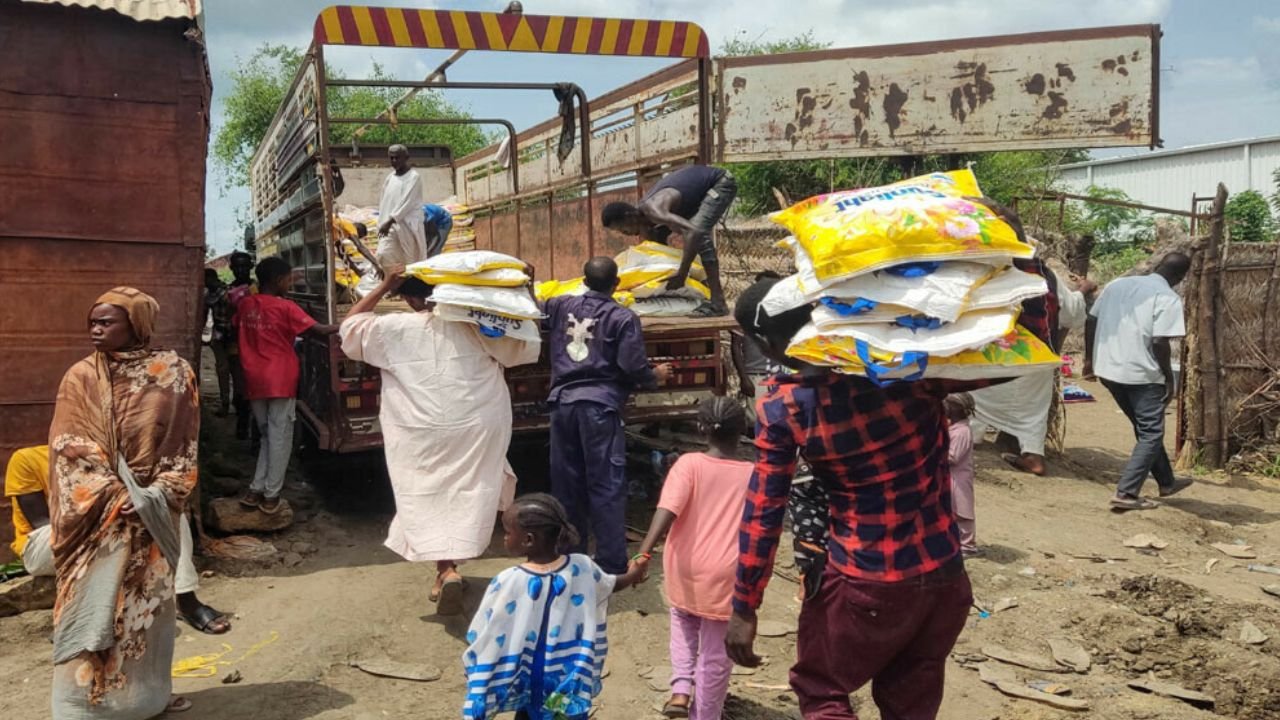
    Ten months into a war that has sent Sudan to the “verge of collapse”, the vast majority of its people are going hungry, the UN’s World Food Programme said Wednesday.

    “At this point, less than five percent of Sudanese can afford a square meal a day,” the WFP’s Sudan country director, Eddie Rowe, told reporters in Brussels.

    Since last April, Sudan has been gripped by fighting between the regular army and the paramilitary Rapid Support Forces, which has killed thousands and created what the United Nations calls “the world’s largest displacement crisis”.

    A combined 10.7 million people have been uprooted by the current war and previous conflicts, according to the UN.

    Nine million remain displaced within Sudan, where Rowe said a “lethal cocktail of continued conflict, stalled harvests and rampant and consistent displacement risks plunging millions more into a catastrophic humanitarian disaster.”

    Across Sudan, which the WFP says was already facing one of the world’s worst food crises before the war, 18 million people are facing acute food insecurity.

    Of those, Rowe said “close to five million are on the precipice of catastrophe” — enduring one of the worst emergency classifications the WFP uses, second only to famine.

    Aid groups have for months warned that as a result of hampered humanitarian access and severe underfunding, the spectre of famine looms over Sudan.

    But the same obstacles to aid delivery inhibit the ability to determine the extent of the catastrophe.

    According to Michael Dunford, WFP’s Eastern Africa regional director, there is a major issue in “the availability of the data to confirm one way or the other whether or not the thresholds (required to declare a famine) have been met”.

    With WFP only able to reach 10 percent of those in need, “there are large tracts of the country that we simply cannot access,” Dunford told reporters.

    Sudan’s most fertile regions could have helped ward off famine, if not for the fighting encroaching into the country’s agricultural heartlands.

    In December, a paramilitary advance brought the war to Al-Jazira state, just south of the capital Khartoum, which was set to produce the bulk of Sudan’s grains for the season.

    “Thousands of smallholder farms and even the large-scale schemes have been deserted, because people are on the move running away from the conflict,” Rowe said.

    “As we approach the hunger season,” he said, the crisis is only set to “further deteriorate”.

    The lean season, roughly from April to July, usually sees food prices run high as stocks dwindle ahead of the next harvest.

    With markets across the country already empty and an ongoing communications blackout hampering all transactions, Dunford says the future is bleak.

    “This is a country on the verge of collapse,” he said.

  • Actor-in-Law; Fake Kenyan lawyer won every case he contested

    Actor-in-Law; Fake Kenyan lawyer won every case he contested

    This is not a movie plot-line but a baffling revelation of an imposter working as a lawyer with a streak of 26 victories in a row. Brian Mwenda Njagi, an alleged advocate, now faces arrest and unsettling questions about the country’s judicial credibility.

    The unmasking happened when Njagi dared to represent former leader Maina Njenga. A video of the courtroom went viral, prompting the Law Society of Kenya(LSK) Nairobi Branch to dig deep into the matter only to find out that Mwenda was never registered as a member of the society. On top of that, he also had no legal qualifications.

    He had been presenting himself as a lawyer for three years and had handled 26 cases before High Court Judges, Magistrates, and Court of Appeal Judges. He won all the 26 cases before his arrest.

    This shocking expose has garnered a range of reactions, from shock to amusement that someone without any qualification outperformed established lawyers in the court.

    One social media user posted “So he won 26 cases against Lawyers who went to the law school but he’s rather being punished? Those lawyers should rather be punished for letting one who hasn’t attended a law school win cases against them,”

    Other pleaded to give him the lisence. “Fair enough. Winning 26 cases isn’t beans. He deserves that license.”

    Another user pointed out the forgery of Law Schools. “Brian Mwenda has proved that Law School is a Scam and Law Bar Examination is a Scam too these are Standards made by the Colonial systems this man litigated and won all his cases give him the Law license to practice Law.”

  • Poverty-driven child marriages surge in flood-hit Balochistan

    Poverty-driven child marriages surge in flood-hit Balochistan

    Journalist and storyteller Shahar Baloch has recently reported for BBC about the aftermath of the devastating floods in Balochistan last year. The report reveals that families from lower income backgrounds, impacted by the aftereffects of the floods, are being compelled to sell their daughters due to mounting debts. The dire situation was uncovered in the Chowki Jamali area, one of the regions hit hardest by the 2022 floods.

    Chowki Jamali, a remote area on the border of Sindh and Balochistan, is home to approximately 50,000 people, primarily farmers and daily wage laborers. The 2023 floods displaced over 3.2 million families in 2022, with Sindh and Balochistan experiencing the worst of the brunt.

    As families struggled to recover, the economic downturn pushed many to sell their young daughters to older men, aged between 40 and 60 years, in exchange for money to pay off debts or cover medical expenses. Daily wage laborers, earning as little as 500 rupees a day, say that they are left with no other option.

    Residents of the area say that early marriages have been conducted here in the past as well.

    The Provincial Disaster Management Authority (PDMA) conducted a survey of 14 districts of Balochistan in August 2022. According to the survey, there has been a 13 per cent increase in the number of cases of selling female children.

    Most girls are sold for amounts ranging from three to five lakh rupees, providing relief for financially strained families, who often rely on the transaction to settle debts, access medical treatment, or invest in their son’s education.

    The situation is exacerbated by the fact that in some cases, girls are sold multiple times if they do not “adjust” to their new circumstances. Some girls even run away upon learning of their impending sale, leaving their younger sisters to be married off in their place.

    The term “climate brides” is used to describe these girls, and this alarming practice is not unique to Balochistan; it also occurs in countries like Africa and India where poverty and climate change intersect.

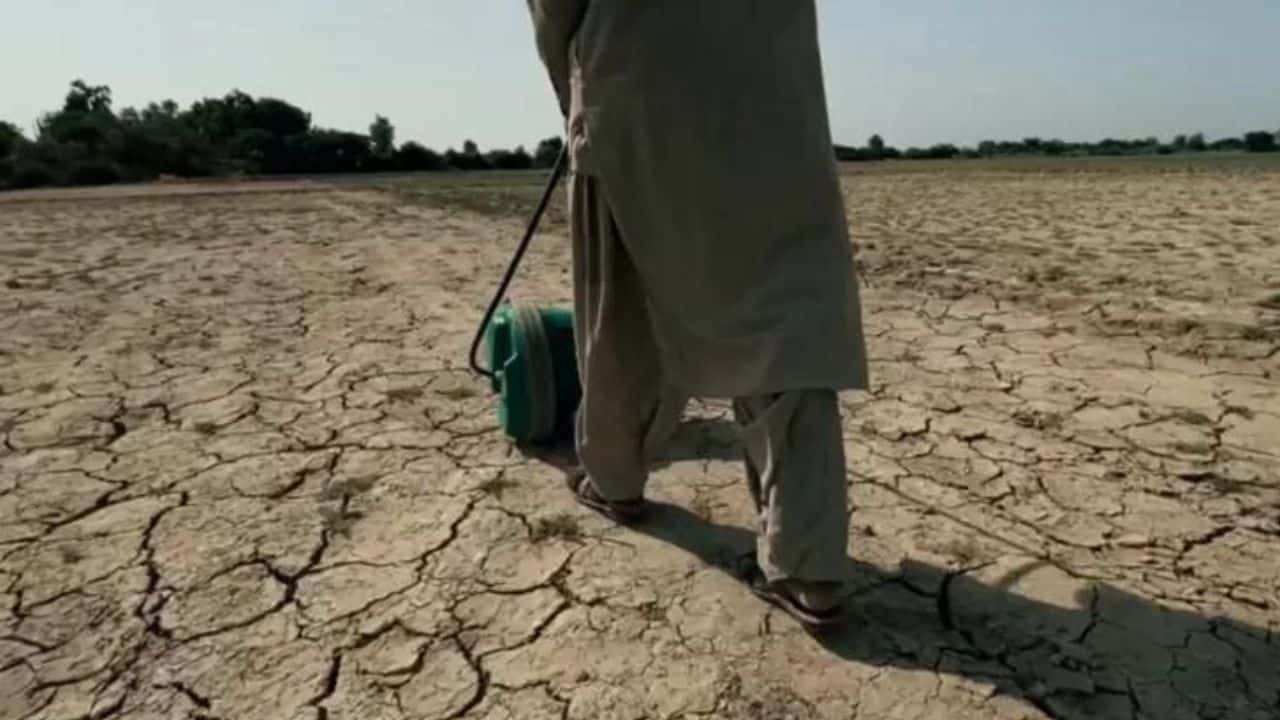
    Climate change and floods have made agriculture increasingly unprofitable in Balochistan, driving families to desperate measures. With little income and food scarcity, many in Chowki Jamali resort to selling their daughters to survive.

    Even though education has made a difference, parents continue to sell their daughters due to extreme poverty.

    Health workers report severe health consequences for young girls married off early, including complications during pregnancy and the development of conditions like fistulas. Despite being aware of this issue, authorities have struggled to curb these marriages.

    Lady health worker Shehzadi told the BBC that in some cases, girls cry in pain, and some die here. “We still make noise, we can say something, but the mothers of these girls cannot say anything in this matter because it is the men of the house who decide to sell the girls.”

    Madad Community, an organization working on climate change in Balochistan, recently said that as a result of climate change and floods, it has become very difficult to earn from the agriculture sector.

    Organizer Maryam Jamali said that most people were forced to migrate, including the middle class of Balochistan. Poor farmers still have nowhere to go. As a result of extreme heat, more droughts and floods have been predicted.

    Fauzia Shaheen, Chairperson of the Government Commission for Women, revealed that Balochistan lacks effective laws to prevent child marriages, and efforts to pass the Child Marriage Restraint Bill have faced obstacles.

    In Balochistan, it is clear that the true cost of flood damage is being borne by the region’s vulnerable young girls, who are forced into early marriages due to dire economic circumstances.

  • Shahnawaz Dahani ne African language kyun seekhi, player reveals details

    Shahnawaz Dahani ne African language kyun seekhi, player reveals details

    Shahnawaz Dahani, Pakistan’s ace fast-medium pacer, has opened up about a viral video featuring the cricketer on the streets of Zimbabwe, singing a famous African traditional song with local children.

    Recently, the Pakistan Shaheens toured Zimbabwe for two Test matches and six One Day Internationals (ODIs), winning both test matches while Zimbabwe emerged victorious in four out of six ODI matches. These were unofficial matches held in Harare.

    The most interesting part of the series was Shahnawaz Dahani’s lively moments on the streets of Zimbabwe with African kids singing their traditional songs in the African Shona language.

    While speaking exclusively to “The Current Life”, Shahnawaz Dahani was asked if he loves spending time with children and the story behind the viral video, as well as how he learned the language.

    “I love spending time with children as they are the future of Pakistan. They watch us and learn from us, and they have dreams just like we did in our childhood. The same goes for the Zimbabwean kids. They enjoy watching us, and we also enjoy their company,” the bowler said.

    “I learned the language in just 30 days. I observed and watched them closely to understand what they were saying, and I quickly picked up the language.

    My teammates were amazed at how I learned the language, and although they tried, they failed. The credit goes to me for learning the African Shona language in just 30 days,” Dhani stated.

    Zimbabwean kids really like cricket and follow Pakistan, the pacer explained, adding that it motivated him to learn their language. “If you have passion, you can easily accomplish difficult and seemingly impossible things,” he remarked.

    When asked how many languages Shahnawaz Dahani can speak, he replied, “I try to learn as many as I can. I love learning languages and new things. I can speak five to six languages.”

  • Vacation but visa nahi mil raha? Here is a list of countries that have visa on arrival for Pakistanis

    Vacation but visa nahi mil raha? Here is a list of countries that have visa on arrival for Pakistanis

    Summers are already here and the recent devaluation of the national currency has made it nearly impossible for travelers to pursue journeys.

    If you have a Pakistani passport, it’s not an easy task to get a visa of the country you love. But we have some suggestions to make your summer vacation memorable and budget-friendly.

    Currently, there are a total of four countries that allow Pakistan visa on arrival. These countries are as follows:

    Maldives

    The Maldives is an island nation in the Indian Ocean, located southwest of Sri Lanka and India. It is known for its beautiful beaches, crystal-clear waters, and stunning coral reefs. The Maldives is a popular tourist destination, offering a variety of activities for visitors to enjoy, including swimming, sunbathing, diving, snorkeling, fishing, and sailing.

    most famous tourist spot in maldives

    Things to do in Maldives

    Swimming and sunbathing:The Maldives has some of the most beautiful beaches in the world, making it the perfect place to relax and soak up the sun.

    Diving and snorkeling:The Maldives is home to stunning coral reefs, making it a popular destination for divers and snorkelers.

    Fishing:The Maldives is a great place to go fishing, with a variety of fish species to catch.

    Sailing:The Maldives is a great place to go sailing, with calm waters and beautiful scenery.

    Spa treatments:The Maldives is a great place to relax and pamper yourself, with many resorts offering a variety of spa treatments.

    You do not need to apply for a visa before you travel to the Maldives on holiday. All tourists, of all nationalities, can receive a 30 day visa free of charge on arrival in the Maldives.

    SamoaSamoa tourist visa is not required for citizens of Pakistan for a stay of up to 60 days.
    Samoa is a beautiful island nation located in the South Pacific Ocean. It is made up of two main islands, Upolu and Savai’i, and several smaller islands. Samoa is known for its stunning natural beauty, including pristine beaches, lush rainforests, and stunning waterfalls.

    samoan traditional dance

    As a tourist, there are many things to see and do in Samoa. Here are some of the top activities and attractions:

    Beaches: Samoa is home to some of the most beautiful beaches in the world. From Lalomanu Beach to Aganoa Beach, there are plenty of stunning spots to soak up the sun and enjoy the crystal-clear waters.

    Waterfalls: Samoa is also known for its incredible waterfalls. Some of the most popular include Togitogiga Falls and Fuipisia Falls.

    Cultural Activities: Samoa is a rich and vibrant culture. Visitors can experience traditional dance performances, attend a Fiafia Night, or visit a village to learn more about Samoan customs and traditions.

    Tuvalu

    Tuvalu has made visa-free access or visa-on-arrival access for almost every country globally, including Pakistan. These visas are valid for 30 days and will cost travellers approximately 100 AUD.
    Enjoy the Beaches: Tuvalu is home to some of the most beautiful and pristine beaches in the world. Visitors can soak up the sun, swim in the crystal-clear waters and enjoy the stunning views.

    Snorkeling and Diving: Tuvalu’s coral reefs are home to a diverse array of marine life, making it a great destination for snorkeling and diving. Visitors can explore the reefs and see colorful fish, sea turtles, and even sharks.

    Visit Funafuti Atoll: This is the capital of Tuvalu and offers visitors a chance to see the local way of life. Visitors can explore the town and visit the local shops, enjoy the markets, and learn about the history and culture of Tuvalu.

    Attend a Cultural Event: Tuvalu has a rich cultural heritage, and visitors can experience traditional dance performances, attend a Falekaupule Meeting, or participate in a local celebration or festival.

    It is important to note that visa policies for each country can change quickly and without notice, so it is recommended that travelers check with their local embassy before departing. Additionally, visa on arrival may not be available for all types of travel such as business or education purposes, so travelers should also verify the purpose of their travel is eligible for visa on arrival.

    In conclusion, while the list of countries offering Pakistan visa on arrival is relatively small, it does provide some relief for those who may have difficulty obtaining a traditional visa. As always, travelers should research their destination before embarking on any trip to ensure all necessary documents are secured to ensure a smooth and enjoyable travel experience.

  • Buckingham Palace reject’s request to send remains of Ethiopian prince to family

    Buckingham Palace has once again rejected a request from Ethiopian officials to send back the body of Prince Alemayehu, who passed away at the age of 18 in the United Kingdom.

    Born in Magdala in 1861, Alemayehu was only seven years old when the British arrived in Ethiopia in 1868 and laid seige to Tewodro’s mountain fortress which led to a fierce battle that ended with the death of the emperor, Tewodros II.

    The British stole many valuable artefacts and heirlooms, along with the Empress Tiruwork Wube and her son, Prince Alemayehu. By the time the young prince arrived in the UK, he was an orphan after his mother died during the journey.

    After his arrival, Queen Victoria took sympathy upon the boy, taking up financial responsibility for his expenses.

    Alemaheyu was first sent to a public school, and then to a military college in Sandhurst where he was bullisd. A private tutor was hired to teach him at his home in Leeds, where he became ill and began refusing treatement, fearing he was poisoned.

    The prince also reportedly longed to go back home, as correspondence had shown, but this idea was constantly shut down.

    Alemayehu passed away at his home at the age of 18.

    Queen Victoria had written about her sadness in her diary:

    “Very grieved and shocked to hear by telegram, that good Alemayehu had passed away this morning. It is too sad! All alone, in a strange country, without a single person or relative, belonging to him,” she wrote.

    “His was no happy life, full of difficulties of every kind, and was so sensitive, thinking that people stared at him on account of his colour… Everyone is very sorry.”

    Demands for the return of the remains of Prince Alemaheyu date back to 2007, when the country’s then-president Girma Wolde-Gior sent a formal request to Queen Elizabeth II, but nothing came of it.

    Recently, a spokesperson from the Buckingham Palace sent a statement to the BBC explaining their refusal to send the remains back to his home, stating that shifting his remains would disturb the other bodies buried at St George’s Chapel in Windsor Castle.

    “It is very unlikely that it would be possible to exhume the remains without disturbing the resting place of a substantial number of others in the vicinity,” the palace responded.

    They further mentioned in the statement that the Royal Palace has awlays accomodated those from Ethiopia who wished to visit the prince’s resting place, and were aware of the need to honor Prince Alemaheyu’s memory.

    Speaking to the BBC, Faisal Minas, a descendant of the Royal Family in Ethiopia, said:

    “We want his remains back as a family and as Ethiopians because that is not the country he was born in. It was not right for him to be buried in the UK.”

  • Ons Jabeur becomes first Arab woman to reach Grand Slam final

    Ons Jabeur becomes first Arab woman to reach Grand Slam final

    Ons Jabeur defeated close friend Tatjana Maria in the Wimbledon semifinals on Thursday, making history as the first Arab woman to compete in a Grand Slam singles final.

    After winning 6-2, 3-6, 6-1, Tunisia’s world number two, 27, will play either Simona Halep or Elena Rybakina in the title match on Saturday.

    Jabeur, the first Arab player to reach a Slam semifinal, said, “I’m a proud Tunisian woman standing here.”

    Irene Bowder Peacock from South Africa and Renee Schuurman from Australia in 1959 were the only African women to have advanced to a Slam singles final before Thursday.

    “It’s a dream come true from years of work and sacrifice. I’m happy that’s paid off and I’ll continue for one more match,” said Jabeur.

    “Physically, Tatjana is a beast, she doesn’t give up, I thought she would give up — her touch, her serve and everything on the court is impressive. I hope she’s continues this way. Let’s not play again I’m good for now.

    “I know in Tunisia they are going crazy right now. I want to see more Arab and African players on the tour. I love the game and I want to share the experience with them.”

    With breaks in the third and seventh games, Jabeur easily defeated mother-of-two Maria in the first set. In the opening set, the Tunisian had 15 winners to her opponent’s six, and she did not encounter a single break point.

    On the strength of a sequence of deft slices, Maria, who Jabeur referred to as her “barbecue buddy,” did manage to ultimately breakthrough for 3-1 in the second set.

    The more precise German levelled the match with six unforced errors to Jabeur’s 17 in the second set.

    However, there would be no unexpected victory when the 103rd-ranked Maria’s challenge was rejected. Jabeur earned a double break for a 5-0 lead before saving a second match point to go down in history.

  • Sheep sentenced to three years in prison for killing a woman

    Sheep sentenced to three years in prison for killing a woman

    A sheep has been sentenced to three years in prison for killing a 45-year-old woman in Africa’s South Sudan, reports NDTV.

    The woman named Adhieu Chaping was attacked by the sheep repeatedly which eventually killed her.

    According to the Indian media outlet, the sheep will spend its sentence in a military camp. Moreover, the court directed the owner of the sheep to give five cows to the family of the victim.

    The police spokesperson said, “The owner is innocent and the sheep is the one that committed the crime so it deserves to be arrested. Later on, the case shall be forwarded to customary court where the case can be handled amicably.”

    It has been reported that according to customary laws, the sheep will be given to the victim’s family as compensation after serving its sentence.