Tag: agriculture

  • Govt planning to increase sales tax on tractors by up to 14%

    Govt planning to increase sales tax on tractors by up to 14%

    The federal government is poised to increase the sales tax on tractors in Pakistan from 10 per cent to 14 per cent, a move that is expected to raise the cost of these essential agricultural machines.

    In the 2024-25 budget, the government removed the previous exemption and introduced a 10 per cent sales tax on tractors.

    However, recent discussions within the Federal Board of Revenue (FBR) have led to a proposal for further increasing this tax to 14 per cent.

    Sources revealed to Business Recorder that the FBR has finalised this proposal, which now awaits Cabinet approval. The Finance Ministry has already forwarded a summary to the Cabinet for review.

    The rationale behind this proposed increase is to address an issue with refunds in the tractor industry. Currently, the 10 per cent sales tax does not fully account for the input tax credits, as the standard sales tax rate is 18 per cent.

    This discrepancy leads to refunds being issued to the industry, which the government aims to curtail by raising the tax rate.

    Since the Finance Act 2024, a 10 per cent sales tax has been in effect on tractors from 1 July 2024, replacing the previous exemption.

    The proposed hike to 14 per cent is intended to mitigate the refund issue and align the tax regime more closely with the standard rate.

  • Watermelon growers send notice of damages to Dr. Affan

    Watermelon growers send notice of damages to Dr. Affan

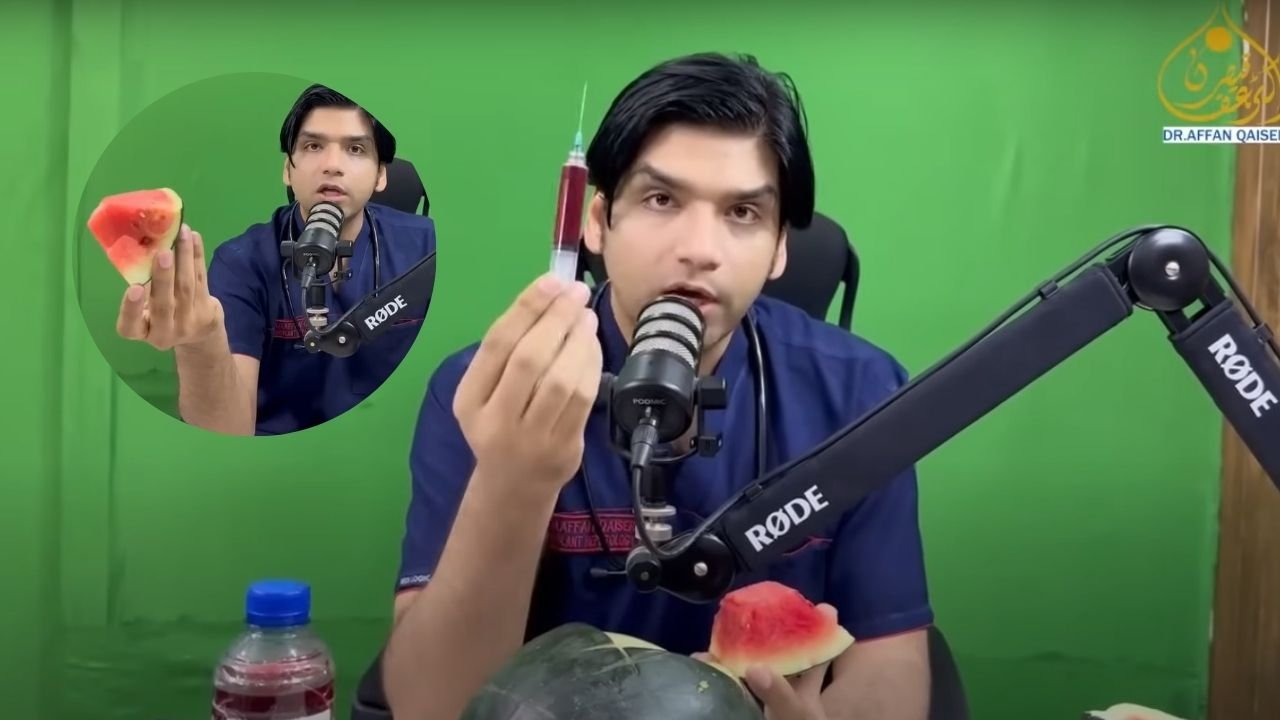
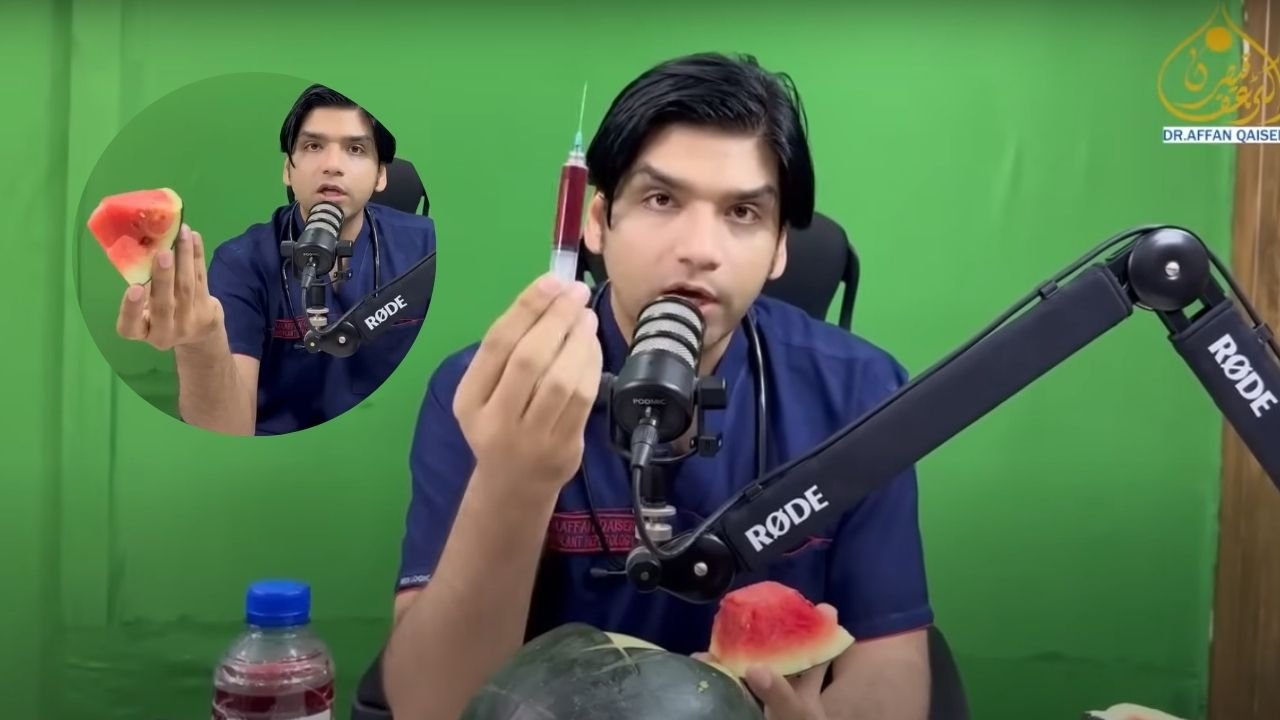
    Businessmen from Faisalabad have sent a notice of 10 billion rupees to Dr. Affan Qaiser against his statement about injecting watermelons.

    A request has also been made by Faisalabad engine traders to register a case against Dr. Affan in Ghulam Muhammad police station.

    According to the petition, Dr. Affan’s statement spread fear and panic and caused billions of rupees loss to businessmen and landlords.

    The YouTuber doctor was also sent a legal notice for damages of ten billion rupees.

    Background:

    In one of his latest videos, he raised the issue of “adulterated watermelons” i.e. injecting watermelons with chemicals in order to give them the red colour that consumers accept as a sign of the fruit being sweet.

    A couple days later, Dr. Qaiser released another video, justifying his claims with online articles while also pointing that he never put the blame on farmers.

  • Farmer slams Dr. Qaiser for targeting watermelons

    Farmer slams Dr. Qaiser for targeting watermelons

    Dr. Affan Qaiser, a doctor from Multan is known on social media for videos that are usually part social commentary and many times, factually incorrect.

    In his latest video, he raised the issue of “adulterated watermelons” i.e. injecting watermelons with chemicals in order to give them the red colour that consumers accept as a sign of the fruit being sweet.

    The video was followed by criticism as people debunked the supposed myth — particularly farmers.

    One farmer pointed out that today, in the age of social media, everyone is a supposed expert in everything, adding that while Dr. Qaiser gives his two cents on everything, he doesn’t realise how his claims can be detrimental for certain people.

    He also said that Qaiser should instead focus on his profession i.e. doctor, and talk about the exploitation by medical labs and pharmaceutical companies instead of farmers.

    A couple days later, Dr. Qaiser released another video, justifying his claims with online articles while also pointing that he never put the blame on farmers.

    Who is Dr. Qaiser?

    Dr. Affan Qaiser and his partner-in-crime – his wife, Nazish Butt -are widely followed on social media.

    As internet personalities, apart from explainers, they also host podcasts and interviews.

    Time and again, people have criticised Dr. Qaiser for having a holier-than-thou attitude while being hypocritical all the same. For example, he persistently and strongly disapproves eating out in efforts to encourage a healthy diet yet simultaneously, he and his wife have often been seen at restaurants.

    But he is mostly known for his criticism of the widely loved Pakistani snack: samosa.

    According to Dr Qaiser, the samosa is an “atom bomb of 400 calories”, and that samosas are fried in poor quality oil.

  • CDWP gives go-ahead to 10 development projects valued at Rs115 billion

    CDWP gives go-ahead to 10 development projects valued at Rs115 billion

    In a key meeting held on Friday, the Central Development Working Party (CDWP) approved a total of 10 development projects, with an overall cost of Rs115.458 billion.

    Out of these, eight projects totaling Rs17.297 billion were given the green light by the CDWP forum, while two projects, valued at Rs98.161 billion, were recommended to the Executive Committee of the National Economic Council (ECNEC) for final approval.

    Deputy Chairman Planning Commission Mohammad Jehanzeb Khan chaired the meeting, attended by Secretary Planning Awais Manzur, Planning Commission members, Additional Secretary Planning, and representatives from federal ministries and provincial governments.

    The meeting’s agenda covered a range of sectors, including agriculture and food, energy, governance, health, higher education, physical planning and housing, science and technology, transport and communication, and water resources.

    A notable project from the agriculture and food sector, the “Sindh Livestock and Aquaculture Development Project,” valued at Rs38.36 billion, was recommended to ECNEC for final approval.

    This World Bank-assisted project aims to improve competitiveness, inclusivity, climate resilience, and sustainability in Sindh’s livestock and aquaculture sectors.

    Another significant project from the energy sector, the “765/500/220/132kV Islamabad West Substation,” worth Rs59.801 billion, was also referred to ECNEC for final approval.

    This World Bank-backed initiative is part of the National Transmission and Modernization Project Phase-I and aims to address increasing power demands in the Islamabad region through a new substation and related transmission lines.

    The governance sector saw approval for the “Modernization and Upgradation of Pakistan Mint Phase-II” project, costing Rs2.48 billion, as well as the “Federal Project Management Unit (FPMU) Post-Flood 2022 Reconstruction Program” project, valued at Rs2.38 billion.

    In the physical planning and housing sector, five projects were discussed, including the “Smart Environmental Sanitation System and Landfill Project” in Gwadar, worth Rs3.277 billion, and the “Construction of Audit House, Lahore,” valued at Rs1,528.931 million. Both projects received approval from the CDWP forum.

    A project related to science and technology, the “Establishment of Regional Nuclear Safety Inspectorate at Lahore,” costing Rs515 million, was also approved by the CDWP. This project aims to enhance nuclear safety and oversight in the region.

    The approval of these projects underscores the government’s commitment to advancing critical infrastructure, promoting sustainable development, and addressing energy needs, among other priorities. The recommendations to ECNEC signal the importance of these projects for the country’s growth and development.

  • ‘Social media is being used to create environment of chaos,’ says General Asim Munir

    ‘Social media is being used to create environment of chaos,’ says General Asim Munir

    In a recent address at the National Farmers Convention in Islamabad, Chief of Army Staff (COAS) General Asim Munir expressed concern over the rampant spread of fabricated claims against the state of Pakistan on social media.

    “Social media is being used to create an environment of chaos, despair, and panic. Through fake news, an impression is being created that the state is losing its [writ],” the army chief said in an address to the National Farmers Convention in Islamabad on Friday.

    Pakistan, like many other nations, is grappling with the challenge of fake news on social media, where unfounded reports fueled by emotional appeals are spreading rapidly and contributing to societal divisions. A detailed report earlier this year by EU DisinfoLab revealed that Indian media outlets were involved in a smear campaign against Pakistan, quoting non-existent organizations, journalists, and bloggers.

    COAS Munir highlighted that such smear campaigns are not limited to external actors, as investigations have revealed the involvement of the Imran Khan-led Pakistan Tehreek-e-Insaf (PTI) in using state resources to spread false propaganda against state institutions.

    Addressing the farmers, COAS Munir addressed the rumors and negative impressions being spread about Pakistan. He emphasized the historical significance of Pakistan, stating that it is founded on the principles of the Kalima, with divine backing for the country.

    COAS Munir reminded the audience of Pakistan’s abundant resources, including glaciers, rivers, mountains, and fertile land producing world-class rice, fruits, and valuable minerals like granite, gold, and copper.

    He lamented that Pakistan, once one of the fastest-growing countries in Asia in the 1960s, witnessed a decline due to forgetting the golden principles of faith, unity, and discipline advocated by the Quaid-i-Azam.

    Moving forward, COAS Munir discussed the Green Pakistan Initiative, highlighting its focus on boosting agriculture. He assured that a major chunk of the initiative’s income will go to the provinces, while the rest will be kept for farmers and agricultural research, he said, noting that the “role of the army in this is only to serve the people and farmers”.

    COAS Munir pledged to ensure easy agricultural credit, a cold storage chain, climate change-resistant seeds, and genetically engineered livestock for farmers.

  • China to assist Pakistan in improving crop growth through advanced farming

    China to assist Pakistan in improving crop growth through advanced farming

    Liu Jianming, Deputy Party Secretary and Deputy Political Commissar of the Xinjiang Production and Construction Corps, announced that China is set to extend support to Pakistan by providing top-quality, disease-resistant, high-yield hybrid seeds for cotton, canola, and wheat crops. 

    The objective is to achieve robust crop production while simultaneously addressing the escalating demands of the textile industry and earning essential foreign exchange. During his visit to the head office of Guard Agricultural Research and Services, he emphasised, “We aim for enhanced crop production through modern mechanised agricultural farming,” according to a news release. 

    Furthermore, Liu affirmed that China will collaborate with Pakistan in the production of cotton hybrid seeds, encompassing sunflower, maize, sesame, and other varieties. He also mentioned that China would share its successful experience with “Water Saving Technology.” 

    Expressing appreciation for the research activities of Guard Agriculture Research, Liu stated that all nine members of the delegation were keenly interested and extended an invitation to visit China for one-on-one interactions with stakeholders. 

    Liu asserted, “Together, we can leverage the power of innovation to address the challenges confronting the agricultural sector in Pakistan,” underscoring China’s readiness to provide technical expertise, research collaboration, and necessary resources for the development of cutting-edge hybrid seeds. 

    Highlighting the significance of the agriculture sector, he mentioned that China is eager to support Pakistan in hybrid seeds, with the shared goal of enhancing crop productivity and contributing to sustainable agricultural practices. Deputy Consul General Cao Ke was also present during the occasion. 

    According to APP, earlier in the event, Shahzad Ali Malik, CEO of Guard Agri, extended a warm welcome to the visiting delegation. He informed them, “We are pioneers in developing the first-ever Guard Hitech hybrid rice seed, which not only doubled production but also significantly increased farmers’ profitability in Pakistan.” 

    Malik mentioned that Guard Agri has been actively engaged in research since 1999 in collaboration with the Longping Chinese Company. He added that their rice is exported to 41 countries across Asia, Europe, the Middle East, and North America. The CEO emphasised ongoing research in rice, wheat, cotton, maize, oilseed, and vegetables in various stations across Punjab and Sindh provinces. 

    “Pakistan aims to enhance the production of all crops through modern technology and Chinese expertise,” Malik stated, expressing gratitude to the Chinese delegation for visiting Pioneer Company. He accepted their invitation to visit Xinjiang Province for further cooperation and collaboration in the agriculture sector. 

    Subsequently, Liu and Shahzad exchanged souvenirs to mark the occasion. 

  • Pakistan’s economy picks up pace: GDP growth hits 2.13%

    Pakistan’s economy picks up pace: GDP growth hits 2.13%

    In the first quarter of the fiscal year 2023-24, Pakistan’s economy exhibited signs of recovery with a Gross Domestic Product (GDP) growth rate of 2.13 per cent, marking a significant improvement from the 0.96 per cent recorded in the same period of the previous fiscal year, according to estimates released by the Pakistan Bureau of Statistics (PBS) on Tuesday. 

    These estimates gained approval during the 107th National Accounts Committee (NAC) meeting convened on the same day.  

    To align with the structural benchmarks outlined in the IMF-SBA program, PBS engaged in consultations with stakeholders and data providers. They presented revised GDP figures for both the fiscal year 2022-23 and the first quarter of 2023-24 to the NAC. 

    In a noteworthy development, the NAC also sanctioned the incorporation of quarterly national accounts into the country’s statistical system. 

    Revisiting the GDP figures for the fiscal year 2022-23, the growth rate has been revised to -0.17 per cent, a departure from the provisional report of 0.29 per cent. 

    Breaking down the growth by industry, the 107th NAC greenlit a sector-specific methodology for compiling quarterly GDP. This includes a series of quarterly growth rates for various industries spanning from the first quarter of 2016-17 to the first quarter of 2023, with 2015-16 serving as the base year. 

    For the first quarter of 2023-24, the agricultural sector exhibited growth of 5.06 per cent, the industrial sector 2.48 per cent, and services 0.82 per cent. 

    In agriculture, crops recorded a robust growth of 6.13 per cent, with a notable 11.16 per cent increase in important crops.  

    The expansion is attributed to a rise in the sowing area, particularly for rice, cotton, and maize, with increases of 21 per cent, 11 per cent, and 5 per cent, respectively. Sugarcane saw an 11 per cent decline, but this was offset by growth in other major crops. 

    The industrial sector, which experienced a continuous decline in the preceding fiscal year except for a modest growth in the second quarter, reversed its trend in the first quarter of 2023-24, registering a growth of 2.48 per cent. Mining and quarrying posted a positive growth of 2.15 per cent, based on quarterly production in the mining sector.  

    Large-Scale Manufacturing (LSM) demonstrated growth of 0.93 per cent according to the Quantum Index of Manufacturing (QIM). Construction industry growth was estimated at 1.73 per cent, with a notable 15.38 per cent increase in cement production. 

    In services, the overall growth was 0.82 per cent. Wholesale and retail trade, reliant on the output of agriculture, manufacturing, and imports, was estimated at 3.05 per cent due to positive growth in agriculture and industry.  

    Transport grew by 1.7 per cent, based on quarterly data. Information & Communication, previously negative, showed a growth of 2.4 per cent, primarily due to a low base and quarterly information received from sources. 

    The finance and insurance industry reported a growth of -12.79 per cent, driven by a decline in the output of insurance companies and brokers, along with high growth in the deflator.  

    Public administration reported -16.65 per cent growth in the quarter, with high deflators contributing to a decline in constant prices.  

    Negative growth in education and human health and social work activities was largely influenced by a decrease in government budget data along with a high deflator. 

  • Army gets more land for ‘agriculture’

    Army gets more land for ‘agriculture’

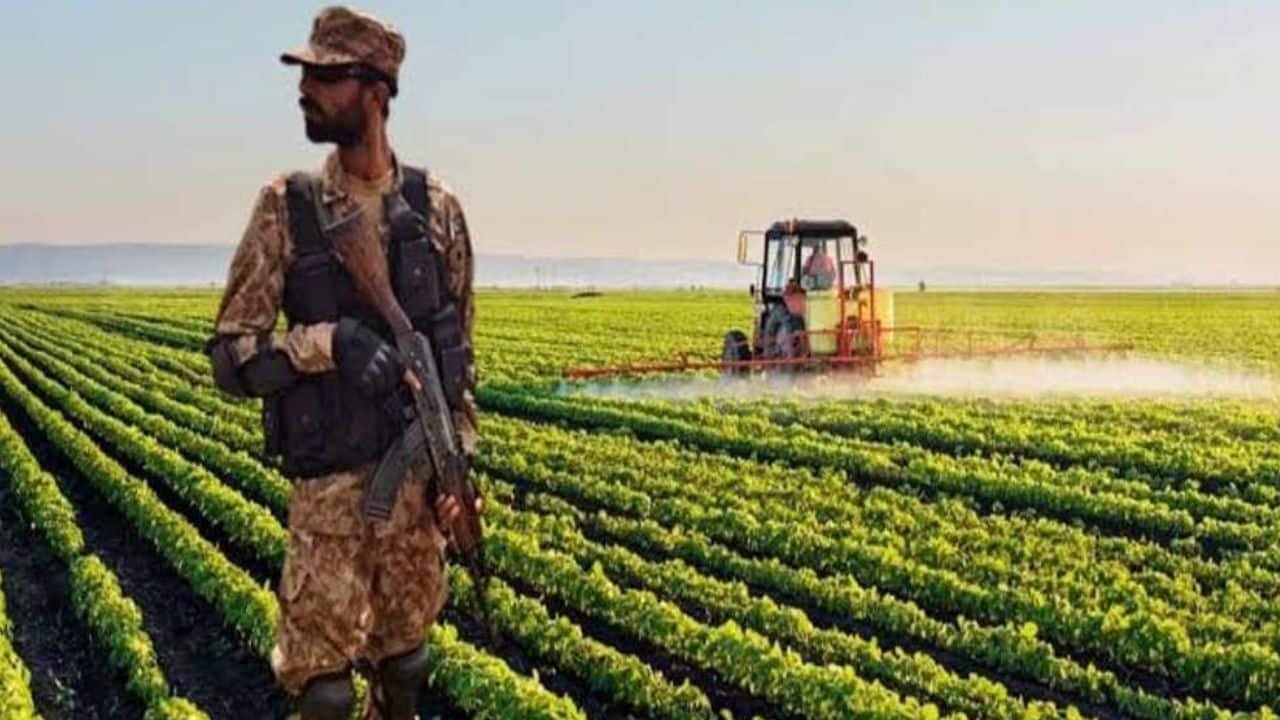
    The Pakistan Army is set to start agriculture farming on 41,000 acres of land in South Waziristan’s Zarmalam area.

    Peshawar Corps Commander Lieutenant General Sardar Hasan Azhar Hayat has said that the army was determined to increase agricultural farming in Khyber Pakhtunkhwa, as per Geo News.

    Lt Gen Hayat said the army has prepared a farming plan on 41,000 acres of land that had been barren for years.

    The officer was of the view that there is a vast opportunity for investment in minerals, hydropower, agriculture, and tourism in KP that can help boost the province’s resources.

    The three-star officer said the army has worked together with the civil government to bring investment in minerals, agriculture, hydropower, and tourism to the province, which is yielding positive results.

    The Pakistan Army’s decision has sparked mixed reactions among locals and experts, with some expressing concerns over the potential implications for the region.

    The move, which involves the cultivation of 41,000 acres of land, has raised questions about the long-term impact on the area’s ecosystem and implications for local communities.

    Critics argue that the project’s scale could lead to significant land and water resource depletion, impacting the livelihoods of communities dependent on the land.

    Additionally, there have been concerns about the army’s increasing involvement in civilian sectors, with some experts cautioning against potential overreach and the need to ensure civilian oversight in such initiatives.

    On October 1st this year, The Pakistan Army launched the first agriculture project under the Special Investment Facilitation Council (SIFC) to make barren lands cultivable in South Waziristan.

    The pilot project launched in the Zarmalam district of South Waziristan oversaw 1,000 acres of barren land made suitable for cultivation.

    The Pakistan Army’s decision has sparked mixed reactions among locals and experts, with some expressing concerns over the potential implications for the region.

    The move, which involves the cultivation of 41,000 acres of land, has raised questions about the long-term impact on the area’s ecosystem and the implications for local communities.

    Critics argue that the project’s scale could lead to significant land and water resource depletion, impacting the livelihoods of communities dependent on the land.

    Additionally, there have been concerns about the army’s increasing involvement in civilian sectors, with some experts cautioning against potential overreach and the need to ensure civilian oversight in such initiatives.

  • World Bank proposes tax reforms with 3% GDP growth projection for Pakistan

    World Bank proposes tax reforms with 3% GDP growth projection for Pakistan

    The World Bank has advised Pakistan to implement taxes on the agricultural and real estate sectors and merge the income thresholds for salaried and non-salaried individuals to create a progressive Personal Income Tax (PIT) system.

    If agriculture income and property taxes are effectively enforced, they could contribute 3 per cent of the GDP annually, totaling over Rs3 trillion. The World Bank is awaiting approval for a $350 million allocation for Pakistan under RISE-II, with the meeting date yet to be confirmed.

    Currently, the annual income threshold for salaried individuals is Rs600,000, and for non-salaried income, it stands at Rs400,000, both exempt from taxes.

    The World Bank emphasises the urgency of Pakistan’s fiscal situation and the need to generate revenue and reduce expenditures, recommending taxing the wealthy while protecting the poor.

    The World Bank proposes simplifying the income tax structure by aligning it for both salaried and non-salaried individuals, ensuring progressivity without suggesting a reduction in the current nominal threshold.

    They acknowledge the importance of considering inflation and labour market changes in recent data when reforming the income tax structure.

    The focus of the recommended tax reforms should fall on higher income brackets and include a comprehensive tax package and expenditure reforms to address unsustainable fiscal deficits.

    These reforms involve cutting down on subsidy expenditures, eliminating regressive tax exemptions, and increasing the taxation of high-income earners, particularly in agriculture, property, and retail sectors, to enhance the progressivity of the tax system.

    Regarding a question about lowering the current exemption threshold for salaried workers earning below Rs50,000 monthly, the World Bank’s lead economist clarified that the bank does not recommend a reduction in the current nominal threshold.

    Instead, the emphasis is on streamlining the income tax structure for both salaried and non-salaried individuals to ensure progressivity while protecting the poor during the reform process.

  • Punjab food department ceases wheat quota subsidy 

    Punjab food department ceases wheat quota subsidy 

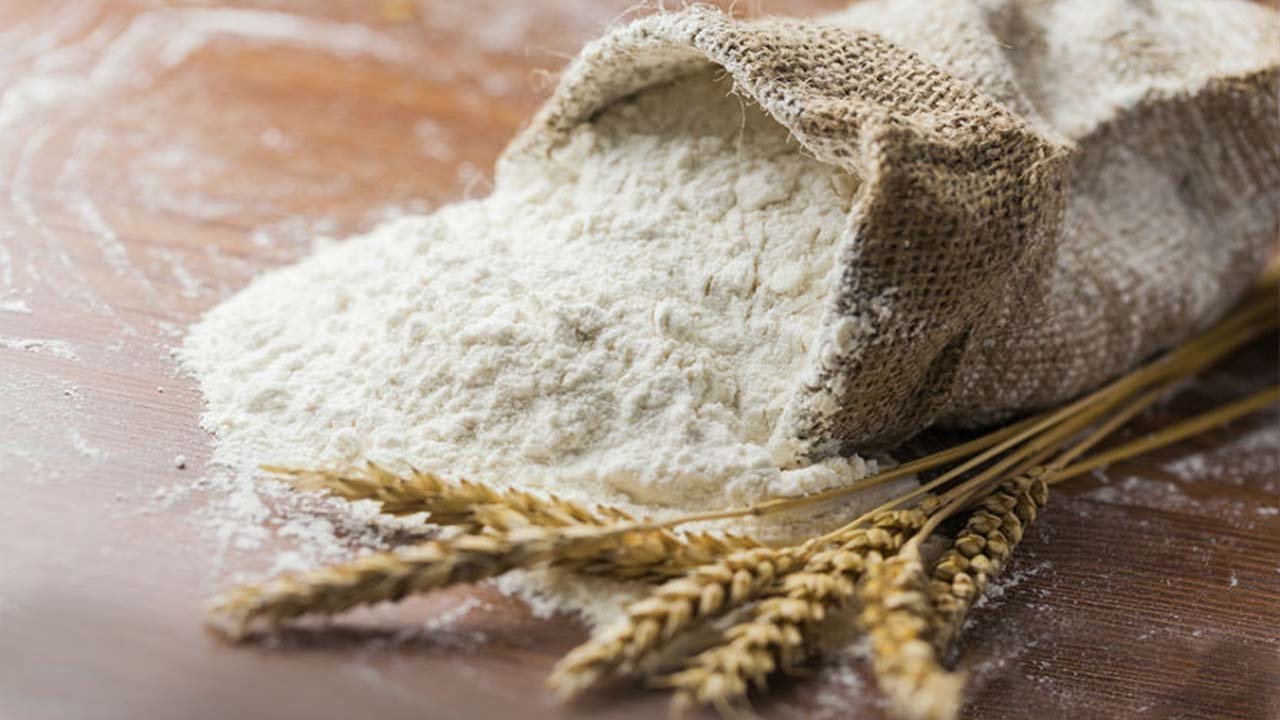
    The Punjab Food Department has decided to discontinue a substantial subsidy programme linked to the allocation of government wheat quotas. 

    Officials responsible for this matter have informed the media that the government has set the price of wheat at Rs3,900 per maund, with the distribution of wheat from the government quota to flour mills commencing on October 15th.  

    Within the framework of the government quota, wheat will be made available to 1,000 operational flour mills at a rate of Rs4,450 per maund.  

    In the wake of the issuance of government wheat quotas, a 20-kilogramme bag of flour will be retailed at Rs2,600, while in the open market, the same 20-kilogramme bag of flour is currently selling for Rs2,750.  

    These officials have also disclosed that the Punjab Food Department currently maintains a wheat stockpile of over 40 lakh tonnes.  

    Read more: IMF urges Pakistan to increase taxation on the rich and ‘protect the poor’ 

    In June, the Punjab Food Department had temporarily halted the allocation of wheat quotas to flour mills, opting instead to conduct wheat auctions in accordance with the regulations set forth by the Public Procurement Regulatory Authority (PPRA).  

    As reported by ARY News, the Punjab Food Secretary mentioned that mill owners are eligible to participate in these auctions.  

    Furthermore, the provincial government is contemplating the provision of direct subsidies on flour, with these measures aimed at curbing any irregularities associated with the allocation of wheat quotas.