Tag: AI

  • AI Tools Generate Sexist Content, Warns UN

    AI Tools Generate Sexist Content, Warns UN

    The world’s most popular AI tools are powered by programs from OpenAI and Meta that show prejudice against women, according to a study launched on Thursday by the UN’s cultural organisation UNESCO.

    The biggest players in the multibillion-dollar AI field train their algorithms on vast amounts of data largely pulled from the internet, which enables their tools to write in the style of Oscar Wilde or create Salvador Dali-inspired images.

    But their outputs have often been criticised for reflecting racial and sexist stereotypes, as well as using copyrighted material without permission.

    UNESCO experts tested Meta’s Llama 2 algorithm and OpenAI’s GPT-2 and GPT-3.5, the program that powers the free version of popular chatbot ChatGPT.

    The study found that each algorithm — known in the industry as Large Language Models (LLMs) — showed “unequivocal evidence of prejudice against women”.

    The programs generated texts that associated women’s names with words such as “home”, “family” or “children”, but men’s names were linked with “business”, “salary” or “career”.

    While men were portrayed in high-status jobs like teachers, lawyers and doctors, women were frequently prostitutes, cooks or domestic servants.

    GPT-3.5 was found to be less biased than the other two models.

    However, the authors praised Llama 2 and GPT-2 for being open source, allowing these problems to be scrutinised, unlike GPT-3.5, which is a closed model.

    AI companies “are really not serving all of their users”, Leona Verdadero, a UNESCO specialist in digital policies, told AFP.

    Audrey Azoulay, UNESCO’s director general, said the general public were increasingly using AI tools in their everyday lives.

    “These new AI applications have the power to subtly shape the perceptions of millions of people, so even small gender biases in their content can significantly amplify inequalities in the real world,” she said.

    UNESCO, releasing the report to mark International Women’s Day, recommended AI companies hire more women and minorities and called on governments to ensure ethical AI through regulation.

  • ChatGPT cranks out gibberish for hours

    ChatGPT cranks out gibberish for hours

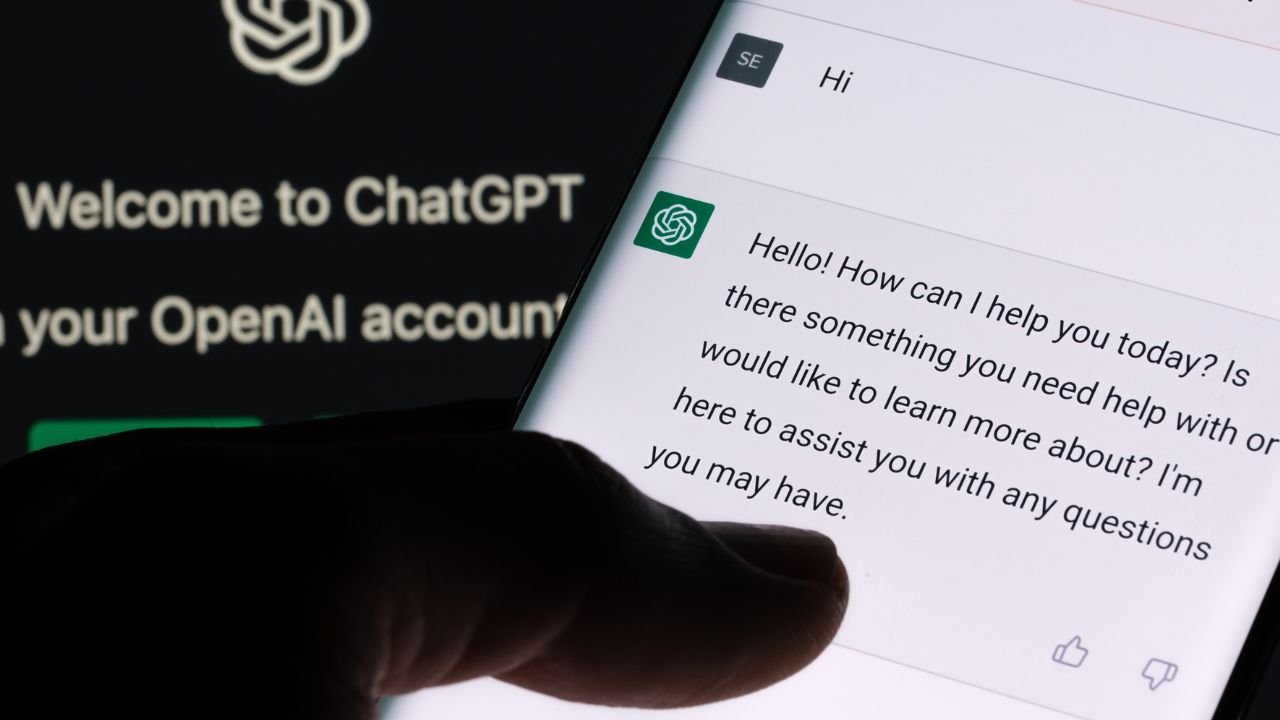
    ChatGPT spewed nonsensical answers to user’s queries for hours Tuesday into Wednesday before eventually returning to its apparent senses.

    OpenAI did not explain what went awry with its generative artificial intelligence (AI) tool, considered the one to beat in the technology sector.

    “We are investigating reports of unexpected responses from ChatGPT,” OpenAI said on its status website when the software seemed to go wacky on Tuesday afternoon.

    ChatGPT was giving “peculiar” responses, generating nonexistent words, incomplete sentences and general gobbledygook, developers using the tool said in a discussion forum on the OpenAI website.

    “It gives me meaningless words followed by a bizarre list,” one developer lamented in the forum.

    “It feels as if my GPT is haunted or something has been compromised, either on my end or at OpenAI’s (end).”

    It wasn’t until more than 16 hours had passed that OpenAI updated the page with a message that ChatGPT was operating normally.

    The San Francisco based technology firm replied to an AFP query by directing it to the ChatGPT status page.

    OpenAI recently concluded a deal with investors that reportedly valued the start-up at $80 billion or more, after a roller-coaster year for the tech firm.

    The agreement, reported by the New York Times but not yet confirmed by OpenAI, would mean the value of the company — a world leader in generative AI — would have nearly tripled in under 10 months.

    OpenAI led a revolution in AI when it placed its ChatGPT program online in late 2022.

    The immediate success of the interface sparked tremendous interest in the cutting-edge technology, capable of producing text, sounds and images upon demand.

    OpenAI — which is also the maker of image-generating DALL-E — recently released a new tool named “Sora,” which can create realistic videos of up to a minute long via simple user prompts.

    Microsoft has invested some $13 billion in OpenAI, using the startup’s technology in Bing and other services.

    Microsoft is locked in fierce competition with Google to roll out new AI-infused tools, to the point that the US Federal Trade Commission in January launched an investigation into the enormous investments by Microsoft, Google and Amazon in such specialized start-ups.

  • Dead politicians come back to life for Indian elections

    Dead politicians come back to life for Indian elections

    Dead Indian politicians are coming back to life with the help of artificial intelligence as the election is around the corner in the country.

    As election campaigns are underway, certain political contenders are resorting to resurrecting dead politicians to appeal to the public. In January, M Karunanidhi, Indian writer and politician, made an appearance during a live assembly via projected screen, and congratulated his “82-year-old friend and fellow politician” TR Baalu on the launch of his autobiographical book.

    Karunanidhi, who died in 2018, has been resurrected thrice as of yet.

    Deep fake speeches have also been used to highlight his son’s achievements, MK Stalin, who is leading the Dravida Munnetra Kazhagam (DMK) party.

    This development raises profound questions about the ethical and legal implications of using AI to resurrect deceased individuals and ascribe opinions to them.

    The decision to utilise AI for elections has multiple downsides such as lack of authenticity, ethics etc.

  • AI giants to unveil pact to fight political deepfakes in year of crucial elections worldwide

    AI giants to unveil pact to fight political deepfakes in year of crucial elections worldwide

    Tech giants including Meta, Microsoft, Google and OpenAI are working on a pact to jointly crack down on AI content intended to deceive voters ahead of crucial elections around the world this year, companies involved said Tuesday.

    Currently under negotiation by the companies, this so-called “accord” on deepfakes and other dangerous content is set to be announced during the Munich Security conference on Friday.

    “In a critical year for global elections, technology companies are working on an accord to combat the deceptive use of AI targeted at voters,” a spokesperson for Meta said in an emailed statement to AFP on Tuesday.

    “Adobe, Google, Meta, Microsoft, OpenAI, TikTok and others are working jointly toward progress on this shared objective,” the statement added.

    According to the Washington Post, which first reported the existence of the project, the companies will agree to develop ways to identify, label and control AI-generated images, videos and audio that aim to deceive voters.

    The idea comes as big tech companies are under considerable pressure over fears that AI-powered applications could be misused in a pivotal election year.

    Meta, Google and OpenAI have already agreed to use a common watermarking standard that would tag images generated by their AI applications, such as OpenAI’s ChatGPT, Microsoft’s Copilot or Google’s Gemini (formerly Bard).

    Recent examples of convincing AI deepfakes have only heightened worries about the easily accessible technology.

    Last month, a robocall impersonation of US President Joe Biden pushed out to tens of thousands of voters urged people to not cast ballots in the New Hampshire primary.

    In Pakistan, the party of former prime minister Imran Khan has used AI to generate speeches from their jailed leader.

  • Fact Check: Did Damon Imani actually tell World Economic Forum to f*** new world order?

    A video circulating on the internet featuring Damon Imani allegedly hurling swear words at Klaus Schwab-Chairperson of the World Economic Forum-during the 2024 Davos Meeting, has sparked curiosity among netizens. The video claims that “A new WEF participant does the unthinkable at the 2024 Davos Meeting.” However, the video is satirical and the incident did not occur in reality.

    The video of Damon Imani was released at a time when the World Economic Forum (WEF) Annual Meeting held in 2024 brought together nearly 3,000 global leaders from over 125 countries to discuss the challenges and crises the world faces.

    Imani is an Iranian producer and artist based in Denmark. Specializing in creating video content covering a range of topics, including societal issues, news, and current events, Imani is known for his satirical approach.

    The video in question is an edited one shared by Imani. He even posted on X, “Satire but true. This video is also available on Rumble here and Klaus Schwab can go f*** himself.” As social media users came across the viral video, some of them jokingly wished that it had really happened.

    The comedian also shared a series of videos where he was apparently calling out the leadership of WEF and people appreciated him for speaking his heart out. He shared a message he received from USA Today to verify if the video is real and how people are responding to it. He replied that actually people understood the meaning of his message which was that the “World Economic Forum is a global communist party that is not elected by the people of Earth.”

  • Watch Khan’s AI version that was live at the virtual jalsa last night

    Watch Khan’s AI version that was live at the virtual jalsa last night

    Pakistan Tehreek-e-Insaf (PTI) held the first-ever virtual jalsa in Pakistan amid a crackdown and unsaid ban on their on-ground jalsas.

    Former Prime Minister and founding chairman of PTI Imran Khan addressed his supporters using an audio clip generated by artificial intelligence (AI) during the virtual jalsa.

    The AI-generated audio, played alongside photographs and videos of Khan, garnered over 1.4 million views on YouTube and drew a live audience of tens of thousands on various social media platforms.

    PTI social media lead, Jibran Ilyas, took to X (former Twitter) and wrote, “Founding Chairman Imran Khan’s speech in AI voice. Can’t stop praising Dr Asma for staying up 36 hours to get this done in time, Nausheen for translations and Intazar Bhai for getting notes from the Legend Imran Khan! #PTIVirtualJalsa.”

    In his address, Khan lamented the restrictions on public rallies imposed on his party, emphasizing the alleged abduction of party members and harassment of their families.

    “Our party is not allowed to hold public rallies,” Khan stated, urging his supporters to actively participate in the upcoming general elections. “Our people are being kidnapped, and their families are being harassed.”

    Officials from Khan’s party revealed that the AI-generated speech was derived from a written version approved by Khan himself while he remains incarcerated. PTI organized the virtual rally in response to Khan’s media blackout.

    Murtaza Solangi, the information minister in Pakistan’s caretaker government tasked with overseeing the elections, did not respond to Reuters’ requests for comments.

    Internet services faced serious disruptions on Sunday night as a large number of people complained about difficulties in accessing social media sites where Pakistan Tehreek-e-Insaf (PTI) was holding a virtual election rally.

    Users from different parts of the country reported slow internet speed all across the country, especially in Karachi, Lahore, Mir Pur Khas, and Rawalpindi.
    Downdetector confirmed that website versions were down since around 7 pm in the evening.

    Imran Khan, convicted and sentenced to three years on graft charges on Aug. 5, has been entangled in numerous court cases, some of which are conducted behind closed doors in prison.

  • Judges in England and Wales allowed to use ChatGPT to write judgments

    Judges in England and Wales allowed to use ChatGPT to write judgments

    Judges in England and Wales have been allowed to use artificial intelligence (AI) tool, Chat GPT, to write judgments.

    The permission has been granted despite concerns that artificial intelligence could write references to cases that never happened.

    The Judicial Office has issued guidelines for the use of AI Chat GPT for thousands of judges in England and Wales, saying that artificial intelligence can help summarise long texts.

    Master of the Rolls Sir Geoffrey Voss has described artificial intelligence as a better, faster and cost-effective digital assistant for the justice system.

    Only earlier this year, two American lawyers were fined for citing fake cases created by ChatGPT.

  • ‘I once found pornographic pictures of myself when I was a teenager’: Janhvi Kapoor

    ‘I once found pornographic pictures of myself when I was a teenager’: Janhvi Kapoor

    Bollywood star Janhvi Kapoor gave an interview to Indian publication Newslaundry where she opened up about how as the daughter of celebrity parents, there were several occasions where her privacy was breached. She talked about an incident where pictures of her as a teenager were uploaded on the internet, taking a toll on her mental health.

    The ‘Mili’ actress revealed she came across pictures of her face morphed on inappropriate photographs on pornographic websites, stressing that she was concerned about the rise of AI technology.

    “People see these manipulated images and assume they’re real. It deeply concerns me.”

    The actress shared how as a ten year old, she searched her name on a school’s computer lab and found pictures taken by the paparazzi on Yahoo, where she looked “very uncomfortable” and not “groomed”. The headlines claimed she was being launched in the industry. Such gossip tabloids further alienated Janhvi from her peers:

    “I don’t think they understood it so they started disliking me. I didn’t understand what was happening. My friends looked at me differently, they poked fun at me for not getting waxed… Many insinuated that I don’t have to work as I was famous anyway, weird taunts that I wouldn’t understand. Everyone kept asking me when I was leaving school and why I was on Yahoo. There was a lot of judgement, a lot of questioning of one’s self-worth from a very young age.”

  • ‘Every actor has the right to protect themselves’: Anil Kapoor wins landmark case against AI

    ‘Every actor has the right to protect themselves’: Anil Kapoor wins landmark case against AI

    Veteran Bollywood actor Anil Kapoor has won a landmark case preventing his image from being used in any manner by Artificial Intelligence (AI) technology.

    The actor filed a case with the Delhi High Court, after numerous morphed videos and emojis featuring his iconic phrase ‘jhakas’ from the 1985 film ‘Yudh’ went viral on social media.

    The suit had asked for protection for the actor’s personality rights including his name, image, likeness, voice against any misuse on social media, and listed various instances of how the actor’s attributes were being misused. After a detailed hearing, the court sided with Anil Kapoor by acknowledging his personality rights, and restrained users from misusing the attributes without his permission or consent.

    Speaking to Variety, Anil Kapoor said he was happy with the order.

    “I’m very happy with this court order, which has come in my favor, and I think it’s very progressive and great for not only me but for other actors also. Because of the way technology and the AI technology, which is which is evolving every day [and] which can completely take advantage of and be misused commercially, as well as where my image, voice, morphing, GIFs and deep fakes are concerned, I can straight away, if that happens, send a court order and injunction and they have to pull it down.”

    “It’s not only for me,” the ‘Slumdog Millionaire’ actor stressed. “Today, I’m there to protect myself, but when I’m not there, the family should have the right to protect my [personality] and gain from it in future.”

    “My intention is not to interfere with anyone’s freedom of expression or to penalize anyone. My intent was to seek protection of my personality rights and prevent any misuse for commercial gains, particularly in the current scenario with rapid changes in technology and tools like artificial intelligence.”

    AI is a central element to the SAG-AFTRA strikes in Hollywood. Anil Kapoor expressed solidarity with the ongoing strike.

    “This [the court order] should be great positive news for all of them to a certain extent. And I am always, completely with them in every which way, and I feel their rights should be protected, because everybody, big, small, popular, not popular, every actor has the right to protect themselves and their rights.”

  • ChatGPT solves medical mystery, diagnosing rare condition in 4-year-old after 17 doctors failed

    ChatGPT solves medical mystery, diagnosing rare condition in 4-year-old after 17 doctors failed

    A mother’s relentless pursuit of answers regarding her four-year-old son’s unexplained pain and growth delay has reached a triumphant conclusion, thanks to the remarkable capabilities of artificial intelligence (AI).

    After consulting with 17 medical professionals over a span of three years, none of whom could provide a definitive diagnosis, she turned to ChatGPT, an AI tool that ultimately unveiled the elusive condition responsible for her son’s suffering.

    ChatGPT has emerged as a transformative AI tool, simplifying intricate tasks and offering solutions to perplexing challenges for individuals and families worldwide. Its profound impact across various industries became evident in a recent case that showcased its extraordinary ability to aid in medical diagnostics.

    The journey began for Courtney, a mother who found herself entangled in a medical mystery concerning her four-year-old son, Alex. This young boy experienced persistent pain and a puzzling lack of growth, necessitating his reliance on Motrin for relief. Desperate to alleviate her son’s suffering, Courtney embarked on an exhaustive quest for answers, consulting numerous physicians and even making a harrowing emergency room visit.

    Courtney recounted the extensive efforts she undertook in her relentless pursuit of a diagnosis, emphasising numerous doctor consultations and a harrowing emergency room visit. She also described spending sleepless nights meticulously researching and exploring various possibilities on her computer.

    Amid the backdrop of the COVID-19 pandemic, Alex’s condition took a perplexing turn as he began chewing objects that caused him severe pain. This development prompted Courtney to intensify her efforts, eventually leading her to a doctor who suggested that Alex’s issues might be related to lingering COVID-19 effects. However, Alex’s growth stagnated, and the mystery endured.

    Having consulted 17 doctors with no conclusive results, Courtney ventured into unconventional territory and turned to ChatGPT for answers. By sharing Alex’s symptoms with the AI, she received a revelation that had eluded medical professionals for years. ChatGPT identified a rare neurological condition known as tethered cord syndrome as the root cause of Alex’s suffering.

    Courtney explained the pivotal role played by ChatGPT in unraveling the medical mystery. She meticulously analysed every detail in her son’s MRI notes, inputting them into the AI tool and even mentioning her son’s inability to sit crisscross applesauce. This meticulous approach led to a breakthrough in understanding the potential structural issue her son was facing.

    Armed with newfound hope and a potential diagnosis, Courtney promptly scheduled an appointment with a neurosurgeon, sharing her suspicion that Alex was afflicted by tethered cord syndrome. The neurosurgeon, after reviewing the MRI, confirmed this diagnosis, paving the way for Alex to undergo surgery to address the condition just a few weeks ago.

    The case of Alex and his mother’s unwavering quest for answers serves as yet another testament to the transformative potential of AI in the field of medicine. ChatGPT’s ability to navigate complex medical data and identify rare conditions has not only provided a lifeline for this family but has also expanded our understanding of AI’s profound impact on healthcare.

    This remarkable story joins a growing list of instances where ChatGPT has proven its mettle in diagnosing challenging medical conditions. In March, a Twitter user shared a similar experience, recounting how the AI tool accurately identified a diagnosis for a pet dog when traditional medical avenues fell short.

    Tethered cord syndrome, as described by the American Association of Neurological Surgeons, occurs when spinal cord tissue forms attachments that restrict its movement. This condition leads to abnormal stretching of the spinal cord, resulting in various neurological symptoms.

    The identification of tethered cord syndrome in Alex’s case underscores the significance of AI-powered solutions like ChatGPT in uncovering rare and complex medical conditions, ultimately enhancing patient outcomes.