Tag: aid

  • How humanitarian aid reaches war-torn Gaza

    How humanitarian aid reaches war-torn Gaza

    Most aid bound for war-ravaged Gaza arrives overland from neighbouring Egypt but Israel and UN agencies clash on how much actually makes it inside the Palestinian territory.

    The volume of aid entering Gaza by road each day through the Rafah crossing from Egypt is insufficient, aid workers say, blaming rigorous Israeli inspections at least in part.

    With no truce in sight to pause the Israel-Hamas war, here is a look at how aid currently reaches Gaza and what alternatives are being weighed to alleviate the crisis in the besieged Palestinian territory.

    First stop: Egypt

    Most Gaza-bound goods arrive by sea in the Egyptian ports of Port Said or El-Arish.

    El-Arish is closer to Gaza but also smaller, and was quickly overwhelmed by the volume of shipments arriving, aid groups say.

    Israeli authorities, who have blockaded Gaza since Hamas took sole control of the Palestinian territory in 2007, require that all aid entering Gaza be inspected by them.

    The main inspection area for goods is Kerem Shalom in southern Israel, not far from the Rafah crossing.

    Another inspection area exists in Nitzana, on the Israeli-Egyptian border about 40 kilometres (25 miles) to the southeast.

    Long wait for trucks

    Before reaching the inspection areas, many aid trucks wait for days at the Egyptian side of the Rafah checkpoint.

    Once inspected, goods that are cleared to enter by Israel are unloaded from the mostly Egyptian trucks in the zone between Egypt and Gaza.

    The supplies are then loaded onto separate vehicles, driven by Gazans working for aid groups, for distribution inside the Palestinian territory.

    Cumbersome screenings are a major reason shortages are so glaring, aid workers say.

    Israel blames a lack of sufficient capacity on the Palestinian side to distribute the aid once it gets in.

    In recent days, Israel took issue with UN figures on the number of trucks entering Gaza, accusing UN Palestinian refugee agency UNRWA of counting only trucks it had processed, not those processed by Israel.

    Heading north

    For months, aid groups and foreign governments including top ally the United States have urged Israel to reopen border crossings into the north of Gaza, where the humanitarian crisis is most severe.

    Israel announced that six World Food Programme (WFP) aid trucks entered the north directly from its territory in early March, in what it described as a “pilot project”.

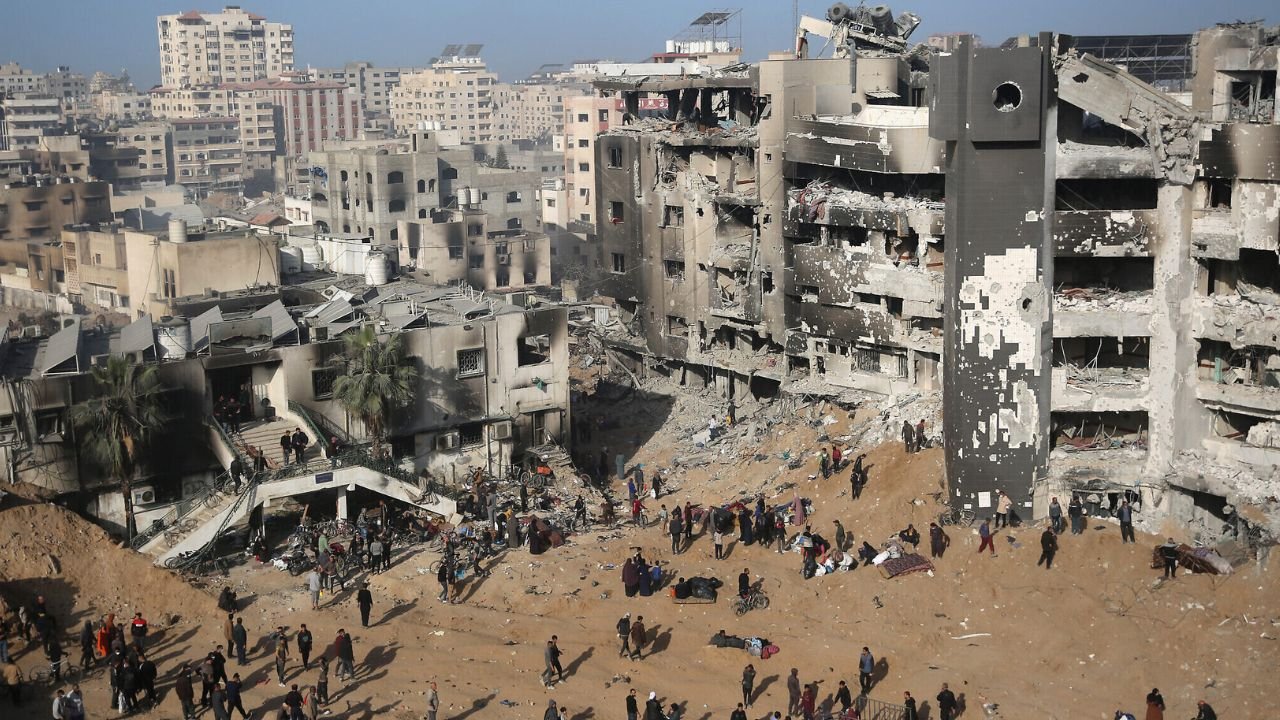
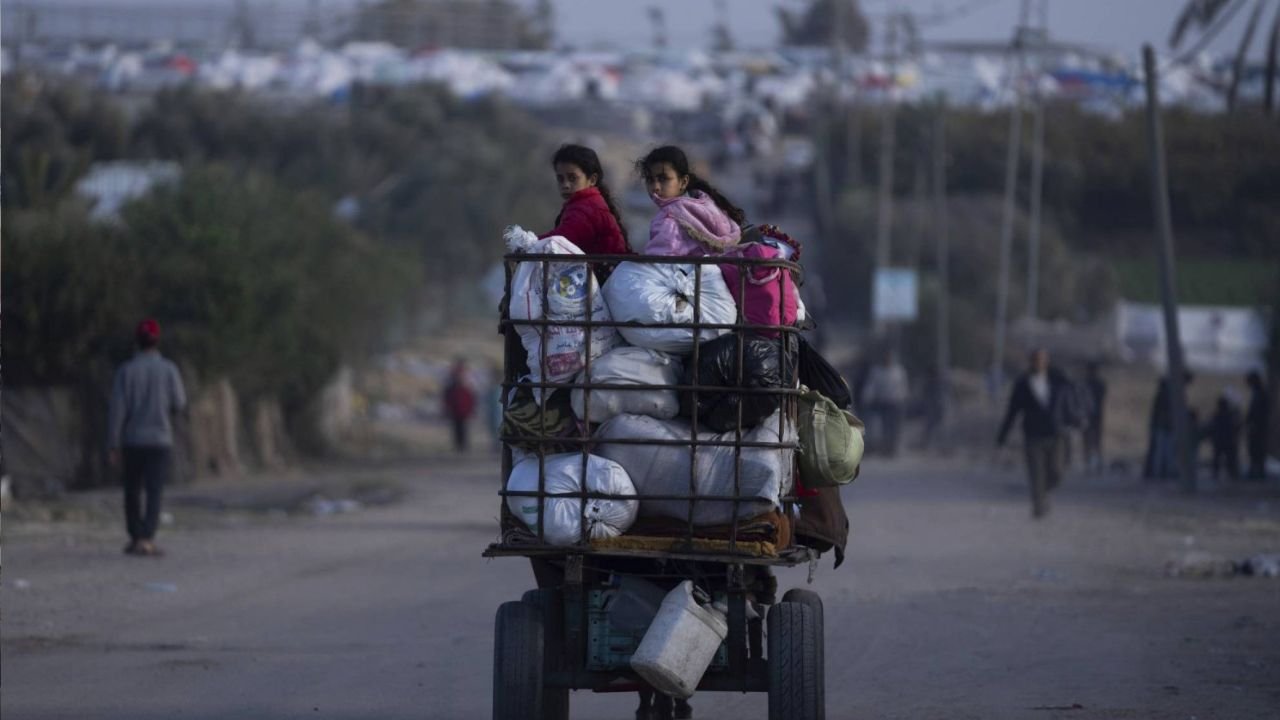
    The trial was not extended, however, and aid convoys bound for northern Gaza must travel the length of the territory negotiating battlegrounds, Israeli bombardments and mobs of desperate civilians.

    In March, the WFP said one of its convoys had been blocked by Israeli forces inside Gaza before it could reach the north.

    After turning back, the agency said the convoy was looted by a “crowd of desperate people”.

    According to Israeli authorities, 28 trucks reached northern Gaza on Wednesday.

    They were among 298 trucks that Israel said entered Gaza on Wednesday, still far below the number aid groups say is needed to sustain the territory’s 2.4 million people.

    Under pressure from the international community, Israel announced on April 5 that it would open a new crossing directly into northern Gaza, without specifying its exact location or when it would open.

    By air and by sea

    In a bid to get round the logjam, several Arab and European governments, later joined by Washington, began carrying out aid airdrops over Gaza, particularly the north.

    But the airdrops have proved controversial, with multiple deaths among civilians on the ground who were crushed by aid crates when parachutes failed to open, or drowned trying to reach others accidentally dropped in the sea.

    There has also been an attempt to establish a maritime aid corridor from the Mediterranean island of Cyprus but it has largely fizzled out after seven aid workers were killed by Israeli fire on April 1 as they unloaded food from the second flotilla to make the crossing.

    Even though the Cypriot government insists it has not given up on the aid corridor, no further crossings are currently planned after the US and Spanish charities behind the first two suspended their operations in the region.

    UN agencies have in any case said repeatedly that road convoys are the only practical way of meeting Gaza’s needs.
  • Israel increases Gaza aid; admits ‘mistakes’ in aid worker deaths

    TEL AVIV: The Israeli army on Friday admitted a series of errors and violations of its rules in the killing of seven aid workers in Gaza, saying it had mistakenly believed it was “targeting armed Hamas operatives”.

    The two brigade officers who ordered the drone strikes, a colonel and a major, are being fired, the army said, and its Southern Command chief reprimanded.

    It was a rare confession of wrongdoing by Israel in its nearly six-month war against Hamas in the Gaza Strip, where the health ministry of the Hamas-ruled territory says more than 33,000 people, mostly civilians, have been killed.

    The victims — an Australian, three Britons, a North American, a Palestinian and a Pole — were killed Monday night in three strikes over four minutes by an Israeli drone as they ran for their lives between their three vehicles, the military said.

    The US-based charity for which they worked, World Central Kitchen, demanded an independent inquiry, and Poland called for a “criminal” probe after the military’s announcement.

    The drone team who killed the aid workers made an “operational misjudgement of the situation” after spotting a suspected Hamas gunman shooting from the top of one of the food trucks the aid workers were escorting, an internal Israeli military inquiry found.

    Senior Israeli officers showed reporters clips from drone footage of what they said was a “Hamas operative” joining the US-based World Central Kitchen (WCK) convoy.

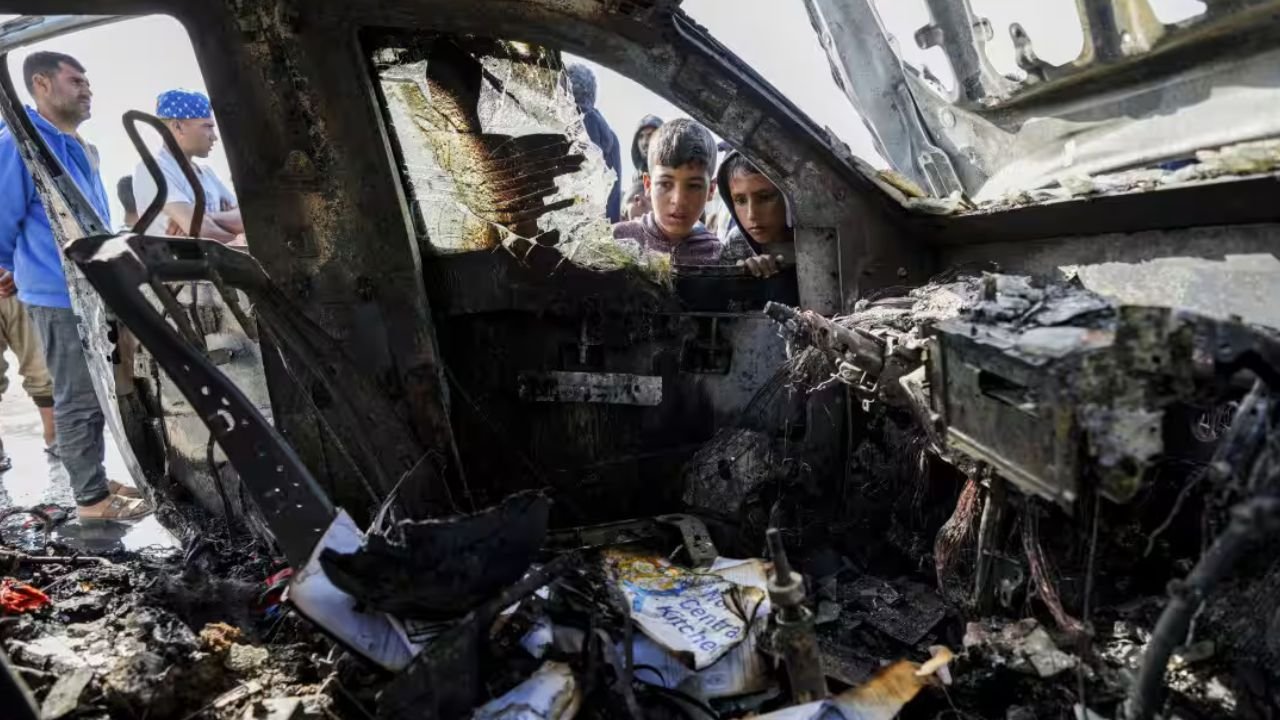
    Although the roofs of the three aid workers’ vehicles were emblazoned with WCK logos, retired Israeli general Yoav Har-Even, who is leading the investigation, said the drone’s camera could not see them in the dark.

    “This was a key factor in the chain of events,” he said.

    The aid group has said its team was travelling in a “de-conflicted” area at the time of the strike. “Despite coordinating movements with the (Israeli army), the convoy was hit as it was leaving the Deir al-Balah warehouse,” WCK said.

    The army said aid was moved at night to avoid deadly stampedes by hungry Gazans.

    The aid workers’ deaths “outraged” US President Joe Biden who demanded Israeli Prime Minister Benjamin Netanyahu order steps toward an “immediate ceasefire”.

    Israel later said it would allow “temporary” aid deliveries into northern Gaza, where the United Nations has warned of imminent famine.

    Har-Even admitted that “the three air strikes were in violation of standard operating procedures”.

    But he argued that “the state of mind” of the Israeli drone commanders “was that they were striking cars that had been seized by Hamas” after they thought one passenger was carrying a gun rather than a bag.

    “One of the commanders mistakenly assumed the gunmen were inside the vehicles and were Hamas terrorists,” the army said in a statement.

    US Secretary of State Antony Blinken said it was “very important that Israel is taking full responsibility for this incident.”

    The aid workers were killed after they had overseen the unloading of a ship carrying 300 tonnes of food aid from Cyprus to a warehouse inland.

    But as they drove south at 11:09 pm on April 1 the drone “struck one car, and identified people running out of the car and entering the second car,” Har-Even said.

    “They decided to hit it, which was against standard operating procedures. Then they struck the third car.”

    Asked by AFP, the general was not able to explain what happened to the “Hamas gunman” on the truck but he conceded they had been mistaken to think armed Hamas suspects had joined the WCK aid workers in the three pickups.

    “It is a tragedy. It is a serious mistake that we are responsible for,” Israeli military spokesman Daniel Hagari told reporters. “That shouldn’t have happened.”

    Har-Even said it was a breakdown in communication in the chain of military command which may have led to the strikes.

    He said that WCK had provided all the information necessary, but it was not passed down.

    “The biggest mistake was that (the drone team) didn’t have the coordination plan,” he said. “Their belief was the vehicles were Hamas, based on operational misjudgement and misclassification.”

  • ‘Shocking increase’ of children denied aid in conflicts: UN

    ‘Shocking increase’ of children denied aid in conflicts: UN

    A growing number of children caught up in armed conflicts around the globe are being denied access to critical humanitarian aid, a United Nations official warned Wednesday, as relief operations come under attack or are blocked by governments.

    The last report by the UN secretary-general on the rights of children in conflicts, published in June 2023, recorded nearly 4,000 confirmed cases of aid being denied to children, from Gaza to Yemen, Afghanistan and Mali.

    “Data gathered for our forthcoming 2024 report shows we are on target to witness a shocking increase of the incidents of the denial of humanitarian access globally,” Virginia Gamba, the secretary-general’s special representative for children and armed conflict, told the Security Council Wednesday.

    She said last year’s figure already represented an “exponential” increase since 2019.

    “Cases of denial of humanitarian access are linked to the restriction of humanitarian activities and movements; interference with humanitarian operations and discrimination of aid recipients; direct and indiscriminate attacks on civilian infrastructure; disinformation and detention, violence against, and killing of, humanitarian personnel; and looting,” Gamba said.

    She did not specify which countries would be singled out in the 2024 report, set to be released this summer.

    Nearly half of the cases in last year’s report — 1,861 — were of Israeli forces denying aid to children in Gaza.

    That report came before the October 7 attack by Hamas militants on southern Israel and the ensuing all-out war in Gaza.

    The UN has since repeatedly denounced restrictions Israel has put on aid entering the war-torn territory.

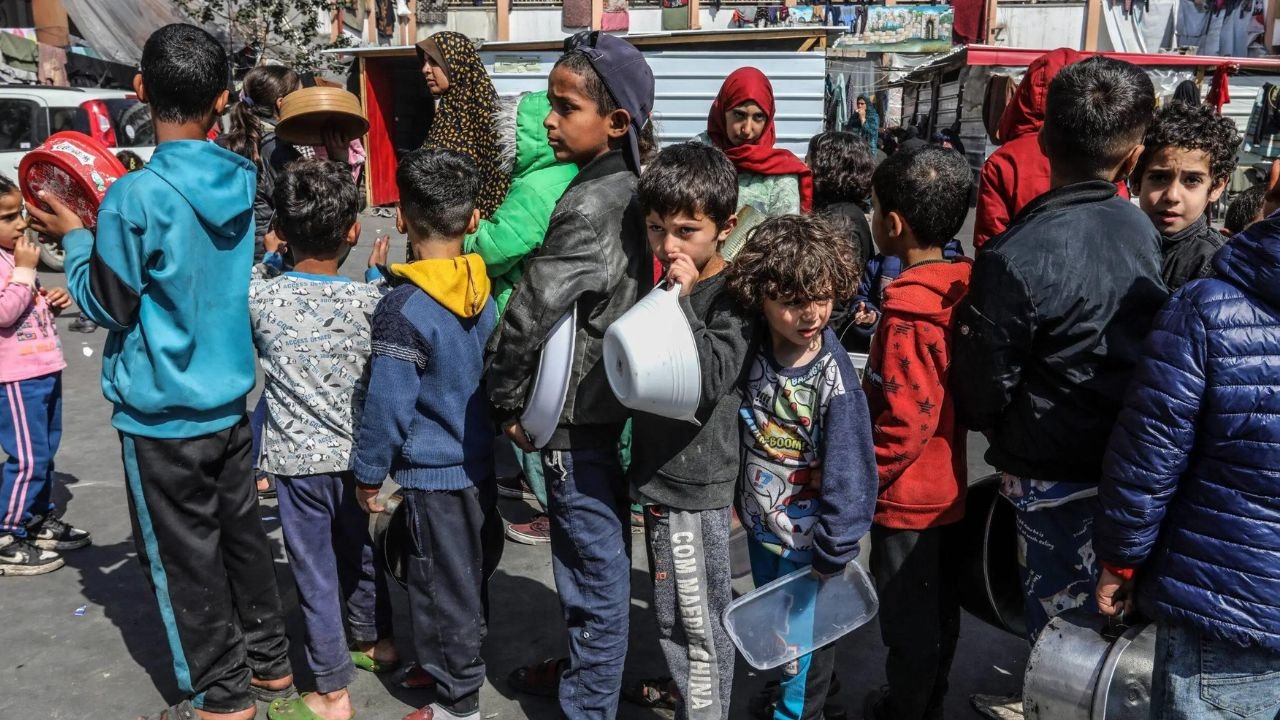
    “As a result of these constraints, children cannot access age-appropriate nutritious food or medical services and have less than two to three liters of water per day,” UNICEF deputy executive director Ted Chaiban told the Council.

    “The consequences have been clear,” Chaiban said, noting that one in three children in northern Gaza  under two years old suffer from acute malnutrition, “a figure that has more than doubled in the last two months.”

    Apart from Gaza, he also highlighted the threats to children’s access to humanitarian aid in Sudan and Burma.

    In addition to access to humanitarian aid, the UN’s report on children and armed conflict also lists the number of children killed and wounded, as well as attacks on hospitals and schools.

    From all the data points, the report draws up a “list of shame” of government forces and other armed groups responsible for the violations.

    Last year’s report listed Russia’s military over its attacks on Ukraine, but excluded Israel, angering several NGOs which have called for its inclusion for years.

  • Israeli President apologises for deaths of Gaza aid workers

    Israeli President apologises for deaths of Gaza aid workers

    Israeli President Isaac Herzog apologised Tuesday for the air strike that killed seven aid workers in Gaza.

    Herzog said he spoke to Jose Andres, the US-based celebrity chef who heads the aid group World Central Kitchen, to express his “deep sorrow and sincere apologies over the tragic loss of life”.

    Prime Minister Benjamin Netanyahu had earlier stopped short of apologising for the deaths, which he described as a “tragic case” that would be investigated “right to the end”.

    “It happens in war… we will do everything so that this thing does not happen again,” he added.

    AFPTV footage showed the roof of a white vehicle emblazoned with the group’s logo punctured with a blackened hole, alongside the mangled wreckage of other vehicles.

    World Central Kitchen had earlier said a “targeted attack” by Israeli forces on Monday had killed its staff, which included Australian, British, Palestinian, Polish and US-Canadian citizens.

    The charity, which has been delivering food aid to Gaza’s starving population, said its convoy was clearly marked and it had coordinated with the Israeli military to avoid any danger.

    Since October 7 attack, Gaza has been under a near-complete siege, with the United Nations accusing Israel of preventing deliveries of humanitarian assistance to the 2.4 million Palestinians in the devastated territory.

    UN agencies have repeatedly warned that northern Gaza is on the verge of famine, calling the situation a man-made crisis.

    But Herzog said Israel was committed to “delivering and upgrading humanitarian aid to the people of Gaza”.

    The Israeli military also said Tuesday they were looking at ways to coordinate safe aid deliveries.

    The bloodiest-ever Gaza war erupted with the October 7 attack, which resulted in about 1,160 deaths in Israel, mostly civilians, according to an AFP tally of Israeli official figures.

    Israeli genocide in Gaza since October 7, 2023, has killed at least 32,916 people, mostly women and children, according to the health ministry in Hamas-run Gaza.

  • NGO World Central Kitchen says seven of its workers killed in Israeli strike in Gaza

    NGO World Central Kitchen says seven of its workers killed in Israeli strike in Gaza

    An Israeli strike killed several people working for US-based charity World Central Kitchen in the Gaza Strip on Monday, according to the organization’s founder.

    World Central Kitchen “lost several of our sisters and brothers in an IDF air strike in Gaza. I am heartbroken and grieving for their families and friends and our whole WCK family,” chef Jose Andres posted on social media site X.

    Earlier, the Gaza health ministry had said the bodies of four foreign aid workers and their Palestinian driver were brought to the hospital in the central town of Deir el-Balah after an Israeli strike targeted their vehicle.

    Hamas said in a statement that the aid workers included “British, Australian and Polish nationalities, with the fourth nationality not known”, and that the fifth person killed was a Palestinian driver and translator.

    US National Security Council spokesperson Adrienne Watson said the White House was “heartbroken and deeply troubled by the strike.”

    “Humanitarian aid workers must be protected as they deliver aid that is desperately needed, and we urge Israel to swiftly investigate what happened,” she wrote on X.

    The Israeli military said in a statement that it was “conducting a thorough review at the highest levels to understand the circumstances of this tragic incident”, adding that it had been “working closely with WCK” in the effort to provide aid to Palestinians.

    At the Al-Aqsa Hospital in Deir el-Balah, an AFP correspondent saw five bodies with three foreign passports lying nearby.

    Australian Prime Minister Anthony Albanese on Tuesday confirmed one of the killed aid workers was Australian national Zomi Frankcom.

    “This is completely unacceptable. Australia expects full accountability for the deaths of aid workers,” Albanese said

    World Central Kitchen has been involved in delivering the aid arriving by boat from Cyprus, and in the construction of a temporary jetty in Gaza.

    Gaza has been under a near-complete blockade since October 7, with the United Nations accusing Israel of preventing deliveries of humanitarian assistance urgently needed by all 2.4 million Palestinians.

    UN agencies have warned repeatedly that northern Gaza is on the verge of famine, calling the situation a man-made crisis because aid lorries are backed up on the Egypt-Gaza border awaiting long checks by Israeli officials. Israel has denied responsibility.

    Israeli genocide in Gaza has killed at least 32,845 people, mostly women and children, according to the health ministry in Gaza.

  • Entire Gaza population at ‘severe levels of acute food insecurity’: Blinken

    Entire Gaza population at ‘severe levels of acute food insecurity’: Blinken

    The entire population of Gaza is experiencing “severe levels of acute food insecurity”, US Secretary of State Antony Blinken said Tuesday, underscoring the urgency for increasing the delivery of humanitarian aid into the Palestinian territory.

    “According to the most respected measure of these things, 100 percent of the population in Gaza is at severe levels of acute food insecurity. That’s the first time an entire population has been so classified,” Blinken told a press conference in the Philippines where he is on an official visit.

    Blinken’s remarks came on the eve of his return to the Middle East, this time to Saudi Arabia and Egypt, to discuss efforts to secure a ceasefire in Gaza and ramp up aid deliveries.

    A United Nations-backed food security assessment warned Monday that half of Gazans are experiencing “catastrophic” hunger, with famine projected to hit the north of the territory by May unless there is urgent intervention.

    Martin Griffiths, the UN’s humanitarian chief, has called for Israel to allow unfettered aid into the besieged Palestinian territory, saying there was “no time to lose”.

    With aid agencies reporting huge difficulties gaining access to Gaza, particularly the north, the UN has warned for weeks that a famine is looming.

    Donors have turned to deliveries by air or sea, but these are not viable alternatives to land deliveries, UN agencies say.

    The Integrated Food Security Phase Classification partnership said Monday that while the technical criteria for a famine had not yet been met, “all evidence points towards a major acceleration of deaths and malnutrition”.

    Citing UN data, Blinken said 100 percent of the population in Gaza needed humanitarian assistance, compared with 80 percent in Sudan and 70 percent in Afghanistan.

    “This only underscores both the urgency, the imperative, of making this the priority,” Blinken said of aid deliveries.

    “We need more, we need it to be sustained, and we need it to be a priority if we’re going to effectively address the needs of people.”

    Blinken is in Manila as part of a brief Asia tour aimed at reinforcing US support for regional allies against China.

    During a joint press conference with his Philippine counterpart, Blinken was asked about steps he was taking to address the lack of access to Gaza for foreign journalists.

    “There are obviously profound security considerations in an active war zone and those have to be taken into account,” Blinken said.

    “But the basic principle of access for journalists is something we stand strongly behind.”

  • All cargo offloaded from first aid ship to reach Gaza: NGO

    All cargo offloaded from first aid ship to reach Gaza: NGO

    A US charity said Saturday its team in Gaza Strip had finished unloading the first maritime aid shipment to reach the besieged territory.

    “All cargo was offloaded and is being readied for distribution in Gaza,” World Central Kitchen said in a statement, noting that the aid was “almost 200 tonnes of food”.

    The group is preparing a second boat of 240 tonnes of food to set sail from Cyprus, the starting point of a new maritime aid route across the eastern Mediterranean.

    The humanitarian effort is intended to mitigate food shortages that have prompted UN famine warnings in Gaza from the United Nations and aid workers.

    “That shipment includes pallets of canned goods and bulk product including beans, carrots, canned tuna, chickpeas, canned corn, parboiled rice, flour, oil and salt,” World Central Kitchen said.

    The second shipment would also include a forklift and a crane to assist with deliveries, it added.

    The humanitarian group said it had “no information to release on when our second boat and the crew ship will be able to embark.”

    The Israeli military on Friday confirmed the first vessel, operated by the Spanish charity Open Arms, had arrived and said soldiers had been deployed to secure the area and conduct a security inspection.

    The military also said the delivery of humanitarian aid by sea did not constitute a breach of its years-long maritime blockade of Gaza, which has been ruled since 2007 by Hamas.

    World Central Kitchen had to build a jetty southwest of Gaza City to deliver the aid.

    Israel has killed at least 31,490 people in Gaza since October 7, mostly women and children, according to the health ministry in the Hamas-run territory.

    As cumbersome Israeli security checks and logistical hurdles slow overland aid delivery to Gaza, countries have pursued alternatives including airdrops and the new maritime corridor.

    Jose Andres, founder of World Central Kitchen, said on social media platform X on Friday that the first shipment was “a test” and that “we could bring thousands of tonnes each week.”

  • Palestinians feel ‘no joy’ as Israel bombs Gaza on Christmas

    Palestinians feel ‘no joy’ as Israel bombs Gaza on Christmas

    Palestinians said they felt “no joy” this Christmas as Israel bombed Gaza on Monday, with no end in sight to the war that Hamas says has claimed more than 20,000 lives.

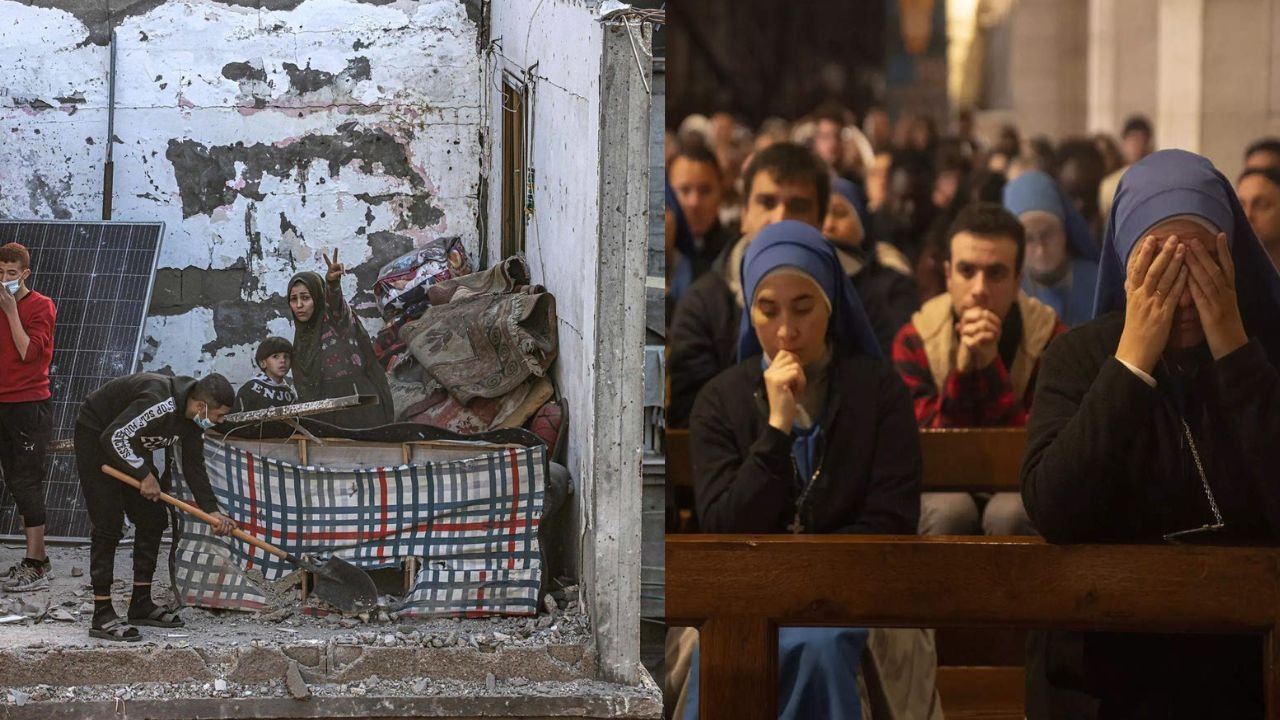
    Festivities were effectively scrapped in the occupied West Bank city of Bethlehem, revered as the birthplace of Jesus Christ, with few worshippers or tourists on the usually packed streets.

    In the besieged Gaza Strip, the Hamas-run ministry of health said early Monday Israeli strikes had killed at least 18 people in the southern city of Khan Yunis, the centre of recent fighting.

    At a hospital in the city, Fadi Sayegh — whose family has previously received permits to travel to Bethlehem for celebrations — said he would not be celebrating Christmas this year.

    “There is no joy. No Christmas tree, no decorations, no family dinner, no celebrations,” he said while undergoing dialysis. “I pray for this war to be over soon.”

    Sister Nabila Salah from the Catholic Holy Church in Gaza — where two Christian women were killed by an Israeli sniper earlier this month according to the Latin Patriarchate of Jerusalem — struck a sombre tone.

    “All Christmas celebrations have been cancelled,” she told AFP. “How do we celebrate when we are… hearing the sound of tanks and bombardment instead of the ringing of bells?”

    The war broke out when Hamas fighters attacked southern Israel on October 7 and killed about 1,140 people, mostly civilians, and seized 250 hostages, according to an AFP tally based on Israeli figures.

    Israel has vowed to eliminate Hamas in response and its military campaign, which has included massive aerial bombardment. The campaign has killed 20,424 people, mostly women and children, according to Gaza’s health ministry.

    Pope Francis kicked off global Christmas celebrations on Sunday with a call for peace.

    “Our heart goes to Gaza, to all people in Gaza but a special attention to our Christian community in Gaza who is suffering,” the Catholic leader said.

    Christmas eve strike

    Just ahead of Christmas, the Hamas-run health ministry said at least 70 people were killed in an Israeli air strike on Sunday at the Al-Maghazi refugee camp in central Gaza.

    Health ministry spokesman Ashraf al-Qudra said the “toll is likely to rise” as many families were thought to be in the area at the time of the strike.

    In a separate incident, the ministry said 10 members of one family were killed in an Israeli strike on their house in the Jabalia camp in northern Gaza.

    AFP was unable to independently verify either toll.

    Vast areas of Gaza lie in ruins and its 2.4 million people have endured dire shortages of water, food, fuel and medicine due to an Israeli siege, alleviated only by the limited arrival of aid trucks.

    Eighty percent of Gazans have been displaced, according to the UN, many fleeing south and now shielding against the winter cold in makeshift tents.

    The head of the UN refugee agency, Filippo Grandi, called for an end to the suffering.

    “A humanitarian ceasefire in Gaza is the only way forward,” he wrote on X, formerly Twitter. “War defies logic and humanity, and prepares a future of more hatred and less peace.”

    World Health Organization chief Tedros Adhanom Ghebreyesus also renewed calls for a ceasefire, saying: “The decimation of the Gaza health system is a tragedy.”

    ‘No choice’

    Israeli Prime Minister Benjamin Netanyahu said Sunday the war was exacting a “very heavy price”, as the death toll of soldiers killed in the conflict continued to mount.

    “But we have no choice but to keep fighting,” he said, adding: “This will be a long war.”

    The army said Monday two more soldiers had been killed, taking to 17 the number of troops killed since Friday and 156 since Israel’s ground assault began on October 27.

    Israeli military spokesman Jonathan Conricus indicated that forces were close to gaining control in northern Gaza and that now “we focus our efforts against Hamas in southern Gaza”.

    Two freed detainees and a medic said Sunday that Palestinians held by the Israeli army in the Gaza Strip had suffered torture, a charged denied by the military.

    The two men were among hundreds detained by Israeli forces over alleged links with Hamas during Israel’s ground offensive.

    About 20 men released from Israeli custody “have bruises and marks of blows on their bodies”, Marwan al-Hams, hospital director in the southern city of Rafah, told AFP.

  • At least 116 dead in northwest China earthquake

    At least 116 dead in northwest China earthquake

    At least 105 were killed and almost 400 injured in Gansu province, local officials said, after the strong, shallow tremor struck around midnight.

    According to state broadcaster CCTV, 11 others were killed and 100 injured in the city of Haidong in the neighbouring province of Qinghai.

    The quake brought homes crashing down and caused other significant damage, sending people running into the street for safety, state news agency Xinhua said.

    “I was almost scared to death. Look at how my hands and legs are shaking,” said a woman of about 30 in a video posted to a social media account associated with the state-run People’s Daily newspaper.

    “As soon as I ran out of the house, the earth on the mountain gave way, thudding on the roof,” she said as she sat swaddled in a blanket outside, cradling a baby.

    Footage from CCTV showed family possessions visible among strewn masonry from a house that caved in during the quake.

    Rescue work was under way early Tuesday, with Chinese President Xi Jinping calling for “all-out efforts” in the search and relief work.

    Temperatures are below freezing in the high-altitude area, and rescuers should be on guard for secondary disasters, he said according to CCTV.

    The quake, which was logged as magnitude 5.9 by the US Geological Survey, struck in Gansu near the border with Qinghai, where Haidong is located.

    That epicentre is about 100 kilometres (60 miles) southwest of Gansu province’s capital, Lanzhou.

    Xinhua reported the quake — which was felt in the major city of Xi’an in northern Shaanxi province, about 570 kilometres (350 miles) away — as being magnitude 6.2.

    Several smaller aftershocks followed the initial earthquake, and officials warned that tremors with a magnitude of more than 5.0 were possible in the next few days.

    A quake measured at magnitude 5.2 by USGS was detected further northwest in Xinjiang province on Monday morning.

    Freezing temperatures

    Power and water supplies were disrupted in some villages around the epicentre, Xinhua said.

    Footage from one of the worst-hit places on CCTV showed residents warming themselves by a fire while emergency services set up tents.

    CCTV said more than 1,400 firefighters and rescue personnel had been sent to the disaster zone, while another 1,600 remained “on standby”.

    The broadcaster added that supplies including drinking water, blankets, stoves and instant noodles were also being sent to the affected area.

    Footage showed emergency vehicles driving along snow-lined highways towards the scene with their lights flashing.

    Rescue workers in overalls were pictured shoulder-to-shoulder in the trucks, while other images showed them lining up in ranks to receive instructions.

    Other clips showed emergency personnel going through debris by torchlight, unfolding orange stretchers for the casualties.

    Hundreds of people have been evacuated in Gansu, officials said.

    The earthquake struck at a shallow depth at 11:59 pm local time Monday (1559 GMT), according to the USGS, which revised the magnitude downwards after initially reporting it to be 6.0.

    Earthquakes are not uncommon in China. In August, a shallow 5.4-magnitude earthquake struck eastern China, injuring 23 people and collapsing dozens of buildings.

    In September 2022, a 6.6-magnitude quake hit Sichuan province leaving almost 100 dead.

    A 7.9-magnitude quake in 2008 left more than 87,000 people dead or missing, including 5,335 schoolchildren.

  • Israel intentionally starving civilians in Gaza: HRW

    Israel intentionally starving civilians in Gaza: HRW

    The group Human Rights Watch on Monday accused the Israeli government of intentionally starving civilians in Gaza as part of its offensive in the besieged Palestinian territory. 

    “The Israeli government is using starvation of civilians as a method of warfare in the occupied Gaza Strip, which is a war crime,” the New York-based group charged in a report.

    “Israeli forces are deliberately blocking the delivery of water, food and fuel, while wilfully impeding humanitarian assistance, apparently razing agricultural areas, and depriving the civilian population of objects indispensable to their survival,” it added.

    The Israeli government hit back at HRW, accusing it of being an “anti-Semitic and anti-Israeli organisation”.

    “Human Rights Watch … did not condemn the attack on Israeli citizens and the massacre of October 7 and has no moral basis to talk about what’s going on in Gaza if they turn a blind eye to the suffering and the human rights of Israelis,” foreign ministry spokesman Lior Haiat told AFP.

    The deadliest ever Gaza war began with the unprecedented attack by Hamas on October 7, when the group killed 1,139 people, mostly civilians, and abducted around 250, according to updated Israeli figures.

    The health ministry in the Hamas-run territory says more than 18,800 people, mostly women and children, have died in Israel’s campaign in Gaza.

    Following months of fierce bombardment and fighting, most of Gaza’s population has been displaced and people are grappling with shortages of food, water, fuel and medicine.

    Israel on Friday approved the “temporary” delivery of much-needed aid to Gaza via its Kerem Shalom crossing.

    A humanitarian aid convoy entered Gaza through the crossing on Sunday, the first since Israel approved the move, an Egyptian Red Crescent official said.

    A total of “79 trucks began entering today,” the official, who is not authorised to speak to the media, said on condition of anonymity.